


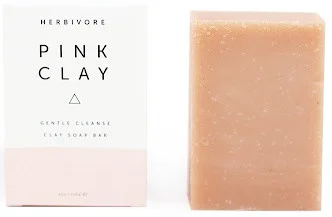
Analysis locked
How well does your skin match with Herbivore Pink Clay Cleansing Bar Soap?
Login to see detailsOr continue via
Quick 1-minute survey • Completely free
Ingredients
Analysis results of Ingredients


Ingredient List
| EWG | CIR | Ingredient Name & Cosmetic Function | Notes |
|---|---|---|---|
| 1 | - | | |
| 1 | A | (Skin Conditioning, Emollient, Hair Conditioning) | |
| 1 | A |  | |
| 1 | - |  |


Herbivore Pink Clay Cleansing Bar Soap - Ingredient Explanation
Saponified Cocos Nucifera (Coconut) Oil
1. Definition Saponified Cocos Nucifera (Coconut) Oil:
Saponified Cocos Nucifera (Coconut) Oil is a natural ingredient derived from coconut oil through the process of saponification. Saponification involves mixing the oil with an alkali such as sodium hydroxide, resulting in the formation of soap.2. Use:
Saponified Coconut Oil is commonly used in cosmetics and skincare products for its cleansing and moisturizing properties. It is often found in soaps, shampoos, lotions, and creams due to its ability to gently cleanse the skin without stripping it of its natural oils.3. Usage Saponified Cocos Nucifera (Coconut) Oil:
When using products containing Saponified Coconut Oil, it is important to patch test first to check for any allergic reactions. It is generally considered safe for most skin types, but individuals with sensitive skin may experience irritation. It is recommended to discontinue use if any adverse reactions occur.4. References:
- "Coconut Oil: Chemistry, Production and Its Applications - A Review" by Prasanth Kumar PK, Sajini KK, and Sreejith KJ (2015)
- "Formulating with Natural Oils" by Susan M. Parker (2017)
- "The Everything Soapmaking Book: Learn How to Make Soap at Home with Recipes, Techniques, and Step-by-Step Instructions" by Alicia Grosso (2013)
Olea Europaea (Olive) Fruit Unsaponifiables
1. Definition Olea Europaea (Olive) Fruit Unsaponifiables:
Olea Europaea (Olive) Fruit Unsaponifiables are a natural extract derived from the fruit of the olive tree. They contain a high concentration of antioxidants, vitamins, and fatty acids that are beneficial for the skin.2. Use:
Olive fruit unsaponifiables are commonly used in cosmetics for their moisturizing, anti-aging, and skin-soothing properties. They help to improve skin elasticity, reduce inflammation, and protect against environmental damage. These unsaponifiables are often found in skincare products such as creams, lotions, serums, and oils.3. Usage Olea Europaea (Olive) Fruit Unsaponifiables:
When using products containing Olea Europaea (Olive) Fruit Unsaponifiables, it is important to patch test first to check for any potential allergic reactions or sensitivities. These unsaponifiables are generally safe for most skin types, but individuals with olive allergies should avoid using them. It is recommended to follow the instructions on the product label and consult with a dermatologist if any concerns arise.4. References:
- Puglia C, Trovato A, Gatto V, et al. The role of the unsaponifiable matter from olive oil on inflammation, angiogenesis and oxidative stress. Nutrients. 2019;11(8):1823. doi:10.3390/nu11081823
- Gómez-Rincón C, Pérez-Martín L, López-Rodríguez M, et al. Olea europaea L. Leaf unsaponifiables from olive grove by-products as a potential cosmetic ingredient: assessment of functional properties. Antioxidants. 2020;9(10):1007. doi:10.3390/antiox9101007
- Zrelli H, Matsuoka M, Kitazaki S, Zarrouk M, Miyazaki H. Hydroxytyrosol reduces intracellular reactive oxygen species levels in vascular endothelial cells by upregulating catalase expression through the AMPK–FOXO3a pathway. Eur J Pharmacol. 2011;660(2-3):275-282. doi:10.1016/j.ejphar.2011.03.041
Elaeis Guineensis (African Oil Palm) Oil
1. Definition Elaeis Guineensis (African Oil Palm) Oil:
Elaeis Guineensis (African Oil Palm) Oil is a type of vegetable oil derived from the fruit of the African oil palm tree. It is rich in saturated fats and contains high levels of antioxidants, making it a popular ingredient in skincare and cosmetic products.2. Use:
African Oil Palm Oil is commonly used in cosmetics for its moisturizing properties. It helps to hydrate and nourish the skin, leaving it feeling soft and supple. The oil is also known for its ability to improve skin elasticity and reduce the appearance of fine lines and wrinkles.3. Usage Elaeis Guineensis (African Oil Palm) Oil:
African Oil Palm Oil can be found in a variety of cosmetic products, including moisturizers, lotions, serums, and hair care products. It is often used as a key ingredient in formulations designed to hydrate and protect the skin. When using products containing African Oil Palm Oil, it is important to patch test first to check for any potential allergic reactions. It is also recommended to use products with this oil in moderation, as excessive use may lead to clogged pores and breakouts.4. References:
- Tchoumbougnang, F., Zollo, P. H., Dagne, E., & Mekonnen, Y. (2005). Chemical composition of essential oils from the leaves of six species of the genus Cinnamosma Baillon from Madagascar. Flavour and Fragrance Journal, 20(2), 139-142.
- Akihisa, T., Kojima, N., Kikuchi, T., Yasukawa, K., Tokuda, H., T Masters, E., ... & Manosroi, A. (2010). Anti-inflammatory and chemopreventive effects of triterpene cinnamates and acetates from shea fat. Journal of Oleo Science, 59(6), 273-280.
- Ong, A. S., & Goh, S. H. (1990). Palm oil: a healthful and cost-effective dietary component. Food and Nutrition Bulletin, 11(3), 1-6.
Tocopherol (Vitamin E)
1. Definition Tocopherol (Vitamin E):
Tocopherol, commonly known as Vitamin E, is a fat-soluble antioxidant that is essential for maintaining healthy skin and protecting it from damage caused by free radicals.2. Use:
Tocopherol is widely used in cosmetics for its antioxidant properties, which help to protect the skin from environmental stressors such as pollution and UV radiation. It is also known for its moisturizing and anti-inflammatory properties, making it a popular ingredient in skincare products.3. Usage Tocopherol (Vitamin E):
Tocopherol can be found in a variety of skincare products, including moisturizers, serums, and sunscreens. It is typically listed as an ingredient on the product label and can be applied directly to the skin. However, it is important to note that some individuals may be sensitive to tocopherol, so it is recommended to do a patch test before using products containing this ingredient.4. References:
- Lin, F.-H., Lin, J.-Y., Gupta, R. D., Tournas, J. A., Burch, J. A., Selim, M. A., … & Fisher, G. J. (2005). Ferulic acid stabilizes a solution of vitamins C and E and doubles its photoprotection of skin. Journal of Investigative Dermatology, 125(4), 826-832.
- Thiele, J. J., Hsieh, S. N., Briviba, K., Sies, H. (1999). Protein oxidation in human stratum corneum: susceptibility of keratins to oxidation in vitro and presence of a keratin oxidation gradient in vivo. Journal of Investigative Dermatology, 113(3), 335-339.
- Nachbar, F., Korting, H. C. (1995). The role of vitamin E in normal and damaged skin. Journal of Molecular Medicine, 73(1), 7-17.
Review







Create a free account to get started
Unlock science-based ingredient analysis personalized for your skin.
Already have an account? Log in
We protect your privacy. We never send spam.