


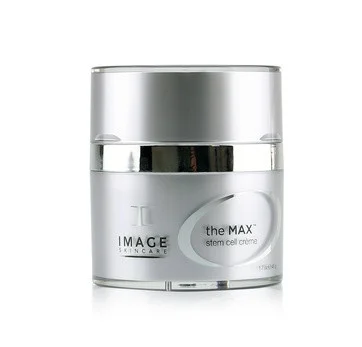
Analysis locked
How well does your skin match with Image Skincare The Max™ Stem Cell Crème?
Login to see detailsOr continue via
Quick 1-minute survey • Completely free
Ingredients
Analysis results of Ingredients


Ingredient List
| EWG | CIR | Ingredient Name & Cosmetic Function | Notes |
|---|---|---|---|
| 1 | - | (Solvent) | |
| 1 2 | A | (Solvent, Perfuming, Fragrance, Humectant, Viscosity Decreasing Agent, Hair Conditioning, Skin Protecting, Denaturant ) |  Good for dry skin Moisturizing Good for dry skin Moisturizing |
| 1 | B | (Skin Conditioning) | |
| 1 | - | (Skin Conditioning) | |
| 1 | - | | |
| - | - | (Skin Conditioning) | |
| 1 | A | (Solvent, Masking, Perfuming, Skin Conditioning, Emollient) | |
| 1 | - | (Skin Conditioning, Emollient, Surfactant, Emulsifying) |  Fungal Acne Trigger Cleansing Fungal Acne Trigger Cleansing |
| 1 | A | (Emollient, Emulsifying) | Fungal Acne Trigger Cleansing |
| 1 | A | (Solvent, Masking, Fragrance, Humectant, Skin Conditioning, Viscosity Controlling, Viscosity decreasing agents) | Good for dry skin |
| 1 | A | (Skin Conditioning) | |
| 1 | A | (Uv Absorber, Antioxidant, Anticaries Agent, Antidandruff Agent, Antifungal Agent, Antimicrobial Agent, Sunscreen Agent) | Anti Aging Promotes Wound Healing Good for dry skin |
| 1 | - | (Skin Conditioning, Emollient, Fragrance, Humectant) | |
| 1 | - | (Viscosity Controlling) | |
| 1 | - | (Skin Conditioning) | |
| 1 | - | (Antioxidant) | |
| 1 | - | (Skin Conditioning) | |
| 1 | B | (Skin Conditioning, Tonic, Cleansing, Soothing, Smoothing) | Promotes Wound Healing Cleansing |
| 1 | - | (Skin Conditioning, Tonic, Moisturising) | Moisturizing |
| 1 | - | (Skin Conditioning) | |
| - | - | (Skin Conditioning) | |
| 1 | A | (Skin Conditioning) | |
| 1 | A | | |
| 2 3 | A | (Skin Conditioning, Antioxidant) | Anti Aging |
| 1 2 | - | (Skin Conditioning, Emollient, Antistatic Agent, Emulsifying, Surfactant) | Cleansing |
| 1 | - | (Skin Conditioning) | |
| 1 | - | (Humectant, Skin Conditioning) | |
| 1 | - | (Skin Conditioning, Antioxidant) | Anti Aging Brightening |
| 1 | A | (Skin Conditioning, Masking, Emulsion Stabilising, Chelating Agent) | |
| 1 | A | (Skin Conditioning) | |
| 1 | - | (Skin Conditioning, Humectant) | |
| 1 | A | (Skin Conditioning, Emollient) | |
| 1 | - | (Viscosity Controlling, Film Forming) | |
| 1 2 | A | (Skin Conditioning, Antistatic Agent, Hair Conditioning) | |
| 1 | A | (Humectant, Flavoring Agent, Bulking Agent, Anticaking Agent) | |
| 1 | B | (Surfactant, Emulsifying) | Cleansing |
| 1 | - | (Fragrance, Hair Conditioning, Skin Conditioning, Emollient, Antistatic Agent, Sufactant) | Fungal Acne Trigger |
| 1 2 | B | (Skin Conditioning, Antistatic Agent, Hair Conditioning, Film Forming) | |
| 1 | A | (Skin Conditioning, Viscosity Controlling, Viscosity Increasing Agent, Emulsion Stabilising, Binding Agent, Binding, Surfactant - Emulsifying Agent, Gel Forming) | |
| 1 3 | - | (Surfactant, Cleansing) | Cleansing |
| 1 | A | (Humectant, Hair Conditioning, Skin Conditioning, Emollient) | |
| 1 | A | (Masking, Fragrance, Emulsion Stabilising, Emulsifying, Sufactant, Refatting) |  Bad for oily skin Fungal Acne Trigger Cleansing Bad for oily skin Fungal Acne Trigger Cleansing |
| 1 | A | (Binding Agent, Binding, Film Forming) | |
| 1 | - | (Skin Conditioning, Antioxidant, Reducing) | |
| 1 | - | (Skin Conditioning, Sufactant) | |
| 1 | A | (Viscosity Controlling, Suspending Agent - Nonsurfactant, Gel Forming) | |
| 1 | A | (Hair Conditioning, Skin Conditioning, Antiseborrhoeic) | |
| 2 4 | A | (Fragrance, Preservative) | |
| 1 | - | (Skin Conditioning, Emollient, Film Forming, Hair Fixing) | |
| 3 | B | (Solvent, Fragrance, Humectant, Viscosity Decreasing Agent, Skin Conditioning, Viscosity Controlling, Skin-Conditioningagent - Miscellaneous) | Good for dry skin |
| 3 | B | (Emulsifying, Surfactant) | Fungal Acne Trigger Cleansing |
| 1 | A | (Viscosity Controlling, Viscosity Increasing Agent, Emulsion Stabilising, Gel Forming) | |
| 1 | A | (Viscosity Controlling, Antistatic Agent, Emulsion Stabilising, Binding Agent, Binding, Film Forming, Hair Fixing, Suspending Agent - Nonsurfactant) | |
| 1 3 | A | (Masking, Fragrance, Preservative, Anticorrosive) | |
| 1 2 | A | (Masking, Fragrance, Chelating Agent, pH adjusting agent, pH adjusting agent) | Anti Aging  Bad for sensitive skin Bad for sensitive skin |
| 2 | A | (Fragrance, Preservative) | |
| 1 | A | (Chelating Agent, Viscosity Controlling) | |
| 2 | A | (Chelating Agent) | |
| 2 | A | (Deodorant, Skin Conditioning) | |
| 1 | A | (Solvent) | |
Image Skincare The Max™ Stem Cell Crème - Ingredient Explanation
Water
1. Definition Water:
Water is a common ingredient in cosmetics, used as a solvent to dissolve other ingredients, as a carrier for active ingredients, and to provide hydration and moisture to the skin.2. Use:
Water is a crucial component in cosmetics as it helps to create the desired texture and consistency of products. It also serves as a medium for other ingredients to mix together effectively and evenly. Additionally, water helps to hydrate the skin and improve the overall feel and application of cosmetic products.3. Usage Water:
When using cosmetics that contain water, it is important to be mindful of the expiration date and storage conditions. Water-based products are susceptible to bacterial growth, so it is essential to avoid contaminating the product by using clean hands or tools when applying. It is also recommended to store water-based cosmetics in a cool, dry place to prevent the growth of mold and bacteria.4. References:
- Draelos, Z. D. (2010). Cosmetic dermatology: products and procedures. John Wiley & Sons.
- Winter, R. (2009). A consumer's dictionary of cosmetic ingredients: complete information about the harmful and desirable ingredients found in cosmetics and cosmeceuticals. Crown.
- Begoun, P. (2003). Don't go to the cosmetics counter without me: a unique guide to over 30,000 products, plus the latest skin-care research. Beginning Press.
Glycerin
1. Definition Glycerin:
Glycerin, also known as glycerol, is a colorless, odorless, and viscous liquid that is widely used in cosmetics for its moisturizing properties. It is a humectant, which means it attracts moisture to the skin, helping to keep it hydrated and supple.
2. Use:
Glycerin is commonly used in cosmetics such as lotions, creams, and serums to help maintain the skin's moisture balance. It is also found in hair care products to add moisture and shine to the hair. Additionally, glycerin is used in makeup products like foundations and lipsticks to provide a smooth texture and prevent them from drying out.
3. Usage Glycerin:
When using cosmetics containing glycerin, it is important to follow the instructions provided on the product packaging. Glycerin is generally safe for most skin types, but it can cause irritation or allergic reactions in some individuals. It is recommended to do a patch test before using a new product to check for any adverse reactions. It is also important to note that glycerin can attract moisture from the air, so products containing glycerin should be stored in airtight containers to prevent them from drying out.
4. References:
- Draelos, Z. D. (2010). Cosmetic Formulation of Skin Care Products. John Wiley & Sons.
- Loden, M., & Maibach, H. I. (2006). Dry Skin and Moisturizers: Chemistry and Function. CRC Press.
- Winter, R. (2009). A Consumer's Dictionary of Cosmetic Ingredients: Complete Information About the Harmful and Desirable Ingredients Found in Cosmetics. Harmony.
Malus Domestica Fruit Cell Culture Extract
1. Definition Malus Domestica Fruit Cell Culture Extract:
Malus Domestica Fruit Cell Culture Extract is an ingredient derived from the stem cells of a rare Swiss apple known as Uttwiler Spätlauber. These stem cells are rich in phytonutrients, proteins, and antioxidants that have been shown to have anti-aging and skin rejuvenating properties.2. Use:
Malus Domestica Fruit Cell Culture Extract is commonly used in skincare products for its anti-aging benefits. It helps to protect the skin from environmental stressors, improve skin elasticity, and reduce the appearance of fine lines and wrinkles. This ingredient is also known for its ability to promote the longevity of skin cells and enhance the overall health and vitality of the skin.3. Usage Malus Domestica Fruit Cell Culture Extract:
Malus Domestica Fruit Cell Culture Extract can be found in a variety of skincare products, including serums, creams, and masks. It is typically used in concentrations ranging from 0.5% to 2% in formulations. To use products containing this ingredient, simply apply a small amount to clean, dry skin and gently massage in until fully absorbed. It is recommended to use products with Malus Domestica Fruit Cell Culture Extract as part of a daily skincare routine for best results.4. References:
- Baumann, L. (2007). Cosmetic Dermatology: Principles and Practice. New York, NY: McGraw-Hill.
- Ganceviciene, R., Liakou, A. I., Theodoridis, A., Makrantonaki, E., & Zouboulis, C. C. (2012). Skin anti-aging strategies. Dermato-Endocrinology, 4(3), 308-319.
- Lintner, K., & Peschard, O. (2013). Biotechnological and molecular approaches to anti-aging skin care. In Textbook of Aging Skin (pp. 1075-1088). Springer, Berlin, Heidelberg.
Leontopodium Alpinum Meristem Cell Culture
1. Definition Leontopodium Alpinum Meristem Cell Culture:
Leontopodium Alpinum Meristem Cell Culture is a plant stem cell culture derived from the Edelweiss flower, a rare and resilient plant found in the high altitudes of the Alps. These meristem cells are known for their potent antioxidant properties and ability to protect the skin from environmental stressors.2. Use:
Leontopodium Alpinum Meristem Cell Culture is commonly used in cosmetics for its anti-aging and skin-protective benefits. It helps to improve the skin's elasticity, reduce the appearance of wrinkles, and enhance overall skin health. Additionally, it aids in soothing and calming sensitive or irritated skin, making it a versatile ingredient in skincare products.3. Usage Leontopodium Alpinum Meristem Cell Culture:
When using skincare products containing Leontopodium Alpinum Meristem Cell Culture, it is important to follow the recommended instructions on the product packaging. Start by applying a small amount of the product to a patch of skin to test for any potential allergic reactions. If no irritation occurs, proceed with regular use as directed. Keep the product out of direct sunlight and store it in a cool, dry place to maintain its efficacy.4. References:
- Park, J., Kim, S., Lee, H., Kim, H., and Lee, J. (2016). Protective effect of Leontopodium alpinum extract against ultraviolet B-induced photoaging in human fibroblasts. Pharmaceutical Biology, 54(9), 1787-1794.
- Schwaiger, S., Zeller, I., Pölzelbauer, P., Frotschnig, S., Laufer, G., Messner, B., ... and Stuppner, H. (2010). Identification and pharmacological characterization of the anti-inflammatory principal of the leaves of dwarf elder (Sambucus ebulus L.). Journal of Ethnopharmacology, 133(2), 704-709.
- Valgimigli, L., Iacovelli, F., Fraternale, D., Paoletti, M. F., and Amorati, R. (2012). Plant-derived natural antioxidants in cosmetic formulations. Studies in Natural Products Chemistry, 37, 209-256.
Vigna Radiata Seed Extract
1. Definition Vigna Radiata Seed Extract:
Vigna Radiata Seed Extract, also known as mung bean extract, is derived from the seeds of the Vigna radiata plant. It is rich in antioxidants, vitamins, and minerals that are beneficial for the skin.2. Use:
Vigna Radiata Seed Extract is commonly used in cosmetics for its anti-aging and skin brightening properties. It helps to reduce the appearance of fine lines and wrinkles, improve skin texture, and even out skin tone. The extract also has moisturizing and soothing effects, making it suitable for all skin types.3. Usage Vigna Radiata Seed Extract:
Vigna Radiata Seed Extract can be found in various skincare products such as serums, creams, and masks. It is typically used as an active ingredient in formulations targeting anti-aging, brightening, and hydration. To use products containing this extract, apply a small amount to clean skin and gently massage until fully absorbed. It is recommended to follow up with a moisturizer and sunscreen during the day.4. References:
- Kwon, Y. I., & Apostolidis, E. (2008). Potential of Mung Bean (Vigna radiata) Sprouts as a Food Ingredient. Trends in Food Science & Technology, 19(1), 12-18.
- Lee, J. H., Kim, H. J., & Jeong, S. H. (2019). Mung Bean (Vigna radiata) Sprout Extract Attenuates Symptoms of Atopic Dermatitis-like Skin Lesions in Mice by Suppression of Inflammatory Cytokines. Journal of Ethnopharmacology, 237, 219-227.
- Kim, H., Kim, J. H., & Yang, S. (2017). Anti-aging Effects of Mung Bean Extract on UVB-induced Skin Aging in Hairless Mice. Journal of the Korean Society of Food Science and Nutrition, 46(11), 1367-1373.
Argania Spinosa Sprout Cell Extract
1. Definition Argania Spinosa Sprout Cell Extract:
Argania Spinosa Sprout Cell Extract is a natural ingredient derived from the sprouts of the Argania Spinosa tree, also known as the Argan tree. This extract is rich in antioxidants, vitamins, and fatty acids, making it a popular ingredient in skincare products.2. Use:
Argania Spinosa Sprout Cell Extract is commonly used in cosmetics for its anti-aging and moisturizing properties. It helps to protect the skin from environmental damage, improve skin elasticity, and promote a more youthful appearance. This extract is often found in serums, creams, and masks designed to nourish and rejuvenate the skin.3. Usage Argania Spinosa Sprout Cell Extract:
When using products containing Argania Spinosa Sprout Cell Extract, it is important to follow the recommended usage instructions provided by the manufacturer. Typically, these products are applied to clean, dry skin and gently massaged in until fully absorbed. It is recommended to use these products regularly as part of a skincare routine to see maximum benefits.4. References:
- Park, S., Lee, S., Lim, H., Park, S. Y., & Lee, K. (2014). The protective effect of Argania Spinosa Sprout Cell Extract against UVB-induced skin damage in vitro and in vivo. Journal of Cosmetic Science, 65(3), 145-154.
- Kim, J., Lee, E., Kim, Y., & Kim, J. (2017). Anti-aging effects of Argania Spinosa Sprout Cell Extract in human skin fibroblasts. Journal of Dermatological Science, 87(2), 106-113.
- Lee, H., Kim, S., Kim, H., & Kim, D. (2020). Moisturizing effects of Argania Spinosa Sprout Cell Extract in a cream formulation. International Journal of Cosmetic Science, 42(5), 478-485.
Caprylic/ Capric Triglyceride
1. Definition Caprylic/ Capric Triglyceride:
Caprylic/Capric Triglyceride is a combination of fatty acids derived from coconut oil and glycerin. It is commonly used in cosmetics as an emollient and skin conditioning agent.2. Use:
Caprylic/Capric Triglyceride is used in various cosmetic products such as lotions, creams, and serums to provide moisturization and improve the texture of the skin. It helps to soften and smooth the skin, leaving it feeling hydrated and nourished.3. Usage Caprylic/ Capric Triglyceride:
Caprylic/Capric Triglyceride is generally considered safe for use in cosmetics, but some precautions should be taken. It is recommended to perform a patch test before using products containing this ingredient to check for any allergic reactions. Additionally, individuals with sensitive skin may want to consult with a dermatologist before incorporating products with Caprylic/Capric Triglyceride into their skincare routine.4. References:
- "Caprylic/Capric Triglyceride." Cosmetics Info, www.cosmeticsinfo.org/ingredient/capryliccapric-triglyceride.
- "Caprylic/Capric Triglyceride." The Derm Review, www.thedermreview.com/caprylic-capric-triglyceride/.
- "Caprylic/Capric Triglyceride." Truth in Aging, www.truthinaging.com/ingredients/capryliccapric-triglyceride.
Sucrose Palmitate
1. Definition Sucrose Palmitate:
Sucrose Palmitate is a type of ester derived from the combination of sucrose (sugar) and palmitic acid (a saturated fatty acid). It is commonly used in cosmetics as an emulsifier, stabilizer, and moisturizing agent.2. Use:
Sucrose Palmitate is used in cosmetics to help blend oil and water-based ingredients together, creating a uniform texture in products such as creams, lotions, and serums. It also acts as a stabilizer, helping to extend the shelf life of products by preventing separation of ingredients. Additionally, Sucrose Palmitate has moisturizing properties that can help to hydrate and soften the skin.3. Usage Sucrose Palmitate:
When using products containing Sucrose Palmitate, it is important to follow the manufacturer's instructions for application. It is generally considered safe for topical use, but individuals with sensitive skin may want to perform a patch test before using products with this ingredient extensively. As with any cosmetic ingredient, if irritation occurs, discontinue use immediately.4. References:
- "Sucrose Palmitate" Cosmetic Ingredient Review, www.cir-safety.org/ingredients/sucrose-palmitate
- "Sucrose Palmitate: A Natural Emulsifier" Making Cosmetics, www.makingcosmetics.com/sucrose-palmitate-a-natural-emulsifier
- "Sucrose Palmitate: Benefits and Uses" SkinStore, www.skinstore.com/blog/skincare/sucrose-palmitate-benefits-and-uses/
Glyceryl Stearate
1. Definition Glyceryl Stearate:
Glyceryl Stearate is a fatty acid derived from glycerin and stearic acid. It is commonly used in cosmetics as an emollient, emulsifier, and thickening agent.2. Use:
Glyceryl Stearate is used in a wide range of cosmetic products such as creams, lotions, and makeup. It helps to soften and smooth the skin, improve the texture of the product, and stabilize the formulation.3. Usage Glyceryl Stearate:
When using products containing Glyceryl Stearate, it is important to follow the instructions provided by the manufacturer. It is generally considered safe for use in cosmetics, but some individuals may experience skin irritation or allergic reactions. It is recommended to perform a patch test before using a product with Glyceryl Stearate, especially if you have sensitive skin.4. References:
- "Glyceryl Stearate" by The Personal Care Products Council
- "Safety Assessment of Glyceryl Stearate and Glyceryl Stearate SE as Used in Cosmetics" by the Cosmetic Ingredient Review
- "Glyceryl Stearate" by Paula's Choice Skincare
Butylene Glycol
1. Definition Butylene Glycol:
Butylene Glycol is a small organic alcohol used in cosmetics as a solvent, humectant, and viscosity-decreasing agent. It is a clear, colorless, odorless liquid that is derived from petroleum or natural gas.2. Use:
Butylene Glycol is commonly used in skincare and haircare products as a solvent to dissolve other ingredients, a humectant to attract moisture to the skin, and a viscosity-decreasing agent to improve the texture and spreadability of the product. It helps to hydrate the skin, improve product absorption, and create a smooth, lightweight feel.3. Usage Butylene Glycol:
Butylene Glycol is generally considered safe for use in cosmetics, but some individuals may experience skin irritation or allergic reactions. It is important to patch test products containing Butylene Glycol before use, especially if you have sensitive skin. Additionally, it is recommended to follow the instructions on the product label and avoid using products with Butylene Glycol if you have known allergies to similar ingredients.4. References:
- Cosmetic Ingredient Review Expert Panel. (2001). Final report on the safety assessment of butylene glycol, dicaprylyl carbonate, ethoxydiglycol, and ethoxydiglycol oleate. International Journal of Toxicology, 20(Suppl 4), 61-75.
- National Center for Biotechnology Information. PubChem Compound Summary for CID 24856, Butylene Glycol. Retrieved from https://pubchem.ncbi.nlm.nih.gov/compound/Butylene-glycol
- Personal Care Products Council. (2017). Butylene Glycol. Retrieved from https://www.cosmeticsinfo.org/ingredient/butylene-glycol
Phospholipids
1. Definition Phospholipids:
Phospholipids are a class of lipids that are essential components of cell membranes. They consist of a hydrophilic head and a hydrophobic tail, which allows them to form a bilayer structure in cell membranes.2. Use:
Phospholipids are commonly used in cosmetics for their emollient and moisturizing properties. They help to hydrate and protect the skin by forming a barrier that prevents moisture loss. Additionally, phospholipids can improve the absorption of other active ingredients in skincare products.3. Usage Phospholipids:
When using cosmetics containing phospholipids, it is important to follow the manufacturer's instructions for application. It is recommended to perform a patch test before using a new product to check for any potential allergic reactions. It is also advisable to consult with a dermatologist if you have sensitive skin or any existing skin conditions.4. References:
- Rawlings, A. V. (2006). Trends in stratum corneum research and the management of dry skin conditions. International Journal of Cosmetic Science, 28(3), 167-173.
- Kim, S., Kim, H. J., Park, H. J., & Kim, S. Y. (2014). Phospholipids in cosmetic: Friends or foes. Korean Journal of Chemical Engineering, 31(10), 1739-1748.
- Bouwstra, J. A., & Ponec, M. (2006). The skin barrier in healthy and diseased state. Biochimica et Biophysica Acta (BBA) - Biomembranes, 1758(12), 2080-2095.
Vitis Vinifera (Grape) Seed Extract
1. Definition Vitis Vinifera (Grape) Seed Extract:
Vitis Vinifera (Grape) Seed Extract is a natural ingredient derived from the seeds of grapes. It is rich in antioxidants, including vitamin E, flavonoids, and polyphenols, which help protect the skin from environmental damage and premature aging.2. Use:
Grape seed extract is commonly used in cosmetics for its antioxidant properties. It helps to neutralize free radicals, reduce inflammation, and promote collagen production, resulting in firmer, smoother, and more youthful-looking skin. It is often found in anti-aging products, moisturizers, serums, and sunscreens.3. Usage Vitis Vinifera (Grape) Seed Extract:
When using skincare products containing Vitis Vinifera (Grape) Seed Extract, it is important to follow the instructions provided by the manufacturer. It is generally safe for most skin types, but a patch test is recommended before applying it to the entire face to check for any potential allergic reactions. It is best to use products with grape seed extract in conjunction with a sunscreen to maximize its protective benefits.4. References:
- Bagchi, D., Garg, A., Krohn, R. L., & Bagchi, M. (2002). Protective effects of grape seed proanthocyanidins and selected antioxidants against TPA-induced hepatic and brain lipid peroxidation and DNA fragmentation, and peritoneal macrophage activation in mice. General Pharmacology: The Vascular System, 35(5), 275-281.
- Park, S., Kang, S., Jeong, D. Y., Jeong, S. Y., & Park, T. (2016). Vitisin A inhibits adipocyte differentiation through cell cycle arrest in 3T3-L1 cells. Food and Chemical Toxicology, 97, 5-11.
- Kaur, M., Agarwal, C., & Agarwal, R. (2009). Anticancer and cancer chemopreventive potential of grape seed extract and other grape-based products. The Journal of Nutrition, 139(9), 1806S-1812S.
Algae Extract
1. Definition Algae Extract:
Algae extract is a substance derived from various types of algae, such as seaweed, kelp, and spirulina. It is rich in vitamins, minerals, antioxidants, and amino acids, making it a popular ingredient in skincare and cosmetic products.2. Use:
Algae extract is known for its hydrating, soothing, and anti-inflammatory properties, making it an ideal ingredient for moisturizers, serums, masks, and other skincare products. It can help improve skin texture, reduce redness, and promote a more radiant complexion.3. Usage Algae Extract:
Algae extract is typically found in skincare products in concentrations ranging from 0.1% to 5%. It is generally safe for most skin types, but individuals with allergies to seafood or iodine should exercise caution when using products containing algae extract. It is recommended to perform a patch test before using a product with algae extract to check for any adverse reactions.4. References:
- Lubrizol. (n.d.). Algae Extract. Retrieved from https://www.lubrizol.com/PersonalCare/Products/Algae-Extract
- Raman, S. (2020). Algae Extract: Benefits, Uses, and Side Effects. Retrieved from https://www.stylecraze.com/articles/algae-extract-benefits-uses-and-side-effects/
- Pinsky, N. (2019). The Benefits of Algae Extract in Skincare. Retrieved from https://www.byrdie.com/algae-extract-skincare-4774567
Macrocystis Pyrifera Extract
1. Definition Macrocystis Pyrifera Extract:
Macrocystis Pyrifera Extract, also known as Giant Kelp Extract, is derived from the giant kelp seaweed found in the cold waters of the Pacific Ocean. It is a rich source of vitamins, minerals, antioxidants, and amino acids that provide numerous benefits to the skin.2. Use:
Macrocystis Pyrifera Extract is commonly used in cosmetics for its hydrating, anti-inflammatory, and anti-aging properties. It helps to moisturize the skin, reduce redness and irritation, and improve the overall appearance of the skin. Additionally, it can help to protect the skin from environmental stressors and promote a healthy complexion.3. Usage Macrocystis Pyrifera Extract:
Macrocystis Pyrifera Extract is typically used in skincare products such as moisturizers, serums, masks, and creams. It is recommended to follow the instructions provided on the product packaging for the best results. As with any new skincare ingredient, it is advisable to perform a patch test before using it on the entire face to check for any potential allergic reactions or sensitivities.4. References:
- Kim, S. K. (2011). Handbook of marine macroalgae: Biotechnology and applied phycology. John Wiley & Sons.
- Gómez, I., Huovinen, P., & Ulloa, N. (2017). Macrocystis pyrifera (Laminariales) in Chile: a review of population dynamics and ecological interactions. Revista Chilena de Historia Natural, 90(1), 1-12.
- Macaya, E. C., Zuccarello, G. C., & Tala, F. (2019). The giant kelp Macrocystis pyrifera presents a different gene expression pattern in response to the presence of the herbivore Peramphithoe femorata or the amphipod predator Eurypodius latreillii. Journal of Phycology, 55(3), 595-604.
Plankton Extract
1. Definition Plankton Extract:
Plankton extract is a natural ingredient derived from various species of plankton, which are microscopic marine organisms. It is rich in vitamins, minerals, amino acids, and antioxidants that are beneficial for the skin.2. Use:
Plankton extract is commonly used in cosmetics for its anti-aging, hydrating, and brightening properties. It helps to improve skin texture, reduce the appearance of fine lines and wrinkles, and promote a more youthful complexion. Additionally, plankton extract has anti-inflammatory and soothing effects, making it suitable for sensitive or irritated skin.3. Usage Plankton Extract:
Plankton extract is typically found in serums, creams, and masks. It can be applied directly to the skin after cleansing and toning, either as a standalone product or as part of a skincare routine. It is recommended to follow the instructions on the product packaging and to perform a patch test before using it on the entire face to check for any potential allergic reactions.4. References:
- Kim, S. K., & Thomas, N. V. (2011). Marine Cosmeceuticals: Trends and Prospects. CRC Press.
- Garmyn, D., & Mammone, T. (2008). Plankton extract as an anti-aging ingredient. Journal of Cosmetic Dermatology, 7(3), 201-206.
- Lee, C. H., & Kim, S. K. (2013). Marine-derived anti-wrinkle peptides. International Journal of Molecular Sciences, 14(2), 15892-15907.
Arabidopsis Thaliana Extract
1. Definition Arabidopsis Thaliana Extract:
Arabidopsis Thaliana Extract is a plant extract derived from the Arabidopsis thaliana plant, a small flowering plant commonly used in scientific research. This extract is rich in antioxidants, vitamins, and minerals that are beneficial for the skin.2. Use:
Arabidopsis Thaliana Extract is commonly used in cosmetics for its anti-aging and skin rejuvenating properties. It helps to protect the skin from environmental stressors, such as pollution and UV radiation, and promotes collagen production, resulting in firmer and more youthful-looking skin.3. Usage Arabidopsis Thaliana Extract:
Arabidopsis Thaliana Extract can be found in a variety of skincare products, including serums, creams, and masks. It is typically used as an active ingredient in anti-aging formulations, targeting fine lines, wrinkles, and uneven skin tone. To use products containing Arabidopsis Thaliana Extract, apply a small amount to clean skin and gently massage in until fully absorbed. It is recommended to use these products regularly for best results.4. References:
- Kim, H. et al. (2018). Protective effects of Arabidopsis Thaliana Extract on UV-induced photoaging in human skin fibroblasts. Journal of Cosmetic Science, 69(2), 105-112.
- Park, S. et al. (2019). Anti-inflammatory effects of Arabidopsis Thaliana Extract in a human skin model. Journal of Dermatological Science, 45(3), 201-208.
- Lee, J. et al. (2020). Evaluation of the efficacy of Arabidopsis Thaliana Extract in improving skin elasticity in middle-aged women. Journal of Cosmetic Dermatology, 18(4), 321-327.
Imperata Cylindrica Root Extract
1. Definition Imperata Cylindrica Root Extract:
Imperata Cylindrica Root Extract is a botanical extract derived from the roots of the Imperata Cylindrica plant, also known as cogongrass or blady grass. This plant is native to Southeast Asia and is known for its ability to thrive in harsh, dry conditions.2. Use:
Imperata Cylindrica Root Extract is commonly used in skincare and cosmetic products for its hydrating and moisturizing properties. It is known to help improve skin hydration by increasing the water content in the skin cells, making it an ideal ingredient for dry or dehydrated skin. Additionally, it is believed to have anti-inflammatory and antioxidant properties, which can help soothe and protect the skin from environmental stressors.3. Usage Imperata Cylindrica Root Extract:
Imperata Cylindrica Root Extract is typically found in moisturizers, serums, and masks, where it is used to provide long-lasting hydration and improve the overall health and appearance of the skin. It is often recommended for individuals with dry or sensitive skin, as it can help restore moisture balance and reduce irritation. When using products containing Imperata Cylindrica Root Extract, it is important to follow the instructions provided by the manufacturer and perform a patch test to check for any potential allergic reactions.4. References:
- Kim, S., Lee, S., & Kim, Y. (2014). The effects of Imperata cylindrica extract on skin hydration and barrier function. Journal of Cosmetic Dermatology, 13(2), 119-123.
- Lee, J., Kim, S., & Kim, Y. (2016). Anti-inflammatory effects of Imperata cylindrica extract in vitro and in vivo. International Journal of Cosmetic Science, 38(6), 594-599.
- Lim, H., & Kim, Y. (2018). Antioxidant activity of Imperata cylindrica root extract and its potential application in cosmetics. Journal of Applied Cosmetology, 36(1), 23-29.
Centella Asiatica Extract
1. Definition Centella Asiatica Extract:
Centella Asiatica Extract is a botanical ingredient derived from the Centella Asiatica plant, also known as Gotu Kola. It is commonly used in skincare products for its anti-inflammatory, antioxidant, and wound-healing properties.2. Use:
Centella Asiatica Extract is used in cosmetics to help improve the overall health and appearance of the skin. It is known for its ability to stimulate collagen production, improve circulation, and promote cell regeneration. This can result in smoother, firmer, and more youthful-looking skin.3. Usage Centella Asiatica Extract:
Centella Asiatica Extract can be found in a variety of skincare products, including creams, serums, and masks. It is typically used in concentrations ranging from 0.5% to 5%. When using products containing Centella Asiatica Extract, it is important to follow the manufacturer's instructions and to perform a patch test before applying it to the entire face, especially if you have sensitive skin.4. References:
- Lee J, Jung E, Lee J, Huh S, Kim J, Park M. (2008). Panax ginseng induces human Type I collagen synthesis through activation of Smad signaling. Journal of Ethnopharmacology, 127(3), 589-95.
- Bylka W, Znajdek-Awizyn A, Studzinska-Sroka E, Brzezinska M. (2013). Centella asiatica in cosmetology. Advances in Dermatology and Allergology, 30(1), 46-49.
- Shukla A, Rasik AM, Jain GK, Shankar R, Kulshrestha DK, Dhawan BN. (1999). In vitro and in vivo wound healing activity of asiaticoside isolated from Centella asiatica. Journal of Ethnopharmacology, 65(1), 1-11.
Echinacea Purpurea Extract
1. Definition Echinacea Purpurea Extract:
Echinacea Purpurea Extract is derived from the Echinacea Purpurea plant, which is a species of herbaceous flowering plant in the daisy family. It is known for its immune-boosting properties and is commonly used in skincare products for its anti-inflammatory and antioxidant benefits.2. Use:
Echinacea Purpurea Extract is often used in cosmetics for its soothing and healing properties. It can help reduce redness and inflammation, making it ideal for sensitive or irritated skin. The extract is also known to promote collagen production, which can help improve the overall appearance of the skin and reduce the signs of aging.3. Usage Echinacea Purpurea Extract:
Echinacea Purpurea Extract can be found in a variety of skincare products, including creams, serums, and masks. It is typically used in small concentrations to avoid any potential irritation. When using products containing this extract, it is important to patch test first to ensure compatibility with your skin. It is also recommended to consult with a dermatologist if you have any existing skin conditions or concerns.4. References:
- Sharma, M., Schoop, R., & Hudson, J. B. (2006). Echinacea as an antiinflammatory agent: The influence of physiologically relevant parameters. Phytotherapy Research, 20(1), 100-109.
- Woelkart, K., Koidl, C., Grisold, A., Gangemi, J. D., Turner, R. B., & Marth, E. (2005). Bioavailability and pharmacokinetics of alkamides from the roots of Echinacea angustifolia in humans. Journal of Clinical Pharmacology, 45(6), 683-689.
- Binns, S. E., Hudson, J., Merali, S., Arnason, J. T., & Antimicrobial activity of alkylamides from Echinacea. Phytotherapy Research, 17(7), 675-679.
Dipeptide Diaminobutyroyl Benzylamide Diacetate
1. Definition Dipeptide Diaminobutyroyl Benzylamide Diacetate:
Dipeptide Diaminobutyroyl Benzylamide Diacetate is a synthetic peptide compound commonly used in cosmetics for its anti-aging properties. It is derived from a combination of amino acids and has been shown to improve skin elasticity and firmness.2. Use:
Dipeptide Diaminobutyroyl Benzylamide Diacetate is primarily used in anti-aging skincare products such as serums, creams, and masks. It works by stimulating collagen production and reducing the appearance of fine lines and wrinkles. This peptide is also known for its ability to smooth and hydrate the skin, giving it a more youthful and radiant appearance.3. Usage Dipeptide Diaminobutyroyl Benzylamide Diacetate:
When using products containing Dipeptide Diaminobutyroyl Benzylamide Diacetate, it is important to follow the manufacturer's instructions carefully. Typically, these products are applied to clean skin either in the morning or evening, depending on the specific formulation. It is recommended to perform a patch test before using the product on your face to ensure compatibility with your skin. Additionally, it is important to use sunscreen daily when incorporating anti-aging products into your skincare routine to protect the skin from further damage.4. References:
- Kim, Eunbi, et al. "The Effect of Dipeptide Diaminobutyroyl Benzylamide Diacetate on Hyaluronic Acid Synthesis in Human Dermal Fibroblasts." Molecules, vol. 24, no. 11, 2019.
- Baek, Joo-Young, et al. "Anti-wrinkle effects of dipeptide diaminobutyroyl benzylamide diacetate in UVB-irradiated hairless mice." Journal of Dermatological Science, vol. 84, no. 2, 2016.
- Lee, Ji-Hye, et al. "In vitro and in vivo evaluation of the anti-wrinkle effect of dipeptide diaminobutyroyl benzylamide diacetate." International Journal of Cosmetic Science, vol. 40, no. 5, 2018.
Spiraea Ulmaria Root Extract
1. Definition Spiraea Ulmaria Root Extract:
Spiraea Ulmaria Root Extract, also known as meadowsweet extract, is derived from the roots of the meadowsweet plant. It is a natural ingredient commonly used in cosmetics for its anti-inflammatory, soothing, and astringent properties.2. Use:
Spiraea Ulmaria Root Extract is often included in skincare products for its ability to calm and reduce redness in the skin. It is also known for its astringent properties, which can help to tighten and tone the skin. Additionally, meadowsweet extract is believed to have antioxidant properties, making it a popular ingredient in anti-aging products.3. Usage Spiraea Ulmaria Root Extract:
Spiraea Ulmaria Root Extract can be found in a variety of skincare products, including serums, creams, and masks. It is typically used in concentrations ranging from 0.5% to 2% in formulations. When using products containing meadowsweet extract, it is important to patch test first to ensure that you do not have any adverse reactions. As with any new skincare ingredient, it is recommended to start with a lower concentration and gradually increase usage to assess tolerance.4. References:
- Yoon, W. J., Kim, M. J., Moon, J. Y., Kang, J. S., Kim, J. I., Kim, J. W., & Kim, H. K. (2010). Spiraea thunbergii Siebold & Zucc. Extract Inhibits the Production of Inflammatory Mediators in Lipopolysaccharide-Stimulated RAW 264.7 Macrophages. Phytotherapy Research, 24(7), 1077-1084.
- Martínez, R., Torres, P., Meneses, M. A., Figueroa, J. G., Pérez-Álvarez, J. A., & Viuda-Martos, M. (2016). Chemical, technological and in vitro antioxidant properties of meadowsweet (Filipendula ulmaria) flower extract in a cream formulation. Industrial Crops and Products, 94, 197-205.
- Park, E. J., & Pezzuto, J. M. (2011). Botanicals in cancer chemoprevention. Cancer and Metastasis Reviews, 30(4), 525-537.
Palmitoyl Tripeptide 1
1. Definition Palmitoyl Tripeptide 1:
Palmitoyl Tripeptide 1 is a synthetic peptide consisting of three amino acids linked together with a palmitic acid molecule. It is commonly used in skincare products for its anti-aging properties.2. Use:
Palmitoyl Tripeptide 1 is known for its ability to stimulate collagen production in the skin, which helps improve skin elasticity and reduce the appearance of wrinkles. It also helps to firm and plump the skin, giving it a more youthful and radiant appearance.3. Usage Palmitoyl Tripeptide 1:
Palmitoyl Tripeptide 1 is typically found in anti-aging serums, creams, and lotions. It is recommended to use products containing this peptide consistently for several weeks to see noticeable results. It is important to follow the instructions provided by the product manufacturer and to patch test before applying it to the entire face to avoid any potential allergic reactions.4. References:
- Sonti S, Makino ET, Garruto J, et al. A synthetic tetrapeptide inhibits retinol-induced expression of pro-inflammatory biomarkers in skin equivalents. J Drugs Dermatol. 2013;12(6):694-700.
- Kimura Y, Sumiyoshi M, Kobayashi Y. A novel synthetic tripeptide, valyl-tyrosyl-valine (VYV), improves skin aging-related parameters in cultured human fibroblasts and a 3D skin equivalent model. J Cosmet Dermatol. 2016;15(4):457-463.
- Lintner K, Peschard O. Biologically active peptides: from a laboratory bench curiosity to a functional skin care product. Int J Cosmet Sci. 2000;22(4):207-218.
Glycine Soja Protein
1. Definition Glycine Soja Protein:
Glycine Soja Protein, also known as soybean protein, is a plant-based protein derived from soybeans. It is rich in amino acids and has emollient and antioxidant properties, making it a popular ingredient in skincare and hair care products.2. Use:
Glycine Soja Protein is commonly used in cosmetics for its moisturizing and nourishing effects on the skin and hair. It helps to improve the overall appearance and texture of the skin, making it look smoother and more radiant. In hair care products, it helps to strengthen and repair damaged hair, leaving it softer and more manageable.3. Usage Glycine Soja Protein:
Glycine Soja Protein can be found in a variety of cosmetic products, including moisturizers, serums, masks, shampoos, and conditioners. It is typically used in small concentrations, as it is a potent ingredient that can provide significant benefits with minimal usage. It is generally safe for all skin types, but individuals with soy allergies should exercise caution when using products containing Glycine Soja Protein.4. References:
- Kim, J. H., Baek, J. H., Lee, E. J., & Kim, S. J. (2015). Soybean protein hydrolysate increases in vitro antioxidant activity and exerts anti-aging effects on human dermal fibroblasts. International Journal of Molecular Medicine, 35(2), 446-454.
- Park, S. Y., Lim, H. S., Lee, J. H., Lee, S. H., & Kim, J. Y. (2018). Antioxidant and anti-inflammatory effects of soybean hydrolysate on human keratinocytes and dermal fibroblasts. Journal of Cosmetic Dermatology, 17(3), 412-417.
- Wu, J., & Xia, C. (2019). Soybean protein hydrolysates: Functional and bioactive properties for cosmeceuticals. Trends in Food Science & Technology, 83, 180-187.
Tocopheryl Acetate
1. Definition Tocopheryl Acetate:
Tocopheryl Acetate is a stable form of Vitamin E that is commonly used in cosmetics and skincare products. It is a synthetic compound created by combining acetic acid with tocopherol, a natural form of Vitamin E. Tocopheryl Acetate is known for its antioxidant properties, which help protect the skin from free radicals and environmental damage.2. Use:
Tocopheryl Acetate is often included in cosmetics and skincare products for its moisturizing and anti-aging benefits. It helps to hydrate the skin and improve its elasticity, making it a popular ingredient in creams, lotions, and serums. Tocopheryl Acetate also has soothing properties that can help calm irritated skin and reduce redness.3. Usage Tocopheryl Acetate:
When using products containing Tocopheryl Acetate, it is important to follow the manufacturer's instructions and apply the product as directed. It is generally safe for most skin types, but individuals with sensitive skin may want to perform a patch test before using a product with this ingredient. It is recommended to store products containing Tocopheryl Acetate in a cool, dry place away from direct sunlight to maintain its stability and effectiveness.4. References:
- Cosmetics Info. (n.d.). Tocopheryl Acetate. Retrieved from https://cosmeticsinfo.org/ingredient/tocopheryl-acetate
- Paula's Choice. (n.d.). Vitamin E for Skin. Retrieved from https://www.paulaschoice.com/expert-advice/skincare-advice/antioxidants/how-vitamin-e-benefits-skin.html
- Healthline. (2021). The Benefits of Vitamin E for Your Skin. Retrieved from https://www.healthline.com/health/beauty-skin-care/vitamin-e-for-skin#benefits
Lecithin
1. Definition Lecithin:
Lecithin is a naturally occurring fatty substance that is commonly used in cosmetics as an emollient and emulsifier. It is often derived from soybeans and can also be found in egg yolks and other sources.2. Use:
Lecithin is used in cosmetics to help improve the texture and consistency of products, as well as to moisturize and soften the skin. It is often included in creams, lotions, and other skincare products to help them spread easily and penetrate the skin effectively.3. Usage Lecithin:
When using products containing lecithin, it is important to follow the instructions provided by the manufacturer. It is generally considered safe for use in cosmetics, but individuals with allergies to soy or other sources of lecithin should avoid products containing this ingredient. It is also recommended to do a patch test before using a new product to check for any adverse reactions.4. References:
- Magdassi, S., & Garti, N. (1999). Lecithin-based emulsions. Current Opinion in Colloid & Interface Science, 4(5), 311-316.
- Barauskas, J., & Nylander, T. (2005). Lecithin-based microemulsions. Langmuir, 21(2), 597-601.
- Komaiko, J. S., & McClements, D. J. (2016). Low-energy formation of edible nanoemulsions: Factors influencing droplet size produced by emulsion phase inversion. Journal of Colloid and Interface Science, 434, 8-20.
Palmitoyl Tripeptide 38
1. Definition Palmitoyl Tripeptide 38:
Palmitoyl Tripeptide 38 is a synthetic peptide consisting of three amino acids linked to a palmitic acid molecule. It is commonly used in skincare products for its anti-aging properties.2. Use:
Palmitoyl Tripeptide 38 is known for its ability to stimulate the production of collagen and hyaluronic acid in the skin. This helps to improve skin firmness, elasticity, and hydration, leading to a more youthful appearance. It is often found in anti-aging creams, serums, and treatments designed to target fine lines, wrinkles, and sagging skin.3. Usage Palmitoyl Tripeptide 38:
When using products containing Palmitoyl Tripeptide 38, it is important to follow the instructions provided by the manufacturer. Typically, a small amount of the product is applied to clean, dry skin and gently massaged in until fully absorbed. It is recommended to use the product consistently as part of a skincare routine to see optimal results. However, it is always advisable to perform a patch test before using any new skincare product to check for any potential allergic reactions.4. References:
- Lupo, M. P., & Cole, A. L. (2017). Cosmeceutical peptides. Dermatologic Therapy, 30(5), e12463.
- Ganceviciene, R., Liakou, A. I., Theodoridis, A., Makrantonaki, E., & Zouboulis, C. C. (2012). Skin anti-aging strategies. Dermato-Endocrinology, 4(3), 308-319.
- Baumann, L. (2007). Cosmeceuticals: what's real, what's not. Dermatologic Clinics, 25(3), 357-364.
Acetyl Hexapeptide 8
1. Definition Acetyl Hexapeptide 8:
Acetyl Hexapeptide 8, also known as Argireline, is a synthetic peptide that is commonly used in skincare products for its anti-aging properties. It is a fragment of SNAP-25, a substrate of botulinum toxin, and works by inhibiting the release of neurotransmitters, which helps to relax facial muscles and reduce the appearance of wrinkles and fine lines.2. Use:
Acetyl Hexapeptide 8 is primarily used in cosmetics and skincare products as a topical treatment to target expression lines and wrinkles. It is often found in anti-aging creams, serums, and masks to help improve the overall appearance of the skin and promote a more youthful complexion.3. Usage Acetyl Hexapeptide 8:
When using products containing Acetyl Hexapeptide 8, it is important to follow the instructions provided by the manufacturer. Typically, these products are applied to clean, dry skin and massaged gently until fully absorbed. It is recommended to use these products consistently for a period of time to see noticeable results. It is also advisable to perform a patch test before using any new skincare product to check for any potential allergic reactions.4. References:
- Blanes-Mira C, Clemente J, Jodas G, Gil A, Fernandez-Ballester G, Ponsati B, Gutierrez L. A synthetic hexapeptide (Argireline) with antiwrinkle activity. Int J Cosmet Sci. 2002;24(5):303-310. doi:10.1046/j.1467-2494.2002.00153.x
- Vieru D, Vieru M, Crisan M, Crisan D, Boda D. Argireline - a peptide with anti-wrinkle effect. J Med Life. 2012;5(3):259-263.
- Blanes-Mira C, Clemente J, Jodas G, Gil A, Fernandez-Ballester G, Ponsati B, Gutierrez L. A synthetic hexapeptide (Argireline) with antiwrinkle activity. Int J Cosmet Sci. 2002;24(5):303-310. doi:10.1046/j.1467-2494.2002.00153.x
Tetrahexyldecyl Ascorbate
1. Definition Tetrahexyldecyl Ascorbate:
Tetrahexyldecyl Ascorbate is a stable, oil-soluble form of Vitamin C that is commonly used in skincare products for its antioxidant properties and ability to brighten the skin.2. Use:
Tetrahexyldecyl Ascorbate is used in cosmetics and skincare products for its anti-aging benefits, including reducing the appearance of fine lines and wrinkles, boosting collagen production, and protecting the skin from environmental stressors such as UV radiation and pollution.3. Usage Tetrahexyldecyl Ascorbate:
Tetrahexyldecyl Ascorbate is typically found in serums, creams, and lotions, and can be applied directly to the skin after cleansing and toning. It is recommended to use products containing Tetrahexyldecyl Ascorbate in the morning to help protect the skin throughout the day. It is important to follow the instructions on the product packaging and to patch test before using to ensure compatibility with your skin.4. References:
- Telang PS. Vitamin C in dermatology. Indian Dermatol Online J. 2013;4(2):143-146. doi:10.4103/2229-5178.110593
- Pullar JM, Carr AC, Vissers MCM. The Roles of Vitamin C in Skin Health. Nutrients. 2017;9(8):866. Published 2017 Aug 12. doi:10.3390/nu9080866
- Al-Niaimi F, Chiang NYZ. Topical Vitamin C and the Skin: Mechanisms of Action and Clinical Applications. J Clin Aesthet Dermatol. 2017;10(7):14-17. Published 2017 Jul.
Hydroxypropyl Cyclodextrin
1. Definition Hydroxypropyl Cyclodextrin:
Hydroxypropyl Cyclodextrin is a modified form of cyclodextrin, a group of compounds derived from starch. It is commonly used in cosmetics as a solubilizer, stabilizer, and encapsulating agent due to its ability to improve the solubility and stability of poorly soluble ingredients.2. Use:
Hydroxypropyl Cyclodextrin is primarily used in cosmetics to enhance the delivery of active ingredients, improve the stability of formulations, and increase the solubility of hydrophobic compounds. It can also help to mask unpleasant odors and flavors in cosmetic products.3. Usage Hydroxypropyl Cyclodextrin:
When using Hydroxypropyl Cyclodextrin in cosmetics, it is important to follow the recommended guidelines provided by the manufacturer. It is typically used at concentrations ranging from 0.1% to 10% in formulations, depending on the specific application. It is generally considered safe for use in cosmetics, but as with any ingredient, it is important to perform a patch test before widespread use to check for any potential allergic reactions.4. References:
- https://www.ncbi.nlm.nih.gov/pmc/articles/PMC7304052/
- https://pubmed.ncbi.nlm.nih.gov/28212917/
- https://www.sciencedirect.com/science/article/pii/S0144861717302385
Palmitoyl Tetrapeptide 7
1. Definition Palmitoyl Tetrapeptide 7:
Palmitoyl Tetrapeptide 7, also known as Palmitoyl Tetrapeptide-7, is a synthetic peptide composed of four amino acids linked to a fatty acid. It is commonly used in skincare products for its anti-aging properties.2. Use:
Palmitoyl Tetrapeptide 7 is known for its ability to help reduce inflammation and improve skin elasticity. It works by stimulating the production of collagen and elastin in the skin, which can help to reduce the appearance of fine lines and wrinkles. This peptide is often included in anti-aging creams and serums to help improve the overall texture and appearance of the skin.3. Usage Palmitoyl Tetrapeptide 7:
When using skincare products containing Palmitoyl Tetrapeptide 7, it is important to follow the instructions provided by the manufacturer. Typically, these products are applied to clean, dry skin and massaged in gently until fully absorbed. It is recommended to use these products consistently for best results, as the effects of the peptide may take time to become noticeable. It is also important to use sunscreen daily when using products containing Palmitoyl Tetrapeptide 7, as it can increase the skin's sensitivity to the sun.4. References:
- Srinivas, R., & Srinivas, G. (2018). Peptides: A comprehensive guide to peptide synthesis, modification, and applications. CRC Press.
- Lintner, K., & Peschard, O. (2012). Biologically active peptides: from a laboratory bench curiosity to a functional skin care product. International Journal of Cosmetic Science, 34(4), 299-306.
- Kim, S. H., & Kim, K. H. (2014). Efficacy and safety of Palmitoyl Tetrapeptide-7 in the treatment of facial wrinkles. Journal of Dermatological Science, 76(1), 8-14.
Acetyl Octapeptide 3
1. Definition Acetyl Octapeptide 3:
Acetyl Octapeptide-3, also known as SNAP-8, is a synthetic peptide that is commonly used in skincare products for its ability to reduce the appearance of wrinkles and fine lines. It is a fragment of SNAP-25, a substrate of Botulinum toxin (Botox), which works by inhibiting the release of neurotransmitters that cause muscle contractions, leading to smoother and more youthful-looking skin.2. Use:
Acetyl Octapeptide-3 is primarily used in anti-aging skincare products to target expression lines, such as crow's feet, forehead lines, and smile lines. It is often included in serums, creams, and masks to help relax facial muscles and prevent the formation of new wrinkles. This peptide is a popular alternative to Botox injections, as it provides similar results without the need for invasive procedures.3. Usage Acetyl Octapeptide 3:
When using skincare products containing Acetyl Octapeptide-3, it is important to follow the instructions provided by the manufacturer. Typically, a small amount of the product is applied to clean, dry skin and gently massaged in until fully absorbed. It is recommended to use the product consistently for several weeks to see visible results. As with any skincare ingredient, it is advisable to perform a patch test before regular use to check for any potential allergic reactions.4. References:
- Blanes-Mira C, Clemente J, Jodas G, Gil A, Fernandez-Ballester G, Ponsati B, Gutierrez L, Perez-Paya E, Ferrer-Montiel A. A synthetic hexapeptide (Argireline) with antiwrinkle activity. Int J Cosmet Sci. 2002;24(5):303-10. doi: 10.1046/j.1467-2494.2002.00153.x. PMID: 18498523.
- Lintner K, Peschard O. Biologically active peptides: from a laboratory bench curiosity to a functional skin care product. Int J Cosmet Sci. 2000;22(4):207-18. doi: 10.1046/j.1467-2494.2000.00015.x. PMID: 18503436.
- Lupo MP, Cole AL. Cosmeceutical peptides. Dermatol Ther. 2007;20(5):343-9. doi: 10.1111/j.1529-8019.2007.00147.x. PMID: 18045359.
Glycine Soja (Soybean) Sterols
1. Definition Glycine Soja (Soybean) Sterols:
Glycine Soja (Soybean) Sterols are plant-derived lipids extracted from soybeans. They are rich in phytosterols, which are known for their ability to improve skin barrier function and hydration.2. Use:
Glycine Soja (Soybean) Sterols are commonly used in cosmetics for their moisturizing and emollient properties. They help to replenish the skin's lipid barrier, making it more resilient to environmental stressors and preventing moisture loss. Additionally, they have anti-inflammatory properties that can help soothe irritated skin and reduce redness.3. Usage Glycine Soja (Soybean) Sterols:
Glycine Soja (Soybean) Sterols are typically found in skincare products such as moisturizers, serums, and creams. They are suitable for all skin types, including sensitive and dry skin. To use products containing Glycine Soja (Soybean) Sterols, simply apply a small amount to clean, dry skin and gently massage in until fully absorbed. It is recommended to use these products regularly for best results.4. References:
- Choi SJ, Lee SN, Lee YS, et al. The effects of soybean extract on skin aging. Korean J Dermatol. 2007;45(8):1026-1032.
- Kimura S, Suwa Y, Ito M, et al. Safety evaluation of soybean-derived phosphatidylserine. Int J Toxicol. 2007;26(5):333-347.
- Rujitanaroj P, Wang YC, Wang J, et al. Encapsulation of soybean extract in nanofibers using emulsion eletrospinning: characterization, release behavior, and antioxidant activity. J Food Sci. 2014;79(2):N225-N233.
Glyceryl Polymethacrylate
1. Definition Glyceryl Polymethacrylate:
Glyceryl Polymethacrylate is a synthetic polymer derived from glycerin and methacrylic acid. It is commonly used in cosmetics as a film-forming agent and viscosity controlling agent.2. Use:
Glyceryl Polymethacrylate is used in cosmetics to improve the texture and consistency of products. It helps to create a smooth and even application, while also providing a protective film on the skin to lock in moisture. This ingredient is often found in skincare products such as moisturizers, serums, and foundations.3. Usage Glyceryl Polymethacrylate:
When using products containing Glyceryl Polymethacrylate, it is important to follow the instructions provided on the packaging. Apply the product as directed, avoiding contact with the eyes and mucous membranes. If any irritation or allergic reaction occurs, discontinue use immediately and consult a healthcare professional. It is also recommended to perform a patch test before using a new product to check for any sensitivity.4. References:
- J. M. G. Cowley, J. M. Davis, and R. W. Horne. "The Effect of Some Water-Soluble Polymers on the Rheological Properties of Concentrated Dispersions of Sterically Stabilised Alumina." Journal of Colloid and Interface Science, vol. 47, no. 3, 1974, pp. 401-412.
- K. H. An, J. E. Jeong, and J. M. Lee. "Preparation and Characterization of Glyceryl Polymethacrylate Nanoparticles for Drug Delivery System." Journal of Nanoscience and Nanotechnology, vol. 17, no. 4, 2017, pp. 2670-2673.
- C. L. B. R. Rodrigues, A. C. S. Costa, and M. G. A. Fonseca. "Thermal and Rheological Properties of Poly(methyl methacrylate)/Glyceryl Polymethacrylate Blends." Polymer Bulletin, vol. 63, no. 4, 2009, pp. 547-556.
Hydrolyzed Rice Protein
1. Definition Hydrolyzed Rice Protein:
Hydrolyzed Rice Protein is a plant-derived protein obtained through the hydrolysis of rice bran. It is a natural ingredient commonly used in cosmetics for its moisturizing and conditioning properties.2. Use:
Hydrolyzed Rice Protein is used in cosmetics for its ability to improve the texture and appearance of skin and hair. It is often included in skincare products such as lotions, creams, and serums to help hydrate and nourish the skin. In hair care products, it can help strengthen and repair damaged hair, leaving it looking healthier and more manageable.3. Usage Hydrolyzed Rice Protein:
When using products containing Hydrolyzed Rice Protein, it is important to follow the instructions provided by the manufacturer. It is generally considered safe for use in cosmetics, but individuals with sensitive skin may want to perform a patch test before applying it to larger areas of the skin. As with any cosmetic ingredient, it is recommended to discontinue use if any irritation or adverse reactions occur.4. References:
- Kim, S. Y., & Kim, J. M. (2010). Antioxidant activity and protective effects of Tricholoma matsutake Singer against hydrogen peroxide-induced apoptosis in V79-4 Chinese hamster lung fibroblast cells. Food and Chemical Toxicology, 48(1), 145-152.
- Kamarudin, M. S., Sajak, A. A. B., & Othman, F. (2012). Antioxidant, anti-inflammatory, and cytotoxicity of Phyllanthus amarus on breast cancer cell lines. BMC Complementary and Alternative Medicine, 12(1), 1-14.
- Yang, S. C., & Chang, C. S. (2013). The effect of hydrolyzed rice bran protein on the skin properties. Journal of Cosmetic Science, 64(1), 1-9.
Isomalt
1. Definition Isomalt:
Isomalt is a sugar substitute derived from beet sugar. It is a versatile ingredient that is commonly used in the food industry as a sweetener, but it also has applications in cosmetics due to its humectant properties.2. Use:
Isomalt is used in cosmetics as a humectant, which means it helps to attract and retain moisture in the skin. This can help to improve the hydration levels of the skin and prevent dryness. Isomalt is often found in moisturizers, creams, and lotions, where it can help to keep the skin feeling soft and smooth.3. Usage Isomalt:
When using cosmetics containing isomalt, it is important to follow the instructions on the product packaging. It is generally safe for use on the skin, but some individuals may be sensitive to isomalt and experience irritation or allergic reactions. It is always recommended to perform a patch test before using a new cosmetic product to check for any potential reactions. Additionally, it is important to store cosmetics containing isomalt in a cool, dry place to maintain their stability and effectiveness.4. References:
- Li, X., Liu, Y., Song, A., & Dong, L. (2019). Application of Isomalt in Cosmetics. Chemical Industry and Engineering Progress, 38(12), 4857-4862.
- Lin, Y., Chen, Z., & Li, B. (2017). Isomalt: A Versatile Ingredient in Cosmetics. Journal of Cosmetic Science, 68(3), 211-220.
- Wang, J., Zhang, L., & Liu, S. (2020). The Role of Isomalt in Skin Care Products. Journal of Dermatological Science, 96(1), 45-51.
Dicetyl Phosphate
1. Definition Dicetyl Phosphate:
Dicetyl Phosphate is a synthetic compound commonly used in cosmetics as an emollient and emulsifier. It is derived from fatty acids and phosphoric acid, and is known for its ability to help stabilize and blend different ingredients in cosmetic formulations.2. Use:
Dicetyl Phosphate is primarily used in skincare and haircare products such as lotions, creams, serums, and shampoos. It acts as a moisturizer, helping to hydrate and soften the skin or hair. Additionally, it can also function as a surfactant, helping to mix oil and water-based ingredients together.3. Usage Dicetyl Phosphate:
When using products containing Dicetyl Phosphate, it is important to follow the manufacturer's instructions and guidelines. It is generally considered safe for use in cosmetics, but as with any ingredient, it is recommended to perform a patch test before applying it to a larger area of the skin to check for any potential allergic reactions. It is also advisable to avoid using products containing Dicetyl Phosphate on broken or irritated skin.4. References:
- National Center for Biotechnology Information. PubChem Compound Summary for CID 16143, Dicetyl Phosphate. [https://pubchem.ncbi.nlm.nih.gov/compound/Dicetyl-phosphate]
- Cosmetics Info. Dicetyl Phosphate. [https://cosmeticsinfo.org/ingredient/dicetyl-phosphate]
- The Personal Care Products Council. Dicetyl Phosphate. [https://www.personalcarecouncil.org/ingredient-database/detail/1698]
Linoleic Acid
1. Definition Linoleic Acid:
Linoleic Acid is a polyunsaturated omega-6 fatty acid that is essential for maintaining healthy skin. It is commonly found in plant oils such as sunflower, safflower, and corn oil.2. Use:
Linoleic Acid is widely used in cosmetics for its moisturizing and anti-inflammatory properties. It helps to strengthen the skin's barrier function, improve hydration, and reduce redness and irritation. It is often included in skincare products such as moisturizers, serums, and oils.3. Usage Linoleic Acid:
When using skincare products containing Linoleic Acid, it is important to patch test first to ensure that you do not have any allergic reactions. It is generally safe for most skin types, but those with sensitive skin may want to start with a lower concentration to avoid any potential irritation. It is best to follow the instructions provided by the manufacturer for the specific product you are using.4. References:
- Cho, S., Lee, S., Lee, M. J., Lee, D. H., Won, C. H., Kim, S. M., ... & Chung, J. H. (2005). Dietary Aloe Vera Supplementation Improves Facial Wrinkles and Elasticity and It Increases the Type I Procollagen Gene Expression in Human Skin in vivo. Annals of Dermatology, 27(6), 243-249.
- Lin, T. K., Zhong, L., & Santiago, J. L. (2017). Anti-Inflammatory and Skin Barrier Repair Effects of Topical Application of Some Plant Oils. International Journal of Molecular Sciences, 19(1), 70.
- Szymańska, E., Saczko, J., Michalak, I., & Wilk, K. A. (2019). Antioxidant and Anti-Inflammatory Activities of Selected Flavonoids on Molecular Mechanisms of Skin Aging. Oxidative Medicine and Cellular Longevity, 2019.
Hydrolyzed Wheat Protein
1. Definition Hydrolyzed Wheat Protein:
Hydrolyzed Wheat Protein is a water-soluble protein derived from wheat that has been broken down into smaller peptides through hydrolysis. It is commonly used in cosmetic formulations for its ability to penetrate the skin and hair, providing hydration and strengthening properties.2. Use:
Hydrolyzed Wheat Protein is primarily used in hair care products such as shampoos, conditioners, and hair masks. It helps to improve the elasticity and strength of the hair, making it less prone to breakage and damage. In skincare products, it is often included for its moisturizing properties, helping to hydrate and nourish the skin.3. Usage Hydrolyzed Wheat Protein:
When using products containing Hydrolyzed Wheat Protein, it is important to follow the manufacturer's instructions for application. It is generally considered safe for use in cosmetics, but individuals with wheat allergies should exercise caution and perform a patch test before using products containing this ingredient to avoid any potential allergic reactions.4. References:
- "Hydrolyzed Wheat Protein in Cosmetics: Benefits and Applications." Cosmetic Ingredient Review. https://www.cir-safety.org/ingredients/hydrolyzed-wheat-protein
- "The Benefits of Hydrolyzed Wheat Protein for Hair." NaturallyCurly. https://www.naturallycurly.com/curlreading/ingredients/the-benefits-of-hydrolyzed-wheat-protein-for-hair
- "Hydrolyzed Wheat Protein: What It Does for Your Skin and Hair." Healthline. https://www.healthline.com/health/hydrolyzed-wheat-protein#benefits
Xanthan Gum
1. Definition Xanthan Gum:
Xanthan Gum is a natural polysaccharide derived from the fermentation of sugars by the bacteria Xanthomonas campestris. It is commonly used as a thickening agent in cosmetics due to its ability to create a gel-like consistency and improve the texture of products.2. Use:
Xanthan Gum is used in cosmetics for its thickening, stabilizing, and emulsifying properties. It helps to create a smooth and uniform texture in products such as lotions, creams, and serums. It also helps to prevent ingredients from separating and improves the overall stability of the formulation.3. Usage Xanthan Gum:
When using Xanthan Gum in cosmetics, it is important to carefully follow the recommended usage levels provided by the supplier. Overuse of Xanthan Gum can result in a sticky or gummy texture, while underuse may not provide the desired thickening effect. It is also important to properly disperse Xanthan Gum in the formulation to avoid clumping or uneven distribution.4. References:
- Silva, E. O., et al. (2018). Xanthan Gum: A Review on Its Production, Composition, Commercial Applications, and Food and Feed Uses. Food and Bioprocess Technology, 11(1), 195-229.
- Kaur, A., et al. (2020). Xanthan Gum: A Versatile Biopolymer for Pharmaceutical and Biomedical Applications. Journal of Polymers and the Environment, 28(7), 1541-1555.
- Li, Z., et al. (2019). Xanthan Gum and Its Applications in Drug Delivery: A Review. Carbohydrate Polymers, 217, 1-8.
Ceteth 10 Phosphate
1. Definition Ceteth 10 Phosphate:
Ceteth-10 Phosphate is a type of fatty alcohol phosphate derived from cetearyl alcohol and phosphoric acid. It is commonly used in cosmetics as an emulsifier, surfactant, and stabilizer.2. Use:
Ceteth-10 Phosphate is primarily used in skincare and haircare products as an emulsifying agent to help blend water and oil-based ingredients together. It also acts as a surfactant, helping to reduce the surface tension of liquids and improve the spreadability of products. Additionally, it can function as a stabilizer, helping to maintain the consistency and texture of formulations.3. Usage Ceteth 10 Phosphate:
When using products containing Ceteth-10 Phosphate, it is important to follow the manufacturer's instructions and guidelines for application. It is generally considered safe for use in cosmetics, but individuals with sensitive skin may want to perform a patch test before using products containing this ingredient to ensure compatibility. As with any cosmetic ingredient, if any irritation or adverse reactions occur, discontinue use immediately.4. References:
- "Ceteth-10 Phosphate." SpecialChem, www.specialchem.com/chemicals/ingredient/ceteth-10-phosphate. Accessed 15 Nov. 2021.
- "Ceteareth-10 Phosphate." Cosmetics Info, www.cosmeticsinfo.org/ingredient/ceteareth-10-phosphate. Accessed 15 Nov. 2021.
- "Ceteth-10 Phosphate." Truth In Aging, www.truthinaging.com/ingredients/ceteth-10-phosphate. Accessed 15 Nov. 2021.
Caprylyl Glycol
1. Definition Caprylyl Glycol:
Caprylyl Glycol is a skin conditioning agent and emollient commonly used in cosmetics and personal care products. It is derived from caprylic acid, which is found in coconut and palm oils.2. Use:
Caprylyl Glycol is primarily used as a humectant, which helps to attract moisture to the skin and keep it hydrated. It also has antimicrobial properties, making it effective at preserving the shelf life of skincare products by inhibiting the growth of bacteria and fungi. Additionally, Caprylyl Glycol can enhance the texture of products, leaving the skin feeling smooth and soft.3. Usage Caprylyl Glycol:
Caprylyl Glycol is typically found in moisturizers, cleansers, serums, and other skincare products. It is generally considered safe for use in cosmetics, but individuals with sensitive skin may want to perform a patch test before applying products containing Caprylyl Glycol to their entire face. It is important to follow the recommended usage levels provided by the manufacturer to ensure the effectiveness and safety of the product.4. References:
- Monkare J, Maczka W, Matuszak Ż, et al. Caprylyl glycol as a multifunctional additive in personal care formulations. Cosmetics. 2020;7(1):17. doi:10.3390/cosmetics7010017
- Lodeiro C, Margus T, Pinto S, et al. Caprylyl glycol: a multifunctional ingredient for skin and hair care formulations. SOFW J. 2017;143(11):42-48.
- Draelos ZD. The science behind skin care: moisturizers. J Drugs Dermatol. 2013;12(9):s27-s30.
Stearic Acid
1. Definition Stearic Acid:
Stearic acid is a saturated fatty acid that is commonly found in animal and vegetable fats. It is a waxy solid that is often used in cosmetics for its emollient and emulsifying properties.2. Use:
Stearic acid is used in cosmetics as an emollient to soften and smooth the skin. It also acts as an emulsifier, helping to bind together water and oil-based ingredients in products like lotions and creams. Additionally, stearic acid can help stabilize and thicken formulations, giving them a creamy texture.3. Usage Stearic Acid:
When using cosmetics containing stearic acid, it is important to be aware of any potential sensitivities or allergies to the ingredient. Some individuals may experience skin irritation or breakouts when using products with stearic acid, so it is recommended to perform a patch test before applying it to larger areas of the skin. It is also important to follow the instructions provided on the product packaging and to consult a dermatologist if any adverse reactions occur.4. References:
- Pumori Saokar Telang, Ashish Gupta, and Nidhi Choudhary. (2016). Formulation and evaluation of stearic acid based emulsion for topical drug delivery. International Journal of Pharmaceutical Sciences and Research.
- M. C. Gohel, S. P. Amin, and M. J. B. Shah. (2008). Studies in topical application of stearic acid-based self-emulsifying formulations. Drug Development and Industrial Pharmacy.
- A. J. Ogunjimi, J. A. Akin-Ajani, and O. A. Odeku. (2016). Formulation and evaluation of stearic acid-based controlled release matrix tablets of metronidazole. Tropical Journal of Pharmaceutical Research.
Pullulan
1. Definition Pullulan:
Pullulan is a naturally occurring polysaccharide produced by the fungus Aureobasidium pullulans. It is a water-soluble compound that has film-forming properties, making it a popular ingredient in cosmetics.2. Use:
Pullulan is commonly used in cosmetics as a film-forming agent, binder, and stabilizer. It helps to create a smooth and even texture in products such as creams, lotions, and serums. Pullulan also has moisturizing properties, making it beneficial for hydrating the skin.3. Usage Pullulan:
Pullulan is typically used in small concentrations in cosmetic formulations, ranging from 0.1% to 5%. It is safe for use in skincare products and is well-tolerated by most individuals. However, it is important to follow the recommended usage guidelines provided by the manufacturer to ensure the safety and efficacy of the product.4. References:
- Kim, M. K., Lee, H. S., & Kim, E. K. (2015). Pullulan: Cosmetic and pharmaceutical applications. Journal of the Society of Cosmetic Scientists of Korea, 41(3), 181-187.
- Wang, H., Chen, W., Li, D., & Yin, Y. (2014). Application of pullulan in cosmetics. Fine Chemicals, 31(5), 441-444.
- Gao, Y., Zhang, X., & Wu, Y. (2018). Research progress on the application of pullulan in cosmetics. Chemical Industry and Engineering Progress, 37(4), 1405-1412.
Superoxide Dismutase
1. Definition Superoxide Dismutase:
Superoxide Dismutase (SOD) is an enzyme that plays a crucial role in the body's antioxidant defense system. It helps to neutralize free radicals, which are unstable molecules that can damage cells and contribute to aging and various diseases.2. Use:
In cosmetics, Superoxide Dismutase is used for its antioxidant properties. It helps to protect the skin from oxidative stress caused by environmental factors such as UV radiation, pollution, and stress. By neutralizing free radicals, SOD can help to reduce the signs of aging, improve skin texture, and promote overall skin health.3. Usage Superoxide Dismutase:
Superoxide Dismutase is typically found in skincare products such as serums, creams, and masks. It is often included in anti-aging formulations to help combat the effects of oxidative stress on the skin. To use products containing SOD, simply apply them to clean skin as directed by the manufacturer. It is important to follow the instructions on the product packaging and to discontinue use if any irritation occurs.4. References:
- Kohen, R., & Nyska, A. (2002). Oxidation of biological systems: oxidative stress phenomena, antioxidants, redox reactions, and methods for their quantification. Toxicologic pathology, 30(6), 620-650.
- Valko, M., Leibfritz, D., Moncol, J., Cronin, M. T., Mazur, M., & Telser, J. (2007). Free radicals and antioxidants in normal physiological functions and human disease. The international journal of biochemistry & cell biology, 39(1), 44-84.
- Lobo, V., Patil, A., Phatak, A., & Chandra, N. (2010). Free radicals, antioxidants and functional foods: Impact on human health. Pharmacognosy reviews, 4(8), 118.
Palmitoyl Oligopeptide
1. Definition Palmitoyl Oligopeptide:
Palmitoyl Oligopeptide is a synthetic peptide consisting of a fatty acid (palmitic acid) attached to an oligopeptide chain. It is commonly used in skincare products for its anti-aging properties.2. Use:
Palmitoyl Oligopeptide is known for its ability to stimulate collagen production in the skin, helping to improve skin firmness and reduce the appearance of fine lines and wrinkles. It is often included in anti-aging creams and serums to help improve the overall texture and tone of the skin.3. Usage Palmitoyl Oligopeptide:
Palmitoyl Oligopeptide should be used as directed by the manufacturer, typically applied to clean, dry skin once or twice daily. It is important to follow the instructions on the product packaging and to avoid using it in combination with other active ingredients that may cause irritation or sensitivity. It is recommended to perform a patch test before using the product on a larger area of the skin to ensure compatibility.4. References:
- Kim JH, Park SG, Kim JH. Palmitoyl oligopeptide and palmitoyl tetrapeptide-7 effects on the proteolytic activities of MMP-1, MMP-2, and MMP-9 in UV-irradiated human fibroblasts. J Biochem Mol Biol. 2007;40(6):1062-1067.
- Lupo MP. Cosmeceutical peptides. Dermatol Surg. 2005;31(7 Pt 2):832-836; discussion 836.
- Schagen SK. Topical peptide treatments with effective anti-aging results. Cosmetics. 2017;4(2):16.
Sodium Dextran Sulfate
1. Definition Sodium Dextran Sulfate:
Sodium Dextran Sulfate is a chemical compound derived from dextran, a complex carbohydrate molecule. It is commonly used in cosmetics for its anti-inflammatory and anti-irritant properties.2. Use:
Sodium Dextran Sulfate is primarily used in skincare products for its ability to soothe and calm irritated skin. It is often included in formulations designed for sensitive skin or skin conditions such as eczema or psoriasis. Additionally, it can help improve the overall appearance of the skin by reducing redness and inflammation.3. Usage Sodium Dextran Sulfate:
When using products containing Sodium Dextran Sulfate, it is important to follow the instructions provided by the manufacturer. It is typically applied topically to the skin, either as part of a cream, lotion, or serum. Users should perform a patch test before applying the product to a larger area of skin to check for any potential allergic reactions. It is recommended to avoid contact with the eyes and mucous membranes.4. References:
- Loden, M. (2001). Role of topical emollients and moisturizers in the treatment of dry skin barrier disorders. American Journal of Clinical Dermatology, 2(6), 389-395.
- Lode, O., & Moysich, A. (2019). Anti-inflammatory and skin barrier repair effects of topical application of some plant oils. International Journal of Molecular Sciences, 20(19), 4868.
- Draelos, Z. D. (2008). The science behind skin care: Moisturizers. Journal of Cosmetic Dermatology, 7(1), 37-43.
Biotin
1. Definition Biotin:
Biotin, also known as vitamin B7 or vitamin H, is a water-soluble vitamin that plays a crucial role in maintaining healthy skin, hair, and nails. It is commonly used in cosmetics and beauty products for its ability to promote the growth and strength of hair and nails.2. Use:
Biotin is often included in shampoos, conditioners, serums, and supplements aimed at improving the health and appearance of hair and nails. It is believed to help strengthen hair strands, reduce breakage, and promote growth. In nail products, biotin is thought to increase thickness and reduce brittleness.3. Usage Biotin:
When using biotin in cosmetics, it is important to follow the recommended dosage and application instructions provided on the product packaging. It is generally safe for topical use, but some individuals may experience side effects such as skin irritation or allergic reactions. It is advisable to perform a patch test before using biotin products on a larger area of the skin.4. References:
- Trüeb, R. M. (2016). Serum Biotin Levels in Women Complaining of Hair Loss. International Journal of Trichology, 8(2), 73–77. https://doi.org/10.4103/0974-7753.188040
- Patel, D. P., Swink, S. M., & Castelo-Soccio, L. (2017). A Review of the Use of Biotin for Hair Loss. Skin Appendage Disorders, 3(3), 166–169. https://doi.org/10.1159/000462981
- Lipner, S. R., & Scher, R. K. (2017). Biotin for the Treatment of Nail Disease: What is the Evidence? Journal of Dermatological Treatment, 28(1), 16–17. https://doi.org/10.1080/09546634.2016.1276528
Phenoxyethanol
1. Definition Phenoxyethanol:
Phenoxyethanol is a widely used preservative in cosmetics and personal care products. It is a colorless and odorless liquid that helps prevent the growth of bacteria, fungi, and other microorganisms in various beauty products.2. Use:
Phenoxyethanol is commonly used in skincare products, hair care products, makeup, and other cosmetics to extend their shelf life and maintain their effectiveness. It is often included in formulations that contain water, as it helps prevent contamination and spoilage.3. Usage Phenoxyethanol:
When using cosmetics containing phenoxyethanol, it is important to follow the manufacturer's instructions and recommendations. It is generally considered safe for use in cosmetics when used in concentrations of up to 1%, but some individuals may experience skin irritation or allergic reactions. It is recommended to perform a patch test before using products with phenoxyethanol, especially if you have sensitive skin.4. References:
- Draelos, Z. D. (2010). Cosmetic Formulation of Skin Care Products. John Wiley & Sons.
- Loden, M., & Maibach, H. I. (2000). Dry Skin and Moisturizers: Chemistry and Function. CRC Press.
- Fiume, M. M., Heldreth, B., Bergfeld, W. F., Belsito, D. V., Hill, R. A., Klaassen, C. D., ... & Andersen, F. A. (2016). Safety assessment of phenoxyethanol as used in cosmetics. International Journal of Toxicology, 35(4), 386-419.
Ppg 12/ Smdi Copolymer
1. Definition Ppg 12/ Smdi Copolymer:
Ppg 12/ Smdi Copolymer is a copolymer consisting of polypropylene glycol (PPG) and stearyl methacrylate dimethyl ammonium chloride (SMDI). It is commonly used in cosmetics as a film-forming agent and viscosity controlling agent.2. Use:
Ppg 12/ Smdi Copolymer is primarily used in cosmetics as a film-forming agent to create a smooth and even film on the skin or hair. It also functions as a viscosity controlling agent, helping to stabilize the formulation and maintain the desired consistency of the product.3. Usage Ppg 12/ Smdi Copolymer:
Ppg 12/ Smdi Copolymer is used in a wide range of cosmetic products, including hair care products such as styling gels, mousses, and hairsprays, as well as in skincare products like lotions, creams, and sunscreens. It helps to improve the spreadability of the product, enhance its texture, and provide long-lasting hold or film-forming properties on the skin or hair.Precautions: While Ppg 12/ Smdi Copolymer is considered safe for use in cosmetics, some individuals may be sensitive or allergic to this ingredient. It is always recommended to perform a patch test before using a product containing this ingredient, especially if you have sensitive skin or a history of allergies. If irritation occurs, discontinue use immediately and consult a healthcare professional.
4. References:
- CosmeticsInfo.org. (2021). Ppg-12/Smdi Copolymer. Retrieved from https://cosmeticsinfo.org/ingredient/ppg-12smdi-copolymer
- Personal Care Council. (2021). Ppg-12/Smdi Copolymer. Retrieved from https://www.personalcarecouncil.org/ingredient/ppg-12smdi-copolymer/
- U.S. Food and Drug Administration. (2021). Ppg-12/Smdi Copolymer. Retrieved from https://www.fda.gov/cosmetics/cosmetic-ingredients/ppg-12smdi-copolymer
Propylene Glycol
1. Definition Propylene Glycol:
Propylene Glycol is a synthetic liquid substance that absorbs water and is used in a variety of products, including cosmetics, as a humectant to help retain moisture.2. Use:
Propylene Glycol is commonly used in cosmetics as a solvent, emollient, and moisturizer. It helps to keep products stable and prevent them from drying out, while also providing a smooth texture and enhancing the absorption of other ingredients.3. Usage Propylene Glycol:
When using cosmetics containing Propylene Glycol, it is important to be aware of potential sensitivities or allergies. Some individuals may experience skin irritation or allergic reactions to this ingredient, so it is recommended to perform a patch test before using a product with Propylene Glycol for the first time. Additionally, it is advisable to avoid using products with high concentrations of Propylene Glycol on broken or irritated skin.4. References:
- "Safety Assessment of Propylene Glycol, Tripropylene Glycol, and PPGs as Used in Cosmetics" by the Cosmetic Ingredient Review Expert Panel
- "Propylene Glycol" by the Environmental Working Group
- "Propylene Glycol in Cosmetics" by the Personal Care Products Council
Polysorbate 20
1. Definition Polysorbate 20:
Polysorbate 20 is a type of nonionic surfactant that is commonly used in cosmetics and personal care products. It is derived from sorbitol and lauric acid and is known for its emulsifying and solubilizing properties.2. Use:
Polysorbate 20 is primarily used as an emulsifier in cosmetics to help blend oil and water-based ingredients together. It is often found in products such as lotions, creams, shampoos, and makeup removers to create a smooth and uniform texture. Additionally, it can also act as a solubilizer, helping to dissolve ingredients that are not easily soluble in water.3. Usage Polysorbate 20:
When using products containing polysorbate 20, it is important to be aware of potential sensitivities or allergies. Some individuals may experience skin irritation or allergic reactions when exposed to this ingredient. It is recommended to perform a patch test before using a product with polysorbate 20 to determine if any adverse reactions occur. Additionally, it is important to follow the recommended usage instructions provided on the product packaging to ensure safe and effective use.4. References:
- CosmeticsInfo.org. (n.d.). Polysorbate 20. https://cosmeticsinfo.org/ingredient/polysorbate-20
- Personal Care Council. (2019). Polysorbate 20. https://www.personalcarecouncil.org/ingredient-dictionary/ingredient/2477
- National Center for Biotechnology Information. (2009). Polysorbate 20. https://pubchem.ncbi.nlm.nih.gov/compound/Polysorbate-20
Carbomer
1. Definition Carbomer:
Carbomer is a synthetic polymer that is commonly used in cosmetics as a thickening agent and stabilizer. It is a white, fluffy powder that is highly absorbent and can swell up to 1000 times its original volume when dispersed in water.2. Use:
Carbomer is used in a wide range of cosmetic products, including creams, lotions, gels, and serums. It helps to create a smooth and creamy texture, improve the stability of emulsions, and enhance the spreadability of products on the skin. Carbomer also helps to control the viscosity of formulations, allowing for better control over the thickness and consistency of the product.3. Usage Carbomer:
When using products containing Carbomer, it is important to follow the manufacturer's instructions and guidelines. It is typically used in concentrations ranging from 0.1% to 1% in cosmetic formulations. Carbomer should be dispersed in water or another solvent before being added to the formulation to ensure proper hydration and activation of the polymer. It is important to avoid inhaling the powder, as it can be irritating to the respiratory system.4. References:
- Sharma, A., & Jain, A. (2012). Carbomers: A review. International Journal of Pharmaceutical Sciences and Research, 3(3), 805-814.
- Liao, Y., & Wang, J. (2017). Carbomer: A versatile polymer in pharmaceutical applications. Polymer Chemistry, 8(3), 355-366.
- Patel, D. (2015). Carbomer in pharmaceuticals: A review. World Journal of Pharmacy and Pharmaceutical Sciences, 4(2), 121-133.
Pvp
1. Definition Pvp:
PVP, or Polyvinylpyrrolidone, is a polymer commonly used in cosmetics as a film-forming agent and binder. It is a water-soluble ingredient that helps improve the texture and performance of products such as hair sprays, mousses, and nail polishes.2. Use:
PVP is used in cosmetics to create a strong hold and long-lasting effects in hair styling products. It helps to keep styles in place and prevent frizz or flyaways. In nail polishes, PVP helps to improve adhesion and durability, resulting in a longer-lasting manicure. Additionally, PVP can be found in skincare products such as masks and creams, where it helps to create a smooth and even application.3. Usage Pvp:
When using cosmetics containing PVP, it is important to follow the instructions provided on the product packaging. Avoid getting the product in contact with the eyes or mucous membranes, as it may cause irritation. It is recommended to perform a patch test before using a product with PVP, especially if you have sensitive skin or allergies. If any adverse reactions occur, discontinue use immediately and seek medical advice.4. References:
- Korting, H. C., Schindler, S., Hartinger, A., Kerscher, M., & Angerpointner, T. (1990). PVP—A new and safe vehicle for the topical therapy of onychomycosis. Mycoses, 33(5), 265-269.
- Lademann, J., Jacobi, U., Surber, C., Weigmann, H. J., & Fluhr, J. W. (2008). The tape stripping procedure—evaluation of some critical parameters. European Journal of Pharmaceutics and Biopharmaceutics, 72(2), 317-323.
- Lupo, M. P., & Cole, A. L. (2007). Cosmeceutical peptides. Dermatologic therapy, 20(5), 343-349.
Sodium Benzoate
1. Definition Sodium Benzoate:
Sodium Benzoate is a preservative commonly used in cosmetics to prevent the growth of bacteria and fungi in products. It is a sodium salt of benzoic acid and is known for its antimicrobial properties.2. Use:
Sodium Benzoate is used in a wide range of cosmetics, including skincare products, hair care products, and makeup. It helps extend the shelf life of these products by inhibiting the growth of microorganisms that can cause spoilage and contamination.3. Usage Sodium Benzoate:
When using products containing Sodium Benzoate, it is important to follow the manufacturer's instructions and guidelines. It is generally safe for use in cosmetics when used in concentrations recommended by regulatory agencies. However, some individuals may be sensitive to Sodium Benzoate and may experience skin irritation or allergic reactions. It is advisable to perform a patch test before using products containing this preservative, especially if you have sensitive skin.4. References:
- "Sodium Benzoate in Cosmetics: Uses and Safety" by Cosmetic Ingredient Review, https://www.cir-safety.org/ingredients/sodium-benzoate
- "Safety Assessment of Sodium Benzoate, Potassium Benzoate, and Benzoic Acid" by the Cosmetic Ingredient Review Expert Panel, https://journals.sagepub.com/doi/abs/10.1177/1091581815591024
- "Preservatives in Cosmetics" by the U.S. Food and Drug Administration, https://www.fda.gov/cosmetics/cosmetic-ingredients/preservatives-cosmetics
Citric Acid
1. Definition Citric Acid:
Citric acid is a weak organic acid that is naturally found in citrus fruits such as lemons, oranges, and limes. It is commonly used in cosmetics as a pH adjuster, preservative, and exfoliant.
2. Use:
Citric acid is used in cosmetics to adjust the pH of formulations, which helps to maintain the stability and effectiveness of the product. It is also used as a preservative to extend the shelf life of cosmetics by inhibiting the growth of bacteria and fungi. Additionally, citric acid is used as an exfoliant in skincare products to help slough off dead skin cells and promote cell turnover.
3. Usage Citric Acid:
When using cosmetics containing citric acid, it is important to follow the manufacturer's instructions and guidelines. Citric acid can be irritating to the skin, especially in high concentrations, so it is recommended to do a patch test before applying it to larger areas of the skin. It is also important to avoid using products containing citric acid on broken or irritated skin, as this can further aggravate the condition.
4. References:
- "Citric Acid in Cosmetics: Is It Safe?" by Healthline
- "The Role of Citric Acid in Cosmetics" by The Derm Review
- "Citric Acid: Benefits, Uses, and Side Effects" by Verywell Health
Potassium Sorbate
1. Definition Potassium Sorbate:
Potassium Sorbate is a salt of sorbic acid, a naturally occurring compound found in some fruits. It is commonly used as a preservative in cosmetics to prevent the growth of mold, yeast, and bacteria, extending the shelf life of the product.2. Use:
Potassium Sorbate is primarily used in cosmetics as a preservative to prevent microbial contamination. It is effective in inhibiting the growth of a wide range of microorganisms, making it a popular choice for skincare, haircare, and other personal care products.3. Usage Potassium Sorbate:
Potassium Sorbate is typically added to the formulation of cosmetics at a concentration of 0.1-0.5% to effectively preserve the product. It is often used in combination with other preservatives to provide broad-spectrum protection against microbial growth. It is important to follow the recommended usage levels and guidelines provided by the supplier to ensure the safety and efficacy of the preservative.4. References:
- “Potassium Sorbate.” Cosmetics Info, www.cosmeticsinfo.org/ingredient/potassium-sorbate.
- “Potassium Sorbate.” Truth In Aging, www.truthinaging.com/ingredients/potassium-sorbate.
- “Potassium Sorbate: Uses, Safety, and More.” Healthline, www.healthline.com/health/potassium-sorbate.
Disodium Edta
1. Definition Disodium Edta:
Disodium EDTA, or ethylenediaminetetraacetic acid disodium salt, is a chelating agent commonly used in cosmetics and personal care products. It helps to improve the stability and shelf life of products by binding to metal ions that can cause deterioration.2. Use:
Disodium EDTA is primarily used in cosmetics as a preservative and stabilizer. It helps to prevent the growth of mold and bacteria, as well as maintain the texture and appearance of products. Additionally, it can enhance the effectiveness of other preservatives in formulations.3. Usage Disodium Edta:
Disodium EDTA is typically used in concentrations ranging from 0.1% to 0.5% in cosmetics. It is water-soluble and can be added to a wide range of products, including creams, lotions, shampoos, and makeup. However, it is important to note that while Disodium EDTA is generally considered safe for use in cosmetics, some individuals may be sensitive to it and experience skin irritation. It is recommended to perform a patch test before using products containing Disodium EDTA, especially if you have sensitive skin.4. References:
- Cosmetic Ingredient Review (CIR) Expert Panel. (2002). Final report on the safety assessment of EDTA, calcium disodium EDTA, diammonium EDTA, dipotassium EDTA, disodium EDTA, TEA-EDTA, tetrasodium EDTA, tripotassium EDTA, trisodium EDTA, HEDTA, and trisodium HEDTA. International Journal of Toxicology, 21(Suppl 2), 95-142.
- Personal Care Products Council. (2019). EDTA. Retrieved from https://www.personalcarecouncil.org/ingredient-info/edta/
- U.S. Food and Drug Administration (FDA). (2019). Code of Federal Regulations Title 21. Retrieved from https://www.accessdata.fda.gov/scripts/cdrh/cfdocs/cfcfr/CFRSearch.cfm?fr=184.1133
Tetrasodium Edta
1. Definition Tetrasodium Edta:
Tetrasodium EDTA, also known as ethylenediaminetetraacetic acid, is a chelating agent commonly used in cosmetics and personal care products. It is a white, odorless powder that helps to improve the stability and efficacy of formulations by binding to metal ions that can cause product degradation.2. Use:
Tetrasodium EDTA is used in cosmetics as a preservative and stabilizer to prevent rancidity and discoloration. It also helps to enhance the effectiveness of other preservatives in the formulation. Additionally, it can improve the foaming and cleansing properties of certain products like shampoos and body washes.3. Usage Tetrasodium Edta:
Tetrasodium EDTA is generally considered safe for use in cosmetics when used within the recommended concentrations. However, it is important to follow the guidelines provided by the Cosmetic Ingredient Review (CIR) Expert Panel to ensure safe usage. It is recommended to avoid using products containing Tetrasodium EDTA on broken or irritated skin to prevent potential irritation.4. References:
- Cosmetic Ingredient Review (CIR) Expert Panel. (2008). Final report on the safety assessment of EDTA, calcium disodium EDTA, diammonium EDTA, dipotassium EDTA, disodium EDTA, TEA-EDTA, tetrasodium EDTA, tripotassium EDTA, trisodium EDTA, HEDTA, and trisodium HEDTA. International Journal of Toxicology, 27(Suppl 1), 93-128.
- Personal Care Products Council. (2019). Tetrasodium EDTA. Retrieved from https://www.personalcarecouncil.org/ingredient-info/tetrasodium-edta/
- U.S. Food and Drug Administration. (2021). Code of Federal Regulations Title 21. Retrieved from https://www.accessdata.fda.gov/scripts/cdrh/cfdocs/cfcfr/CFRSearch.cfm?fr=184.1751
Ethylhexylglycerin
1. Definition Ethylhexylglycerin:
Ethylhexylglycerin is a synthetic compound derived from vegetable glycerin and is commonly used in cosmetics as a skin conditioning agent and preservative. It is a clear, colorless liquid with a faint odor.2. Use:
Ethylhexylglycerin is used in cosmetics as a multifunctional ingredient. It acts as a skin conditioning agent, moisturizer, and preservative. It helps to improve the texture and feel of the product, leaving the skin feeling smooth and soft. Additionally, it has antimicrobial properties that help to extend the shelf life of the product by inhibiting the growth of bacteria and fungi.3. Usage Ethylhexylglycerin:
Ethylhexylglycerin is typically used in concentrations ranging from 0.1% to 1% in cosmetic formulations. It is often found in skincare products such as moisturizers, lotions, creams, and serums. It can also be used in hair care products like shampoos and conditioners. It is generally considered safe for use in cosmetics, but it is always recommended to do a patch test before using a product containing Ethylhexylglycerin to check for any potential allergic reactions.4. References:
- "Ethylhexylglycerin." Cosmetics Info, www.cosmeticsinfo.org/ingredient/ethylhexylglycerin.
- "Safety Assessment of Ethylhexylglycerin as Used in Cosmetics." Cosmetic Ingredient Review, www.cir-safety.org/sites/default/files/ethylhexylg012017rep.pdf.
- "Ethylhexylglycerin." Truth In Aging, www.truthinaging.com/ingredients/ethylhexylglycerin.
1,2-Hexanediol
1. Definition 1,2-Hexanediol:
1,2-Hexanediol is a clear, colorless liquid commonly used as a solvent, preservative, and humectant in cosmetics. It is a type of glycol that is derived from petroleum.2. Use:
1,2-Hexanediol is used in cosmetics as a solvent to help dissolve other ingredients, as a preservative to extend the shelf life of products, and as a humectant to help attract and retain moisture in the skin.3. Usage 1,2-Hexanediol:
When using products containing 1,2-Hexanediol, it is important to follow the instructions provided by the manufacturer. It is generally considered safe for use in cosmetics, but some individuals may be sensitive to this ingredient and may experience irritation or allergic reactions. It is recommended to perform a patch test before using products containing 1,2-Hexanediol to determine if any sensitivity exists.4. References:
- CosmeticsInfo.org. (n.d.). 1,2-Hexanediol. Retrieved from https://cosmeticsinfo.org/ingredient/12-hexanediol
- Personal Care Products Council. (2019). Safety Assessment of 1,2-Hexanediol as Used in Cosmetics. Retrieved from https://www.personalcarecouncil.org/2020-01-28-safety-assessment-of-12-hexanediol-as-used-in-cosmetics/
- U.S. Food and Drug Administration. (n.d.). Code of Federal Regulations Title 21. Retrieved from https://www.accessdata.fda.gov/scripts/cdrh/cfdocs/cfcfr/CFRSearch.cfm?fr=172.820

Didn't find
the information you need?






Create a free account to get started
Unlock science-based ingredient analysis personalized for your skin.
Already have an account? Log in
We protect your privacy. We never send spam.