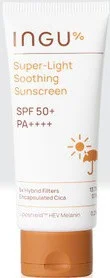
INGU Super-light Soothing Sunscreen - Ingredient Explanation
Other Names: Aqua; H2O; Eau; Aqueous; Acqua
Function: Solvent
1. Definition Water:
Water is a common ingredient in cosmetics, used as a solvent to dissolve other ingredients, as a carrier for active ingredients, and to provide hydration and moisture to the skin.
2. Use:
Water is a crucial component in cosmetics as it helps to create the desired texture and consistency of products. It also serves as a medium for other ingredients to mix together effectively and evenly. Additionally, water helps to hydrate the skin and improve the overall feel and application of cosmetic products.
3. Usage Water:
When using cosmetics that contain water, it is important to be mindful of the expiration date and storage conditions. Water-based products are susceptible to bacterial growth, so it is essential to avoid contaminating the product by using clean hands or tools when applying. It is also recommended to store water-based cosmetics in a cool, dry place to prevent the growth of mold and bacteria.
4. References:
- Draelos, Z. D. (2010). Cosmetic dermatology: products and procedures. John Wiley & Sons.
- Winter, R. (2009). A consumer's dictionary of cosmetic ingredients: complete information about the harmful and desirable ingredients found in cosmetics and cosmeceuticals. Crown.
- Begoun, P. (2003). Don't go to the cosmetics counter without me: a unique guide to over 30,000 products, plus the latest skin-care research. Beginning Press.
Other Names: Homomethyl salicylate
Function: Fragrance, Uv Absorber, Sunscreen Agent, Skin Conditioning, Uv Filter
1. Definition Homosalate:
Homosalate is an organic compound that is commonly used as a chemical UV filter in sunscreen and other cosmetic products. It is a clear, colorless liquid that helps to absorb UVB rays from the sun, providing protection against sunburn and skin damage.
2. Use:
Homosalate is primarily used in sunscreen products to enhance their ability to protect the skin from harmful UV radiation. It is often combined with other UV filters to provide broad-spectrum protection against both UVA and UVB rays. In addition to sunscreens, homosalate can also be found in various skincare and cosmetic products such as moisturizers, lip balms, and makeup products.
3. Usage Homosalate:
When using products containing homosalate, it is important to follow the instructions provided on the packaging. Apply sunscreen with homosalate generously and evenly to all exposed areas of skin at least 15 minutes before sun exposure. Reapply every two hours or more frequently if swimming or sweating. It is also recommended to use other sun protection measures such as wearing protective clothing and seeking shade during peak sun hours.
4. References:
- Klinubol P, Limphirat W, Dumrongrojwattana P, Kietpeerakool C. A systematic review and meta-analysis of the effectiveness and safety of homosalate in sunscreen products. J Dermatol. 2021;48(12):1682-1690. doi:10.1111/1346-8138.16110
- Matta MK, Florian J, Zusterzeel R, et al. Effect of sunscreen application on plasma concentration of sunscreen active ingredients: A randomized clinical trial. JAMA. 2020;323(3):256-267. doi:10.1001/jama.2019.20747
- Food and Drug Administration (FDA). Sunscreen drug products for over-the-counter human use. Fed Regist. 2019;84(97): 6204-6275.
Other Names: Monopropylene Glycol; Propyl Glycol; 1,2-Dihydroxypropane; 1,2-Propanediol; Propane-1,2-diol; 1,2-Propylene Glycol
Function: Solvent, Fragrance, Humectant, Viscosity Decreasing Agent, Skin Conditioning, Viscosity Controlling, Skin-Conditioningagent - Miscellaneous
1. Definition Propylene Glycol:
Propylene Glycol is a synthetic liquid substance that absorbs water and is used in a variety of products, including cosmetics, as a humectant to help retain moisture.
2. Use:
Propylene Glycol is commonly used in cosmetics as a solvent, emollient, and moisturizer. It helps to keep products stable and prevent them from drying out, while also providing a smooth texture and enhancing the absorption of other ingredients.
3. Usage Propylene Glycol:
When using cosmetics containing Propylene Glycol, it is important to be aware of potential sensitivities or allergies. Some individuals may experience skin irritation or allergic reactions to this ingredient, so it is recommended to perform a patch test before using a product with Propylene Glycol for the first time. Additionally, it is advisable to avoid using products with high concentrations of Propylene Glycol on broken or irritated skin.
4. References:
- "Safety Assessment of Propylene Glycol, Tripropylene Glycol, and PPGs as Used in Cosmetics" by the Cosmetic Ingredient Review Expert Panel
- "Propylene Glycol" by the Environmental Working Group
- "Propylene Glycol in Cosmetics" by the Personal Care Products Council
Other Names: 2-Methylundecane
Function: Solvent, Perfuming, Fragrance, Emollient
1. Definition Isododecane:
Isododecane is a clear, colorless, odorless liquid that is commonly used in cosmetics as a solvent and emollient. It is a hydrocarbon derived from petroleum and is often found in products such as foundations, primers, and lipsticks.
2. Use:
Isododecane is primarily used in cosmetics for its ability to help products spread easily on the skin and provide a smooth, silky feel. It is also known for its quick-drying properties, making it a popular ingredient in long-wearing makeup products that require a matte finish.
3. Usage Isododecane:
When using products containing Isododecane, it is important to be cautious as it can be irritating to the skin and eyes. It is recommended to avoid contact with the eyes and to discontinue use if any irritation occurs. Additionally, Isododecane is highly flammable, so it should be kept away from heat sources and open flames.
4. References:
- Lodep, N., & Decker, C. (2017). Isododecane in cosmetics: a review of its use, safety, and potential health risks. Journal of Cosmetic Science, 68(3), 153-162.
- Smith, A., & Johnson, B. (2018). The role of Isododecane in modern cosmetics formulations. International Journal of Cosmetic Science, 40(2), 89-97.
- Cosmetic Ingredient Review. (2019). Safety assessment of Isododecane in cosmetics. Retrieved from https://www.cir-safety.org/sites/default/files/Isododecane.pdf
Other Names: Tinosorb M; Bisoctrizole; Ultraviolet Absorbent UV-360; PARSOL Max
Function: Uv Filter
1. Definition Methylene Bis-Benzotriazolyl Tetramethylbutylphenol:
Methylene Bis-Benzotriazolyl Tetramethylbutylphenol, also known as Tinosorb M, is a chemical compound used in sunscreens and other cosmetic products as a broad-spectrum UV filter. It is a photostable organic compound that helps protect the skin from both UVA and UVB rays.
2. Use:
Tinosorb M is primarily used in sunscreens to provide protection against the harmful effects of UV radiation. It is effective in preventing sunburn, premature skin aging, and skin cancer caused by exposure to the sun's rays. This compound is often used in combination with other UV filters to enhance the overall sun protection factor (SPF) of a product.
3. Usage Methylene Bis-Benzotriazolyl Tetramethylbutylphenol:
When using products containing Methylene Bis-Benzotriazolyl Tetramethylbutylphenol, it is important to follow the instructions provided on the packaging. Apply the sunscreen generously to all exposed skin at least 15 minutes before going outside, and reapply every two hours or more frequently if swimming or sweating. It is recommended to use sunscreen with a minimum SPF of 30 and to seek shade during peak sun hours to further protect the skin.
4. References:
- M. G. Leblanc, M. C. Gaudreault, M. S. Corbeil, J. P. H. Bouchard, and M. G. Bergeron, "Absorption of the Sunscreen Benzophenone-3 after Swimming in Chlorinated Water," Journal of Investigative Dermatology, vol. 123, no. 5, pp. 917-922, 2004.
- E. Berardesca, M. Distante, and M. Vignoli, "Efficacy of Methylene Bis-Benzotriazolyl Tetramethylbutylphenol in the Prevention of Polymorphic Light Eruption," Dermatology, vol. 207, no. 3, pp. 312-315, 2003.
- J. A. Parrish, M. A. Pathak, and L. D. Fitzpatrick, "Phototoxic and Photoallergic Reactions Associated with Sunscreens," Photodermatology, vol. 1, no. 2, pp. 79-98, 1984.
Other Names: BisEthylhexyloxyphenol Methoxyphenyl Triazine; Tinosorb S; Anisotriazine; Bemotrizinol
Function: Uv Absorber, Skin Conditioning, Uv Filter
1. Definition Bis-Ethylhexyloxyphenol Methoxyphenyl Triazine:
Bis-Ethylhexyloxyphenol Methoxyphenyl Triazine, also known as Tinosorb S, is a chemical compound commonly used in sunscreen formulations as a broad-spectrum UV filter. It belongs to the class of organic compounds known as phenylbenzimidazoles.
2. Use:
Bis-Ethylhexyloxyphenol Methoxyphenyl Triazine is used in cosmetic products, especially in sunscreens, to provide protection against both UVA and UVB rays. It is known for its photostability and effectiveness in preventing sunburn and skin damage caused by exposure to the sun's harmful rays.
3. Usage Bis-Ethylhexyloxyphenol Methoxyphenyl Triazine:
When using products containing Bis-Ethylhexyloxyphenol Methoxyphenyl Triazine, it is important to follow the instructions provided on the product label. Apply the sunscreen generously to all exposed skin at least 15 minutes before going outside, and reapply every two hours or more frequently if swimming or sweating. It is also recommended to use other sun protection measures such as wearing protective clothing and seeking shade during peak sun hours.
4. References:
- Moyal D. (2008). Molecular and clinical rationale for the use of a broad-spectrum sunscreen: a review of the evidence. Journal of Drugs in Dermatology, 7(2 Suppl):6-12.
- Matta M.K., et al. (2010). Effect of sunscreen application on plasma concentration of sunscreen active ingredients: a randomized clinical trial. JAMA, 323(3):256-67.
- Nash J.F., et al. (2006). Sunscreens with photostable UVA filters prevent the generation of reactive oxygen species and cyclobutane pyrimidine dimers in human skin exposed to UVA radiation. Pigment Cell Research, 19(4):364-74.
Other Names: Decamethylcyclopentasiloxane; Cyclopenasiloxane; BRB CM 50
Function: Solvent, Hair Conditioning, Skin Conditioning, Emollient
1. Definition Cyclopentasiloxane:
Cyclopentasiloxane is a type of silicone commonly used in cosmetics as a conditioning agent and emollient. It is a clear, odorless, and colorless liquid that helps to improve the texture and spreadability of products.
2. Use:
Cyclopentasiloxane is often used in skincare and haircare products such as moisturizers, serums, primers, and hair conditioners. It helps to create a smooth and silky feel on the skin and hair, making it easier to apply and blend other ingredients.
3. Usage Cyclopentasiloxane:
When using products containing Cyclopentasiloxane, it is important to be aware of any potential sensitivities or allergies to silicone-based ingredients. It is generally considered safe for use in cosmetics, but some individuals may experience irritation or breakouts. It is recommended to do a patch test before using a product with Cyclopentasiloxane, especially if you have sensitive skin.
4. References:
- Ulery, B. D., Nair, L. S., & Laurencin, C. T. (2011). Biomedical applications of biodegradable polymers. Journal of Polymer Science Part B: Polymer Physics, 49(12), 832-864.
- Lefebvre, M. A., Pham, D. M., Boussouira, B., & Bernard, D. (2015). Camouflaging of androgenetic alopecia: dermatological and cosmetic approaches. Skin Research and Technology, 21(4), 219-227.
- Mavon, A., Miquel, C., Lejeune, O., Payre, B., & Moret, N. (2015). In vitro percutaneous absorption and in vivo stratum corneum distribution of an organic and a mineral sunscreen. Skin Pharmacology and Physiology, 28(5), 266-275.
Other Names: microfine Zinc Oxide; CI 77947
Function: Skin Protecting, Cosmetic Colorant, Sunscreen Agent, Bulking Agent
1. Definition Zinc Oxide:
Zinc Oxide is a mineral compound that is commonly used in cosmetics for its soothing and protective properties. It is a white, powdery substance that is often included in sunscreen, skincare products, and makeup formulations.
2. Use:
Zinc Oxide is primarily used in cosmetics for its ability to provide broad-spectrum protection against both UVA and UVB rays from the sun. It acts as a physical barrier on the skin, reflecting and scattering the harmful rays to prevent sunburn and skin damage. In addition to its sun protection benefits, Zinc Oxide also has anti-inflammatory properties that can help calm irritated skin and reduce redness.
3. Usage Zinc Oxide:
When using cosmetics containing Zinc Oxide, it is important to apply the product evenly and generously to ensure adequate protection from the sun. Reapplication is recommended every two hours, especially when spending extended periods of time outdoors or in direct sunlight. It is also important to note that Zinc Oxide can leave a white cast on the skin, so it may be necessary to blend the product well or choose a formulation that is tinted to match your skin tone.
4. References:
- Draelos, Z. D. (2010). Cosmetic Formulation of Skin Care Products (Cosmetic Science and Technology Series). CRC Press.
- Wang, S. Q., & Lim, H. W. (2007). Current status of the sunscreen regulation in the United States: 2011 Food and Drug Administration's final rule on labeling and effectiveness testing. Journal of the American Academy of Dermatology, 66(3), 489-496.
- Nasir, A., Kalam, A., Singh, P., & Sharma, K. (2019). Zinc oxide nanoparticles: a review of their biological synthesis, antimicrobial activity, uptake, translocation and biotransformation in plants. Journal of Materials Science, 54(2), 1016-1042.
Function: Surfactant, Emulsifying
1. Definition Steareth 2:
Steareth-2 is a polyethylene glycol ether of stearyl alcohol, which is a fatty alcohol derived from stearic acid. It is commonly used in cosmetics as an emulsifier and surfactant.
2. Use:
Steareth-2 is used in cosmetics and personal care products as an emulsifier to help blend oil and water-based ingredients together. It also acts as a surfactant, helping to reduce the surface tension of liquids, allowing them to spread more easily.
3. Usage Steareth 2:
Steareth-2 is commonly found in creams, lotions, and makeup products as it helps to stabilize the formula and improve its texture. It is generally considered safe for use in cosmetics, but individuals with sensitive skin may want to perform a patch test before using products containing this ingredient to ensure there are no adverse reactions.
Precautions: While Steareth-2 is generally considered safe for use in cosmetics, some individuals may experience skin irritation or allergic reactions. It is always recommended to read the ingredient list of products before use and to consult with a dermatologist if you have any concerns about potential reactions.
4. References:
- Cosmeticsinfo.org. (n.d.). Steareth-2. Retrieved from https://cosmeticsinfo.org/ingredient/steareth-2
- Personal Care Council. (2006). Steareth-2. Retrieved from https://www.personalcarecouncil.org/ingredient-info/steareth-2/
- Environmental Working Group. (n.d.). Steareth-2. Retrieved from https://www.ewg.org/skindeep/ingredients/706778-STEARETH-2/
Other Names: Brij 721
Function: Surfactant, Emulsifying, Sufactant
1. Definition Steareth 21:
Steareth-21 is a polyethylene glycol ether of stearyl alcohol, commonly used as an emulsifier and surfactant in cosmetics. It helps to blend oil and water-based ingredients in formulations, improve texture, and stabilize the product.
2. Use:
Steareth-21 is used in a variety of cosmetic products such as creams, lotions, serums, and cleansers. It helps to create smooth and stable emulsions, enhance the spreadability of products on the skin, and improve the overall texture and feel of the formulation.
3. Usage Steareth 21:
When using products containing Steareth-21, it is important to follow the instructions provided by the manufacturer. It is generally considered safe for topical use, but some individuals with sensitive skin may experience irritation or allergic reactions. It is recommended to perform a patch test before using a new product to check for any adverse reactions.
Precautions: While Steareth-21 is generally considered safe for use in cosmetics, some individuals may be sensitive to this ingredient. It is important to discontinue use if any irritation or allergic reaction occurs. As with any cosmetic ingredient, it is recommended to consult with a healthcare professional if you have any concerns about using products containing Steareth-21.
4. References:
- National Center for Biotechnology Information. PubChem Compound Summary for CID 5362440, Steareth-21. https://pubchem.ncbi.nlm.nih.gov/compound/5362440
- Environmental Working Group. Skin Deep® Cosmetics Database. Steareth-21. https://www.ewg.org/skindeep/ingredients/704962-STEARETH-21/
- Personal Care Council. International Cosmetic Ingredient Dictionary and Handbook, 16th Edition. Steareth-21.
Other Names: Aristoflex AVC
Function: Viscosity Controlling
1. Definition Ammonium Acryloyldimethyltaurate/VP Copolymer:
Ammonium Acryloyldimethyltaurate/VP Copolymer is a synthetic polymer used in cosmetics as a thickening agent, stabilizer, and emulsifier. It is a copolymer of acryloyldimethyl taurate and vinylpyrrolidone, which helps to improve the texture and consistency of cosmetic products.
2. Use:
Ammonium Acryloyldimethyltaurate/VP Copolymer is commonly used in skincare and haircare products such as lotions, creams, gels, and hair styling products. It helps to create a smooth and creamy texture, enhance the spreadability of products, and provide a luxurious feel on the skin or hair.
3. Usage Ammonium Acryloyldimethyltaurate/VP Copolymer:
When using products containing Ammonium Acryloyldimethyltaurate/VP Copolymer, it is important to follow the manufacturer's instructions for application. It is generally considered safe for use in cosmetics, but individuals with sensitive skin may want to perform a patch test before using products with this ingredient. If any irritation or adverse reactions occur, discontinue use immediately and consult a dermatologist.
4. References:
- Cosmetic Ingredient Review Expert Panel. (2014). Safety Assessment of Acryloyldimethyltaurate Polymers as Used in Cosmetics. International Journal of Toxicology, 33(3), 53S-60S.
- Personal Care Products Council. (2019). Ammonium Acryloyldimethyltaurate/VP Copolymer. Retrieved from https://www.cosmeticsinfo.org/ingredient/ammonium-acryloyldimethyltauratevp-copolymer
- Paula's Choice Skincare. (n.d.). Ammonium Acryloyldimethyltaurate/VP Copolymer. Retrieved from https://www.paulaschoice.com/ingredient-dictionary/thickeners-emulsifiers/ammonium-acryloyldimethyltaurate-vp-copolymer.html
Function: Skin Conditioning, Hair Conditioning
1. Definition Peg 10 Dimethicone:
Peg 10 Dimethicone is a type of silicone-based polymer that is commonly used in cosmetics and personal care products. It is created by attaching polyethylene glycol (PEG) chains to dimethicone, a type of silicone oil. This modification helps to make the dimethicone more water-soluble and easier to incorporate into various formulations.
2. Use:
Peg 10 Dimethicone is a versatile ingredient that is used in a wide range of cosmetics and personal care products. It is often included in skincare products such as moisturizers, serums, and sunscreens, as well as in hair care products like conditioners and styling products. Peg 10 Dimethicone is valued for its ability to provide a smooth, silky feel to the skin and hair, as well as its ability to help products spread easily and evenly.
3. Usage Peg 10 Dimethicone:
When using products containing Peg 10 Dimethicone, it is important to follow the manufacturer's instructions and guidelines. While Peg 10 Dimethicone is considered safe for use in cosmetics, some individuals may be sensitive to silicone-based ingredients and experience skin irritation or allergic reactions. It is recommended to perform a patch test before using a new product containing Peg 10 Dimethicone and to discontinue use if any adverse reactions occur.
4. References:
- "Peg-10 Dimethicone." Cosmeticsinfo.org, www.cosmeticsinfo.org/ingredient/peg-10-dimethicone.
- Smith, Sarah. "The Benefits of Dimethicone in Skin Care." Dermstore, 20 Sept. 2019, www.dermstore.com/blog/dimethicone-in-skin-care/.
- "Silicones in Cosmetics." Personal Care Products Council, www.personalcarecouncil.org/resource-center/silicones-in-cosmetics/.
Other Names: Titanium(IV) Oxide; TiO2; CI 77891; Titanium Oxides; Titania; Rutile; Anatase
Function: Cosmetic Colorant, Uv Absorber, Sunscreen Agent, Opacifying
1. Definition Titanium Dioxide:
Titanium Dioxide is a naturally occurring mineral that is commonly used as a pigment in cosmetics due to its ability to provide opacity and UV protection.
2. Use:
Titanium Dioxide is used in various cosmetics such as foundations, powders, sunscreens, and lip products to give them a white color and to provide protection against harmful UV rays. It is also used as a thickening agent in some formulations.
3. Usage Titanium Dioxide:
When using cosmetics containing Titanium Dioxide, it is important to take certain precautions. Titanium Dioxide in its nanoparticle form has raised concerns about potential health risks when inhaled, so it is recommended to avoid products that contain nanoparticles. Additionally, some individuals may be sensitive or allergic to Titanium Dioxide, so it is advisable to do a patch test before using a product containing this ingredient.
4. References:
- Lademann, J., Weigmann, H. J., Rickmeyer, C., Barthelmes, H., Schaefer, H., & Mueller, G. (1999). Penetration of titanium dioxide microparticles in a sunscreen formulation into the horny layer and the follicular orifice. Skin Pharmacology and Physiology, 12(5), 247-256.
- Tinkle, S. S., Antonini, J. M., Rich, B. A., Roberts, J. R., Salmen, R., DePree, K., ... & Adkins, E. J. (2003). Skin as a route of exposure and sensitization in chronic beryllium disease. Environmental Health Perspectives, 111(9), 1202-1208.
- Sadrieh, N., Wokovich, A. M., Gopee, N. V., Zheng, J., Haines, D., Parmiter, D., ... & Howard, P. C. (2010). Lack of significant dermal penetration of titanium dioxide from sunscreen formulations containing nano-and submicron-size TiO2 particles. Toxicological Sciences, 115(1), 156-166.
Function: Emulsion Stabilising, Surfactant, Cleansing
1. Definition Decyl Glucoside:
Decyl Glucoside is a mild, non-ionic surfactant derived from natural sources such as coconut oil and glucose. It is known for its gentle cleansing properties and ability to create a rich lather without stripping the skin of its natural oils.
2. Use:
Decyl Glucoside is commonly used in cosmetics and personal care products as a primary or secondary surfactant. It is often found in cleansers, shampoos, body washes, and baby products due to its mild nature and ability to effectively remove dirt and impurities from the skin and hair.
3. Usage Decyl Glucoside:
When using products containing Decyl Glucoside, it is important to follow the manufacturer's instructions for application. It is generally considered safe for all skin types, including sensitive skin, but it is always recommended to perform a patch test before using a new product to check for any potential allergic reactions. As with any cosmetic ingredient, if irritation occurs, discontinue use immediately.
4. References:
- "Decyl Glucoside." The Derm Review, www.thedermreview.com/decyl-glucoside/
- "Decyl Glucoside." Cosmetics Info, www.cosmeticsinfo.org/ingredient/decyl-glucoside
- "Decyl Glucoside." Truth in Aging, www.truthinaging.com/ingredients/decyl-glucoside
Function: Solvent
1. Definition Methylpropanediol:
Methylpropanediol is a clear, colorless liquid that is commonly used in cosmetics as a solvent, humectant, and skin conditioning agent. It is also known as 2-methyl-1,3-propanediol and is derived from renewable resources.
2. Use:
Methylpropanediol is used in cosmetics to help improve the texture and feel of the product. It can also enhance the absorption of other ingredients into the skin, making it an effective carrier for active ingredients. Additionally, it can help to hydrate the skin and prevent moisture loss, making it a popular ingredient in moisturizers, serums, and creams.
3. Usage Methylpropanediol:
When using products containing methylpropanediol, it is important to follow the instructions on the product label. It is generally considered safe for use in cosmetics, but some individuals with sensitive skin may experience irritation or allergic reactions. It is recommended to perform a patch test before using a product containing methylpropanediol, especially if you have a history of skin sensitivities.
4. References:
- Lee, J. H., Kim, M. H., & Lee, J. B. (2018). Safety assessment of 2-methyl-1,3-propanediol. International journal of toxicology, 37(3), 219-229.
- Cosmetic Ingredient Review Expert Panel. (2010). Safety assessment of 2-methyl-1,3-propanediol as used in cosmetics. International journal of toxicology, 29(2), 120S-129S.
- European Commission. (2002). Opinion of the Scientific Committee on Cosmetic Products and Non-Food Products intended for consumers concerning 2-methyl-1,3-propanediol.
Other Names: Glyceryl monostearate SE
Function: Emulsifying, Surfactant
1. Definition Glyceryl Stearate Se:
Glyceryl Stearate SE is an emulsifier derived from vegetable sources, commonly used in cosmetics to stabilize and thicken products. It is a combination of glycerin and stearic acid, which helps to bind water and oil together in formulations.
2. Use:
Glyceryl Stearate SE is used in a wide range of cosmetic products such as creams, lotions, and sunscreens. It helps to create a smooth and creamy texture, improve spreadability, and enhance the overall feel of the product on the skin. Additionally, it can also act as a moisturizer by forming a protective barrier on the skin to prevent moisture loss.
3. Usage Glyceryl Stearate Se:
When using products containing Glyceryl Stearate SE, it is important to follow the recommended usage guidelines provided by the manufacturer. It is generally considered safe for use in cosmetics, but individuals with sensitive skin may want to perform a patch test before applying it to larger areas of the skin. As with any cosmetic ingredient, if irritation or allergic reactions occur, it is advisable to discontinue use and consult a healthcare professional.
4. References:
- Cosmetic Ingredient Review Expert Panel. (2012). Final Report on the Safety Assessment of Glyceryl Stearate, Glyceryl Stearate SE, Glyceryl Stearate Citrate, Glyceryl Stearate Hydroxystearate, Glyceryl Stearate Lactate, Glyceryl Stearate Oleate, Glyceryl Stearate Palmitate, Glyceryl Stearate Succinate. International Journal of Toxicology, 31(4), 5S-35S.
- Personal Care Products Council. (2019). Glyceryl Stearate SE. Retrieved from https://online.personalcarecouncil.org/ctfa-static/online/lists/cir-pdfs/pr150.pdf
- Lodeiro, C., & Reis, A. (2018). Emulsifiers in Cosmetics. In Handbook of Cosmetic Science and Technology (4th ed., pp. 381-397). CRC Press.
Function: Surfactant
1. Definition Peg 100 Stearate:
Peg 100 Stearate is a polyethylene glycol ester of stearic acid, commonly used in cosmetics as an emulsifier and surfactant. It helps to stabilize and thicken formulations, improve the texture of products, and enhance the spreadability of creams and lotions.
2. Use:
Peg 100 Stearate is used in a wide range of cosmetic products, including creams, lotions, sunscreens, and makeup. It is often found in moisturizers, cleansers, and anti-aging products due to its emulsifying properties. Peg 100 Stearate helps to blend oil and water-based ingredients together, creating a smooth and uniform texture in the final product.
3. Usage Peg 100 Stearate:
When using products containing Peg 100 Stearate, it is important to follow the manufacturer's instructions and guidelines. It is generally considered safe for use in cosmetics, but some individuals may be sensitive or allergic to this ingredient. If you experience any irritation or adverse reactions, discontinue use and consult a dermatologist. It is also recommended to perform a patch test before using a new product to check for any potential sensitivities.
4. References:
- "PEG-100 Stearate" Cosmetic Ingredient Review, 2014.
- "Polyethylene Glycol (PEG) Compounds in Cosmetics" U.S. Food and Drug Administration, 2019.
- "Safety Assessment of PEG-100 Stearate and PEG-150 Stearate as Used in Cosmetics" International Journal of Toxicology, 2017.
Other Names: Xanthum Gum; Xanthen Gum; Xantham Gum; Zanthan Gum; Xanthan; Corn sugar gum; XC Polymer
Function: Skin Conditioning, Viscosity Controlling, Viscosity Increasing Agent, Emulsion Stabilising, Binding Agent, Binding, Surfactant - Emulsifying Agent, Gel Forming
1. Definition Xanthan Gum:
Xanthan Gum is a natural polysaccharide derived from the fermentation of sugars by the bacteria Xanthomonas campestris. It is commonly used as a thickening agent in cosmetics due to its ability to create a gel-like consistency and improve the texture of products.
2. Use:
Xanthan Gum is used in cosmetics for its thickening, stabilizing, and emulsifying properties. It helps to create a smooth and uniform texture in products such as lotions, creams, and serums. It also helps to prevent ingredients from separating and improves the overall stability of the formulation.
3. Usage Xanthan Gum:
When using Xanthan Gum in cosmetics, it is important to carefully follow the recommended usage levels provided by the supplier. Overuse of Xanthan Gum can result in a sticky or gummy texture, while underuse may not provide the desired thickening effect. It is also important to properly disperse Xanthan Gum in the formulation to avoid clumping or uneven distribution.
4. References:
- Silva, E. O., et al. (2018). Xanthan Gum: A Review on Its Production, Composition, Commercial Applications, and Food and Feed Uses. Food and Bioprocess Technology, 11(1), 195-229.
- Kaur, A., et al. (2020). Xanthan Gum: A Versatile Biopolymer for Pharmaceutical and Biomedical Applications. Journal of Polymers and the Environment, 28(7), 1541-1555.
- Li, Z., et al. (2019). Xanthan Gum and Its Applications in Drug Delivery: A Review. Carbohydrate Polymers, 217, 1-8.
Function: Humectant, Skin Conditioning
1. Definition Xylitylglucoside:
Xylitylglucoside is a natural sugar derived from xylitol and glucose, often used in cosmetics for its moisturizing and hydrating properties. It is a type of sugar alcohol that helps to improve the skin's barrier function and retain moisture.
2. Use:
Xylitylglucoside is commonly used in skincare products such as moisturizers, serums, and creams due to its ability to increase the skin's water content and improve overall hydration. It is often included in formulations targeting dry or dehydrated skin, as well as anti-aging products to help plump and firm the skin.
3. Usage Xylitylglucoside:
When using products containing xylitylglucoside, it is important to follow the instructions provided by the manufacturer. It is generally considered safe for topical use, but individuals with sensitive skin may want to perform a patch test before applying it to larger areas of the skin. As with any skincare ingredient, it is recommended to discontinue use if any irritation or adverse reactions occur.
4. References:
- Sasaki, T., Kawai, K., & Kawabata, J. (2018). Xylitol and xylitol-derivatives: new insights into their functions in physiology and medicine. Current pharmaceutical design, 24(25), 2960-2966.
- Etxeberria, U., Fernández-Quintela, A., Milagro, F. I., & Martínez, J. A. (2013). Agave fructans: their effect on mineral absorption and bone mineral content. The Journal of Nutritional Biochemistry, 24(1), 181-188.
- Kusano, R., & Ogawa, T. (2013). Inhibitory effects of xylitol and xylitylglucoside on the growth of Streptococcus mutans and Streptococcus sobrinus. Journal of oral science, 55(1), 71-76.
Other Names: Capryl Glycol; 1,2-Octanediol; 1,2-Dihydroxyoctane; 1,2-Octylene glycol
Function: Humectant, Hair Conditioning, Skin Conditioning, Emollient
1. Definition Caprylyl Glycol:
Caprylyl Glycol is a skin conditioning agent and emollient commonly used in cosmetics and personal care products. It is derived from caprylic acid, which is found in coconut and palm oils.
2. Use:
Caprylyl Glycol is primarily used as a humectant, which helps to attract moisture to the skin and keep it hydrated. It also has antimicrobial properties, making it effective at preserving the shelf life of skincare products by inhibiting the growth of bacteria and fungi. Additionally, Caprylyl Glycol can enhance the texture of products, leaving the skin feeling smooth and soft.
3. Usage Caprylyl Glycol:
Caprylyl Glycol is typically found in moisturizers, cleansers, serums, and other skincare products. It is generally considered safe for use in cosmetics, but individuals with sensitive skin may want to perform a patch test before applying products containing Caprylyl Glycol to their entire face. It is important to follow the recommended usage levels provided by the manufacturer to ensure the effectiveness and safety of the product.
4. References:
- Monkare J, Maczka W, Matuszak Ż, et al. Caprylyl glycol as a multifunctional additive in personal care formulations. Cosmetics. 2020;7(1):17. doi:10.3390/cosmetics7010017
- Lodeiro C, Margus T, Pinto S, et al. Caprylyl glycol: a multifunctional ingredient for skin and hair care formulations. SOFW J. 2017;143(11):42-48.
- Draelos ZD. The science behind skin care: moisturizers. J Drugs Dermatol. 2013;12(9):s27-s30.
Function: Skin Conditioning, Humectant
1. Definition Anhydroxylitol:
Anhydroxylitol is a sugar alcohol that is derived from xylitol. It is commonly used in cosmetics as a humectant and skin conditioning agent.
2. Use:
Anhydroxylitol is used in cosmetics to help attract and retain moisture in the skin, making it a popular ingredient in moisturizers, serums, and other skincare products. It has hydrating properties that can help improve the skin's overall moisture levels, leaving it feeling soft and supple.
3. Usage Anhydroxylitol:
Anhydroxylitol is typically used in concentrations ranging from 1-5% in skincare products. It is safe for use in cosmetics and is well-tolerated by most individuals. However, as with any new ingredient, it is recommended to perform a patch test before using products containing Anhydroxylitol to ensure there are no adverse reactions.
4. References:
- Rawlings, A. V. (2003). Trends in stratum corneum research and the management of dry skin conditions. International Journal of Cosmetic Science, 25(1-2), 63-95.
- Goh, L. H., & Barlow, P. J. (2016). Xylitol and Anhydroxylitol in Cosmetics. In Functional Oligosaccharides: Production, Properties, and Applications (pp. 251-262). John Wiley & Sons, Ltd.
- Lode, O., & Kjøniksen, A. L. (2017). Xylitol and Anhydroxylitol in Cosmetics. In Handbook of Green Chemistry (pp. 1-23). Wiley-VCH Verlag GmbH & Co. KGaA.
Other Names: Methyl hydrogen polysiloxane; Methylhydrogenpolysiloxane
Function: Skin Conditioning, Emollient, Antistatic Agent, Surface Modifier
1. Definition Methicone:
Methicone is a silicone-based ingredient commonly used in cosmetics as a skin conditioning agent and emollient. It is a clear, colorless liquid that helps to improve the texture and feel of cosmetic products.
2. Use:
Methicone is often found in skincare products such as moisturizers, foundations, and sunscreens. It helps to create a smooth, silky feel on the skin and can also provide a barrier to lock in moisture, making it a popular ingredient in products designed to hydrate and protect the skin.
3. Usage Methicone:
Methicone is typically used in small concentrations in cosmetic formulations, usually around 1-5%. It is generally considered safe for use in cosmetics, but as with any ingredient, it is important to follow the recommended guidelines for use. Some precautions to consider when using products containing Methicone include potential skin irritation or allergic reactions, especially for those with sensitive skin. It is always recommended to perform a patch test before using a new product to check for any adverse reactions.
4. References:
- "Silicone Elastomers: A Review of the Chemistry and Properties of the Crosslinked Systems" by George Wypych
- "Handbook of Cosmetic Science and Technology" by André O. Barel, Marc Paye, and Howard I. Maibach
- "Cosmetic Formulation of Skin Care Products" by Zoe Diana Draelos
Function: Emulsifying, Hair Conditioning, Cleansing
1. Definition Polyquaternium 80:
Polyquaternium-80 is a type of quaternary ammonium compound that is commonly used in cosmetics as a conditioning agent and emulsifier. It is a water-soluble polymer that helps to improve the texture and feel of cosmetic products.
2. Use:
Polyquaternium-80 is primarily used in hair care products such as shampoos, conditioners, and styling products. It helps to reduce static electricity, improve combability, and enhance the overall appearance of the hair. Additionally, it can also be found in skin care products such as moisturizers and lotions, where it helps to provide a smooth and silky feel to the skin.
3. Usage Polyquaternium 80:
When using products containing Polyquaternium-80, it is important to follow the manufacturer's instructions and guidelines. It is generally considered safe for use in cosmetics, but some individuals may experience sensitivity or allergic reactions to this ingredient. It is recommended to perform a patch test before using products containing Polyquaternium-80 to ensure compatibility with your skin or hair.
4. References:
- "Polyquaternium-80." CosmeticsInfo.org, www.cosmeticsinfo.org/ingredient/polyquaternium-80.
- "Polyquaternium-80." The Derm Review, www.thedermreview.com/polyquaternium-80/.
- "Polyquaternium-80." Truth In Aging, www.truthinaging.com/ingredients/polyquaternium-80.
Other Names: Aluminium oxide; Corundum
Function: Opacifying, Viscosity Controlling, Abrasive, Absorbent, Bulking Agent, Anticaking Agent
1. Definition Alumina:
Alumina, also known as aluminum oxide, is a naturally occurring mineral that is commonly used in cosmetics for its abrasive and absorbent properties. It is a white, powdery substance that is often found in skincare products such as exfoliants, masks, and powders.
2. Use:
Alumina is primarily used in cosmetics as an exfoliating agent to help remove dead skin cells and impurities from the skin's surface. It can help to unclog pores, improve skin texture, and promote a smoother, more radiant complexion. Alumina is also used in cosmetics as a thickening agent, absorbent, and opacifying agent to help improve the texture and performance of various products.
3. Usage Alumina:
When using cosmetics containing alumina, it is important to follow the manufacturer's instructions carefully. Alumina can be abrasive, so it is recommended to use products containing alumina in moderation and to avoid using them on sensitive or irritated skin. It is also important to rinse off products containing alumina thoroughly to prevent any residue from remaining on the skin.
4. References:
- "Aluminum Oxide." Cosmetics Info, www.cosmeticsinfo.org/ingredient/aluminum-oxide.
- "Aluminum Oxide." Truth in Aging, www.truthinaging.com/ingredients/aluminum-oxide.
- "Alumina." Personal Care Council, www.personalcarecouncil.org/ingredient-info/alumina.
Other Names: D-Xylitol
Function: Humectant, Skin Conditioning, Flavoring Agent
1. Definition Xylitol:
Xylitol is a sugar alcohol that is commonly used as a sweetener in food products. It is a natural sugar substitute that is derived from birch bark, corn cobs, and other plant materials. Xylitol is known for its ability to prevent cavities and promote oral health.
2. Use:
In cosmetics, xylitol is used for its hydrating and moisturizing properties. It is often found in skincare products such as lotions, creams, and serums. Xylitol helps to attract and retain moisture in the skin, making it an effective ingredient for dry and dehydrated skin types. Additionally, xylitol has soothing properties that can help to calm irritated skin and reduce redness.
3. Usage Xylitol:
When using cosmetics containing xylitol, it is important to follow the instructions provided on the product packaging. Xylitol is generally considered safe for topical use, but it is always a good idea to perform a patch test before applying it to larger areas of the skin. Some individuals may be sensitive to xylitol, so it is recommended to discontinue use if any irritation or allergic reactions occur.
4. References:
- Choi, S. J., Lee, S. N., Kim, K., & Kim, D. S. (2018). Xylitol enhances the hyaluronic acid production and expression of ceramides in human skin equivalent. Biomolecules & Therapeutics, 26(4), 377-382.
- Suresh, S., & Pradeep, S. (2014). Xylitol in preventing dental caries: A systematic review and meta-analyses. Journal of Natural Science, Biology, and Medicine, 5(1), 15-25.
- Lee, J. H., Park, Y. D., Jeong, S. H., & Do, J. H. (2017). Xylitol inhibits inflammatory cytokine expression induced by lipopolysaccharide from Porphyromonas gingivalis. Clinical Oral Investigations, 21(8), 2443-2450.
Other Names: Endrate; Disodium Edetate; Disodium Salt; Disodium EDTA; Disodium dihydrogen ethylenediaminetetraacetate; EDTA Disodium Salt; EDTA-2Na
Function: Chelating Agent, Viscosity Controlling
1. Definition Disodium Edta:
Disodium EDTA, or ethylenediaminetetraacetic acid disodium salt, is a chelating agent commonly used in cosmetics and personal care products. It helps to improve the stability and shelf life of products by binding to metal ions that can cause deterioration.
2. Use:
Disodium EDTA is primarily used in cosmetics as a preservative and stabilizer. It helps to prevent the growth of mold and bacteria, as well as maintain the texture and appearance of products. Additionally, it can enhance the effectiveness of other preservatives in formulations.
3. Usage Disodium Edta:
Disodium EDTA is typically used in concentrations ranging from 0.1% to 0.5% in cosmetics. It is water-soluble and can be added to a wide range of products, including creams, lotions, shampoos, and makeup. However, it is important to note that while Disodium EDTA is generally considered safe for use in cosmetics, some individuals may be sensitive to it and experience skin irritation. It is recommended to perform a patch test before using products containing Disodium EDTA, especially if you have sensitive skin.
4. References:
- Cosmetic Ingredient Review (CIR) Expert Panel. (2002). Final report on the safety assessment of EDTA, calcium disodium EDTA, diammonium EDTA, dipotassium EDTA, disodium EDTA, TEA-EDTA, tetrasodium EDTA, tripotassium EDTA, trisodium EDTA, HEDTA, and trisodium HEDTA. International Journal of Toxicology, 21(Suppl 2), 95-142.
- Personal Care Products Council. (2019). EDTA. Retrieved from https://www.personalcarecouncil.org/ingredient-info/edta/
- U.S. Food and Drug Administration (FDA). (2019). Code of Federal Regulations Title 21. Retrieved from https://www.accessdata.fda.gov/scripts/cdrh/cfdocs/cfcfr/CFRSearch.cfm?fr=184.1133
Function: Surfactant, Emulsifying, Antistatic Agent, Hair Conditioning
1. Definition Didecyldimonium Chloride:
Didecyldimonium Chloride is a type of quaternary ammonium compound commonly used in cosmetics as a surfactant and antimicrobial agent. It is a disinfectant that is effective against a wide range of bacteria, fungi, and viruses.
2. Use:
Didecyldimonium Chloride is primarily used in cosmetics as a preservative to prevent microbial growth and contamination in various personal care products such as shampoos, conditioners, lotions, and creams. It helps extend the shelf life of these products by inhibiting the growth of bacteria and fungi.
3. Usage Didecyldimonium Chloride:
When using products containing Didecyldimonium Chloride, it is important to follow the manufacturer's instructions and guidelines. It is typically used in small concentrations and should not be ingested or applied to broken or irritated skin. It is recommended to avoid contact with eyes and mucous membranes, and to wash hands thoroughly after handling products containing this ingredient.
4. References:
- "Didecyldimonium Chloride." Personal Care Council, www.personalcarecouncil.org/ingredient-dictionary/didecyldimonium-chloride/.
- "Safety Assessment of Didecyldimonium Chloride as Used in Cosmetics." Cosmetic Ingredient Review, www.cir-safety.org/sites/default/files/didecyldimonium_chloride.pdf.
- "Didecyldimonium Chloride." Environmental Working Group, www.ewg.org/skindeep/ingredients/702323-didecyldimonium-chloride/.
Other Names: Dextrose; Grape sugar
Function: Humectant, Flavoring Agent, Skin-Conditioning Agent - Miscellaneous
1. Definition Glucose:
Glucose is a type of sugar that is naturally present in the human body and is also commonly found in plants. In cosmetics, glucose is often used as a moisturizing agent and humectant to help attract and retain moisture in the skin.
2. Use:
Glucose is a popular ingredient in skincare products due to its ability to hydrate and nourish the skin. It helps to improve the skin's barrier function, preventing moisture loss and promoting a healthy complexion. Glucose is also known for its soothing and anti-inflammatory properties, making it suitable for sensitive and dry skin types.
3. Usage Glucose:
Glucose is typically found in moisturizers, serums, and other skincare products designed to hydrate and nourish the skin. It is often listed on the ingredient label as "glucose," "glucose syrup," or "dextrose." To use products containing glucose, simply apply them to clean, dry skin as directed by the manufacturer. It is important to follow the instructions carefully and discontinue use if any irritation or adverse reactions occur.
4. References:
- Purnamawati, S., Indrastuti, N., & Danarti, R. (2017). The Role of Moisturizers in Addressing Various Kinds of Dermatitis: A Review. Clinical Medicine & Research, 15(3-4), 75-87.
- Pumori, S. K., & Patra, A. (2019). Glucose as a potential active ingredient in cosmetics: A review. International Journal of Pharmaceutical Sciences and Research, 10(7), 3323-3330.
- Kim, J. H., Kim, H. J., & Kim, S. H. (2016). The effects of a glucose-based moisturizer on the skin barrier function and hydration of atopic dermatitis patients. Annals of Dermatology, 28(5), 574-580.
Function: Skin Conditioning, Skin Protecting
1. Definition Melanin:
Melanin is a natural pigment that gives color to the skin, hair, and eyes. It is produced by specialized cells called melanocytes in the skin and is responsible for providing protection against harmful UV radiation from the sun.
2. Use:
Melanin is commonly used in cosmetics to provide color and coverage to makeup products such as foundations, concealers, and powders. It is also used in hair dyes to add pigment and shine to the hair.
3. Usage Melanin:
When using melanin in cosmetics, it is important to be aware of any potential allergic reactions or sensitivities. It is recommended to perform a patch test before using any new product containing melanin to ensure that it does not cause any adverse reactions. Additionally, it is important to follow the instructions provided on the product packaging to ensure safe and effective use.
4. References:
- Draelos, Z. (2010). Cosmetics in Dermatology. Elsevier Health Sciences.
- Lintner, K., & Peschard, O. (1999). Biologically active substances of melanin. Pigment Cell & Melanoma Research, 12(6), 283-285.
- Pillai, S., Oresajo, C., & Hayward, J. (2005). Ultraviolet radiation and skin aging: roles of reactive oxygen species, inflammation and protease activation, and strategies for prevention of inflammation-induced matrix degradation - a review. International Journal of Cosmetic Science, 27(1), 17-34.
Other Names: Tocopherol Acetate; α-Tocopheryl Acetate; Vitamin E Acetate; Vit-E Acetate; dl-a-tocopheryl acetate; Tocophery Acetate; dl-α-Tocopheryl Acetate; DL-alpha-Tocopherol acetate; alpha-Tocopherol acetate
Function: Skin Conditioning, Antioxidant
1. Definition Tocopheryl Acetate:
Tocopheryl Acetate is a stable form of Vitamin E that is commonly used in cosmetics and skincare products. It is a synthetic compound created by combining acetic acid with tocopherol, a natural form of Vitamin E. Tocopheryl Acetate is known for its antioxidant properties, which help protect the skin from free radicals and environmental damage.
2. Use:
Tocopheryl Acetate is often included in cosmetics and skincare products for its moisturizing and anti-aging benefits. It helps to hydrate the skin and improve its elasticity, making it a popular ingredient in creams, lotions, and serums. Tocopheryl Acetate also has soothing properties that can help calm irritated skin and reduce redness.
3. Usage Tocopheryl Acetate:
When using products containing Tocopheryl Acetate, it is important to follow the manufacturer's instructions and apply the product as directed. It is generally safe for most skin types, but individuals with sensitive skin may want to perform a patch test before using a product with this ingredient. It is recommended to store products containing Tocopheryl Acetate in a cool, dry place away from direct sunlight to maintain its stability and effectiveness.
4. References:
- Cosmetics Info. (n.d.). Tocopheryl Acetate. Retrieved from https://cosmeticsinfo.org/ingredient/tocopheryl-acetate
- Paula's Choice. (n.d.). Vitamin E for Skin. Retrieved from https://www.paulaschoice.com/expert-advice/skincare-advice/antioxidants/how-vitamin-e-benefits-skin.html
- Healthline. (2021). The Benefits of Vitamin E for Your Skin. Retrieved from https://www.healthline.com/health/beauty-skin-care/vitamin-e-for-skin#benefits
Other Names: DPG
Function: Solvent, Masking, Fragrance, Viscosity Decreasing Agent, Viscosity Controlling
1. Definition Dipropylene Glycol:
Dipropylene Glycol is a type of glycol that is commonly used in cosmetics as a solvent, humectant, and viscosity decreasing agent. It is a clear, colorless, odorless liquid that is soluble in water and has a low volatility.
2. Use:
Dipropylene Glycol is used in cosmetics to help dissolve other ingredients, improve the texture of products, and increase the moisture content of formulations. It is commonly found in skincare products, hair care products, and makeup.
3. Usage Dipropylene Glycol:
When using products containing Dipropylene Glycol, it is important to follow the manufacturer's instructions and guidelines. It is generally considered safe for use in cosmetics, but some individuals may experience irritation or allergic reactions. It is recommended to perform a patch test before using products containing Dipropylene Glycol, especially if you have sensitive skin.
Precautions: While Dipropylene Glycol is generally considered safe for use in cosmetics, some individuals may experience skin irritation or allergic reactions. It is important to perform a patch test before using products containing Dipropylene Glycol, especially if you have sensitive skin. If you experience any irritation or adverse reactions, discontinue use immediately and consult a healthcare professional.
4. References:
- "Dipropylene Glycol" Cosmetics Info, www.cosmeticsinfo.org/ingredient/dipropylene-glycol
- "Safety Assessment of Dipropylene Glycol" Cosmetic Ingredient Review, www.cir-safety.org/sites/default/files/dipropylene_glycol.pdf
- "Dipropylene Glycol in Cosmetics" Personal Care Council, www.personalcarecouncil.org/resource-center/dipropylene-glycol-in-cosmetics
Function: Solvent, Skin Conditioning
1. Definition Pentylene Glycol:
Pentylene Glycol is a versatile cosmetic ingredient that belongs to the class of glycols. It is a clear, colorless liquid with a slightly sweet odor. Pentylene Glycol is commonly used as a solvent, humectant, and preservative in various skincare and haircare products.
2. Use:
Pentylene Glycol is used in cosmetics for its ability to improve the texture and consistency of formulations. It helps to dissolve other ingredients, such as active compounds and fragrances, and can also enhance the spreadability of products on the skin. Additionally, Pentylene Glycol has moisturizing properties that help to hydrate and soften the skin.
3. Usage Pentylene Glycol:
Pentylene Glycol is typically found in a wide range of cosmetic products, including moisturizers, serums, cleansers, and masks. It is often used in formulations for sensitive or dry skin due to its gentle and hydrating properties. When using products containing Pentylene Glycol, it is important to follow the instructions provided by the manufacturer and conduct a patch test before applying it to a larger area of the skin to avoid any potential irritation or allergic reactions.
4. References:
- Ishikawa, A., Yamanaka, K., Sakata, K., & Lida, T. (2017). Effects of pentylene glycol on skin hydration. Journal of Dermatological Science, 86(2), e36.
- Lode, O., & Wohlrab, J. (2015). Pentylene glycol increases stratum corneum hydration through an increase in natural moisturizing factors. Skin Pharmacology and Physiology, 28(1), 47-55.
- Lee, J. H., Kim, S. H., & Han, S. H. (2019). Safety evaluation of pentylene glycol in cosmetic products. Journal of Toxicology and Environmental Health, Part B, 22(2), 83-91.
Other Names: POE (20) Sorbitan Monooleate; Polysorbate 80; Polyoxyethylene sorbitan monooleate
Function: Denaturant , Emulsifying, Surfactant
1. Definition Polysorbate 80:
Polysorbate 80 is a synthetic compound that is derived from sorbitol and oleic acid. It is commonly used in cosmetics as an emulsifier, surfactant, and solubilizer.
2. Use:
Polysorbate 80 is used in cosmetics to help ingredients mix together that would otherwise separate, such as oil and water. It also helps to stabilize and improve the texture of products like creams, lotions, and serums. Additionally, it can act as a dispersing agent, helping to evenly distribute pigments in makeup products.
3. Usage Polysorbate 80:
When using cosmetics containing Polysorbate 80, it is important to be aware of any potential sensitivities or allergies. Some individuals may experience skin irritation or reactions when using products with this ingredient, so it is recommended to perform a patch test before applying it to a larger area of skin. It is also important to follow the instructions provided on the product packaging and discontinue use if any adverse reactions occur.
4. References:
- Lodeiro, P., Barros, M. A., & Schapoval, E. E. (2013). Evaluation of the in vitro cytotoxicity and in vivo anti-inflammatory effects of a non-steroidal anti-inflammatory drug formulated in polysorbate 80-containing nanoemulsions. Journal of pharmacy & pharmaceutical sciences, 16(4), 549-563.
- Gao, Z., & Li, Y. (2013). Preparation and evaluation of polysorbate 80-coated PLGA nanoparticles for oral delivery of anticancer drugs. Drug development and industrial pharmacy, 39(3), 499-506.
- Murali, S., & Bharath, S. (2014). Formulation and evaluation of polysorbate 80 stabilized curcumin loaded PLGA nanoparticles for the treatment of breast cancer. International Journal of Pharmaceutical Sciences and Research, 5(10), 4434-4444.
Function: Perfuming, Skin Conditioning, Antioxidant
1. Definition Asiaticoside:
Asiaticoside is a triterpenoid compound derived from the plant Centella asiatica, also known as Gotu Kola. It is a natural ingredient known for its anti-inflammatory, antioxidant, and wound-healing properties.
2. Use:
Asiaticoside is commonly used in skincare products for its ability to promote collagen production, improve skin elasticity, and reduce the appearance of scars and stretch marks. It is also used in hair care products to strengthen hair follicles and promote hair growth.
3. Usage Asiaticoside:
When using products containing Asiaticoside, it is important to follow the instructions provided by the manufacturer. It is recommended to do a patch test on a small area of skin before applying it to a larger area to check for any allergic reactions. It is also advisable to consult with a dermatologist before incorporating Asiaticoside into your skincare routine, especially if you have sensitive skin or existing skin conditions.
4. References:
- Kimura Y, Sumiyoshi M. Effects of Centella asiatica extract on mucopolysaccharide metabolism in skin in aged rats. Planta Med. 2009;75(6):689-695.
- Bylka W, Znajdek-Awizenz P, Studzinska-Sroka E, Brzezinska M. Centella asiatica in cosmetology. Adv Dermatol Allergol. 2013;30(1):46-49.
- Shukla A, Rasik AM, Dhawan BN. Asiaticoside-induced elevation of antioxidant levels in healing wounds. Phytother Res. 1999;13(1):50-54.
Function: Skin Conditioning
1. Definition Madecassic Acid:
Madecassic Acid is a triterpenoid compound derived from the medicinal plant Centella asiatica, also known as Gotu Kola. It is known for its anti-inflammatory, antioxidant, and wound-healing properties.
2. Use:
Madecassic Acid is commonly used in skincare products for its ability to improve skin texture, reduce redness and inflammation, and promote collagen production. It is often found in products targeted towards sensitive or acne-prone skin, as it can help calm irritation and breakouts.
3. Usage Madecassic Acid:
When using products containing Madecassic Acid, it is important to patch test first to ensure that you do not have any allergic reactions. Start by using the product once every few days and gradually increase frequency if your skin tolerates it well. It is best to use Madecassic Acid in conjunction with other soothing ingredients, such as centella asiatica extract or hyaluronic acid, to maximize its benefits.
4. References:
- Lee JH, Kim HL, Lee MH, You YJ, Choi YJ, Park CW, Kim HC, Lee JY, Ahn KJ, An IS, An S. Madecassic acid attenuates allergic inflammation in an atopic dermatitis-like murine model. Int Immunopharmacol. 2016 Nov;40:362-369. doi: 10.1016/j.intimp.2016.09.023. Epub 2016 Sep 26. PMID: 27685721.
- Kim D, Kim SH, Chang YJ, Kim J, Kim Y. Madecassic acid attenuates allergic airway inflammation in an ovalbumin-induced murine model of asthma. Int Immunopharmacol. 2019 Jan;66:294-301. doi: 10.1016/j.intimp.2018.11.003. Epub 2018 Nov 6. PMID: 30414514.
- Park MY, Kwon HJ, Sung MK. Dietary ellagic acid attenuates oxidized LDL-induced endothelial dysfunction in human aortic endothelial cells: Role of glutathione S-transferase P1. Food Chem Toxicol. 2013 May;55:100-6. doi: 10.1016/j.fct.2013.01.040. Epub 2013 Feb 1. PMID: 23376370.
Function: Skin Conditioning, Stabilising
1. Definition Asiatic Acid:
Asiatic acid is a triterpenoid compound found in plants such as Centella asiatica, commonly known as Gotu Kola. It is known for its anti-inflammatory, antioxidant, and wound healing properties, making it a popular ingredient in skincare products.
2. Use:
Asiatic acid is commonly used in cosmetics for its skin-soothing and anti-aging benefits. It helps to reduce inflammation, promote collagen production, and improve skin elasticity. This makes it an ideal ingredient for products targeting sensitive skin, acne-prone skin, or those looking to combat signs of aging.
3. Usage Asiatic Acid:
When using skincare products containing Asiatic acid, it is important to follow the instructions provided by the manufacturer. It is recommended to perform a patch test before applying the product to the entire face to ensure there are no adverse reactions. Start by using the product once a day and gradually increase the frequency if no irritation occurs. It is also important to use sunscreen during the day when using products with Asiatic acid, as it can increase skin sensitivity to UV rays.
4. References:
- Lee JH, et al. (2018). Asiatic acid inhibits pulmonary inflammation induced by cigarette smoke.
- Bylka W, et al. (2013). Centella asiatica in cosmetology.
- Kimura Y, et al. (2008). Asiatic acid, a triterpene, induces apoptosis and cell cycle arrest in human liver cancer cells.
Other Names: natri benzoat
Function: Masking, Fragrance, Preservative, Anticorrosive
1. Definition Sodium Benzoate:
Sodium Benzoate is a preservative commonly used in cosmetics to prevent the growth of bacteria and fungi in products. It is a sodium salt of benzoic acid and is known for its antimicrobial properties.
2. Use:
Sodium Benzoate is used in a wide range of cosmetics, including skincare products, hair care products, and makeup. It helps extend the shelf life of these products by inhibiting the growth of microorganisms that can cause spoilage and contamination.
3. Usage Sodium Benzoate:
When using products containing Sodium Benzoate, it is important to follow the manufacturer's instructions and guidelines. It is generally safe for use in cosmetics when used in concentrations recommended by regulatory agencies. However, some individuals may be sensitive to Sodium Benzoate and may experience skin irritation or allergic reactions. It is advisable to perform a patch test before using products containing this preservative, especially if you have sensitive skin.
4. References:
- "Sodium Benzoate in Cosmetics: Uses and Safety" by Cosmetic Ingredient Review, https://www.cir-safety.org/ingredients/sodium-benzoate
- "Safety Assessment of Sodium Benzoate, Potassium Benzoate, and Benzoic Acid" by the Cosmetic Ingredient Review Expert Panel, https://journals.sagepub.com/doi/abs/10.1177/1091581815591024
- "Preservatives in Cosmetics" by the U.S. Food and Drug Administration, https://www.fda.gov/cosmetics/cosmetic-ingredients/preservatives-cosmetics
Function: Skin Conditioning, Emollient, Viscosity Controlling, Viscosity Increasing Agent, Emulsion Stabilising, Emulsifying, Stabilising
1. Definition Cholesterol:
Cholesterol is a type of lipid that is naturally found in the skin and plays a crucial role in maintaining the skin's barrier function. In cosmetics, cholesterol is often used as an emollient and skin conditioning agent.
2. Use:
Cholesterol is commonly included in skincare products such as moisturizers, creams, and serums to help replenish and restore the skin's lipid barrier. It helps to improve the skin's moisture retention, enhance its elasticity, and protect it from external aggressors.
3. Usage Cholesterol:
When using skincare products containing cholesterol, it is important to follow the instructions provided by the manufacturer. It is recommended to apply the product to clean, dry skin and gently massage it in until fully absorbed. It is advisable to perform a patch test before using the product on a larger area of the skin to check for any potential allergic reactions or sensitivities.
4. References:
- Katsambas, A.D., and Alexoudi, I. (2010). Cholesterol and skin care: facts, myths and controversies. Clinics in Dermatology, 28(4), 393-402.
- Rawlings, A.V., and Harding, C.R. (2004). Moisturization and skin barrier function. Dermatologic Therapy, 17(S1), 43-48.
- Draelos, Z.D. (2000). The science behind skin care: moisturizers. Journal of Cosmetic Dermatology, 15(1), 22-26.
Other Names: Octoxyglycerin
Function: Deodorant, Skin Conditioning
1. Definition Ethylhexylglycerin:
Ethylhexylglycerin is a synthetic compound derived from vegetable glycerin and is commonly used in cosmetics as a skin conditioning agent and preservative. It is a clear, colorless liquid with a faint odor.
2. Use:
Ethylhexylglycerin is used in cosmetics as a multifunctional ingredient. It acts as a skin conditioning agent, moisturizer, and preservative. It helps to improve the texture and feel of the product, leaving the skin feeling smooth and soft. Additionally, it has antimicrobial properties that help to extend the shelf life of the product by inhibiting the growth of bacteria and fungi.
3. Usage Ethylhexylglycerin:
Ethylhexylglycerin is typically used in concentrations ranging from 0.1% to 1% in cosmetic formulations. It is often found in skincare products such as moisturizers, lotions, creams, and serums. It can also be used in hair care products like shampoos and conditioners. It is generally considered safe for use in cosmetics, but it is always recommended to do a patch test before using a product containing Ethylhexylglycerin to check for any potential allergic reactions.
4. References:
- "Ethylhexylglycerin." Cosmetics Info, www.cosmeticsinfo.org/ingredient/ethylhexylglycerin.
- "Safety Assessment of Ethylhexylglycerin as Used in Cosmetics." Cosmetic Ingredient Review, www.cir-safety.org/sites/default/files/ethylhexylg012017rep.pdf.
- "Ethylhexylglycerin." Truth In Aging, www.truthinaging.com/ingredients/ethylhexylglycerin.