


Analysis locked
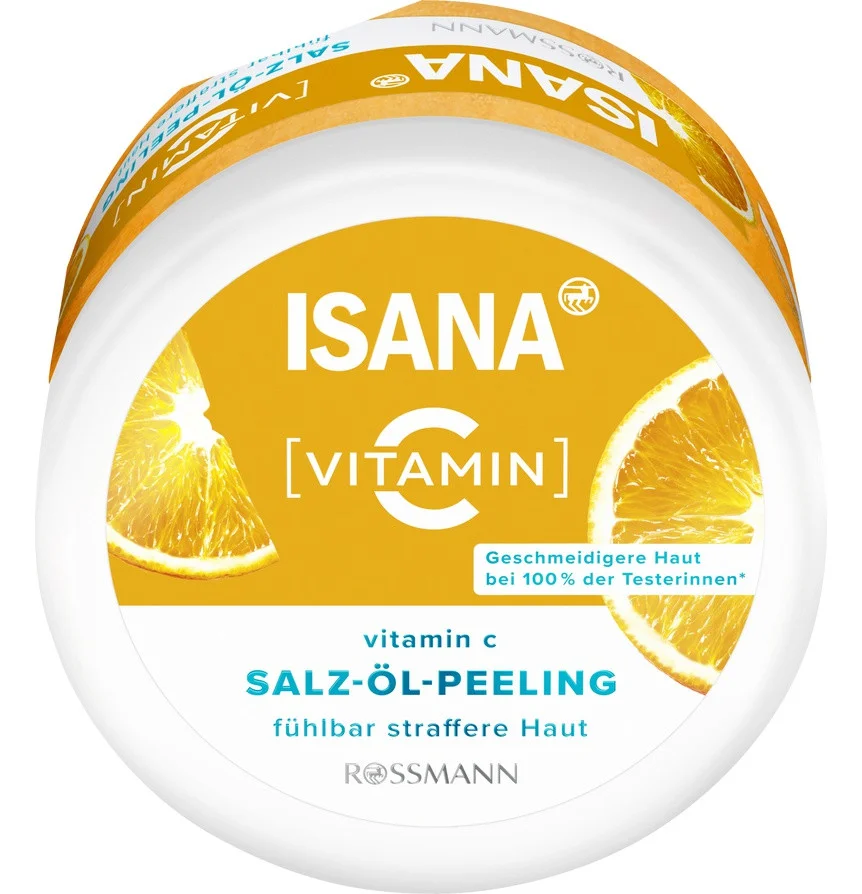
How well does your skin match with Isana Vitamin C Salz-Öl-Peeling?
Login to see detailsOr continue via
Quick 1-minute survey • Completely free
Ingredients
Analysis results of Ingredients


Ingredient List
| EWG | CIR | Ingredient Name & Cosmetic Function | Notes |
|---|---|---|---|
| 1 | - | (Masking, Humectant, Viscosity Controlling, Abrasive, Bulking Agent) | |
| - | - | | |
| 1 | - | (Antioxidant) |  |
| 1 | A | (Binding Agent, Binding, Emulsifying) | |


Isana Vitamin C Salz-Öl-Peeling - Ingredient Explanation
Sea Salt
1. Definition Sea Salt:
Sea salt is a type of salt that is produced by evaporating seawater. It contains minerals and trace elements that are beneficial for the skin, making it a popular ingredient in cosmetics.2. Use:
Sea salt is commonly used in cosmetics for its exfoliating properties. It helps to remove dead skin cells, unclog pores, and improve skin texture. Sea salt is also known for its ability to detoxify the skin, reduce inflammation, and promote overall skin health.3. Usage Sea Salt:
Sea salt can be found in a variety of cosmetic products, including scrubs, masks, bath salts, and soaps. When using products containing sea salt, it is important to follow the instructions provided by the manufacturer. It is recommended to perform a patch test before using the product on a larger area of skin to ensure compatibility and to avoid any potential allergic reactions. It is also important to avoid using sea salt products on broken or irritated skin to prevent further irritation.4. References:
- Kaur, C., & Kapoor, H. (2001). Antioxidants in fruits and vegetables - the millennium's health. International Journal of Food Science & Technology, 36(7), 703-725.
- Gomes, A., Fernandes, E., & Lima, J. L. F. C. (2005). Fluorescence probes used for detection of reactive oxygen species. Journal of Biochemical and Biophysical Methods, 65(2-3), 45-80.
- Draelos, Z. D. (2005). Cosmeceuticals: Procedures in Cosmetic Dermatology Series. Elsevier Health Sciences.
Helianthus Annuus (Sunflower) Hybrid Oil
1. Definition Helianthus Annuus (Sunflower) Hybrid Oil:
Helianthus Annuus (Sunflower) Hybrid Oil is a natural oil derived from the seeds of the sunflower plant. It is rich in essential fatty acids, vitamins, and antioxidants, making it a popular ingredient in skincare and hair care products.2. Use:
Sunflower oil is known for its moisturizing and nourishing properties, making it a great ingredient for hydrating dry skin and hair. It is often used in creams, lotions, serums, and hair masks to help improve skin elasticity, reduce inflammation, and promote a healthy scalp.3. Usage Helianthus Annuus (Sunflower) Hybrid Oil:
Sunflower oil can be applied directly to the skin or hair, or it can be incorporated into various cosmetic formulations. It is gentle enough for daily use and is suitable for all skin types, including sensitive skin. When using sunflower oil, it is important to perform a patch test first to check for any allergic reactions. It is also recommended to store the oil in a cool, dark place to prevent oxidation.4. References:
- Şahin, S., & Bilgin, M. (2018). Sunflower (Helianthus annuus L.) as a source of edible and industrial oil: An overview. International Journal of Food Science & Technology, 53(7), 1449-1454.
- Pappas, A. (2009). Epidermal surface lipids. Dermato-Endocrinology, 1(2), 72-76.
- Lin, T. K., Zhong, L., & Santiago, J. L. (2017). Anti-inflammatory and skin barrier repair effects of topical application of some plant oils. International Journal of Molecular Sciences, 19(1), 70.
Ascorbyl Stearate
1. Definition Ascorbyl Stearate:
Ascorbyl Stearate is a derivative of Vitamin C that is commonly used in cosmetics for its antioxidant properties. It is a combination of ascorbic acid (Vitamin C) and stearic acid, a fatty acid.2. Use:
Ascorbyl Stearate is used in cosmetics for its ability to brighten the skin, reduce the appearance of fine lines and wrinkles, and protect the skin from environmental damage. It is often found in anti-aging products, serums, and moisturizers.3. Usage Ascorbyl Stearate:
Ascorbyl Stearate is typically used in concentrations of 0.5% to 2% in cosmetic formulations. It is stable and less likely to oxidize compared to other forms of Vitamin C, making it a popular choice for skincare products. It is generally safe for all skin types, but it is recommended to do a patch test before using it on the entire face to check for any potential sensitivity or allergic reactions.4. References:
- R. A. Panzella, S. E. Maier, M. Napolitano, A. d’Ischia, “Ascorbyl stearate: a natural antioxidant for food preservation”, Food Chemistry, Volume 119, Issue 4, 2010, Pages 1414-1419.
- A. R. Costa, L. C. F. Salviano, M. C. M. R. Alvim, R. C. S. Machado, C. M. R. S. Machado, “Ascorbyl Stearate: Synthesis, Characterization and Evaluation of Antioxidant Activity”, Molecules, 2014, 19(11), 18075-18088.
- V. M. S. Pereira, M. A. R. Monteiro, A. M. C. R. F. S. Ribeiro, “Ascorbyl stearate microparticles obtained by spray drying: Characterization and stability evaluation”, Powder Technology, Volume 304, 2017, Pages 162-169.
Isostearic Acid
1. Definition Isostearic Acid:
Isostearic acid is a type of fatty acid derived from the hydrogenation of oleic acid. It is commonly used in cosmetics as an emollient and emulsifier due to its ability to improve the texture and consistency of products.2. Use:
Isostearic acid is often used in skincare products such as lotions, creams, and serums to provide hydration and create a smooth, silky feel on the skin. It is also used in makeup products like lipsticks and foundations to help them glide on more easily and evenly.3. Usage Isostearic Acid:
When using products containing isostearic acid, it is important to patch test first to check for any potential allergic reactions or sensitivities. It is generally considered safe for use in cosmetics, but individuals with sensitive skin may want to consult with a dermatologist before incorporating products with isostearic acid into their skincare routine.4. References:
- "Isostearic Acid" by Cosmetics Info (https://cosmeticsinfo.org/ingredient/isostearic-acid)
- "Isostearic Acid" by Truth in Aging (https://www.truthinaging.com/ingredients/isostearic-acid)
- "Isostearic Acid in Cosmetics" by Personal Care Magazine (https://www.personalcaremagazine.com/story/31115/isostearic-acid-in-cosmetics)
Review

Didn't find
the information you need?




Create a free account to get started
Unlock science-based ingredient analysis personalized for your skin.
Already have an account? Log in
We protect your privacy. We never send spam.