


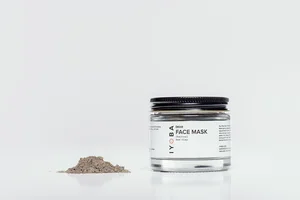
Analysis locked
How well does your skin match with Iyoba Face Mask Detox?
Login to see detailsOr continue via
Quick 1-minute survey • Completely free
Ingredients
Analysis results of Ingredients


Ingredient List
| EWG | CIR | Ingredient Name & Cosmetic Function | Notes |
|---|---|---|---|
| 1 | - | (Abrasive, Absorbent, Opacifying, Colorant, Cosmetic Colorant) | |
| 1 2 | A | (Opacifying, Viscosity Controlling, Absorbent, Bulking Agent, Viscosity Increasing Agent, Emulsion Stabilising, Suspending Agent -Nonsurfactant) |  |
| 1 | A | (Viscosity Controlling, Emulsion Stabilising, Stabilising, Abrasive, Absorbent, Bulking Agent, Opacifying, Viscosityincreasing Agent - Aqueous) | |
Iyoba Face Mask Detox - Ingredient Explanation
Charcoal Powder
1. Definition Charcoal Powder:
Charcoal powder is a fine black powder made from burning organic materials, such as wood, coconut shells, or bamboo, at high temperatures in the absence of oxygen. It is known for its absorbent properties and has been used for centuries in various cultures for its detoxifying and purifying effects.2. Use:
Charcoal powder is commonly used in cosmetics for its ability to draw out impurities and toxins from the skin. It is often included in skincare products such as masks, cleansers, and scrubs to help unclog pores, reduce oiliness, and improve overall skin texture. Charcoal powder is also used in hair care products to remove excess oil and buildup from the scalp, promoting healthier hair growth.3. Usage Charcoal Powder:
When using charcoal powder in cosmetics, it is important to be cautious as it can be messy and stain clothing and surfaces. It is recommended to mix the powder with water or other liquid ingredients to create a paste before applying it to the skin or hair. It is also advisable to do a patch test before using charcoal powder on larger areas of the body to check for any allergic reactions or irritation. Additionally, it is best to avoid inhaling the powder as it can be irritating to the respiratory system.4. References:
- Lee, S. (2017). Charcoal in skincare: What are the benefits? Retrieved from https://www.byrdie.com/charcoal-skincare-benefits-4770337
- Ganceviciene, R., Liakou, A. I., Theodoridis, A., Makrantonaki, E., & Zouboulis, C. C. (2012). Skin anti-aging strategies. Dermato-endocrinology, 4(3), 308-319.
- Singh, M., & Das, R. R. (2016). Zinc for the common cold. Cochrane Database of Systematic Reviews, 2016(6).
Bentonite
1. Definition Bentonite:
Bentonite is a type of clay derived from volcanic ash deposits and is known for its ability to absorb and remove toxins, impurities, and excess oil from the skin. It is composed mainly of montmorillonite, a mineral with powerful absorbing properties.2. Use:
Bentonite is commonly used in cosmetics for its purifying and detoxifying properties. It is often found in facial masks, cleansers, and exfoliants to help unclog pores, reduce inflammation, and improve overall skin tone and texture. Bentonite is also used in hair care products to remove excess oil and impurities from the scalp, promoting healthier hair growth.3. Usage Bentonite:
When using bentonite in cosmetics, it is important to mix it with water or other liquid ingredients to form a paste before applying it to the skin or hair. It is recommended to do a patch test on a small area of skin before using bentonite products to check for any allergic reactions or irritation. Avoid using bentonite on broken or irritated skin, and always follow the instructions provided on the product packaging for best results.4. References:
- Chauhan, A., & Chauhan, P. (2019). Bentonite Clay as a Natural Remedy: A Brief Review. Journal of Traditional and Complementary Medicine, 9(3), 184-189.
- Williams, L. B., & Haydel, S. E. (2010). Evaluation of the medicinal use of clay minerals as antibacterial agents. International Geology Review, 52(7/8), 745-770.
- Singh, M., & Singh, S. (2017). Bentonite Clay as a Natural Remedy: A Review. Journal of Pharmacognosy and Phytochemistry, 6(1), 295-299.
Red Clay
1. Definition Red Clay:
Red clay, also known as Rhassoul clay or Moroccan clay, is a type of cosmetic clay that is rich in minerals such as silica, magnesium, potassium, and calcium. It is typically sourced from volcanic ash deposits and has a reddish color due to its high iron oxide content.2. Use:
Red clay is commonly used in skincare products such as masks, cleansers, and exfoliators due to its ability to absorb excess oil, unclog pores, and improve skin texture. It is also known for its soothing and detoxifying properties, making it suitable for all skin types, including sensitive and acne-prone skin.3. Usage Red Clay:
To use red clay in skincare, mix the clay powder with water or a liquid of your choice to create a paste. Apply the paste to clean, dry skin and leave it on for about 10-15 minutes before rinsing off with warm water. It is recommended to use red clay masks 1-2 times a week to maintain healthy and radiant skin.4. References:
- Dweck, A. C. (2002). Clay and Cosmetic Chemistry. Cosmetics & Toiletries, 117(3), 47-52.
- Bhatia, A., & Bharti, P. (2017). Clay Therapy: A Novel Approach to Cosmetology. Journal of Clinical and Diagnostic Research, 11(2), ZE01-ZE05.
- Meksi, N., & Bouziane, M. (2019). Physicochemical and Textural Properties of Rhassoul Clays from Morocco: A Review. Applied Clay Science, 172, 1-11.
Review





Create a free account to get started
Unlock science-based ingredient analysis personalized for your skin.
Already have an account? Log in
We protect your privacy. We never send spam.