


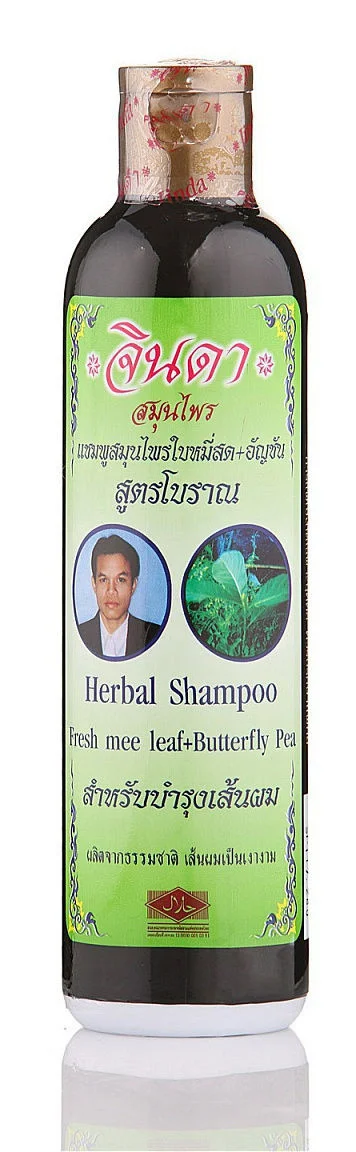
Analysis locked
How well does your skin match with JINDA Herbal Shampoo for Hair Loss?
Login to see detailsOr continue via
Quick 1-minute survey • Completely free
Ingredients
Analysis results of Ingredients


Ingredient List
| EWG | CIR | Ingredient Name & Cosmetic Function | Notes |
|---|---|---|---|
| 1 | - | (Skin Conditioning) | |
| - | - | Litsea Glutinosa Leaf Extract | |
| 1 3 | - | (Emulsifying, Surfactant, Cleansing, Foaming) |   |
| 1 2 | A | (Surfactant, Emulsifying, Cleansing) | |


JINDA Herbal Shampoo for Hair Loss - Ingredient Explanation
Clitoria Ternatea Flower Extract
1. Definition Clitoria Ternatea Flower Extract:
Clitoria Ternatea Flower Extract, also known as Butterfly Pea Flower Extract, is a natural ingredient derived from the Clitoria Ternatea plant. This extract is rich in antioxidants, vitamins, and flavonoids, making it a popular choice in skincare and cosmetic products.2. Use:
Clitoria Ternatea Flower Extract is commonly used in cosmetics for its anti-inflammatory and antioxidant properties. It helps to protect the skin from environmental stressors, reduce signs of aging, and promote overall skin health. This extract is often found in products such as serums, creams, and masks to provide nourishment and hydration to the skin.3. Usage Clitoria Ternatea Flower Extract:
When using Clitoria Ternatea Flower Extract in cosmetics, it is important to follow the instructions provided on the product packaging. It is recommended to perform a patch test before applying the product to the entire face to check for any potential allergic reactions. Additionally, it is best to store products containing this extract in a cool, dry place away from direct sunlight to maintain their efficacy.4. References:
- Sujith K, et al. "Phytochemical and pharmacological properties of Clitoria ternatea Linn. - An overview." Int J Pharm Sci Res. 2012; 3(6): 1557-1562.
- Ramesh B, et al. "Clitoria ternatea Linn.: A review on its ethnopharmacological, phytochemical, and pharmacological profile." Pharmacogn Rev. 2013; 7(14): 81-89.
- Sireeratawong S, et al. "Acute and subacute toxicities of the butanolic extract from Clitoria ternatea Linn. in mice." Songklanakarin J Sci Technol. 2008; 30(3): 341-349.
Litsea Glutinosa Leaf Extract
Ingredient data is being updated. Please check back later.
Sodium Laureth Sulfate
1. Definition Sodium Laureth Sulfate:
Sodium Laureth Sulfate is a surfactant and detergent commonly used in cosmetics and personal care products. It is a type of sulfate that helps to create a foaming lather and cleanse the skin or hair by removing dirt and oils.2. Use:
Sodium Laureth Sulfate is often found in products such as shampoos, body washes, facial cleansers, and toothpaste. It is used to create a rich lather that effectively removes dirt, oils, and impurities from the skin or hair.3. Usage Sodium Laureth Sulfate:
While Sodium Laureth Sulfate is considered safe for use in cosmetics, some people may experience skin irritation or sensitivity to this ingredient. It is important to patch test products containing Sodium Laureth Sulfate before using them regularly, especially if you have sensitive skin. Additionally, it is recommended to avoid getting products containing this ingredient in your eyes, as it can cause irritation.4. References:
- National Center for Biotechnology Information. PubChem Compound Summary for CID 23665879, Sodium Laureth Sulfate. https://pubchem.ncbi.nlm.nih.gov/compound/Sodium-laureth-sulfate
- Environmental Working Group. Sodium Laureth Sulfate. https://www.ewg.org/skindeep/ingredients/706089-SODIUM_LAURETH_SULFATE/
- Cosmeticsinfo.org. Sodium Laureth Sulfate. http://cosmeticsinfo.org/ingredient/sodium-laureth-sulfate
Sodium Coco Sulfate
1. Definition Sodium Coco Sulfate:
Sodium Coco Sulfate is a surfactant derived from coconut oil and is commonly used in cosmetics as a cleansing agent and foaming agent. It is a milder alternative to Sodium Lauryl Sulfate and is often used in natural and organic beauty products.2. Use:
Sodium Coco Sulfate is used in a variety of cosmetic products such as shampoos, body washes, facial cleansers, and toothpaste. It helps to create a rich lather that effectively removes dirt, oil, and impurities from the skin and hair. Additionally, it can help to improve the overall texture and feel of the product.3. Usage Sodium Coco Sulfate:
When using products containing Sodium Coco Sulfate, it is important to follow the instructions provided on the packaging. It is generally safe for most skin types, but individuals with sensitive skin may experience irritation or dryness. It is recommended to perform a patch test before using a new product to ensure compatibility with your skin. Avoid getting the product in your eyes, as it may cause irritation. If irritation occurs, discontinue use and consult a healthcare professional.4. References:
- CosmeticsInfo.org. (n.d.). Sodium Coco Sulfate. https://cosmeticsinfo.org/ingredient/sodium-coco-sulfate
- Personal Care Council. (2019). Sodium Coco Sulfate. https://www.personalcarecouncil.org/ingredient/sodium-coco-sulfate/
- Environmental Working Group. (n.d.). Sodium Coco Sulfate. https://www.ewg.org/skindeep/ingredients/704993-sodium-coco-sulfate/
Review
Didn't find
the information you need?





Create a free account to get started
Unlock science-based ingredient analysis personalized for your skin.
Already have an account? Log in
We protect your privacy. We never send spam.