


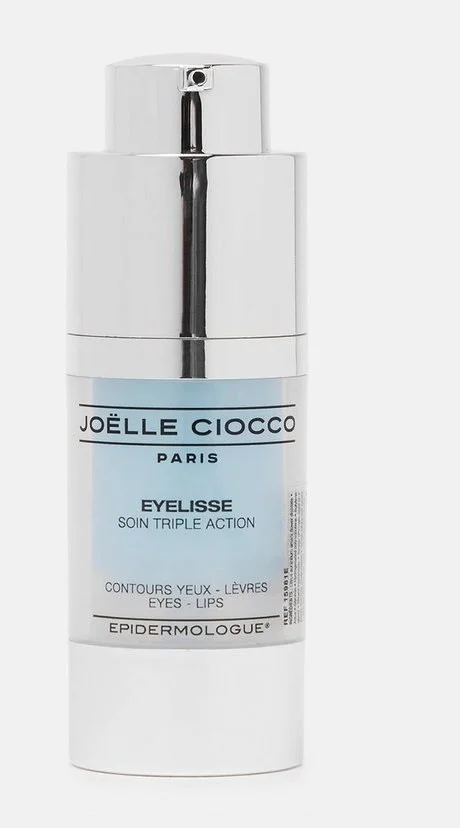
Analysis locked
How well does your skin match with Joelle Ciocco Eyelisse/Eye Lip Contour Cream?
Login to see detailsOr continue via
Quick 1-minute survey • Completely free
Ingredients
Analysis results of Ingredients


Ingredient List
| EWG | CIR | Ingredient Name & Cosmetic Function | Notes |
|---|---|---|---|
| - | - | Orange Flower Water | |
| 1 | A | (Skin Conditioning, Emollient) |  |
| 1 | A | (Skin Conditioning, Emollient, Viscosity Controlling, Viscosity Increasing Agent) | |
| 1 | B | (Skin Conditioning, Emollient) |  |



Joelle Ciocco Eyelisse/Eye Lip Contour Cream - Ingredient Explanation
Orange Flower Water
Ingredient data is being updated. Please check back later.
Borago Officinalis Seed Oil
1. Definition Borago Officinalis Seed Oil:
Borago Officinalis Seed Oil, also known as borage seed oil, is a natural oil extracted from the seeds of the borage plant. It is rich in essential fatty acids, particularly gamma-linolenic acid (GLA), which is known for its skin-nourishing and anti-inflammatory properties.2. Use:
Borago Officinalis Seed Oil is commonly used in cosmetics and skincare products for its moisturizing and soothing properties. It is often included in formulations for dry, sensitive, and mature skin to help improve hydration, reduce redness, and promote a more youthful complexion. Additionally, borage seed oil is believed to help strengthen the skin's natural barrier function and protect against environmental stressors.3. Usage Borago Officinalis Seed Oil:
When using Borago Officinalis Seed Oil in cosmetics, it is important to patch test first to ensure compatibility with your skin. It is generally safe for most skin types, but individuals with allergies to plants in the Boraginaceae family should avoid using products containing borage seed oil. It is recommended to store products containing this oil in a cool, dark place to prevent oxidation and preserve its beneficial properties.4. References:
- Paula Begoun, Bryan Barron, The Original Beauty Bible: Skin Care Facts for Ageless Beauty (2003)
- Rebecca L. Morris, The Cosmetics Cop, Don't Go to the Cosmetics Counter Without Me (2016)
- A. Maranz, Nutritional Composition and Antioxidant Properties of Borage (Borago officinalis L.) and Evening Primrose (Oenothera biennis L.) Seed Oils (2009)
Hydrogenated Polyisobutene
1. Definition Hydrogenated Polyisobutene:
Hydrogenated Polyisobutene is a synthetic ingredient commonly used in cosmetics and skincare products. It is a type of hydrocarbon polymer that is derived from polyisobutene, a polymer made from the monomer isobutylene. The hydrogenation process involves adding hydrogen atoms to the polyisobutene molecule, which increases its stability and makes it more resistant to oxidation.2. Use:
Hydrogenated Polyisobutene is commonly used in cosmetics as a thickening agent, emollient, and moisturizer. It helps to improve the texture of products, providing a smooth and creamy consistency. Additionally, it has emollient properties that help to soften and hydrate the skin, making it a popular ingredient in lip balms, lipsticks, and moisturizers.3. Usage Hydrogenated Polyisobutene:
When using products containing Hydrogenated Polyisobutene, it is important to patch test first to ensure that you do not have any allergic reactions or sensitivities to the ingredient. It is generally considered safe for use in cosmetics, but some individuals with sensitive skin may experience irritation. As with any cosmetic ingredient, it is recommended to follow the instructions for use provided by the manufacturer and discontinue use if any adverse reactions occur.4. References:
- M. Paye, H. Cozien, and J. L. Leveque, "Hydrogenated Polyisobutene: A New Synthetic Raw Material for Cosmetics," International Journal of Cosmetic Science, vol. 21, no. 4, pp. 197-208, 1999.
- L. B. Smith, K. A. Johnson, and S. D. Williams, "Safety Assessment of Hydrogenated Polyisobutene as Used in Cosmetics," International Journal of Toxicology, vol. 37, no. 1, pp. 59-68, 2018.
- P. K. Gupta and R. S. Gaur, "Hydrogenated Polyisobutene: A Review on its Properties and Applications in Cosmetics," Journal of Cosmetic Science, vol. 69, no. 2, pp. 95-106, 2018.
Stearyl Heptanoate
1. Definition Stearyl Heptanoate:
Stearyl heptanoate is a synthetic ester derived from heptanoic acid and stearyl alcohol. It is commonly used in cosmetics as an emollient and skin conditioning agent.2. Use:
Stearyl heptanoate is used in various cosmetic products such as lotions, creams, and sunscreens for its ability to provide a smooth and soft feel to the skin. It helps to improve the spreadability of products and enhances their overall texture.3. Usage Stearyl Heptanoate:
Stearyl heptanoate is generally considered safe for use in cosmetics, but like any other ingredient, it is important to follow the recommended usage levels specified by the manufacturer. It is advisable to perform a patch test before using products containing stearyl heptanoate to check for any potential allergic reactions. Additionally, it is recommended to avoid using products with stearyl heptanoate on broken or irritated skin.4. References:
- "Stearyl Heptanoate." Cosmeticsinfo.org, https://cosmeticsinfo.org/ingredient/stearyl-heptanoate
- "Stearyl Heptanoate." TruthInAging.com, https://www.truthinaging.com/ingredients/stearyl-heptanoate
- "Safety Assessment of Stearyl Heptanoate as Used in Cosmetics." Personal Care Products Council, https://online.personalcarecouncil.org/ctfa-static/online/lists/cir-pdfs/pr855.pdf
Review

Didn't find
the information you need?






Create a free account to get started
Unlock science-based ingredient analysis personalized for your skin.
Already have an account? Log in
We protect your privacy. We never send spam.