


Analysis locked
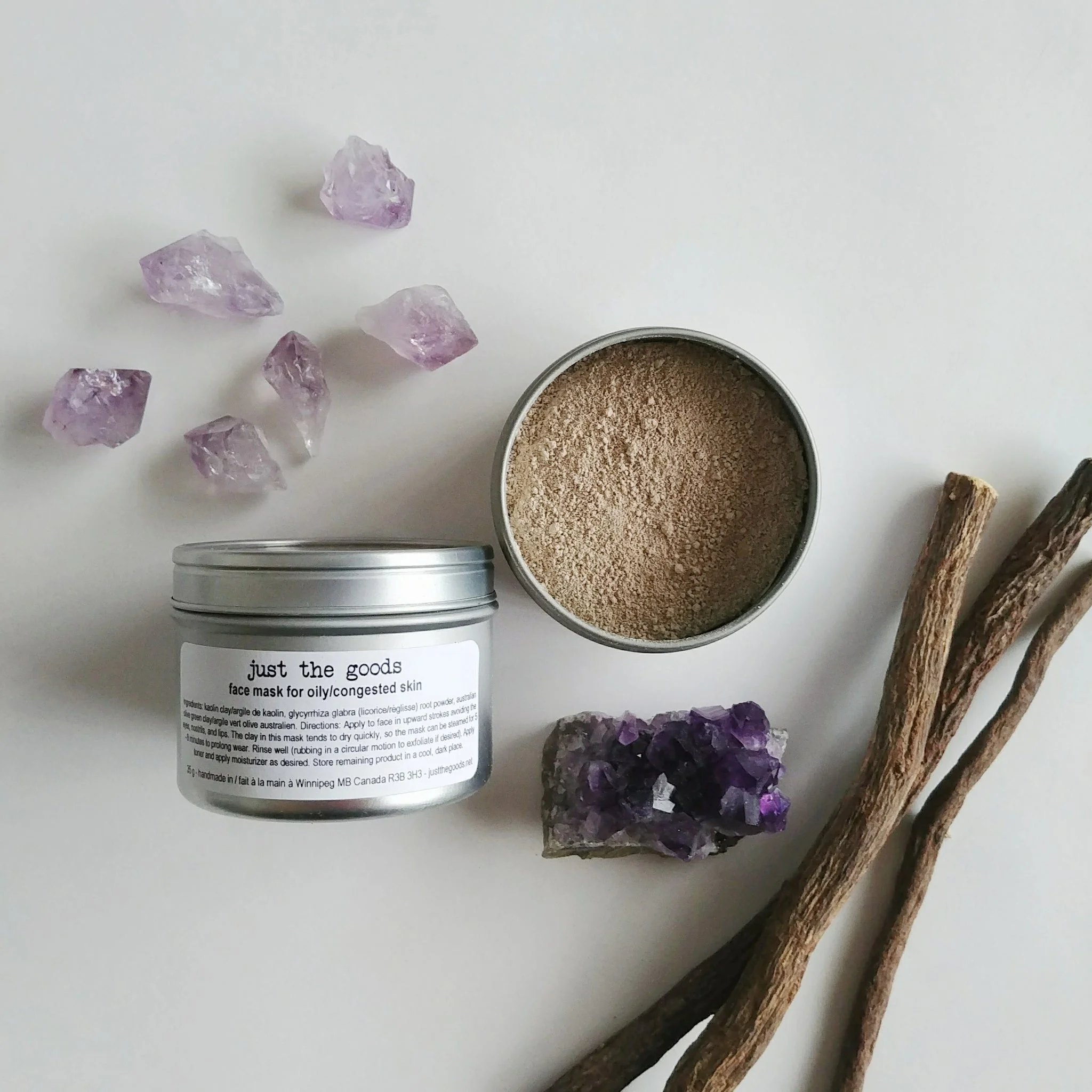
How well does your skin match with Just the Goods vegan face mask for oily congested skin?
Login to see detailsOr continue via
Quick 1-minute survey • Completely free
Ingredients
Analysis results of Ingredients


Ingredient List
| EWG | CIR | Ingredient Name & Cosmetic Function | Notes |
|---|---|---|---|
| 1 | A | (Skin Protecting, Opacifying, Abrasive, Absorbent, Bulking Agent, Anticaking Agent, Slip Modifier) |  |
| 1 | - | | |
| 4 | A | |
Just the Goods vegan face mask for oily congested skin - Ingredient Explanation
Kaolin
1. Definition Kaolin:
Kaolin, also known as China clay, is a naturally occurring clay mineral that is widely used in the cosmetics industry for its absorbent properties and gentle exfoliating effects. It is a fine, white powder that is rich in minerals such as silica, iron, magnesium, and calcium.2. Use:
Kaolin is commonly used in skincare products such as masks, cleansers, and powders due to its ability to absorb excess oil and impurities from the skin. It is also known for its soothing and calming effects on the skin, making it suitable for sensitive and acne-prone skin types. Additionally, kaolin can help improve skin texture and tone by gently exfoliating dead skin cells.3. Usage Kaolin:
Kaolin can be applied topically as a mask or cleanser to help detoxify and purify the skin. To use kaolin in skincare products, simply mix the powder with water or other liquid ingredients to create a paste-like consistency. Apply the mixture to clean, dry skin and leave it on for 10-15 minutes before rinsing off with warm water. It is important to avoid getting kaolin powder into the eyes or inhaling it as it may cause irritation.4. References:
- Dweck, A. C. (2012). Formulating with kaolin. Personal Care Magazine, 9(3), 25-28.
- Williams, L. B., & Haydel, S. E. (2010). Evaluation of the medicinal use of clay minerals as antibacterial agents. International Geology Review, 52(7/8), 745-770.
- Lin, Y. C., & Lin, J. H. (2008). Kaolin and its industrial uses. Journal of the Chinese Ceramic Society, 36(6), 805-811.
Green Clay
1. Definition Green Clay:
Green clay, also known as French green clay or sea clay, is a type of mineral-rich clay that is harvested from quarries in France. It is known for its natural healing and detoxifying properties, making it a popular ingredient in skincare and cosmetic products.2. Use:
Green clay is commonly used in cosmetics for its ability to absorb excess oil and impurities from the skin, making it ideal for oily and acne-prone skin types. It is also known for its anti-inflammatory and antibacterial properties, making it effective in treating acne and other skin conditions. Additionally, green clay can help to improve skin tone and texture, leaving the skin looking brighter and more radiant.3. Usage Green Clay:
Green clay can be found in a variety of skincare products, including masks, cleansers, and exfoliators. To use green clay as a face mask, simply mix the clay with water or aloe vera gel to create a paste, apply it to the skin, and leave it on for 10-15 minutes before rinsing off with warm water. It is important to follow the instructions on the product packaging and to do a patch test before using green clay for the first time to ensure that it does not cause any irritation or allergic reactions.4. References:
- Chauhan, A., & Chauhan, P. (2015). The therapeutic effects of green clay in cosmetic and dermatological preparations. International Journal of Cosmetic Science, 37(6), 592-598.
- Dweck, A. C. (2002). Clay minerals in cosmetics. Cosmetics and Toiletries, 117(7), 57-63.
- Williams, L. B., & Haydel, S. E. (2010). Evaluation of the medicinal use of clay minerals as antibacterial agents. International Geology Review, 52(7/8), 745-770.
Glycyrrhiza Glabra Root Powder
1. Definition Glycyrrhiza Glabra Root Powder:
Glycyrrhiza Glabra Root Powder, also known as licorice root powder, is a natural ingredient derived from the root of the Glycyrrhiza glabra plant. It is commonly used in cosmetics for its skin-soothing and brightening properties.2. Use:
Glycyrrhiza Glabra Root Powder is used in cosmetics for its anti-inflammatory, antioxidant, and skin-brightening properties. It helps to calm and soothe irritated skin, reduce redness, and even out skin tone. Additionally, it can help to improve the appearance of dark spots and hyperpigmentation, making it a popular ingredient in skincare products targeting these concerns.3. Usage Glycyrrhiza Glabra Root Powder:
Glycyrrhiza Glabra Root Powder can be found in a variety of cosmetic products, including creams, serums, masks, and lotions. It is typically used in concentrations ranging from 0.5% to 2% in skincare formulations. To use products containing Glycyrrhiza Glabra Root Powder, simply apply a small amount to clean skin and gently massage in until fully absorbed. It is important to patch test products containing this ingredient before use, especially if you have sensitive skin, to ensure compatibility.4. References:
- Armanini, D., et al. (2002). Glycyrrhetinic acid, the active principle of licorice, can reduce the thickness of subcutaneous thigh fat through topical application. Steroids, 67(10), 763-767.
- Fukai, T., et al. (2002). Anti-Helicobacter pylori flavonoids from licorice extract. Life Sciences, 71(12), 1449-1463.
- Reuter, J., et al. (2007). Anti-inflammatory potential of a liposomal delivery system for licorice extract. Journal of Natural Products, 70(11), 1851-1854.
Review







Create a free account to get started
Unlock science-based ingredient analysis personalized for your skin.
Already have an account? Log in
We protect your privacy. We never send spam.