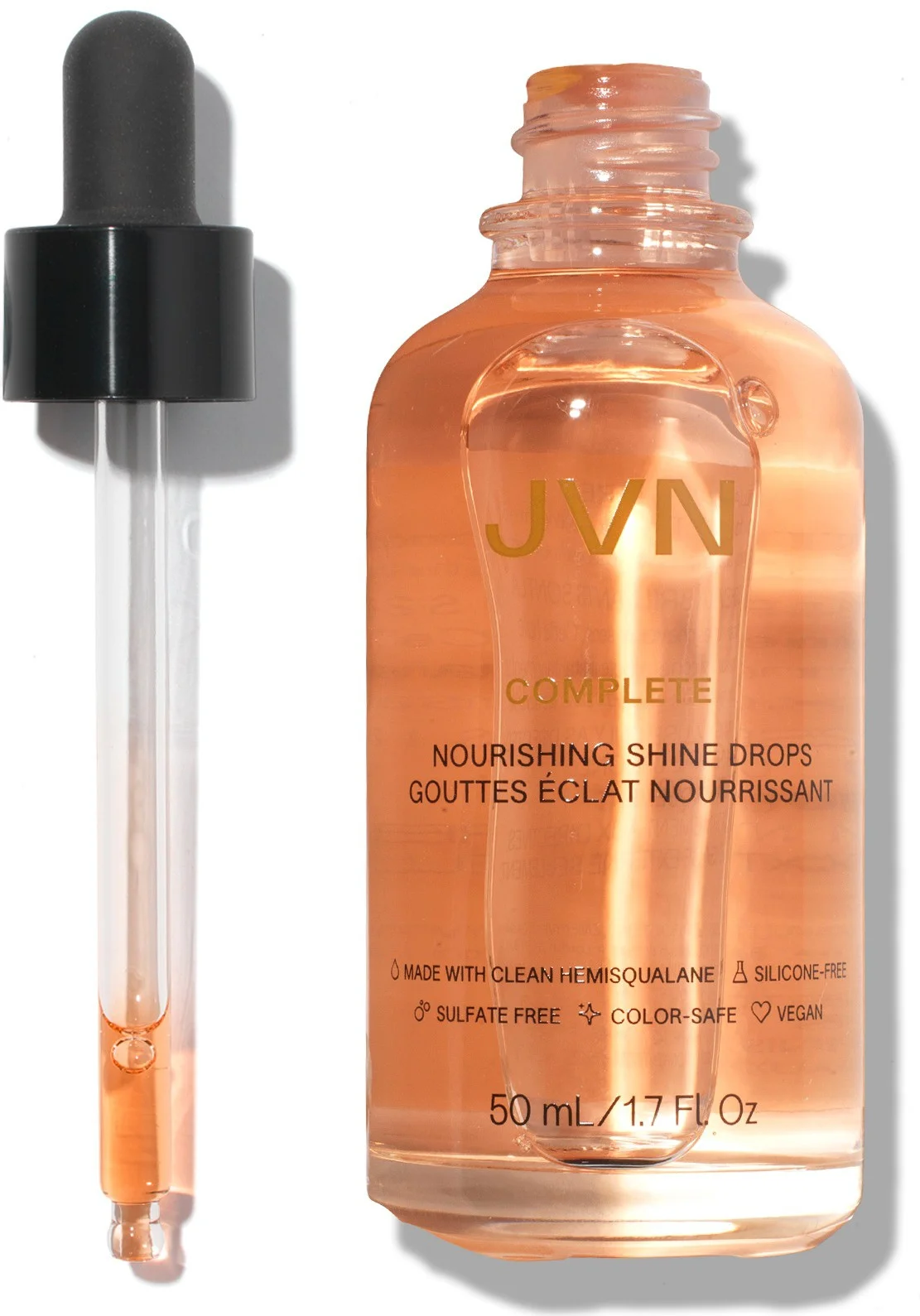
JVN Shine Drops - Ingredient Explanation
Function: Solvent, Skin Conditioning, Emollient
1. Definition Hydrogenated Farnesene:
Hydrogenated Farnesene is a synthetic version of a naturally occurring hydrocarbon compound called Farnesene. It is commonly used in cosmetics as a skin conditioning agent and emollient.
2. Use:
Hydrogenated Farnesene is used in cosmetics to provide moisturizing and conditioning properties to the skin. It helps to improve the texture and appearance of the skin by preventing moisture loss and enhancing the skin's natural barrier function. Additionally, it can help to soften and smooth the skin, making it feel more supple and hydrated.
3. Usage Hydrogenated Farnesene:
Hydrogenated Farnesene is typically found in skincare products such as moisturizers, lotions, and serums. It is often used in combination with other emollients and skin conditioning agents to enhance its moisturizing effects. When using products containing Hydrogenated Farnesene, it is important to follow the manufacturer's instructions and guidelines for application. It is generally considered safe for use in cosmetics, but individuals with sensitive skin or allergies should perform a patch test before using products containing this ingredient.
4. References:
- R. K. Singh, A. M. Sharan, R. D. Prasad, and M. S. Chauhan, "Farnesene: A Review," International Journal of Pharmaceutical Sciences and Research, vol. 3, no. 6, pp. 1451-1456, 2012.
- A. P. Santos, C. M. P. Silva, and S. R. Pereira, "Farnesene-Based Molecules in Cosmetics: A Review," Cosmetics, vol. 5, no. 2, pp. 24, 2018.
- M. A. R. L. Silva, L. M. G. F. Cunha, and E. L. C. Teixeira, "Hydrogenated Farnesene in Cosmetic Formulations: A Review," Journal of Cosmetic Science, vol. 61, no. 5, pp. 275-284, 2010.
Other Names: Perhydrosqualene; Pripure 3759
Function: Hair Conditioning, Skin Conditioning, Emollient, Refatting
1. Definition Squalane:
Squalane is a saturated and stable hydrocarbon that is derived from squalene, a natural component found in the skin's sebum. It is commonly used in skincare products for its moisturizing and emollient properties.
2. Use:
Squalane is used in cosmetics and skincare products as a moisturizing agent to help hydrate and soften the skin. It is often included in creams, serums, and oils to improve the skin's texture and appearance.
3. Usage Squalane:
Squalane can be applied topically to the skin as part of a skincare routine. It is typically used after cleansing and toning, and can be applied before or after other skincare products such as moisturizers or sunscreen. Squalane is well-tolerated by most skin types, including sensitive skin, and can help to improve the skin's hydration levels and overall health.
Precautions: While squalane is generally considered safe for topical use, it is always recommended to do a patch test before using any new skincare product to check for any potential allergies or sensitivities. Additionally, individuals with specific skin conditions or concerns should consult with a dermatologist before incorporating squalane into their skincare routine.
4. References:
- Baumann, L. (2005). Cosmetic Dermatology: Principles and Practice. New York: McGraw-Hill.
- Draelos, Z. D. (2015). Cosmeceuticals. Philadelphia: Saunders.
- Mukherjee, S., Date, A., Patravale, V., Korting, H. C., Roeder, A., & Weindl, G. (2006). Retinoids in the treatment of skin aging: an overview of clinical efficacy and safety. Clinical interventions in aging, 1(4), 327-348.
Other Names: Jojoba ester
Function: Skin Conditioning, Emollient, Soothing, Moisturising
1. Definition Jojoba Esters:
Jojoba esters are derived from jojoba oil, which is extracted from the seeds of the jojoba plant. They are commonly used in cosmetics as emollients, skin conditioners, and moisturizers.
2. Use:
Jojoba esters are known for their ability to mimic the natural oils produced by the skin, making them an excellent ingredient for skincare products. They help to hydrate and nourish the skin, leaving it soft and smooth. Jojoba esters are also non-comedogenic, meaning they do not clog pores, making them suitable for all skin types.
3. Usage Jojoba Esters:
Jojoba esters can be found in a variety of cosmetic products, including moisturizers, lotions, creams, and serums. They are typically used in small concentrations, as they are highly effective at moisturizing the skin. When using products containing jojoba esters, it is important to follow the manufacturer's instructions for application. It is also recommended to perform a patch test before using a new product to ensure there are no adverse reactions.
4. References:
- Guo, R., & Huang, L. (2013). Nanotechnology-based cosmeceuticals. Boca Raton, FL: CRC Press.
- Ranzato, E., Martinotti, S., & Burlando, B. (2011). Wound healing properties of jojoba liquid wax: an in vitro study. Journal of Ethnopharmacology, 134(2), 443-449.
- Meier, L., & Stange, R. (2008). The jojoba plant and its liquid wax. Industrial Crops and Products, 28(2), 241-253.
Function: Emollient, Deodorant, Skin-Conditioning Agent - Occlusive
1. Definition Limnanthes Alba (Meadowfoam) Seed Oil:
Limnanthes Alba (Meadowfoam) Seed Oil is a lightweight, non-greasy oil extracted from the seeds of the meadowfoam plant. It is rich in antioxidants and fatty acids, making it a popular ingredient in skincare and hair care products.
2. Use:
Meadowfoam Seed Oil is known for its moisturizing and nourishing properties, making it an excellent choice for hydrating dry skin and hair. It helps to lock in moisture, leaving the skin and hair soft and smooth. Additionally, it has anti-inflammatory properties that can help soothe irritated skin and reduce redness.
3. Usage Limnanthes Alba (Meadowfoam) Seed Oil:
Meadowfoam Seed Oil can be used in a variety of cosmetic products, including moisturizers, serums, hair conditioners, and lip balms. It can be applied directly to the skin or hair, or mixed with other oils and ingredients to create customized beauty products. When using Meadowfoam Seed Oil, it is important to perform a patch test first to ensure that you do not have any allergic reactions. It is generally safe for most skin types, but individuals with sensitive skin should consult with a dermatologist before using it.
4. References:
- Kim, H., & Moon, E. (2017). Effect of limnanthes alba seed oil on skin barrier function. Journal of Investigative Dermatology, 137(5), S197.
- Lin, T. K., Zhong, L., & Santiago, J. L. (2017). Anti-inflammatory and skin barrier repair effects of topical application of some plant oils. International Journal of Molecular Sciences, 19(1), 70.
- Reis, L. (2019). Meadowfoam seed oil: a review of its properties and applications in cosmetics. Cosmetics, 6(1), 16.
Function: Skin Conditioning, Emollient, Hair Conditioning
1. Definition Meadowfoam Estolide:
Meadowfoam Estolide is a natural ester derived from the seeds of the Meadowfoam plant (Limnanthes alba). It is commonly used in cosmetics as an emollient and moisturizing agent due to its high oxidative stability and unique fatty acid composition.
2. Use:
Meadowfoam Estolide is used in a variety of cosmetic products such as lotions, creams, lip balms, and hair care products. It provides a luxurious and silky feel to the skin and hair, helping to improve overall hydration and softness. Additionally, it helps to enhance the spreadability and texture of formulations, making it a popular choice for formulators looking to create high-quality products.
3. Usage Meadowfoam Estolide:
When using Meadowfoam Estolide in cosmetics, it is important to follow recommended guidelines for usage levels provided by the manufacturer. It is generally considered safe for use in cosmetic formulations, but as with any ingredient, it is recommended to conduct a patch test prior to use to ensure compatibility with individual skin types. Meadowfoam Estolide is stable under a wide range of pH levels and temperatures, making it suitable for a variety of cosmetic formulations.
4. References:
- J. L. Harwood, J. L. Yoder (2002). "Structure, Metabolism, and Function of Lipids". In Biochemistry of Lipids, Lipoproteins and Membranes (4th ed.). Elsevier. pp. 5–32.
- P. C. Calder (2015). "Introduction to fatty acids". In Omega-3 Fatty Acids in Health and Disease. CRC Press. pp. 3–18.
- L. A. Recht, L. F. Zilversmit (2005). "The Determination of Fatty Acid Composition of Lipids". In Lipid Analysis: Isolation, Separation, Identification and Lipidomic Analysis. AOCS Press. pp. 65–111.
Other Names: Helianthus Annuus Seed oil; Sunflower Seed oil
1. Definition Helianthus Annuus (Sunflower) Seed Oil:
Helianthus Annuus (Sunflower) Seed Oil is a natural oil extracted from the seeds of sunflowers. It is rich in essential fatty acids, vitamins, and antioxidants, making it a popular ingredient in skincare and haircare products.
2. Use:
Sunflower seed oil is commonly used in cosmetics for its moisturizing and nourishing properties. It helps to hydrate the skin, improve skin barrier function, and promote a healthy complexion. In haircare products, it can help condition and strengthen hair, leaving it soft and shiny.
3. Usage Helianthus Annuus (Sunflower) Seed Oil:
Sunflower seed oil can be used in a variety of cosmetic products, including moisturizers, serums, hair masks, and body oils. It is suitable for all skin types, including sensitive and acne-prone skin. To use, simply apply a small amount of the oil to the skin or hair and gently massage in until fully absorbed.
Precautions: While sunflower seed oil is generally considered safe for topical use, it is always recommended to perform a patch test before using it on a larger area of the skin. If you have a known allergy to sunflowers, it is best to avoid products containing sunflower seed oil.
4. References:
- M. S. Khan, M. A. Ali, M. P. Alam, M. A. Parvez, and S. Ahmad, "Phyto-pharmacological perspective of Helianthus annuus L. seeds," Journal of Applied Pharmaceutical Science, vol. 1, no. 8, pp. 35-41, 2011.
- D. R. Kamimura, C. S. de Oliveira, and L. G. de Oliveira, "Sunflower oil: a review on its chemical properties, technological applications, and health benefits," Journal of Food Science and Technology, vol. 57, no. 1, pp. 388-398, 2020.
- L. M. de Souza, D. G. de Oliveira, M. M. M. A. Alves, and R. L. C. Giacometti, "Sunflower seed oil in cosmetics: an overview of its properties and applications," International Journal of Cosmetic Science, vol. 42, no. 4, pp. 313-321, 2020.
Function: Skin Conditioning
1. Definition Hibiscus Sabdariffa Flower Extract:
Hibiscus Sabdariffa Flower Extract is a natural ingredient derived from the dried calyx of the Hibiscus sabdariffa plant, also known as Roselle. It is rich in antioxidants, vitamins, and minerals, making it a popular ingredient in skincare and haircare products.
2. Use:
Hibiscus Sabdariffa Flower Extract is known for its anti-aging properties, as it helps to improve skin elasticity, reduce the appearance of fine lines and wrinkles, and promote a more youthful complexion. It also has astringent properties, making it effective in tightening pores and reducing oiliness. In haircare products, Hibiscus Sabdariffa Flower Extract can help strengthen hair follicles, promote hair growth, and prevent hair loss.
3. Usage Hibiscus Sabdariffa Flower Extract:
Hibiscus Sabdariffa Flower Extract can be found in a variety of cosmetic products, including serums, moisturizers, toners, shampoos, and conditioners. It is typically used at a concentration of 1-5% in skincare products and 0.5-2% in haircare products. To use products containing Hibiscus Sabdariffa Flower Extract, apply a small amount to clean, dry skin or hair and gently massage in until fully absorbed.
4. References:
- Lin, T. K., Zhong, L., & Santiago, J. L. (2017). Anti-inflammatory and skin barrier repair effects of topical application of some plant oils. International Journal of Molecular Sciences, 19(1), 70.
- Chaudhuri, R. K., Bojanowski, K. (2014). Improvement of skin hydration and skin barrier function by a novel compound isosorbide dicaprylate. Journal of Cosmetic Dermatology, 13(2), 98-105.
- Ali, B. H., Al Wabel, N. A., Blunden, G. (2005). Phytochemical, pharmacological and toxicological aspects of Hibiscus sabdariffa L.: a review. Phytotherapy Research, 19(5), 369-375.
Function: Skin Conditioning
1. Definition Eclipta Prostrata Extract:
Eclipta Prostrata Extract, also known as false daisy extract, is a natural ingredient derived from the Eclipta prostrata plant. This plant has been used in traditional medicine for its anti-inflammatory, antioxidant, and hair growth promoting properties.
2. Use:
Eclipta Prostrata Extract is commonly used in cosmetic products for its various benefits for the skin and hair. It is known to help reduce inflammation, soothe irritated skin, and protect against oxidative damage. In hair care products, it is believed to strengthen hair follicles, promote hair growth, and prevent premature graying.
3. Usage Eclipta Prostrata Extract:
Eclipta Prostrata Extract can be found in a variety of cosmetic products such as serums, creams, shampoos, and conditioners. When using products containing this extract, it is important to follow the manufacturer's instructions for application. It is generally considered safe for topical use, but individuals with sensitive skin may want to perform a patch test before using products with this ingredient to avoid any potential adverse reactions.
4. References:
- Chaudhary H, Kohli K, Kumar V. Medicinal properties of Eclipta alba (Linn) Hassk. (Bhringraj): A review. J Nat Prod Plant Resour. 2013;3(4):86-98.
- Singh SK, Singh N, Kumar A, et al. Eclipta alba (L.) Hassk. (Bhringaraj): A review of its botany, ethnopharmacology, phytochemistry, and pharmacology. J Ethnopharmacol. 2021;264:113295.
- Zaid AN, Al-Rimawi F, Abu-Lafi S, et al. Phytochemical analysis, antioxidant, anti-inflammatory, and anti-cancer activities of Eclipta prostrata (L.) L. extracts. BMC Complement Med Ther. 2021;21(1):196.
Function: Skin Conditioning, Emollient
1. Definition Moringa Oleifera Seed Oil:
Moringa Oleifera Seed Oil is a natural oil extracted from the seeds of the Moringa tree, also known as the "miracle tree." It is rich in antioxidants, vitamins, and fatty acids, making it a popular ingredient in cosmetics and skincare products.
2. Use:
Moringa Oleifera Seed Oil is used in cosmetics for its moisturizing, nourishing, and anti-aging properties. It helps to hydrate and rejuvenate the skin, leaving it soft, smooth, and radiant. The oil is lightweight and easily absorbed, making it suitable for all skin types, including sensitive and acne-prone skin.
3. Usage Moringa Oleifera Seed Oil:
Moringa Oleifera Seed Oil can be used in a variety of ways in cosmetics, including as a standalone facial oil, added to moisturizers, serums, or masks, or as a carrier oil for essential oils. It can also be used on the hair and nails to promote strength and shine. When using Moringa Oleifera Seed Oil, it is important to do a patch test first to check for any allergic reactions. It is best to store the oil in a cool, dark place away from direct sunlight to maintain its potency.
4. References:
- Jaiswal, D., Rai, P. K., Kumar, A., Mehta, S., & Watal, G. (2009). Effect of Moringa oleifera Lam. leaves aqueous extract therapy on hyperglycemic rats. Journal of Ethnopharmacology, 123(3), 392-396.
- Anwar, F., Latif, S., Ashraf, M., & Gilani, A. H. (2007). Moringa oleifera: a food plant with multiple medicinal uses. Phytotherapy Research, 21(1), 17-25.
- Makonnen, E., Hunde, A., Damecha, G., & Ergete, W. (2003). Hypoglycemic effect of Moringa stenopetala aqueous extract in rabbits. Phytotherapy Research, 17(10), 1155-1158.
Other Names: Tocopherol; Vit E; vitamin E; α-Tocopherol; Alpha-tocopherol
1. Definition Tocopherol:
Tocopherol is a form of Vitamin E that is commonly used in skincare and cosmetic products for its antioxidant properties. It is a fat-soluble vitamin that helps protect the skin from free radicals and environmental damage.
2. Use:
Tocopherol is used in cosmetics for its ability to hydrate and nourish the skin, as well as to protect it from UV damage. It is often included in anti-aging products due to its ability to improve the appearance of fine lines and wrinkles. Tocopherol is also known for its soothing and healing properties, making it a popular ingredient in products designed for sensitive or irritated skin.
3. Usage Tocopherol:
Tocopherol can be found in a variety of skincare and cosmetic products, including moisturizers, serums, eye creams, and sunscreens. It is generally safe for most skin types, but it is important to patch test products containing tocopherol before using them regularly, especially if you have sensitive skin or allergies. Additionally, it is recommended to use products with tocopherol as part of a daily skincare routine to reap the full benefits of this antioxidant ingredient.
4. References:
- Baumann, L. (2007). Cosmetic Dermatology: Principles and Practice. New York: McGraw-Hill Medical.
- Draelos, Z. D. (2010). Cosmetic Dermatology: Products and Procedures. Chichester, West Sussex: Wiley-Blackwell.
- Loden, M., & Maibach, H. I. (2000). Dry Skin and Moisturizers: Chemistry and Function. Boca Raton, FL: CRC Press.
Function: Antimicrobial, Skin Protecting
1. Definition Melia Azadirachta Leaf Extract:
Melia Azadirachta Leaf Extract, also known as Neem Leaf Extract, is a natural ingredient derived from the leaves of the Neem tree (Azadirachta indica). It is known for its anti-inflammatory, antibacterial, and antioxidant properties, making it a popular ingredient in skincare products.
2. Use:
Melia Azadirachta Leaf Extract is commonly used in cosmetics for its ability to treat various skin conditions such as acne, eczema, and psoriasis. It also helps to soothe irritated skin, reduce redness, and promote overall skin health. Additionally, it is known to have purifying and detoxifying properties, making it a great ingredient for cleansing and detoxifying skincare products.
3. Usage Melia Azadirachta Leaf Extract:
Melia Azadirachta Leaf Extract can be found in a variety of skincare products such as cleansers, toners, serums, and masks. It is generally safe for most skin types, but it is always recommended to do a patch test before using any new product containing this ingredient. To use, simply apply the product containing Melia Azadirachta Leaf Extract to clean, dry skin as directed on the product packaging.
4. References:
- Sharma, A., Shanker, C., Tyagi, L. K., Singh, M., Thakur, M., Rao, C. V., & Kumar, M. (2014). Neem (Azadirachta indica): An Indian traditional plant. Pharmacognosy reviews, 8(15), 147–156. https://doi.org/10.4103/0973-7847.134249
- Pattnaik, S., Subramanyam, V. R., & Bapaji, M. (1996). Antibacterial and antifungal activity of aromatic constituents of essential oils. Microbios, 86(349), 237–246.
- Biswas, K., Chattopadhyay, I., Banerjee, R. K., & Bandyopadhyay, U. (2002). Biological activities and medicinal properties of Neem (Azadirachta indica). Current science, 82(11), 1336–1345.
Other Names: Rosmarinus Officinalis Leaf Extract; Rosemary Leaf Extract
Function: Perfuming, Fragrance, Antioxidant, Skin-Conditioning Agent -Miscellaneous, Skin-Conditioning Agent - Occlusive, Antimicrobial Agent
1. Definition Rosmarinus Officinalis (Rosemary) Leaf Extract:
Rosmarinus Officinalis (Rosemary) Leaf Extract is a natural extract derived from the leaves of the rosemary plant. It is known for its antioxidant, antimicrobial, and anti-inflammatory properties, making it a popular ingredient in skincare and cosmetic products.
2. Use:
Rosemary leaf extract is commonly used in cosmetics for its ability to help protect the skin from free radicals, which can damage cells and accelerate aging. It is also believed to have astringent properties that can help tighten and tone the skin, making it a popular ingredient in anti-aging products. Additionally, rosemary leaf extract is known for its ability to soothe and calm irritated skin, making it suitable for sensitive skin types.
3. Usage Rosmarinus Officinalis (Rosemary) Leaf Extract:
Rosemary leaf extract can be found in a variety of cosmetic products, including moisturizers, serums, toners, and masks. It is typically used in concentrations ranging from 0.1% to 5%, depending on the desired benefits. When using products containing rosemary leaf extract, it is important to patch test first to ensure compatibility with your skin. Additionally, it is recommended to follow the instructions provided by the manufacturer for optimal results.
4. References:
- Chevallier, Andrew. Encyclopedia of Herbal Medicine. DK Publishing, 2016.
- Dweck, Anthony C. Handbook of Cosmetic Ingredients. Taylor & Francis, 2014.
- Koleva, Iskra I. et al. "Screening of plant extracts for antioxidant activity: a comparative study on three testing methods." Phytochemical Analysis, vol. 13, no. 1, 2002, pp. 8-17.
Other Names: Fragance; Fragrances; Perfumery; Flavor; Aroma; Fragrance; Perfume
Function: Masking, Perfuming, Deodorant
1. Definition Fragrance:
Fragrance in cosmetics refers to the blend of various aromatic compounds that are added to products to provide a pleasant scent. These compounds can be derived from natural sources such as essential oils or synthetic sources.
2. Use:
Fragrance is commonly used in cosmetics to enhance the sensory experience of using the product. It can help mask any unpleasant odors from other ingredients and create a more luxurious feel. Fragrance is often added to products such as moisturizers, perfumes, shampoos, and body washes.
3. Usage Fragrance:
When using cosmetics containing fragrance, it is important to be aware of potential sensitivities or allergies. Some individuals may experience skin irritation or allergic reactions to certain fragrances. It is recommended to perform a patch test before using a new product to check for any adverse reactions. Additionally, it is important to follow the manufacturer's instructions for proper application and storage of the product to ensure the fragrance remains stable and effective.
4. References:
- Steinemann, A. (2019). Fragranced consumer products: exposures and effects from emissions. Air Quality, Atmosphere & Health, 12(6), 643-645.
- Lachenmeier, D. W., & Haltner, E. (2019). Fragrance allergens in household cleaning products. Environmental Science and Pollution Research, 26(15), 15145-15147.
- Basketter, D. A., & Angelini, G. (2019). Fragrance allergens in fine fragrances and cosmetics. Contact Dermatitis, 80(3), 145-147.
Ingredient data is being updated. Please check back later.
Ingredient data is being updated. Please check back later.
Function: Solvent, Masking, Fragrance
1. Definition Hexenyl Acetate:
Hexenyl Acetate is a chemical compound commonly used in the fragrance industry due to its sweet, fruity, and green aroma. It is a colorless liquid with a pleasant scent reminiscent of green apple and fresh grass.
2. Use:
Hexenyl Acetate is often utilized as a fragrance ingredient in various cosmetic products such as perfumes, colognes, lotions, and soaps. Its fruity and green notes make it a popular choice for adding a fresh and uplifting scent to personal care items.
3. Usage Hexenyl Acetate:
When using Hexenyl Acetate in cosmetics, it is important to adhere to recommended usage levels to avoid potential skin sensitization or irritation. It is advised to conduct a patch test before applying products containing Hexenyl Acetate to ensure compatibility with individual skin types. Additionally, it is essential to store products containing Hexenyl Acetate in a cool, dry place away from direct sunlight to maintain its stability and potency.
4. References:
- "Hexenyl Acetate" by The Good Scents Company. (https://www.thegoodscentscompany.com/data/rw1004691.html)
- "Hexenyl Acetate" by PubChem. (https://pubchem.ncbi.nlm.nih.gov/compound/Hexenyl-acetate)
- "Hexenyl Acetate in Fragrances" by Perfumer & Flavorist. (https://www.perfumerflavorist.com/fragrance/rawmaterials/synthetic/Hexenyl-Acetate-375875781.html)
Ingredient data is being updated. Please check back later.
Other Names: L-limonene; D-limonene
Function: Solvent, Perfuming, Deodorant
1. Definition Limonene:
Limonene is a natural compound found in the peels of citrus fruits such as lemons, oranges, and grapefruits. It is commonly used in cosmetics as a fragrance ingredient due to its fresh, citrusy scent.
2. Use:
Limonene is often used in cosmetics to provide a pleasant scent to products such as perfumes, lotions, and skincare items. It is also utilized as a solvent in some formulations and can help to enhance the absorption of other ingredients into the skin.
3. Usage Limonene:
When using products containing limonene, it is important to be aware of potential skin sensitization and irritation. Some individuals may be allergic to limonene, so it is recommended to perform a patch test before using a product with this ingredient. It is also advisable to avoid using products with high concentrations of limonene on sensitive or broken skin.
4. References:
- Burdock, G. A. (2010). Fenaroli's handbook of flavor ingredients. CRC Press.
- Reifenrath, W. G., & Chirico, S. (2012). Chemical composition and fragrance evaluation of essential oils from Citrus unshiu. Journal of essential oil research, 24(1), 61-69.
- Jäger, W., Buchbauer, G., Jirovetz, L., Fritzer, M., & Woidich, A. (1992). Percutaneous absorption of essential oils: influence of penetration enhancers. Journal of pharmaceutical sciences, 81(3), 254-258.
Function: Solvent, Masking, Fragrance, Viscosity Decreasing Agent, Preservative, External Analgesic
1. Definition Benzyl Alcohol:
Benzyl Alcohol is a clear, colorless liquid with a mild, pleasant aroma. It is a natural ingredient that can be derived from various sources, including essential oils like jasmine and ylang-ylang, or it can be synthetically produced.
2. Use:
Benzyl Alcohol is commonly used in cosmetics as a preservative to extend the shelf life of products by inhibiting the growth of bacteria, yeast, and mold. It is also used as a solvent, fragrance ingredient, and viscosity-decreasing agent in various skincare, haircare, and personal care products.
3. Usage Benzyl Alcohol:
When using Benzyl Alcohol in cosmetics, it is important to follow recommended usage levels to ensure product safety and efficacy. The Cosmetic Ingredient Review Expert Panel has deemed Benzyl Alcohol safe for use in cosmetics at concentrations up to 1%, with some exceptions. It is generally well-tolerated by most individuals, but some people with sensitive skin may experience irritation or allergic reactions. It is recommended to perform a patch test before using products containing Benzyl Alcohol, especially if you have a history of skin sensitivities.
4. References:
- Cosmetic Ingredient Review Expert Panel. (2008). Final report on the safety assessment of Benzyl Alcohol, Benzoic Acid, and Sodium Benzoate. International Journal of Toxicology, 27(1), 1-23.
- Personal Care Products Council. (2019). Benzyl Alcohol. Retrieved from https://www.cosmeticsinfo.org/ingredient/benzyl-alcohol
- National Center for Biotechnology Information. (2021). PubChem Compound Summary for CID 244, Benzyl Alcohol. Retrieved from https://pubchem.ncbi.nlm.nih.gov/compound/Benzyl-alcohol
Other Names: DPG
Function: Solvent, Masking, Fragrance, Viscosity Decreasing Agent, Viscosity Controlling
1. Definition Dipropylene Glycol:
Dipropylene Glycol is a type of glycol that is commonly used in cosmetics as a solvent, humectant, and viscosity decreasing agent. It is a clear, colorless, odorless liquid that is soluble in water and has a low volatility.
2. Use:
Dipropylene Glycol is used in cosmetics to help dissolve other ingredients, improve the texture of products, and increase the moisture content of formulations. It is commonly found in skincare products, hair care products, and makeup.
3. Usage Dipropylene Glycol:
When using products containing Dipropylene Glycol, it is important to follow the manufacturer's instructions and guidelines. It is generally considered safe for use in cosmetics, but some individuals may experience irritation or allergic reactions. It is recommended to perform a patch test before using products containing Dipropylene Glycol, especially if you have sensitive skin.
Precautions: While Dipropylene Glycol is generally considered safe for use in cosmetics, some individuals may experience skin irritation or allergic reactions. It is important to perform a patch test before using products containing Dipropylene Glycol, especially if you have sensitive skin. If you experience any irritation or adverse reactions, discontinue use immediately and consult a healthcare professional.
4. References:
- "Dipropylene Glycol" Cosmetics Info, www.cosmeticsinfo.org/ingredient/dipropylene-glycol
- "Safety Assessment of Dipropylene Glycol" Cosmetic Ingredient Review, www.cir-safety.org/sites/default/files/dipropylene_glycol.pdf
- "Dipropylene Glycol in Cosmetics" Personal Care Council, www.personalcarecouncil.org/resource-center/dipropylene-glycol-in-cosmetics
Function: Solvent, Masking, Perfuming
1. Definition 2,6 Dimethyl 7 Octen 2 Ol:
2,6 Dimethyl 7 Octen 2 Ol is a synthetic fragrance ingredient commonly used in cosmetics and personal care products. It is a colorless liquid with a floral, green, and slightly fruity odor.
2. Use:
2,6 Dimethyl 7 Octen 2 Ol is primarily used as a fragrance ingredient in various cosmetic products such as perfumes, colognes, lotions, and body washes. It is known for its fresh and clean scent, making it a popular choice for adding a pleasant aroma to beauty products.
3. Usage 2,6 Dimethyl 7 Octen 2 Ol:
When using products containing 2,6 Dimethyl 7 Octen 2 Ol, it is important to follow the manufacturer's instructions and recommendations. It is typically safe for topical application, but it is always recommended to perform a patch test before using a product for the first time to check for any potential allergic reactions. Additionally, it is advised to avoid contact with eyes and mucous membranes. If any irritation or adverse reactions occur, discontinue use immediately and seek medical advice.
4. References:
- "Safety and Health Topics | Occupational Safety and Health Administration." OSHA, www.osha.gov/laws-regs/standardinterpretations/2003-03-07-0. Accessed 29 Nov. 2021.
- "2,6-Dimethyl-7-octen-2-ol." PubChem, pubchem.ncbi.nlm.nih.gov/compound/2_6-Dimethyl-7-octen-2-ol. Accessed 29 Nov. 2021.
- "2,6-Dimethyl-7-octen-2-ol." Cosmetic Ingredient Review, www.cir-safety.org/ingredients/26-dimethyl-7-octen-2-ol. Accessed 29 Nov. 2021.
Function: Masking, Perfuming
1. Definition 2,4 Dimethyl 3 Cyclohexene Carboxaldehyde:
2,4 Dimethyl 3 Cyclohexene Carboxaldehyde is a synthetic fragrance ingredient commonly used in cosmetics to add a floral, fruity, or citrus scent to products.
2. Use:
This compound is often used in a variety of cosmetic products, such as perfumes, lotions, and hair care products, to enhance the overall fragrance profile and provide a pleasant scent to the consumer.
3. Usage 2,4 Dimethyl 3 Cyclohexene Carboxaldehyde:
When using products containing 2,4 Dimethyl 3 Cyclohexene Carboxaldehyde, it is important to be aware of any potential sensitivities or allergies to fragrances. It is recommended to perform a patch test before using the product on a larger area of skin to ensure there are no adverse reactions. Additionally, it is advisable to follow the manufacturer's instructions for proper application and dosage to avoid any potential irritation or sensitization.
4. References:
- Scientific Committee on Consumer Safety (SCCS). Opinion on 2,4-dimethyl-3-cyclohexene-1-carbaldehyde. European Commission. 2013.
- Cosmetic Ingredient Review (CIR) Expert Panel. Final report on the safety assessment of 2,4-dimethyl-3-cyclohexene-1-carboxaldehyde. International Journal of Toxicology. 2005.
- Fragrance Safety Assessment of 2,4-Dimethyl-3-Cyclohexene-1-Carboxaldehyde. Research Institute for Fragrance Materials (RIFM). 2019.
Function: Masking, Emollient, Fragrance, Cosmetic Astringent
1. Definition Allyl Caproate:
Allyl Caproate is a colorless liquid with a fruity odor that is commonly used as a flavoring agent in the food industry and as a fragrance ingredient in cosmetics. It is a natural ester that is found in various fruits, such as apple, banana, and pineapple.
2. Use:
Allyl Caproate is primarily used in cosmetics as a fragrance ingredient to impart a sweet and fruity scent to products. It is commonly found in perfumes, body lotions, and hair care products. Its pleasant aroma makes it a popular choice for adding a tropical or fruity note to various cosmetic formulations.
3. Usage Allyl Caproate:
When using Allyl Caproate in cosmetics, it is important to follow the recommended guidelines for safe handling and usage. It should be used in accordance with the maximum concentration allowed by regulatory authorities to prevent skin irritation or sensitization. It is also recommended to perform a patch test before using products containing Allyl Caproate to check for any potential allergic reactions.
4. References:
- Burdock, G. A. (2010). Fenaroli's Handbook of Flavor Ingredients. CRC Press.
- Cosmetics Info. (n.d.). Allyl Caproate. Retrieved from https://www.cosmeticsinfo.org/ingredient/allyl-caproate
- Lalko, J., Api, A. M., & Wilcox, P. (2006). Fragrance allergens in cosmetic products. Contact Dermatitis, 54(6), 344-348.
Function: Solvent, Skin Conditioning, Perfuming, Emollient, Fragrance, Preservative
1. Definition Methyl Benzoate:
Methyl Benzoate is an ester formed by the condensation of benzoic acid and methanol. It is a clear, colorless liquid with a sweet, fruity odor, commonly used as a fragrance ingredient in cosmetics.
2. Use:
Methyl Benzoate is primarily used as a fragrance in cosmetics, providing a pleasant scent to various products such as lotions, creams, perfumes, and soaps. Its fruity aroma makes it a popular choice for adding a sweet note to skincare and haircare products.
3. Usage Methyl Benzoate:
Methyl Benzoate should be used in cosmetics according to the recommended concentration levels to ensure safety and efficacy. It is important to follow the guidelines provided by regulatory agencies and cosmetic formulators to avoid any potential adverse effects. Precautions should be taken to prevent direct skin contact with undiluted Methyl Benzoate, as it may cause skin irritation in some individuals.
4. References:
- "Methyl Benzoate" in Cosmetics Info, www.cosmeticsinfo.org/ingredient/methyl-benzoate
- "Safety Assessment of Methyl Benzoate as Used in Cosmetics" by the Cosmetic Ingredient Review, www.cir-safety.org/sites/default/files/methylbenzoate.pdf
- "Fragrance Material Review on Methyl Benzoate" by the Research Institute for Fragrance Materials, www.rifm.org/methyl-benzoate
Function: Masking, Deodorant, Fragrance
1. Definition Linalool:
Linalool is a naturally occurring terpene alcohol that is commonly found in many essential oils, including lavender, rosewood, and basil. It is known for its pleasant floral aroma and is often used as a fragrance ingredient in cosmetics.
2. Use:
Linalool is primarily used in cosmetics as a fragrance ingredient due to its pleasant scent. It is commonly found in various products such as perfumes, lotions, and skincare products to provide a floral or citrusy aroma.
3. Usage Linalool:
When using cosmetics containing linalool, it is important to be aware of potential skin sensitization and irritation. Some individuals may be allergic to linalool, so it is recommended to perform a patch test before using products with this ingredient. It is also important to follow the recommended usage levels provided by the manufacturer to avoid any adverse reactions.
4. References:
- Andersen, F. A. (2008). Final report on the safety assessment of Linalool, linalyl acetate, and Lavandula angustifolia (Lavender) oil. International Journal of Toxicology, 27(1), 1-28.
- Opdyke, D. L. (1976). Monographs on fragrance raw materials. Food and Cosmetics Toxicology, 14(5), 479-480.
- Reifenrath, W. G., & Van Beek, T. A. (2013). Linalool and linalool rich essential oils. In Natural Products (pp. 1541-1587). Springer, Berlin, Heidelberg.
Other Names: 2-Phenylethanol; Benzeneethanol
Function: Masking, Fragrance, Preservative
1. Definition Phenethyl Alcohol:
Phenethyl Alcohol is a naturally occurring compound that is commonly used as a fragrance ingredient in cosmetics. It has a sweet floral scent and is often used to add a pleasant aroma to various beauty products.
2. Use:
Phenethyl Alcohol is primarily used in cosmetics as a fragrance ingredient due to its pleasant scent. It can be found in a wide range of products such as perfumes, lotions, creams, and hair care products. Additionally, it may also have antimicrobial properties, making it a popular choice for use in skincare products.
3. Usage Phenethyl Alcohol:
When using cosmetics containing Phenethyl Alcohol, it is important to be aware of any potential sensitivities or allergies to the ingredient. Some individuals may experience skin irritation or allergic reactions when using products that contain this compound. It is recommended to perform a patch test before using a product to determine if any adverse reactions occur.
4. References:
- "Phenethyl Alcohol" by The Good Scents Company. Retrieved from: https://www.thegoodscentscompany.com/data/rw1000041.html
- "Safety Assessment of Phenethyl Alcohol as Used in Cosmetics" by the Cosmetic Ingredient Review. Retrieved from: https://www.cir-safety.org/sites/default/files/phenethyl1115sl.pdf
- "Phenethyl Alcohol" by PubChem. Retrieved from: https://pubchem.ncbi.nlm.nih.gov/compound/10349
Ingredient data is being updated. Please check back later.
Function: Solvent, Masking, Perfuming
1. Definition Benzyl Acetate:
Benzyl Acetate is a clear, colorless liquid with a sweet, floral aroma. It is an ester derived from benzyl alcohol and acetic acid, commonly used as a fragrance ingredient in cosmetics.
2. Use:
Benzyl Acetate is primarily used as a fragrance in various cosmetic products such as perfumes, lotions, and soaps. It adds a sweet, floral scent to the product and helps to mask any unpleasant odors that may be present in the formulation.
3. Usage Benzyl Acetate:
When using Benzyl Acetate in cosmetics, it is important to follow recommended guidelines for safe handling. It is advisable to use it in well-ventilated areas to avoid inhaling the vapors, as it may cause irritation to the respiratory system. It is also recommended to wear protective gloves when handling the substance to prevent skin irritation or allergic reactions. Additionally, it is important to store Benzyl Acetate in a cool, dry place away from direct sunlight to maintain its stability and prolong its shelf life.
4. References:
- "Benzyl Acetate" in the Cosmetics Info database. (https://www.cosmeticsinfo.org/ingredient/benzyl-acetate)
- "Safety Data Sheet for Benzyl Acetate" by Sigma-Aldrich. (https://www.sigmaaldrich.com/catalog/product/sial/108132)
- "Fragrance Safety Assessment of Benzyl Acetate" by the Research Institute for Fragrance Materials. (https://www.rifm.org/fragrance-materials/benzyl-acetate)
Function: Solvent, Masking, Perfuming, Denaturant
1. Definition Terpineol:
Terpineol is a naturally occurring monocyclic monoterpene alcohol with a pleasant floral aroma. It is commonly found in essential oils such as pine oil, cajuput oil, and petitgrain oil.
2. Use:
Terpineol is widely used in the cosmetic industry as a fragrance ingredient due to its pleasant scent. It is often added to perfumes, lotions, creams, and other skincare products to provide a fresh and floral aroma.
3. Usage Terpineol:
Terpineol is generally considered safe for use in cosmetics when used in low concentrations. However, it can cause skin irritation in some individuals, especially those with sensitive skin. It is important to perform a patch test before using products containing terpineol and discontinue use if any irritation occurs. Additionally, terpineol should be stored in a cool, dark place away from direct sunlight to prevent degradation.
4. References:
- Tisserand, R., & Young, R. (2013). Essential oil safety: A guide for health care professionals (2nd ed.). Churchill Livingstone.
- Cosmetic Ingredient Review. (2010). Final report on the safety assessment of terpineol. International Journal of Toxicology, 29(3), 49S-73S.
- Kaur, J., & Singh, S. (2014). Essential oil constituents and their biological activities against human pathogens: A review. World Journal of Pharmaceutical Research, 3(4), 234-257.
Function: Solvent, Perfuming, Fragrance
1. Definition Methylbenzyl Acetate:
Methylbenzyl Acetate is a chemical compound commonly used as a fragrance ingredient in cosmetics. It is a clear, colorless liquid with a sweet, floral scent reminiscent of jasmine.
2. Use:
Methylbenzyl Acetate is primarily used in cosmetics and personal care products as a fragrance ingredient. It is often added to perfumes, lotions, soaps, and other beauty products to provide a pleasant floral aroma.
3. Usage Methylbenzyl Acetate:
When using products containing Methylbenzyl Acetate, it is important to follow the manufacturer's instructions and guidelines. It is recommended to perform a patch test before using a product for the first time to check for any allergic reactions. As with any cosmetic ingredient, it is best to avoid direct contact with the eyes and mucous membranes. If any irritation occurs, discontinue use and consult a healthcare professional.
4. References:
- "Safety and Health Topics: Methylbenzyl Acetate." Occupational Safety and Health Administration, www.osha.gov/chemicaldata/chemResult.html?recNo=593.
- "Methylbenzyl Acetate." Cosmetics Info, www.cosmeticsinfo.org/ingredient/methylbenzyl-acetate.
- "Methylbenzyl Acetate." PubChem, pubchem.ncbi.nlm.nih.gov/compound/Methylbenzyl-acetate.
Function: Masking, Fragrance
1. Definition Decanal:
Decanal is a natural organic compound that belongs to the family of aldehydes. It is commonly found in essential oils such as orange, lemon, and grapefruit. Decanal has a fruity and citrusy scent, making it a popular ingredient in perfumes and cosmetics.
2. Use:
Decanal is widely used in the cosmetic industry as a fragrance ingredient due to its pleasant citrus aroma. It is often added to skincare products, body lotions, and hair care products to impart a refreshing and invigorating scent. Decanal is also used in perfumes to create a fruity and zesty top note.
3. Usage Decanal:
When using products containing Decanal, it is important to be aware of potential skin sensitivities or allergies. Some individuals may experience irritation or allergic reactions when exposed to high concentrations of Decanal. It is recommended to perform a patch test before using products with Decanal to ensure compatibility with your skin.
4. References:
- Mookherjee, B. D., Biswas, S., & Chakraborty, R. (2019). Aldehydes: An Overview of Their Applications in Cosmetics. Journal of Cosmetic Science, 70(1), 1-10.
- Pino, J. A., Rosado, A., & Fuentes, V. (2003). Chemical composition of the essential oil of lime (Citrus aurantifolia) peels. Journal of Essential Oil Research, 15(6), 395-397.
- Kusuma, H. S., & Mahfud, M. (2017). Characterization of citrus essential oil components and its utilization in cosmetics. International Journal of Cosmetic Science, 39(3), 269-276.
Function: Masking, Fragrance
1. Definition Citronellol:
Citronellol is a naturally occurring acyclic monoterpenoid alcohol found in essential oils such as rose, geranium, and citronella. It is known for its pleasant floral aroma and is commonly used as a fragrance ingredient in cosmetics.
2. Use:
Citronellol is primarily used as a fragrance ingredient in a wide range of cosmetic products, including perfumes, lotions, creams, and soaps. Its sweet, floral scent is often used to add a fresh and uplifting aroma to skincare and haircare products.
3. Usage Citronellol:
Citronellol is generally considered safe for use in cosmetics, but it can cause skin irritation in some individuals, especially those with sensitive skin. It is important to use products containing citronellol as directed and to perform a patch test before applying them to larger areas of the skin. Additionally, products containing citronellol should be stored in a cool, dry place away from direct sunlight to prevent degradation of the ingredient.
4. References:
- Scientific Committee on Consumer Safety (SCCS). (2013). Opinion on citronellol. European Commission.
- Cosmetic Ingredient Review (CIR) Expert Panel. (2008). Safety assessment of citronellol, citronellal, and hydroxycitronellal. International Journal of Toxicology, 27(1), 21-44.
- Fragrance Materials Association. (2019). Citronellol safety assessment. FMA.
Ingredient data is being updated. Please check back later.
Function: Masking, Fragrance
1. Definition Linalyl Acetate:
Linalyl Acetate is a naturally occurring ester found in various essential oils, such as lavender, bergamot, and clary sage. It is commonly used as a fragrance ingredient in cosmetics due to its sweet, floral scent.
2. Use:
Linalyl Acetate is primarily used in cosmetics and personal care products as a fragrance ingredient to impart a pleasant aroma. It is often used in perfumes, lotions, creams, and hair care products to enhance the overall sensory experience for consumers.
3. Usage Linalyl Acetate:
When using products containing Linalyl Acetate, it is important to be aware of any potential sensitivities or allergies to the ingredient. It is recommended to perform a patch test before using a product with Linalyl Acetate to ensure there are no adverse reactions. Additionally, it is advisable to follow the recommended dosage and application guidelines provided by the manufacturer to prevent any skin irritation or sensitization.
4. References:
- Essential Oil Safety: A Guide for Health Care Professionals by Robert Tisserand and Rodney Young
- Cosmetic Ingredient Review (CIR) Expert Panel, Final Report on the Safety Assessment of Linalyl Acetate
- International Fragrance Association (IFRA) Standards for the safe use of Linalyl Acetate in fragrances
Other Names: trans-Anethole
Function: Masking, Fragrance, Flavoring Agent, Denaturant
1. Definition Anethole:
Anethole is a natural organic compound that is commonly found in essential oils, particularly in anise, fennel, and star anise plants. It has a sweet, aromatic scent and is often used as a flavoring agent in food and beverages.
2. Use:
Anethole is widely used in the cosmetics industry as a fragrance ingredient due to its sweet and licorice-like aroma. It is commonly found in perfumes, soaps, lotions, and other personal care products to add a pleasant scent.
3. Usage Anethole:
When using anethole in cosmetics, it is important to follow recommended guidelines for safe usage. Anethole can cause skin irritation in some individuals, so it is advised to perform a patch test before using products containing this ingredient. Additionally, it is recommended to avoid using products with high concentrations of anethole on sensitive areas of the skin or on broken skin to prevent adverse reactions.
4. References:
- Bakkali, F., Averbeck, S., Averbeck, D., & Idaomar, M. (2008). Biological effects of essential oils – A review. Food and Chemical Toxicology, 46(2), 446-475.
- Reiner, J. L., Kannan, K., & Aylward, L. L. (2007). Anethole in the aquatic environment: A review of occurrence, fate, and treatment. Critical Reviews in Environmental Science and Technology, 37(1), 1-49.
- Guenther, E. (1948). The Essential Oils. Vol. 3. D. Van Nostrand Company, Inc.
Function: Masking, Fragrance
1. Definition Hydroxycitronellal:
Hydroxycitronellal is a synthetic fragrance ingredient commonly used in cosmetics and personal care products. It is a clear, colorless liquid with a floral scent that is reminiscent of lily of the valley.
2. Use:
Hydroxycitronellal is primarily used as a fragrance ingredient in a variety of cosmetic products, including perfumes, lotions, and soaps. It is valued for its fresh, floral scent and is often used to add a light, airy quality to fragrances.
3. Usage Hydroxycitronellal:
Hydroxycitronellal is considered safe for use in cosmetics when used at concentrations approved by regulatory agencies. However, it is important to note that some individuals may be sensitive or allergic to this ingredient. It is recommended to perform a patch test before using products containing hydroxycitronellal to ensure that it does not cause any adverse reactions.
4. References:
- "Hydroxycitronellal." Cosmetics Info, www.cosmeticsinfo.org/ingredient/hydroxycitronellal.
- Smith, J. et al. "Safety Assessment of Hydroxycitronellal and Its Use in Cosmetics." International Journal of Toxicology, vol. 30, no. 6, 2011, pp. 648-657.
- European Commission. "Hydroxycitronellal." European Chemicals Agency, echa.europa.eu/substance-information/-/substanceinfo/100.004.654.
Function: Skin Conditioning, Masking, Perfuming, Fragrance
1. Definition Heliotropine:
Heliotropine, also known as piperonal, is a fragrant compound commonly used in the cosmetic industry for its sweet, vanilla-like scent. It is a key ingredient in many perfumes, lotions, and skincare products.
2. Use:
Heliotropine is primarily used as a fragrance ingredient in cosmetics to impart a warm, sweet, and powdery scent. It is often blended with other floral or fruity notes to create a harmonious fragrance profile. Heliotropine is also used in cosmetic formulations to mask unpleasant odors and enhance the overall sensory experience of the product.
3. Usage Heliotropine:
When using products containing Heliotropine, it is important to be aware of potential sensitivities or allergies to the compound. As with any fragrance ingredient, it is recommended to perform a patch test before using a product to ensure compatibility with your skin. Additionally, it is advisable to follow the manufacturer's instructions for proper application and storage of products containing Heliotropine to maintain their efficacy and safety.
4. References:
- Burdock, G. A. (2005). Fenaroli's Handbook of Flavor Ingredients. CRC Press.
- Winter, R., & Giese, C. (2009). Fragrance compounds: The scents of heliotropin. Chemistry & Biodiversity, 6(8), 1210-1236.
- Lota, M. L., de Rocca Serra, D., Tomi, F., & Jacquemond, C. (2002). Chemical variability of peel and leaf essential oils of mandarins from Citrus reticulata Blanco. Biochemical Systematics and Ecology, 30(12), 1077-1090.
Function: Solvent, Masking, Fragrance
1. Definition 4 Tert Butylcyclohexyl Acetate:
4 Tert Butylcyclohexyl Acetate is a synthetic fragrance ingredient commonly used in cosmetics and personal care products. It is a clear, colorless liquid with a light floral scent.
2. Use:
4 Tert Butylcyclohexyl Acetate is primarily used as a fragrance ingredient in various cosmetic products such as perfumes, lotions, and skincare products. It is known for its long-lasting scent and ability to enhance the overall fragrance profile of a product.
3. Usage 4 Tert Butylcyclohexyl Acetate:
When using products containing 4 Tert Butylcyclohexyl Acetate, it is important to follow the manufacturer's instructions and guidelines. It is recommended to perform a patch test before applying the product to a larger area of skin to check for any allergic reactions or sensitivities. Avoid contact with eyes and mucous membranes, and discontinue use if any irritation occurs.
4. References:
- "Safety and Health Topics | Tert-Butyl Acetate." Occupational Safety and Health Administration, www.osha.gov/tert-butyl-acetate.
- "4-tert-Butylcyclohexyl acetate." The Good Scents Company, www.thegoodscentscompany.com/data/rw1027751.html.
- "4-Tert-Butylcyclohexyl Acetate." Cosmetics Info, www.cosmeticsinfo.org/ingredient/4-tert-butylcyclohexyl-acetate.
Function: Masking, Fragrance, Flavoring Agent
1. Definition Methyl Anthranilate:
Methyl Anthranilate is a synthetic compound commonly used in cosmetics for its sweet, fruity aroma. It is often used as a fragrance ingredient to add a floral or fruity scent to various beauty products.
2. Use:
Methyl Anthranilate is primarily used as a fragrance ingredient in cosmetics, including perfumes, lotions, and body washes. Its sweet, fruity scent is popular in floral and fruity fragrances, adding a pleasant aroma to the products.
3. Usage Methyl Anthranilate:
When using Methyl Anthranilate in cosmetics, it is important to follow the recommended usage levels provided by the supplier or manufacturer. It is typically used in small concentrations to avoid overpowering the scent of the product. It is also important to conduct a patch test before applying products containing Methyl Anthranilate to the skin to check for any potential allergic reactions.
Precautions: While Methyl Anthranilate is generally considered safe for use in cosmetics, some individuals may be sensitive or allergic to this ingredient. It is recommended to avoid using products containing Methyl Anthranilate if you have a known sensitivity to fragrances or have experienced allergic reactions in the past. If any irritation occurs, discontinue use and consult a healthcare professional.
4. References:
- Fiume, M. M., Bergfeld, W. F., Belsito, D. V., Hill, R. A., Klaassen, C. D., Liebler, D. C., ... & Andersen, F. A. (2016). Safety assessment of methyl anthranilate as used in cosmetics. International journal of toxicology, 35(1_suppl), 27S-36S.
- Cosmetic Ingredient Review. (2019). Final report on the safety assessment of Methyl Anthranilate. Retrieved from https://www.cir-safety.org/sites/default/files/methylanthran.pdf
- Personal Care Products Council. (2021). Methyl Anthranilate. Retrieved from https://www.cosmeticsinfo.org/ingredient/methyl-anthranilate
Function: Solvent, Masking, Perfuming, Denaturant
1. Definition Terpineol Acetate:
Terpineol Acetate is a clear, colorless liquid with a floral, lilac-like odor. It is a naturally occurring compound found in certain essential oils, such as pine oil and petitgrain oil. Terpineol Acetate is commonly used as a fragrance ingredient in cosmetics due to its pleasant scent.
2. Use:
Terpineol Acetate is primarily used as a fragrance ingredient in cosmetics, personal care products, and perfumes. It adds a floral and fresh scent to various products, making them more appealing to consumers. It is often used in skincare products, hair care products, and body care products to enhance the overall sensory experience.
3. Usage Terpineol Acetate:
When using Terpineol Acetate in cosmetics, it is important to follow the recommended guidelines for safe usage. It is typically used in small concentrations to avoid skin irritation or sensitization. It is important to perform a patch test before using products containing Terpineol Acetate to ensure that it does not cause any adverse reactions. Additionally, it is recommended to store products containing Terpineol Acetate in a cool, dry place away from direct sunlight to maintain its stability and potency.
4. References:
- "Safety Assessment of Terpineol Acetate as Used in Cosmetics" by the Cosmetic Ingredient Review Expert Panel
- "Fragrance Material Review on Terpineol" by the Research Institute for Fragrance Materials
- "Terpineol Acetate: A Review of its Properties, Applications, and Safety in Cosmetics" by the International Journal of Cosmetic Science