


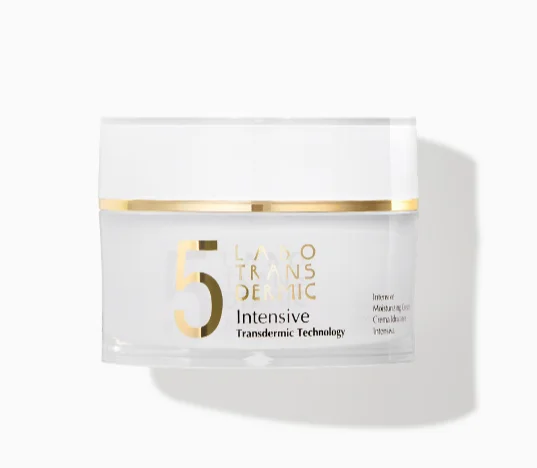
Analysis locked
How well does your skin match with Labo Transdermic Intensive Transdermic Technology?
Login to see detailsOr continue via
Quick 1-minute survey • Completely free
Ingredients
Analysis results of Ingredients


Ingredient List
| EWG | CIR | Ingredient Name & Cosmetic Function | Notes |
|---|---|---|---|
| 1 | A | (Hair Conditioning, Skin Conditioning, Antistatic Agent) |  |
| 1 | - | (Skin Conditioning) | |
Labo Transdermic Intensive Transdermic Technology - Ingredient Explanation
Panthenol
1. Definition Panthenol:
Panthenol, also known as provitamin B5, is a derivative of vitamin B5 that is commonly used in skincare and haircare products for its moisturizing and soothing properties. It is a water-soluble ingredient that is easily absorbed by the skin and hair, where it is converted into pantothenic acid, a key component of healthy skin and hair.2. Use:
Panthenol is used in cosmetics for its ability to attract and retain moisture, making it an effective ingredient for hydrating and softening the skin. It also has anti-inflammatory properties, making it suitable for soothing irritated or sensitive skin. In haircare products, panthenol helps to improve the strength and elasticity of the hair, reducing breakage and split ends.3. Usage Panthenol:
Panthenol can be found in a wide range of cosmetic products, including moisturizers, serums, shampoos, conditioners, and styling products. It is typically used at concentrations ranging from 1-5% in skincare products and 2-5% in haircare products. Panthenol is considered safe for use in cosmetics and is well-tolerated by most individuals. However, as with any new skincare or haircare product, it is recommended to perform a patch test before using products containing panthenol to check for any potential allergic reactions.4. References:
- Draelos, Z. D. (2010). Cosmetic Formulation of Skin Care Products. CRC Press.
- Baumann, L. (2009). Cosmetic Dermatology: Principles and Practice. McGraw Hill Professional.
- Fiume, M. M., Bergfeld, W. F., Belsito, D. V., Hill, R. A., Klaassen, C. D., Liebler, D. C., ... & Andersen, F. A. (2016). Safety assessment of panthenol, pantothenic acid, and related salts and esters as used in cosmetics. International Journal of Toxicology, 35(2), 42S-61S.
Acetyl Hexapeptide 37
1. Definition Acetyl Hexapeptide 37:
Acetyl Hexapeptide 37 is a synthetic peptide that is commonly used in cosmetics for its anti-aging properties. It is also known as Neurophroline, as it targets stress-related signs of aging by boosting the release of endorphins in the skin.2. Use:
Acetyl Hexapeptide 37 is primarily used in skincare products to reduce the appearance of wrinkles, fine lines, and other signs of aging. It works by stimulating the production of beta-endorphins, which help to improve skin firmness and elasticity. Additionally, it has been shown to enhance the skin's natural defense mechanisms against environmental stressors.3. Usage Acetyl Hexapeptide 37:
Acetyl Hexapeptide 37 is typically found in serums, creams, and masks targeted towards mature skin or those looking to prevent premature aging. It is recommended to apply products containing this peptide to clean, dry skin, focusing on areas where signs of aging are most prominent. It is important to follow the instructions provided by the manufacturer and consult with a dermatologist before incorporating it into your skincare routine.4. References:
- Lintner, K., & Peschard, O. (2012). Biologically active peptides: from a laboratory bench curiosity to a functional skin care product. International Journal of Cosmetic Science, 34(4), 299-306.
- Draelos, Z. D. (2010). Cosmeceuticals. In Cosmetic Dermatology (pp. 231-239). John Wiley & Sons, Ltd.
- Khavkin, J., & Ellis, D. A. (2011). Aging skin: histology, physiology, and pathology. Facial Plastic Surgery Clinics of North America, 19(2), 229-234.
Review
Didn't find
the information you need?










Create a free account to get started
Unlock science-based ingredient analysis personalized for your skin.
Already have an account? Log in
We protect your privacy. We never send spam.