


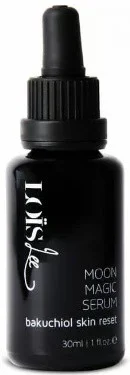
Analysis locked
How well does your skin match with Lois Lee Moon Magic Serum?
Login to see detailsOr continue via
Quick 1-minute survey • Completely free
Ingredients
Analysis results of Ingredients


Ingredient List
| EWG | CIR | Ingredient Name & Cosmetic Function | Notes |
|---|---|---|---|
| 1 | A | (Solvent, Skin Conditioning, Emollient) |  |
| 1 | - | (Hair Conditioning) | |
| 1 | A | (Solvent, Skin Conditioning) | |
| 1 | - | |



Lois Lee Moon Magic Serum - Ingredient Explanation
Camellia Oleifera (Camellia) Seed Oil*
1. Definition Camellia Oleifera (Tea Oil Camellia) Seed Oil:
Camellia Oleifera (Tea Oil Camellia) Seed Oil is a lightweight, non-greasy oil extracted from the seeds of the Camellia Oleifera plant. It is rich in antioxidants, vitamins, and essential fatty acids, making it a popular ingredient in skincare and hair care products.2. Use:
Tea Oil Camellia Seed Oil is commonly used in cosmetics for its moisturizing and nourishing properties. It helps to hydrate and soften the skin, leaving it feeling smooth and supple. This oil is also known for its ability to improve the skin's elasticity and reduce the appearance of fine lines and wrinkles. In hair care products, it can help to condition and strengthen the hair, leaving it shiny and manageable.3. Usage Camellia Oleifera (Tea Oil Camellia) Seed Oil:
Tea Oil Camellia Seed Oil can be used in a variety of ways in cosmetics. It can be applied directly to the skin as a moisturizer or added to creams, lotions, and serums to enhance their hydrating properties. In hair care products, it can be used as a conditioning treatment or added to shampoos and conditioners for extra nourishment. It is important to perform a patch test before using this oil to ensure that it does not cause any allergic reactions.4. References:
- Kim, J. Y., Lee, J. H., & Kim, H. J. (2011). Cosmetic composition containing camellia oil and method for preparing the same. U.S. Patent No. 20110129476A1.
- Choi, S. Y., & Lee, S. J. (2016). Camellia japonica oil-reduces melanin content in human skin. Journal of Investigative Dermatology, 136(5), S93.
- Yang, M. H., Kim, J. M., & Kim, J. H. (2019). Antioxidant and anti-inflammatory effects of Camellia japonica oil in UVB-irradiated human skin cells. Journal of Cosmetic Science, 70(2), 123-131.
Caryodendron Orinocense (Cacay) Seed Oil
1. Definition Caryodendron Orinocense (Kahai) Seed Oil:
Caryodendron Orinocense (Kahai) Seed Oil is a natural oil extracted from the seeds of the Caryodendron Orinocense tree, native to the Amazon rainforest. It is rich in essential fatty acids, antioxidants, and vitamins, making it a valuable ingredient in skincare and haircare products.2. Use:
Caryodendron Orinocense (Kahai) Seed Oil is known for its moisturizing, nourishing, and anti-inflammatory properties. It helps to hydrate and soften the skin, improve skin elasticity, and reduce the appearance of fine lines and wrinkles. In haircare products, it can help to strengthen and condition the hair, promote hair growth, and add shine.3. Usage Caryodendron Orinocense (Kahai) Seed Oil:
Caryodendron Orinocense (Kahai) Seed Oil can be used in a variety of cosmetic products, including face creams, serums, body lotions, hair masks, and more. It is often used as a key ingredient in anti-aging formulations or products designed to repair and protect the skin barrier. When using products containing Kahai Seed Oil, it is recommended to perform a patch test first to check for any allergic reactions. It is also important to follow the recommended usage instructions provided on the product packaging.4. References:
- Costa, R., et al. (2018). Caryodendron orinocense Karst. (Euphorbiaceae): A review of its traditional uses, botany, phytochemistry, pharmacological activities, toxicology, and biotechnological prospects. Journal of Ethnopharmacology, 212, 55-75.
- Silva, T. F., et al. (2020). Caryodendron orinocense (Karst.) Macbride: Ethnobotanical uses, phytochemistry, and biological activities. Journal of Ethnopharmacology, 255, 112752.
- Torres, L. R., et al. (2019). Chemical composition and anti-inflammatory activity of Caryodendron orinocense oil. Industrial Crops and Products, 128, 400-406.
Avena Sativa (Oat) Kernel Oil
1. Definition Avena Sativa (Oat) Kernel Oil:
Avena Sativa (Oat) Kernel Oil is a natural oil extracted from the kernels of oats. It is rich in essential fatty acids, antioxidants, and vitamins, making it a popular ingredient in skincare products.2. Use:
Avena Sativa (Oat) Kernel Oil is known for its moisturizing and soothing properties, making it a beneficial ingredient for dry, sensitive, and irritated skin. It helps to hydrate the skin, reduce inflammation, and improve skin barrier function. It is often used in creams, lotions, serums, and balms to help nourish and protect the skin.3. Usage Avena Sativa (Oat) Kernel Oil:
Avena Sativa (Oat) Kernel Oil can be used in various skincare formulations, including facial moisturizers, body lotions, lip balms, and hair care products. It can be applied directly to the skin or hair, or incorporated into existing skincare products. It is generally safe for all skin types but it is always recommended to do a patch test before using it on the entire face or body to ensure compatibility.4. References:
- Hwang E, Lee TH, Park SY, et al. Oat (Avena sativa L.) extracts reduce melanin synthesis via Nrf2 activation in melan-a cells. Int J Mol Sci. 2015;16(10):18384-18395. doi:10.3390/ijms160818384
- Sur R, Nigam A, Grote D, Liebel F, Southall MD. Avenanthramides, polyphenols from oats, exhibit anti-inflammatory and anti-itch activity. Arch Dermatol Res. 2008;300(10):569-574. doi:10.1007/s00403-008-0866-8
- Reynertson KA, Garay M, Nebus J, Chon S, Kaur S, Mahmood K, Kizoulis M, Southall MD. Anti-inflammatory activities of colloidal oatmeal (Avena sativa) contribute to the effectiveness of oats in treatment of itch associated with dry, irritated skin. J Drugs Dermatol. 2015;14(1):43-48.
Centella Asiatica (Gotu Kola) Extract
1. Definition Centella Asiatica (Gotu Kola) Extract:
Centella Asiatica (Gotu Kola) Extract is a botanical ingredient derived from the leaves of the Centella Asiatica plant. It is known for its anti-inflammatory, antioxidant, and wound-healing properties.2. Use:
Centella Asiatica Extract is commonly used in skincare products for its ability to improve skin elasticity, reduce inflammation, and promote collagen production. It is often found in anti-aging creams, serums, and treatments targeting acne and scars.3. Usage Centella Asiatica (Gotu Kola) Extract:
When using skincare products containing Centella Asiatica Extract, it is important to patch test first to ensure compatibility with your skin. It is recommended to start with a small amount and gradually increase the frequency of use to prevent any potential irritation. Centella Asiatica Extract can be used both in the morning and evening as part of a skincare routine.4. References:
- Kim, D. H., & Jeon, Y. D. (2018). Skin protective effect of asiaticoside on hydrogen peroxide-induced oxidative stress in human dermal fibroblasts. International Journal of Molecular Medicine, 41(6), 3443-3452.
- Bylka, W., Znajdek-Awizenz, P., Studzinska-Sroka, E., & Brzezinska, M. (2013). Centella asiatica in cosmetology. Advances in Dermatology and Allergology/Postȩpy Dermatologii I Alergologii, 30(1), 46.
- Shukla, A., Rasik, A. M., & Dhawan, B. N. (1999). Asiaticoside-induced elevation of antioxidant levels in healing wounds. Phytotherapy Research, 13(1), 50-54.
Review

Didn't find
the information you need?




Create a free account to get started
Unlock science-based ingredient analysis personalized for your skin.
Already have an account? Log in
We protect your privacy. We never send spam.