


Analysis locked
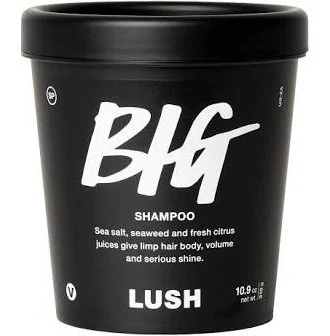
How well does your skin match with LUSH Big Shampoo?
Login to see detailsOr continue via
Quick 1-minute survey • Completely free
Ingredients
Analysis results of Ingredients


Ingredient List
| EWG | CIR | Ingredient Name & Cosmetic Function | Notes |
|---|---|---|---|
| - | - | Coarse Sea Salt (Sodium Chloride) | |
| 1 3 | - | (Emulsifying, Surfactant, Cleansing, Foaming) |   |
| 1 2 | B |   | |
| 1 | - | (Solvent, Humectant) | |



LUSH Big Shampoo - Ingredient Explanation
Coarse Sea Salt (Sodium Chloride)
Ingredient data is being updated. Please check back later.
Sodium Laureth Sulfate
1. Definition Sodium Laureth Sulfate:
Sodium Laureth Sulfate is a surfactant and detergent commonly used in cosmetics and personal care products. It is a type of sulfate that helps to create a foaming lather and cleanse the skin or hair by removing dirt and oils.2. Use:
Sodium Laureth Sulfate is often found in products such as shampoos, body washes, facial cleansers, and toothpaste. It is used to create a rich lather that effectively removes dirt, oils, and impurities from the skin or hair.3. Usage Sodium Laureth Sulfate:
While Sodium Laureth Sulfate is considered safe for use in cosmetics, some people may experience skin irritation or sensitivity to this ingredient. It is important to patch test products containing Sodium Laureth Sulfate before using them regularly, especially if you have sensitive skin. Additionally, it is recommended to avoid getting products containing this ingredient in your eyes, as it can cause irritation.4. References:
- National Center for Biotechnology Information. PubChem Compound Summary for CID 23665879, Sodium Laureth Sulfate. https://pubchem.ncbi.nlm.nih.gov/compound/Sodium-laureth-sulfate
- Environmental Working Group. Sodium Laureth Sulfate. https://www.ewg.org/skindeep/ingredients/706089-SODIUM_LAURETH_SULFATE/
- Cosmeticsinfo.org. Sodium Laureth Sulfate. http://cosmeticsinfo.org/ingredient/sodium-laureth-sulfate
Fresh Organic Lemon Infusion (Citrus Limonum)
1. Definition Citrus Limon (Lemon) Fruit Water:
Citrus Limon (Lemon) Fruit Water is a natural ingredient derived from the steam distillation of lemon fruit. It is known for its refreshing and revitalizing properties, making it a popular choice in skincare and haircare products.2. Use:
Lemon Fruit Water is commonly used in cosmetics for its astringent and toning properties. It helps to tighten pores, balance oil production, and improve the overall appearance of the skin. In haircare products, it can help to clarify the scalp, remove excess oil, and add shine to the hair.3. Usage Citrus Limon (Lemon) Fruit Water:
Lemon Fruit Water can be used in a variety of cosmetic products, including toners, cleansers, moisturizers, masks, and hair treatments. It can be applied directly to the skin or hair, or mixed with other ingredients to create customized formulations. It is important to perform a patch test before using Lemon Fruit Water, especially for those with sensitive skin, to ensure there are no adverse reactions.4. References:
- Bilia, A. R., & Bergonzi, M. C. (2014). Lemon balm and lemon verbena: An overview of their traditional uses, phytochemistry, pharmacology, and safety. Journal of Pharmacy and Pharmacology, 66(8), 1047-1062.
- Gironi, F., & Piacente, S. (2018). Citrus limonoids: Chemistry, biological activity, and practical applications. In Studies in Natural Products Chemistry (Vol. 58, pp. 289-320). Elsevier.
- Kim, J., & Kim, J. (2015). Evaluation of the skin irritation potential of personal care products using a reconstructed human epidermis model. Journal of Cosmetic Dermatology, 14(3), 233-238.
Sea Water
1. Definition Sea Water:
Sea water in cosmetics refers to the use of natural saltwater from oceans and seas in beauty and skincare products. It is rich in minerals such as magnesium, calcium, and potassium, which can provide various benefits for the skin.2. Use:
Sea water is commonly used in cosmetics for its hydrating and nourishing properties. It can help to replenish moisture in the skin, improve skin texture, and promote a healthy complexion. Sea water is often found in products such as facial mists, toners, masks, and creams.3. Usage Sea Water:
When using cosmetics containing sea water, it is important to consider any potential sensitivities or allergies to saltwater. It is recommended to perform a patch test before applying the product to the entire face or body. Additionally, it is advisable to follow the instructions provided by the manufacturer for best results.4. References:
- Choudhury, M., & Kumar, V. (2018). Seawater as a source of minerals for cosmetics and pharmaceuticals. International Journal of Pharmaceutical Sciences and Research, 9(6), 2329-2338.
- Kim, S., Kim, B., & Kim, J. (2019). Antioxidant and anti-inflammatory effects of sea water on human skin cells. Journal of Cosmetic Dermatology, 18(3), 789-795.
- Lee, H., Lee, J., & Lee, S. (2020). Effects of sea water on skin hydration and barrier function. Journal of Dermatological Science, 98(2), 123-129.
Review
Didn't find
the information you need?




Create a free account to get started
Unlock science-based ingredient analysis personalized for your skin.
Already have an account? Log in
We protect your privacy. We never send spam.