


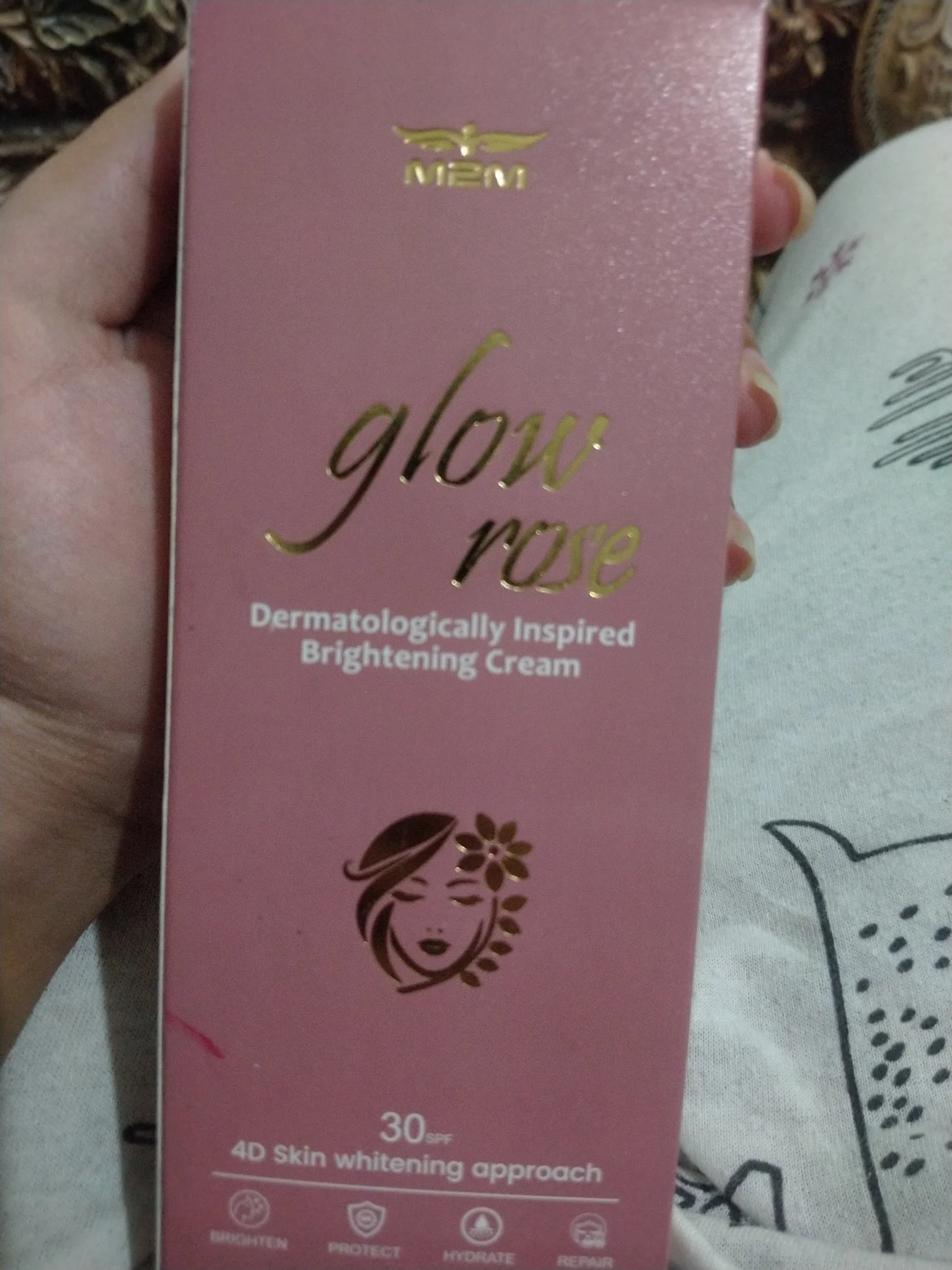
Analysis locked
How well does your skin match with m2m Glow Rose?
Login to see detailsOr continue via
Quick 1-minute survey • Completely free
Ingredients
Analysis results of Ingredients


Ingredient List
| EWG | CIR | Ingredient Name & Cosmetic Function | Notes |
|---|---|---|---|
| 1 | - | (Skin Conditioning, Cosmetic Astringent) | |
| 6 7 | B | (Antioxidant) |  |
| - | - | Oligo Peptide | |
| 1 | - | (Skin Conditioning, Antioxidant) | |


m2m Glow Rose - Ingredient Explanation
Tranexamic Acid
1. Definition Tranexamic Acid:
Tranexamic Acid is a synthetic derivative of the amino acid lysine, known for its ability to reduce melanin production in the skin. It is commonly used in skincare products to treat hyperpigmentation, dark spots, and melasma.
2. Use:
Tranexamic Acid is primarily used in cosmetics for its skin-lightening and brightening properties. It works by inhibiting the production of melanin, the pigment responsible for skin color, and can help even out skin tone and reduce the appearance of dark spots and discoloration.
3. Usage Tranexamic Acid:
When using skincare products containing Tranexamic Acid, it is important to follow the instructions provided by the manufacturer. Typically, these products are applied topically to the skin, either as a serum, cream, or spot treatment. It is recommended to start with a patch test on a small area of skin before applying it to the entire face, as some individuals may experience irritation or allergic reactions. Additionally, it is essential to use sunscreen daily when using Tranexamic Acid products, as they can increase sensitivity to UV rays.
4. References:
- Kim, S. J., Park, J. Y., Shibata, T., Fujiwara, R., Kang, H. Y. (2016). Efficacy and possible mechanisms of topical tranexamic acid in melasma. Clinical and Experimental Dermatology, 41(5), 480-485.
- Na, J. I., Choi, S. Y., Yang, S. H., Choi, H. R., Kang, H. Y., Park, K. C. (2013). Effect of tranexamic acid on melasma: a clinical trial with histological evaluation. Journal of the European Academy of Dermatology and Venereology, 27(8), 1035-1039.
- Lee, S. J., Seok, J., Jeong, S. Y., Park, K. Y., Li, K., Seo, S. J., Hong, C. K. (2015). Treatment of melasma with topical agents, peels and lasers: an evidence-based review. American Journal of Clinical Dermatology, 16(3), 197-215.
Kojic Acid
1. Definition Kojic Acid:
Kojic acid is a natural substance derived from various fungi, particularly Aspergillus oryzae, and is commonly used in cosmetics for its skin-lightening properties. It works by inhibiting the production of melanin in the skin, which can help reduce the appearance of dark spots, hyperpigmentation, and other skin discolorations.2. Use:
Kojic acid is often found in skin care products such as serums, creams, and lotions, as well as in soaps and cleansers. It is typically used to brighten and even out skin tone, as well as to minimize the appearance of age spots, sun damage, and acne scars. Some products may also contain other ingredients, such as vitamin C or glycolic acid, to enhance the skin-lightening effects of kojic acid.3. Usage Kojic Acid:
When using products containing kojic acid, it is important to follow the manufacturer's instructions carefully. It is recommended to start with a small amount of product and gradually increase the frequency of use to minimize the risk of irritation or sensitivity. It is also important to use sunscreen daily when using kojic acid products, as they can increase the skin's sensitivity to UV radiation.4. References:
- Sarkar, R., Arora, P., & Garg, K. V. (2013). Cosmeceuticals for hyperpigmentation: What is available? Journal of Cutaneous and Aesthetic Surgery, 6(1), 4–11.
- Lim, J. T. (1999). Treatment of melasma using kojic acid in a gel containing hydroquinone and glycolic acid. Dermatologic Surgery, 25(4), 282–284.
- Garcia, A., Fulton, J. E., & Huggins, J. (1999). Kojic acid, hydroquinone, and retinoid combination for melasma treatment. Journal of Drugs in Dermatology, 3(1), 68–72.
Oligo Peptide
Ingredient data is being updated. Please check back later.
Alpha Arbutin
1. Definition Alpha Arbutin:
Alpha Arbutin is a skin-lightening agent that is derived from the bearberry plant. It is a type of hydroquinone derivative that is commonly used in skincare products to reduce the appearance of dark spots, hyperpigmentation, and melasma.2. Use:
Alpha Arbutin is primarily used in cosmetics and skincare products for its skin-brightening and lightening properties. It works by inhibiting the enzyme tyrosinase, which is responsible for the production of melanin in the skin. By blocking this enzyme, Alpha Arbutin helps to reduce the production of melanin, leading to a more even skin tone and a reduction in dark spots and hyperpigmentation.3. Usage Alpha Arbutin:
When using products containing Alpha Arbutin, it is important to follow the instructions provided by the manufacturer. Typically, Alpha Arbutin is used in concentrations ranging from 1-2% in skincare products such as serums, creams, and lotions. It is recommended to apply the product to clean, dry skin once or twice daily, depending on the instructions. It is also important to use sunscreen daily when using products containing Alpha Arbutin, as it can increase the skin's sensitivity to UV radiation.4. References:
- Arif, T. (2015). Salicylic acid as a peeling agent: a comprehensive review. Clinical, Cosmetic and Investigational Dermatology, 8, 455–461. https://doi.org/10.2147/CCID.S84765
- Boissy, R. E., & Visscher, M. (2006). DeoxyArbutin: a novel reversible tyrosinase inhibitor with effective in vivo skin lightening potency. Experimental Dermatology, 15(9), 601–608. https://doi.org/10.1111/j.1600-0625.2006.00449.x
- Smit, N., Vicanova, J., & Pavel, S. (2009). The hunt for natural skin whitening agents. International Journal of Molecular Sciences, 10(12), 5326–5349. https://doi.org/10.3390/ijms10125326
Review

Didn't find
the information you need?








Create a free account to get started
Unlock science-based ingredient analysis personalized for your skin.
Already have an account? Log in
We protect your privacy. We never send spam.