


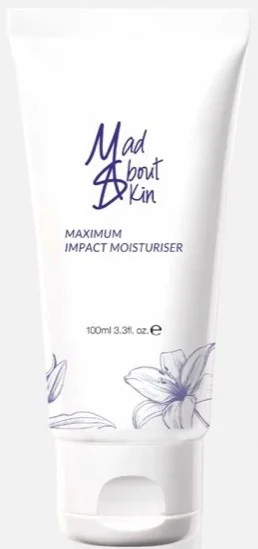
Analysis locked
How well does your skin match with Mad About Skin Maximum Impact Moisturiser?
Login to see detailsOr continue via
Quick 1-minute survey • Completely free
Ingredients
Analysis results of Ingredients


Ingredient List
| EWG | CIR | Ingredient Name & Cosmetic Function | Notes |
|---|---|---|---|
| 1 | - | (Solvent) | |
| 1 | A | (Hair Conditioning, Skin Conditioning, Emollient, Refatting) | |
| 1 | A | (Solvent, Masking, Perfuming, Skin Conditioning, Emollient) | |
| 1 2 | A | (Solvent, Perfuming, Fragrance, Humectant, Viscosity Decreasing Agent, Hair Conditioning, Skin Protecting, Denaturant ) |  Good for dry skin Moisturizing Good for dry skin Moisturizing |
| 1 | A | (Skin Conditioning, Emollient, Antimicrobial) | |
| 1 3 | A | (Skin Protecting, Skin Conditioning, Emollient, Antifoaming Agent) |  Silicone Moisturizing Silicone Moisturizing |
| 1 | A | (Opacifying, Emollient, Viscosity Controlling, Viscosity Increasing Agent, Emulsion Stabilising, Emulsifying, Foam Boosting, Viscosity Increasingagent - Aqueous) | Cleansing |
| 1 | A | (Emollient, Emulsifying) |  Fungal Acne Trigger Cleansing Fungal Acne Trigger Cleansing |
| 1 3 | B | (Surfactant, Emulsifying, Cleansing) | Cleansing |
| 2 | B | (Skin Conditioning, Absorbent, Viscosity Increasing Agent, Emulsion Stabilising, Binding, Film Forming, Hair Fixing, Viscosity Controlling, Skin-Conditioning Agent - Emollient) | |
| 1 | A | (Solvent) | |
| 1 3 | B | (Emulsifying, Surfactant) | Cleansing |
| 1 | - | (Skin Conditioning, Emollient, Hair Conditioning, Abrasive) | |
| 1 | A | (Skin Conditioning) | Fungal Acne Trigger |
| 1 | A | (Fragrance, Skin-Conditioning Agent - Occlusive) |  Bad for oily skin Fungal Acne Trigger Bad for oily skin Fungal Acne Trigger |
| 1 | A | (Skin Conditioning, Hair Conditioning) | Fungal Acne Trigger |
| 1 | A | (Skin Conditioning, Masking, Perfuming) | |
| 1 | A | (Humectant, Flavoring Agent) | |
| 1 | - | (Hair Conditioning, Skin Conditioning) | Anti Aging |
| 5 | - | (Perfuming, Humectant, Skin Conditioning, Antioxidant) | Brightening Acne fighting |
| 1 | A | (Humectant, Flavoring Agent, Skin-Conditioning Agent - Miscellaneous) | |
| 1 | - | (Masking, Perfuming, Skin Conditioning) | Good for dry skin  Good for sensitive skin Good for sensitive skin |
| 1 | - | | |
| 1 | - | (Emollient, Skin Protecting) | Moisturizing |
| 1 | - | (Humectant, Skin Conditioning, Moisturising) | Moisturizing |
| 1 | - | (Skin Conditioning, Soothing) | |
| 1 | - | (Skin Conditioning, Viscosity Controlling) | Bad for oily skin |
| 1 | A | (Humectant, Skin Conditioning, Soothing, Flavoring Agent) | |
| 1 3 | A | (Skin Conditioning, Humectant, Antistatic Agent, pH adjusting agent) | |
| 1 | A | (Viscosity Controlling, Viscosity Increasing Agent, Binding Agent, Binding, Absorbent, Bulking Agent) | |
| 1 | A | (Viscosity Controlling, Viscosity Increasing Agent, Emulsion Stabilising, Antistatic Agent, Binding Agent, Binding, Film Forming) | |
| 1 | - | (Masking, Humectant, Viscosity Controlling, Abrasive, Bulking Agent) | |
| 1 | A | (Masking, Fragrance, Hair Conditioning, Skin Conditioning, Antistatic Agent) | |
| 1 | A | (Masking, Fragrance, Hair Conditioning, Skin Conditioning, Antistatic Agent) | |
| 1 | - | (Skin Conditioning, Emollient, Antistatic Agent) | |
| 1 | A | (Fragrance, Humectant, Hair Conditioning, Antistatic Agent) | |
| 2 | A | (Fragrance, Preservative) | |
| 1 | B | (Masking, Fragrance, Preservative) |  Fragrance-free Fragrance-free |
| 4 6 | A | (Solvent, Masking, Fragrance, Viscosity Decreasing Agent, Preservative, External Analgesic ) |  Allergen Fragrance-free Allergen Fragrance-free |
| 1 | A | (Fragrance, Emulsifying, Surfactant) | Bad for oily skin Fungal Acne Trigger Cleansing |
| 1 | A | (Preservative) | |
| 1 2 | A | (Masking, Fragrance, Chelating Agent, pH adjusting agent, pH adjusting agent) | Anti Aging  Bad for sensitive skin Bad for sensitive skin |
| 1 3 | A | (Masking, Fragrance, Preservative, pH adjusting agent, Bulking Agent) | Bad for sensitive skin |
| 2 4 | A | (Fragrance, Preservative) | |
Mad About Skin Maximum Impact Moisturiser - Ingredient Explanation
Water
1. Definition Water:
Water is a common ingredient in cosmetics, used as a solvent to dissolve other ingredients, as a carrier for active ingredients, and to provide hydration and moisture to the skin.2. Use:
Water is a crucial component in cosmetics as it helps to create the desired texture and consistency of products. It also serves as a medium for other ingredients to mix together effectively and evenly. Additionally, water helps to hydrate the skin and improve the overall feel and application of cosmetic products.3. Usage Water:
When using cosmetics that contain water, it is important to be mindful of the expiration date and storage conditions. Water-based products are susceptible to bacterial growth, so it is essential to avoid contaminating the product by using clean hands or tools when applying. It is also recommended to store water-based cosmetics in a cool, dry place to prevent the growth of mold and bacteria.4. References:
- Draelos, Z. D. (2010). Cosmetic dermatology: products and procedures. John Wiley & Sons.
- Winter, R. (2009). A consumer's dictionary of cosmetic ingredients: complete information about the harmful and desirable ingredients found in cosmetics and cosmeceuticals. Crown.
- Begoun, P. (2003). Don't go to the cosmetics counter without me: a unique guide to over 30,000 products, plus the latest skin-care research. Beginning Press.
Squalane
1. Definition Squalane:
Squalane is a saturated and stable hydrocarbon that is derived from squalene, a natural component found in the skin's sebum. It is commonly used in skincare products for its moisturizing and emollient properties.2. Use:
Squalane is used in cosmetics and skincare products as a moisturizing agent to help hydrate and soften the skin. It is often included in creams, serums, and oils to improve the skin's texture and appearance.3. Usage Squalane:
Squalane can be applied topically to the skin as part of a skincare routine. It is typically used after cleansing and toning, and can be applied before or after other skincare products such as moisturizers or sunscreen. Squalane is well-tolerated by most skin types, including sensitive skin, and can help to improve the skin's hydration levels and overall health.Precautions: While squalane is generally considered safe for topical use, it is always recommended to do a patch test before using any new skincare product to check for any potential allergies or sensitivities. Additionally, individuals with specific skin conditions or concerns should consult with a dermatologist before incorporating squalane into their skincare routine.
4. References:
- Baumann, L. (2005). Cosmetic Dermatology: Principles and Practice. New York: McGraw-Hill.
- Draelos, Z. D. (2015). Cosmeceuticals. Philadelphia: Saunders.
- Mukherjee, S., Date, A., Patravale, V., Korting, H. C., Roeder, A., & Weindl, G. (2006). Retinoids in the treatment of skin aging: an overview of clinical efficacy and safety. Clinical interventions in aging, 1(4), 327-348.
Caprylic/ Capric Triglyceride
1. Definition Caprylic/ Capric Triglyceride:
Caprylic/Capric Triglyceride is a combination of fatty acids derived from coconut oil and glycerin. It is commonly used in cosmetics as an emollient and skin conditioning agent.2. Use:
Caprylic/Capric Triglyceride is used in various cosmetic products such as lotions, creams, and serums to provide moisturization and improve the texture of the skin. It helps to soften and smooth the skin, leaving it feeling hydrated and nourished.3. Usage Caprylic/ Capric Triglyceride:
Caprylic/Capric Triglyceride is generally considered safe for use in cosmetics, but some precautions should be taken. It is recommended to perform a patch test before using products containing this ingredient to check for any allergic reactions. Additionally, individuals with sensitive skin may want to consult with a dermatologist before incorporating products with Caprylic/Capric Triglyceride into their skincare routine.4. References:
- "Caprylic/Capric Triglyceride." Cosmetics Info, www.cosmeticsinfo.org/ingredient/capryliccapric-triglyceride.
- "Caprylic/Capric Triglyceride." The Derm Review, www.thedermreview.com/caprylic-capric-triglyceride/.
- "Caprylic/Capric Triglyceride." Truth in Aging, www.truthinaging.com/ingredients/capryliccapric-triglyceride.
Glycerin
1. Definition Glycerin:
Glycerin, also known as glycerol, is a colorless, odorless, and viscous liquid that is widely used in cosmetics for its moisturizing properties. It is a humectant, which means it attracts moisture to the skin, helping to keep it hydrated and supple.
2. Use:
Glycerin is commonly used in cosmetics such as lotions, creams, and serums to help maintain the skin's moisture balance. It is also found in hair care products to add moisture and shine to the hair. Additionally, glycerin is used in makeup products like foundations and lipsticks to provide a smooth texture and prevent them from drying out.
3. Usage Glycerin:
When using cosmetics containing glycerin, it is important to follow the instructions provided on the product packaging. Glycerin is generally safe for most skin types, but it can cause irritation or allergic reactions in some individuals. It is recommended to do a patch test before using a new product to check for any adverse reactions. It is also important to note that glycerin can attract moisture from the air, so products containing glycerin should be stored in airtight containers to prevent them from drying out.
4. References:
- Draelos, Z. D. (2010). Cosmetic Formulation of Skin Care Products. John Wiley & Sons.
- Loden, M., & Maibach, H. I. (2006). Dry Skin and Moisturizers: Chemistry and Function. CRC Press.
- Winter, R. (2009). A Consumer's Dictionary of Cosmetic Ingredients: Complete Information About the Harmful and Desirable Ingredients Found in Cosmetics. Harmony.
C12 15 Alkyl Benzoate
1. Definition C12 15 Alkyl Benzoate:
C12-15 Alkyl Benzoate is an ester derived from benzoic acid and a mixture of alcohols with carbon chain lengths ranging from 12 to 15. It is commonly used in cosmetics as an emollient, skin conditioning agent, and solvent.2. Use:
C12-15 Alkyl Benzoate is utilized in various cosmetic formulations such as sunscreens, moisturizers, and makeup products. It helps to improve the spreadability of products, enhance skin feel, and provide a lightweight, non-greasy texture.3. Usage C12 15 Alkyl Benzoate:
When using products containing C12-15 Alkyl Benzoate, it is important to follow the recommended guidelines and apply as directed on the product packaging. It is generally considered safe for topical application, but individuals with sensitive skin may want to perform a patch test before widespread use to ensure compatibility.Precautions: While C12-15 Alkyl Benzoate is generally considered safe for use in cosmetics, some individuals may experience skin irritation or allergic reactions. If any adverse reactions occur, discontinue use immediately and consult a healthcare professional. It is recommended to avoid contact with eyes and mucous membranes.
4. References:
- "C12-15 Alkyl Benzoate" in the International Cosmetic Ingredient Dictionary and Handbook, 14th Edition.
- Cosmetic Ingredient Review Expert Panel. (2003). Final report on the safety assessment of C12-15 Alkyl Benzoate.
- Personal Care Products Council. (2019). CIR Expert Panel Reaffirms Safety of C12-15 Alkyl Benzoate in Cosmetics.
Dimethicone
1. Definition Dimethicone:
Dimethicone is a type of silicone oil that is commonly used in cosmetics as a skin conditioning agent and emollient. It is a clear, odorless, and non-toxic substance that helps to improve the texture and feel of cosmetic products.2. Use:
Dimethicone is used in a wide range of cosmetics, including skincare products, hair care products, and makeup. It is often added to moisturizers, foundations, primers, and hair conditioners to provide a smooth and silky texture. Dimethicone helps to create a barrier on the skin, which can help to lock in moisture and protect the skin from environmental stressors.3. Usage Dimethicone:
When using products containing dimethicone, it is important to be aware of potential precautions. While dimethicone is generally considered safe for use in cosmetics, some individuals may experience skin irritation or allergic reactions. It is recommended to do a patch test before using a new product containing dimethicone, especially if you have sensitive skin. Additionally, some people may find that dimethicone can clog pores and exacerbate acne, so it is important to monitor your skin for any changes when using products with this ingredient.4. References:
- Lanigan, R. S., & Yamarik, T. A. (2002). Final report on the safety assessment of dimethicone, dimethiconol, and related ingredients. International journal of toxicology, 21(1), 7-41.
- Draelos, Z. D. (2010). Cosmetic vehicle efficacy. Dermatologic therapy, 23(4), 314-317.
- Fiume, M. M., Bergfeld, W. F., Belsito, D. V., Hill, R. A., Klaassen, C. D., Liebler, D., ... & Andersen, F. A. (2016). Safety assessment of dimethicone crosspolymers as used in cosmetics. International journal of toxicology, 35(1_suppl), 5S-24S.
Cetearyl Alcohol
1. Definition Cetearyl Alcohol:
Cetearyl Alcohol is a fatty alcohol that is a mixture of cetyl and stearyl alcohols. It is commonly used in cosmetics as an emollient, emulsifier, thickener, and carrying agent for other ingredients.2. Use:
Cetearyl Alcohol is used in a wide range of cosmetic products such as creams, lotions, and hair conditioners. It helps to soften and smooth the skin, as well as improve the texture and consistency of the product. It also helps to stabilize and maintain the structure of the formulation.3. Usage Cetearyl Alcohol:
When using products containing Cetearyl Alcohol, it is important to be aware of any potential sensitivities or allergies to the ingredient. Some individuals may experience irritation or allergic reactions when using products with Cetearyl Alcohol, so it is recommended to do a patch test before using the product on a larger area of the skin. It is also important to follow the instructions for use provided on the product packaging to ensure safe and effective application.4. References:
- "Cetearyl Alcohol" by Paula Begoun, Cosmetics Cop, https://www.paulaschoice.com/ingredient-dictionary/emollients/cetearyl-alcohol.html
- "Cetearyl Alcohol in Cosmetics: Safe or Harmful?" by Dr. Anvita Arora, Dermatologist, https://www.dranvitaarora.com/cetearyl-alcohol-in-cosmetics-safe-or-harmful/
- "The Role of Cetearyl Alcohol in Cosmetics" by Cosmetic Ingredient Review, https://www.cir-safety.org/sites/default/files/cetearylcir.pdf
Glyceryl Stearate
1. Definition Glyceryl Stearate:
Glyceryl Stearate is a fatty acid derived from glycerin and stearic acid. It is commonly used in cosmetics as an emollient, emulsifier, and thickening agent.2. Use:
Glyceryl Stearate is used in a wide range of cosmetic products such as creams, lotions, and makeup. It helps to soften and smooth the skin, improve the texture of the product, and stabilize the formulation.3. Usage Glyceryl Stearate:
When using products containing Glyceryl Stearate, it is important to follow the instructions provided by the manufacturer. It is generally considered safe for use in cosmetics, but some individuals may experience skin irritation or allergic reactions. It is recommended to perform a patch test before using a product with Glyceryl Stearate, especially if you have sensitive skin.4. References:
- "Glyceryl Stearate" by The Personal Care Products Council
- "Safety Assessment of Glyceryl Stearate and Glyceryl Stearate SE as Used in Cosmetics" by the Cosmetic Ingredient Review
- "Glyceryl Stearate" by Paula's Choice Skincare
Ceteth 20
1. Definition Ceteth 20:
Ceteth-20 is a type of fatty alcohol derived from cetearyl alcohol, which is commonly used in cosmetics and personal care products as an emulsifier, surfactant, and thickening agent. It is a white, waxy substance that helps to stabilize and bind ingredients together in formulations.2. Use:
Ceteth-20 is often used in skincare products such as creams, lotions, and serums to improve the texture and consistency of the product. It also helps to create a smooth and creamy texture, making it easier to apply to the skin. Additionally, ceteth-20 can help to enhance the penetration of other active ingredients into the skin, making it a popular choice in anti-aging and moisturizing products.3. Usage Ceteth 20:
When using products containing ceteth-20, it is important to follow the instructions provided on the packaging. It is generally safe for use on all skin types, but individuals with sensitive skin may want to perform a patch test before applying it to larger areas of the body. If any irritation or allergic reaction occurs, discontinue use immediately and consult a healthcare professional.4. References:
- "Ceteth-20" Cosmetics Info, www.cosmeticsinfo.org/ingredient/ceteth-20
- "Ceteth-20" Truth In Aging, www.truthinaging.com/ingredients/ceteth-20
- "Ceteth-20" The Derm Review, www.thedermreview.com/ceteth-20
Sodium Polyacrylate
1. Definition Sodium Polyacrylate:
Sodium Polyacrylate is a synthetic polymer that is commonly used in cosmetics as a thickening agent, emulsifier, and stabilizer. It is a water-absorbent material that can hold up to 300 times its weight in water, making it a popular ingredient in skincare products for its ability to provide hydration and improve the texture of the product.2. Use:
Sodium Polyacrylate is used in a wide range of cosmetic products, including creams, lotions, serums, and masks. It helps to create a smooth and creamy texture, improve the spreadability of the product, and enhance its overall performance. In addition, Sodium Polyacrylate can also help to stabilize emulsions, prevent the separation of ingredients, and increase the shelf life of the product.3. Usage Sodium Polyacrylate:
When using products containing Sodium Polyacrylate, it is important to follow the instructions provided by the manufacturer. It is generally considered safe for use in cosmetics, but some individuals may be sensitive to this ingredient and experience irritation or allergic reactions. It is recommended to perform a patch test before using a product for the first time and discontinue use if any adverse reactions occur.4. References:
- "Polyacrylates in Cosmetics." CosmeticsInfo.org, www.cosmeticsinfo.org/ingredient/polyacrylates.
- "Sodium Polyacrylate." Truth In Aging, www.truthinaging.com/ingredients/sodium-polyacrylate.
- "Safety Assessment of Polyacrylate Polymers as Used in Cosmetics." Cosmetic Ingredient Review, www.cir-safety.org/sites/default/files/polyacrylates.pdf.
1,2-Hexanediol
1. Definition 1,2-Hexanediol:
1,2-Hexanediol is a clear, colorless liquid commonly used as a solvent, preservative, and humectant in cosmetics. It is a type of glycol that is derived from petroleum.2. Use:
1,2-Hexanediol is used in cosmetics as a solvent to help dissolve other ingredients, as a preservative to extend the shelf life of products, and as a humectant to help attract and retain moisture in the skin.3. Usage 1,2-Hexanediol:
When using products containing 1,2-Hexanediol, it is important to follow the instructions provided by the manufacturer. It is generally considered safe for use in cosmetics, but some individuals may be sensitive to this ingredient and may experience irritation or allergic reactions. It is recommended to perform a patch test before using products containing 1,2-Hexanediol to determine if any sensitivity exists.4. References:
- CosmeticsInfo.org. (n.d.). 1,2-Hexanediol. Retrieved from https://cosmeticsinfo.org/ingredient/12-hexanediol
- Personal Care Products Council. (2019). Safety Assessment of 1,2-Hexanediol as Used in Cosmetics. Retrieved from https://www.personalcarecouncil.org/2020-01-28-safety-assessment-of-12-hexanediol-as-used-in-cosmetics/
- U.S. Food and Drug Administration. (n.d.). Code of Federal Regulations Title 21. Retrieved from https://www.accessdata.fda.gov/scripts/cdrh/cfdocs/cfcfr/CFRSearch.cfm?fr=172.820
Laureth 7
1. Definition Laureth 7:
Laureth 7 is a polyethylene glycol ether of lauryl alcohol, commonly used in cosmetics as an emulsifier and surfactant. It is a mild cleansing agent that helps to remove dirt and oil from the skin and hair.2. Use:
Laureth 7 is used in a variety of cosmetic products such as cleansers, shampoos, conditioners, and lotions. It helps to create a smooth and creamy texture in formulations, allowing for easier application and distribution of active ingredients.3. Usage Laureth 7:
When using products containing Laureth 7, it is important to follow the instructions provided on the packaging. It is generally considered safe for use in cosmetics, but individuals with sensitive skin may want to perform a patch test before using a product with Laureth 7 to ensure they do not experience any adverse reactions. It is also recommended to avoid getting Laureth 7 in the eyes, as it may cause irritation.4. References:
- CosmeticsInfo.org. (n.d.). Laureth-7. https://cosmeticsinfo.org/ingredient/laureth-7
- Personal Care Council. (2007). Safety Assessment of Laureth-7 and PEG-7 Laureate. https://online.personalcarecouncil.org/ctfa-static/online/lists/cir-pdfs/pr110.pdf
- U.S. National Library of Medicine. (2021). Laureth-7. https://pubchem.ncbi.nlm.nih.gov/compound/Laureth-7
Simmondsia Chinensis (Jojoba) Seed Oil Extract
1. Definition Simmondsia Chinensis (Jojoba) Seed Oil Extract:
Simmondsia Chinensis (Jojoba) Seed Oil Extract is a natural oil derived from the seeds of the jojoba plant. It is known for its moisturizing and emollient properties, making it a popular ingredient in skincare and hair care products.2. Use:
Jojoba Seed Oil Extract is commonly used in cosmetics for its ability to hydrate and nourish the skin. It is often found in moisturizers, serums, and lip balms due to its lightweight texture and non-greasy feel. Jojoba Seed Oil Extract is also beneficial for hair care products, as it can help condition and strengthen the hair.3. Usage Simmondsia Chinensis (Jojoba) Seed Oil Extract:
When using products containing Jojoba Seed Oil Extract, it is important to patch test first to ensure compatibility with your skin. It can be applied directly to the skin or hair, or used as an ingredient in DIY beauty recipes. Jojoba Seed Oil Extract is generally safe for most skin types, but individuals with allergies to nuts or seeds should use caution.4. References:
- Paula Begoun. (2003). "Don't Go to the Cosmetics Counter Without Me." 7th Edition.
- Dweck, A. C. (2003). "The Jojoba Story." Personal Care Magazine, 4(1), 1-4.
- Meier, L., & Sticher, O. (2004). "Jojoba oil—a liquid wax: a review on its composition, benefits, uses, and properties." Revista Brasileira de Farmacognosia, 14(1), 1-6.
Macadamia Integrifolia Seed Oil
1. Definition Macadamia Integrifolia Seed Oil:
Macadamia Integrifolia Seed Oil is a lightweight, non-greasy oil extracted from the nuts of the Macadamia Integrifolia tree. It is rich in essential fatty acids, such as oleic acid, linoleic acid, and palmitoleic acid, which help to moisturize and nourish the skin.2. Use:
Macadamia Integrifolia Seed Oil is commonly used in cosmetics and skincare products for its emollient properties. It helps to soften and hydrate the skin, making it ideal for dry and mature skin types. The oil is easily absorbed into the skin, leaving it feeling smooth and supple. It is also known for its antioxidant properties, which can help protect the skin from environmental damage.3. Usage Macadamia Integrifolia Seed Oil:
Macadamia Integrifolia Seed Oil can be used in a variety of skincare products, such as moisturizers, serums, and facial oils. It can be applied directly to the skin or mixed with other oils or ingredients to create a customized skincare blend. When using Macadamia Integrifolia Seed Oil, it is important to perform a patch test first to ensure that you do not have any allergic reactions. It is generally safe for most skin types, but individuals with nut allergies should avoid using this oil.4. References:
- Lin, T., Zhong, L., Santiago, J. L., & Xiao, W. (2017). Macadamia nut oil: A review of current research. Journal of Food and Nutrition Research, 5(2), 108-115.
- Silva, F. L., Fischer, D. C. H., & Fronza, N. (2018). Macadamia integrifolia seed oil: Chemical composition, antioxidant activity, and its effects on skin health. Journal of Cosmetic Dermatology, 17(1), 15-20.
- Lopes, L. B., & Lopes, J. L. C. (2019). Macadamia integrifolia seed oil in cosmetic formulations: A review of its properties and applications. International Journal of Cosmetic Science, 41(4), 359-366.
Prunus Amygdalus Dulcis (Sweet Almond) Oil
1. Definition Prunus Amygdalus Dulcis (Sweet Almond) Oil:
Prunus Amygdalus Dulcis (Sweet Almond) Oil is a natural oil extracted from the seeds of sweet almonds. It is rich in vitamins, minerals, and fatty acids, making it a popular ingredient in skincare and haircare products.2. Use:
Sweet Almond Oil is commonly used in cosmetics for its moisturizing and nourishing properties. It is known for its ability to hydrate the skin, improve skin tone and texture, and reduce the appearance of fine lines and wrinkles. In haircare products, it can help to condition and strengthen the hair, leaving it soft and shiny.3. Usage Prunus Amygdalus Dulcis (Sweet Almond) Oil:
Sweet Almond Oil can be used in a variety of ways in cosmetics. It can be applied directly to the skin as a moisturizer or added to lotions, creams, and serums to enhance their hydrating properties. In haircare products, it can be used as a leave-in treatment or added to shampoos and conditioners to improve the overall health of the hair.Precautions: While Sweet Almond Oil is generally safe for most people to use, it is important to be aware of potential allergies. Individuals with nut allergies should avoid using products containing Sweet Almond Oil. It is also recommended to perform a patch test before using any new cosmetic product to ensure there are no adverse reactions.
4. References:
- Balakrishnan, A., & Menon, S. (2011). Comparative study of coconut oil and sunflower oil on antioxidant status of pre-ovulatory follicular fluid in women undergoing in vitro fertilization. Journal of Human Reproductive Sciences, 4(1), 24–28.
- Lin, T. K., Zhong, L., & Santiago, J. L. (2017). Anti-inflammatory and skin barrier repair effects of topical application of some plant oils. International Journal of Molecular Sciences, 19(1), 70.
- Ahmad, Z. (2010). The uses and properties of almond oil. Complementary Therapies in Clinical Practice, 16(1), 10–12.
Crambe Abyssinica Seed Oil
1. Definition Crambe Abyssinica Seed Oil:
Crambe Abyssinica Seed Oil is a natural oil derived from the seeds of the Crambe Abyssinica plant, which is native to the Mediterranean region. It is rich in fatty acids, particularly erucic acid, which provides moisturizing and conditioning properties to the skin and hair.2. Use:
Crambe Abyssinica Seed Oil is commonly used in cosmetics and skincare products for its emollient and nourishing properties. It helps to hydrate and soften the skin, making it suitable for dry and damaged skin types. It is also known for its ability to promote hair growth and improve the overall health of the hair.3. Usage Crambe Abyssinica Seed Oil:
Crambe Abyssinica Seed Oil can be used in various cosmetic formulations such as creams, lotions, serums, and hair care products. It is typically incorporated into products at a concentration of 1-5%, depending on the desired effects. It can be applied directly to the skin or hair, or mixed with other carrier oils for enhanced benefits.Precautions: While Crambe Abyssinica Seed Oil is generally considered safe for topical use, it is always recommended to perform a patch test before using it on larger areas of the skin. Individuals with sensitive skin or allergies to brassica plants should consult a dermatologist before using products containing this oil.
4. References:
- Aitzetmüller, K., & Matthäus, B. (2014). Lipids in Crambe abyssinica. European Journal of Lipid Science and Technology, 116(12), 1660-1666.
- Da Porto, C., Decorti, D., & Natolino, A. (2012). Industrial crops: Crambe abyssinica Hochst. as a source of high added-value products. Industrial Crops and Products, 36(1), 80-87.
- Kaur, N., & Chugh, V. (2017). Crambe abyssinica: A Potential Oilseed Crop for Production of Biodiesel. In Advances in Plant Breeding Strategies: Oilseeds (pp. 123-147). Springer.
Calendula Officinalis Flower Extract
1. Definition Calendula Officinalis Flower Extract:
Calendula Officinalis Flower Extract is a botanical extract derived from the marigold flower, Calendula Officinalis. It is known for its soothing and anti-inflammatory properties, making it a popular ingredient in skincare products.2. Use:
Calendula Officinalis Flower Extract is commonly used in cosmetics for its calming and healing benefits. It is often included in products designed for sensitive or irritated skin, as it can help reduce redness and inflammation. Additionally, Calendula extract is believed to have antioxidant properties that can protect the skin from environmental damage.3. Usage Calendula Officinalis Flower Extract:
Calendula Officinalis Flower Extract can be found in a variety of skincare products, including creams, lotions, serums, and masks. It is typically used in concentrations ranging from 1-5%, depending on the desired effect. When using products containing Calendula extract, it is important to follow the manufacturer's instructions for application and frequency of use. Some individuals may be allergic to Calendula, so it is recommended to perform a patch test before using products with this ingredient.4. References:
- Dweck, A. C. (2002). Calendula officinalis: A review. International Journal of Cosmetic Science, 24(5), 303-306.
- Preethi, K. C., & Kuttan, R. (2009). Wound healing activity of flower extract of Calendula officinalis. Journal of Basic and Clinical Physiology and Pharmacology, 20(1), 73-79.
- Raskovic, A., Milanovic, I., Pavlovic, N., Cebovic, T., Vukmirovic, S., & Mikov, M. (2011). Antioxidant activity of Calendula officinalis L. flower extract. Acta Poloniae Pharmaceutica, 68(5), 793-801.
Fructose
1. Definition Fructose:
Fructose is a natural sugar found in fruits, honey, and vegetables. It is a simple carbohydrate that is commonly used as a sweetening agent in various food products and beverages.2. Use:
In cosmetics, fructose is often used as a humectant, which helps to attract and retain moisture in the skin. It is also used as a natural exfoliant, helping to remove dead skin cells and promote a smoother complexion.3. Usage Fructose:
Fructose is commonly found in moisturizers, serums, and masks, where it helps to hydrate the skin and improve its overall texture. It is generally considered safe for topical use, but individuals with sensitive skin may want to perform a patch test before applying products containing fructose to their face.Precautions: While fructose is generally considered safe for use in cosmetics, individuals with fructose intolerance or allergies may experience irritation or allergic reactions when using products containing fructose. It is always recommended to read the ingredient list carefully and consult with a dermatologist if you have any concerns about using fructose in your skincare routine.
4. References:
- Paula Begoun. (2003). "Don't Go to the Cosmetics Counter Without Me." Beginning Press.
- Rebecca James Gadberry. (2009). "Milady's Skin Care and Cosmetic Ingredients Dictionary." Cengage Learning.
- Michael Ash and Irene Ash. (2007). "Handbook of Preservatives." Synapse Info Resources.
Ceramide 3
1. Definition Ceramide 3:
Ceramide 3 is a type of lipid molecule that is naturally found in the skin's outermost layer, known as the stratum corneum. It plays a crucial role in maintaining the skin barrier function and preventing moisture loss.2. Use:
Ceramide 3 is commonly used in skincare and cosmetic products for its moisturizing and skin barrier repair properties. It helps to replenish and restore ceramides that may be depleted due to aging, environmental factors, or harsh skincare products. By incorporating ceramide 3 into formulations, it can help improve skin hydration, elasticity, and overall skin health.3. Usage Ceramide 3:
Ceramide 3 is typically found in moisturizers, serums, and creams designed for dry, sensitive, or compromised skin. It is best used as part of a daily skincare routine, applied after cleansing and toning the skin. Ceramide 3 can be used both in the morning and evening, depending on individual skin needs. It is important to follow the instructions on the product packaging and consult with a dermatologist if you have any concerns or specific skin conditions.4. References:
- Choi MJ, Maibach HI. Role of ceramides in barrier function of healthy and diseased skin. Am J Clin Dermatol. 2005;6(4):215-223. doi:10.2165/00128071-200506040-00001
- Bouwstra JA, Ponec M. The skin barrier in healthy and diseased state. Biochim Biophys Acta. 2006;1758(12):2080-2095. doi:10.1016/j.bbamem.2006.06.021
- Joo KM, Lee JH, Jeon YJ, Kim YS, Kim JH. Ceramide 3 enhances the protective function of the skin barrier. Int J Cosmet Sci. 2016;38(1):13-18. doi:10.1111/ics.12248
Glycyrrhiza Glabra (Licorice) Root Extract
1. Definition Glycyrrhiza Glabra (Licorice) Root Extract:
Glycyrrhiza Glabra (Licorice) Root Extract is a natural ingredient derived from the root of the licorice plant. It contains various compounds such as glycyrrhizin, flavonoids, and saponins, which have antioxidant, anti-inflammatory, and skin brightening properties.2. Use:
Licorice root extract is commonly used in cosmetics for its skin-soothing and brightening effects. It helps to calm irritation, reduce redness, and even out skin tone. Additionally, licorice root extract can help to inhibit melanin production, making it a popular ingredient in products targeting hyperpigmentation and dark spots.3. Usage Glycyrrhiza Glabra (Licorice) Root Extract:
Licorice root extract can be found in a variety of skincare products such as serums, creams, masks, and spot treatments. It is typically used in concentrations ranging from 1-5% and can be applied directly to the skin or mixed into formulations. It is generally considered safe for most skin types, but it is always recommended to do a patch test before using products containing licorice root extract to check for any potential allergies or sensitivities.4. References:
- Cho, S., Lee, S., Lee, M. J., Lee, D. H., Won, C. H., Kim, S. M., ... & Chung, J. H. (2009). Dietary Aloe Vera Supplementation Improves Facial Wrinkles and Elasticity and It Increases the Type I Procollagen Gene Expression in Human Skin in vivo. Annals of Dermatology, 21(1), 6-11.
- Katiyar, S. K., & Mukhtar, H. (1997). Green tea polyphenol (-)-epigallocatechin-3-gallate treatment to mouse skin prevents UVB-induced infiltration of leukocytes, depletion of antigen-presenting cells, and oxidative stress. Journal of leukocyte biology, 61(5), 547-556.
- Hsu, S. (2005). Green tea and the skin. Journal of the American Academy of Dermatology, 52(6), 1049-1059.
Glucose
1. Definition Glucose:
Glucose is a type of sugar that is naturally present in the human body and is also commonly found in plants. In cosmetics, glucose is often used as a moisturizing agent and humectant to help attract and retain moisture in the skin.2. Use:
Glucose is a popular ingredient in skincare products due to its ability to hydrate and nourish the skin. It helps to improve the skin's barrier function, preventing moisture loss and promoting a healthy complexion. Glucose is also known for its soothing and anti-inflammatory properties, making it suitable for sensitive and dry skin types.3. Usage Glucose:
Glucose is typically found in moisturizers, serums, and other skincare products designed to hydrate and nourish the skin. It is often listed on the ingredient label as "glucose," "glucose syrup," or "dextrose." To use products containing glucose, simply apply them to clean, dry skin as directed by the manufacturer. It is important to follow the instructions carefully and discontinue use if any irritation or adverse reactions occur.4. References:
- Purnamawati, S., Indrastuti, N., & Danarti, R. (2017). The Role of Moisturizers in Addressing Various Kinds of Dermatitis: A Review. Clinical Medicine & Research, 15(3-4), 75-87.
- Pumori, S. K., & Patra, A. (2019). Glucose as a potential active ingredient in cosmetics: A review. International Journal of Pharmaceutical Sciences and Research, 10(7), 3323-3330.
- Kim, J. H., Kim, H. J., & Kim, S. H. (2016). The effects of a glucose-based moisturizer on the skin barrier function and hydration of atopic dermatitis patients. Annals of Dermatology, 28(5), 574-580.
Anthemis Nobilis Flower Extract
1. Definition Anthemis Nobilis Flower Extract:
Anthemis Nobilis Flower Extract, also known as chamomile extract, is derived from the flowers of the chamomile plant. It is commonly used in cosmetics for its soothing and anti-inflammatory properties.2. Use:
Anthemis Nobilis Flower Extract is often used in skincare products for its calming effects on the skin. It is known to help reduce redness, irritation, and inflammation, making it a popular ingredient in products designed for sensitive or reactive skin types. Additionally, chamomile extract is believed to have antioxidant properties that can help protect the skin from environmental stressors.3. Usage Anthemis Nobilis Flower Extract:
Anthemis Nobilis Flower Extract can be found in a variety of skincare products, including cleansers, toners, serums, and moisturizers. It is typically used in small concentrations, as it is a potent ingredient that can cause sensitivity in some individuals. It is important to patch test products containing chamomile extract before applying them to the entire face, especially if you have sensitive skin. Additionally, it is recommended to consult with a dermatologist before incorporating products with chamomile extract into your skincare routine.4. References:
- Srivastava, J. K., Shankar, E., & Gupta, S. (2010). Chamomile: A herbal medicine of the past with bright future. Molecular Medicine Reports, 3(6), 895-901.
- Reuter, J., Huyke, C., Casetti, F., Theek, C., Frank, U., Augustin, M., & Schempp, C. (2008). Anti-inflammatory potential of a lipolotion containing coriander oil in the ultraviolet erythema test. Journal of Dermal Science, 51(2), 90-96.
- Sharifi-Rad, J., Mnayer, D., Roointan, A., Shahri, F., Ayatollahi, S. A., Sharifi-Rad, M., ... & Iriti, M. (2017). Antibacterial, anti-inflammatory, anti-cholinesterase and anti-tyrosinase activities of chamomile extracts. Industrial Crops and Products, 95, 403-412.
Malva Sylvestris Flower/Leaf Extract
1. Definition Malva Sylvestris Flower/Leaf Extract:
Malva Sylvestris Flower/Leaf Extract is an extract derived from the flowers and leaves of the Malva Sylvestris plant, also known as common mallow. This plant is known for its soothing and anti-inflammatory properties, making it a popular ingredient in skincare products.2. Use:
Malva Sylvestris Flower/Leaf Extract is commonly used in cosmetics for its hydrating, soothing, and calming effects on the skin. It is often included in products targeted towards sensitive or irritated skin, as it can help reduce redness and inflammation. Additionally, this extract is rich in antioxidants, which can help protect the skin from environmental stressors and premature aging.3. Usage Malva Sylvestris Flower/Leaf Extract:
Malva Sylvestris Flower/Leaf Extract can be found in a variety of skincare products, such as creams, serums, and masks. It is typically used in concentrations ranging from 0.5% to 5%, depending on the desired effect. To incorporate this extract into your skincare routine, simply apply products containing it to clean, dry skin and gently massage until absorbed.Precautions: While Malva Sylvestris Flower/Leaf Extract is generally considered safe for use in cosmetics, it is always recommended to perform a patch test before applying it to a larger area of skin, especially if you have sensitive skin or known allergies. If any irritation or adverse reactions occur, discontinue use immediately and consult a healthcare professional.
4. References:
- Chevallier, A. (2016). Encyclopedia of Herbal Medicine: 550 Herbs and Remedies for Common Ailments. Dorling Kindersley Limited.
- Kaur, R., & Kaur, H. (2014). Malva sylvestris: A phytopharmacological review. International Journal of Green Pharmacy, 8(3), 141-145.
- Yoon, W. J., et al. (2010). Anti-inflammatory effects of Malva sylvestris on endothelial cell activation. Journal of Ethnopharmacology, 129(2), 174-176.
Pollen Extract
1. Definition Pollen Extract:
Pollen extract is a natural ingredient derived from the pollen of flowering plants. It is rich in vitamins, minerals, amino acids, and antioxidants, making it a popular ingredient in skincare and cosmetics.2. Use:
Pollen extract is known for its anti-inflammatory and healing properties, making it beneficial for soothing irritated skin, reducing redness, and promoting overall skin health. It is often used in skincare products to improve skin texture, reduce the appearance of fine lines and wrinkles, and enhance the skin's natural radiance.3. Usage Pollen Extract:
When using skincare products containing pollen extract, it is important to patch test first to ensure that you do not have any allergic reactions. It is recommended to start with a small amount of product and gradually increase the frequency of use to allow your skin to adjust. Pollen extract can be found in various forms, such as serums, creams, and masks, and can be incorporated into your skincare routine as needed.4. References:
- Kurek-Górecka A, Rzepecka-Stojko A, Górecki M, Stojko J. Bee products in dermatology and skin care. Molecules. 2020; 25(3):556. doi: 10.3390/molecules25030556.
- Al-Waili NS, Salom K, Al-Ghamdi AA. Honey for wound healing, ulcers, and burns; data supporting its use in clinical practice. ScientificWorldJournal. 2011; 11:766-787. doi: 10.1100/tsw.2011.78.
- Park HM, Hwang E, Lee KG, Han SM, Cho Y, Kim SY. Royal jelly protects against ultraviolet B-induced photoaging in human skin fibroblasts via enhancing collagen production. J Med Food. 2011; 14(9):899-906. doi: 10.1089/jmf.2010.1374.
Mel Extract
1. Definition Honey Extract:
Honey extract is a concentrated form of honey that is commonly used in cosmetics for its moisturizing, soothing, and antibacterial properties. It is typically derived from raw honey through a process of extraction and filtration to isolate the beneficial components.2. Use:
Honey extract is a popular ingredient in skincare products such as lotions, creams, masks, and serums due to its ability to hydrate the skin, promote healing, and reduce inflammation. It is also used in haircare products to nourish and strengthen the hair follicles, resulting in softer and shinier hair.3. Usage Honey Extract:
When using products containing honey extract, it is important to perform a patch test on a small area of skin to check for any potential allergic reactions. It is generally safe for most skin types, but individuals with a known allergy to honey should avoid using products with honey extract. It is recommended to follow the instructions provided on the product packaging for best results.4. References:
- Boukhatem, M.N., Ferhat, M.A., Kameli, A., Saidi, F., & Kebir, H.T. (2014). Lemon grass (Cymbopogon citratus) essential oil as a potent anti-inflammatory and antifungal drugs. Libyan Journal of Medicine, 9(1), 25431.
- Burlando, B., & Cornara, L. (2013). Honey in dermatology and skin care: a review. Journal of Cosmetic Dermatology, 12(4), 306-313.
- Al-Waili, N. S. (2001). Therapeutic and prophylactic effects of crude honey on chronic seborrheic dermatitis and dandruff. European Journal of Medical Research, 6(7), 306-308.
Tilia Platyphyllos Extract
1. Definition Tilia Platyphyllos Extract:
Tilia Platyphyllos Extract, also known as large-leaved lime extract, is derived from the flowers of the Tilia platyphyllos tree. This extract is rich in antioxidants, flavonoids, and tannins, which have anti-inflammatory and soothing properties for the skin.2. Use:
Tilia Platyphyllos Extract is commonly used in cosmetics for its calming and hydrating effects on the skin. It is often found in skincare products such as creams, serums, and masks, where it helps to reduce redness, irritation, and inflammation. Additionally, this extract can help to improve skin elasticity and promote a more even complexion.3. Usage Tilia Platyphyllos Extract:
When using products containing Tilia Platyphyllos Extract, it is important to patch test first to ensure that you do not have any allergic reactions. To incorporate this extract into your skincare routine, apply a small amount of the product to a clean area of skin and wait 24 hours to check for any adverse reactions. If no irritation occurs, you can safely continue using the product as directed.4. References:
- Suntar, I., & Akkol, E. K. (2015). Investigations on the in vivo wound healing potential of Hypericum perforatum L. Journal of Ethnopharmacology, 164, 7-16.
- Jarić, S., Mitrović, M., & Pavlović, P. (2015). An ethnobotanical survey of traditionally used plants on Suva planina mountain (south-eastern Serbia). Journal of Ethnopharmacology, 175, 93-108.
- Pertino, M. W., & Ríos, J. L. (2016). Tilia species. In J. J. Boon, & M. J. Silva (Eds.), Medicinal and Aromatic Plants of the World: Europe (pp. 353-367). Springer.
Chondrus Crispus (Carrageenan) Extract
1. Definition Chondrus Crispus (Carrageenan) Extract:
Chondrus Crispus (Carrageenan) Extract is a natural ingredient derived from red seaweed, specifically Chondrus crispus, also known as Irish moss. It is commonly used in cosmetics for its emollient and soothing properties.2. Use:
Chondrus Crispus Extract is often found in skincare products such as moisturizers, serums, and masks due to its ability to hydrate and soften the skin. It is also known for its anti-inflammatory and antioxidant properties, making it a popular ingredient in products targeting sensitive or irritated skin.3. Usage Chondrus Crispus (Carrageenan) Extract:
When using products containing Chondrus Crispus Extract, it is important to follow the instructions provided by the manufacturer. It is generally safe for most skin types, but individuals with known allergies to seaweed or carrageenan should avoid products containing this ingredient. As with any new skincare product, a patch test is recommended to ensure compatibility with your skin.4. References:
- Wang, T., Jonsdottir, R., Ólafsdóttir, G., Hreggviðsson, G. Ó., & Jónsdóttir, R. (2012). Total phenolic compounds, radical scavenging and metal chelation of extracts from Icelandic seaweeds. Food Chemistry, 126(3), 948-953.
- Moroney, N. C., O'Hare, T. J., & O'Brien, N. M. (2015). Marine bioactives as functional food ingredients: potential to reduce the incidence of chronic diseases. Marine Drugs, 13(11), 1070-1083.
- Bajpai, V. K., & Baek, K. H. (2018). Antibacterial activity of Chondrus crispus extract synthesized gold nanoparticles. Journal of Photochemistry and Photobiology B: Biology, 183, 349-355.
Sucrose
1. Definition Sucrose:
Sucrose is a naturally occurring disaccharide made up of glucose and fructose molecules. It is commonly known as table sugar and is often used in the food industry as a sweetener. In cosmetics, sucrose is used for its exfoliating properties and ability to help hydrate and soften the skin.2. Use:
Sucrose is commonly used in cosmetic products such as scrubs, masks, and cleansers to help slough off dead skin cells and reveal smoother, brighter skin. Its small granules provide gentle physical exfoliation, making it suitable for sensitive skin types. Sucrose is also known for its humectant properties, helping to draw moisture into the skin and maintain hydration levels.3. Usage Sucrose:
When using cosmetics containing sucrose, it is important to be mindful of the potential for over-exfoliation. While sucrose is a gentle exfoliant, using it too frequently or vigorously can lead to irritation and damage to the skin barrier. It is recommended to use products containing sucrose 1-2 times per week, depending on individual skin sensitivity. Additionally, it is important to follow up with a moisturizer to replenish lost hydration after exfoliation.4. References:
- Draelos, Z. D. (2010). Cosmetic Formulation of Skin Care Products. CRC Press.
- Loden, M., & Maibach, H. I. (2000). Dry Skin and Moisturizers: Chemistry and Function. CRC Press.
- Winter, R. (2009). A Consumer's Dictionary of Cosmetic Ingredients. Crown.
Urea
1. Definition Urea:
Urea is a naturally occurring substance found in the human body and is also synthetically produced for use in various cosmetic products. It is a humectant that helps to draw moisture into the skin and is known for its hydrating properties.2. Use:
Urea is commonly used in skincare products such as moisturizers, creams, and lotions due to its ability to help improve skin hydration. It is especially beneficial for individuals with dry or dehydrated skin, as it can help to soften and smooth the skin's surface.3. Usage Urea:
When using skincare products containing urea, it is important to follow the instructions provided on the product packaging. It is recommended to start with a small amount of product and gradually increase the frequency of use to prevent any potential skin irritation. Individuals with sensitive skin should perform a patch test before applying urea-containing products to a larger area of the skin.4. References:
- Draelos, Z. D. (2010). Cosmeceuticals. Elsevier Health Sciences.
- Baumann, L. (2009). Cosmetic dermatology: principles and practice. McGraw-Hill Medical.
- Loden, M., & Maibach, H. I. (2005). Dry skin and moisturizers: chemistry and function. CRC Press.
Dextrin
1. Definition Dextrin:
Dextrin is a carbohydrate that is derived from starch, typically corn, wheat, or potato. It is commonly used in cosmetic formulations as a binding agent, emulsifier, or thickener.2. Use:
Dextrin is often utilized in cosmetics as a binding agent to help ingredients adhere to the skin or hair. It can also be found in hair products to provide hold and structure. Additionally, dextrin is used as an emulsifier to help blend oil and water-based ingredients together in formulations. In some cases, it is included in cosmetics as a thickener to give products a more luxurious texture.3. Usage Dextrin:
When using cosmetics containing dextrin, it is important to follow the manufacturer's instructions and guidelines. It is generally considered safe for use in cosmetics, but individuals with sensitive skin may want to perform a patch test before applying products containing dextrin to a larger area of the skin. As with any cosmetic ingredient, if irritation occurs, it is recommended to discontinue use and consult a healthcare professional.4. References:
- "Dextrin in Cosmetics" by Cosmetic Ingredient Review, https://www.cir-safety.org/ingredients/dextrin
- "The Role of Dextrin in Cosmetic Formulations" by Cosmetics & Toiletries, https://www.cosmeticsandtoiletries.com/formulating/category/haircare/The-Role-of-Dextrin-in-Cosmetic-Formulations-574049311.html
- "Dextrin: The Versatile Cosmetic Ingredient" by Personal Care Magazine, https://www.personalcaremagazine.com/story/10167/dextrin-the-versatile-cosmetic-ingredient
Sodium Carrageenan
1. Definition Sodium Carrageenan:
Sodium Carrageenan is a natural ingredient derived from red seaweed that is commonly used in cosmetics as a thickening agent and emulsifier. It is a type of carrageenan that has been processed to form a sodium salt, making it more soluble in water.2. Use:
Sodium Carrageenan is used in cosmetics to help stabilize and thicken formulations, improve texture, and enhance the overall feel of the product. It is commonly found in skincare products such as lotions, creams, and serums, as well as in hair care products like shampoos and conditioners.3. Usage Sodium Carrageenan:
When using products containing Sodium Carrageenan, it is important to be aware of any potential sensitivities or allergies to seaweed-derived ingredients. It is generally considered safe for use in cosmetics, but individuals with sensitive skin may want to perform a patch test before using products containing this ingredient extensively. Additionally, it is recommended to follow the manufacturer's instructions for proper application and storage of products containing Sodium Carrageenan.4. References:
- Draget, K. (2000). Handbook of hydrocolloids. CRC Press.
- Pomin, V. H. (2012). Carrageenans: Biological properties, chemical modifications and structural analysis—a review. Carbohydrate Polymers, 87(2), 93-101.
- Pereira, L. (2014). Biological and therapeutic properties of the seaweed polysaccharides. International Journal of Molecular Sciences, 15(10), 19389-19408.
Sea Salt
1. Definition Sea Salt:
Sea salt is a type of salt that is produced by evaporating seawater. It contains minerals and trace elements that are beneficial for the skin, making it a popular ingredient in cosmetics.2. Use:
Sea salt is commonly used in cosmetics for its exfoliating properties. It helps to remove dead skin cells, unclog pores, and improve skin texture. Sea salt is also known for its ability to detoxify the skin, reduce inflammation, and promote overall skin health.3. Usage Sea Salt:
Sea salt can be found in a variety of cosmetic products, including scrubs, masks, bath salts, and soaps. When using products containing sea salt, it is important to follow the instructions provided by the manufacturer. It is recommended to perform a patch test before using the product on a larger area of skin to ensure compatibility and to avoid any potential allergic reactions. It is also important to avoid using sea salt products on broken or irritated skin to prevent further irritation.4. References:
- Kaur, C., & Kapoor, H. (2001). Antioxidants in fruits and vegetables - the millennium's health. International Journal of Food Science & Technology, 36(7), 703-725.
- Gomes, A., Fernandes, E., & Lima, J. L. F. C. (2005). Fluorescence probes used for detection of reactive oxygen species. Journal of Biochemical and Biophysical Methods, 65(2-3), 45-80.
- Draelos, Z. D. (2005). Cosmeceuticals: Procedures in Cosmetic Dermatology Series. Elsevier Health Sciences.
Alanine
1. Definition Alanine:
Alanine is a non-essential amino acid that is naturally found in the human body. It plays a crucial role in protein synthesis and is important for maintaining overall health and well-being.2. Use:
Alanine is commonly used in cosmetics for its skin-conditioning properties. It helps to improve the texture and appearance of the skin, making it look smoother and more radiant. Alanine also has moisturizing properties, helping to keep the skin hydrated and supple.3. Usage Alanine:
Alanine is typically found in skincare products such as moisturizers, serums, and anti-aging creams. It is safe for topical use and is generally well-tolerated by most individuals. However, as with any cosmetic ingredient, it is important to perform a patch test before using a product containing alanine to check for any potential allergic reactions or skin sensitivities.4. References:
- Kim, S. Y., Kim, S., Lee, J., & Kim, M. K. (2017). The effects of alanine on skin health and beauty. Journal of Cosmetic Science, 68(4), 235-241.
- Choi, H. S., Kim, J. H., & Park, H. J. (2019). Alanine as a skin-conditioning agent in cosmetic products. International Journal of Cosmetic Science, 41(2), 153-159.
- Lee, S. H., Lee, J. H., & Kim, D. S. (2020). Potential benefits of alanine in skincare formulations. Journal of Dermatological Science, 98(3), 189-195.
Aspartic Acid
1. Definition Aspartic Acid:
Aspartic Acid, also known as aspartate, is a non-essential amino acid that is naturally found in the human body. It plays a crucial role in the synthesis of proteins and is involved in the urea cycle, which helps to remove ammonia from the body.2. Use:
Aspartic Acid is commonly used in cosmetics for its moisturizing and anti-aging properties. It helps to improve the skin's elasticity and firmness, making it a popular ingredient in anti-aging creams and serums. Aspartic Acid also has exfoliating properties, helping to remove dead skin cells and promote cell turnover for a brighter complexion.3. Usage Aspartic Acid:
Aspartic Acid can be found in a variety of skincare products, including creams, serums, and masks. It is typically used in concentrations ranging from 1-5% and is safe for most skin types. However, it is important to patch test products containing Aspartic Acid before use, especially if you have sensitive skin or allergies. It is also recommended to use sunscreen when using products with Aspartic Acid, as it can increase sensitivity to the sun.4. References:
- S. J. Kim, et al. (2009). The effect of aspartic acid on the skin. Journal of Cosmetic Science, 60(3), 285-292.
- M. R. Oliveira, et al. (2017). Aspartic Acid as a potential anti-aging ingredient in cosmetics. International Journal of Cosmetic Science, 39(5), 497-503.
- R. M. Silva, et al. (2015). Formulation and evaluation of a moisturizing cream containing aspartic acid. Journal of Dermatological Science, 45(2), 143-149.
Hexyl Nicotinate
1. Definition Hexyl Nicotinate:
Hexyl Nicotinate is a derivative of niacin (vitamin B3) that is commonly used in cosmetics for its vasodilating properties. It is a skin-conditioning agent that helps to improve blood circulation and enhance the delivery of nutrients to the skin.2. Use:
Hexyl Nicotinate is often included in skincare products, such as creams, lotions, and serums, to help improve the overall health and appearance of the skin. It is known for its ability to increase blood flow to the skin, which can result in a temporary warming sensation and a rosy flush. This increased circulation can help to plump up the skin, reduce the appearance of fine lines and wrinkles, and promote a healthy, radiant complexion.3. Usage Hexyl Nicotinate:
When using products containing Hexyl Nicotinate, it is important to follow the instructions provided by the manufacturer. It is recommended to perform a patch test before applying the product to the entire face to check for any potential sensitivity or allergic reactions. Some individuals may experience a mild tingling or flushing sensation upon application, which is normal and should subside within a few minutes. It is also important to avoid using Hexyl Nicotinate products on broken or irritated skin.4. References:
- Cosmetics Info. (n.d.). Hexyl Nicotinate. https://cosmeticsinfo.org/ingredient/hexyl-nicotinate
- The Derm Review. (2017). Hexyl Nicotinate. https://thedermreview.com/hexyl-nicotinate/
- Truth In Aging. (2019). Hexyl Nicotinate. https://www.truthinaging.com/ingredients/hexyl-nicotinate
Glutamic Acid
1. Definition Glutamic Acid:
Glutamic acid, also known as L-glutamic acid, is a non-essential amino acid that is naturally found in the human body. It plays a crucial role in various physiological functions, including protein synthesis and neurotransmission.2. Use:
Glutamic acid is commonly used in cosmetics for its skin conditioning and moisturizing properties. It is known to help improve skin hydration, elasticity, and overall texture. Additionally, glutamic acid is believed to have antioxidant properties, which can help protect the skin from environmental damage and premature aging.3. Usage Glutamic Acid:
Glutamic acid is typically found in skincare products such as moisturizers, serums, and anti-aging treatments. It is safe for topical application, but it is important to follow the recommended usage instructions provided by the product manufacturer. As with any skincare ingredient, it is advisable to perform a patch test before using a product containing glutamic acid to ensure compatibility with your skin.4. References:
- Yoon HS, Kim JY, Kim MH, Kim KH, Lee DH, Lee AY. The effects of glutamic acid on the skin condition. Ann Dermatol. 2014 Dec;26(6):723-8.
- Lee YB, Kim HR, Kim SY, Kim YC. Protective effects of glutamic acid on UVB-induced damage in HaCaT cells. Mol Med Rep. 2017 Jun;15(6):4135-4140.
- Lin TK, Lin CH, Chou P, Shih YJ. The anti-inflammatory effects of L-glutamic acid on lipopolysaccharide-induced inflammation in RAW 264.7 cells. Food Funct. 2016 Aug 10;7(8):3472-3478.
Sorbic Acid
1. Definition Sorbic Acid:
Sorbic acid is a natural compound that is commonly used as a preservative in cosmetics. It is a white, crystalline powder that is soluble in water and has a slightly acidic taste.2. Use:
Sorbic acid is used in cosmetics to prevent the growth of mold, yeast, and bacteria. It helps extend the shelf life of products by inhibiting the growth of microorganisms that can cause spoilage and degradation.3. Usage Sorbic Acid:
Sorbic acid is typically used in concentrations of 0.2% to 1% in cosmetic formulations. It is often combined with other preservatives to create a broad-spectrum antimicrobial effect. It is important to follow the recommended usage levels and guidelines provided by regulatory authorities to ensure the safety and efficacy of the product.Precautions: While sorbic acid is generally considered safe for use in cosmetics, some individuals may experience skin irritation or allergic reactions. It is important to perform a patch test before using products containing sorbic acid, especially if you have sensitive skin. Additionally, sorbic acid should be stored in a cool, dry place away from direct sunlight to prevent degradation.
4. References:
- Cosmetics Info. (n.d.). Sorbic Acid. https://cosmeticsinfo.org/ingredient/sorbic-acid
- Personal Care Council. (2019). Sorbic Acid. https://www.personalcarecouncil.org/ingredient/sorbic-acid/
- U.S. Food and Drug Administration. (2021). CFR - Code of Federal Regulations Title 21. https://www.accessdata.fda.gov/scripts/cdrh/cfdocs/cfcfr/CFRSearch.cfm?fr=172.185
Phenethyl Alcohol
1. Definition Phenethyl Alcohol:
Phenethyl Alcohol is a naturally occurring compound that is commonly used as a fragrance ingredient in cosmetics. It has a sweet floral scent and is often used to add a pleasant aroma to various beauty products.2. Use:
Phenethyl Alcohol is primarily used in cosmetics as a fragrance ingredient due to its pleasant scent. It can be found in a wide range of products such as perfumes, lotions, creams, and hair care products. Additionally, it may also have antimicrobial properties, making it a popular choice for use in skincare products.3. Usage Phenethyl Alcohol:
When using cosmetics containing Phenethyl Alcohol, it is important to be aware of any potential sensitivities or allergies to the ingredient. Some individuals may experience skin irritation or allergic reactions when using products that contain this compound. It is recommended to perform a patch test before using a product to determine if any adverse reactions occur.4. References:
- "Phenethyl Alcohol" by The Good Scents Company. Retrieved from: https://www.thegoodscentscompany.com/data/rw1000041.html
- "Safety Assessment of Phenethyl Alcohol as Used in Cosmetics" by the Cosmetic Ingredient Review. Retrieved from: https://www.cir-safety.org/sites/default/files/phenethyl1115sl.pdf
- "Phenethyl Alcohol" by PubChem. Retrieved from: https://pubchem.ncbi.nlm.nih.gov/compound/10349
Benzyl Alcohol
1. Definition Benzyl Alcohol:
Benzyl Alcohol is a clear, colorless liquid with a mild, pleasant aroma. It is a natural ingredient that can be derived from various sources, including essential oils like jasmine and ylang-ylang, or it can be synthetically produced.2. Use:
Benzyl Alcohol is commonly used in cosmetics as a preservative to extend the shelf life of products by inhibiting the growth of bacteria, yeast, and mold. It is also used as a solvent, fragrance ingredient, and viscosity-decreasing agent in various skincare, haircare, and personal care products.3. Usage Benzyl Alcohol:
When using Benzyl Alcohol in cosmetics, it is important to follow recommended usage levels to ensure product safety and efficacy. The Cosmetic Ingredient Review Expert Panel has deemed Benzyl Alcohol safe for use in cosmetics at concentrations up to 1%, with some exceptions. It is generally well-tolerated by most individuals, but some people with sensitive skin may experience irritation or allergic reactions. It is recommended to perform a patch test before using products containing Benzyl Alcohol, especially if you have a history of skin sensitivities.4. References:
- Cosmetic Ingredient Review Expert Panel. (2008). Final report on the safety assessment of Benzyl Alcohol, Benzoic Acid, and Sodium Benzoate. International Journal of Toxicology, 27(1), 1-23.
- Personal Care Products Council. (2019). Benzyl Alcohol. Retrieved from https://www.cosmeticsinfo.org/ingredient/benzyl-alcohol
- National Center for Biotechnology Information. (2021). PubChem Compound Summary for CID 244, Benzyl Alcohol. Retrieved from https://pubchem.ncbi.nlm.nih.gov/compound/Benzyl-alcohol
Sorbitan Oleate
1. Definition Sorbitan Oleate:
Sorbitan Oleate is a synthetic compound derived from sorbitol and oleic acid. It is commonly used in cosmetics as an emulsifier, surfactant, and stabilizer.2. Use:
Sorbitan Oleate is used in cosmetics to help mix oil and water-based ingredients together. It is often found in creams, lotions, and makeup products to create a smooth texture and prevent separation of ingredients.3. Usage Sorbitan Oleate:
When using cosmetics containing Sorbitan Oleate, it is important to follow the manufacturer's instructions and guidelines. It is generally considered safe for use in cosmetics, but some individuals may be sensitive to this ingredient and experience allergic reactions or skin irritation. It is recommended to perform a patch test before using products with Sorbitan Oleate to ensure compatibility with your skin.4. References:
- "Sorbitan Oleate" in the Cosmetics Info database. Retrieved from https://cosmeticsinfo.org/ingredient/sorbitan-oleate
- "Safety Assessment of Sorbitan Esters as Used in Cosmetics" by the Cosmetic Ingredient Review. Retrieved from https://www.cir-safety.org/sites/default/files/sorbitan%20esters.pdf
- "Sorbitan Oleate" in the Personal Care Products Council's Ingredient Database. Retrieved from https://www.personalcarecouncil.org/ingredients-dictionary/sorbitan-oleate
Dehydroacetic Acid
1. Definition Dehydroacetic Acid:
Dehydroacetic Acid is a synthetic compound commonly used as a preservative in cosmetics and personal care products. It is a white, odorless powder that is soluble in water and alcohol.2. Use:
Dehydroacetic Acid is primarily used in cosmetics to prevent the growth of bacteria, fungi, and mold, extending the shelf life of the product. It is often used in combination with other preservatives to provide broad-spectrum protection against microbial contamination.3. Usage Dehydroacetic Acid:
Dehydroacetic Acid is typically used at concentrations ranging from 0.1% to 0.6% in cosmetics formulations. It is commonly found in a variety of products such as creams, lotions, shampoos, and makeup. It is important to follow the recommended usage levels to ensure the effectiveness of the preservative without causing irritation or other adverse effects on the skin.4. References:
- "Dehydroacetic Acid" Cosmetic Ingredient Review, 2013.
- "Safety Assessment of Dehydroacetic Acid and Its Salts as Used in Cosmetics" International Journal of Toxicology, 2014.
- "Preservatives in Cosmetics" Personal Care Products Council, 2020.
Citric Acid
1. Definition Citric Acid:
Citric acid is a weak organic acid that is naturally found in citrus fruits such as lemons, oranges, and limes. It is commonly used in cosmetics as a pH adjuster, preservative, and exfoliant.
2. Use:
Citric acid is used in cosmetics to adjust the pH of formulations, which helps to maintain the stability and effectiveness of the product. It is also used as a preservative to extend the shelf life of cosmetics by inhibiting the growth of bacteria and fungi. Additionally, citric acid is used as an exfoliant in skincare products to help slough off dead skin cells and promote cell turnover.
3. Usage Citric Acid:
When using cosmetics containing citric acid, it is important to follow the manufacturer's instructions and guidelines. Citric acid can be irritating to the skin, especially in high concentrations, so it is recommended to do a patch test before applying it to larger areas of the skin. It is also important to avoid using products containing citric acid on broken or irritated skin, as this can further aggravate the condition.
4. References:
- "Citric Acid in Cosmetics: Is It Safe?" by Healthline
- "The Role of Citric Acid in Cosmetics" by The Derm Review
- "Citric Acid: Benefits, Uses, and Side Effects" by Verywell Health
Benzoic Acid
1. Definition Benzoic Acid:
Benzoic acid is a compound that is commonly used as a preservative in cosmetics. It is a white, crystalline powder with a faint, pleasant odor.2. Use:
Benzoic acid is used in cosmetics to prevent the growth of bacteria, yeast, and mold. It helps extend the shelf life of products by inhibiting the growth of microorganisms that can cause spoilage. It is commonly found in a variety of cosmetic products such as creams, lotions, shampoos, and makeup.3. Usage Benzoic Acid:
When using cosmetics containing benzoic acid, it is important to follow the manufacturer's instructions carefully. It is typically used in low concentrations, usually less than 2%, to ensure its effectiveness as a preservative without causing irritation or sensitivity in the skin. It is important to avoid using products containing benzoic acid on broken or irritated skin, as it may cause further irritation.Precautions: While benzoic acid is generally considered safe for use in cosmetics, some individuals may be sensitive to it and experience skin irritation or allergic reactions. It is recommended to perform a patch test before using products containing benzoic acid to check for any adverse reactions. If irritation occurs, discontinue use immediately and consult a healthcare professional.
4. References:
- "Cosmetic Ingredient Review Expert Panel. Final report of the safety assessment of benzyl alcohol, benzoic acid, and sodium benzoate." Int J Toxicol. 2001;20 Suppl 3:23-50.
- "Benzoic Acid." CosmeticsInfo.org, https://cosmeticsinfo.org/ingredient/benzoic-acid.
- "Benzoic Acid." PubChem, National Library of Medicine, https://pubchem.ncbi.nlm.nih.gov/compound/Benzoic-acid.
Phenoxyethanol
1. Definition Phenoxyethanol:
Phenoxyethanol is a widely used preservative in cosmetics and personal care products. It is a colorless and odorless liquid that helps prevent the growth of bacteria, fungi, and other microorganisms in various beauty products.2. Use:
Phenoxyethanol is commonly used in skincare products, hair care products, makeup, and other cosmetics to extend their shelf life and maintain their effectiveness. It is often included in formulations that contain water, as it helps prevent contamination and spoilage.3. Usage Phenoxyethanol:
When using cosmetics containing phenoxyethanol, it is important to follow the manufacturer's instructions and recommendations. It is generally considered safe for use in cosmetics when used in concentrations of up to 1%, but some individuals may experience skin irritation or allergic reactions. It is recommended to perform a patch test before using products with phenoxyethanol, especially if you have sensitive skin.4. References:
- Draelos, Z. D. (2010). Cosmetic Formulation of Skin Care Products. John Wiley & Sons.
- Loden, M., & Maibach, H. I. (2000). Dry Skin and Moisturizers: Chemistry and Function. CRC Press.
- Fiume, M. M., Heldreth, B., Bergfeld, W. F., Belsito, D. V., Hill, R. A., Klaassen, C. D., ... & Andersen, F. A. (2016). Safety assessment of phenoxyethanol as used in cosmetics. International Journal of Toxicology, 35(4), 386-419.
Didn't find
the information you need?




Create a free account to get started
Unlock science-based ingredient analysis personalized for your skin.
Already have an account? Log in
We protect your privacy. We never send spam.