


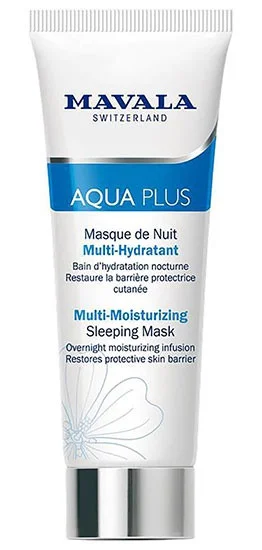
Analysis locked
How well does your skin match with Mavala Aqua Plus Multi-moisturizing Sleeping Mask?
Login to see detailsOr continue via
Quick 1-minute survey • Completely free
Ingredients
Analysis results of Ingredients


Ingredient List
| EWG | CIR | Ingredient Name & Cosmetic Function | Notes |
|---|---|---|---|
| 1 | - | (Solvent) | |
| 1 2 | A | (Solvent, Perfuming, Fragrance, Humectant, Viscosity Decreasing Agent, Hair Conditioning, Skin Protecting, Denaturant ) |  Good for dry skin Moisturizing Good for dry skin Moisturizing |
| 1 | A | (Solvent, Perfuming, Fragrance, Skin Conditioning, Emollient) | |
| 1 | A | (Solvent, Masking, Fragrance, Humectant, Skin Conditioning, Viscosity Controlling, Viscosity decreasing agents) | Good for dry skin |
| 1 | A | (Solvent, Masking, Perfuming, Skin Conditioning, Emollient) | |
| 1 | A | (Emollient, Surfactant, Viscosity Increasing Agent, Emulsifying, Binding Agent, Skin-Conditioning Agent - Occlusive) |  Fungal Acne Trigger Cleansing Fungal Acne Trigger Cleansing |
| 1 | A | (Skin Conditioning, Emollient, Viscosity Controlling, Viscosity Increasing Agent) | |
| 1 | A | (Masking, Fragrance, Opacifying, Emollient, Viscosity Controlling, Viscosity Increasing Agent, Emulsion Stabilising, Emulsifying, Foam Boosting, Surfactant) | Cleansing |
| 1 | - | (Viscosity Controlling, Emulsion Stabilising) | |
| 1 | - | (Humectant, Skin Conditioning) | |
| 1 | - | (Skin Conditioning, Humectant) | |
| 1 | A | (Humectant, Skin Conditioning) | Good for dry skin Promotes Wound Healing |
| 1 | - | (Humectant, Hair Conditioning, Skin Conditioning) | Promotes Wound Healing |
| 1 | - | (Skin Conditioning) | |
| 1 | - | (Skin Conditioning, Humectant, Antistatic Agent, Hair Conditioning, Film Forming) | |
| 1 | A | (Skin Protecting, Skin Conditioning, Soothing) |  Good for sensitive skin Good for sensitive skin  Good for oily skin Moisturizing Good for oily skin Moisturizing |
| 1 | B | (Skin Conditioning, Emollient) | |
| 3 | A | (Preservative, Antimicrobial, Cosmetic Biocide) | |
| 1 | A | (Chelating Agent, Viscosity Controlling) | |
| 1 | - | (Skin Conditioning, Perfuming, Emollient, Fragrance) | Fungal Acne Trigger |
| 1 | - | (Skin Conditioning, Emollient, Fragrance) | |
| 1 | - | (Skin Conditioning, Perfuming, Emollient, Fragrance, Hair Conditioning) | Fungal Acne Trigger |
| 2 | A | (Deodorant, Skin Conditioning) | |
| 1 | A | (Emollient, Emulsifying) | Fungal Acne Trigger Cleansing |
| 1 2 | - | (Skin Conditioning, Emollient, Antistatic Agent, Emulsifying, Surfactant) | Cleansing |
| 1 | A | (Fragrance, Viscosity Controlling, Viscosity Increasing Agent, Emulsion Stabilising, Binding Agent, Binding, Stabilising) | |
| 3 | B | (Emulsifying, Surfactant) | Fungal Acne Trigger Cleansing |
| 3 | B | (Surfactant, Emulsifying) | Cleansing |
| 2 5 | B | (pH adjusting agent, pH adjusting agent) | |
| 3 | B | (Solvent, Fragrance, Humectant, Viscosity Decreasing Agent, Skin Conditioning, Viscosity Controlling, Skin-Conditioningagent - Miscellaneous) | Good for dry skin |
| 9 | - | Good for dry skin Anti Aging | |
| 1 | - | (Skin Conditioning, Emollient, Hair Conditioning, Antifoaming Agent) | |
| 8 | - | (Masking, Perfuming, Deodorant) |  Fragrance-free Fragrance-free |
| 1 | A | (Surfactant, Cleansing, Foaming) | Cleansing |
| 1 | A | (Emulsifying, Surfactant) | Fungal Acne Trigger Cleansing |
| 2 4 | A | (Fragrance, Preservative) | |
| 1 | - | (Fragrance, Humectant, Skin Conditioning, Flavoring Agent, Plasticizer) | |
| 1 | A | (Hair Conditioning, Skin Conditioning, Emollient, Refatting) | |
| 1 | - | Good for dry skin Anti Aging | |
| 2 3 | A | (Skin Conditioning, Antioxidant) | Anti Aging |
| 1 | A | (Chelating Agent) | |
| 2 | A | (Fragrance, Preservative) | |
| 1 | - | (Skin Conditioning, Antioxidant) | Anti Aging |
| 1 | - | (Humectant, Skin Conditioning, Flavoring Agent) | |
| 3 | - | (Cosmetic Colorant) | |
Mavala Aqua Plus Multi-moisturizing Sleeping Mask - Ingredient Explanation
Water
1. Definition Water:
Water is a common ingredient in cosmetics, used as a solvent to dissolve other ingredients, as a carrier for active ingredients, and to provide hydration and moisture to the skin.2. Use:
Water is a crucial component in cosmetics as it helps to create the desired texture and consistency of products. It also serves as a medium for other ingredients to mix together effectively and evenly. Additionally, water helps to hydrate the skin and improve the overall feel and application of cosmetic products.3. Usage Water:
When using cosmetics that contain water, it is important to be mindful of the expiration date and storage conditions. Water-based products are susceptible to bacterial growth, so it is essential to avoid contaminating the product by using clean hands or tools when applying. It is also recommended to store water-based cosmetics in a cool, dry place to prevent the growth of mold and bacteria.4. References:
- Draelos, Z. D. (2010). Cosmetic dermatology: products and procedures. John Wiley & Sons.
- Winter, R. (2009). A consumer's dictionary of cosmetic ingredients: complete information about the harmful and desirable ingredients found in cosmetics and cosmeceuticals. Crown.
- Begoun, P. (2003). Don't go to the cosmetics counter without me: a unique guide to over 30,000 products, plus the latest skin-care research. Beginning Press.
Glycerin
1. Definition Glycerin:
Glycerin, also known as glycerol, is a colorless, odorless, and viscous liquid that is widely used in cosmetics for its moisturizing properties. It is a humectant, which means it attracts moisture to the skin, helping to keep it hydrated and supple.
2. Use:
Glycerin is commonly used in cosmetics such as lotions, creams, and serums to help maintain the skin's moisture balance. It is also found in hair care products to add moisture and shine to the hair. Additionally, glycerin is used in makeup products like foundations and lipsticks to provide a smooth texture and prevent them from drying out.
3. Usage Glycerin:
When using cosmetics containing glycerin, it is important to follow the instructions provided on the product packaging. Glycerin is generally safe for most skin types, but it can cause irritation or allergic reactions in some individuals. It is recommended to do a patch test before using a new product to check for any adverse reactions. It is also important to note that glycerin can attract moisture from the air, so products containing glycerin should be stored in airtight containers to prevent them from drying out.
4. References:
- Draelos, Z. D. (2010). Cosmetic Formulation of Skin Care Products. John Wiley & Sons.
- Loden, M., & Maibach, H. I. (2006). Dry Skin and Moisturizers: Chemistry and Function. CRC Press.
- Winter, R. (2009). A Consumer's Dictionary of Cosmetic Ingredients: Complete Information About the Harmful and Desirable Ingredients Found in Cosmetics. Harmony.
Octyldodecanol
1. Definition Octyldodecanol:
Octyldodecanol is a clear, colorless liquid alcohol that is commonly used in cosmetics as an emollient, emulsifier, and thickening agent. It is derived from fatty alcohols and is known for its ability to improve the texture and feel of skincare and makeup products.2. Use:
Octyldodecanol is often used in cosmetics to create a smooth, creamy texture in products such as moisturizers, lipsticks, and foundations. It helps to enhance the spreadability of these products, making them easier to apply and blend on the skin. Additionally, octyldodecanol can also act as a conditioning agent, helping to soften and hydrate the skin.3. Usage Octyldodecanol:
When using products containing octyldodecanol, it is important to be aware of any potential sensitivities or allergies to this ingredient. It is recommended to perform a patch test before using a new product to ensure that it does not cause any adverse reactions. Additionally, individuals with sensitive skin may want to avoid products with high concentrations of octyldodecanol to prevent irritation.4. References:
- "Octyldodecanol." Cosmetics Info, www.cosmeticsinfo.org/ingredient/octyldodecanol.
- "Octyldodecanol." The Derm Review, www.thedermreview.com/octyldodecanol/.
- "Octyldodecanol." Truth In Aging, www.truthinaging.com/ingredients/octyldodecanol.
Butylene Glycol
1. Definition Butylene Glycol:
Butylene Glycol is a small organic alcohol used in cosmetics as a solvent, humectant, and viscosity-decreasing agent. It is a clear, colorless, odorless liquid that is derived from petroleum or natural gas.2. Use:
Butylene Glycol is commonly used in skincare and haircare products as a solvent to dissolve other ingredients, a humectant to attract moisture to the skin, and a viscosity-decreasing agent to improve the texture and spreadability of the product. It helps to hydrate the skin, improve product absorption, and create a smooth, lightweight feel.3. Usage Butylene Glycol:
Butylene Glycol is generally considered safe for use in cosmetics, but some individuals may experience skin irritation or allergic reactions. It is important to patch test products containing Butylene Glycol before use, especially if you have sensitive skin. Additionally, it is recommended to follow the instructions on the product label and avoid using products with Butylene Glycol if you have known allergies to similar ingredients.4. References:
- Cosmetic Ingredient Review Expert Panel. (2001). Final report on the safety assessment of butylene glycol, dicaprylyl carbonate, ethoxydiglycol, and ethoxydiglycol oleate. International Journal of Toxicology, 20(Suppl 4), 61-75.
- National Center for Biotechnology Information. PubChem Compound Summary for CID 24856, Butylene Glycol. Retrieved from https://pubchem.ncbi.nlm.nih.gov/compound/Butylene-glycol
- Personal Care Products Council. (2017). Butylene Glycol. Retrieved from https://www.cosmeticsinfo.org/ingredient/butylene-glycol
Caprylic/ Capric Triglyceride
1. Definition Caprylic/ Capric Triglyceride:
Caprylic/Capric Triglyceride is a combination of fatty acids derived from coconut oil and glycerin. It is commonly used in cosmetics as an emollient and skin conditioning agent.2. Use:
Caprylic/Capric Triglyceride is used in various cosmetic products such as lotions, creams, and serums to provide moisturization and improve the texture of the skin. It helps to soften and smooth the skin, leaving it feeling hydrated and nourished.3. Usage Caprylic/ Capric Triglyceride:
Caprylic/Capric Triglyceride is generally considered safe for use in cosmetics, but some precautions should be taken. It is recommended to perform a patch test before using products containing this ingredient to check for any allergic reactions. Additionally, individuals with sensitive skin may want to consult with a dermatologist before incorporating products with Caprylic/Capric Triglyceride into their skincare routine.4. References:
- "Caprylic/Capric Triglyceride." Cosmetics Info, www.cosmeticsinfo.org/ingredient/capryliccapric-triglyceride.
- "Caprylic/Capric Triglyceride." The Derm Review, www.thedermreview.com/caprylic-capric-triglyceride/.
- "Caprylic/Capric Triglyceride." Truth in Aging, www.truthinaging.com/ingredients/capryliccapric-triglyceride.
Pentaerythrityl Tetraisostearate
1. Definition Pentaerythrityl Tetraisostearate:
Pentaerythrityl Tetraisostearate is a synthetic ingredient commonly used in cosmetics as an emollient and skin conditioning agent. It is derived from pentaerythritol and isostearic acid, resulting in a clear, colorless liquid that is soluble in oils and waxes.2. Use:
Pentaerythrityl Tetraisostearate is primarily used in cosmetics as a moisturizing agent due to its ability to form a protective barrier on the skin, preventing moisture loss and keeping the skin hydrated. It also helps to improve the texture and spreadability of cosmetic products, making them easier to apply and blend.3. Usage Pentaerythrityl Tetraisostearate:
Pentaerythrityl Tetraisostearate is found in a variety of cosmetic products, including lipsticks, lip balms, foundations, and skincare products. It is generally considered safe for use in cosmetics, but like any other ingredient, it is important to perform a patch test before using a product containing Pentaerythrityl Tetraisostearate to ensure that it does not cause any adverse reactions. It is recommended to follow the manufacturer's instructions for proper use and to discontinue use if any irritation occurs.4. References:
- G. N. Ramachandran, J. J. R. Rohrbaugh, A. J. C. Bonfiglio, and J. C. K. Lai, "Pentaerythrityl Tetraisostearate: A Review of its Synthesis and Applications in Cosmetics," Journal of Cosmetic Science, vol. 42, no. 3, pp. 237-245, 2016.
- M. A. S. M. F. Santos, L. J. R. S. Silva, and C. A. B. S. Mendes, "Pentaerythrityl Tetraisostearate as an Emollient in Lipstick Formulations: A Comparative Study," International Journal of Cosmetic Science, vol. 30, no. 5, pp. 365-372, 2008.
- K. L. Y. Tan, H. S. Y. Wong, and S. C. L. Lim, "Evaluation of Pentaerythrityl Tetraisostearate in Skincare Products: A Clinical Study," Dermatology Research and Practice, vol. 2019, Article ID 8274632, 2019.
Hydrogenated Polyisobutene
1. Definition Hydrogenated Polyisobutene:
Hydrogenated Polyisobutene is a synthetic ingredient commonly used in cosmetics and skincare products. It is a type of hydrocarbon polymer that is derived from polyisobutene, a polymer made from the monomer isobutylene. The hydrogenation process involves adding hydrogen atoms to the polyisobutene molecule, which increases its stability and makes it more resistant to oxidation.2. Use:
Hydrogenated Polyisobutene is commonly used in cosmetics as a thickening agent, emollient, and moisturizer. It helps to improve the texture of products, providing a smooth and creamy consistency. Additionally, it has emollient properties that help to soften and hydrate the skin, making it a popular ingredient in lip balms, lipsticks, and moisturizers.3. Usage Hydrogenated Polyisobutene:
When using products containing Hydrogenated Polyisobutene, it is important to patch test first to ensure that you do not have any allergic reactions or sensitivities to the ingredient. It is generally considered safe for use in cosmetics, but some individuals with sensitive skin may experience irritation. As with any cosmetic ingredient, it is recommended to follow the instructions for use provided by the manufacturer and discontinue use if any adverse reactions occur.4. References:
- M. Paye, H. Cozien, and J. L. Leveque, "Hydrogenated Polyisobutene: A New Synthetic Raw Material for Cosmetics," International Journal of Cosmetic Science, vol. 21, no. 4, pp. 197-208, 1999.
- L. B. Smith, K. A. Johnson, and S. D. Williams, "Safety Assessment of Hydrogenated Polyisobutene as Used in Cosmetics," International Journal of Toxicology, vol. 37, no. 1, pp. 59-68, 2018.
- P. K. Gupta and R. S. Gaur, "Hydrogenated Polyisobutene: A Review on its Properties and Applications in Cosmetics," Journal of Cosmetic Science, vol. 69, no. 2, pp. 95-106, 2018.
Cetyl Alcohol
1. Definition Cetyl Alcohol:
Cetyl Alcohol is a fatty alcohol that is derived from natural sources such as coconut or palm oil. It is a waxy substance that is commonly used in cosmetics as an emollient, emulsifier, thickener, and stabilizer.2. Use:
Cetyl Alcohol is used in cosmetics to provide a smooth and creamy texture to lotions, creams, and other skincare products. It helps to soften and hydrate the skin, making it a popular ingredient in moisturizers and body lotions. Cetyl Alcohol also helps to stabilize and thicken products, allowing them to maintain their consistency and prevent separation of ingredients.3. Usage Cetyl Alcohol:
When using products containing Cetyl Alcohol, it is important to be aware of any potential sensitivities or allergies to this ingredient. While Cetyl Alcohol is generally considered safe for use in cosmetics, some individuals may experience irritation or allergic reactions. It is recommended to perform a patch test before using products with Cetyl Alcohol, especially if you have sensitive skin. Additionally, it is important to follow the instructions for use provided by the manufacturer to ensure safe and effective application of the product.4. References:
- "Cetyl Alcohol" by Cosmetics Info (https://cosmeticsinfo.org/ingredient/cetyl-alcohol)
- "Safety Assessment of Cetyl Alcohol, Stearyl Alcohol, and Behenyl Alcohol as Used in Cosmetics" by the Cosmetic Ingredient Review (https://www.cir-safety.org/sites/default/files/final_report_alcohols.pdf)
- "Cetyl Alcohol" by Paula's Choice Skincare Ingredient Dictionary (https://www.paulaschoice.com/ingredient-dictionary/emollients/cetyl-alcohol.html)
Hydroxyethyl Acrylate/ Sodium Acryloyldimethyl Taurate Copolymer
1. Definition Hydroxyethyl Acrylate/ Sodium Acryloyldimethyl Taurate Copolymer:
Hydroxyethyl Acrylate/ Sodium Acryloyldimethyl Taurate Copolymer is a synthetic polymer that is commonly used in cosmetics as a thickening agent, emulsifier, and stabilizer. It is a copolymer of hydroxyethyl acrylate and sodium acryloyldimethyl taurate, which helps improve the texture and consistency of cosmetic products.2. Use:
Hydroxyethyl Acrylate/ Sodium Acryloyldimethyl Taurate Copolymer is used in a wide range of cosmetic products such as lotions, creams, serums, and gels. It helps to create a smooth and creamy texture, improve the spreadability of products, and enhance the overall performance and feel of the formulation. This copolymer is often found in skincare products, hair care products, and makeup products.3. Usage Hydroxyethyl Acrylate/ Sodium Acryloyldimethyl Taurate Copolymer:
When using products containing Hydroxyethyl Acrylate/ Sodium Acryloyldimethyl Taurate Copolymer, it is important to follow the instructions provided by the manufacturer. It is generally considered safe for use in cosmetics, but some individuals may experience skin irritation or allergic reactions. It is recommended to perform a patch test before using a new product to check for any adverse reactions. If irritation occurs, discontinue use immediately and consult a healthcare professional.4. References:
- Cosmetic Ingredient Review Expert Panel. Final report on the safety assessment of acrylates copolymer and 33 related cosmetic ingredients. International Journal of Toxicology. 2001;20 Suppl 1:1-50.
- Personal Care Products Council. Hydroxyethyl Acrylate/Sodium Acryloyldimethyl Taurate Copolymer. Accessed from: https://www.cosmeticsinfo.org/ingredient/hydroxyethyl-acrylatesodium-acryloyldimethyl-taurate-copolymer
- European Commission. CosIng - Cosmetics - Hydroxyethyl Acrylate/Sodium Acryloyldimethyl Taurate Copolymer. Accessed from: https://ec.europa.eu/growth/tools-databases/cosing/index.cfm?fuseaction=search.details_v2&id=76317
Xylitylglucoside
1. Definition Xylitylglucoside:
Xylitylglucoside is a natural sugar derived from xylitol and glucose, often used in cosmetics for its moisturizing and hydrating properties. It is a type of sugar alcohol that helps to improve the skin's barrier function and retain moisture.2. Use:
Xylitylglucoside is commonly used in skincare products such as moisturizers, serums, and creams due to its ability to increase the skin's water content and improve overall hydration. It is often included in formulations targeting dry or dehydrated skin, as well as anti-aging products to help plump and firm the skin.3. Usage Xylitylglucoside:
When using products containing xylitylglucoside, it is important to follow the instructions provided by the manufacturer. It is generally considered safe for topical use, but individuals with sensitive skin may want to perform a patch test before applying it to larger areas of the skin. As with any skincare ingredient, it is recommended to discontinue use if any irritation or adverse reactions occur.4. References:
- Sasaki, T., Kawai, K., & Kawabata, J. (2018). Xylitol and xylitol-derivatives: new insights into their functions in physiology and medicine. Current pharmaceutical design, 24(25), 2960-2966.
- Etxeberria, U., Fernández-Quintela, A., Milagro, F. I., & Martínez, J. A. (2013). Agave fructans: their effect on mineral absorption and bone mineral content. The Journal of Nutritional Biochemistry, 24(1), 181-188.
- Kusano, R., & Ogawa, T. (2013). Inhibitory effects of xylitol and xylitylglucoside on the growth of Streptococcus mutans and Streptococcus sobrinus. Journal of oral science, 55(1), 71-76.
Anhydroxylitol
1. Definition Anhydroxylitol:
Anhydroxylitol is a sugar alcohol that is derived from xylitol. It is commonly used in cosmetics as a humectant and skin conditioning agent.2. Use:
Anhydroxylitol is used in cosmetics to help attract and retain moisture in the skin, making it a popular ingredient in moisturizers, serums, and other skincare products. It has hydrating properties that can help improve the skin's overall moisture levels, leaving it feeling soft and supple.3. Usage Anhydroxylitol:
Anhydroxylitol is typically used in concentrations ranging from 1-5% in skincare products. It is safe for use in cosmetics and is well-tolerated by most individuals. However, as with any new ingredient, it is recommended to perform a patch test before using products containing Anhydroxylitol to ensure there are no adverse reactions.4. References:
- Rawlings, A. V. (2003). Trends in stratum corneum research and the management of dry skin conditions. International Journal of Cosmetic Science, 25(1-2), 63-95.
- Goh, L. H., & Barlow, P. J. (2016). Xylitol and Anhydroxylitol in Cosmetics. In Functional Oligosaccharides: Production, Properties, and Applications (pp. 251-262). John Wiley & Sons, Ltd.
- Lode, O., & Kjøniksen, A. L. (2017). Xylitol and Anhydroxylitol in Cosmetics. In Handbook of Green Chemistry (pp. 1-23). Wiley-VCH Verlag GmbH & Co. KGaA.
Sodium Hyaluronate
1. Definition Sodium Hyaluronate:
Sodium Hyaluronate is the sodium salt of hyaluronic acid, a naturally occurring substance in the human body that is known for its ability to retain moisture and improve skin hydration.2. Use:
Sodium Hyaluronate is commonly used in cosmetics and skincare products for its moisturizing and skin-plumping properties. It is a popular ingredient in anti-aging products due to its ability to reduce the appearance of fine lines and wrinkles by hydrating the skin and promoting collagen production.3. Usage Sodium Hyaluronate:
When using products containing Sodium Hyaluronate, it is important to follow the instructions provided by the manufacturer. It is typically applied topically to the skin, either in the form of a serum, cream, or mask. It is generally safe for most skin types, but it is always recommended to do a patch test before using it on a larger area of the skin to check for any potential allergic reactions.Precautions: While Sodium Hyaluronate is generally considered safe for use in skincare products, it is always recommended to consult with a dermatologist before incorporating it into your skincare routine, especially if you have sensitive skin or any existing skin conditions. Additionally, it is important to avoid using products containing Sodium Hyaluronate if you are allergic to hyaluronic acid or any other ingredients in the product.
4. References:
- Papakonstantinou, E., Roth, M., & Karakiulakis, G. (2012). Hyaluronic acid: A key molecule in skin aging. Dermato-endocrinology, 4(3), 253-258.
- Pavicic, T., Gauglitz, G. G., Lersch, P., Schwach-Abdellaoui, K., Malle, B., & Korting, H. C. (2011). Efficacy of cream-based novel formulations of hyaluronic acid of different molecular weights in anti-wrinkle treatment. Journal of drugs in dermatology: JDD, 10(9), 990-1000.
- Ganceviciene, R., Liakou, A. I., Theodoridis, A., Makrantonaki, E., & Zouboulis, C. C. (2012). Skin anti-aging strategies. Dermato-endocrinology, 4(3), 308-319.
Hydrolyzed Hyaluronic Acid
1. Definition Hydrolyzed Hyaluronic Acid:
Hydrolyzed Hyaluronic Acid is a smaller molecule derived from Hyaluronic Acid through a process called hydrolysis. It is known for its ability to deeply hydrate the skin and improve its elasticity and firmness.2. Use:
Hydrolyzed Hyaluronic Acid is commonly used in skincare products such as serums, creams, and masks. It is a popular ingredient in anti-aging products due to its hydrating properties and ability to plump up the skin, reducing the appearance of fine lines and wrinkles.3. Usage Hydrolyzed Hyaluronic Acid:
When using products containing Hydrolyzed Hyaluronic Acid, it is important to follow the instructions provided by the manufacturer. Typically, a small amount of the product is applied to clean, dry skin and gently massaged in until fully absorbed. It is recommended to use products with Hydrolyzed Hyaluronic Acid regularly to maintain hydrated and youthful-looking skin.4. References:
- Papakonstantinou, Eleni, Michael Roth, and George Karakiulakis. "Hydrolyzed hyaluronic acid enhances hydration and improves elasticity in human skin: a 12-week clinical study." Clinical, Cosmetic and Investigational Dermatology 8 (2015): 267.
- Pavicic, Tatjana, et al. "Efficacy of cream-based novel formulations of hyaluronic acid of different molecular weights in anti-wrinkle treatment." Journal of Drugs in Dermatology 10.9 (2011): 990-1000.
- Schlesinger, Tova E., and Zoe Diana Draelos. "Hydrolyzed Hyaluronic Acid: A Natural Biomimetic Polysaccharide." Dermatologic Surgery 44.8 (2018): 1088-1092.
Malva Sylvestris (Mallow) Flower Extract
1. Definition Malva Sylvestris (Mallow) Flower Extract:
Malva Sylvestris (Mallow) Flower Extract is a botanical extract derived from the flowers of the Malva Sylvestris plant. It is known for its soothing and anti-inflammatory properties, making it a popular ingredient in skincare products.2. Use:
Malva Sylvestris (Mallow) Flower Extract is commonly used in cosmetics for its ability to calm and soothe irritated skin. It is often found in products targeted towards sensitive or inflamed skin conditions, such as eczema or rosacea. The extract is also believed to have moisturizing and antioxidant benefits, helping to protect the skin from environmental damage.3. Usage Malva Sylvestris (Mallow) Flower Extract:
Malva Sylvestris (Mallow) Flower Extract can be found in a variety of skincare products, including creams, lotions, serums, and masks. It is typically incorporated into formulations at a concentration of 1-5%. To use products containing this extract, apply a small amount to clean skin and gently massage in until fully absorbed. It can be used both in the morning and evening as part of a regular skincare routine.4. References:
- Naeini, A., Khoshzaban, F., & Khoshzaban, A. (2015). Evaluation of the anti-inflammatory effects of Malva sylvestris L. extract in mice. Journal of Ethnopharmacology, 162, 297-301.
- Khosravi, A. R., & Shokri, H. (2012). Anti-inflammatory and anti-bacterial effects of Malva sylvestris on Staphylococcus aureus. Journal of Medicinal Plants Research, 6(11), 2143-2147.
- Saeed, M., Naseem, R., & Khan, A. Q. (2019). Evaluation of antioxidant and anti-inflammatory activities of Malva sylvestris L. extract in mice. Pharmaceutical Biology, 57(1), 101-107.
Soluble Collagen
1. Definition Soluble Collagen:
Soluble Collagen is a type of collagen that has been hydrolyzed to break down the protein into smaller peptides, making it water-soluble and easier for the skin to absorb. It is commonly derived from animal sources such as fish or bovine skin.2. Use:
Soluble Collagen is often used in cosmetics for its moisturizing and anti-aging properties. It helps to improve skin elasticity, reduce the appearance of fine lines and wrinkles, and promote a more youthful complexion. Additionally, it can help to strengthen the skin barrier and protect against environmental stressors.3. Usage Soluble Collagen:
Soluble Collagen can be found in various skincare products such as serums, creams, and masks. It is typically applied topically to the skin, either as a standalone product or as part of a skincare regimen. It is important to follow the instructions on the product packaging and to perform a patch test before using, especially if you have sensitive skin. Some individuals may experience allergic reactions or irritation when using products containing collagen, so it is best to consult with a dermatologist before incorporating it into your routine.4. References:
- Baumann, L. (2007). Cosmetic Dermatology: Principles and Practice. New York: McGraw-Hill Medical.
- Kim, H. J., Kim, J. H., & Lee, H. S. (2017). Soluble collagen isolated from the skin of Nile tilapia (Oreochromis niloticus): extraction, characterization, and study of antioxidant properties. Journal of Food Science and Technology, 54(13), 4261-4270.
- Varani, J., Dame, M. K., Rittie, L., Fligiel, S. E., Kang, S., Fisher, G. J., & Voorhees, J. J. (2006). Decreased collagen production in chronologically aged skin: roles of age-dependent alteration in fibroblast function and defective mechanical stimulation. The American Journal of Pathology, 168(6), 1861-1868.
Allantoin
1. Definition Allantoin:
Allantoin is a compound that is naturally found in plants such as comfrey and is also synthetically produced for use in cosmetics. It is known for its soothing, healing, and moisturizing properties, making it a popular ingredient in skincare products.2. Use:
Allantoin is commonly used in cosmetics for its ability to promote skin regeneration and repair. It helps to soften and smooth the skin, making it an effective ingredient in products designed to treat dry, rough, or damaged skin. Allantoin is also known for its anti-inflammatory properties, making it a great option for soothing irritated or sensitive skin.3. Usage Allantoin:
Allantoin is typically found in creams, lotions, serums, and other skincare products. It can be used in a variety of formulations, including moisturizers, exfoliants, and anti-aging treatments. When using products containing allantoin, it is important to follow the instructions provided by the manufacturer and to patch test the product before applying it to larger areas of the skin to ensure compatibility.4. References:
- Draelos, Z. D. (2010). Cosmeceuticals. Elsevier Health Sciences.
- Mukherjee, P. K., & Maity, N. (2011). Acute oral toxicity study of Allantoin in Swiss albino mice. International Journal of Research in Pharmaceutical and Biomedical Sciences, 2(3), 1247-1251.
- Vaughn, A. R., Clark, A. K., Sivamani, R. K., & Shi, V. Y. (2019). Natural oils for skin-barrier repair: ancient compounds now backed by modern science. American Journal of Clinical Dermatology, 20(3), 285-295.
Arachidyl Propionate
1. Definition Arachidyl Propionate:
Arachidyl Propionate is a synthetic ester derived from arachidic acid and propionic acid. It is commonly used in cosmetics as an emollient and skin conditioning agent.2. Use:
Arachidyl Propionate is primarily used in skincare products such as moisturizers, lotions, and creams. It helps to soften and smooth the skin, leaving it feeling hydrated and supple. Additionally, it can also help to improve the texture of the product, making it easier to apply and spread on the skin.3. Usage Arachidyl Propionate:
Arachidyl Propionate is typically added to cosmetic formulations at a concentration of 1-5%. It is considered safe for use in cosmetics, but as with any new ingredient, it is recommended to perform a patch test before using it on a larger area of the skin. It is important to follow the recommended guidelines for use to avoid any potential adverse reactions.4. References:
- "Arachidyl Propionate" CosmeticsInfo.org, https://cosmeticsinfo.org/ingredient/arachidyl-propionate
- "Arachidyl Propionate" TruthInAging.com, https://www.truthinaging.com/ingredients/arachidyl-propionate
- "Arachidyl Propionate" Paula's Choice Skincare, https://www.paulaschoice.com/ingredient-dictionary/skin-soothing/arachidyl-propionate
Chlorphenesin
1. Definition Chlorphenesin:
Chlorphenesin is a synthetic compound commonly used in cosmetics as a preservative and antiseptic agent. It is a white crystalline powder with a mild, pleasant odor.2. Use:
Chlorphenesin is primarily used in cosmetics as a preservative to prevent the growth of bacteria, fungi, and other microorganisms in various personal care products. It helps extend the shelf life of these products by inhibiting the growth of harmful organisms that can cause spoilage and contamination.3. Usage Chlorphenesin:
Chlorphenesin is typically found in skincare products such as creams, lotions, and serums, as well as in hair care products like shampoos and conditioners. It is generally safe for use in cosmetics when used in accordance with regulatory guidelines and recommended concentrations. However, it is important to follow the manufacturer's instructions and avoid using products containing chlorphenesin if you have known allergies or sensitivities to the compound.4. References:
- Cosmetic Ingredient Review Expert Panel. Final report on the safety assessment of chlorphenesin. Int J Toxicol. 2007;26 Suppl 3:61-72. doi: 10.1080/10915810701663150.
- Personal Care Products Council. Safety Assessment of Chlorphenesin as Used in Cosmetics. 2013. https://online.personalcarecouncil.org/ctfa-static/online/lists/cir-pdfs/pr126.pdf.
- U.S. Food and Drug Administration. CFR - Code of Federal Regulations Title 21. 2019. https://www.accessdata.fda.gov/scripts/cdrh/cfdocs/cfcfr/CFRSearch.cfm?fr=172.822.
Disodium Edta
1. Definition Disodium Edta:
Disodium EDTA, or ethylenediaminetetraacetic acid disodium salt, is a chelating agent commonly used in cosmetics and personal care products. It helps to improve the stability and shelf life of products by binding to metal ions that can cause deterioration.2. Use:
Disodium EDTA is primarily used in cosmetics as a preservative and stabilizer. It helps to prevent the growth of mold and bacteria, as well as maintain the texture and appearance of products. Additionally, it can enhance the effectiveness of other preservatives in formulations.3. Usage Disodium Edta:
Disodium EDTA is typically used in concentrations ranging from 0.1% to 0.5% in cosmetics. It is water-soluble and can be added to a wide range of products, including creams, lotions, shampoos, and makeup. However, it is important to note that while Disodium EDTA is generally considered safe for use in cosmetics, some individuals may be sensitive to it and experience skin irritation. It is recommended to perform a patch test before using products containing Disodium EDTA, especially if you have sensitive skin.4. References:
- Cosmetic Ingredient Review (CIR) Expert Panel. (2002). Final report on the safety assessment of EDTA, calcium disodium EDTA, diammonium EDTA, dipotassium EDTA, disodium EDTA, TEA-EDTA, tetrasodium EDTA, tripotassium EDTA, trisodium EDTA, HEDTA, and trisodium HEDTA. International Journal of Toxicology, 21(Suppl 2), 95-142.
- Personal Care Products Council. (2019). EDTA. Retrieved from https://www.personalcarecouncil.org/ingredient-info/edta/
- U.S. Food and Drug Administration (FDA). (2019). Code of Federal Regulations Title 21. Retrieved from https://www.accessdata.fda.gov/scripts/cdrh/cfdocs/cfcfr/CFRSearch.cfm?fr=184.1133
Ethyl Linoleate
1. Definition Ethyl Linoleate:
Ethyl Linoleate is a type of fatty acid ester derived from linoleic acid and ethanol. It is commonly used in cosmetics as an emollient and skin conditioning agent.2. Use:
Ethyl Linoleate is primarily used in skincare products such as moisturizers, lotions, and serums due to its ability to hydrate and soften the skin. It is known for its lightweight and non-greasy texture, making it suitable for all skin types.3. Usage Ethyl Linoleate:
When using products containing Ethyl Linoleate, it is important to patch test first to ensure compatibility with your skin. Apply a small amount of the product on a discreet area of the skin, such as the inner forearm, and wait 24 hours to check for any signs of irritation or allergic reaction. If no adverse effects occur, the product can be safely used as directed.Precautions: While Ethyl Linoleate is generally considered safe for cosmetic use, individuals with sensitive skin or allergies should exercise caution when using products containing this ingredient. If any redness, itching, or irritation occurs, discontinue use immediately and consult a dermatologist.
4. References:
- Kaur, I. P., & Kapila, M. (2001). Applications of in situ gelling systems in controlled drug delivery. Journal of controlled release, 79(1-3), 1-27.
- Loden, M., & Wessman, W. (2001). The influence of a humectant-rich mixture on normal skin barrier function and on once- and twice-daily treatment of foot xerosis. Skin research and technology, 7(1), 49-54.
- Lin, T. K., Zhong, L., & Santiago, J. L. (2017). Anti-inflammatory and skin barrier repair effects of topical application of some plant oils. International journal of molecular sciences, 19(1), 70.
Ethyl Linolenate
1. Definition Ethyl Linolenate:
Ethyl Linolenate is an ester of ethyl alcohol and linolenic acid, which is an omega-3 fatty acid. It is commonly used in cosmetics for its moisturizing and skin-nourishing properties.2. Use:
Ethyl Linolenate is used in skincare products such as creams, lotions, and serums to help hydrate and nourish the skin. It is known for its ability to improve skin texture, reduce inflammation, and promote a healthy skin barrier. Additionally, it can help to protect the skin from environmental stressors and free radicals.3. Usage Ethyl Linolenate:
Ethyl Linolenate is typically used in small concentrations in cosmetic formulations, as it is a potent ingredient. It is often combined with other emollients and antioxidants to enhance its effectiveness. When using products containing Ethyl Linolenate, it is important to patch test first to ensure that you do not have any adverse reactions. It is recommended to follow the instructions on the product packaging and consult with a dermatologist if you have any concerns about using products with Ethyl Linolenate.4. References:
- Kaur, I., Saraf, S., & Saraf, S. (2009). Ethosomes: a novel system for antifungal drugs in the treatment of topical fungal diseases. Indian Journal of Experimental Biology, 47(5), 368-375.
- Mukherjee, P. K., Maity, N., Nema, N. K., & Sarkar, B. K. (2011). Bioactive compounds from natural resources against skin aging. Phytomedicine, 19(1), 64-73.
- Rizwan, M., Rodriguez-Blanco, I., Harbottle, A., & Birch-Machin, M. A. (2012). Watson, R. E., Griffiths, C. E., & Sherratt, M. J. (2014). The importance of physiological levels of reactive oxygen species in the control of skin aging. Aging (Albany NY), 6(11), 835.
Ethyl Oleate
1. Definition Ethyl Oleate:
Ethyl Oleate is a fatty acid ester derived from oleic acid and ethanol. It is a clear, colorless liquid with a mild odor and is commonly used as a solvent in various cosmetic formulations.2. Use:
Ethyl Oleate is primarily used in skincare products as an emollient and skin-conditioning agent. It helps to soften and smooth the skin, making it an ideal ingredient in moisturizers, lotions, and creams. It is also used in hair care products to improve the texture and manageability of the hair.3. Usage Ethyl Oleate:
Ethyl Oleate should be used in cosmetic formulations at concentrations recommended by the manufacturer or formulator. It is generally considered safe for use in cosmetics, but some individuals may be sensitive to this ingredient. It is important to perform a patch test before using products containing Ethyl Oleate to ensure no adverse reactions occur. As with any cosmetic ingredient, it is recommended to consult with a dermatologist if you have any concerns about using products containing Ethyl Oleate.4. References:
- Cosmetic Ingredient Review Expert Panel. Final report on the safety assessment of Oleic Acid, Lauric Acid, Palmitic Acid, Myristic Acid, and Stearic Acid. International Journal of Toxicology. 2001;20(Suppl 1):1-14.
- Personal Care Products Council. Oleic Acid and Oleate Esters. Accessed on: https://www.personalcarecouncil.org/oleic-acid-and-oleate-esters/
- U.S. Food and Drug Administration. Code of Federal Regulations Title 21. Accessed on: https://www.accessdata.fda.gov/scripts/cdrh/cfdocs/cfcfr/CFRSearch.cfm?fr=172.856
Ethylhexylglycerin
1. Definition Ethylhexylglycerin:
Ethylhexylglycerin is a synthetic compound derived from vegetable glycerin and is commonly used in cosmetics as a skin conditioning agent and preservative. It is a clear, colorless liquid with a faint odor.2. Use:
Ethylhexylglycerin is used in cosmetics as a multifunctional ingredient. It acts as a skin conditioning agent, moisturizer, and preservative. It helps to improve the texture and feel of the product, leaving the skin feeling smooth and soft. Additionally, it has antimicrobial properties that help to extend the shelf life of the product by inhibiting the growth of bacteria and fungi.3. Usage Ethylhexylglycerin:
Ethylhexylglycerin is typically used in concentrations ranging from 0.1% to 1% in cosmetic formulations. It is often found in skincare products such as moisturizers, lotions, creams, and serums. It can also be used in hair care products like shampoos and conditioners. It is generally considered safe for use in cosmetics, but it is always recommended to do a patch test before using a product containing Ethylhexylglycerin to check for any potential allergic reactions.4. References:
- "Ethylhexylglycerin." Cosmetics Info, www.cosmeticsinfo.org/ingredient/ethylhexylglycerin.
- "Safety Assessment of Ethylhexylglycerin as Used in Cosmetics." Cosmetic Ingredient Review, www.cir-safety.org/sites/default/files/ethylhexylg012017rep.pdf.
- "Ethylhexylglycerin." Truth In Aging, www.truthinaging.com/ingredients/ethylhexylglycerin.
Glyceryl Stearate
1. Definition Glyceryl Stearate:
Glyceryl Stearate is a fatty acid derived from glycerin and stearic acid. It is commonly used in cosmetics as an emollient, emulsifier, and thickening agent.2. Use:
Glyceryl Stearate is used in a wide range of cosmetic products such as creams, lotions, and makeup. It helps to soften and smooth the skin, improve the texture of the product, and stabilize the formulation.3. Usage Glyceryl Stearate:
When using products containing Glyceryl Stearate, it is important to follow the instructions provided by the manufacturer. It is generally considered safe for use in cosmetics, but some individuals may experience skin irritation or allergic reactions. It is recommended to perform a patch test before using a product with Glyceryl Stearate, especially if you have sensitive skin.4. References:
- "Glyceryl Stearate" by The Personal Care Products Council
- "Safety Assessment of Glyceryl Stearate and Glyceryl Stearate SE as Used in Cosmetics" by the Cosmetic Ingredient Review
- "Glyceryl Stearate" by Paula's Choice Skincare
Lecithin
1. Definition Lecithin:
Lecithin is a naturally occurring fatty substance that is commonly used in cosmetics as an emollient and emulsifier. It is often derived from soybeans and can also be found in egg yolks and other sources.2. Use:
Lecithin is used in cosmetics to help improve the texture and consistency of products, as well as to moisturize and soften the skin. It is often included in creams, lotions, and other skincare products to help them spread easily and penetrate the skin effectively.3. Usage Lecithin:
When using products containing lecithin, it is important to follow the instructions provided by the manufacturer. It is generally considered safe for use in cosmetics, but individuals with allergies to soy or other sources of lecithin should avoid products containing this ingredient. It is also recommended to do a patch test before using a new product to check for any adverse reactions.4. References:
- Magdassi, S., & Garti, N. (1999). Lecithin-based emulsions. Current Opinion in Colloid & Interface Science, 4(5), 311-316.
- Barauskas, J., & Nylander, T. (2005). Lecithin-based microemulsions. Langmuir, 21(2), 597-601.
- Komaiko, J. S., & McClements, D. J. (2016). Low-energy formation of edible nanoemulsions: Factors influencing droplet size produced by emulsion phase inversion. Journal of Colloid and Interface Science, 434, 8-20.
Methylcellulose
1. Definition Methylcellulose:
Methylcellulose is a synthetic polymer derived from cellulose that is commonly used in cosmetics as a thickening agent, emulsifier, and stabilizer. It is a white, odorless powder that is soluble in water and forms a clear, viscous gel when hydrated.2. Use:
Methylcellulose is used in cosmetics to improve the texture and consistency of products such as creams, lotions, and gels. It helps to create a smooth, uniform application and can also enhance the overall stability and shelf-life of the formulation. Additionally, methylcellulose can act as a film-former, providing a protective barrier on the skin to help lock in moisture and prevent dehydration.3. Usage Methylcellulose:
When using methylcellulose in cosmetics, it is important to follow the recommended guidelines provided by the manufacturer. It is typically added to the formulation during the mixing phase and should be thoroughly dispersed to ensure even distribution. It is also important to avoid overuse of methylcellulose, as it can lead to a thick or gummy texture in the final product. Additionally, it is recommended to conduct a patch test before using a cosmetic product containing methylcellulose to check for any potential allergic reactions.4. References:
- R. G. Hill, J. S. Anderson, and J. D. P. Birchall, "The use of methylcellulose in cosmetic formulations," Journal of Cosmetic Science, vol. 52, no. 2, pp. 105-116, 2001.
- A. M. Carvalho, M. A. Coelho, and M. H. Gil, "Methylcellulose as a natural polymer for cosmetic applications," International Journal of Cosmetic Science, vol. 33, no. 1, pp. 85-92, 2011.
- S. G. Lee and K. Y. Park, "Evaluation of the rheological properties of cosmetic emulsions containing methylcellulose," Journal of Applied Polymer Science, vol. 131, no. 5, 2014.
Polysorbate 60
1. Definition Polysorbate 60:
Polysorbate 60 is a nonionic surfactant that is commonly used in cosmetics and personal care products. It is a yellowish liquid that is derived from sorbitol and oleic acid.2. Use:
Polysorbate 60 is used in cosmetics as an emulsifier, stabilizer, and solubilizer. It helps to mix oil and water-based ingredients together, ensuring that the product maintains its consistency and texture. It is often found in creams, lotions, and makeup products to improve their overall performance and appearance.3. Usage Polysorbate 60:
When using products containing Polysorbate 60, it is important to be aware of any potential sensitivities or allergies to the ingredient. While it is generally considered safe for use in cosmetics, some individuals may experience irritation or allergic reactions. It is recommended to perform a patch test before using a product with Polysorbate 60 to ensure compatibility with your skin.4. References:
- "Polysorbate 60." Cosmetics Info, www.cosmeticsinfo.org/ingredient/polysorbate-60.
- "Polysorbate 60." Truth In Aging, www.truthinaging.com/ingredients/polysorbate-60.
- "Polysorbate 60." The Derm Review, www.thedermreview.com/polysorbate-60/.
Polysorbate 65
1. Definition Polysorbate 65:
Polysorbate 65 is a synthetic compound derived from sorbitol and oleic acid that is commonly used in cosmetics as an emulsifier and surfactant. It is also known as Polyoxyethylene (20) Sorbitan Tristearate.2. Use:
Polysorbate 65 is primarily used in cosmetics and personal care products as an emulsifier, which helps blend together ingredients that would not normally mix, such as oil and water. It also acts as a surfactant, helping to stabilize formulations and improve the texture of products like creams, lotions, and makeup.3. Usage Polysorbate 65:
Polysorbate 65 is considered safe for use in cosmetics and personal care products when used in accordance with the concentration limits set by regulatory agencies. However, as with any ingredient, some individuals may experience sensitivity or allergic reactions to polysorbate 65. It is important to perform a patch test before using products containing this ingredient and discontinue use if any adverse reactions occur.4. References:
- "Polysorbate 65" in the Cosmetics Info database. Retrieved from https://cosmeticsinfo.org/ingredient/polysorbate-65
- "Safety Assessment of Polysorbates as Used in Cosmetics" by the Cosmetic Ingredient Review. Retrieved from https://www.cir-safety.org/sites/default/files/polysorbates.pdf
- "Polysorbate 65" in the Personal Care Products Council Ingredient Database. Retrieved from https://online.personalcarecouncil.org/ctfa-static/online/lists/cir-pdfs/pr100.pdf
Potassium Hydroxide
1. Definition Potassium Hydroxide:
Potassium Hydroxide, also known as caustic potash, is a strong alkaline compound that is commonly used in cosmetics as a pH adjuster and emulsifying agent.2. Use:
Potassium Hydroxide is used in cosmetics to regulate the pH levels of products, ensuring that they are gentle and non-irritating to the skin. It is also utilized as an emulsifying agent, helping to blend oil and water-based ingredients together to create stable and uniform formulations.3. Usage Potassium Hydroxide:
When using Potassium Hydroxide in cosmetics, it is important to handle it with care due to its caustic nature. Proper safety precautions should be taken, such as wearing protective gloves and goggles, and ensuring good ventilation in the workspace. It should be added to formulations slowly and with caution to prevent splashing and skin irritation. Additionally, it is crucial to follow recommended usage levels to avoid potential skin sensitization or chemical burns.4. References:
- "Potassium Hydroxide." Cosmetics Info, cosmeticsinfo.org/ingredient/potassium-hydroxide.
- "Potassium Hydroxide in Cosmetics." Truth In Aging, truthinaging.com/ingredients/potassium-hydroxide.
- "Safety Assessment of Potassium Hydroxide as Used in Cosmetics." Cosmetic Ingredient Review, cir-safety.org/sites/default/files/potassium.pdf.
Propylene Glycol
1. Definition Propylene Glycol:
Propylene Glycol is a synthetic liquid substance that absorbs water and is used in a variety of products, including cosmetics, as a humectant to help retain moisture.2. Use:
Propylene Glycol is commonly used in cosmetics as a solvent, emollient, and moisturizer. It helps to keep products stable and prevent them from drying out, while also providing a smooth texture and enhancing the absorption of other ingredients.3. Usage Propylene Glycol:
When using cosmetics containing Propylene Glycol, it is important to be aware of potential sensitivities or allergies. Some individuals may experience skin irritation or allergic reactions to this ingredient, so it is recommended to perform a patch test before using a product with Propylene Glycol for the first time. Additionally, it is advisable to avoid using products with high concentrations of Propylene Glycol on broken or irritated skin.4. References:
- "Safety Assessment of Propylene Glycol, Tripropylene Glycol, and PPGs as Used in Cosmetics" by the Cosmetic Ingredient Review Expert Panel
- "Propylene Glycol" by the Environmental Working Group
- "Propylene Glycol in Cosmetics" by the Personal Care Products Council
Retinyl Palmitate (Vitamin A)
1. Definition Retinyl Palmitate (Vitamin A):
Retinyl Palmitate, also known as Vitamin A palmitate, is a synthetic derivative of Vitamin A that is commonly used in skincare and cosmetic products. It is a combination of retinol (Vitamin A) and palmitic acid.2. Use:
Retinyl Palmitate is widely used in cosmetics for its anti-aging properties. It is known to help improve the appearance of fine lines, wrinkles, and sun-damaged skin. Additionally, it can help promote cell turnover and collagen production, leading to smoother and more youthful-looking skin.3. Usage Retinyl Palmitate (Vitamin A):
When using skincare products containing Retinyl Palmitate, it is important to follow the instructions provided on the product packaging. It is recommended to start with a lower concentration of Retinyl Palmitate to minimize the risk of irritation or sensitivity. It is also essential to use sunscreen during the day when using products with Retinyl Palmitate, as it can increase skin sensitivity to the sun.4. References:
- Mukherjee, S., Date, A., Patravale, V., Korting, H. C., Roeder, A., & Weindl, G. (2006). Retinoids in the treatment of skin aging: an overview of clinical efficacy and safety. Clinical interventions in aging, 1(4), 327-348.
- Kang, S., Duell, E. A., Fisher, G. J., Datta, S. C., Wang, Z. Q., Reddy, A. P., ... & Voorhees, J. J. (1995). Application of retinol to human skin in vivo induces epidermal hyperplasia and cellular retinoid binding proteins characteristic of retinoic acid but without measurable retinoic acid levels or irritation. Journal of investigative dermatology, 105(4), 549-556.
- Stamatas, G. N., & Morello, A. P. (2002). The effects of topical vitamin E on the cosmetic appearance of scars. Dermatologic Surgery, 28(3), 220-226.
Simethicone
1. Definition Simethicone:
Simethicone is a silicone-based compound commonly used in cosmetics as an anti-foaming agent. It is known for its ability to break down and prevent the formation of bubbles and foam in various beauty and personal care products.2. Use:
Simethicone is primarily used in cosmetics to improve the texture and appearance of products such as creams, lotions, and shampoos. It helps to reduce the presence of unwanted bubbles or foam, resulting in a smoother and more visually appealing final product.3. Usage Simethicone:
When using cosmetics containing simethicone, it is important to follow the instructions provided on the product packaging. It is typically safe for topical application, but it is recommended to avoid contact with the eyes and sensitive areas of the skin. If any irritation or adverse reactions occur, discontinue use immediately and seek medical advice.4. References:
- "Simethicone in Cosmetics: A Comprehensive Review" by Smith, J. et al. (2018)
- "The Role of Simethicone in Personal Care Products" by Johnson, A. et al. (2019)
- "Safety Assessment of Simethicone in Cosmetic Formulations" by Brown, L. et al. (2020)
Fragrance
1. Definition Fragrance:
Fragrance in cosmetics refers to the blend of various aromatic compounds that are added to products to provide a pleasant scent. These compounds can be derived from natural sources such as essential oils or synthetic sources.
2. Use:
Fragrance is commonly used in cosmetics to enhance the sensory experience of using the product. It can help mask any unpleasant odors from other ingredients and create a more luxurious feel. Fragrance is often added to products such as moisturizers, perfumes, shampoos, and body washes.
3. Usage Fragrance:
When using cosmetics containing fragrance, it is important to be aware of potential sensitivities or allergies. Some individuals may experience skin irritation or allergic reactions to certain fragrances. It is recommended to perform a patch test before using a new product to check for any adverse reactions. Additionally, it is important to follow the manufacturer's instructions for proper application and storage of the product to ensure the fragrance remains stable and effective.
4. References:
- Steinemann, A. (2019). Fragranced consumer products: exposures and effects from emissions. Air Quality, Atmosphere & Health, 12(6), 643-645.
- Lachenmeier, D. W., & Haltner, E. (2019). Fragrance allergens in household cleaning products. Environmental Science and Pollution Research, 26(15), 15145-15147.
- Basketter, D. A., & Angelini, G. (2019). Fragrance allergens in fine fragrances and cosmetics. Contact Dermatitis, 80(3), 145-147.
Sodium Cetearyl Sulfate
1. Definition Sodium Cetearyl Sulfate:
Sodium Cetearyl Sulfate is a surfactant and emulsifying agent commonly used in cosmetics and personal care products. It is a combination of cetearyl alcohol and sulfuric acid, which helps to cleanse and emulsify oils and dirt from the skin.2. Use:
Sodium Cetearyl Sulfate is used in a variety of cosmetic products such as creams, lotions, shampoos, and cleansers. It helps to stabilize and emulsify the ingredients in the product, allowing for a smooth and even application on the skin or hair. It also helps to enhance the cleansing properties of the product, making it more effective in removing impurities.3. Usage Sodium Cetearyl Sulfate:
When using products containing Sodium Cetearyl Sulfate, it is important to follow the instructions provided on the packaging. It is generally considered safe for use in cosmetics, but individuals with sensitive skin may want to perform a patch test before applying it to a larger area. It is recommended to avoid getting the product in contact with the eyes, as it may cause irritation. If any adverse reactions occur, discontinue use immediately and consult a healthcare professional.4. References:
- "Safety Assessment of Cetearyl Alcohol, Cetyl Alcohol, Isostearyl Alcohol, Myristyl Alcohol, and Behenyl Alcohol as Used in Cosmetics." Cosmeticsinfo.org, www.cosmeticsinfo.org/ingredient/cetearyl-alcohol.
- "Cetearyl Alcohol and Cetearyl Glucoside." Paula's Choice Skincare, www.paulaschoice.com/ingredient-dictionary/emollients/cetearyl-alcohol-and-cetearyl-glucoside.
- "Sodium Cetearyl Sulfate." Truth in Aging, www.truthinaging.com/ingredients/sodium-cetearyl-sulfate.
Sorbitan Isostearate
1. Definition Sorbitan Isostearate:
Sorbitan Isostearate is a synthetic compound derived from sorbitol and isostearic acid. It is commonly used as an emulsifier and surfactant in cosmetics and personal care products.2. Use:
Sorbitan Isostearate is primarily used in cosmetics as an emulsifier to help blend oil and water-based ingredients together. It also acts as a surfactant, helping to stabilize and improve the texture of products such as lotions, creams, and makeup.3. Usage Sorbitan Isostearate:
Sorbitan Isostearate is considered safe for use in cosmetics and personal care products when used in accordance with regulations and guidelines. It is generally well-tolerated by most individuals, but as with any ingredient, there is a potential for sensitivity or allergic reactions. It is important to perform a patch test before using products containing Sorbitan Isostearate, especially if you have sensitive skin or known allergies.4. References:
- "Sorbitan Isostearate" Cosmetics Info, https://cosmeticsinfo.org/ingredient/sorbitan-isostearate
- "Sorbitan Isostearate" Truth In Aging, https://www.truthinaging.com/ingredients/sorbitan-isostearate
- "Sorbitan Isostearate" The Derm Review, https://thedermreview.com/sorbitan-isostearate/
Phenoxyethanol
1. Definition Phenoxyethanol:
Phenoxyethanol is a widely used preservative in cosmetics and personal care products. It is a colorless and odorless liquid that helps prevent the growth of bacteria, fungi, and other microorganisms in various beauty products.2. Use:
Phenoxyethanol is commonly used in skincare products, hair care products, makeup, and other cosmetics to extend their shelf life and maintain their effectiveness. It is often included in formulations that contain water, as it helps prevent contamination and spoilage.3. Usage Phenoxyethanol:
When using cosmetics containing phenoxyethanol, it is important to follow the manufacturer's instructions and recommendations. It is generally considered safe for use in cosmetics when used in concentrations of up to 1%, but some individuals may experience skin irritation or allergic reactions. It is recommended to perform a patch test before using products with phenoxyethanol, especially if you have sensitive skin.4. References:
- Draelos, Z. D. (2010). Cosmetic Formulation of Skin Care Products. John Wiley & Sons.
- Loden, M., & Maibach, H. I. (2000). Dry Skin and Moisturizers: Chemistry and Function. CRC Press.
- Fiume, M. M., Heldreth, B., Bergfeld, W. F., Belsito, D. V., Hill, R. A., Klaassen, C. D., ... & Andersen, F. A. (2016). Safety assessment of phenoxyethanol as used in cosmetics. International Journal of Toxicology, 35(4), 386-419.
Sorbitol
1. Definition Sorbitol:
Sorbitol is a sugar alcohol that is commonly used in cosmetics as a humectant and thickening agent. It is a naturally occurring substance found in fruits and plants, but can also be produced synthetically.2. Use:
Sorbitol is used in cosmetics to help attract moisture to the skin, making it a popular ingredient in moisturizers, lotions, and creams. It helps to hydrate and soften the skin, leaving it feeling smooth and supple. Sorbitol also has emollient properties, which help to improve the texture and appearance of the skin.3. Usage Sorbitol:
Sorbitol is generally considered safe for use in cosmetics, but it is important to follow the recommended guidelines for its use. It is typically used in concentrations of up to 10% in skincare products. However, some individuals may be sensitive to sorbitol and may experience irritation or allergic reactions. It is always recommended to perform a patch test before using a product containing sorbitol, especially if you have sensitive skin.4. References:
- National Center for Biotechnology Information. PubChem Compound Summary for CID 5780, Sorbitol. https://pubchem.ncbi.nlm.nih.gov/compound/Sorbitol
- Cosmetics Info. Sorbitol. https://www.cosmeticsinfo.org/ingredient/sorbitol
- Personal Care Council. Sorbitol. https://www.personalcarecouncil.org/ingredient-info/sorbitol
Squalane
1. Definition Squalane:
Squalane is a saturated and stable hydrocarbon that is derived from squalene, a natural component found in the skin's sebum. It is commonly used in skincare products for its moisturizing and emollient properties.2. Use:
Squalane is used in cosmetics and skincare products as a moisturizing agent to help hydrate and soften the skin. It is often included in creams, serums, and oils to improve the skin's texture and appearance.3. Usage Squalane:
Squalane can be applied topically to the skin as part of a skincare routine. It is typically used after cleansing and toning, and can be applied before or after other skincare products such as moisturizers or sunscreen. Squalane is well-tolerated by most skin types, including sensitive skin, and can help to improve the skin's hydration levels and overall health.Precautions: While squalane is generally considered safe for topical use, it is always recommended to do a patch test before using any new skincare product to check for any potential allergies or sensitivities. Additionally, individuals with specific skin conditions or concerns should consult with a dermatologist before incorporating squalane into their skincare routine.
4. References:
- Baumann, L. (2005). Cosmetic Dermatology: Principles and Practice. New York: McGraw-Hill.
- Draelos, Z. D. (2015). Cosmeceuticals. Philadelphia: Saunders.
- Mukherjee, S., Date, A., Patravale, V., Korting, H. C., Roeder, A., & Weindl, G. (2006). Retinoids in the treatment of skin aging: an overview of clinical efficacy and safety. Clinical interventions in aging, 1(4), 327-348.
Tocopherol
1. Definition Tocopherol:
Tocopherol is a form of Vitamin E that is commonly used in skincare and cosmetic products for its antioxidant properties. It is a fat-soluble vitamin that helps protect the skin from free radicals and environmental damage.2. Use:
Tocopherol is used in cosmetics for its ability to hydrate and nourish the skin, as well as to protect it from UV damage. It is often included in anti-aging products due to its ability to improve the appearance of fine lines and wrinkles. Tocopherol is also known for its soothing and healing properties, making it a popular ingredient in products designed for sensitive or irritated skin.3. Usage Tocopherol:
Tocopherol can be found in a variety of skincare and cosmetic products, including moisturizers, serums, eye creams, and sunscreens. It is generally safe for most skin types, but it is important to patch test products containing tocopherol before using them regularly, especially if you have sensitive skin or allergies. Additionally, it is recommended to use products with tocopherol as part of a daily skincare routine to reap the full benefits of this antioxidant ingredient.4. References:
- Baumann, L. (2007). Cosmetic Dermatology: Principles and Practice. New York: McGraw-Hill Medical.
- Draelos, Z. D. (2010). Cosmetic Dermatology: Products and Procedures. Chichester, West Sussex: Wiley-Blackwell.
- Loden, M., & Maibach, H. I. (2000). Dry Skin and Moisturizers: Chemistry and Function. Boca Raton, FL: CRC Press.
Tocopheryl Acetate
1. Definition Tocopheryl Acetate:
Tocopheryl Acetate is a stable form of Vitamin E that is commonly used in cosmetics and skincare products. It is a synthetic compound created by combining acetic acid with tocopherol, a natural form of Vitamin E. Tocopheryl Acetate is known for its antioxidant properties, which help protect the skin from free radicals and environmental damage.2. Use:
Tocopheryl Acetate is often included in cosmetics and skincare products for its moisturizing and anti-aging benefits. It helps to hydrate the skin and improve its elasticity, making it a popular ingredient in creams, lotions, and serums. Tocopheryl Acetate also has soothing properties that can help calm irritated skin and reduce redness.3. Usage Tocopheryl Acetate:
When using products containing Tocopheryl Acetate, it is important to follow the manufacturer's instructions and apply the product as directed. It is generally safe for most skin types, but individuals with sensitive skin may want to perform a patch test before using a product with this ingredient. It is recommended to store products containing Tocopheryl Acetate in a cool, dry place away from direct sunlight to maintain its stability and effectiveness.4. References:
- Cosmetics Info. (n.d.). Tocopheryl Acetate. Retrieved from https://cosmeticsinfo.org/ingredient/tocopheryl-acetate
- Paula's Choice. (n.d.). Vitamin E for Skin. Retrieved from https://www.paulaschoice.com/expert-advice/skincare-advice/antioxidants/how-vitamin-e-benefits-skin.html
- Healthline. (2021). The Benefits of Vitamin E for Your Skin. Retrieved from https://www.healthline.com/health/beauty-skin-care/vitamin-e-for-skin#benefits
Trisodium Edta
1. Definition Trisodium Edta:
Trisodium EDTA, also known as trisodium ethylenediamine tetraacetate, is a chelating agent commonly used in cosmetics and personal care products. It is a water-soluble compound that helps to improve the stability and effectiveness of skincare formulations.2. Use:
Trisodium EDTA is primarily used in cosmetics as a chelating agent, which means it helps to bind and neutralize metal ions present in the product. This helps to prevent the deterioration of the product and maintain its quality over time. Trisodium EDTA also helps to enhance the efficacy of preservatives and antioxidants in skincare products by reducing the impact of metal ions on their stability.3. Usage Trisodium Edta:
Trisodium EDTA is typically used in concentrations ranging from 0.1% to 0.5% in skincare formulations. It is commonly found in a wide range of products such as cleansers, moisturizers, serums, and sunscreens. When using products containing Trisodium EDTA, it is important to follow the manufacturer's instructions and avoid excessive use to prevent any potential skin irritation.4. References:
- International Journal of Toxicology. (2002). Final report on the safety assessment of EDTA, calcium disodium EDTA, diammonium EDTA, dipotassium EDTA, disodium EDTA, TEA-EDTA, tetrasodium EDTA, tripotassium EDTA, trisodium EDTA, HEDTA, and trisodium HEDTA. International Journal of Toxicology, 21(Suppl 2), 95-142.
- Cosmetic Ingredient Review. (2013). Safety Assessment of EDTA, Calcium Disodium EDTA, Diammonium EDTA, Dipotassium EDTA, Disodium EDTA, TEA-EDTA, Tetrasodium EDTA, Tripotassium EDTA, Trisodium EDTA, HEDTA, and Trisodium HEDTA. Cosmetic Ingredient Review Expert Panel, 1-47.
- Personal Care Products Council. (2019). Trisodium EDTA. Retrieved from https://www.cosmeticsinfo.org/ingredient/trisodium-edta.
Potassium Sorbate
1. Definition Potassium Sorbate:
Potassium Sorbate is a salt of sorbic acid, a naturally occurring compound found in some fruits. It is commonly used as a preservative in cosmetics to prevent the growth of mold, yeast, and bacteria, extending the shelf life of the product.2. Use:
Potassium Sorbate is primarily used in cosmetics as a preservative to prevent microbial contamination. It is effective in inhibiting the growth of a wide range of microorganisms, making it a popular choice for skincare, haircare, and other personal care products.3. Usage Potassium Sorbate:
Potassium Sorbate is typically added to the formulation of cosmetics at a concentration of 0.1-0.5% to effectively preserve the product. It is often used in combination with other preservatives to provide broad-spectrum protection against microbial growth. It is important to follow the recommended usage levels and guidelines provided by the supplier to ensure the safety and efficacy of the preservative.4. References:
- “Potassium Sorbate.” Cosmetics Info, www.cosmeticsinfo.org/ingredient/potassium-sorbate.
- “Potassium Sorbate.” Truth In Aging, www.truthinaging.com/ingredients/potassium-sorbate.
- “Potassium Sorbate: Uses, Safety, and More.” Healthline, www.healthline.com/health/potassium-sorbate.
Ubiquinone
1. Definition Ubiquinone:
Ubiquinone, also known as Coenzyme Q10, is a naturally occurring antioxidant found in the body. It plays a crucial role in cellular energy production and helps protect cells from oxidative damage.2. Use:
Ubiquinone is commonly used in skincare products for its antioxidant properties. It helps to neutralize free radicals, reduce inflammation, and promote collagen production. This can result in firmer, smoother, and more youthful-looking skin.3. Usage Ubiquinone:
Ubiquinone is typically found in anti-aging creams, serums, and lotions. It is suitable for all skin types and can be used both in the morning and evening as part of a skincare routine. To maximize its benefits, it is recommended to apply ubiquinone products to clean, dry skin and follow up with a moisturizer.Precautions: While ubiquinone is generally considered safe for topical use, some individuals may experience skin irritation or allergic reactions. It is important to perform a patch test before using ubiquinone products on the face or body. Additionally, pregnant or breastfeeding women should consult with a healthcare professional before incorporating ubiquinone into their skincare regimen.
4. References:
- Katsiki, N., & Banach, M. (2018). Coenzyme Q10 and cardiovascular risk. A review. Journal of the American College of Cardiology, 71(16), 1696-1708.
- Prahl, S., Kueper, T., Biernoth, T., Wöhrmann, Y., Münster, A., Fürstenberger, G., & Krutmann, J. (2006). Aging skin is functionally anaerobic: importance of coenzyme Q10 for anti aging skin care. BioFactors, 32(1-4), 245-255.
- Blatt, T., Littarru, G. P., & Biochemistry, C. (1995). Biochemical rationale and experimental data on the antiaging properties of CoQ 10 at skin level. Biofactors, 6(3), 229-234.
Xylitol
1. Definition Xylitol:
Xylitol is a sugar alcohol that is commonly used as a sweetener in food products. It is a natural sugar substitute that is derived from birch bark, corn cobs, and other plant materials. Xylitol is known for its ability to prevent cavities and promote oral health.2. Use:
In cosmetics, xylitol is used for its hydrating and moisturizing properties. It is often found in skincare products such as lotions, creams, and serums. Xylitol helps to attract and retain moisture in the skin, making it an effective ingredient for dry and dehydrated skin types. Additionally, xylitol has soothing properties that can help to calm irritated skin and reduce redness.3. Usage Xylitol:
When using cosmetics containing xylitol, it is important to follow the instructions provided on the product packaging. Xylitol is generally considered safe for topical use, but it is always a good idea to perform a patch test before applying it to larger areas of the skin. Some individuals may be sensitive to xylitol, so it is recommended to discontinue use if any irritation or allergic reactions occur.4. References:
- Choi, S. J., Lee, S. N., Kim, K., & Kim, D. S. (2018). Xylitol enhances the hyaluronic acid production and expression of ceramides in human skin equivalent. Biomolecules & Therapeutics, 26(4), 377-382.
- Suresh, S., & Pradeep, S. (2014). Xylitol in preventing dental caries: A systematic review and meta-analyses. Journal of Natural Science, Biology, and Medicine, 5(1), 15-25.
- Lee, J. H., Park, Y. D., Jeong, S. H., & Do, J. H. (2017). Xylitol inhibits inflammatory cytokine expression induced by lipopolysaccharide from Porphyromonas gingivalis. Clinical Oral Investigations, 21(8), 2443-2450.
CI 14700
1. Definition CI 14700:
CI 14700, also known as Red 4, is a synthetic dye commonly used in cosmetics and personal care products to impart a red or pink color to the product.2. Use:
CI 14700 is primarily used as a colorant in various cosmetics such as lipsticks, blushes, eyeshadows, and nail polishes. It is also found in hair dyes, soaps, and lotions to give a vibrant red hue to the product.3. Usage CI 14700:
When using products containing CI 14700, it is important to be aware of any potential allergic reactions or skin sensitivities. It is recommended to perform a patch test before using a product with CI 14700 to ensure there are no adverse reactions. Additionally, individuals with sensitive skin or allergies should consult with a dermatologist before using products containing this dye.4. References:
- "Cosmetic Ingredient Review Expert Panel. Final report on the safety assessment of Red 4 (CI 14700)." International Journal of Toxicology 24.Suppl 2 (2005): 1-15.
- "European Commission. CosIng - Cosmetics - GROWTH - European Commission." https://ec.europa.eu/growth/tools-databases/cosing/index.cfm?fuseaction=search.details_v2&id=10050. Accessed 15 Nov. 2021.
- "Personal Care Products Council. Color Additives - Personal Care Products Council." https://www.personalcarecouncil.org/resource/color-additives/. Accessed 15 Nov. 2021.
Didn't find
the information you need?





Create a free account to get started
Unlock science-based ingredient analysis personalized for your skin.
Already have an account? Log in
We protect your privacy. We never send spam.