


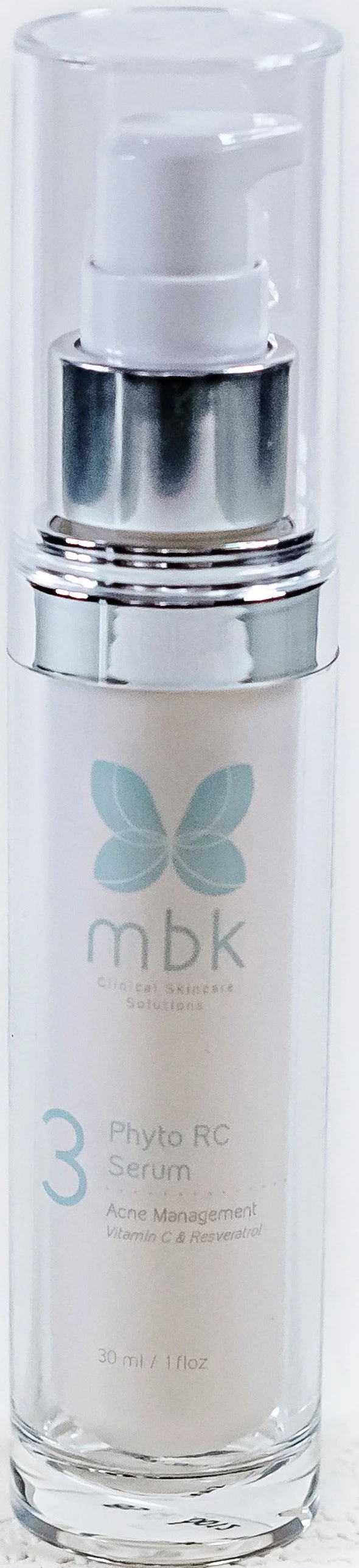
Analysis locked
How well does your skin match with MBK Clinical Skincare Solutions Phyto RC Serum?
Login to see detailsOr continue via
Quick 1-minute survey • Completely free
Ingredients
Analysis results of Ingredients


Ingredient List
| EWG | CIR | Ingredient Name & Cosmetic Function | Notes |
|---|---|---|---|
| 1 | - | (Skin Conditioning) | |
| - | - | Pseudocollagen | |
| 1 | - | (Skin Conditioning) | |
| 1 2 | - | (Masking, Fragrance, Humectant, Skin Protecting, Uv Absorber, Skin Conditioning, Antioxidant, Emollient, Antimicrobial, Astringent, Tonic, Skin-Conditioning Agent -Miscellaneous) | |
MBK Clinical Skincare Solutions Phyto RC Serum - Ingredient Explanation
Yeast Extract
1. Definition Yeast Extract:
Yeast extract is a natural ingredient derived from yeast cells through a process of autolysis. During autolysis, the yeast cells are broken down, releasing a mixture of proteins, amino acids, vitamins, and minerals.2. Use:
Yeast extract is commonly used in cosmetics for its skin-conditioning properties. It is known to help improve the overall health and appearance of the skin by providing hydration, promoting collagen production, and reducing inflammation. Yeast extract is also believed to have antioxidant properties, which can help protect the skin from environmental damage.3. Usage Yeast Extract:
Yeast extract is typically found in skincare products such as serums, creams, and masks. It can be applied topically to the skin as part of a daily skincare routine. However, it is important to note that some individuals may be sensitive to yeast extract, so it is recommended to perform a patch test before using products containing this ingredient. Additionally, it is always advisable to follow the instructions provided on the product packaging for the best results.4. References:
- Kim, J. E., Park, J. H., Lee, S. K., & Park, S. H. (2016). Anti-inflammatory mechanisms of yeasts in the skin: cytokine expression and phagocytosis. Journal of Dermatological Science, 84(3), e77.
- Gancedo, C., & Serrano, R. (1989). Energy-yielding metabolism in yeasts. FEMS Microbiology Reviews, 63(2-3), 233-257.
- Zhai, Q., & Tian, F. (2016). Feeding the microbiota: transducer of nutrient signals for the host. Gut Microbes, 7(5), 465-468.
Pseudocollagen
Ingredient data is being updated. Please check back later.
Hydrolyzed Yeast Extract
1. Definition Hydrolyzed Yeast Extract:
Hydrolyzed Yeast Extract is a natural ingredient derived from yeast that has been broken down into smaller molecules through a process known as hydrolysis. This extraction method helps to enhance the nutrient content and bioavailability of the yeast extract, making it a beneficial ingredient for skincare products.2. Use:
Hydrolyzed Yeast Extract is commonly used in cosmetics for its skin conditioning and moisturizing properties. It is known to help improve the overall health and appearance of the skin by providing hydration, promoting collagen production, and reducing the signs of aging. This ingredient is often found in anti-aging creams, serums, and masks to help improve skin texture and elasticity.3. Usage Hydrolyzed Yeast Extract:
When using products containing Hydrolyzed Yeast Extract, it is important to follow the instructions provided by the manufacturer. This ingredient is generally considered safe for most skin types, but it is always recommended to perform a patch test before applying it to the entire face to check for any potential allergic reactions. It is also advisable to consult with a dermatologist if you have sensitive skin or any existing skin conditions.4. References:
- Kim, J., Lee, Y., Kim, S., & Kim, J. (2013). Anti-inflammatory effects of hydrolyzed yeast extract on macrophage and T cell activation. Journal of Medicinal Food, 16(10), 881-888.
- Lupo, M. P. (2017). Cosmeceutical peptides. Dermatologic Therapy, 30(5), e12529.
- Mukherjee, S., Date, A., Patravale, V., Korting, H. C., Roeder, A., & Weindl, G. (2006). Retinoids in the treatment of skin aging: an overview of clinical efficacy and safety. Clinical Interventions in Aging, 1(4), 327-348.
Camellia Sinensis (Green Tea) Extract
1. Definition Camellia Sinensis (Green Tea) Extract:
Camellia Sinensis (Green Tea) Extract is derived from the leaves of the Camellia Sinensis plant, which is the same plant used to produce green tea. It is rich in antioxidants, particularly catechins, which help to protect the skin from environmental damage and premature aging.2. Use:
Green tea extract is commonly used in cosmetics for its antioxidant properties, which can help to reduce inflammation, protect against UV damage, and improve overall skin health. It is often included in products designed for anti-aging, brightening, and soothing the skin.3. Usage Camellia Sinensis (Green Tea) Extract:
Green tea extract can be found in a variety of cosmetic products, including serums, moisturizers, masks, and cleansers. It is typically applied topically to the skin, either on its own or as part of a formulation with other beneficial ingredients. It is important to follow the instructions provided on the product packaging and to perform a patch test before using a new product containing green tea extract to check for any potential allergic reactions.4. References:
- Yoon HS, Kim JR, Park GY, Kim JY, Won YJ, Kim HR, Kim BJ. Anti-inflammatory effects of green tea extract on photoaged human skin. J Dermatol Sci. 2016 Oct;84(1):74-83. doi: 10.1016/j.jdermsci.2016.06.016. Epub 2016 Jul 1. PMID: 27422719.
- Chiu AE, Chan JL, Kern DG, Kohler S, Rehmus WE, Kimball AB. Double-blinded, placebo-controlled trial of green tea extracts in the clinical and histologic appearance of photoaging skin. Dermatol Surg. 2005 Jul;31(7 Pt 2):855-60; discussion 860. doi: 10.1097/00042728-200507000-00011. PMID: 16029678.
- Zhou B, Wu LM, Yang L, Liu ZL. Evidence for alpha-bisabolol as a natural antioxidant. J Agric Food Chem. 2007 Aug 8;55(16):6302-6306. doi: 10.1021/jf070477y. Epub 2007 Jul 11. PMID: 17625876.
Review

Didn't find
the information you need?




Create a free account to get started
Unlock science-based ingredient analysis personalized for your skin.
Already have an account? Log in
We protect your privacy. We never send spam.