


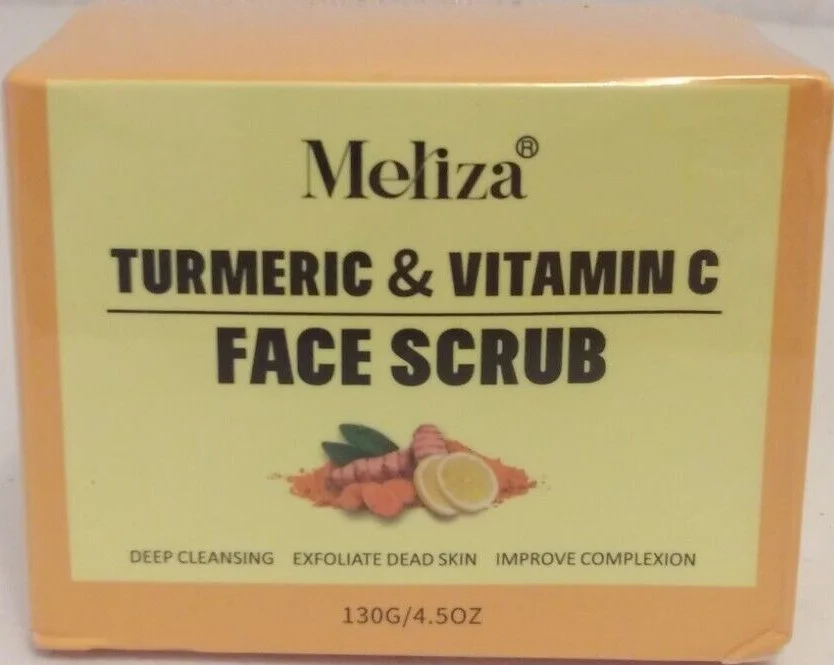
Analysis locked
How well does your skin match with Meliza Turmeric And Vitamin C Face Scrub?
Login to see detailsOr continue via
Quick 1-minute survey • Completely free
Ingredients
Analysis results of Ingredients


Ingredient List
| EWG | CIR | Ingredient Name & Cosmetic Function | Notes |
|---|---|---|---|
| 1 | - | (Abrasive) | |
| 1 | B | (Skin Conditioning, Perfuming, Emollient, Fragrance) |   |
| 1 | - | (Skin Conditioning, Viscosity Controlling, Gel Forming) | |
| 1 | A | (Opacifying, Emollient, Viscosity Controlling, Viscosity Increasing Agent, Emulsion Stabilising, Emulsifying, Foam Boosting, Viscosity Increasingagent - Aqueous) | |

Meliza Turmeric And Vitamin C Face Scrub - Ingredient Explanation
Fragaria Vesca (Strawberry) Seed
1. Definition Fragaria Vesca (Strawberry) Seed:
Fragaria Vesca (Strawberry) Seed is the small, edible seeds found within the fruit of the strawberry plant. These seeds are rich in essential fatty acids, antioxidants, and vitamins, making them a popular ingredient in skincare and cosmetic products.2. Use:
Fragaria Vesca (Strawberry) Seed is commonly used in cosmetics for its moisturizing and nourishing properties. The seeds are often cold-pressed to extract their oil, which is then used in various skincare products such as serums, creams, and lotions. The oil helps to hydrate the skin, improve its elasticity, and protect it from environmental damage.3. Usage Fragaria Vesca (Strawberry) Seed:
When using products containing Fragaria Vesca (Strawberry) Seed, it is important to patch test first to check for any allergic reactions. The oil can be applied directly to the skin or mixed with other ingredients to create a customized skincare treatment. It is best used in the evening as part of a nighttime skincare routine to allow the skin to absorb the nutrients while you sleep.4. References:
- Fornari, T., Vicente, G., Vázquez, A., García-Risco, M. R., Reglero, G., & Fornari, T. (2012). Supercritical fluid extraction of strawberry (Fragaria ananassa Duch.) seed oil: fatty acids composition and antioxidant activity. Journal of Supercritical Fluids, 72, 9-15.
- Kim, S. Y., Jeon, J. S., Ryu, H. S., Lee, S. H., Lee, S. J., & Lee, H. J. (2016). Anti-melanogenic activity of strawberry seed extract by suppression of the MAPK and Akt signaling pathways in B16F10 cells. International journal of molecular medicine, 37(5), 1289-1296.
- Jadoon, S., Karim, S., Bin Asad, M. H., Akram, M. R., Kalsoom Khan, A., & Malik, A. (2015). Anti-aging potential of phytoextract loaded-pharmaceutical creams for human skin cell longetivity. Oxidative medicine and cellular longevity, 2015.
Ethylhexyl Palmitate
1. Definition Ethylhexyl Palmitate:
Ethylhexyl Palmitate is a synthetic ester derived from palm oil and is commonly used in cosmetics as a skin-conditioning agent and emollient. It is a clear, colorless liquid with a light, non-greasy texture.2. Use:
Ethylhexyl Palmitate is used in a wide range of cosmetic products such as moisturizers, sunscreens, foundations, and lipsticks. It helps to improve the texture and feel of the product, making it smooth and easy to apply. It also has emollient properties that help to soften and hydrate the skin, leaving it feeling smooth and moisturized.3. Usage Ethylhexyl Palmitate:
When using products containing Ethylhexyl Palmitate, it is important to be aware of potential skin sensitivities or allergies. Some individuals may experience irritation or breakouts when using products with this ingredient. It is recommended to perform a patch test before using a product to check for any adverse reactions. Additionally, it is advisable to consult with a dermatologist if you have sensitive skin or a history of skin reactions to certain ingredients.4. References:
- Ethylhexyl Palmitate. (n.d.). Cosmetics Info. https://cosmeticsinfo.org/ingredient/ethylhexyl-palmitate
- Guo, L., & Lai, W. (2012). Ethylhexyl Palmitate. In Handbook of Cosmetic Science and Technology (pp. 193-200). CRC Press.
- Ethylhexyl Palmitate. (n.d.). The Derm Review. https://thedermreview.com/ethylhexyl-palmitate/
Euglena Gracilis Polysaccharide
1. Definition Euglena Gracilis Polysaccharide:
Euglena Gracilis Polysaccharide is a natural polysaccharide derived from the Euglena gracilis microalgae. It is known for its moisturizing, anti-inflammatory, and antioxidant properties, making it a popular ingredient in skincare products.2. Use:
Euglena Gracilis Polysaccharide is commonly used in cosmetics for its ability to hydrate and protect the skin. It helps to improve the skin's barrier function, preventing moisture loss and keeping the skin hydrated and supple. Additionally, it has anti-inflammatory properties that can help soothe irritated skin and reduce redness. The antioxidant properties of this polysaccharide also help to protect the skin from environmental stressors and free radicals, preventing premature aging.3. Usage Euglena Gracilis Polysaccharide:
Euglena Gracilis Polysaccharide can be found in a variety of skincare products, such as moisturizers, serums, and masks. It is typically used in concentrations ranging from 0.1% to 1% in formulations. To use products containing this ingredient, apply a small amount to clean, dry skin and gently massage until fully absorbed. It is suitable for all skin types, including sensitive skin, but it is always recommended to do a patch test before using a new product to ensure compatibility.4. References:
- Kim, S. K., Ravichandran, Y. D., Khan, S. B., & Kim, Y. T. (2015). Prospective of the cosmeceuticals derived from marine organisms. Biotechnology and Bioprocess Engineering, 20(3), 403-412.
- Puglisi, C., Maida, I., La Camera, E., Barreca, D., Trombetta, D., & Lanuzza, F. (2019). Evaluation of the antioxidant and anti-inflammatory properties of Euglena gracilis polysaccharidic extract. Journal of Applied Phycology, 31(1), 675-682.
- Rabelo, C. A., Rodrigues, J. A. G., de Melo, C. M. L., & Borges, M. F. (2018). Marine polysaccharides from algae with potential biomedical applications. Brazilian Journal of Pharmaceutical Sciences, 54(2), e01048.
Cetearyl Alcohol
1. Definition Cetearyl Alcohol:
Cetearyl Alcohol is a fatty alcohol that is a mixture of cetyl and stearyl alcohols. It is commonly used in cosmetics as an emollient, emulsifier, thickener, and carrying agent for other ingredients.2. Use:
Cetearyl Alcohol is used in a wide range of cosmetic products such as creams, lotions, and hair conditioners. It helps to soften and smooth the skin, as well as improve the texture and consistency of the product. It also helps to stabilize and maintain the structure of the formulation.3. Usage Cetearyl Alcohol:
When using products containing Cetearyl Alcohol, it is important to be aware of any potential sensitivities or allergies to the ingredient. Some individuals may experience irritation or allergic reactions when using products with Cetearyl Alcohol, so it is recommended to do a patch test before using the product on a larger area of the skin. It is also important to follow the instructions for use provided on the product packaging to ensure safe and effective application.4. References:
- "Cetearyl Alcohol" by Paula Begoun, Cosmetics Cop, https://www.paulaschoice.com/ingredient-dictionary/emollients/cetearyl-alcohol.html
- "Cetearyl Alcohol in Cosmetics: Safe or Harmful?" by Dr. Anvita Arora, Dermatologist, https://www.dranvitaarora.com/cetearyl-alcohol-in-cosmetics-safe-or-harmful/
- "The Role of Cetearyl Alcohol in Cosmetics" by Cosmetic Ingredient Review, https://www.cir-safety.org/sites/default/files/cetearylcir.pdf
Review
Didn't find
the information you need?




Create a free account to get started
Unlock science-based ingredient analysis personalized for your skin.
Already have an account? Log in
We protect your privacy. We never send spam.