


Analysis locked
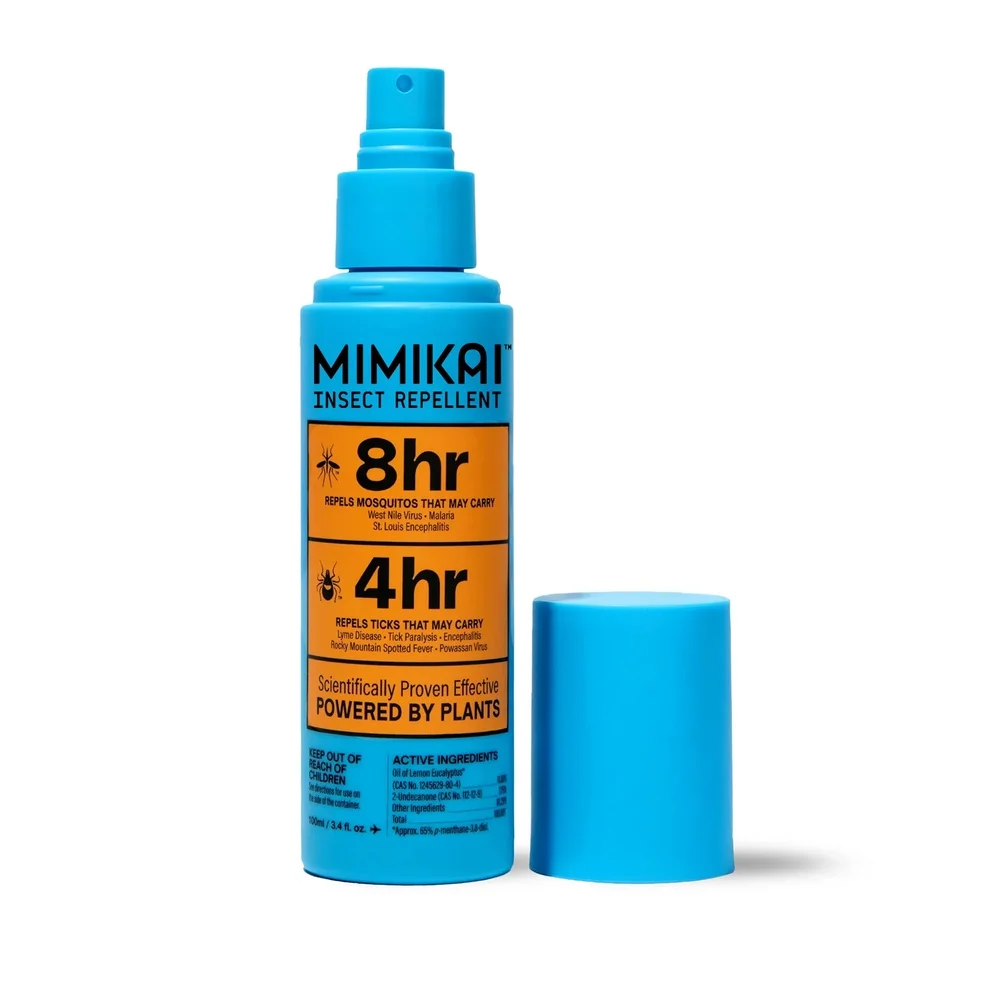
How well does your skin match with Mimikai Mosquito & Tick Repellent Spray?
Login to see detailsOr continue via
Quick 1-minute survey • Completely free
Ingredients
Analysis results of Ingredients


Ingredient List
| EWG | CIR | Ingredient Name & Cosmetic Function | Notes |
|---|---|---|---|
| - | - | Methyl Nonyl Ketone | |
| 1 | - | (Masking, Tonic) | |
| 1 | A | (Fragrance, Skin Conditioning, Antioxidant, Emollient) |   |
| 4 | - | (Solvent, Masking, Antifoaming Agent, Viscosity Controlling, Antimicrobial, Astringent) |    |


Mimikai Mosquito & Tick Repellent Spray - Ingredient Explanation
Methyl Nonyl Ketone
Ingredient data is being updated. Please check back later.
Eucalyptus Citriodora Oil
1. Definition Eucalyptus Citriodora Oil:
Eucalyptus Citriodora Oil, also known as lemon eucalyptus oil, is an essential oil extracted from the leaves of the lemon-scented gum eucalyptus tree. It is known for its refreshing citrusy aroma and is commonly used in cosmetics for its antimicrobial and astringent properties.2. Use:
Eucalyptus Citriodora Oil is used in cosmetics for its natural fragrance and skin benefits. It is often added to skincare products such as lotions, creams, and serums for its antibacterial and antifungal properties. The oil is also known for its astringent properties, making it a popular ingredient in toners and cleansers for oily and acne-prone skin.3. Usage Eucalyptus Citriodora Oil:
When using Eucalyptus Citriodora Oil in cosmetics, it is important to dilute it properly as it can be irritating to the skin in its pure form. It is recommended to do a patch test before using products containing this essential oil to check for any allergic reactions. It is also important to avoid using this oil near the eyes and mucous membranes.4. References:
- Carson, C. F., Hammer, K. A., & Riley, T. V. (2006). Melaleuca alternifolia (Tea Tree) oil: a review of antimicrobial and other medicinal properties. Clinical Microbiology Reviews, 19(1), 50-62.
- Rehman, J., Dillow, J. M., Carter, S. M., Chou, J., & Le, B. (2017). Increased production of reactive oxygen species contributes to antibacterial and antifungal activity of eucalyptus citriodora essential oil. Molecules, 22(8), 1228.
- Silva, J., Abebe, W., Sousa, S. M., Duarte, V. G., Machado, M. I. L., & Matos, F. J. A. (2003). Analgesic and anti-inflammatory effects of essential oils of eucalyptus. Journal of Ethnopharmacology, 89(2-3), 277-283.
Glycine Soja Oil
1. Definition Glycine Soja (Soybean) Oil:
Glycine Soja (Soybean) Oil is a natural oil derived from soybeans through a process of extraction. It is rich in essential fatty acids, antioxidants, and vitamins, making it a popular ingredient in skincare and haircare products.2. Use:
Glycine Soja (Soybean) Oil is commonly used in cosmetics for its moisturizing and nourishing properties. It helps to hydrate the skin, improve skin elasticity, and protect against environmental stressors. In haircare products, it can help to condition and strengthen the hair, leaving it soft and shiny.3. Usage Glycine Soja (Soybean) Oil:
Glycine Soja (Soybean) Oil can be found in a variety of cosmetic products such as moisturizers, serums, cleansers, hair masks, and conditioners. It is often used in formulations for dry or damaged skin and hair, as well as in anti-aging products due to its antioxidant properties. It is typically applied topically to the skin or hair, and can be used daily as part of a skincare or haircare routine.4. References:
- Kim, S. Y., Kim, H. W., & Lee, S. H. (2018). Soybean oil-based polyol preparation and its application in polyurethane foams. Journal of Industrial and Engineering Chemistry, 64, 25-32.
- Reiter, M., Walfisz, A., & Wertz, J. (2016). Antioxidant potential of soybean oil enriched with phospholipids. Journal of the American Oil Chemists' Society, 93(2), 265-273.
- De Oliveira, D. M., Silva, R. C., & De Oliveira, L. E. (2015). Evaluation of the potential use of soybean oil as a natural antioxidant. Journal of Food Science and Technology, 52(5), 2808-2816.
Alcohol Denat
1. Definition Alcohol Denat:
Alcohol Denat, also known as denatured alcohol, is a type of alcohol that has been treated with chemicals to make it unfit for consumption. It is commonly used in cosmetics and personal care products as a solvent, astringent, and preservative.2. Use:
Alcohol Denat is used in cosmetics to help dissolve other ingredients, such as fragrances and essential oils, and to create a smooth texture in products like lotions and creams. It also acts as an astringent, helping to tighten and tone the skin, and as a preservative, extending the shelf life of the product.3. Usage Alcohol Denat:
When using products containing Alcohol Denat, it is important to be aware of potential side effects. Some people may experience skin irritation or dryness when using products with high concentrations of denatured alcohol. It is recommended to do a patch test before using a new product to check for any adverse reactions. Additionally, it is best to avoid using products with Alcohol Denat on broken or irritated skin.4. References:
- "Denatured Alcohol in Cosmetics." Cosmetics Info, www.cosmeticsinfo.org/ingredient/denatured-alcohol.
- "Alcohol Denat." Paula's Choice Skincare, www.paulaschoice.com/ingredient-dictionary/skin-soothing/alcohol-denat.html.
- "Is Alcohol Denat Safe in Skin Care?" Byrdie, www.byrdie.com/alcohol-denat-in-skincare.
Review

Didn't find
the information you need?



Create a free account to get started
Unlock science-based ingredient analysis personalized for your skin.
Already have an account? Log in
We protect your privacy. We never send spam.