


Analysis locked
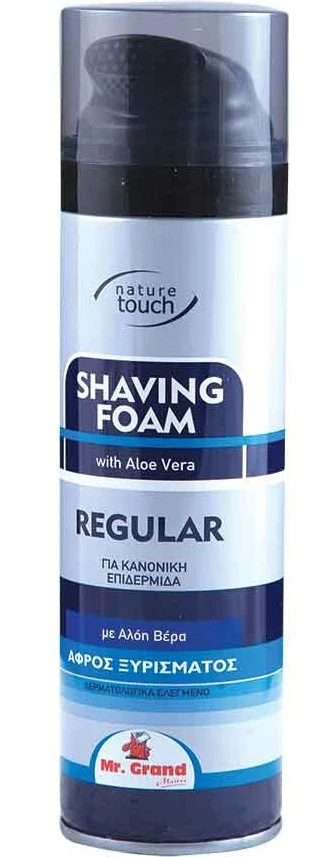
How well does your skin match with Mr Grand Nature Touch Shaving Foam Regular?
Login to see detailsOr continue via
Quick 1-minute survey • Completely free
Ingredients
Analysis results of Ingredients


Ingredient List
| EWG | CIR | Ingredient Name & Cosmetic Function | Notes |
|---|---|---|---|
| 1 | - | (Solvent) | |
| 1 3 | B | (Surfactant, Emulsifying, Cleansing) | |
| 1 2 | B | (Surfactant, Emulsifying, Cleansing) | |
| 3 6 | A | (Propellant agent) | |




Mr Grand Nature Touch Shaving Foam Regular - Ingredient Explanation
Water
1. Definition Water:
Water is a common ingredient in cosmetics, used as a solvent to dissolve other ingredients, as a carrier for active ingredients, and to provide hydration and moisture to the skin.2. Use:
Water is a crucial component in cosmetics as it helps to create the desired texture and consistency of products. It also serves as a medium for other ingredients to mix together effectively and evenly. Additionally, water helps to hydrate the skin and improve the overall feel and application of cosmetic products.3. Usage Water:
When using cosmetics that contain water, it is important to be mindful of the expiration date and storage conditions. Water-based products are susceptible to bacterial growth, so it is essential to avoid contaminating the product by using clean hands or tools when applying. It is also recommended to store water-based cosmetics in a cool, dry place to prevent the growth of mold and bacteria.4. References:
- Draelos, Z. D. (2010). Cosmetic dermatology: products and procedures. John Wiley & Sons.
- Winter, R. (2009). A consumer's dictionary of cosmetic ingredients: complete information about the harmful and desirable ingredients found in cosmetics and cosmeceuticals. Crown.
- Begoun, P. (2003). Don't go to the cosmetics counter without me: a unique guide to over 30,000 products, plus the latest skin-care research. Beginning Press.
Tea Stearate
1. Definition Tea Stearate:
Tea Stearate is a compound derived from the mixture of stearic acid and tea extracts. It is commonly used in cosmetics as an emulsifier and stabilizer to enhance the texture and consistency of products.2. Use:
Tea Stearate is primarily used in cosmetics as a thickening agent and emollient. It helps to improve the spreadability of products and create a smooth, creamy texture. Additionally, it can also act as a binding agent to help ingredients adhere together in formulations.3. Usage Tea Stearate:
When using Tea Stearate in cosmetics, it is important to follow the recommended guidelines for concentration levels to ensure product efficacy and safety. It is generally considered safe for use in skincare and makeup products, but individuals with sensitive skin may want to perform a patch test before widespread application to avoid potential irritation.4. References:
- Kaul, S., Gulati, N., & Verma, D. (2016). Green Tea: A Potential Source of Nutraceuticals. In Nutraceuticals (pp. 113-122). Springer, Cham.
- Kim, J. E., Kim, Y. J., Kim, Y. J., Kang, Y. G., Kim, J. H., & Kim, J. S. (2016). Green tea extract and its major component epigallocatechin gallate inhibits melanin synthesis in human epidermal melanocytes. Journal of Dermatological Science, 84(1), 3-10.
- Saeed, M., Naveed, M., BiBi, J., Kamboh, A. A., Arain, M. A., Shah, Q. A., ... & Babazadeh, D. (2020). The promising pharmacological effects and therapeutic/medicinal applications of tea (Camellia sinensis) and its bioactive compounds: A review. Biological Research, 53(1), 33.
Tea Palmitate
1. Definition Tea Palmitate:
Tea Palmitate is a compound derived from the combination of tea (Triethanolamine) and palmitic acid. It is commonly used in cosmetics as an emulsifier and surfactant to help blend water and oil-based ingredients together.2. Use:
Tea Palmitate is primarily used in cosmetics as an emulsifier, helping to stabilize and blend together water and oil-based ingredients in formulations such as lotions, creams, and serums. It also acts as a surfactant, helping to improve the spreadability and texture of products.3. Usage Tea Palmitate:
When using products containing Tea Palmitate, it is important to be aware of potential sensitivities or allergies to the compound. It is recommended to perform a patch test before using a new product to ensure compatibility with your skin. Additionally, it is essential to follow the manufacturer's instructions for proper use and storage of products containing Tea Palmitate to maintain their effectiveness and safety.4. References:
- "Triethanolamine Palmitate." SpecialChem, www.specialchem.com/tech-library/article/triethanolamine-palmitate-cosmetics-00023316.
- "Triethanolamine Palmitate." Truth In Aging, www.truthinaging.com/ingredients/triethanolamine-palmitate.
- "Triethanolamine Palmitate." Cosmetics Info, www.cosmeticsinfo.org/ingredient/triethanolamine-palmitate.
Isobutane
1. Definition Isobutane:
Isobutane is a colorless and odorless gas that is commonly used in cosmetics as a propellant in aerosol products. It is a hydrocarbon compound with the chemical formula C4H10.2. Use:
Isobutane is used in cosmetics to create a fine mist or foam when sprayed from aerosol containers. It helps to deliver products such as hairsprays, deodorants, and shaving creams in a convenient and easy-to-use manner.3. Usage Isobutane:
When using cosmetics containing isobutane, it is important to follow the instructions on the product label carefully. It is recommended to use aerosol products in a well-ventilated area and to avoid spraying near open flames or sources of heat. Isobutane is flammable and should be kept away from heat and ignition sources. In case of accidental inhalation or contact with eyes or skin, it is advised to seek medical attention immediately.4. References:
- "Isobutane." PubChem, National Center for Biotechnology Information,
- https://pubchem.ncbi.nlm.nih.gov/compound/6554
- "Isobutane in Cosmetics." Cosmetics Info,
- https://www.cosmeticsinfo.org/ingredient/isobutane
- "Isobutane Safety Data Sheet." ScienceLab,
- https://www.sciencelab.com/msds.php?msdsId=9927308
Review

Didn't find
the information you need?




Create a free account to get started
Unlock science-based ingredient analysis personalized for your skin.
Already have an account? Log in
We protect your privacy. We never send spam.