


Analysis locked
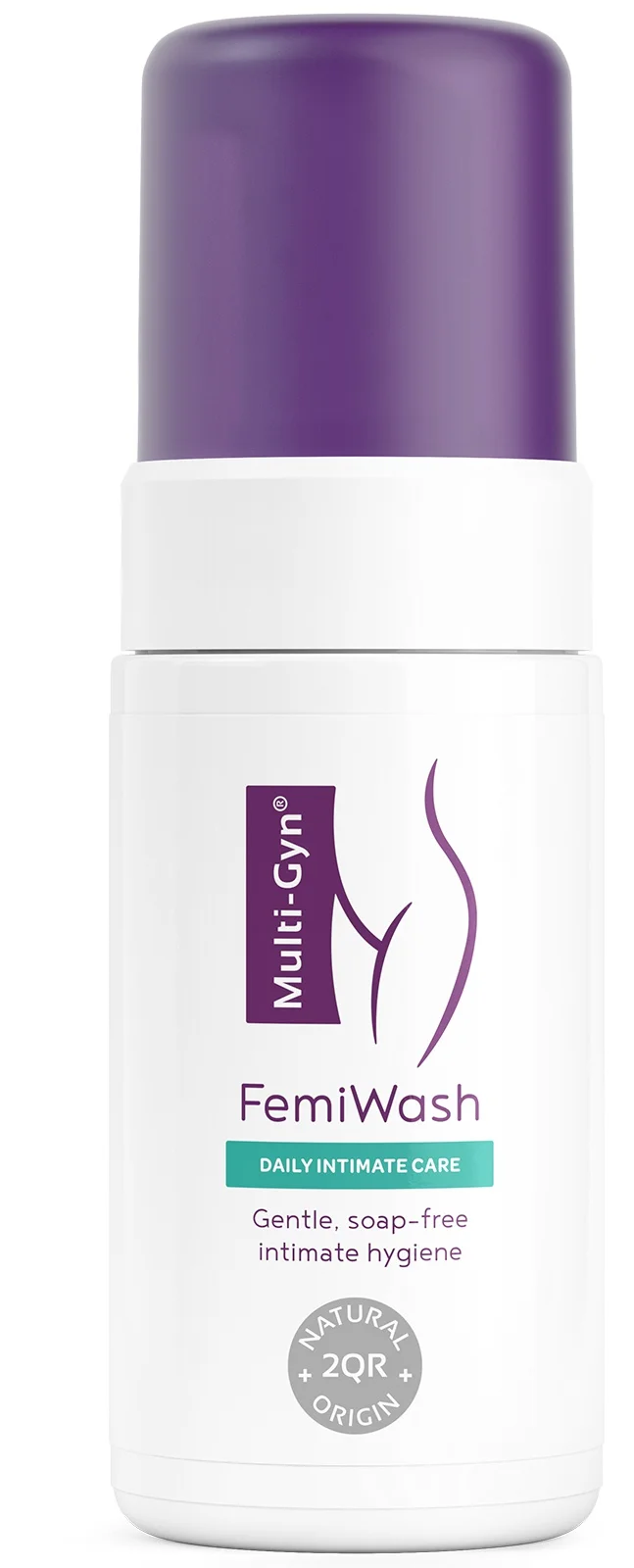
How well does your skin match with Multi-Gyn Femiwash?
Login to see detailsOr continue via
Quick 1-minute survey • Completely free
Ingredients
Analysis results of Ingredients


Ingredient List
| EWG | CIR | Ingredient Name & Cosmetic Function | Notes |
|---|---|---|---|
| - | - | 2Qr-Complex (Bioaktiv Polysackarid) | |
| 1 3 | - | (Skin Conditioning) | |
| 1 | - | (Surfactant, Emulsifying) | |
| 1 3 | B | (Surfactant, Emulsifying) | |


Multi-Gyn Femiwash - Ingredient Explanation
2Qr-Complex (Bioaktiv Polysackarid)
Ingredient data is being updated. Please check back later.
Aloe Barbadensis Extract
1. Definition Aloe Barbadensis Extract:
Aloe Barbadensis Extract, also known as Aloe Vera Extract, is a natural ingredient derived from the leaves of the Aloe Barbadensis plant. It is known for its soothing, hydrating, and healing properties, making it a popular ingredient in skincare and cosmetic products.2. Use:
Aloe Barbadensis Extract is commonly used in cosmetics for its moisturizing and anti-inflammatory properties. It helps to soothe and calm irritated skin, making it ideal for sensitive or sunburned skin. Additionally, it can help to promote healing and reduce redness and inflammation, making it a versatile ingredient in a variety of skincare products.3. Usage Aloe Barbadensis Extract:
Aloe Barbadensis Extract can be found in a wide range of cosmetic products, including moisturizers, serums, lotions, and masks. It is typically used in concentrations of 0.5% to 5% in formulations, depending on the desired effect. When using products containing Aloe Barbadensis Extract, it is important to patch test first to ensure that you do not have any adverse reactions. Additionally, it is best to store products containing Aloe Barbadensis Extract in a cool, dark place to preserve its efficacy.4. References:
- Barel, A., Calomme, M., Timchenko, A., De Paepe, K., Demeester, N., Rogiers, V., ... & Clarys, P. (2001). Effect of oral intake of choline-stabilized orthosilicic acid on skin, nails, and hair in women with photodamaged skin. Archives of dermatological research, 293(10), 509-516.
- Surjushe, A., Vasani, R., & Saple, D. G. (2008). Aloe vera: a short review. Indian journal of dermatology, 53(4), 163.
- Radha, M. H., & Laxmipriya, N. P. (2015). Evaluation of biological properties and clinical effectiveness of Aloe vera: A systematic review. Journal of traditional and complementary medicine, 5(1), 21-26.
Glycereth 2 Cocoate
1. Definition Glycereth 2 Cocoate:
Glycereth 2 Cocoate is a synthetic ingredient commonly used in cosmetics and personal care products as an emulsifier and surfactant. It is derived from coconut oil and glycerin, and it helps to mix oil and water-based ingredients together in formulations.2. Use:
Glycereth 2 Cocoate is used in various cosmetic products such as lotions, creams, shampoos, and conditioners. It helps to stabilize the formula, improve the texture, and enhance the overall performance of the product. Additionally, it can also act as a mild cleansing agent, making it suitable for use in gentle cleansers and body washes.3. Usage Glycereth 2 Cocoate:
When using products containing Glycereth 2 Cocoate, it is important to follow the manufacturer's instructions and guidelines. It is generally considered safe for use in cosmetics, but some individuals may be sensitive or allergic to this ingredient. It is recommended to perform a patch test before using a product with Glycereth 2 Cocoate to check for any adverse reactions. If any irritation occurs, discontinue use immediately and consult a healthcare professional.4. References:
- Cosmetic Ingredient Review (CIR) Expert Panel. Final report on the safety assessment of PEG-2, -6, -8, -20, -32, -33, -40, -45, -50, -55, -60, -75, -90, -100, -120, -150, -175, -180, -200, -220, -240, -260, -320, -360, -370, -400, -420, -450, -600, -660, -900, -1000, and -1200. International Journal of Toxicology. 2005; 24(Suppl 4):1-142.
- Personal Care Products Council. Glycereth-2 cocoate. Accessed from: https://www.cosmeticsinfo.org/ingredient/glycereth-2-cocoate
- Environmental Working Group (EWG). Glycereth-2 Cocoate. Accessed from: https://www.ewg.org/skindeep/ingredients/706483-GLYCERETH-2_COCOATE/
Laureth 10
1. Definition Laureth 10:
Laureth-10 is a polyethylene glycol ether of lauryl alcohol, commonly used as an emulsifier and surfactant in cosmetics and personal care products. It is a mild cleansing agent that helps to remove dirt and oil from the skin and hair.2. Use:
Laureth-10 is primarily used in cosmetics as an emulsifying agent to stabilize oil-in-water emulsions. It helps to create a smooth and uniform texture in lotions, creams, shampoos, and other beauty products. Additionally, Laureth-10 can also function as a solubilizer, helping to dissolve ingredients that are not easily soluble in water.3. Usage Laureth 10:
When using products containing Laureth-10, it is important to follow the instructions provided by the manufacturer. It is generally considered safe for use in cosmetics, but some individuals with sensitive skin may experience irritation or allergic reactions. It is recommended to perform a patch test before using a product with Laureth-10, especially if you have a history of skin allergies or sensitivities.4. References:
- "Safety Assessment of Laureth-10 and PEG-10 Lauryl Ether as Used in Cosmetics" by the Cosmetic Ingredient Review, 2008.
- "Handbook of Cosmetic Science and Technology" edited by André O. Barel, Marc Paye, and Howard I. Maibach, 2014.
- "Polyethylene Glycols: Chemistry and Biological Effects" by J. M. Saavedra and A. J. B. Zehnder, 1984.
Review

Didn't find
the information you need?








Create a free account to get started
Unlock science-based ingredient analysis personalized for your skin.
Already have an account? Log in
We protect your privacy. We never send spam.