


Analysis locked
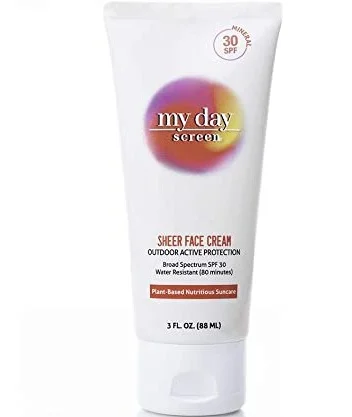
How well does your skin match with My Day Screen Sheer Face Cream Sunscreen Lotion, SPF 30?
Login to see detailsOr continue via
Quick 1-minute survey • Completely free
Ingredients
Analysis results of Ingredients


Ingredient List
| EWG | CIR | Ingredient Name & Cosmetic Function | Notes |
|---|---|---|---|
| 2 9 | - | (Skin Protecting, Cosmetic Colorant, Sunscreen Agent, Bulking Agent) |  |
| 1 3 | - | | |
| 1 | - | (Solvent) | |
| 1 | - | (Skin Conditioning, Masking) | |




My Day Screen Sheer Face Cream Sunscreen Lotion, SPF 30 - Ingredient Explanation
Zinc Oxide
1. Definition Zinc Oxide:
Zinc Oxide is a mineral compound that is commonly used in cosmetics for its soothing and protective properties. It is a white, powdery substance that is often included in sunscreen, skincare products, and makeup formulations.2. Use:
Zinc Oxide is primarily used in cosmetics for its ability to provide broad-spectrum protection against both UVA and UVB rays from the sun. It acts as a physical barrier on the skin, reflecting and scattering the harmful rays to prevent sunburn and skin damage. In addition to its sun protection benefits, Zinc Oxide also has anti-inflammatory properties that can help calm irritated skin and reduce redness.3. Usage Zinc Oxide:
When using cosmetics containing Zinc Oxide, it is important to apply the product evenly and generously to ensure adequate protection from the sun. Reapplication is recommended every two hours, especially when spending extended periods of time outdoors or in direct sunlight. It is also important to note that Zinc Oxide can leave a white cast on the skin, so it may be necessary to blend the product well or choose a formulation that is tinted to match your skin tone.4. References:
- Draelos, Z. D. (2010). Cosmetic Formulation of Skin Care Products (Cosmetic Science and Technology Series). CRC Press.
- Wang, S. Q., & Lim, H. W. (2007). Current status of the sunscreen regulation in the United States: 2011 Food and Drug Administration's final rule on labeling and effectiveness testing. Journal of the American Academy of Dermatology, 66(3), 489-496.
- Nasir, A., Kalam, A., Singh, P., & Sharma, K. (2019). Zinc oxide nanoparticles: a review of their biological synthesis, antimicrobial activity, uptake, translocation and biotransformation in plants. Journal of Materials Science, 54(2), 1016-1042.
Aloe Barbadensis (Aloe Vera) Juice
1. Definition Aloe Barbadensis (Aloe Vera) Juice:
Aloe Barbadensis (Aloe Vera) Juice is a natural ingredient derived from the leaves of the Aloe Vera plant. It is known for its soothing and hydrating properties and has been used for centuries in traditional medicine and skincare.2. Use:
Aloe Barbadensis Juice is commonly used in cosmetics for its moisturizing, healing, and anti-inflammatory properties. It is often included in skincare products such as lotions, creams, serums, and masks to help soothe and hydrate the skin. Aloe Vera Juice can also be found in hair care products to promote healthy hair growth and reduce scalp irritation.3. Usage Aloe Barbadensis (Aloe Vera) Juice:
When using products containing Aloe Barbadensis Juice, it is important to perform a patch test first to check for any allergic reactions. Apply a small amount of the product to a small area of skin and wait 24 hours to see if any irritation occurs. If no reaction occurs, the product can be safely used as directed.Precautions: While Aloe Vera Juice is generally considered safe for most people, some individuals may experience allergic reactions or skin irritation. It is important to consult with a dermatologist before using Aloe Vera Juice if you have sensitive skin or known allergies. Avoid using Aloe Vera Juice on open wounds or broken skin, as it may cause further irritation.
4. References:
- Foster, M., & Hunter, D. (2014). Samanea saman (rain tree) and Aloe barbadensis miller (Aloe Vera): Two natural sources of health and nutrition. Journal of Medicinal Plants Research, 8(28), 967-973.
- Surjushe, A., Vasani, R., & Saple, D. G. (2008). Aloe Vera: A short review. Indian Journal of Dermatology, 53(4), 163-166.
- Radha, M. H., & Laxmipriya, N. P. (2015). Evaluation of biological properties and clinical effectiveness of Aloe Vera: A systematic review. Journal of Traditional and Complementary Medicine, 5(1), 21-26.
Water
1. Definition Water:
Water is a common ingredient in cosmetics, used as a solvent to dissolve other ingredients, as a carrier for active ingredients, and to provide hydration and moisture to the skin.2. Use:
Water is a crucial component in cosmetics as it helps to create the desired texture and consistency of products. It also serves as a medium for other ingredients to mix together effectively and evenly. Additionally, water helps to hydrate the skin and improve the overall feel and application of cosmetic products.3. Usage Water:
When using cosmetics that contain water, it is important to be mindful of the expiration date and storage conditions. Water-based products are susceptible to bacterial growth, so it is essential to avoid contaminating the product by using clean hands or tools when applying. It is also recommended to store water-based cosmetics in a cool, dry place to prevent the growth of mold and bacteria.4. References:
- Draelos, Z. D. (2010). Cosmetic dermatology: products and procedures. John Wiley & Sons.
- Winter, R. (2009). A consumer's dictionary of cosmetic ingredients: complete information about the harmful and desirable ingredients found in cosmetics and cosmeceuticals. Crown.
- Begoun, P. (2003). Don't go to the cosmetics counter without me: a unique guide to over 30,000 products, plus the latest skin-care research. Beginning Press.
Bixa Orellana Extract
1. Definition Bixa Orellana Extract:
Bixa Orellana Extract, also known as annatto extract, is derived from the seeds of the Bixa Orellana tree, which is native to tropical regions of the Americas. It is commonly used in cosmetics for its natural coloring properties and potential skin benefits.2. Use:
Bixa Orellana Extract is often used in cosmetics as a natural colorant, providing a yellow to orange hue to products such as lipsticks, eyeshadows, and blushes. Additionally, it is believed to have antioxidant properties that can help protect the skin from environmental damage and promote a healthy complexion.3. Usage Bixa Orellana Extract:
When using products containing Bixa Orellana Extract, it is important to be aware of any potential allergies or sensitivities to the ingredient. Patch testing on a small area of skin before widespread use is recommended to ensure compatibility. As with any cosmetic ingredient, it is best to follow the manufacturer's instructions for safe and effective use.4. References:
- Cefali, L. C., et al. (2014). Antioxidant activity and chemical composition of annatto (Bixa orellana L.) extract and its use in butter. Retrieved from https://www.ncbi.nlm.nih.gov/pmc/articles/PMC4003795/
- Costa, R. M., et al. (2016). Evaluation of the photoprotective effect of Bixa orellana L. (Bixaceae) extract on the skin of hairless mice exposed to UV radiation. Retrieved from https://www.ncbi.nlm.nih.gov/pmc/articles/PMC4758982/
- Oliveira, J. M., et al. (2018). Antioxidant and anti-inflammatory activities of Bixa orellana L. seed extract. Retrieved from https://www.ncbi.nlm.nih.gov/pmc/articles/PMC6261535/
Review

Didn't find
the information you need?





Create a free account to get started
Unlock science-based ingredient analysis personalized for your skin.
Already have an account? Log in
We protect your privacy. We never send spam.