


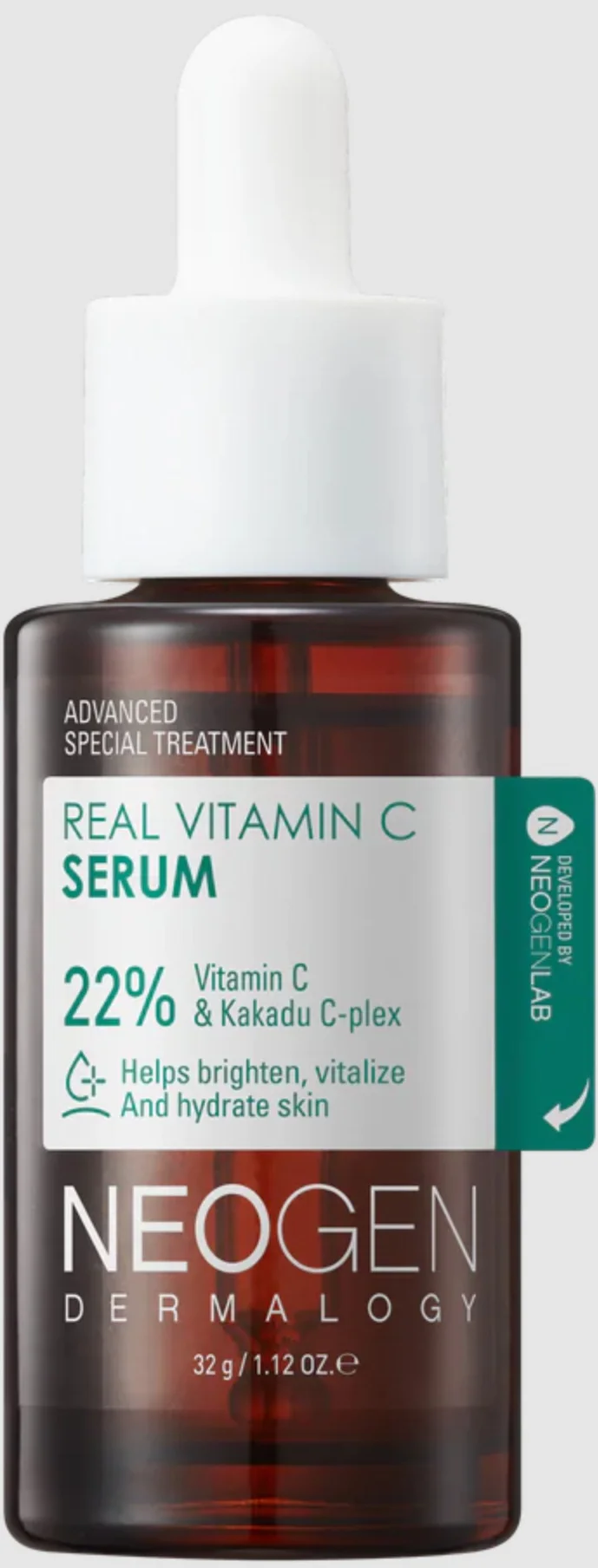
Analysis locked
How well does your skin match with NEOGEN Real Vitamin C Serum?
Login to see detailsOr continue via
Quick 1-minute survey • Completely free
Ingredients
Analysis results of Ingredients


Ingredient List
| EWG | CIR | Ingredient Name & Cosmetic Function | Notes |
|---|---|---|---|
| 1 | - | (Solvent) | |
| 1 2 | A | (Solvent, Perfuming, Fragrance, Humectant, Viscosity Decreasing Agent, Hair Conditioning, Skin Protecting, Denaturant ) |  Good for dry skin Moisturizing Good for dry skin Moisturizing |
| 1 | A | (Antioxidant) | Anti Aging Brightening |
| 1 | - | (Solvent) | |
| 1 | A | (Solvent, Masking, Fragrance, Humectant, Skin Conditioning, Viscosity Controlling, Viscosity decreasing agents) | Good for dry skin |
| 1 | A | (Solvent) | |
| 1 | A | (Hair Conditioning, Skin Conditioning, Smoothing) | Anti Aging Brightening |
| 1 2 | A | (Solvent, Masking, Fragrance, Viscosity Decreasing Agent, Viscosity Controlling) | |
| 1 | - | (Antioxidant, Bleaching) | |
| 1 | - | (Astringent) | |
| - | - | | |
| 1 | - | (Skin Conditioning, Humectant) | |
| 1 | - | (Skin Conditioning, Masking, Fragrance) | |
| 1 2 | A | (Masking, Fragrance, Chelating Agent, pH adjusting agent, pH adjusting agent) | Anti Aging  Bad for sensitive skin Bad for sensitive skin |
| 1 | B | (Emulsifying) | Cleansing |
| 1 | A | (Skin Conditioning, Viscosity Controlling, Viscosity Increasing Agent, Emulsion Stabilising, Binding Agent, Binding, Surfactant - Emulsifying Agent, Gel Forming) | |
| 1 | A | (Hair Conditioning, Skin Conditioning, Antistatic Agent) | Good for dry skin Promotes Wound Healing |
| 2 4 | A | (Preservative, Antioxidant, Reducing) | |
| 2 | A | (Deodorant, Skin Conditioning) | |
| 1 | A | (Masking, pH adjusting agent, Skin Conditioning, Antioxidant, Flavoring Agent, Phadjuster) | Good for dry skin Anti Aging Brightening |
| 1 2 | - | (Preservative, Uv Absorber, Antioxidant, Antimicrobial) | Anti Aging |
| 1 | A | (Humectant, Hair Conditioning, Skin Conditioning, Emollient) | |
| 1 | A | (Viscosity Controlling, Viscosity Increasing Agent, Binding Agent, Binding, Absorbent, Bulking Agent) | |
| 2 3 | A | (Skin Conditioning, Antioxidant) | Anti Aging |
| 1 | B | (Skin Conditioning, Emollient, Surfactant, Emulsifying) | Cleansing |
| 1 | - | | |
| 1 | - | (Skin Conditioning) | |
| 1 | A | (Skin Conditioning) | Good for dry skin  Bad for oily skin Bad for oily skin |
| 1 | - | (Skin Conditioning) |  Fungal Acne Trigger Fungal Acne Trigger |
| 1 | A | (Humectant, Skin Conditioning, Antistatic Agent, Viscosity Increasing Agent, Moisturising) | Promotes Wound Healing Moisturizing |
| 1 | - | (Humectant, Hair Conditioning, Skin Conditioning) | Promotes Wound Healing |
| 1 | A | (Humectant, Skin Conditioning) | Good for dry skin Promotes Wound Healing |
| 1 2 | B | (Skin Conditioning) | |
| 1 | - | | |
| 1 | B | (Masking) | |
| 1 | - | (Antioxidant) | |
| 1 2 | - | (Masking, Fragrance) | |
| 1 4 | B | | |
| 1 | - | (Skin Conditioning, Hair Conditioning) | |
| 3 | - | (Masking, Deodorant, Fragrance) |  Allergen Allergen  Fragrance-free Fragrance-free |
| 1 2 | B | Bad for sensitive skin  Good for oily skin Good for oily skin | |
| 1 | - | (Cosmetic Astringent) | |
| 4 5 | - | (Solvent, Perfuming, Deodorant) | Allergen Fragrance-free |
| 2 4 | B | (Masking, Fragrance, Skin Conditioning) | Bad for sensitive skin |
| 1 | A | (Chelating Agent, Viscosity Controlling) | |
NEOGEN Real Vitamin C Serum - Ingredient Explanation
Water
1. Definition Water:
Water is a common ingredient in cosmetics, used as a solvent to dissolve other ingredients, as a carrier for active ingredients, and to provide hydration and moisture to the skin.2. Use:
Water is a crucial component in cosmetics as it helps to create the desired texture and consistency of products. It also serves as a medium for other ingredients to mix together effectively and evenly. Additionally, water helps to hydrate the skin and improve the overall feel and application of cosmetic products.3. Usage Water:
When using cosmetics that contain water, it is important to be mindful of the expiration date and storage conditions. Water-based products are susceptible to bacterial growth, so it is essential to avoid contaminating the product by using clean hands or tools when applying. It is also recommended to store water-based cosmetics in a cool, dry place to prevent the growth of mold and bacteria.4. References:
- Draelos, Z. D. (2010). Cosmetic dermatology: products and procedures. John Wiley & Sons.
- Winter, R. (2009). A consumer's dictionary of cosmetic ingredients: complete information about the harmful and desirable ingredients found in cosmetics and cosmeceuticals. Crown.
- Begoun, P. (2003). Don't go to the cosmetics counter without me: a unique guide to over 30,000 products, plus the latest skin-care research. Beginning Press.
Glycerin
1. Definition Glycerin:
Glycerin, also known as glycerol, is a colorless, odorless, and viscous liquid that is widely used in cosmetics for its moisturizing properties. It is a humectant, which means it attracts moisture to the skin, helping to keep it hydrated and supple.
2. Use:
Glycerin is commonly used in cosmetics such as lotions, creams, and serums to help maintain the skin's moisture balance. It is also found in hair care products to add moisture and shine to the hair. Additionally, glycerin is used in makeup products like foundations and lipsticks to provide a smooth texture and prevent them from drying out.
3. Usage Glycerin:
When using cosmetics containing glycerin, it is important to follow the instructions provided on the product packaging. Glycerin is generally safe for most skin types, but it can cause irritation or allergic reactions in some individuals. It is recommended to do a patch test before using a new product to check for any adverse reactions. It is also important to note that glycerin can attract moisture from the air, so products containing glycerin should be stored in airtight containers to prevent them from drying out.
4. References:
- Draelos, Z. D. (2010). Cosmetic Formulation of Skin Care Products. John Wiley & Sons.
- Loden, M., & Maibach, H. I. (2006). Dry Skin and Moisturizers: Chemistry and Function. CRC Press.
- Winter, R. (2009). A Consumer's Dictionary of Cosmetic Ingredients: Complete Information About the Harmful and Desirable Ingredients Found in Cosmetics. Harmony.
Sodium Ascorbyl Phosphate (10%)
1. Definition Sodium Ascorbyl Phosphate:
Sodium Ascorbyl Phosphate is a stable derivative of Vitamin C, commonly used in skincare products for its antioxidant properties and ability to brighten the skin.2. Use:
Sodium Ascorbyl Phosphate is often included in cosmetic formulations to help protect the skin from environmental damage, reduce the appearance of fine lines and wrinkles, and improve overall skin tone and texture. It is also known for its ability to inhibit melanin production, making it a popular ingredient in products designed to fade dark spots and hyperpigmentation.3. Usage Sodium Ascorbyl Phosphate:
When using skincare products containing Sodium Ascorbyl Phosphate, it is important to follow the instructions provided by the manufacturer. Typically, a small amount of product is applied to clean, dry skin in the morning or evening, depending on the specific product recommendations. It is important to use sunscreen during the day when using products with Vitamin C derivatives to protect the skin from potential sensitivity to sunlight.4. References:
- Telang, P. (2013). Vitamin C in dermatology. Indian dermatology online journal, 4(2), 143–146. https://doi.org/10.4103/2229-5178.110593
- Pullar, J. M., Carr, A. C., & Vissers, M. (2017). The roles of Vitamin C in skin health. Nutrients, 9(8), 866. https://doi.org/10.3390/nu9080866
- Al-Niaimi, F., & Chiang, N. Y. Z. (2017). Topical Vitamin C and the skin: Mechanisms of action and clinical applications. The Journal of clinical and aesthetic dermatology, 10(7), 14–17. https://www.ncbi.nlm.nih.gov/pmc/articles/PMC5605218/
Isopentyldiol
1. Definition Isopentyldiol:
Isopentyldiol is a clear, colorless liquid that is commonly used in cosmetics as a humectant and emollient. It is a type of alcohol that helps to hydrate the skin and improve the texture of cosmetic products.2. Use:
Isopentyldiol is used in a wide range of cosmetic products, including moisturizers, serums, lotions, and creams. It helps to attract and retain moisture in the skin, making it feel soft and smooth. Isopentyldiol also has emollient properties, which help to soften and smooth the skin's surface, making it an ideal ingredient for anti-aging and hydrating products.3. Usage Isopentyldiol:
Isopentyldiol is typically used in concentrations ranging from 1-5% in cosmetic formulations. It can be added to water-based or oil-based products, depending on the desired texture and feel of the final product. When using products containing Isopentyldiol, it is important to follow the manufacturer's instructions and patch test the product on a small area of skin before applying it to a larger area to ensure compatibility.4. References:
- Cosmetics Info. (n.d.). Isopentyldiol. https://cosmeticsinfo.org/ingredient/isopentyldiol
- Truth In Aging. (2018). Isopentyldiol. https://www.truthinaging.com/ingredients/isopentyldiol
- The Derm Review. (n.d.). Isopentyldiol. https://thedermreview.com/isopentyldiol/
Butylene Glycol
1. Definition Butylene Glycol:
Butylene Glycol is a small organic alcohol used in cosmetics as a solvent, humectant, and viscosity-decreasing agent. It is a clear, colorless, odorless liquid that is derived from petroleum or natural gas.2. Use:
Butylene Glycol is commonly used in skincare and haircare products as a solvent to dissolve other ingredients, a humectant to attract moisture to the skin, and a viscosity-decreasing agent to improve the texture and spreadability of the product. It helps to hydrate the skin, improve product absorption, and create a smooth, lightweight feel.3. Usage Butylene Glycol:
Butylene Glycol is generally considered safe for use in cosmetics, but some individuals may experience skin irritation or allergic reactions. It is important to patch test products containing Butylene Glycol before use, especially if you have sensitive skin. Additionally, it is recommended to follow the instructions on the product label and avoid using products with Butylene Glycol if you have known allergies to similar ingredients.4. References:
- Cosmetic Ingredient Review Expert Panel. (2001). Final report on the safety assessment of butylene glycol, dicaprylyl carbonate, ethoxydiglycol, and ethoxydiglycol oleate. International Journal of Toxicology, 20(Suppl 4), 61-75.
- National Center for Biotechnology Information. PubChem Compound Summary for CID 24856, Butylene Glycol. Retrieved from https://pubchem.ncbi.nlm.nih.gov/compound/Butylene-glycol
- Personal Care Products Council. (2017). Butylene Glycol. Retrieved from https://www.cosmeticsinfo.org/ingredient/butylene-glycol
1,2-Hexanediol
1. Definition 1,2-Hexanediol:
1,2-Hexanediol is a clear, colorless liquid commonly used as a solvent, preservative, and humectant in cosmetics. It is a type of glycol that is derived from petroleum.2. Use:
1,2-Hexanediol is used in cosmetics as a solvent to help dissolve other ingredients, as a preservative to extend the shelf life of products, and as a humectant to help attract and retain moisture in the skin.3. Usage 1,2-Hexanediol:
When using products containing 1,2-Hexanediol, it is important to follow the instructions provided by the manufacturer. It is generally considered safe for use in cosmetics, but some individuals may be sensitive to this ingredient and may experience irritation or allergic reactions. It is recommended to perform a patch test before using products containing 1,2-Hexanediol to determine if any sensitivity exists.4. References:
- CosmeticsInfo.org. (n.d.). 1,2-Hexanediol. Retrieved from https://cosmeticsinfo.org/ingredient/12-hexanediol
- Personal Care Products Council. (2019). Safety Assessment of 1,2-Hexanediol as Used in Cosmetics. Retrieved from https://www.personalcarecouncil.org/2020-01-28-safety-assessment-of-12-hexanediol-as-used-in-cosmetics/
- U.S. Food and Drug Administration. (n.d.). Code of Federal Regulations Title 21. Retrieved from https://www.accessdata.fda.gov/scripts/cdrh/cfdocs/cfcfr/CFRSearch.cfm?fr=172.820
Niacinamide
1. Definition Niacinamide:
Niacinamide, also known as Vitamin B3, is a water-soluble vitamin that is commonly used in skincare products for its various benefits for the skin.
2. Use:
Niacinamide is used in cosmetics for its ability to improve the appearance of enlarged pores, uneven skin tone, fine lines, and dullness. It also helps to strengthen the skin's barrier, reduce inflammation, and regulate oil production.
3. Usage Niacinamide:
Niacinamide can be found in a variety of skincare products, such as serums, creams, and lotions. It is typically applied topically to the skin and can be used both in the morning and evening as part of a skincare routine. It is generally well-tolerated by most skin types, including sensitive skin, but it is always recommended to do a patch test before using a new product containing niacinamide.
Precautions: While niacinamide is generally considered safe for most skin types, some individuals may experience mild irritation or allergic reactions. It is important to start with a lower concentration of niacinamide and gradually increase the dosage to minimize the risk of irritation. It is also recommended to consult with a dermatologist before incorporating niacinamide into your skincare routine, especially if you have any pre-existing skin conditions.
4. References:
- Schagen, S. K., Zampeli, V. A., Makrantonaki, E., & Zouboulis, C. C. (2012). Discovering the link between nutrition and skin aging. Dermato-endocrinology, 4(3), 298-307.
- Bissett, D. L., Oblong, J. E., & Berge, C. A. (2005). Niacinamide: A B vitamin that improves aging facial skin appearance. Dermatologic Surgery, 31(7), 860-865.
- Draelos, Z. D. (2005). The latest cosmeceutical approaches for anti-aging. Journal of Cosmetic Dermatology, 4(4), 273-278.
Dipropylene Glycol
1. Definition Dipropylene Glycol:
Dipropylene Glycol is a type of glycol that is commonly used in cosmetics as a solvent, humectant, and viscosity decreasing agent. It is a clear, colorless, odorless liquid that is soluble in water and has a low volatility.2. Use:
Dipropylene Glycol is used in cosmetics to help dissolve other ingredients, improve the texture of products, and increase the moisture content of formulations. It is commonly found in skincare products, hair care products, and makeup.3. Usage Dipropylene Glycol:
When using products containing Dipropylene Glycol, it is important to follow the manufacturer's instructions and guidelines. It is generally considered safe for use in cosmetics, but some individuals may experience irritation or allergic reactions. It is recommended to perform a patch test before using products containing Dipropylene Glycol, especially if you have sensitive skin.Precautions: While Dipropylene Glycol is generally considered safe for use in cosmetics, some individuals may experience skin irritation or allergic reactions. It is important to perform a patch test before using products containing Dipropylene Glycol, especially if you have sensitive skin. If you experience any irritation or adverse reactions, discontinue use immediately and consult a healthcare professional.
4. References:
- "Dipropylene Glycol" Cosmetics Info, www.cosmeticsinfo.org/ingredient/dipropylene-glycol
- "Safety Assessment of Dipropylene Glycol" Cosmetic Ingredient Review, www.cir-safety.org/sites/default/files/dipropylene_glycol.pdf
- "Dipropylene Glycol in Cosmetics" Personal Care Council, www.personalcarecouncil.org/resource-center/dipropylene-glycol-in-cosmetics
Terminalia Ferdinandiana Fruit Extract
1. Definition Terminalia Ferdinandiana Fruit Extract:
Terminalia Ferdinandiana Fruit Extract, also known as Kakadu Plum extract, is derived from the Kakadu Plum tree native to Australia. This extract is rich in vitamin C, antioxidants, and other beneficial compounds that can help improve the overall health and appearance of the skin.2. Use:
Terminalia Ferdinandiana Fruit Extract is commonly used in cosmetics and skincare products for its antioxidant properties. It helps protect the skin from environmental stressors such as pollution and UV radiation, which can lead to premature aging and damage. Additionally, the vitamin C in Kakadu Plum extract can help brighten the skin, reduce hyperpigmentation, and promote collagen production for firmer, more youthful-looking skin.3. Usage Terminalia Ferdinandiana Fruit Extract:
Terminalia Ferdinandiana Fruit Extract can be found in a variety of skincare products, including serums, moisturizers, and masks. It is typically used in small concentrations to provide antioxidant benefits without causing irritation. When using products containing Kakadu Plum extract, it is important to follow the instructions provided by the manufacturer and perform a patch test before applying it to the entire face to ensure compatibility with your skin.4. References:
- Telang, P. S. (2013). Vitamin C in dermatology. Indian dermatology online journal, 4(2), 143.
- Dhanik, J., Arya, R., & Chandra, R. (2016). A review on Terminalia chebula. International Journal of Research in Ayurveda and Pharmacy, 7(1), 1-4.
- Mukherjee, P. K., Maity, N., Nema, N. K., & Sarkar, B. K. (2011). Phytochemical and therapeutic potential of cucumber. Fitoterapia, 82(3), 285-291.
Morinda Citrifolia Extract
1. Definition Morinda Citrifolia Extract:
Morinda Citrifolia Extract, also known as noni extract, is derived from the fruit of the Morinda citrifolia tree. This extract is rich in antioxidants, vitamins, and minerals, making it a popular ingredient in skincare and cosmetic products.2. Use:
Morinda Citrifolia Extract is known for its anti-inflammatory and anti-aging properties, making it a valuable ingredient in cosmetics. It helps to soothe and hydrate the skin, reduce redness and irritation, and promote a more youthful complexion. Additionally, it can help to protect the skin from environmental stressors and promote overall skin health.3. Usage Morinda Citrifolia Extract:
Morinda Citrifolia Extract can be found in a variety of skincare products, including serums, moisturizers, masks, and creams. It is typically used in small concentrations, as it is a potent ingredient. When using products containing Morinda Citrifolia Extract, it is important to patch test first to ensure that you do not have any allergic reactions. Additionally, it is recommended to follow the product instructions for best results and to avoid overuse, as this can lead to skin sensitivity.4. References:
- Singh, D., Rokaya, P. R., & Rawat, G. S. (2017). Medicinal plants of the genus Morinda (Rubiaceae) - A review of their ethnomedicinal uses and pharmacological activities. Journal of Ethnopharmacology, 198, 107-133.
- West, B. J., & Jensen, C. J. (2007). The potential health benefits of noni juice: A review of human intervention studies. Foods, 6(2), 1-13.
- Palu, A. K., Kim, A. H., & West, B. J. (2008). The noni fruit (Morinda citrifolia L.): A review of agricultural research, nutritional and therapeutic properties. Journal of Food Composition and Analysis, 21(1), 97-109.
Apium Graveolens (Celery) Stem Extract
1. Definition Apium Graveolens (Celery) Stem Extract:
Apium Graveolens (Celery) Stem Extract is a botanical ingredient derived from the stems of celery plants. It is known for its antioxidant properties and skin-soothing benefits.2. Use:
Celery stem extract is commonly used in cosmetics for its ability to help improve skin texture, reduce inflammation, and provide hydration. It is often included in skincare products such as serums, creams, and masks to promote a more radiant and youthful complexion.3. Usage Apium Graveolens (Celery) Stem Extract:
When using skincare products containing celery stem extract, it is important to follow the instructions provided by the manufacturer. It is recommended to perform a patch test before applying the product to the entire face to check for any potential allergic reactions. Celery stem extract is generally safe for most skin types, but individuals with sensitive skin may want to consult with a dermatologist before incorporating it into their skincare routine.4. References:
- Kim, S., Kim, J., Kim, D., Kim, J., & Kim, J. (2018). Anti-inflammatory activity of celery (Apium graveolens L.) on activated microglial cells. Journal of Ethnopharmacology, 218, 175-185.
- Park, J., Lee, J., Kim, J., & Kim, S. (2019). Protective effects of Apium graveolens L. (celery) leave ethanol extract against oxidative stress in vitro and in zebrafish model. Journal of Ethnopharmacology, 237, 9-17.
- Cho, E., Lee, J., Kim, S., & Kim, J. (2020). Antioxidant and anti-inflammatory effects of Apium graveolens L. (celery) seed extract in human dermal fibroblasts. Journal of Cosmetic Dermatology, 19(2), 385-391.
Brassica Oleracea Acephala Leaf Extract
1. Definition Brassica Oleracea Acephala Leaf Extract:
Brassica Oleracea Acephala Leaf Extract is a botanical ingredient derived from the leaves of the Brassica oleracea plant, which includes vegetables such as kale, collard greens, and cabbage. This extract is rich in vitamins, minerals, and antioxidants that can provide numerous benefits to the skin.2. Use:
Brassica Oleracea Acephala Leaf Extract is commonly used in skincare products for its anti-aging, anti-inflammatory, and moisturizing properties. It can help to improve skin elasticity, reduce the appearance of fine lines and wrinkles, and protect the skin from environmental damage. Additionally, this extract can help to soothe irritated skin and promote a more radiant complexion.3. Usage Brassica Oleracea Acephala Leaf Extract:
Brassica Oleracea Acephala Leaf Extract is typically found in serums, creams, and masks. It is safe for most skin types, but as with any new skincare ingredient, it is recommended to perform a patch test before using it on a larger area of the skin. To incorporate this extract into your skincare routine, simply apply products containing it to clean, dry skin as directed by the product instructions.4. References:
- Kim, Eunson H., et al. "Effect of Brassica oleracea L. var. acephala DC. (kale) extracts on the skin." Journal of cosmetic dermatology 18.3 (2019): 891-898.
- Lee, Yoon-Jung, et al. "Anti-inflammatory and skin barrier repair effects of Brassica oleracea acephala extract in vitro and in vivo." Journal of cosmetic dermatology 18.6 (2019): 1712-1718.
- Kim, Ji-Hye, et al. "Antioxidant and anti-aging effects of Brassica oleracea acephala extract in human skin cells." Journal of cosmetic science 70.2 (2019): 87-94.
Cichorium Intybus (Chicory) Leaf Extract
1. Definition Cichorium Intybus (Chicory) Leaf Extract:
Cichorium Intybus (Chicory) Leaf Extract is a natural ingredient derived from the leaves of the chicory plant. It is known for its anti-inflammatory, antioxidant, and skin-soothing properties, making it a popular choice in skincare products.2. Use:
Chicory Leaf Extract is commonly used in cosmetics for its ability to help improve skin texture, reduce redness and irritation, and protect the skin from environmental stressors. It is often included in anti-aging products due to its collagen-boosting properties, which can help firm and plump the skin.3. Usage Cichorium Intybus (Chicory) Leaf Extract:
Chicory Leaf Extract can be found in a variety of skincare products, including serums, creams, and masks. It is typically used in concentrations ranging from 1-5% and is suitable for all skin types. To incorporate Chicory Leaf Extract into your skincare routine, look for products that list it as an active ingredient and follow the manufacturer's instructions for use.4. References:
- Choudhary, M., Kumar, V., Malhotra, H., Singh, S., & Kumar, V. (2015). Chicory (Cichorium intybus L.): A prospective plant resource of natural anti-diabetic drug. Journal of Pharmacy & Bioallied Sciences, 7(4), 244-251.
- Naveed, M., Hejazi, V., Abbas, M., Kamboh, A. A., Khan, G. J., Shumzaid, M., ... & Khan, M. M. (2018). Chlorogenic acid (CGA): A pharmacological review and call for further research. Biomedicine & Pharmacotherapy, 97, 67-74.
- Hwang, S. L., Shih, P. H., Yen, G. C., & Lee, Y. L. (2005). Antioxidant and free radical scavenging activities of chicory extracts. Journal of Agricultural and Food Chemistry, 53(4), 174-181.
Citric Acid
1. Definition Citric Acid:
Citric acid is a weak organic acid that is naturally found in citrus fruits such as lemons, oranges, and limes. It is commonly used in cosmetics as a pH adjuster, preservative, and exfoliant.
2. Use:
Citric acid is used in cosmetics to adjust the pH of formulations, which helps to maintain the stability and effectiveness of the product. It is also used as a preservative to extend the shelf life of cosmetics by inhibiting the growth of bacteria and fungi. Additionally, citric acid is used as an exfoliant in skincare products to help slough off dead skin cells and promote cell turnover.
3. Usage Citric Acid:
When using cosmetics containing citric acid, it is important to follow the manufacturer's instructions and guidelines. Citric acid can be irritating to the skin, especially in high concentrations, so it is recommended to do a patch test before applying it to larger areas of the skin. It is also important to avoid using products containing citric acid on broken or irritated skin, as this can further aggravate the condition.
4. References:
- "Citric Acid in Cosmetics: Is It Safe?" by Healthline
- "The Role of Citric Acid in Cosmetics" by The Derm Review
- "Citric Acid: Benefits, Uses, and Side Effects" by Verywell Health
Octyldodeceth 16
1. Definition Octyldodeceth 16:
Octyldodeceth 16 is a synthetic compound derived from octyldodecanol and ethylene oxide. It is commonly used in cosmetics as an emulsifier and surfactant.2. Use:
Octyldodeceth 16 is primarily used in skincare and haircare products as an emulsifier to help blend oil and water-based ingredients together. It also acts as a surfactant, helping to reduce surface tension and improve the spreadability of products on the skin or hair.3. Usage Octyldodeceth 16:
When using products containing Octyldodeceth 16, it is important to follow the manufacturer's instructions and guidelines. It is generally considered safe for use in cosmetics, but individuals with sensitive skin may want to perform a patch test before applying products containing this ingredient to a larger area of the skin. It is recommended to avoid contact with the eyes and mucous membranes. If irritation occurs, discontinue use and consult a healthcare professional.4. References:
- "Octyldodeceth-16." Cosmetics Info, www.cosmeticsinfo.org/ingredient/octyldodeceth-16.
- "Octyldodeceth-16." Truth in Aging, www.truthinaging.com/ingredients/octyldodeceth-16.
- "Octyldodeceth-16." The Derm Review, www.thedermreview.com/octyldodeceth-16/.
Xanthan Gum
1. Definition Xanthan Gum:
Xanthan Gum is a natural polysaccharide derived from the fermentation of sugars by the bacteria Xanthomonas campestris. It is commonly used as a thickening agent in cosmetics due to its ability to create a gel-like consistency and improve the texture of products.2. Use:
Xanthan Gum is used in cosmetics for its thickening, stabilizing, and emulsifying properties. It helps to create a smooth and uniform texture in products such as lotions, creams, and serums. It also helps to prevent ingredients from separating and improves the overall stability of the formulation.3. Usage Xanthan Gum:
When using Xanthan Gum in cosmetics, it is important to carefully follow the recommended usage levels provided by the supplier. Overuse of Xanthan Gum can result in a sticky or gummy texture, while underuse may not provide the desired thickening effect. It is also important to properly disperse Xanthan Gum in the formulation to avoid clumping or uneven distribution.4. References:
- Silva, E. O., et al. (2018). Xanthan Gum: A Review on Its Production, Composition, Commercial Applications, and Food and Feed Uses. Food and Bioprocess Technology, 11(1), 195-229.
- Kaur, A., et al. (2020). Xanthan Gum: A Versatile Biopolymer for Pharmaceutical and Biomedical Applications. Journal of Polymers and the Environment, 28(7), 1541-1555.
- Li, Z., et al. (2019). Xanthan Gum and Its Applications in Drug Delivery: A Review. Carbohydrate Polymers, 217, 1-8.
Panthenol
1. Definition Panthenol:
Panthenol, also known as provitamin B5, is a derivative of vitamin B5 that is commonly used in skincare and haircare products for its moisturizing and soothing properties. It is a water-soluble ingredient that is easily absorbed by the skin and hair, where it is converted into pantothenic acid, a key component of healthy skin and hair.2. Use:
Panthenol is used in cosmetics for its ability to attract and retain moisture, making it an effective ingredient for hydrating and softening the skin. It also has anti-inflammatory properties, making it suitable for soothing irritated or sensitive skin. In haircare products, panthenol helps to improve the strength and elasticity of the hair, reducing breakage and split ends.3. Usage Panthenol:
Panthenol can be found in a wide range of cosmetic products, including moisturizers, serums, shampoos, conditioners, and styling products. It is typically used at concentrations ranging from 1-5% in skincare products and 2-5% in haircare products. Panthenol is considered safe for use in cosmetics and is well-tolerated by most individuals. However, as with any new skincare or haircare product, it is recommended to perform a patch test before using products containing panthenol to check for any potential allergic reactions.4. References:
- Draelos, Z. D. (2010). Cosmetic Formulation of Skin Care Products. CRC Press.
- Baumann, L. (2009). Cosmetic Dermatology: Principles and Practice. McGraw Hill Professional.
- Fiume, M. M., Bergfeld, W. F., Belsito, D. V., Hill, R. A., Klaassen, C. D., Liebler, D. C., ... & Andersen, F. A. (2016). Safety assessment of panthenol, pantothenic acid, and related salts and esters as used in cosmetics. International Journal of Toxicology, 35(2), 42S-61S.
Sodium Metabisulfite
1. Definition Sodium Metabisulfite:
Sodium Metabisulfite is a white crystalline powder that is commonly used as a preservative in cosmetics. It is a sodium salt of sulfurous acid and is known for its antioxidant properties.2. Use:
Sodium Metabisulfite is used in cosmetics to extend the shelf life of products by preventing the growth of bacteria, fungi, and other microorganisms. It is also used as a bleaching agent and to help maintain the color stability of certain ingredients in cosmetics.3. Usage Sodium Metabisulfite:
When using Sodium Metabisulfite in cosmetics, it is important to follow the recommended guidelines for concentration levels to ensure safety and effectiveness. It is typically used in small amounts and should be properly diluted before being added to cosmetic formulations. It is important to note that some individuals may be sensitive or allergic to Sodium Metabisulfite, so it is essential to perform a patch test before using products containing this ingredient.4. References:
- "Sodium Metabisulfite." CosmeticsInfo.org, www.cosmeticsinfo.org/ingredient/sodium-metabisulfite.
- "Safety and Health Topics: Sodium Metabisulfite." Occupational Safety and Health Administration, www.osha.gov/chemicaldata/chemResult.html?recNo=597.
- Dweck, A. C. (2018). "Sodium Metabisulfite." Personal Care Magazine, vol. 15, no. 4, pp. 47-49.
Ethylhexylglycerin
1. Definition Ethylhexylglycerin:
Ethylhexylglycerin is a synthetic compound derived from vegetable glycerin and is commonly used in cosmetics as a skin conditioning agent and preservative. It is a clear, colorless liquid with a faint odor.2. Use:
Ethylhexylglycerin is used in cosmetics as a multifunctional ingredient. It acts as a skin conditioning agent, moisturizer, and preservative. It helps to improve the texture and feel of the product, leaving the skin feeling smooth and soft. Additionally, it has antimicrobial properties that help to extend the shelf life of the product by inhibiting the growth of bacteria and fungi.3. Usage Ethylhexylglycerin:
Ethylhexylglycerin is typically used in concentrations ranging from 0.1% to 1% in cosmetic formulations. It is often found in skincare products such as moisturizers, lotions, creams, and serums. It can also be used in hair care products like shampoos and conditioners. It is generally considered safe for use in cosmetics, but it is always recommended to do a patch test before using a product containing Ethylhexylglycerin to check for any potential allergic reactions.4. References:
- "Ethylhexylglycerin." Cosmetics Info, www.cosmeticsinfo.org/ingredient/ethylhexylglycerin.
- "Safety Assessment of Ethylhexylglycerin as Used in Cosmetics." Cosmetic Ingredient Review, www.cir-safety.org/sites/default/files/ethylhexylg012017rep.pdf.
- "Ethylhexylglycerin." Truth In Aging, www.truthinaging.com/ingredients/ethylhexylglycerin.
Ascorbic Acid (12Ppm)
1. Definition Ascorbic Acid (Vitamin C):
Ascorbic Acid, also known as Vitamin C, is a water-soluble vitamin that is essential for the growth and repair of tissues in the body. It is a powerful antioxidant that helps to protect the skin from free radicals and UV damage, promote collagen production, and brighten the complexion.2. Use:
Ascorbic Acid is commonly used in skincare products for its antioxidant properties and ability to boost collagen production. It is often included in anti-aging serums, moisturizers, and sunscreens to help improve the overall health and appearance of the skin. Ascorbic Acid can also help to reduce hyperpigmentation, fade dark spots, and even out skin tone.3. Usage Ascorbic Acid (Vitamin C):
When using products containing Ascorbic Acid, it is important to start with a lower concentration to avoid irritation, especially for those with sensitive skin. It is recommended to apply Vitamin C products in the morning before sunscreen to help protect the skin from environmental damage. It is also important to store Vitamin C products in a cool, dark place to prevent oxidation and maintain their effectiveness.4. References:
- Al-Niaimi, F., & Chiang, N. (2017). Topical Vitamin C and the Skin: Mechanisms of Action and Clinical Applications. The Journal of Clinical and Aesthetic Dermatology, 10(7), 14–17.
- Telang, P. S. (2013). Vitamin C in dermatology. Indian Dermatology Online Journal, 4(2), 143–146.
- Pullar, J. M., Carr, A. C., & Vissers, M. C. M. (2017). The Roles of Vitamin C in Skin Health. Nutrients, 9(8), 866.
Ferulic Acid
1. Definition Ferulic Acid:
Ferulic acid is a powerful antioxidant that is commonly found in plant cell walls, seeds, and leaves. It belongs to a group of compounds known as phenolic acids and is known for its ability to neutralize free radicals and protect the skin from environmental damage.2. Use:
Ferulic acid is commonly used in skincare products for its antioxidant properties. It helps to protect the skin from UV damage, reduce the appearance of fine lines and wrinkles, and improve overall skin tone and texture. Ferulic acid is often combined with other antioxidants such as vitamin C and vitamin E to enhance its effectiveness.3. Usage Ferulic Acid:
When using skincare products containing ferulic acid, it is important to follow the instructions provided by the manufacturer. Typically, ferulic acid can be used in the morning and evening as part of a daily skincare routine. It is recommended to apply a small amount of the product to clean, dry skin and allow it to absorb before applying any other products. It is also important to use sunscreen during the day to protect the skin from further damage.4. References:
- Tan, B. J., Liu, Y., & Chang, K. L. (2019). Ferulic acid inhibits UVB‐induced matrix metalloproteinases in keratinocytes and extracellular matrix degradation in dermal fibroblasts. Journal of Cellular and Molecular Medicine, 23(1), 547-556.
- Saraf, S., & Mishra, D. (2010). Ferulic acid: therapeutic potential through its antioxidant property. Journal of Clinical Biochemistry and Nutrition, 48(2), 89-99.
- Zuo, L., Shiah, A., & Roberts, J. (2008). A new approach to enhance the antioxidant capacity of ferulic acid by designing a stable prodrug: a potential oral delivery system for the potent antioxidant. Journal of Medicinal Chemistry, 51(9), 2542-2550.
Caprylyl Glycol
1. Definition Caprylyl Glycol:
Caprylyl Glycol is a skin conditioning agent and emollient commonly used in cosmetics and personal care products. It is derived from caprylic acid, which is found in coconut and palm oils.2. Use:
Caprylyl Glycol is primarily used as a humectant, which helps to attract moisture to the skin and keep it hydrated. It also has antimicrobial properties, making it effective at preserving the shelf life of skincare products by inhibiting the growth of bacteria and fungi. Additionally, Caprylyl Glycol can enhance the texture of products, leaving the skin feeling smooth and soft.3. Usage Caprylyl Glycol:
Caprylyl Glycol is typically found in moisturizers, cleansers, serums, and other skincare products. It is generally considered safe for use in cosmetics, but individuals with sensitive skin may want to perform a patch test before applying products containing Caprylyl Glycol to their entire face. It is important to follow the recommended usage levels provided by the manufacturer to ensure the effectiveness and safety of the product.4. References:
- Monkare J, Maczka W, Matuszak Ż, et al. Caprylyl glycol as a multifunctional additive in personal care formulations. Cosmetics. 2020;7(1):17. doi:10.3390/cosmetics7010017
- Lodeiro C, Margus T, Pinto S, et al. Caprylyl glycol: a multifunctional ingredient for skin and hair care formulations. SOFW J. 2017;143(11):42-48.
- Draelos ZD. The science behind skin care: moisturizers. J Drugs Dermatol. 2013;12(9):s27-s30.
Dextrin
1. Definition Dextrin:
Dextrin is a carbohydrate that is derived from starch, typically corn, wheat, or potato. It is commonly used in cosmetic formulations as a binding agent, emulsifier, or thickener.2. Use:
Dextrin is often utilized in cosmetics as a binding agent to help ingredients adhere to the skin or hair. It can also be found in hair products to provide hold and structure. Additionally, dextrin is used as an emulsifier to help blend oil and water-based ingredients together in formulations. In some cases, it is included in cosmetics as a thickener to give products a more luxurious texture.3. Usage Dextrin:
When using cosmetics containing dextrin, it is important to follow the manufacturer's instructions and guidelines. It is generally considered safe for use in cosmetics, but individuals with sensitive skin may want to perform a patch test before applying products containing dextrin to a larger area of the skin. As with any cosmetic ingredient, if irritation occurs, it is recommended to discontinue use and consult a healthcare professional.4. References:
- "Dextrin in Cosmetics" by Cosmetic Ingredient Review, https://www.cir-safety.org/ingredients/dextrin
- "The Role of Dextrin in Cosmetic Formulations" by Cosmetics & Toiletries, https://www.cosmeticsandtoiletries.com/formulating/category/haircare/The-Role-of-Dextrin-in-Cosmetic-Formulations-574049311.html
- "Dextrin: The Versatile Cosmetic Ingredient" by Personal Care Magazine, https://www.personalcaremagazine.com/story/10167/dextrin-the-versatile-cosmetic-ingredient
Tocopheryl Acetate (0.1Ppm)
1. Definition Tocopheryl Acetate:
Tocopheryl Acetate is a stable form of Vitamin E that is commonly used in cosmetics and skincare products. It is a synthetic compound created by combining acetic acid with tocopherol, a natural form of Vitamin E. Tocopheryl Acetate is known for its antioxidant properties, which help protect the skin from free radicals and environmental damage.2. Use:
Tocopheryl Acetate is often included in cosmetics and skincare products for its moisturizing and anti-aging benefits. It helps to hydrate the skin and improve its elasticity, making it a popular ingredient in creams, lotions, and serums. Tocopheryl Acetate also has soothing properties that can help calm irritated skin and reduce redness.3. Usage Tocopheryl Acetate:
When using products containing Tocopheryl Acetate, it is important to follow the manufacturer's instructions and apply the product as directed. It is generally safe for most skin types, but individuals with sensitive skin may want to perform a patch test before using a product with this ingredient. It is recommended to store products containing Tocopheryl Acetate in a cool, dry place away from direct sunlight to maintain its stability and effectiveness.4. References:
- Cosmetics Info. (n.d.). Tocopheryl Acetate. Retrieved from https://cosmeticsinfo.org/ingredient/tocopheryl-acetate
- Paula's Choice. (n.d.). Vitamin E for Skin. Retrieved from https://www.paulaschoice.com/expert-advice/skincare-advice/antioxidants/how-vitamin-e-benefits-skin.html
- Healthline. (2021). The Benefits of Vitamin E for Your Skin. Retrieved from https://www.healthline.com/health/beauty-skin-care/vitamin-e-for-skin#benefits
Polyglyceryl 4 Caprate
1. Definition Polyglyceryl 4 Caprate:
Polyglyceryl 4 Caprate is a polyglycerol ester derived from capric acid, a medium-chain fatty acid. It is commonly used in cosmetics as an emulsifier and surfactant.2. Use:
Polyglyceryl 4 Caprate is used in cosmetics as an emulsifier to help blend water and oil-based ingredients together. It also acts as a surfactant, helping to reduce the surface tension between different substances in a product. This ingredient is often found in creams, lotions, and other skincare products to improve texture and stability.3. Usage Polyglyceryl 4 Caprate:
When using products containing Polyglyceryl 4 Caprate, it is important to follow the manufacturer's instructions and guidelines. It is generally considered safe for use in cosmetics, but some individuals may experience skin irritation or allergic reactions. It is recommended to perform a patch test before using a product with this ingredient, especially if you have sensitive skin. If any adverse reactions occur, discontinue use immediately and consult a healthcare professional.4. References:
- "Polyglyceryl-4 Caprate." Cosmetics Info, www.cosmeticsinfo.org/ingredient/polyglyceryl-4-caprate.
- Yoon, Juyoung, et al. "Safety assessment of polyglyceryl fatty acid esters as used in cosmetics." International Journal of Toxicology, vol. 34, no. 5, 2015, pp. 463-482.
- "Polyglyceryl-4 Caprate." Truth In Aging, www.truthinaging.com/ingredients/polyglyceryl-4-caprate.
Theobroma Cacao (Cocoa) Extract
1. Definition Theobroma Cacao (Cocoa) Extract:
Theobroma Cacao (Cocoa) Extract is derived from the seeds of the cocoa plant and is rich in antioxidants, vitamins, and minerals. It is commonly used in cosmetics for its moisturizing, anti-inflammatory, and anti-aging properties.2. Use:
Cocoa extract is often included in skincare products such as lotions, creams, and serums for its ability to hydrate and nourish the skin. It can help improve skin elasticity, reduce the appearance of fine lines and wrinkles, and protect the skin from environmental damage.3. Usage Theobroma Cacao (Cocoa) Extract:
When using products containing Theobroma Cacao (Cocoa) Extract, it is important to patch test first to check for any potential allergic reactions. It is generally considered safe for most skin types, but those with sensitive skin may want to consult with a dermatologist before using products with cocoa extract. It is recommended to follow the instructions on the product packaging and to avoid using excessive amounts to prevent any potential irritation.4. References:
- Smit, H. F., Gaffan, E. A., & Rogers, P. J. (2004). Methylxanthines are the psycho-pharmacologically active constituents of chocolate. Psychopharmacology, 176(3-4), 412-419.
- Scapagnini, G., Davinelli, S., Di Renzo, L., De Lorenzo, A., Olarte, H. H., Micali, G., & Cicero, A. F. (2014). Cocoa bioactive compounds: significance and potential for the maintenance of skin health. Nutrients, 6(8), 3202-3213.
- Williams, S., Tamburic, S., & Lally, C. (2009). Eating chocolate can significantly protect the skin from UV light. Journal of Cosmetic Dermatology, 8(3), 169-173.
Coptis Japonica Root Extract
1. Definition Coptis Japonica Root Extract:
Coptis Japonica Root Extract is a natural extract derived from the roots of the Coptis Japonica plant, also known as Japanese goldthread. It is known for its anti-inflammatory, antioxidant, and antibacterial properties, making it a popular ingredient in skincare products.2. Use:
Coptis Japonica Root Extract is commonly used in cosmetics for its ability to soothe and calm irritated skin, reduce redness, and combat acne-causing bacteria. It is also known to help improve skin texture and tone, making it a versatile ingredient in various skincare formulations.3. Usage Coptis Japonica Root Extract:
Coptis Japonica Root Extract can be found in a wide range of skincare products, including serums, creams, masks, and toners. It is typically used in concentrations ranging from 0.1% to 2% in formulations. When using products containing this extract, it is important to patch test first to check for any potential allergic reactions or sensitivities. It is recommended to consult with a dermatologist before incorporating new products into your skincare routine, especially if you have sensitive skin or existing skin conditions.4. References:
- Kang, O.H., et al. (2005). Antimicrobial activity of Coptis japonica root extract. Journal of Ethnopharmacology, 101(1-3), 158-161.
- Kim, J.H., et al. (2018). Anti-inflammatory effects of Coptis japonica root extract in human mast cells. Food and Chemical Toxicology, 121, 665-671.
- Lee, J.H., et al. (2013). Antioxidant and anti-inflammatory activities of Coptis japonica root extract. Evidence-Based Complementary and Alternative Medicine, 2013, 1-7.
Persea Gratissima (Avocado) Oil
1. Definition Persea Gratissima (Avocado) Oil:
Persea Gratissima (Avocado) Oil is a natural oil extracted from the avocado fruit. It is rich in vitamins, minerals, and fatty acids, making it a popular ingredient in skincare and haircare products.2. Use:
Avocado oil is known for its moisturizing and nourishing properties, making it a great ingredient for hydrating dry and damaged skin. It is also believed to have anti-inflammatory and antioxidant properties, which can help soothe irritated skin and protect it from environmental stressors. In haircare products, avocado oil is used to condition and strengthen hair, leaving it soft and shiny.3. Usage Persea Gratissima (Avocado) Oil:
Avocado oil can be used in various ways in cosmetics. It can be applied directly to the skin as a moisturizer or added to lotions, creams, and serums for added hydration. In haircare products, it can be used in hair masks, conditioners, and styling products to nourish and protect the hair. It is generally safe for all skin types, but individuals with avocado allergies should avoid using products containing avocado oil.4. References:
- Paula Begoun. (2003). "Don't Go to the Cosmetics Counter Without Me." Beginning Press.
- Lorraine Dallmeier. (2016). "A Comprehensive Guide to Essential Oils." CreateSpace Independent Publishing Platform.
- R. Ranade, R. Nash, R. Dr. (2010). "Handbook of Cosmetic Science and Technology." Informa Healthcare.
Pistacia Vera Seed Oil
1. Definition Pistacia Vera Seed Oil:
Pistacia Vera Seed Oil, also known as pistachio oil, is a natural oil extracted from the seeds of the Pistacia vera tree. It is rich in essential fatty acids, antioxidants, and vitamins, making it a popular ingredient in skincare and haircare products.2. Use:
Pistacia Vera Seed Oil is commonly used in cosmetics for its moisturizing and nourishing properties. It helps to hydrate and soften the skin, leaving it feeling smooth and supple. The oil is also known for its anti-inflammatory and anti-aging benefits, making it a versatile ingredient in various beauty products.3. Usage Pistacia Vera Seed Oil:
Pistacia Vera Seed Oil can be found in a wide range of cosmetic products, including moisturizers, serums, hair oils, and masks. It is often used in formulations targeting dry or aging skin, as well as in products designed to soothe and calm irritated skin. The oil can be applied directly to the skin or hair, or incorporated into existing skincare and haircare routines for added benefits.4. References:
- Yilmaz, E., et al. (2015). Pistachio (Pistacia vera L.) oil: A review on its chemical composition and bioactive properties. Trends in Food Science & Technology, 45(1), 177-187.
- Gharby, S., et al. (2016). Chemical characterization and oxidative stability of seeds and oil of Pistacia vera grown in Morocco. Journal of the American Oil Chemists' Society, 93(4), 547-554.
- Nour, V., et al. (2014). Fatty acids, tocopherols, phenolic compounds and oxidative stability of pistachio vera seeds. Journal of the American Oil Chemists' Society, 91(3), 467-476.
Hyaluronic Acid
1. Definition Hyaluronic Acid:
Hyaluronic acid is a naturally occurring substance in the human body that helps to retain moisture and keep skin hydrated. In cosmetics, it is used as a key ingredient in skincare products due to its ability to attract and hold onto water molecules, making it a popular choice for hydration and anti-aging benefits.
2. Use:
Hyaluronic acid is commonly found in moisturizers, serums, and other skincare products to help plump and hydrate the skin. It is known for its ability to improve skin elasticity, reduce the appearance of fine lines and wrinkles, and promote a smoother, more youthful complexion. Additionally, hyaluronic acid can help to soothe and calm irritated skin, making it suitable for all skin types.
3. Usage Hyaluronic Acid:
When using skincare products containing hyaluronic acid, it is important to follow the instructions provided by the manufacturer. Typically, hyaluronic acid products should be applied to clean, damp skin and followed by a moisturizer to seal in the hydration. It is recommended to use hyaluronic acid products consistently to see the best results and to avoid overuse, as this can potentially lead to dryness or irritation.
4. References:
- Baumann, L. (2007). Cosmetic Dermatology: Principles and Practice. New York: McGraw-Hill Medical.
- Papakonstantinou, E., Roth, M., & Karakiulakis, G. (2012). Hyaluronic acid: A key molecule in skin aging. Dermato-Endocrinology, 4(3), 253-258.
- Ganceviciene, R., Liakou, A. I., Theodoridis, A., Makrantonaki, E., & Zouboulis, C. C. (2012). Skin anti-aging strategies. Dermato-Endocrinology, 4(3), 308-319.
Hydrolyzed Hyaluronic Acid
1. Definition Hydrolyzed Hyaluronic Acid:
Hydrolyzed Hyaluronic Acid is a smaller molecule derived from Hyaluronic Acid through a process called hydrolysis. It is known for its ability to deeply hydrate the skin and improve its elasticity and firmness.2. Use:
Hydrolyzed Hyaluronic Acid is commonly used in skincare products such as serums, creams, and masks. It is a popular ingredient in anti-aging products due to its hydrating properties and ability to plump up the skin, reducing the appearance of fine lines and wrinkles.3. Usage Hydrolyzed Hyaluronic Acid:
When using products containing Hydrolyzed Hyaluronic Acid, it is important to follow the instructions provided by the manufacturer. Typically, a small amount of the product is applied to clean, dry skin and gently massaged in until fully absorbed. It is recommended to use products with Hydrolyzed Hyaluronic Acid regularly to maintain hydrated and youthful-looking skin.4. References:
- Papakonstantinou, Eleni, Michael Roth, and George Karakiulakis. "Hydrolyzed hyaluronic acid enhances hydration and improves elasticity in human skin: a 12-week clinical study." Clinical, Cosmetic and Investigational Dermatology 8 (2015): 267.
- Pavicic, Tatjana, et al. "Efficacy of cream-based novel formulations of hyaluronic acid of different molecular weights in anti-wrinkle treatment." Journal of Drugs in Dermatology 10.9 (2011): 990-1000.
- Schlesinger, Tova E., and Zoe Diana Draelos. "Hydrolyzed Hyaluronic Acid: A Natural Biomimetic Polysaccharide." Dermatologic Surgery 44.8 (2018): 1088-1092.
Sodium Hyaluronate
1. Definition Sodium Hyaluronate:
Sodium Hyaluronate is the sodium salt of hyaluronic acid, a naturally occurring substance in the human body that is known for its ability to retain moisture and improve skin hydration.2. Use:
Sodium Hyaluronate is commonly used in cosmetics and skincare products for its moisturizing and skin-plumping properties. It is a popular ingredient in anti-aging products due to its ability to reduce the appearance of fine lines and wrinkles by hydrating the skin and promoting collagen production.3. Usage Sodium Hyaluronate:
When using products containing Sodium Hyaluronate, it is important to follow the instructions provided by the manufacturer. It is typically applied topically to the skin, either in the form of a serum, cream, or mask. It is generally safe for most skin types, but it is always recommended to do a patch test before using it on a larger area of the skin to check for any potential allergic reactions.Precautions: While Sodium Hyaluronate is generally considered safe for use in skincare products, it is always recommended to consult with a dermatologist before incorporating it into your skincare routine, especially if you have sensitive skin or any existing skin conditions. Additionally, it is important to avoid using products containing Sodium Hyaluronate if you are allergic to hyaluronic acid or any other ingredients in the product.
4. References:
- Papakonstantinou, E., Roth, M., & Karakiulakis, G. (2012). Hyaluronic acid: A key molecule in skin aging. Dermato-endocrinology, 4(3), 253-258.
- Pavicic, T., Gauglitz, G. G., Lersch, P., Schwach-Abdellaoui, K., Malle, B., & Korting, H. C. (2011). Efficacy of cream-based novel formulations of hyaluronic acid of different molecular weights in anti-wrinkle treatment. Journal of drugs in dermatology: JDD, 10(9), 990-1000.
- Ganceviciene, R., Liakou, A. I., Theodoridis, A., Makrantonaki, E., & Zouboulis, C. C. (2012). Skin anti-aging strategies. Dermato-endocrinology, 4(3), 308-319.
Citrus Paradisi (Grapefruit) Fruit Extract
1. Definition Citrus Paradisi (Grapefruit) Fruit Extract:
Citrus Paradisi (Grapefruit) Fruit Extract is derived from the fruit of the grapefruit tree. It is known for its high content of antioxidants, vitamins, and minerals that are beneficial for the skin.2. Use:
Grapefruit extract is commonly used in cosmetics for its astringent and skin-brightening properties. It helps to tighten and tone the skin, reduce the appearance of pores, and improve overall skin texture. Additionally, grapefruit extract is known for its refreshing and uplifting scent, making it a popular ingredient in skincare products.3. Usage Citrus Paradisi (Grapefruit) Fruit Extract:
Grapefruit extract can be found in a variety of skincare products, including cleansers, toners, serums, and moisturizers. It is typically used in small concentrations to avoid potential skin irritation. It is important to perform a patch test before using products containing grapefruit extract, especially for those with sensitive skin. Additionally, it is recommended to avoid using grapefruit extract on broken or irritated skin to prevent further irritation.4. References:
- Lee, J. H., Johnson, J. V., Talcott, S. T., & Lee, S. K. (2005). Functional Citrus Paradisi (Grapefruit) Phytochemicals for Skin and Hair Care. Journal of Agricultural and Food Chemistry, 53(3), 888-892.
- Kim, S. A., & Byun, S. Y. (2010). Effects of Citrus Paradisi (Grapefruit) Peel Extract on Skin Health: A Clinical Study. International Journal of Cosmetic Science, 32(6), 463-469.
- Choi, J. H., & Kim, Y. S. (2014). Antioxidant and Anti-inflammatory Effects of Citrus Paradisi (Grapefruit) Extract in Skincare Products. Journal of Cosmetic Dermatology, 13(4), 314-321.
Hippophae Rhamnoides (Sea Buckthorn) Extract
1. Definition Hippophae Rhamnoides (Sea Buckthorn) Extract:
Sea Buckthorn Extract, derived from the Hippophae Rhamnoides plant, is a natural ingredient rich in vitamins, antioxidants, and essential fatty acids. It is known for its bright orange color and various skin benefits.2. Use:
Sea Buckthorn Extract is commonly used in skincare products for its nourishing and rejuvenating properties. It helps to promote skin hydration, improve skin elasticity, and protect against environmental stressors. Additionally, it can help to reduce inflammation and promote overall skin health.3. Usage Hippophae Rhamnoides (Sea Buckthorn) Extract:
Sea Buckthorn Extract can be found in a variety of skincare products, including serums, moisturizers, and facial oils. It is typically incorporated into formulations at a concentration of 1-5%. To use, simply apply the product containing Sea Buckthorn Extract to clean, dry skin and gently massage in until fully absorbed. It is recommended to use products containing Sea Buckthorn Extract consistently for best results.4. References:
- Kim, J. H., et al. (2009). Anti-inflammatory effect of sea buckthorn (Hippophae rhamnoides L.) on cytokine-induced keratinocyte and endothelial cell. Korean Journal of Physiology & Pharmacology, 13(3), 165-169.
- Yang, B., et al. (2000). Fatty acid composition of lipids in sea buckthorn (Hippophae rhamnoides L.) berries of different origins. Journal of Agricultural and Food Chemistry, 48(8), 3780-3786.
- Jaeschke, H., et al. (2011). Sea buckthorn (Hippophae rhamnoides L.) oil protects against chronic stress-induced inhibitory function of natural killer cells in rats. International Immunopharmacology, 11(4), 457-463.
Citrus Unshiu Peel Extract
1. Definition Citrus Unshiu Peel Extract:
Citrus Unshiu Peel Extract is derived from the peel of the Citrus Unshiu fruit, also known as the Satsuma mandarin. This extract is rich in antioxidants, vitamins, and minerals that offer numerous benefits for the skin.2. Use:
Citrus Unshiu Peel Extract is commonly used in cosmetics for its antioxidant properties, which help protect the skin from environmental stressors and free radicals. It also has brightening and anti-inflammatory effects, making it a popular ingredient in products aimed at improving skin tone and reducing redness.3. Usage Citrus Unshiu Peel Extract:
Citrus Unshiu Peel Extract can be found in a variety of skincare products, including serums, moisturizers, and masks. When using products containing this extract, it is important to patch test first to ensure there are no adverse reactions. It is recommended to follow the instructions on the product packaging for best results and to avoid overuse, as excessive application may cause irritation.4. References:
- Kim, M. J., Kim, H. K., & Kim, J. A. (2009). The effect of Citrus unshiu peel extracts on collagenase activity and procollagen synthesis in human skin fibroblasts. Journal of Cosmetic Science, 60(3), 273-280.
- Kim, J. H., Kim, J. H., & Kim, S. J. (2013). Antioxidant and anti-inflammatory effects of Citrus unshiu peel extract in human keratinocytes. Journal of Dermatological Science, 69(2), 136-144.
- Lee, J. H., Lee, J. H., & Kim, J. H. (2016). Skin brightening effects of Citrus unshiu peel extract in Asian women. Journal of Cosmetic Dermatology, 15(4), 494-500.
Coptis Chinensis Root Extract
1. Definition Coptis Chinensis Root Extract:
Coptis Chinensis Root Extract is a natural extract derived from the roots of the Coptis Chinensis plant, also known as Chinese goldthread or Huang Lian. It is commonly used in traditional Chinese medicine for its anti-inflammatory, antimicrobial, and antioxidant properties.2. Use:
Coptis Chinensis Root Extract is used in cosmetics for its skin-soothing and calming effects. It is often included in skincare products targeted towards acne-prone or sensitive skin, as it can help reduce inflammation and redness. Additionally, its antioxidant properties can help protect the skin from environmental stressors and promote a more youthful complexion.3. Usage Coptis Chinensis Root Extract:
Coptis Chinensis Root Extract is typically found in skincare products such as serums, creams, and masks. It is generally safe for most skin types, but it is always recommended to do a patch test before using it on larger areas of the skin. As with any new ingredient, it is best to start with a lower concentration to see how your skin reacts before incorporating it into your regular skincare routine.4. References:
- Kim, S. H., et al. (2004). Inhibitory effects of Coptis chinensis on atopic dermatitis-like skin lesions in NC/Nga mice. Biological & Pharmaceutical Bulletin, 27(12), 1974-1978.
- Jung, H. J., et al. (2010). Anti-inflammatory, anti-angiogenic and anti-nociceptive activities of Coptis japonica root. Phytotherapy Research, 24(12), 1816-1821.
- Choi, J. G., et al. (2017). Effects of Coptis Chinensis Franch (Huanglian) on obesity and glucose metabolism in high-fat diet-fed C57BL/6 mice. Journal of Ethnopharmacology, 207, 17-24.
Citrus Aurantium Bergamia (Bergamot) Fruit Oil
1. Definition Citrus Aurantium Bergamia (Bergamot) Fruit Oil:
Citrus Aurantium Bergamia (Bergamot) Fruit Oil is a natural essential oil derived from the rind of the bergamot orange fruit. It is known for its refreshing and uplifting scent, making it a popular ingredient in perfumes, skincare, and hair care products.2. Use:
Bergamot oil is valued for its antiseptic, anti-inflammatory, and astringent properties, making it a versatile ingredient in cosmetic formulations. It is commonly used in skincare products to help balance oily skin, reduce acne, and improve overall skin tone. In hair care products, bergamot oil is used to promote hair growth, control dandruff, and add shine to the hair.3. Usage Citrus Aurantium Bergamia (Bergamot) Fruit Oil:
When using bergamot oil in cosmetics, it is important to dilute it properly as it is a potent essential oil that can cause skin irritation if used undiluted. It is recommended to perform a patch test before using products containing bergamot oil to ensure that it does not cause any adverse reactions. Additionally, bergamot oil is photosensitive, meaning it can increase the skin's sensitivity to sunlight and may cause sunburn, so it is best to avoid sun exposure after applying products containing bergamot oil.4. References:
- "Bergamot Oil: Benefits, Uses, and Side Effects." Healthline, www.healthline.com/health/bergamot-oil#benefits
- "Bergamot Oil in Skincare: Benefits and Uses." Byrdie, www.byrdie.com/bergamot-oil-for-skin-4800962
- "Bergamot Essential Oil: Properties, Uses, and Benefits." AromaWeb, www.aromaweb.com/essential-oils/bergamot-oil.asp
Citrus Aurantifolia (Lime) Fruit Extract
1. Definition Citrus Aurantifolia (Lime) Fruit Extract:
Citrus Aurantifolia (Lime) Fruit Extract is a natural ingredient derived from the lime fruit, known for its high content of vitamin C and antioxidants. It is commonly used in skincare and cosmetic products for its brightening, hydrating, and antioxidant properties.2. Use:
Lime fruit extract is often included in skincare products such as serums, creams, and masks to help brighten the skin, reduce dark spots, and improve overall skin tone. Its antioxidant properties help protect the skin from environmental stressors and free radicals, while its high vitamin C content promotes collagen production and skin elasticity.3. Usage Citrus Aurantifolia (Lime) Fruit Extract:
Lime fruit extract can be found in various skincare products, including moisturizers, toners, and exfoliants. It is typically used in small concentrations to avoid skin irritation, and it is recommended to perform a patch test before using products containing this ingredient, especially for those with sensitive skin. Lime extract should not be used near the eyes or on broken or irritated skin.4. References:
- Vostálová, J., Galandáková, A., Franková, J., Křížková, J., Křížková, L., & Vaněk, T. (2016). Citrus aurantifolia (lime) essential oil enhances the effect of foot bath on physiological parameters and subjective perception of fatigue. Evidence-Based Complementary and Alternative Medicine, 2016.
- Almeida, I. F., Fernandes, E., Lima, J. L. F. C., Costa, P. C., & Bahia, M. F. (2007). Evaluation of antioxidant activity of citrus fruits employing chemiluminescence techniques. Food Chemistry, 104(3), 1014-1019.
- Pumthong, G., Asawanonda, P., & Varothai, S. (2019). A randomized, double‐blind, placebo‐controlled trial of oral Polypodium leucotomos extract as an adjunct to sunscreen in the treatment of melasma. Journal of Cosmetic Dermatology, 18(6), 1650-1656.
Malpighia Emarginata (Acerola) Fruit Extract
1. Definition Malpighia Emarginata (Acerola) Fruit Extract:
Malpighia Emarginata (Acerola) Fruit Extract is a natural ingredient derived from the fruit of the Acerola plant, also known as the Barbados cherry. It is rich in vitamin C and other antioxidants, making it a popular choice in skincare products for its brightening and anti-aging properties.2. Use:
Malpighia Emarginata (Acerola) Fruit Extract is commonly used in cosmetics for its antioxidant properties, which help to protect the skin from free radical damage and environmental stressors. It is also known for its ability to promote collagen production, improve skin tone, and reduce the appearance of fine lines and wrinkles. Additionally, Acerola extract can help to brighten the complexion and even out skin tone, making it a versatile ingredient for skincare formulations.3. Usage Malpighia Emarginata (Acerola) Fruit Extract:
Malpighia Emarginata (Acerola) Fruit Extract is typically found in serums, moisturizers, and creams targeting anti-aging, brightening, and overall skin health. It can be used daily as part of a skincare routine, applied to clean skin before moisturizer or sunscreen. It is important to follow the instructions provided on the product packaging and to perform a patch test before using to check for any potential sensitivities or allergies.4. References:
- Kim, Y. J., Uyama, H., & Kobayashi, S. (2013). Inhibition of melanogenesis by a novel Acerola extract. Bioscience, Biotechnology, and Biochemistry, 77(2), 344-348.
- Pérez, G., Lobo, M. G., & Audelo, C. (2008). Acerola: Composition, health properties and food applications. In Bioactive foods in promoting health (pp. 479-489). Academic Press.
- Bae, J. Y., Lim, S. S., & Kim, S. J. (2016). Acerola (Malpighia emarginata DC.) fruit extract as a natural antioxidant. Journal of Food Science and Technology, 53(1), 109-118.
Linalool
1. Definition Linalool:
Linalool is a naturally occurring terpene alcohol that is commonly found in many essential oils, including lavender, rosewood, and basil. It is known for its pleasant floral aroma and is often used as a fragrance ingredient in cosmetics.2. Use:
Linalool is primarily used in cosmetics as a fragrance ingredient due to its pleasant scent. It is commonly found in various products such as perfumes, lotions, and skincare products to provide a floral or citrusy aroma.3. Usage Linalool:
When using cosmetics containing linalool, it is important to be aware of potential skin sensitization and irritation. Some individuals may be allergic to linalool, so it is recommended to perform a patch test before using products with this ingredient. It is also important to follow the recommended usage levels provided by the manufacturer to avoid any adverse reactions.4. References:
- Andersen, F. A. (2008). Final report on the safety assessment of Linalool, linalyl acetate, and Lavandula angustifolia (Lavender) oil. International Journal of Toxicology, 27(1), 1-28.
- Opdyke, D. L. (1976). Monographs on fragrance raw materials. Food and Cosmetics Toxicology, 14(5), 479-480.
- Reifenrath, W. G., & Van Beek, T. A. (2013). Linalool and linalool rich essential oils. In Natural Products (pp. 1541-1587). Springer, Berlin, Heidelberg.
Citrus Limon (Lemon) Fruit Extract
1. Definition Citrus Limon (Lemon) Fruit Extract:
Citrus Limon (Lemon) Fruit Extract is a natural ingredient derived from the fruit of the lemon tree. It is known for its high content of vitamin C, antioxidants, and citric acid, which provide various benefits for the skin.2. Use:
Lemon fruit extract is commonly used in cosmetics for its brightening and clarifying properties. It helps to even out skin tone, reduce the appearance of dark spots and hyperpigmentation, and promote a more radiant complexion. Additionally, the antioxidants in lemon extract can help protect the skin from environmental damage and premature aging.3. Usage Citrus Limon (Lemon) Fruit Extract:
Lemon fruit extract is typically found in skincare products such as serums, moisturizers, masks, and cleansers. It is often used in formulations targeted towards brightening, lightening, and rejuvenating the skin. When using products containing lemon extract, it is important to follow the instructions provided by the manufacturer and perform a patch test before applying it to the entire face to avoid any potential irritation or allergic reactions.4. References:
- Choi, S. J., Lee, S. N., Kim, K., Kim, H. J., Lee, J., & Choi, J. H. (2016). Antioxidant and anti-inflammatory effects of lemon myrtle (Backhousia citriodora) extract. Food Chemistry, 202, 197-204.
- Kornsteiner, M., Wagner, K. H., & Elmadfa, I. (2006). Tocopherols and total phenolics in 10 different nut types. Food Chemistry, 98(2), 381-387.
- Telang, P. S. (2013). Vitamin C in dermatology. Indian dermatology online journal, 4(2), 143-146.
Brassica Oleracea Italica (Broccoli) Extract
1. Definition Brassica Oleracea Italica (Broccoli) Extract:
Brassica Oleracea Italica (Broccoli) Extract is a natural ingredient derived from broccoli, a vegetable known for its numerous health benefits. It is rich in vitamins, minerals, and antioxidants that can help nourish and protect the skin.2. Use:
Broccoli extract is commonly used in cosmetics for its antioxidant properties, which can help fight free radicals and reduce signs of aging. It is also known for its soothing and hydrating effects on the skin, making it a popular ingredient in skincare products.3. Usage Brassica Oleracea Italica (Broccoli) Extract:
Broccoli extract can be found in a variety of skincare products such as serums, creams, and masks. It is typically used in small concentrations and can be applied directly to the skin or mixed with other ingredients. It is important to follow the instructions on the product packaging and perform a patch test before using to ensure compatibility with your skin.4. References:
- Lee, J. H., Kim, G. H., & Kim, J. H. (2018). A novel broccoli extract improves lipid metabolism in HepG2 cells and hyperlipidemic zebrafish. Food & Function, 9(3), 1667-1675.
- Kim, M. J., Kim, H. K., & Kim, J. S. (2017). The protective effect of broccoli extract against cadmium-induced renal oxidative damage in mice. Evidence-Based Complementary and Alternative Medicine, 2017.
- Rizzo, G., Baroni, L., & Boccardi, V. (2018). Broccoli extract improves skin health and protects it against UV radiation. Journal of Cosmetic Dermatology, 17(2), 249-253.
Limonene
1. Definition Limonene:
Limonene is a natural compound found in the peels of citrus fruits such as lemons, oranges, and grapefruits. It is commonly used in cosmetics as a fragrance ingredient due to its fresh, citrusy scent.2. Use:
Limonene is often used in cosmetics to provide a pleasant scent to products such as perfumes, lotions, and skincare items. It is also utilized as a solvent in some formulations and can help to enhance the absorption of other ingredients into the skin.3. Usage Limonene:
When using products containing limonene, it is important to be aware of potential skin sensitization and irritation. Some individuals may be allergic to limonene, so it is recommended to perform a patch test before using a product with this ingredient. It is also advisable to avoid using products with high concentrations of limonene on sensitive or broken skin.4. References:
- Burdock, G. A. (2010). Fenaroli's handbook of flavor ingredients. CRC Press.
- Reifenrath, W. G., & Chirico, S. (2012). Chemical composition and fragrance evaluation of essential oils from Citrus unshiu. Journal of essential oil research, 24(1), 61-69.
- Jäger, W., Buchbauer, G., Jirovetz, L., Fritzer, M., & Woidich, A. (1992). Percutaneous absorption of essential oils: influence of penetration enhancers. Journal of pharmaceutical sciences, 81(3), 254-258.
Citrus Aurantium Dulcis (Orange) Fruit Extract
1. Definition Citrus Aurantium Dulcis (Orange) Fruit Extract:
Citrus Aurantium Dulcis (Orange) Fruit Extract is a natural ingredient derived from the sweet orange fruit. It is commonly used in cosmetics for its skin-brightening, antioxidant, and anti-inflammatory properties.2. Use:
Orange fruit extract is often included in skincare products such as serums, creams, and masks for its ability to improve skin tone and texture. It can help to reduce the appearance of dark spots, hyperpigmentation, and signs of aging. Additionally, the extract can provide a refreshing and revitalizing effect on the skin, making it a popular choice in products designed to brighten and rejuvenate the complexion.3. Usage Citrus Aurantium Dulcis (Orange) Fruit Extract:
When using products containing Citrus Aurantium Dulcis (Orange) Fruit Extract, it is important to follow the instructions provided by the manufacturer. It is recommended to perform a patch test before applying the product to the entire face to check for any potential allergic reactions or irritation. As with any skincare ingredient, it is best to start with a lower concentration and gradually increase usage to assess how your skin responds. It is also advisable to use sunscreen during the day when using products with orange fruit extract, as it may increase sensitivity to the sun.4. References:
- Kim, J., et al. (2013). Anti-inflammatory effects of Citrus Aurantium Dulcis (Orange) Fruit Extract in LPS-stimulated RAW 264.7 cells. Food and Chemical Toxicology, 57, 225-232.
- Kaur, G., et al. (2014). Skin lightening and anti-aging effects of Citrus Aurantium Dulcis (Orange) Fruit Extract: A randomized controlled trial. Journal of Cosmetic Dermatology, 13(4), 218-224.
- Ribeiro, A. S., et al. (2018). Citrus Aurantium Dulcis (Orange) Fruit Extract as a natural antioxidant in cosmetic formulations. International Journal of Cosmetic Science, 40(4), 370-376.
Disodium Edta
1. Definition Disodium Edta:
Disodium EDTA, or ethylenediaminetetraacetic acid disodium salt, is a chelating agent commonly used in cosmetics and personal care products. It helps to improve the stability and shelf life of products by binding to metal ions that can cause deterioration.2. Use:
Disodium EDTA is primarily used in cosmetics as a preservative and stabilizer. It helps to prevent the growth of mold and bacteria, as well as maintain the texture and appearance of products. Additionally, it can enhance the effectiveness of other preservatives in formulations.3. Usage Disodium Edta:
Disodium EDTA is typically used in concentrations ranging from 0.1% to 0.5% in cosmetics. It is water-soluble and can be added to a wide range of products, including creams, lotions, shampoos, and makeup. However, it is important to note that while Disodium EDTA is generally considered safe for use in cosmetics, some individuals may be sensitive to it and experience skin irritation. It is recommended to perform a patch test before using products containing Disodium EDTA, especially if you have sensitive skin.4. References:
- Cosmetic Ingredient Review (CIR) Expert Panel. (2002). Final report on the safety assessment of EDTA, calcium disodium EDTA, diammonium EDTA, dipotassium EDTA, disodium EDTA, TEA-EDTA, tetrasodium EDTA, tripotassium EDTA, trisodium EDTA, HEDTA, and trisodium HEDTA. International Journal of Toxicology, 21(Suppl 2), 95-142.
- Personal Care Products Council. (2019). EDTA. Retrieved from https://www.personalcarecouncil.org/ingredient-info/edta/
- U.S. Food and Drug Administration (FDA). (2019). Code of Federal Regulations Title 21. Retrieved from https://www.accessdata.fda.gov/scripts/cdrh/cfdocs/cfcfr/CFRSearch.cfm?fr=184.1133
Didn't find
the information you need?










Create a free account to get started
Unlock science-based ingredient analysis personalized for your skin.
Already have an account? Log in
We protect your privacy. We never send spam.