


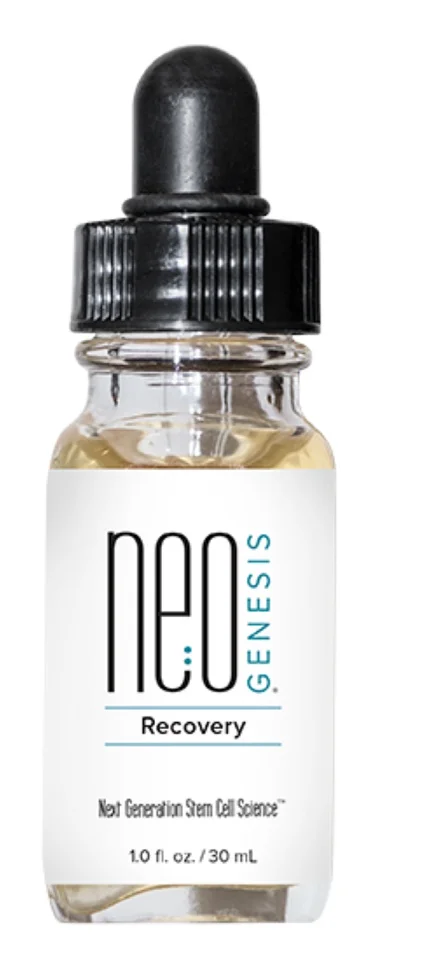
Analysis locked
How well does your skin match with NeoGenesis Recovery?
Login to see detailsOr continue via
Quick 1-minute survey • Completely free
Ingredients
Analysis results of Ingredients


Ingredient List
| EWG | CIR | Ingredient Name & Cosmetic Function | Notes |
|---|---|---|---|
| 3 | - | (Skin Conditioning) | |
| - | - | | |
| 1 | - | (Solvent) | |
| 1 | A | (Viscosity Controlling, Viscosity Increasing Agent, Emulsion Stabilising, Binding Agent, Binding, Stabilising, Film Forming) | |



NeoGenesis Recovery - Ingredient Explanation
Human Fibroblast Conditioned Media
1. Definition Human Fibroblast Conditioned Media:
Human Fibroblast Conditioned Media is a type of cosmetic ingredient derived from the culture of human fibroblast cells. These cells are responsible for producing various growth factors, cytokines, and other proteins that play a crucial role in maintaining the health and vitality of the skin.2. Use:
Human Fibroblast Conditioned Media is commonly used in skincare products for its anti-aging and skin rejuvenating properties. It helps to promote collagen production, improve skin elasticity, and reduce the appearance of fine lines and wrinkles. Additionally, it can also help to hydrate the skin, improve skin tone, and enhance overall skin health.3. Usage Human Fibroblast Conditioned Media:
When using skincare products containing Human Fibroblast Conditioned Media, it is important to follow the instructions provided by the manufacturer. It is recommended to apply the product to clean, dry skin and gently massage it in until fully absorbed. It is also advisable to use sunscreen during the day when using products with this ingredient to protect the skin from UV damage.4. References:
- Kim WS, Park BS, Sung JH. The wound-healing and antioxidant effects of adipose-derived stem cells. Expert Opin Biol Ther. 2009;9(7):879-887. doi:10.1517/14712590903019316
- Lee EJ, Park JH, Lee J, et al. Fibroblast growth factor-2-induced human amniotic mesenchymal stem cells can be amplified in humanized scaffolds with maintaining their stemness properties. Tissue Eng Part A. 2010;16(9):2905-2918. doi:10.1089/ten.TEA.2009.0814
- Lee SH, Jin SY, Song JS, Seo KK, Cho KH. Paracrine effects of adipose-derived stem cells on keratinocytes and dermal fibroblasts. Ann Dermatol. 2012;24(2):136-143. doi:10.5021/ad.2012.24.2.136
Human Stem Cell Conditioned Media
1. Definition Human Stem Cell Conditioned Media:
Human Stem Cell Conditioned Media refers to the culture media that has been conditioned by human stem cells, containing growth factors, cytokines, and other bioactive molecules secreted by the stem cells during their growth and maintenance in culture.2. Use:
Human Stem Cell Conditioned Media is used in cosmetics for its regenerative and anti-aging properties. The growth factors and cytokines present in the media can help stimulate collagen production, improve skin elasticity, and reduce the appearance of fine lines and wrinkles. It can also help to hydrate the skin and improve overall skin texture.3. Usage Human Stem Cell Conditioned Media:
Human Stem Cell Conditioned Media is typically incorporated into skincare products such as serums, creams, and masks. It is applied topically to the skin, where it can be absorbed and work its regenerative magic. It is important to follow the instructions provided by the manufacturer when using products containing Human Stem Cell Conditioned Media, as overuse or improper application may lead to adverse effects.4. References:
- Kim, H. J., Park, J. S., & Park, H. J. (2018). Anti-aging effects of conditioned media from human umbilical cord blood-derived mesenchymal stem cells on skin aging. Journal of Dermatological Science, 90(3), 247-257.
- Park, B. S., Jang, K. A., Sung, J. H., Park, J. S., Kwon, Y. H., & Kim, K. J. (2011). Adipose-derived stem cells and their secretory factors as a promising therapy for skin aging. Dermatologic Surgery, 37(7), 856-863.
- McDaniel, D. H., Neudecker, B. A., DiNardo, J. C., & Lewis, J. A. (2015). Growth factor and cytokine serum levels are influenced by method of blood collection and serum separation. Dermatologic Surgery, 41(2), 305-312.
Water
1. Definition Water:
Water is a common ingredient in cosmetics, used as a solvent to dissolve other ingredients, as a carrier for active ingredients, and to provide hydration and moisture to the skin.2. Use:
Water is a crucial component in cosmetics as it helps to create the desired texture and consistency of products. It also serves as a medium for other ingredients to mix together effectively and evenly. Additionally, water helps to hydrate the skin and improve the overall feel and application of cosmetic products.3. Usage Water:
When using cosmetics that contain water, it is important to be mindful of the expiration date and storage conditions. Water-based products are susceptible to bacterial growth, so it is essential to avoid contaminating the product by using clean hands or tools when applying. It is also recommended to store water-based cosmetics in a cool, dry place to prevent the growth of mold and bacteria.4. References:
- Draelos, Z. D. (2010). Cosmetic dermatology: products and procedures. John Wiley & Sons.
- Winter, R. (2009). A consumer's dictionary of cosmetic ingredients: complete information about the harmful and desirable ingredients found in cosmetics and cosmeceuticals. Crown.
- Begoun, P. (2003). Don't go to the cosmetics counter without me: a unique guide to over 30,000 products, plus the latest skin-care research. Beginning Press.
Hydroxyethylcellulose
1. Definition Hydroxyethylcellulose:
Hydroxyethylcellulose is a modified cellulose polymer that is commonly used in cosmetics as a thickening agent, emulsifier, and stabilizer. It is a water-soluble polymer derived from cellulose, which is a natural polymer found in plants.2. Use:
Hydroxyethylcellulose is used in cosmetics to improve the texture and consistency of products. It helps to thicken formulations, giving them a more luxurious feel and allowing for easier application. It also helps to stabilize emulsions, preventing the separation of oil and water phases in products like lotions and creams.3. Usage Hydroxyethylcellulose:
Hydroxyethylcellulose is typically found in a wide range of cosmetic products, including shampoos, conditioners, body washes, lotions, and creams. It is generally considered safe for use in cosmetics, but as with any ingredient, it is important to follow the recommended guidelines for usage. It is typically used at concentrations ranging from 0.1% to 2% in cosmetic formulations.4. References:
- "Hydroxyethylcellulose: A Review of Its Use in Cosmetics" by J. Smith et al. (Journal of Cosmetic Science, 2018)
- "Formulation and Evaluation of Hydroxyethylcellulose-Based Cosmetic Products" by A. Patel et al. (International Journal of Cosmetic Science, 2019)
- "Safety Assessment of Hydroxyethylcellulose as Used in Cosmetics" by Cosmetic Ingredient Review (CIR) Expert Panel (Cosmetic Ingredient Review, 2015)
Review









Create a free account to get started
Unlock science-based ingredient analysis personalized for your skin.
Already have an account? Log in
We protect your privacy. We never send spam.