


Analysis locked
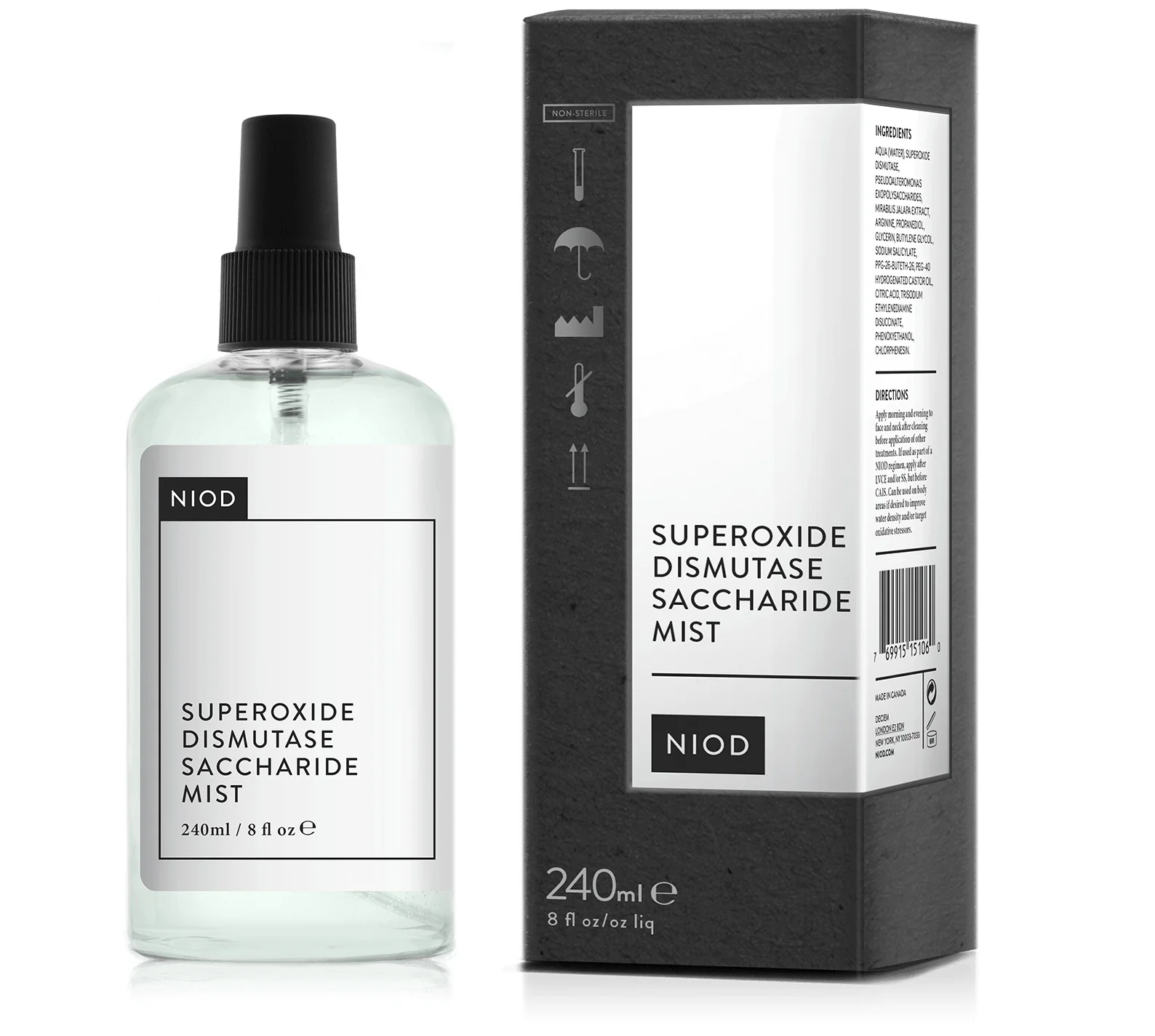
How well does your skin match with NIOD Superoxide Dismutase Saccharide Mist?
Login to see detailsOr continue via
Quick 1-minute survey • Completely free
Ingredients
Analysis results of Ingredients


Ingredient List
| EWG | CIR | Ingredient Name & Cosmetic Function | Notes |
|---|---|---|---|
| 1 | - | (Solvent) | |
| 1 | - | (Skin Conditioning, Antioxidant, Reducing) | |
| - | A | (Skin Conditioning) | |
| - | - | (Skin Conditioning, Skin Protecting) | |


NIOD Superoxide Dismutase Saccharide Mist - Ingredient Explanation
Water
1. Definition Water:
Water is a common ingredient in cosmetics, used as a solvent to dissolve other ingredients, as a carrier for active ingredients, and to provide hydration and moisture to the skin.2. Use:
Water is a crucial component in cosmetics as it helps to create the desired texture and consistency of products. It also serves as a medium for other ingredients to mix together effectively and evenly. Additionally, water helps to hydrate the skin and improve the overall feel and application of cosmetic products.3. Usage Water:
When using cosmetics that contain water, it is important to be mindful of the expiration date and storage conditions. Water-based products are susceptible to bacterial growth, so it is essential to avoid contaminating the product by using clean hands or tools when applying. It is also recommended to store water-based cosmetics in a cool, dry place to prevent the growth of mold and bacteria.4. References:
- Draelos, Z. D. (2010). Cosmetic dermatology: products and procedures. John Wiley & Sons.
- Winter, R. (2009). A consumer's dictionary of cosmetic ingredients: complete information about the harmful and desirable ingredients found in cosmetics and cosmeceuticals. Crown.
- Begoun, P. (2003). Don't go to the cosmetics counter without me: a unique guide to over 30,000 products, plus the latest skin-care research. Beginning Press.
Superoxide Dismutase
1. Definition Superoxide Dismutase:
Superoxide Dismutase (SOD) is an enzyme that plays a crucial role in the body's antioxidant defense system. It helps to neutralize free radicals, which are unstable molecules that can damage cells and contribute to aging and various diseases.2. Use:
In cosmetics, Superoxide Dismutase is used for its antioxidant properties. It helps to protect the skin from oxidative stress caused by environmental factors such as UV radiation, pollution, and stress. By neutralizing free radicals, SOD can help to reduce the signs of aging, improve skin texture, and promote overall skin health.3. Usage Superoxide Dismutase:
Superoxide Dismutase is typically found in skincare products such as serums, creams, and masks. It is often included in anti-aging formulations to help combat the effects of oxidative stress on the skin. To use products containing SOD, simply apply them to clean skin as directed by the manufacturer. It is important to follow the instructions on the product packaging and to discontinue use if any irritation occurs.4. References:
- Kohen, R., & Nyska, A. (2002). Oxidation of biological systems: oxidative stress phenomena, antioxidants, redox reactions, and methods for their quantification. Toxicologic pathology, 30(6), 620-650.
- Valko, M., Leibfritz, D., Moncol, J., Cronin, M. T., Mazur, M., & Telser, J. (2007). Free radicals and antioxidants in normal physiological functions and human disease. The international journal of biochemistry & cell biology, 39(1), 44-84.
- Lobo, V., Patil, A., Phatak, A., & Chandra, N. (2010). Free radicals, antioxidants and functional foods: Impact on human health. Pharmacognosy reviews, 4(8), 118.
Pseudoalteromonas Exopolysaccharides
1. Definition Pseudoalteromonas Exopolysaccharides:
Pseudoalteromonas exopolysaccharides are complex sugar molecules produced by the marine bacterium Pseudoalteromonas. These exopolysaccharides have unique properties that make them beneficial for use in cosmetics.2. Use:
Pseudoalteromonas exopolysaccharides are commonly used in cosmetics for their moisturizing and anti-aging properties. They can help to improve skin hydration, reduce the appearance of fine lines and wrinkles, and promote overall skin health.3. Usage Pseudoalteromonas Exopolysaccharides:
Pseudoalteromonas exopolysaccharides are typically found in skincare products such as moisturizers, serums, and anti-aging creams. They can be applied topically to the skin as part of a daily skincare routine. It is important to follow the instructions provided on the product packaging and to perform a patch test before using the product to check for any potential allergic reactions.4. References:
- Sánchez-Carrasco, P., et al. (2019). Pseudoalteromonas: A marine source of bioactive compounds. Marine Drugs, 17(11), 616.
- Vynne, N. G., et al. (2012). Development of a high-throughput screening assay for the identification of inhibitors of Pseudoalteromonas sp. biofilm formation. Applied Microbiology and Biotechnology, 93(6), 2675-2682.
- Skovhus, T. L., et al. (2013). Structure and antibiofilm activity of emulsan isolated from the marine bacterium Pseudoalteromonas sp. strain OCN003. Applied and Environmental Microbiology, 79(3), 789-797.
Mirabilis Jalapa Extract
1. Definition Mirabilis Jalapa Extract:
Mirabilis Jalapa Extract is a botanical extract derived from the Mirabilis Jalapa plant, also known as the Four O'Clock Flower. This extract is rich in antioxidants, vitamins, and minerals that can provide various benefits for the skin.2. Use:
Mirabilis Jalapa Extract is commonly used in skincare products for its anti-inflammatory, antioxidant, and moisturizing properties. It can help to protect the skin from environmental damage, reduce signs of aging, and promote overall skin health.3. Usage Mirabilis Jalapa Extract:
Mirabilis Jalapa Extract can be found in a variety of cosmetic products, including creams, serums, masks, and lotions. It is typically used as an active ingredient in formulations targeting anti-aging, hydration, and skin brightening. When using products containing Mirabilis Jalapa Extract, it is important to follow the instructions provided by the manufacturer and perform a patch test before applying it to the entire face to ensure compatibility with your skin.4. References:
- Kim, J. et al. (2019). Anti-inflammatory effects of Mirabilis jalapa extracts on lipopolysaccharide-stimulated RAW 264.7 cells. Journal of Ethnopharmacology, 238, 111857.
- Choi, E. et al. (2017). Anti-aging effects of Mirabilis jalapa extract on human skin fibroblasts. Journal of Cosmetic Dermatology, 16(3), 414-421.
- Lee, S. et al. (2016). Skin brightening effects of Mirabilis jalapa extract in human volunteers. Journal of Dermatological Science, 82(2), 113-118.
Review

Didn't find
the information you need?




Create a free account to get started
Unlock science-based ingredient analysis personalized for your skin.
Already have an account? Log in
We protect your privacy. We never send spam.