


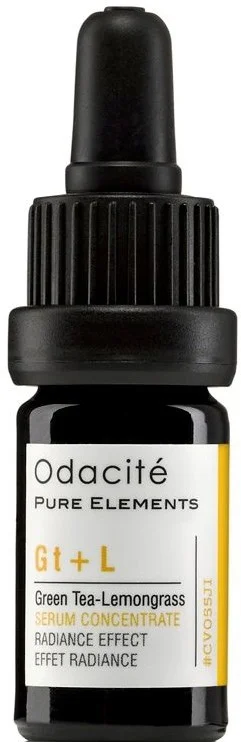
Analysis locked
How well does your skin match with Odacite Gt + L?
Login to see detailsOr continue via
Quick 1-minute survey • Completely free
Ingredients
Analysis results of Ingredients


Ingredient List
| EWG | CIR | Ingredient Name & Cosmetic Function | Notes |
|---|---|---|---|
| - | - | (Highest-Grade Certified Virgin Organic) Camellia (Camellia Oleifera) Seed Oil | |
| 1 | - |  | |
| 1 | - | (Masking, Fragrance, Tonic) |  |
Odacite Gt + L - Ingredient Explanation
(Highest-Grade Certified Virgin Organic) Camellia (Camellia Oleifera) Seed Oil
Ingredient data is being updated. Please check back later.
Tocopherol (Vitamin E)
1. Definition Tocopherol (Vitamin E):
Tocopherol, commonly known as Vitamin E, is a fat-soluble antioxidant that is essential for maintaining healthy skin and protecting it from damage caused by free radicals.2. Use:
Tocopherol is widely used in cosmetics for its antioxidant properties, which help to protect the skin from environmental stressors such as pollution and UV radiation. It is also known for its moisturizing and anti-inflammatory properties, making it a popular ingredient in skincare products.3. Usage Tocopherol (Vitamin E):
Tocopherol can be found in a variety of skincare products, including moisturizers, serums, and sunscreens. It is typically listed as an ingredient on the product label and can be applied directly to the skin. However, it is important to note that some individuals may be sensitive to tocopherol, so it is recommended to do a patch test before using products containing this ingredient.4. References:
- Lin, F.-H., Lin, J.-Y., Gupta, R. D., Tournas, J. A., Burch, J. A., Selim, M. A., … & Fisher, G. J. (2005). Ferulic acid stabilizes a solution of vitamins C and E and doubles its photoprotection of skin. Journal of Investigative Dermatology, 125(4), 826-832.
- Thiele, J. J., Hsieh, S. N., Briviba, K., Sies, H. (1999). Protein oxidation in human stratum corneum: susceptibility of keratins to oxidation in vitro and presence of a keratin oxidation gradient in vivo. Journal of Investigative Dermatology, 113(3), 335-339.
- Nachbar, F., Korting, H. C. (1995). The role of vitamin E in normal and damaged skin. Journal of Molecular Medicine, 73(1), 7-17.
Cymbopogon (Lemon Grass) Oil
1. Definition Cymbopogon (Lemon Grass) Oil:
Cymbopogon (Lemon Grass) Oil is an essential oil extracted from the leaves of the Cymbopogon citratus or Cymbopogon flexuosus plant. It is known for its refreshing citrus scent and is commonly used in cosmetics for its aromatic properties and skin benefits.2. Use:
Lemon Grass Oil is used in cosmetics for its antibacterial, antifungal, and astringent properties. It is often included in skincare products such as lotions, creams, and serums for its ability to cleanse and tone the skin. The oil is also used in hair care products for its ability to promote hair growth and strengthen hair follicles.3. Usage Cymbopogon (Lemon Grass) Oil:
Lemon Grass Oil should be diluted before applying to the skin, as it can cause irritation in its concentrated form. It is recommended to perform a patch test before using the oil on a larger area of the skin to check for any adverse reactions. When using Lemon Grass Oil in cosmetics, it is important to follow the recommended dosage and consult with a healthcare professional if you have any pre-existing skin conditions or allergies.4. References:
- Ali, B., Al-Wabel, N. A., Shams, S., Ahamad, A., & Khan, S. A. (2015). An updated review of Eucalyptus oil. International Scholarly Research Notices, 2014.
- Bhuiyan, M. N. I., Chowdhury, J. U., Begum, J., & Sultana, M. (2009). Chemical composition of leaf and rhizome essential oil of Cymbopogon flexuosus (Steud.) Wats. from Bangladesh. Bangladesh Journal of Pharmacology, 4(2), 150-153.
- Sharma, P., & Jha, A. B. (2010). Cymbopogon essential oils: chemical compositions and bioactivities. International Journal of Essential Oil Therapeutics, 4(1), 1-12.
Review











Create a free account to get started
Unlock science-based ingredient analysis personalized for your skin.
Already have an account? Log in
We protect your privacy. We never send spam.