


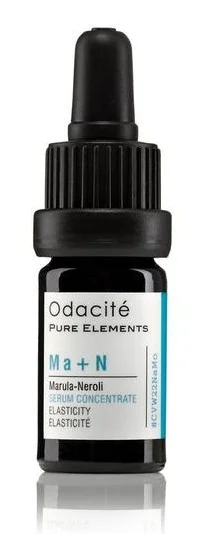
Analysis locked
How well does your skin match with Odacite Ma+N Elasticity Serum Concentrate (Marula + Neroli)?
Login to see detailsOr continue via
Quick 1-minute survey • Completely free
Ingredients
Analysis results of Ingredients


Ingredient List
| EWG | CIR | Ingredient Name & Cosmetic Function | Notes |
|---|---|---|---|
| 1 | - | | |
| 1 | - | (Skin Conditioning, Masking, Fragrance, Tonic) |  |
| - | - | Lemon-Myrtle | |
| - | - | Petitgrain | |

Odacite Ma+N Elasticity Serum Concentrate (Marula + Neroli) - Ingredient Explanation
Marula Oil
1. Definition Marula Oil:
Marula oil is a lightweight, fast-absorbing oil extracted from the kernels of the marula fruit, which is native to Southern Africa. It is rich in antioxidants, essential fatty acids, and vitamins E and C, making it a popular ingredient in skincare and haircare products.2. Use:
Marula oil is commonly used in cosmetics for its moisturizing, anti-aging, and skin-healing properties. It is known to hydrate and nourish the skin, improve elasticity, and reduce the appearance of fine lines and wrinkles. In haircare products, marula oil helps to condition and strengthen the hair, leaving it soft, shiny, and more manageable.3. Usage Marula Oil:
Marula oil can be applied directly to the skin or hair, either on its own or mixed with other skincare or haircare products. A few drops of marula oil can be massaged onto the face or body as a moisturizer, added to a facial serum or cream, or used as a hair treatment by applying it to the ends of the hair or scalp. It is suitable for all skin types, including sensitive and acne-prone skin.4. References:
- Ranzato, E., et al. (2012). Comparative antioxidant activity of tocotrienols and other natural lipid-soluble antioxidants in a homogeneous system and in rat and human lipoproteins. Journal of Agricultural and Food Chemistry, 60(35), 8597-8606.
- Yuniarti, R., et al. (2019). Formulation and evaluation of marula oil-based nanoemulsion for topical delivery. Journal of Drug Delivery Science and Technology, 49, 115-121.
- Mncwangi, N., et al. (2017). Marula oil: A review of the chemical composition and biological activity. Asian Pacific Journal of Tropical Biomedicine, 7(9), 845-854.
Nerol
1. Definition Nerol:
Nerol is a natural organic compound that belongs to the class of monoterpenes. It is a colorless liquid with a sweet floral aroma, commonly found in essential oils such as neroli, ginger, and lemongrass.2. Use:
Nerol is widely used in the cosmetic industry for its pleasant scent and potential skincare benefits. It is often included in perfumes, lotions, and creams to add a fresh and floral fragrance. Additionally, nerol is known for its anti-inflammatory and antioxidant properties, making it a popular ingredient in skincare products aimed at reducing redness and improving overall skin health.3. Usage Nerol:
When using nerol in cosmetics, it is important to follow the recommended guidelines provided by the manufacturer. It is typically used in small concentrations to avoid skin irritation or sensitivities. It is also recommended to perform a patch test before applying products containing nerol to the skin to ensure compatibility.4. References:
- Dweck, A. C. (2006). Natural ingredients for skincare. Allured Publishing Corporation.
- Baser, K. H. C., & Buchbauer, G. (2010). Handbook of essential oils: Science, technology, and applications. CRC Press.
- Rehman, J. U., Wang, X., & Johnson, S. K. (2018). Nerol and geraniol chemotypes of rose-scented geranium (Pelargonium species) have unique effects on the physiology and behavior of female Aedes aegypti mosquitoes. PloS one, 13(5), e0198785.
Lemon-Myrtle
Ingredient data is being updated. Please check back later.
Petitgrain
Ingredient data is being updated. Please check back later.
Review
Didn't find
the information you need?






Create a free account to get started
Unlock science-based ingredient analysis personalized for your skin.
Already have an account? Log in
We protect your privacy. We never send spam.