


Analysis locked
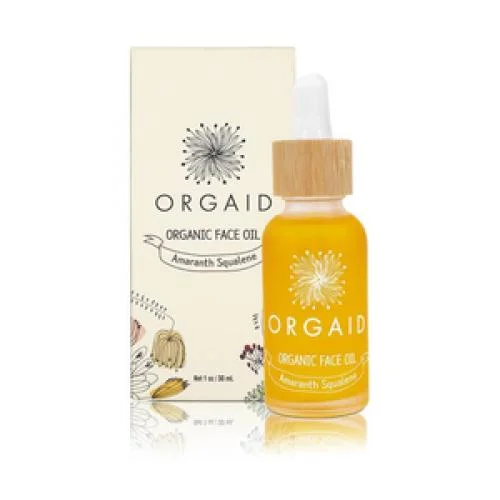
How well does your skin match with ORGAID Organic Face Oil Amaranth Squalene?
Login to see detailsOr continue via
Quick 1-minute survey • Completely free
Ingredients
Analysis results of Ingredients


Ingredient List
| EWG | CIR | Ingredient Name & Cosmetic Function | Notes |
|---|---|---|---|
| 1 | - | (Skin Conditioning, Emollient, Hair Conditioning, Abrasive) | |
| 1 | B | (Perfuming, Fragrance, Antioxidant, Skin-Conditioning Agent -Miscellaneous, Skin-Conditioning Agent - Occlusive, Antimicrobial Agent) | |
| 3 | - | | |
| 1 | - | (Skin Conditioning) | |
ORGAID Organic Face Oil Amaranth Squalene - Ingredient Explanation
Simmondsia Chinensis (Jojoba) Seed Oil Extract
1. Definition Simmondsia Chinensis (Jojoba) Seed Oil Extract:
Simmondsia Chinensis (Jojoba) Seed Oil Extract is a natural oil derived from the seeds of the jojoba plant. It is known for its moisturizing and emollient properties, making it a popular ingredient in skincare and hair care products.2. Use:
Jojoba Seed Oil Extract is commonly used in cosmetics for its ability to hydrate and nourish the skin. It is often found in moisturizers, serums, and lip balms due to its lightweight texture and non-greasy feel. Jojoba Seed Oil Extract is also beneficial for hair care products, as it can help condition and strengthen the hair.3. Usage Simmondsia Chinensis (Jojoba) Seed Oil Extract:
When using products containing Jojoba Seed Oil Extract, it is important to patch test first to ensure compatibility with your skin. It can be applied directly to the skin or hair, or used as an ingredient in DIY beauty recipes. Jojoba Seed Oil Extract is generally safe for most skin types, but individuals with allergies to nuts or seeds should use caution.4. References:
- Paula Begoun. (2003). "Don't Go to the Cosmetics Counter Without Me." 7th Edition.
- Dweck, A. C. (2003). "The Jojoba Story." Personal Care Magazine, 4(1), 1-4.
- Meier, L., & Sticher, O. (2004). "Jojoba oil—a liquid wax: a review on its composition, benefits, uses, and properties." Revista Brasileira de Farmacognosia, 14(1), 1-6.
Rosmarinus Officinalis (Rosemary) Leaf Extract
1. Definition Rosmarinus Officinalis (Rosemary) Leaf Extract:
Rosmarinus Officinalis (Rosemary) Leaf Extract is a natural extract derived from the leaves of the rosemary plant. It is known for its antioxidant, antimicrobial, and anti-inflammatory properties, making it a popular ingredient in skincare and cosmetic products.2. Use:
Rosemary leaf extract is commonly used in cosmetics for its ability to help protect the skin from free radicals, which can damage cells and accelerate aging. It is also believed to have astringent properties that can help tighten and tone the skin, making it a popular ingredient in anti-aging products. Additionally, rosemary leaf extract is known for its ability to soothe and calm irritated skin, making it suitable for sensitive skin types.3. Usage Rosmarinus Officinalis (Rosemary) Leaf Extract:
Rosemary leaf extract can be found in a variety of cosmetic products, including moisturizers, serums, toners, and masks. It is typically used in concentrations ranging from 0.1% to 5%, depending on the desired benefits. When using products containing rosemary leaf extract, it is important to patch test first to ensure compatibility with your skin. Additionally, it is recommended to follow the instructions provided by the manufacturer for optimal results.4. References:
- Chevallier, Andrew. Encyclopedia of Herbal Medicine. DK Publishing, 2016.
- Dweck, Anthony C. Handbook of Cosmetic Ingredients. Taylor & Francis, 2014.
- Koleva, Iskra I. et al. "Screening of plant extracts for antioxidant activity: a comparative study on three testing methods." Phytochemical Analysis, vol. 13, no. 1, 2002, pp. 8-17.
Rosa Canina (Dog Rose) Seed Extract
1. Definition Rosa Canina (Dog Rose) Seed Extract:
Rosa Canina (Dog Rose) Seed Extract is an ingredient derived from the seeds of the Dog Rose plant, which is known for its high content of essential fatty acids, antioxidants, and vitamins. This extract is commonly used in skincare products for its nourishing, hydrating, and anti-aging properties.2. Use:
Rosa Canina Seed Extract is used in cosmetics for its ability to improve skin texture, reduce inflammation, and promote collagen production. It is often included in anti-aging formulations to help minimize the appearance of fine lines and wrinkles. Additionally, the extract is known for its moisturizing properties, making it a popular ingredient in hydrating creams and serums.3. Usage Rosa Canina (Dog Rose) Seed Extract:
When using products containing Rosa Canina Seed Extract, it is important to follow the instructions provided by the manufacturer. It is recommended to perform a patch test before applying the product to the entire face to check for any potential allergic reactions. As with any skincare ingredient, it is advisable to consult with a dermatologist if you have sensitive skin or any concerns about using the product.4. References:
- Ghimire, B., Seong, S. H., Kim, H. R., & Kim, E. H. (2018). Antioxidant, anti-inflammatory, and antiproliferative activities of Rosa canina and Rosa rubiginosa seed extracts. Food Science and Biotechnology, 27(5), 1479-1489.
- Gülçin, İ., Topal, F., Çakmakçı, R., Bilsel, M., Gören, A. C., Erdogan, U., & Küfrevioğlu, Ö. İ. (2011). Pomological Features, Nutritional Quality, Polyphenol Content Analysis, and Antioxidant Properties of Domesticated and 3 Wild Ecotype Forms of R. canina L. Fruits. Journal of Food Science, 76(4), C585-C593.
- Valcheva-Kuzmanova, S., Borisova, P., Galunska, B., Krasnaliev, I., Belcheva, A. (2014). Hepatoprotective effect of the natural fruit juice from Rosa canina L. in mice treated with D-galactosamine. Food and Chemical Toxicology, 63, 46-55.
Amaranthus Caudatus (Love Lies Bleeding) Seed Extract
1. Definition Amaranthus Caudatus (Love Lies Bleeding) Seed Extract:
Amaranthus Caudatus (Love Lies Bleeding) Seed Extract is a natural ingredient derived from the seeds of the Amaranthus Caudatus plant. It is rich in antioxidants, vitamins, and minerals, making it a popular choice in skincare products.2. Use:
Amaranthus Caudatus Seed Extract is commonly used in cosmetics for its hydrating, anti-inflammatory, and anti-aging properties. It helps to nourish and moisturize the skin, improve skin elasticity, and reduce the appearance of wrinkles and fine lines. Additionally, it can help to protect the skin from environmental stressors and promote a more radiant complexion.3. Usage Amaranthus Caudatus (Love Lies Bleeding) Seed Extract:
Amaranthus Caudatus Seed Extract can be found in a variety of skincare products, such as serums, moisturizers, and masks. It is typically included in formulations at a concentration of 1-5% to provide maximum benefits to the skin. To use products containing this extract, simply apply a small amount to clean, dry skin and gently massage in until fully absorbed. It is recommended to use products with this extract regularly as part of your skincare routine for best results.4. References:
- J. G. Gómez-Caravaca, D. Iafelice, A. Lavini, A. Pulvento, F. Caboni. Phenolic compounds and saponins in quinoa samples (Chenopodium quinoa Willd.) grown under different saline and nonsaline irrigation regimens. Journal of Agricultural and Food Chemistry. 2012.
- R. H. Samarth, S. Samarth. In vitro antiglycation activity of ethanolic extracts of some indigenous plants. Experimental Diabetes Research. 2011.
- S. M. N. A. Senadeera, L. S. Wijesundera, K. Sivakanesan. Effect of different solvents on the extraction of phenolic compounds of three types of dry tea (Camellia sinensis) J. Agric. Food Chem. 2006.
Review
Didn't find
the information you need?










Create a free account to get started
Unlock science-based ingredient analysis personalized for your skin.
Already have an account? Log in
We protect your privacy. We never send spam.