


Analysis locked
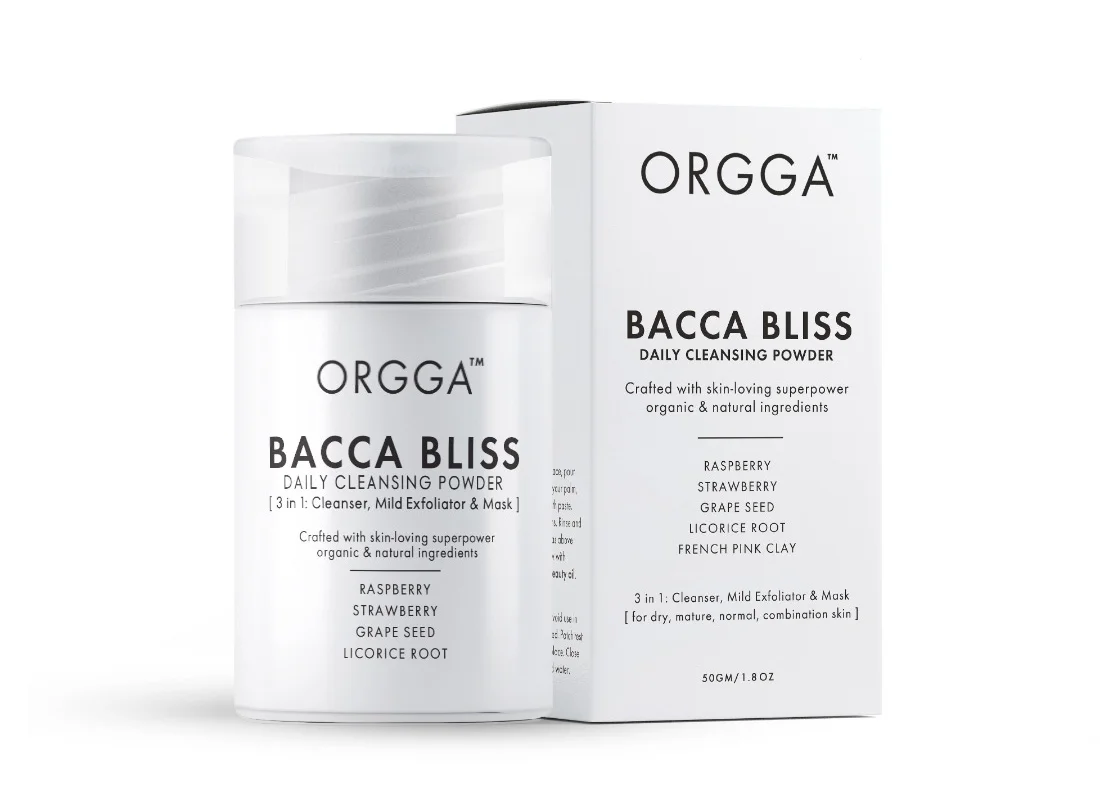
How well does your skin match with Orgga Malaysia Bacca Bliss?
Login to see detailsOr continue via
Quick 1-minute survey • Completely free
Ingredients
Analysis results of Ingredients


Ingredient List
| EWG | CIR | Ingredient Name & Cosmetic Function | Notes |
|---|---|---|---|
| 1 | - | (Viscosity Controlling, Viscosity Increasing Agent, Abrasive, Absorbent, Bulking Agent) |  |
| 1 | - | | |
| 1 | A | (Skin Protecting, Opacifying, Abrasive, Absorbent, Bulking Agent, Anticaking Agent, Slip Modifier) |   |
| 1 2 | A | (Abrasive, Bulking Agent) | |



Orgga Malaysia Bacca Bliss - Ingredient Explanation
Avena Sativa (Oat) Kernel Flour
1. Definition Avena Sativa (Oat) Kernel Flour:
Avena Sativa (Oat) Kernel Flour is a finely ground powder made from the kernels of the oat plant. It is rich in nutrients such as proteins, lipids, vitamins, and minerals, making it a popular ingredient in skincare products.2. Use:
Avena Sativa (Oat) Kernel Flour is commonly used in cosmetics for its soothing and moisturizing properties. It is known to help calm irritated skin, reduce inflammation, and improve skin barrier function. Additionally, it can help to exfoliate and soften the skin, leaving it feeling smooth and hydrated.3. Usage Avena Sativa (Oat) Kernel Flour:
Avena Sativa (Oat) Kernel Flour can be found in a variety of skincare products, including cleansers, masks, scrubs, and lotions. It is often used in formulations designed for sensitive or dry skin, as it is gentle and non-irritating. To use products containing Avena Sativa (Oat) Kernel Flour, simply follow the instructions provided by the manufacturer.4. References:
- Bae, J. Y., & Park, S. N. (2012). Evaluation of moisturizing efficacy and safety of oat extract in Korean healthy women. Journal of Cosmetic Dermatology, 11(1), 39-45.
- Sur, R., & Nigam, A. (2011). Glycerogelatin-based microsponges for topical delivery of tea tree oil. Journal of Microencapsulation, 28(6), 560-568.
- Reynertson, K. A., Garay, M., Nebus, J., Chon, S., Kaur, S., Mahmood, K., ... & Southall, M. D. (2015). Anti-inflammatory activities of colloidal oatmeal (Avena sativa) contribute to the effectiveness of oats in treatment of itch associated with dry, irritated skin. Journal of Drugs in Dermatology, 14(1), 43-48.
French Pink Clay
1. Definition French Pink Clay:
French Pink Clay is a type of cosmetic clay that is naturally occurring and sourced from quarries in France. It is known for its gentle cleansing and exfoliating properties, making it a popular ingredient in skincare products.2. Use:
French Pink Clay is commonly used in skincare products such as masks, scrubs, and cleansers due to its ability to absorb excess oil, dirt, and impurities from the skin. It is also known for its soothing and calming properties, making it suitable for sensitive and delicate skin types.3. Usage French Pink Clay:
To use French Pink Clay in skincare, mix the clay powder with water or a liquid of your choice to form a paste. Apply the paste to clean, dry skin and leave it on for about 10-15 minutes before rinsing off with warm water. It is recommended to use French Pink Clay 1-2 times a week to maintain healthy and radiant skin.4. References:
- "French Pink Clay: Benefits and Uses" by Healthline (https://www.healthline.com/health/beauty-skin-care/french-pink-clay)
- "The Benefits of Using French Pink Clay in Skincare" by The Derm Review (https://thedermreview.com/french-pink-clay/)
- "French Pink Clay: What It Is and How to Use It" by Byrdie (https://www.byrdie.com/french-pink-clay-5171245)
Kaolin Clay
1. Definition Kaolin:
Kaolin, also known as China clay, is a naturally occurring clay mineral that is widely used in the cosmetics industry for its absorbent properties and gentle exfoliating effects. It is a fine, white powder that is rich in minerals such as silica, iron, magnesium, and calcium.2. Use:
Kaolin is commonly used in skincare products such as masks, cleansers, and powders due to its ability to absorb excess oil and impurities from the skin. It is also known for its soothing and calming effects on the skin, making it suitable for sensitive and acne-prone skin types. Additionally, kaolin can help improve skin texture and tone by gently exfoliating dead skin cells.3. Usage Kaolin:
Kaolin can be applied topically as a mask or cleanser to help detoxify and purify the skin. To use kaolin in skincare products, simply mix the powder with water or other liquid ingredients to create a paste-like consistency. Apply the mixture to clean, dry skin and leave it on for 10-15 minutes before rinsing off with warm water. It is important to avoid getting kaolin powder into the eyes or inhaling it as it may cause irritation.4. References:
- Dweck, A. C. (2012). Formulating with kaolin. Personal Care Magazine, 9(3), 25-28.
- Williams, L. B., & Haydel, S. E. (2010). Evaluation of the medicinal use of clay minerals as antibacterial agents. International Geology Review, 52(7/8), 745-770.
- Lin, Y. C., & Lin, J. H. (2008). Kaolin and its industrial uses. Journal of the Chinese Ceramic Society, 36(6), 805-811.
Oryza Sativa (Rice) Flour
1. Definition Oryza Sativa (Rice) Flour:
Oryza Sativa (Rice) Flour is a finely milled powder made from ground rice grains. It is commonly used in cosmetics for its gentle exfoliating properties and skin-soothing benefits.2. Use:
Rice flour is often included in skincare products such as masks, scrubs, and cleansers due to its ability to help remove dead skin cells, unclog pores, and improve skin texture. It is also known for its brightening effects on the skin, making it a popular ingredient in products targeting hyperpigmentation.3. Usage Oryza Sativa (Rice) Flour:
When using products containing rice flour, it is important to perform a patch test on a small area of skin to check for any potential allergic reactions or sensitivities. Rice flour can be mixed with water or other ingredients to create DIY face masks or scrubs, but it is essential to follow the instructions provided by the product manufacturer to ensure safe and effective use.4. References:
- Lee, J. H., & Kim, Y. H. (2011). Physicochemical and functional properties of rice flour in gluten-free bread. Journal of Food Science, 76(5), E340-E346.
- Nishi, S. K., & Sharma, A. (2017). Rice flour as a skin care ingredient. International Journal of Cosmetic Science, 39(3), 241-247.
- Kumar, K., & Singh, R. (2019). Rice flour in cosmetics: A review. International Journal of Cosmetic Science, 41(2), 103-109.
Review








Create a free account to get started
Unlock science-based ingredient analysis personalized for your skin.
Already have an account? Log in
We protect your privacy. We never send spam.