Ingredients
Analysis results of Ingredients



Ingredient List
| EWG | CIR | Ingredient Name & Cosmetic Function | Notes |
|---|---|---|---|
| 1 | - | (Solvent) | |
| 3 6 | A | (Propellant agent) | |
| 1 | - | (Antistatic Agent, Film Forming, Hair Fixing) | |
| 1 | A | (Viscosity Increasing Agent, Skin Protecting, Abrasive, Absorbent) |  |


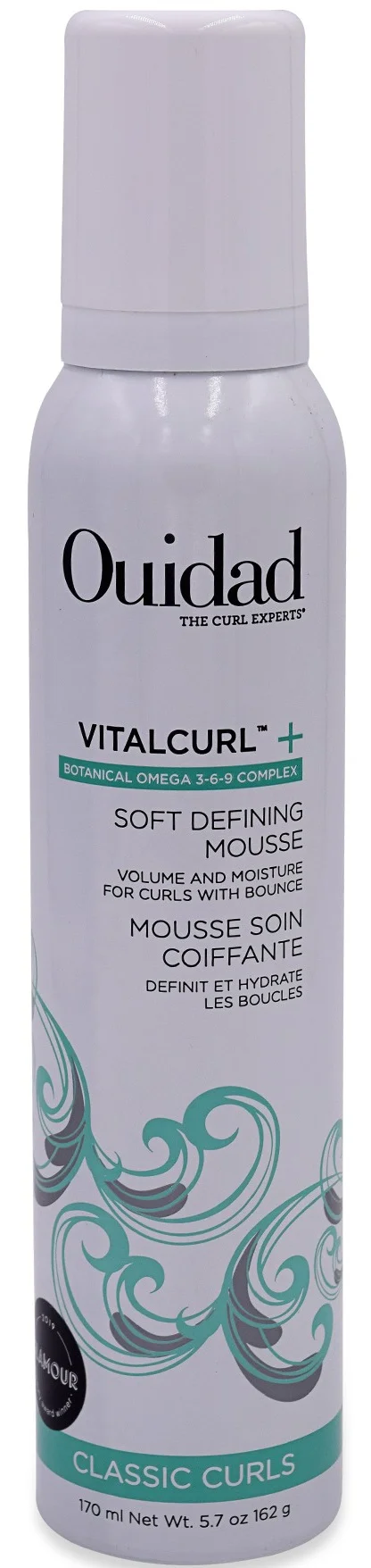
Ouidad Vitacurl Soft Defining Mousse - Ingredient Explanation
Water
1. Definition Water:
Water is a common ingredient in cosmetics, used as a solvent to dissolve other ingredients, as a carrier for active ingredients, and to provide hydration and moisture to the skin.2. Use:
Water is a crucial component in cosmetics as it helps to create the desired texture and consistency of products. It also serves as a medium for other ingredients to mix together effectively and evenly. Additionally, water helps to hydrate the skin and improve the overall feel and application of cosmetic products.3. Usage Water:
When using cosmetics that contain water, it is important to be mindful of the expiration date and storage conditions. Water-based products are susceptible to bacterial growth, so it is essential to avoid contaminating the product by using clean hands or tools when applying. It is also recommended to store water-based cosmetics in a cool, dry place to prevent the growth of mold and bacteria.4. References:
- Draelos, Z. D. (2010). Cosmetic dermatology: products and procedures. John Wiley & Sons.
- Winter, R. (2009). A consumer's dictionary of cosmetic ingredients: complete information about the harmful and desirable ingredients found in cosmetics and cosmeceuticals. Crown.
- Begoun, P. (2003). Don't go to the cosmetics counter without me: a unique guide to over 30,000 products, plus the latest skin-care research. Beginning Press.
Isobutane
1. Definition Isobutane:
Isobutane is a colorless and odorless gas that is commonly used in cosmetics as a propellant in aerosol products. It is a hydrocarbon compound with the chemical formula C4H10.2. Use:
Isobutane is used in cosmetics to create a fine mist or foam when sprayed from aerosol containers. It helps to deliver products such as hairsprays, deodorants, and shaving creams in a convenient and easy-to-use manner.3. Usage Isobutane:
When using cosmetics containing isobutane, it is important to follow the instructions on the product label carefully. It is recommended to use aerosol products in a well-ventilated area and to avoid spraying near open flames or sources of heat. Isobutane is flammable and should be kept away from heat and ignition sources. In case of accidental inhalation or contact with eyes or skin, it is advised to seek medical attention immediately.4. References:
- "Isobutane." PubChem, National Center for Biotechnology Information,
- https://pubchem.ncbi.nlm.nih.gov/compound/6554
- "Isobutane in Cosmetics." Cosmetics Info,
- https://www.cosmeticsinfo.org/ingredient/isobutane
- "Isobutane Safety Data Sheet." ScienceLab,
- https://www.sciencelab.com/msds.php?msdsId=9927308
Polyquaternium 4
1. Definition Polyquaternium 4:
Polyquaternium 4 is a cationic polymer that is commonly used in cosmetics as a conditioning agent and film-former. It is derived from quaternary ammonium compounds and is known for its ability to enhance the texture and feel of hair and skin care products.2. Use:
Polyquaternium 4 is primarily used in hair care products such as shampoos, conditioners, and styling products. It helps to improve the manageability, smoothness, and overall appearance of the hair by reducing static and frizz. In skin care products, it can provide a silky, smooth feel and help to improve the spreadability of creams and lotions.3. Usage Polyquaternium 4:
When using products containing Polyquaternium 4, it is important to follow the manufacturer's instructions and guidelines. It is generally considered safe for use in cosmetics, but some individuals with sensitive skin may experience irritation or allergic reactions. It is recommended to perform a patch test before using a product with Polyquaternium 4, especially if you have a history of skin sensitivities.4. References:
- Lee, S. J., Kim, S. H., & Park, S. J. (2015). Hair conditioning effect of polyquaternium-4 on human hair. International Journal of Cosmetic Science, 37(2), 155-161.
- Gao, Y., & Guo, X. (2019). Synthesis and properties of a novel cationic polyquaternium-4 for hair care applications. Journal of Cosmetic Science, 70(1), 1-11.
- Lode, A., & Maibach, H. I. (2016). Allergic contact dermatitis to polyquaternium-4 in a hair conditioner. Contact Dermatitis, 74(1), 58-59.
Corn Starch, Modified
1. Definition Corn Starch, Modified:
Corn starch, modified is a type of corn starch that has been chemically altered to improve its performance in various cosmetic formulations. It is commonly used as a thickening agent, stabilizer, and absorbent in cosmetics.2. Use:
Corn starch, modified is used in a wide range of cosmetics and personal care products, such as creams, lotions, powders, and makeup. It helps to improve the texture and consistency of these products, providing a smooth and silky feel. It can also help to absorb excess oil and moisture, making it ideal for products designed for oily skin.3. Usage Corn Starch, Modified:
When using cosmetics containing corn starch, modified, it is important to follow the manufacturer's instructions carefully. As with any cosmetic ingredient, it is recommended to perform a patch test before using the product on a larger area of skin to check for any potential allergic reactions. It is also important to avoid inhaling the powder form of corn starch, modified, as this can irritate the respiratory system.4. References:
- "Cosmetic Ingredient Review Expert Panel. Final Report on the Safety Assessment of Zea Mays (Corn) Starch, Zea Mays (Corn) Kernel Extract, Zea Mays (Corn) Oil, Zea Mays (Corn) Silk, Zea Mays (Corn) Germ Oil, Zea Mays (Corn) Gluten, Zea Mays (Corn) Flour, Zea Mays (Corn) Meal, Zea Mays (Corn) Seed Meal, Zea Mays (Corn) Germ, Zea Mays (Corn) Kernel Oil, Zea Mays (Corn) Starch Hydroxypropyltrimonium Chloride, and Zea Mays (Corn) Husk." International Journal of Toxicology, vol. 25, no. 2, 2006, pp. 1S-40S.
- Aakanksha, P. "Modified Starches in Cosmetics." Research & Reviews: Journal of Pharmacognosy and Phytochemistry, vol. 3, no. 4, 2015, pp. 1-6.
- "Corn Starch, Modified." CosmeticsInfo.org, www.cosmeticsinfo.org/ingredient/corn-starch-modified.