


Analysis locked
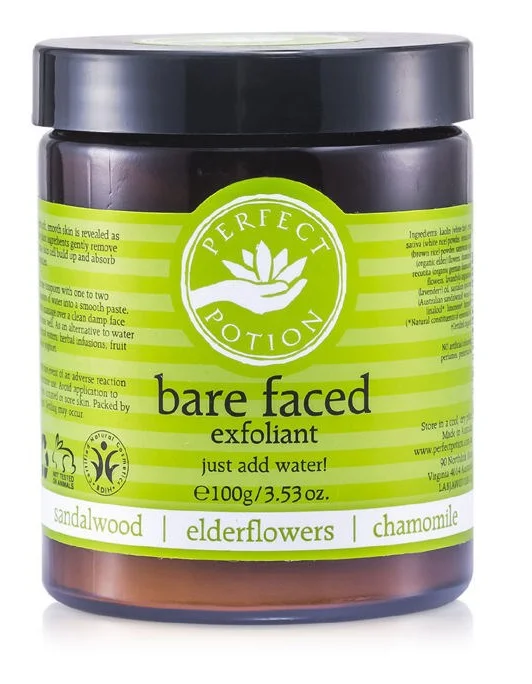
How well does your skin match with Perfect Potion Bare Faced Exfoliant?
Login to see detailsOr continue via
Quick 1-minute survey • Completely free
Ingredients
Analysis results of Ingredients


Ingredient List
| EWG | CIR | Ingredient Name & Cosmetic Function | Notes |
|---|---|---|---|
| 1 | A | (Skin Protecting, Opacifying, Abrasive, Absorbent, Bulking Agent, Anticaking Agent, Slip Modifier) |  |
| 1 2 | - | (Bulking Agent) | |
| 1 | - | (Skin Conditioning) | |
| 2 4 | B | (Skin Conditioning) | |



Perfect Potion Bare Faced Exfoliant - Ingredient Explanation
Kaolin
1. Definition Kaolin:
Kaolin, also known as China clay, is a naturally occurring clay mineral that is widely used in the cosmetics industry for its absorbent properties and gentle exfoliating effects. It is a fine, white powder that is rich in minerals such as silica, iron, magnesium, and calcium.2. Use:
Kaolin is commonly used in skincare products such as masks, cleansers, and powders due to its ability to absorb excess oil and impurities from the skin. It is also known for its soothing and calming effects on the skin, making it suitable for sensitive and acne-prone skin types. Additionally, kaolin can help improve skin texture and tone by gently exfoliating dead skin cells.3. Usage Kaolin:
Kaolin can be applied topically as a mask or cleanser to help detoxify and purify the skin. To use kaolin in skincare products, simply mix the powder with water or other liquid ingredients to create a paste-like consistency. Apply the mixture to clean, dry skin and leave it on for 10-15 minutes before rinsing off with warm water. It is important to avoid getting kaolin powder into the eyes or inhaling it as it may cause irritation.4. References:
- Dweck, A. C. (2012). Formulating with kaolin. Personal Care Magazine, 9(3), 25-28.
- Williams, L. B., & Haydel, S. E. (2010). Evaluation of the medicinal use of clay minerals as antibacterial agents. International Geology Review, 52(7/8), 745-770.
- Lin, Y. C., & Lin, J. H. (2008). Kaolin and its industrial uses. Journal of the Chinese Ceramic Society, 36(6), 805-811.
Oryza Sativa (Rice) Powder
1. Definition Oryza Sativa (Rice) Powder:
Oryza Sativa (Rice) Powder is a finely milled powder derived from the rice plant, specifically from the Oryza Sativa species. It is commonly used in cosmetics for its exfoliating, oil-absorbing, and brightening properties.2. Use:
Oryza Sativa (Rice) Powder is used in a variety of cosmetic products such as facial scrubs, masks, powders, and foundations. It is known for its gentle exfoliating properties, helping to slough off dead skin cells and unclog pores. Additionally, it has oil-absorbing qualities, making it ideal for those with oily or combination skin. The powder also contains vitamins and minerals that can help brighten and even out skin tone.3. Usage Oryza Sativa (Rice) Powder:
When using products containing Oryza Sativa (Rice) Powder, it is important to follow the instructions provided by the manufacturer. Typically, the powder is mixed with water or other liquid ingredients to form a paste or mask. Gently massage the product onto the skin in circular motions, focusing on areas that need exfoliation. Rinse off thoroughly with warm water and follow up with a moisturizer. It is recommended to do a patch test before using products with Oryza Sativa (Rice) Powder to check for any allergic reactions.4. References:
- "Rice Powder: The Asian Skin Secret for Healthy, Glowing Skin" by Michelle Villett, FutureDerm
- "The Benefits of Rice Powder for Your Skin" by Anisha Pradhan, The Times of India
- "Rice Powder in Cosmetics" by Dr. Ritu Goel, International Journal of Cosmetic Science.
Sambucus Nigra Flower
1. Definition Sambucus Nigra Flower:
Sambucus Nigra Flower, also known as elderflower, is a plant native to Europe that produces small, white flowers with a delicate aroma. These flowers are commonly used in cosmetics for their skin-soothing and antioxidant properties.2. Use:
Sambucus Nigra Flower extract is often included in skincare products for its ability to calm and nourish the skin. It is known for its anti-inflammatory properties, making it beneficial for sensitive or irritated skin. Elderflower is also rich in antioxidants, which can help protect the skin from environmental stressors and signs of aging.3. Usage Sambucus Nigra Flower:
Sambucus Nigra Flower extract can be found in a variety of cosmetic products, including creams, serums, and masks. It is typically included in formulations for its soothing and hydrating properties. When using products containing elderflower extract, it is important to follow the instructions provided by the manufacturer. As with any new skincare ingredient, it is recommended to perform a patch test before using the product on a larger area of skin to check for any potential allergic reactions.4. References:
- Dragland, S., Senoo, H., Wake, K., Holte, K., & Blomhoff, R. (2003). Several culinary and medicinal herbs are important sources of dietary antioxidants. Journal of Nutrition, 133(5), 1286-1290.
- Kroyer, G., & Hegedus, N. (2001). Evaluation of bioactive properties of pollen extracts as functional dietary food supplement. Innovative Food Science & Emerging Technologies, 2(3), 171-174.
- Youdim, K. A., & Deans, S. G. (2000). Beneficial effects of thyme and other herbs on human health. Nutritional and medicinal value of herbs, 226, 107-115.
Chamomilla Recutita (Matricaria) Flower
1. Definition Chamomilla Recutita (Matricaria) Flower:
Chamomilla Recutita (Matricaria) Flower, commonly known as chamomile, is a daisy-like plant that belongs to the Asteraceae family. It is native to Europe, Western Asia, and North Africa and has been used for centuries in traditional medicine and skincare for its soothing and anti-inflammatory properties.2. Use:
Chamomilla Recutita (Matricaria) Flower is commonly used in cosmetics for its calming and healing properties. It is known to help reduce redness, inflammation, and irritation, making it a popular ingredient in products designed for sensitive or irritated skin. Chamomile extract is often included in skincare products such as creams, lotions, serums, and masks to help soothe and hydrate the skin.3. Usage Chamomilla Recutita (Matricaria) Flower:
Chamomilla Recutita (Matricaria) Flower extract can be found in a variety of skincare products, including cleansers, toners, moisturizers, and masks. It is typically used in concentrations ranging from 0.5% to 5% in formulations. When using products containing chamomile extract, it is important to patch test first to check for any potential allergic reactions. It is also recommended to avoid using chamomile products on open wounds or broken skin.4. References:
- Srivastava, J. K., Shankar, E., & Gupta, S. (2010). Chamomile: A herbal medicine of the past with bright future. Molecular medicine reports, 3(6), 895-901.
- Reuter, J., Huyke, C., Casetti, F., Theek, C., Frank, U., Augustin, M., & Schempp, C. (2008). Anti-inflammatory potential of a lipolotion containing coriander oil in the ultraviolet erythema test. Journal of Dermal Science, 50(2), 123-125.
- Kato, A., Minoshima, Y., Yamamoto, J., Adachi, I., Watson, A. A., Nash, R. J., ... & Tani, H. (2008). Protective effects of dietary chamomile tea on diabetic complications. Journal of Agricultural and Food Chemistry, 56(17), 8206-8211.
Review

Didn't find
the information you need?








Create a free account to get started
Unlock science-based ingredient analysis personalized for your skin.
Already have an account? Log in
We protect your privacy. We never send spam.