


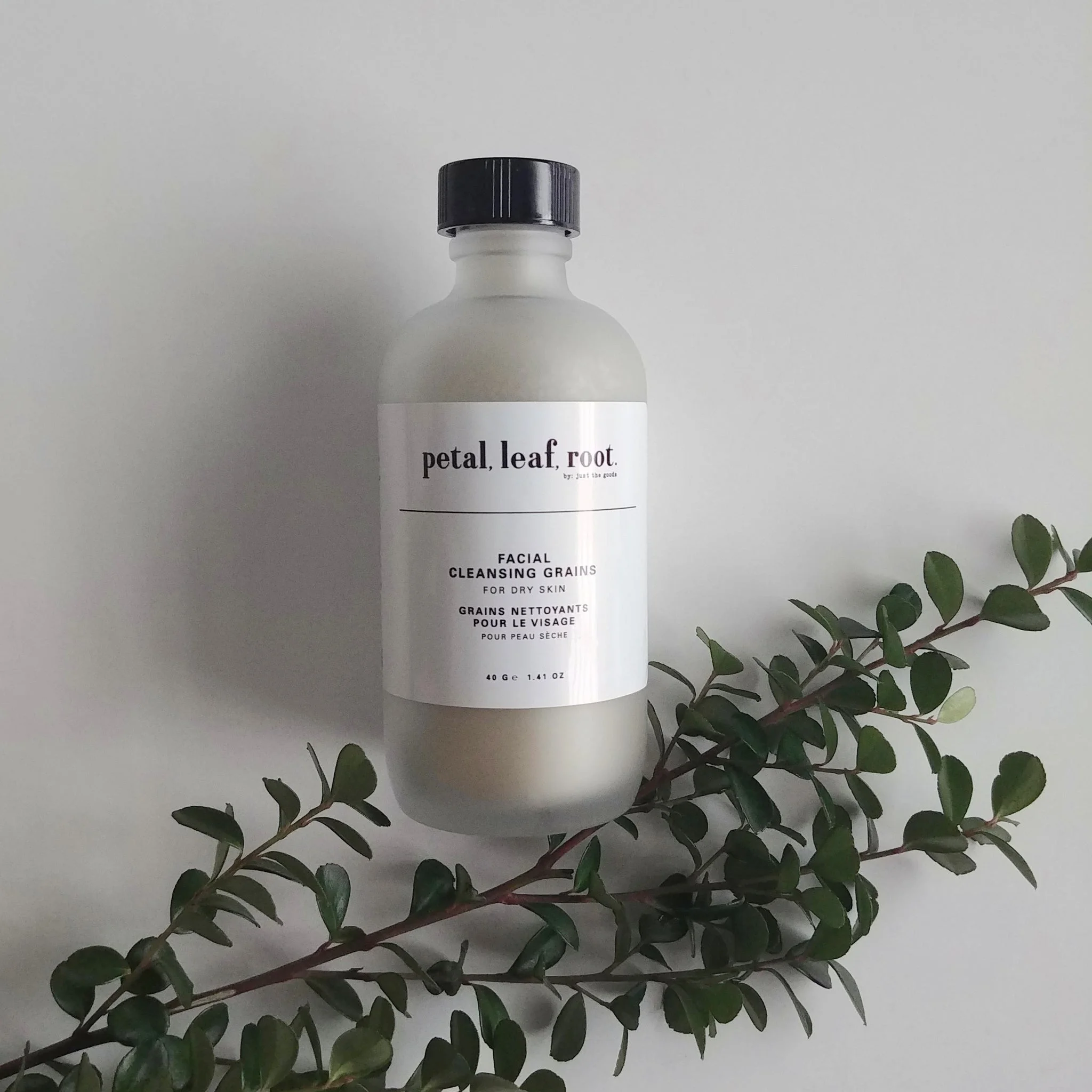
petal, leaf, root. by Just the Goods facial cleansing grains for dry skin
Analysis locked
How well does your skin match with petal, leaf, root. by Just the Goods facial cleansing grains for dry skin?
Login to see detailsOr continue via
Quick 1-minute survey • Completely free
Ingredients
Analysis results of Ingredients


Ingredient List
| EWG | CIR | Ingredient Name & Cosmetic Function | Notes |
|---|---|---|---|
| 1 | A | (Skin Protecting, Opacifying, Abrasive, Absorbent, Bulking Agent, Anticaking Agent, Slip Modifier) |  |
| 1 | - | (Skin Conditioning, Emollient, Soothing, Tonic, Astringent) | |
| 1 | - | (Skin Conditioning) | |
| 1 | - | (Skin Conditioning) | |
petal, leaf, root. by Just the Goods facial cleansing grains for dry skin - Ingredient Explanation
Kaolin
1. Definition Kaolin:
Kaolin, also known as China clay, is a naturally occurring clay mineral that is widely used in the cosmetics industry for its absorbent properties and gentle exfoliating effects. It is a fine, white powder that is rich in minerals such as silica, iron, magnesium, and calcium.2. Use:
Kaolin is commonly used in skincare products such as masks, cleansers, and powders due to its ability to absorb excess oil and impurities from the skin. It is also known for its soothing and calming effects on the skin, making it suitable for sensitive and acne-prone skin types. Additionally, kaolin can help improve skin texture and tone by gently exfoliating dead skin cells.3. Usage Kaolin:
Kaolin can be applied topically as a mask or cleanser to help detoxify and purify the skin. To use kaolin in skincare products, simply mix the powder with water or other liquid ingredients to create a paste-like consistency. Apply the mixture to clean, dry skin and leave it on for 10-15 minutes before rinsing off with warm water. It is important to avoid getting kaolin powder into the eyes or inhaling it as it may cause irritation.4. References:
- Dweck, A. C. (2012). Formulating with kaolin. Personal Care Magazine, 9(3), 25-28.
- Williams, L. B., & Haydel, S. E. (2010). Evaluation of the medicinal use of clay minerals as antibacterial agents. International Geology Review, 52(7/8), 745-770.
- Lin, Y. C., & Lin, J. H. (2008). Kaolin and its industrial uses. Journal of the Chinese Ceramic Society, 36(6), 805-811.
Equisetum Arvense (Horsetail)
1. Definition Equisetum Arvense (Horsetail):
Equisetum Arvense, commonly known as Horsetail, is a perennial plant that belongs to the Equisetaceae family. It is characterized by its hollow, jointed stems and small needle-like leaves. Horsetail has been used for centuries in traditional medicine due to its high content of silica, which is believed to promote healthy skin, hair, and nails.2. Use:
Horsetail extract is commonly used in cosmetic formulations for its astringent, antioxidant, and skin-soothing properties. It is often included in skincare products such as creams, lotions, and serums to help improve the appearance of skin texture, minimize the appearance of pores, and reduce inflammation. Additionally, Horsetail extract is also used in hair care products to strengthen hair follicles, promote hair growth, and add shine to the hair.3. Usage Equisetum Arvense (Horsetail):
When using cosmetics containing Horsetail extract, it is important to follow the manufacturer's instructions and guidelines. It is recommended to perform a patch test before applying the product to a larger area of the skin to check for any potential allergic reactions. Individuals with sensitive skin should consult with a dermatologist before using products with Horsetail extract to avoid any adverse effects.4. References:
- Dragland, S., Senoo, H., Wake, K., Holte, K., Blomhoff, R. Several Culinary and Medicinal Herbs Are Important Sources of Dietary Antioxidants. Journal of Nutrition, 2003.
- Deters, A., Zippel, J., Hellenbrand, N., Pappai, D., Possemeyer, C., Hensel, A. Aqueous extracts and polysaccharides from Marshmallow roots (Althea officinalis L.): Cellular internalisation and stimulation of cell physiology of human epithelial cells in vitro. Journal of Ethnopharmacology, 2010.
- Franz, C., Novak, J. Sources of essential oils. In: Baser, KHC, Buchbauer, G, eds. Handbook of Essential Oils: Science, Technology, and Applications. CRC Press, 2010.
Amaranthus Caudatus (Love Lies Bleeding) Seed Extract
1. Definition Amaranthus Caudatus (Love Lies Bleeding) Seed Extract:
Amaranthus Caudatus (Love Lies Bleeding) Seed Extract is a natural ingredient derived from the seeds of the Amaranthus Caudatus plant. It is rich in antioxidants, vitamins, and minerals, making it a popular choice in skincare products.2. Use:
Amaranthus Caudatus Seed Extract is commonly used in cosmetics for its hydrating, anti-inflammatory, and anti-aging properties. It helps to nourish and moisturize the skin, improve skin elasticity, and reduce the appearance of wrinkles and fine lines. Additionally, it can help to protect the skin from environmental stressors and promote a more radiant complexion.3. Usage Amaranthus Caudatus (Love Lies Bleeding) Seed Extract:
Amaranthus Caudatus Seed Extract can be found in a variety of skincare products, such as serums, moisturizers, and masks. It is typically included in formulations at a concentration of 1-5% to provide maximum benefits to the skin. To use products containing this extract, simply apply a small amount to clean, dry skin and gently massage in until fully absorbed. It is recommended to use products with this extract regularly as part of your skincare routine for best results.4. References:
- J. G. Gómez-Caravaca, D. Iafelice, A. Lavini, A. Pulvento, F. Caboni. Phenolic compounds and saponins in quinoa samples (Chenopodium quinoa Willd.) grown under different saline and nonsaline irrigation regimens. Journal of Agricultural and Food Chemistry. 2012.
- R. H. Samarth, S. Samarth. In vitro antiglycation activity of ethanolic extracts of some indigenous plants. Experimental Diabetes Research. 2011.
- S. M. N. A. Senadeera, L. S. Wijesundera, K. Sivakanesan. Effect of different solvents on the extraction of phenolic compounds of three types of dry tea (Camellia sinensis) J. Agric. Food Chem. 2006.
Medicago Sativa (Alfalfa) Seed Powder
1. Definition Medicago Sativa (Alfalfa) Seed Powder:
Medicago Sativa (Alfalfa) Seed Powder is a natural ingredient derived from the seeds of the alfalfa plant. It is rich in vitamins, minerals, and antioxidants, making it a popular choice in skincare and cosmetic products.2. Use:
Alfalfa seed powder is commonly used in cosmetics for its nourishing and revitalizing properties. It helps to hydrate the skin, improve its texture, and promote a healthy complexion. Additionally, it has anti-inflammatory and antioxidant benefits, which can help protect the skin from environmental damage and signs of aging.3. Usage Medicago Sativa (Alfalfa) Seed Powder:
Alfalfa seed powder can be found in a variety of skincare products, such as face masks, scrubs, and serums. It is often added to formulations to provide gentle exfoliation, improve skin tone, and enhance overall skin health. When using products containing alfalfa seed powder, it is important to follow the manufacturer's instructions and perform a patch test before applying it to the entire face to ensure compatibility with your skin.4. References:
- Raut, S. Y., & Bhadoria, B. K. (2012). Antioxidant potential of Medicago sativa. Journal of Chemical and Pharmaceutical Research, 4(1), 155-159.
- Goyal, S., & Arora, S. (2014). Alfalfa (Medicago sativa Linn.) seeds as a functional food: A review. Journal of Food Science and Technology, 51(9), 2169-2179.
- Sarker, S. D., & Latif, Z. (2002). Alfalfa (Medicago sativa L.). In Natural Products Isolation (pp. 69-70). Humana Press.
Review

Didn't find
the information you need?






Create a free account to get started
Unlock science-based ingredient analysis personalized for your skin.
Already have an account? Log in
We protect your privacy. We never send spam.