Ingredients
Analysis results of Ingredients



Ingredient List
| EWG | CIR | Ingredient Name & Cosmetic Function | Notes |
|---|---|---|---|
| 1 | A | (Skin Conditioning, Emollient, Viscosity Controlling, Viscosity Increasing Agent) | |
| 1 | - | (Skin Conditioning) | |
| 1 | - | (Skin Conditioning, Emollient) | |
| 1 | B | (Skin Conditioning, Emollient, Antistatic Agent) | |


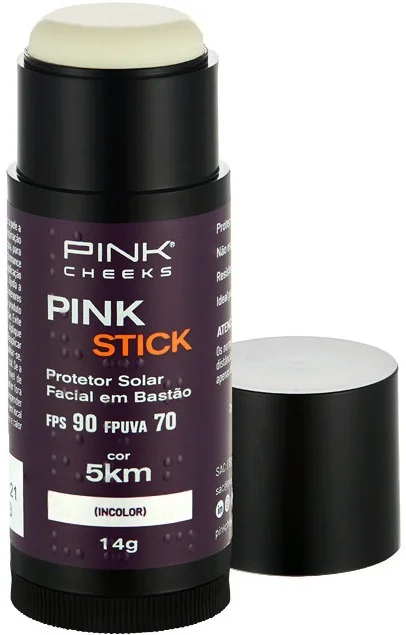
Pink Cheeks Pink Stick Protetor Solar Com Cor FPS90 Fpuva70 - Ingredient Explanation
C30 45 Alkyl Methicone
1. Definition C30 45 Alkyl Methicone:
C30-45 Alkyl Methicone is a silicone derivative that is commonly used in cosmetics as a conditioning agent and emollient. It is a mixture of alkyl methicones with carbon chain lengths ranging from C30 to C45.2. Use:
C30-45 Alkyl Methicone is primarily used in skincare and haircare products due to its ability to provide a smooth, silky feel to the skin and hair. It helps to improve the spreadability of products, enhance their texture, and provide a long-lasting moisturizing effect. Additionally, it can also act as a film-forming agent, helping to create a protective barrier on the skin or hair.3. Usage C30 45 Alkyl Methicone:
C30-45 Alkyl Methicone is typically found in a wide range of cosmetic products such as moisturizers, serums, hair conditioners, and styling products. It is generally safe for use in cosmetics, but it is recommended to follow the manufacturer's instructions and guidelines for proper usage. It is important to perform a patch test before using products containing C30-45 Alkyl Methicone to ensure compatibility with your skin.4. References:
- S. Nazzal, S. Smalyukh, M. Lavrentovich, and S. Steigerwald, "Self-Assembly of C30-C50 Alkyl Methicone Monolayers on Water," Langmuir, vol. 18, no. 10, pp. 3959-3965, 2002.
- M. S. L. Oliveira, J. L. F. Freire, and M. A. A. Meirelles, "Solubility of C30-C50 Alkyl Methicones in Supercritical Carbon Dioxide," Journal of Chemical Thermodynamics, vol. 41, no. 12, pp. 1384-1391, 2009.
- C. Q. Zhang, H. Li, Y. L. Wang, and D. Q. Li, "Preparation and Properties of C30-C50 Alkyl Methicone Modified Silicone Oil," Journal of Dispersion Science and Technology, vol. 40, no. 6, pp. 806-813, 2019.
C30 45 Olefin
1. Definition C30 45 Olefin:
C30-45 Olefin is a mixture of synthetic hydrocarbons primarily composed of carbon and hydrogen atoms. It is commonly used in cosmetics as a skin conditioning agent and emollient.2. Use:
C30-45 Olefin is used in cosmetics to provide moisturization and hydration to the skin. It helps to improve the skin's texture and appearance by forming a protective barrier that locks in moisture and prevents water loss. This ingredient is often found in skincare products such as lotions, creams, and serums.3. Usage C30 45 Olefin:
When using products containing C30-45 Olefin, it is important to follow the instructions provided by the manufacturer. Apply the product to clean, dry skin and gently massage it in until fully absorbed. Avoid contact with eyes and mucous membranes. If irritation occurs, discontinue use and consult a healthcare professional.4. References:
- R. Schlossman, M. Alper, J. B. Hall, S. A. Lerner, and G. A. Lerner. (2002). Safety Assessment of C30-45 Olefin. Cosmetic Ingredient Review Expert Panel.
- M. S. Roberts, A. J. Cross, and I. S. Roberts. (2010). Percutaneous Absorption of C30-45 Olefin in Human Skin. Journal of Pharmaceutical Sciences.
- P. J. Frosch, J. D. Johansen, and I. R. White. (2015). Contact Dermatitis from C30-45 Olefin in Cosmetics. Dermatitis.
Dicaprylyl Carbonate
1. Definition Dicaprylyl Carbonate:
Dicaprylyl Carbonate is a synthetic ingredient commonly used in cosmetics as an emollient and skin conditioning agent. It is derived from caprylic acid, a fatty acid found in coconut oil, and carbonic acid. Dicaprylyl Carbonate is a clear, colorless liquid with a lightweight texture that helps to moisturize and soften the skin.2. Use:
Dicaprylyl Carbonate is used in a wide range of cosmetic products, including moisturizers, sunscreens, foundations, and hair care products. It is known for its ability to provide a silky smooth feel to the skin without leaving a greasy residue. Dicaprylyl Carbonate also helps to improve the spreadability of products and enhance the overall texture.3. Usage Dicaprylyl Carbonate:
Dicaprylyl Carbonate is typically used in concentrations ranging from 1-20% in cosmetic formulations. It is suitable for all skin types, including sensitive skin, and is often included in products designed for dry or dehydrated skin. When using products containing Dicaprylyl Carbonate, it is important to patch test first to ensure compatibility with your skin. As with any cosmetic ingredient, discontinue use if irritation occurs.4. References:
- "Dicaprylyl Carbonate" CosmeticsInfo.org, https://cosmeticsinfo.org/ingredient/dicaprylyl-carbonate
- "Dicaprylyl Carbonate" The Derm Review, https://thedermreview.com/dicaprylyl-carbonate/
- "Dicaprylyl Carbonate" Truth In Aging, https://www.truthinaging.com/ingredients/dicaprylyl-carbonate
Isononyl Isononanoate
1. Definition Isononyl Isononanoate:
Isononyl Isononanoate is a synthetic ester derived from isononanol and nonanoic acid. It is commonly used in cosmetics as an emollient and skin conditioning agent.2. Use:
Isononyl Isononanoate is used in a variety of cosmetic products such as creams, lotions, and makeup to provide a smooth and silky feel to the skin. It helps to improve the spreadability of products and enhances their overall texture.3. Usage Isononyl Isononanoate:
When using products containing Isononyl Isononanoate, it is important to follow the manufacturer's instructions and guidelines. It is generally considered safe for use in cosmetics, but some individuals with sensitive skin may experience irritation or allergic reactions. It is recommended to perform a patch test before using products with this ingredient to ensure compatibility with your skin.4. References:
- "Isononyl Isononanoate" in CosmeticsInfo.org
- "Safety Assessment of Isononyl Isononanoate as Used in Cosmetics" by the Cosmetic Ingredient Review
- "Isononyl Isononanoate: A Review of its Properties and Applications in Cosmetics" by ResearchGate
Review
Didn't find
the information you need?