


Analysis locked
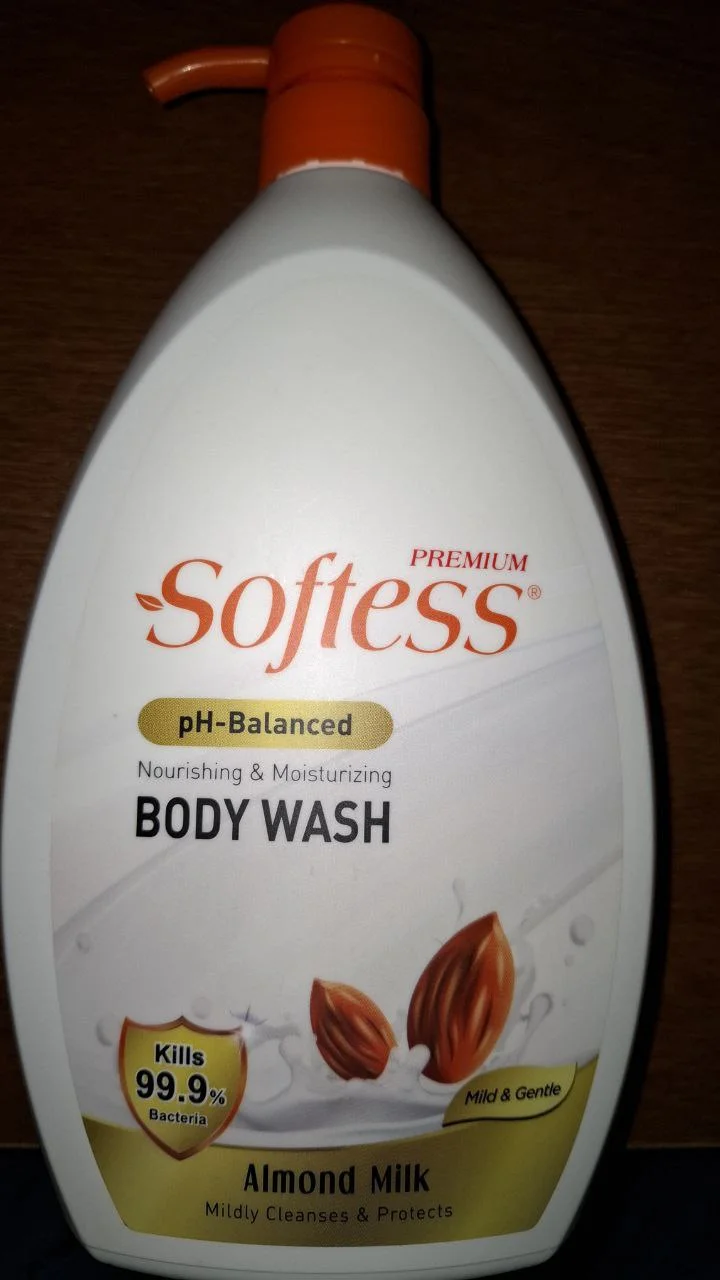
How well does your skin match with PREMIUM Softess Almond Milk Body Wash?
Login to see detailsOr continue via
Quick 1-minute survey • Completely free
Ingredients
Analysis results of Ingredients


Ingredient List
| EWG | CIR | Ingredient Name & Cosmetic Function | Notes |
|---|---|---|---|
| 1 3 | - | (Emulsifying, Surfactant, Cleansing, Foaming) |   |
| 1 5 | B | (Hair Conditioning, Skin Conditioning, Viscosity Controlling, Antistatic Agent, Viscosity Increasing Agent, Foam Boosting, Sufactant) | |
| 1 | - | (Surfactant, Viscosity Controlling, Emulsion Stabilising, Emulsifying) | |
| 10 | B | (pH adjusting agent) | |



PREMIUM Softess Almond Milk Body Wash - Ingredient Explanation
Sodium Laureth Sulfate
1. Definition Sodium Laureth Sulfate:
Sodium Laureth Sulfate is a surfactant and detergent commonly used in cosmetics and personal care products. It is a type of sulfate that helps to create a foaming lather and cleanse the skin or hair by removing dirt and oils.2. Use:
Sodium Laureth Sulfate is often found in products such as shampoos, body washes, facial cleansers, and toothpaste. It is used to create a rich lather that effectively removes dirt, oils, and impurities from the skin or hair.3. Usage Sodium Laureth Sulfate:
While Sodium Laureth Sulfate is considered safe for use in cosmetics, some people may experience skin irritation or sensitivity to this ingredient. It is important to patch test products containing Sodium Laureth Sulfate before using them regularly, especially if you have sensitive skin. Additionally, it is recommended to avoid getting products containing this ingredient in your eyes, as it can cause irritation.4. References:
- National Center for Biotechnology Information. PubChem Compound Summary for CID 23665879, Sodium Laureth Sulfate. https://pubchem.ncbi.nlm.nih.gov/compound/Sodium-laureth-sulfate
- Environmental Working Group. Sodium Laureth Sulfate. https://www.ewg.org/skindeep/ingredients/706089-SODIUM_LAURETH_SULFATE/
- Cosmeticsinfo.org. Sodium Laureth Sulfate. http://cosmeticsinfo.org/ingredient/sodium-laureth-sulfate
Cocamidopropyl Betaine
1. Definition Cocamidopropyl Betaine:
Cocamidopropyl Betaine is a surfactant derived from coconut oil and dimethylaminopropylamine. It is commonly used in cosmetics as a cleansing agent and foam booster.2. Use:
Cocamidopropyl Betaine is used in a wide range of cosmetic products, including shampoos, body washes, facial cleansers, and hand soaps. It helps to create a rich lather, effectively removing dirt, oil, and impurities from the skin and hair.3. Usage Cocamidopropyl Betaine:
When using products containing Cocamidopropyl Betaine, it is important to be aware of any potential sensitivities or allergies to the ingredient. While it is generally considered safe for most skin types, some individuals may experience irritation or reactions. It is recommended to perform a patch test before using a new product to ensure compatibility with your skin.4. References:
- National Center for Biotechnology Information. PubChem Compound Summary for CID 10632, Cocamidopropyl Betaine. https://pubchem.ncbi.nlm.nih.gov/compound/Cocamidopropyl-betaine
- Environmental Working Group. Cocamidopropyl Betaine. https://www.ewg.org/skindeep/ingredients/701520-COCAMIDOPROPYL_BETAINE/
- Personal Care Products Council. Cocamidopropyl Betaine. https://www.personalcarecouncil.org/ingredient-info/cocamidopropyl-betaine/
Cocamide
1. Definition Cocamide:
Cocamide is a type of ingredient commonly found in cosmetics and personal care products. It is derived from coconut oil and is used as a surfactant and foaming agent in various beauty products.2. Use:
Cocamide is used in cosmetics to help cleanse and create lather in products such as shampoos, body washes, and facial cleansers. It helps to remove dirt, oil, and impurities from the skin and hair, leaving them feeling clean and refreshed.3. Usage Cocamide:
When using products containing Cocamide, it is important to follow the instructions provided on the packaging. Avoid getting the product in your eyes, as it may cause irritation. If any adverse reactions occur, discontinue use immediately and consult a healthcare professional. It is also recommended to perform a patch test before using a product with Cocamide to check for any allergic reactions.4. References:
- "Cocamide." Cosmetics Info, www.cosmeticsinfo.org/ingredient/cocamide.
- "Cocamide." Personal Care Council, www.personalcarecouncil.org/ingredient-info/cocamide/.
- "Cocamide." Truth In Aging, www.truthinaging.com/ingredients/cocamide.
Diethanolamine
1. Definition Diethanolamine:
Diethanolamine (DEA) is a clear, viscous liquid that is commonly used in cosmetics as an emulsifier and pH adjuster. It is a type of ethanolamine, which is a compound that contains both alcohol and amine functional groups.2. Use:
Diethanolamine is used in cosmetics to help stabilize and thicken products, as well as to adjust the pH levels to ensure they are gentle and non-irritating to the skin. It is often found in products such as shampoos, conditioners, lotions, and creams.3. Usage Diethanolamine:
While diethanolamine is generally considered safe for use in cosmetics, there are some precautions to keep in mind. It is important to use products containing DEA as directed, as overuse can lead to skin irritation and allergic reactions. Additionally, some studies have suggested that diethanolamine may react with other ingredients in cosmetics to form potentially harmful compounds, so it is best to avoid using products that contain DEA in combination with certain other ingredients.4. References:
- Cosmetic Ingredient Review Expert Panel. (2005). Final report on the safety assessment of DEA-Cetyl Phosphate, DEA-Cystine, DEA-Oleth-3 Phosphate, DEA-Oleth-10 Phosphate, DEA-Stearth-100, DEA-Stearth-75, DEA-Tallow Phosphate, DEA-TEA-Linoleate, DEA-TEA-Linoleate, DEA-TEA-Oleate, DEA-TEA-Palmitate, DEA-TEA-Stearate, DEA-TEA-Stearate, DEA-TEA-Tallowate, and DEA-Trideceth-3 Phosphate. International Journal of Toxicology, 24(Suppl 2), 1-32.
- National Institute of Environmental Health Sciences. (2016). Diethanolamine. Retrieved from https://www.niehs.nih.gov/health/materials/diethanolamine_dea_508.pdf
- U.S. Food and Drug Administration. (2018). Code of Federal Regulations Title 21. Retrieved from https://www.accessdata.fda.gov/scripts/cdrh/cfdocs/cfcfr/CFRSearch.cfm?fr=310.545
Review
Didn't find
the information you need?





Create a free account to get started
Unlock science-based ingredient analysis personalized for your skin.
Already have an account? Log in
We protect your privacy. We never send spam.