


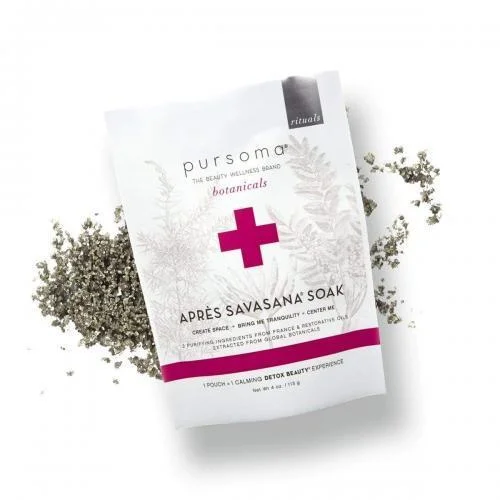
Analysis locked
How well does your skin match with Pursoma Apres Savasana Soak?
Login to see detailsOr continue via
Quick 1-minute survey • Completely free
Ingredients
Analysis results of Ingredients


Ingredient List
| EWG | CIR | Ingredient Name & Cosmetic Function | Notes |
|---|---|---|---|
| 1 | - | (Masking, Viscosity Controlling, Bulking Agent) | |
| 1 | - | (Masking, Tonic) | |
| 1 | - | (Skin Conditioning, Masking, Fragrance, Tonic) | |
| 1 | - | |
Pursoma Apres Savasana Soak - Ingredient Explanation
Sodium Chloride
1. Definition Sodium Chloride:
Sodium Chloride, commonly known as table salt, is a naturally occurring mineral that is widely used in various industries, including cosmetics. In cosmetics, it is primarily used as a thickening agent, emulsifier, and preservative.2. Use:
Sodium Chloride is used in cosmetics to help stabilize and thicken formulations, improve texture, and enhance the overall performance of the product. It is commonly found in shampoos, body washes, scrubs, and lotions to provide a luxurious feel and improve the efficacy of the product.3. Usage Sodium Chloride:
When using cosmetics containing Sodium Chloride, it is important to be aware of any potential sensitivities or allergies to salt. Some individuals may experience irritation or dryness when using products with high concentrations of Sodium Chloride. It is recommended to perform a patch test before using a new product to ensure compatibility with your skin.Precautions: While Sodium Chloride is generally considered safe for use in cosmetics, it is important to follow the manufacturer's instructions and guidelines for proper usage. Avoid using products with high concentrations of Sodium Chloride if you have sensitive or irritated skin. If you experience any adverse reactions, discontinue use immediately and consult a healthcare professional.
4. References:
- "Sodium Chloride in Cosmetics: Functions and Safety." Cosmetics & Toiletries, www.cosmeticsandtoiletries.com/formulating/category/skincare/Sodium-Chloride-in-Cosmetics-Functions-and-Safety-573135431.html.
- "The Benefits of Sodium Chloride in Skincare." The Derm Review, www.thedermreview.com/Sodium-Chloride-in-skincare/.
- "Safety Assessment of Sodium Chloride as Used in Cosmetics." Cosmetic Ingredient Review, www.cir-safety.org/sites/default/files/SodiumChloride.pdf.
Boswellia Carteri (Frankincense) Oil
1. Definition Boswellia Carteri (Frankincense) Oil:
Boswellia Carteri (Frankincense) Oil is an essential oil derived from the resin of the Boswellia Carteri tree. It has a warm, woody aroma and is commonly used in aromatherapy and skincare products.2. Use:
Frankincense oil is known for its anti-inflammatory and antiseptic properties, making it a popular ingredient in cosmetics. It is often used in skincare products to help reduce the appearance of fine lines and wrinkles, improve skin tone and texture, and promote overall skin health.3. Usage Boswellia Carteri (Frankincense) Oil:
When using Boswellia Carteri (Frankincense) Oil in cosmetics, it is important to dilute it properly as it is a potent essential oil. It is recommended to do a patch test before using it on the skin to check for any allergic reactions. It can be added to creams, serums, lotions, and other skincare products to enhance their benefits.4. References:
- Ali, B., Al-Wabel, N. A., Shams, S., Ahamad, A., & Khan, S. A. (2015). An in vitro investigation of the effects of essential oils on the viability of human dermal fibroblasts and epidermal keratinocytes. Evidence-Based Complementary and Alternative Medicine, 2015.
- Buchbauer, G., Jirovetz, L., Jager, W., Plank, C., Dietrich, H., & Fragrance Compounds and Essential Oils. (1993). A Handbook of Cosmetic Science. CRC Press.
- Raut, J. S., & Karuppayil, S. M. (2014). A status review on the medicinal properties of essential oils. Industrial Crops and Products, 62, 250-264.
Cinnamomum Camphora (Camphor) Oil
1. Definition Cinnamomum Camphora (Camphor) Oil:
Cinnamomum Camphora (Camphor) Oil is a natural essential oil extracted from the wood of the camphor tree. It has a strong, aromatic scent and is commonly used in cosmetics for its antiseptic, anti-inflammatory, and cooling properties.2. Use:
Camphor oil is often used in skincare products for its ability to soothe irritated skin, reduce redness and inflammation, and provide a cooling sensation. It is also used in hair care products to promote hair growth and strengthen the hair follicles. In addition, camphor oil is known for its antibacterial and antifungal properties, making it a popular ingredient in products designed to treat acne and other skin conditions.3. Usage Cinnamomum Camphora (Camphor) Oil:
When using camphor oil in cosmetics, it is important to dilute it properly as it can be irritating to the skin in its pure form. It is recommended to do a patch test before using any product containing camphor oil to ensure that you do not have an allergic reaction. Pregnant women and individuals with sensitive skin should consult with a healthcare professional before using products with camphor oil.4. References:
- Paula Begoun. (2003). "The Complete Beauty Bible: The Ultimate Guide to Smart Beauty." Rodale Books.
- A. Dweck. (2011). "Formulating Natural Cosmetics." Allured Publishing Corporation.
- K. H. Shah. (2017). "Handbook of Medicinal Herbs and their Uses." Springer.
Cedrus Atlantica (Atlas Cedar) Oil
1. Definition Cedrus Atlantica (Atlas Cedar) Oil:
Cedrus Atlantica (Atlas Cedar) Oil is an essential oil extracted from the wood of the Cedrus Atlantica tree, native to the Atlas Mountains in Morocco. It is known for its woody, warm, and sweet aroma.2. Use:
Atlas Cedar Oil is commonly used in cosmetics for its skin and hair benefits. It is known for its astringent properties, making it effective in treating oily skin and acne. It also has anti-inflammatory properties, making it useful in soothing skin irritations and reducing redness. Additionally, it is believed to promote hair growth and improve scalp health.3. Usage Cedrus Atlantica (Atlas Cedar) Oil:
Atlas Cedar Oil can be used in various cosmetic products such as creams, lotions, serums, and hair care products. It can be applied directly to the skin or hair, or diluted with a carrier oil before use. It is recommended to do a patch test before using it on a larger area of the skin to check for any allergic reactions. Pregnant women and individuals with sensitive skin should consult a healthcare professional before using Atlas Cedar Oil.4. References:
- Tisserand, R., & Young, R. (2014). Essential Oil Safety: A Guide for Health Care Professionals (2nd ed.). Churchill Livingstone.
- Lawless, J. (2013). The Encyclopedia of Essential Oils: The Complete Guide to the Use of Aromatic Oils In Aromatherapy, Herbalism, Health, and Well Being. Conari Press.
- Buckle, J. (2003). Clinical Aromatherapy: Essential Oils in Healthcare (3rd ed.). Churchill Livingstone.
Review
Didn't find
the information you need?





Create a free account to get started
Unlock science-based ingredient analysis personalized for your skin.
Already have an account? Log in
We protect your privacy. We never send spam.