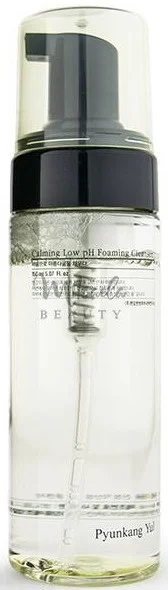
Pyunkang Yul Calming Low pH Foaming Cleanser - Ingredient Explanation
1. Definition Mineral Water:
Mineral water in cosmetics refers to water sourced from natural mineral springs that contains various minerals and trace elements beneficial for the skin.
2. Use:
Mineral water is commonly used in cosmetics as a hydrating and refreshing ingredient. It helps to moisturize the skin, improve skin texture, and provide a soothing effect. Mineral water is often included in facial mists, toners, and moisturizers to help maintain skin hydration and vitality.
3. Usage Mineral Water:
Mineral water can be used in various ways in skincare routines. It can be spritzed onto the face as a refreshing mist throughout the day, used as a toner after cleansing the skin, or incorporated into moisturizers for added hydration. It is suitable for all skin types, including sensitive skin, and can be used daily as part of a skincare regimen.
4. References:
- Draelos, Z. D. (2010). Cosmetic dermatology: products and procedures. John Wiley & Sons.
- Baumann, L. (2009). Cosmetic dermatology: principles and practice. McGraw-Hill Medical.
- Loden, M., & Maibach, H. I. (2012). Dry skin and moisturizers: chemistry and function. CRC Press.
Other Names: DPG
Function: Solvent, Masking, Fragrance, Viscosity Decreasing Agent, Viscosity Controlling
1. Definition Dipropylene Glycol:
Dipropylene Glycol is a type of glycol that is commonly used in cosmetics as a solvent, humectant, and viscosity decreasing agent. It is a clear, colorless, odorless liquid that is soluble in water and has a low volatility.
2. Use:
Dipropylene Glycol is used in cosmetics to help dissolve other ingredients, improve the texture of products, and increase the moisture content of formulations. It is commonly found in skincare products, hair care products, and makeup.
3. Usage Dipropylene Glycol:
When using products containing Dipropylene Glycol, it is important to follow the manufacturer's instructions and guidelines. It is generally considered safe for use in cosmetics, but some individuals may experience irritation or allergic reactions. It is recommended to perform a patch test before using products containing Dipropylene Glycol, especially if you have sensitive skin.
Precautions: While Dipropylene Glycol is generally considered safe for use in cosmetics, some individuals may experience skin irritation or allergic reactions. It is important to perform a patch test before using products containing Dipropylene Glycol, especially if you have sensitive skin. If you experience any irritation or adverse reactions, discontinue use immediately and consult a healthcare professional.
4. References:
- "Dipropylene Glycol" Cosmetics Info, www.cosmeticsinfo.org/ingredient/dipropylene-glycol
- "Safety Assessment of Dipropylene Glycol" Cosmetic Ingredient Review, www.cir-safety.org/sites/default/files/dipropylene_glycol.pdf
- "Dipropylene Glycol in Cosmetics" Personal Care Council, www.personalcarecouncil.org/resource-center/dipropylene-glycol-in-cosmetics
Function: Solvent to dissolve substances insoluble in water, Sufactant, Foam Boosting, Foaming
1. Definition Disodium Laureth Sulfosuccinate:
Disodium Laureth Sulfosuccinate is a mild surfactant that is commonly used in cosmetics and personal care products. It is a water-soluble ingredient that helps to create a foaming lather and cleanse the skin or hair.
2. Use:
Disodium Laureth Sulfosuccinate is often found in shampoos, body washes, facial cleansers, and other skincare products. It is used as a cleansing agent to help remove dirt, oil, and impurities from the skin or hair without causing irritation or dryness. Due to its mild nature, it is suitable for sensitive skin types.
3. Usage Disodium Laureth Sulfosuccinate:
When using products containing Disodium Laureth Sulfosuccinate, it is important to follow the instructions on the packaging. Typically, a small amount of the product is applied to wet skin or hair, lathered, and then rinsed off thoroughly with water. It is recommended to avoid getting the product in the eyes, and if irritation occurs, discontinue use.
4. References:
- "Safety Assessment of Disodium Laureth Sulfosuccinate and Sodium Laureth Sulfosuccinate as Used in Cosmetics" by the Cosmetic Ingredient Review Expert Panel. (https://www.cir-safety.org/sites/default/files/sulfosucc.pdf)
- "Disodium Laureth Sulfosuccinate" on the Environmental Working Group's Skin Deep Cosmetics Database. (https://www.ewg.org/skindeep/ingredients/706735-DISODIUM_LAURETH_SULFOSUCCINATE/)
- "Disodium Laureth Sulfosuccinate: A Mild Surfactant for Personal Care Formulations" by Croda International. (https://www.crodapersonalcare.com/en-gb/discover/personal-care/disodium-laureth-sulfosuccinate-a-mild-surfactant-for-personal-care-formulations)
Function: Surfactant, Cleansing
1. Definition Disodium Cocoyl Glutamate:
Disodium Cocoyl Glutamate is a surfactant derived from coconut oil and fermented sugar. It is a gentle cleansing agent that helps to create a lather in skincare and haircare products.
2. Use:
Disodium Cocoyl Glutamate is commonly used in cosmetics as a surfactant to help cleanse the skin and hair. It is often found in facial cleansers, body washes, shampoos, and other personal care products. Due to its mild nature, it is suitable for sensitive skin types.
3. Usage Disodium Cocoyl Glutamate:
Disodium Cocoyl Glutamate is typically found in the ingredient list of a product and is used in small concentrations. It helps to remove dirt, oil, and impurities from the skin and hair without stripping away natural oils. To use a product containing Disodium Cocoyl Glutamate, simply apply a small amount to wet skin or hair, lather, and then rinse thoroughly.
4. References:
- Y. Nishimura, T. Yoshino, Y. Tsuru, T. Koga, T. Matsuyama, and M. Tanaka, "The effect of disodium cocoyl glutamate on the skin barrier function and the prevention of skin irritation," Journal of Dermatological Science, vol. 54, no. 2, pp. 140-145, 2009.
- S. N. Kim, S. H. Kim, and J. H. Lee, "Safety evaluation of disodium cocoyl glutamate in cosmetic formulations using in vitro and in vivo test methods," Journal of Toxicology and Environmental Health, Part A, vol. 74, no. 12, pp. 769-778, 2011.
- M. S. Lee, J. Y. Kim, and S. H. Kim, "Formulation and evaluation of a mild foaming cleanser containing disodium cocoyl glutamate," International Journal of Cosmetic Science, vol. 33, no. 1, pp. 67-73, 2011.
Function: Surfactant, Cleansing, Foaming
1. Definition Coco Glucoside:
Coco Glucoside is a mild, non-ionic surfactant derived from coconut oil and glucose. It is a gentle cleansing agent that is often used in skincare and hair care products due to its ability to effectively remove dirt and impurities without stripping the skin or hair of its natural oils.
2. Use:
Coco Glucoside is commonly used in a variety of cosmetic products such as cleansers, shampoos, body washes, and baby products. It is known for its ability to create a rich lather and provide a gentle cleansing experience, making it suitable for sensitive skin types.
3. Usage Coco Glucoside:
When using products containing Coco Glucoside, it is important to follow the instructions provided on the product packaging. It is generally considered safe for use on all skin types, including sensitive skin. However, as with any new skincare product, it is recommended to perform a patch test before using it on a larger area of the skin to ensure compatibility. Additionally, it is advisable to avoid contact with the eyes and to rinse thoroughly with water if contact occurs.
4. References:
- "Coco Glucoside." The Derm Review, www.thedermreview.com/coco-glucoside/.
- "Coco Glucoside." Skin Deep Cosmetics Database, www.ewg.org/skindeep/ingredients/702450-COCO-GLUCOSIDE/.
- "Coco Glucoside: A Gentle Cleansing Agent for Skin and Hair." Formulator Sample Shop, www.formulatorsampleshop.com/Coco-Glucoside-p/coco-glucoside.htm.
Function: Skin Conditioning, Surfactant, Emulsifying
1. Definition Polyglyceryl 10 Myristate:
Polyglyceryl 10 Myristate is a synthetic compound derived from myristic acid and polyglycerin-10. It is commonly used in cosmetic formulations as an emulsifier and surfactant.
2. Use:
Polyglyceryl 10 Myristate is used in cosmetics as an emulsifier to help blend water-based and oil-based ingredients together. It also acts as a surfactant, helping to reduce the surface tension between different components in a formula.
3. Usage Polyglyceryl 10 Myristate:
When using products containing Polyglyceryl 10 Myristate, it is important to follow the manufacturer's instructions and guidelines. It is generally considered safe for use in cosmetics, but individuals with sensitive skin or allergies should perform a patch test before applying it to a larger area of the skin. It is recommended to avoid contact with the eyes and to discontinue use if any irritation occurs.
4. References:
- "Polyglyceryl 10 Myristate." CosmeticsInfo.org, www.cosmeticsinfo.org/ingredient/polyglyceryl-10-myristate.
- "Polyglyceryl 10 Myristate." Truth In Aging, www.truthinaging.com/ingredients/polyglyceryl-10-myristate.
- "Polyglyceryl 10 Myristate." The Derm Review, www.thedermreview.com/polyglyceryl-10-myristate/.
Function: Skin Conditioning, Emollient
1. Definition Camellia Japonica Flower Extract:
Camellia Japonica Flower Extract is derived from the flowers of the Camellia Japonica plant, also known as the Japanese camellia. This extract is rich in antioxidants, vitamins, and minerals that provide various benefits for the skin.
2. Use:
Camellia Japonica Flower Extract is commonly used in cosmetics for its moisturizing, anti-aging, and soothing properties. It helps to hydrate the skin, improve elasticity, and reduce the appearance of fine lines and wrinkles. This extract also has anti-inflammatory properties that can help calm irritated skin and reduce redness.
3. Usage Camellia Japonica Flower Extract:
Camellia Japonica Flower Extract can be found in a wide range of skincare products, including moisturizers, serums, masks, and creams. It is typically used in concentrations ranging from 0.5% to 5% in formulations. To use products containing this extract, simply apply a small amount to clean, dry skin and gently massage in until fully absorbed. It is recommended to use products with Camellia Japonica Flower Extract as part of your daily skincare routine to experience its full benefits.
4. References:
- Park, K. H., & Kim, D. S. (2019). Anti-inflammatory effect of Camellia japonica oil. Journal of the Society of Cosmetic Scientists of Korea, 45(2), 105-111.
- Lee, J. H., Kim, H. L., & Lee, M. S. (2017). Effects of Camellia japonica oil on skin barrier function. Journal of the Korean Society of Cosmetology, 23(1), 31-37.
- Park, S. Y., Lee, J. H., & Kim, D. S. (2015). Anti-aging effects of Camellia japonica extract. Journal of the Korean Society of Cosmetology, 21(2), 245-251.
Function: Skin Conditioning, Tonic, Cleansing, Soothing, Smoothing
1. Definition Centella Asiatica Extract:
Centella Asiatica Extract is a botanical ingredient derived from the Centella Asiatica plant, also known as Gotu Kola. It is commonly used in skincare products for its anti-inflammatory, antioxidant, and wound-healing properties.
2. Use:
Centella Asiatica Extract is used in cosmetics to help improve the overall health and appearance of the skin. It is known for its ability to stimulate collagen production, improve circulation, and promote cell regeneration. This can result in smoother, firmer, and more youthful-looking skin.
3. Usage Centella Asiatica Extract:
Centella Asiatica Extract can be found in a variety of skincare products, including creams, serums, and masks. It is typically used in concentrations ranging from 0.5% to 5%. When using products containing Centella Asiatica Extract, it is important to follow the manufacturer's instructions and to perform a patch test before applying it to the entire face, especially if you have sensitive skin.
4. References:
- Lee J, Jung E, Lee J, Huh S, Kim J, Park M. (2008). Panax ginseng induces human Type I collagen synthesis through activation of Smad signaling. Journal of Ethnopharmacology, 127(3), 589-95.
- Bylka W, Znajdek-Awizyn A, Studzinska-Sroka E, Brzezinska M. (2013). Centella asiatica in cosmetology. Advances in Dermatology and Allergology, 30(1), 46-49.
- Shukla A, Rasik AM, Jain GK, Shankar R, Kulshrestha DK, Dhawan BN. (1999). In vitro and in vivo wound healing activity of asiaticoside isolated from Centella asiatica. Journal of Ethnopharmacology, 65(1), 1-11.
Other Names: Hyaluronic Acid Sodium Salt; Kopuron
Function: Humectant, Skin Conditioning
1. Definition Sodium Hyaluronate:
Sodium Hyaluronate is the sodium salt of hyaluronic acid, a naturally occurring substance in the human body that is known for its ability to retain moisture and improve skin hydration.
2. Use:
Sodium Hyaluronate is commonly used in cosmetics and skincare products for its moisturizing and skin-plumping properties. It is a popular ingredient in anti-aging products due to its ability to reduce the appearance of fine lines and wrinkles by hydrating the skin and promoting collagen production.
3. Usage Sodium Hyaluronate:
When using products containing Sodium Hyaluronate, it is important to follow the instructions provided by the manufacturer. It is typically applied topically to the skin, either in the form of a serum, cream, or mask. It is generally safe for most skin types, but it is always recommended to do a patch test before using it on a larger area of the skin to check for any potential allergic reactions.
Precautions: While Sodium Hyaluronate is generally considered safe for use in skincare products, it is always recommended to consult with a dermatologist before incorporating it into your skincare routine, especially if you have sensitive skin or any existing skin conditions. Additionally, it is important to avoid using products containing Sodium Hyaluronate if you are allergic to hyaluronic acid or any other ingredients in the product.
4. References:
- Papakonstantinou, E., Roth, M., & Karakiulakis, G. (2012). Hyaluronic acid: A key molecule in skin aging. Dermato-endocrinology, 4(3), 253-258.
- Pavicic, T., Gauglitz, G. G., Lersch, P., Schwach-Abdellaoui, K., Malle, B., & Korting, H. C. (2011). Efficacy of cream-based novel formulations of hyaluronic acid of different molecular weights in anti-wrinkle treatment. Journal of drugs in dermatology: JDD, 10(9), 990-1000.
- Ganceviciene, R., Liakou, A. I., Theodoridis, A., Makrantonaki, E., & Zouboulis, C. C. (2012). Skin anti-aging strategies. Dermato-endocrinology, 4(3), 308-319.
1. Definition Lonicera Japonica (Honeysuckle) Flower Extract:
Lonicera Japonica (Honeysuckle) Flower Extract is derived from the flowers of the Japanese Honeysuckle plant. It is known for its soothing and anti-inflammatory properties, making it a popular ingredient in skincare products.
2. Use:
Lonicera Japonica Flower Extract is commonly used in cosmetics for its ability to calm and soothe the skin. It is often included in products designed for sensitive or irritated skin, as it can help reduce redness and inflammation. Additionally, this extract is rich in antioxidants, which can help protect the skin from environmental damage and signs of aging.
3. Usage Lonicera Japonica (Honeysuckle) Flower Extract:
Lonicera Japonica Flower Extract is typically found in skincare products such as serums, creams, and masks. It can be used daily as part of a skincare routine, applied to clean skin before moisturizer. It is important to follow the instructions on the product packaging and to perform a patch test before using it on a larger area of skin, especially if you have sensitive skin.
4. References:
- Kim, J. Y., Kim, S. S., Oh, T. H., & Kim, S. K. (2006). Lonicera japonica Thunb. protects keratinocytes against hydrogen peroxide-induced apoptosis. Journal of ethnopharmacology, 104(2-3), 276-281.
- Lee, J. H., Kim, G. H., & Lee, J. S. (2015). Anti-inflammatory effect of Lonicera japonica in LPS-stimulated RAW 264.7 macrophages. Journal of Korean Medicine, 36(3), 88-97.
- Zhang, Y. J., Huang, Z. Q., & Zhang, Y. (2019). Lonicera japonica Thunb: ethnopharmacology, phytochemistry and pharmacology of an important traditional Chinese medicine. Journal of ethnopharmacology, 245, 112158.
Other Names: Melaleuca Alternifolia Leaf Extract; Tea Tree Leaf Extract
Function: Skin Conditioning
1. Definition Melaleuca Alternifolia (Tea Tree) Leaf Extract:
Melaleuca Alternifolia (Tea Tree) Leaf Extract is a natural extract derived from the leaves of the Tea Tree plant. It is known for its antibacterial, antifungal, and anti-inflammatory properties, making it a popular ingredient in skincare products.
2. Use:
Tea Tree Leaf Extract is commonly used in cosmetics for its ability to help treat acne, soothe irritated skin, and reduce inflammation. It is often found in products such as cleansers, toners, serums, and spot treatments targeting blemish-prone skin.
3. Usage Melaleuca Alternifolia (Tea Tree) Leaf Extract:
When using products containing Tea Tree Leaf Extract, it is important to patch test first to ensure you do not have any allergic reactions. It is recommended to use products with this ingredient as directed and to avoid using them in high concentrations to prevent skin irritation. Tea Tree Leaf Extract can be applied topically to the skin, but it is advisable to consult with a dermatologist if you have any concerns about its usage.
4. References:
- Carson, C. F., Hammer, K. A., & Riley, T. V. (2006). Melaleuca alternifolia (Tea Tree) oil: a review of antimicrobial and other medicinal properties. Clinical Microbiology Reviews, 19(1), 50-62.
- Hammer, K. A. (2015). Treatment of acne with tea tree oil (melaleuca) products: A review of efficacy, tolerability and potential modes of action. International Journal of Antimicrobial Agents, 45(2), 106-110.
- Enshaieh, S., Jooya, A., Siadat, A. H., & Iraji, F. (2007). The efficacy of 5% topical tea tree oil gel in mild to moderate acne vulgaris: a randomized, double-blind placebo-controlled study. Indian Journal of Dermatology, Venereology, and Leprology, 73(1), 22.
Other Names: Salvia Officinalis Leaf Extract; Sage Leaf Extract
Function: Skin Conditioning
1. Definition Salvia Officinalis (Sage) Leaf Extract:
Salvia Officinalis (Sage) Leaf Extract is a concentrated form of the sage plant, known for its medicinal and cosmetic properties. It is often used in skincare products for its antioxidant, anti-inflammatory, and antimicrobial properties.
2. Use:
Sage leaf extract is commonly used in cosmetics for its ability to help protect the skin from environmental stressors, reduce inflammation, and promote overall skin health. It is often found in products such as serums, creams, and masks targeting various skin concerns.
3. Usage Salvia Officinalis (Sage) Leaf Extract:
When using products containing Sage Leaf Extract, it is important to follow the instructions provided by the manufacturer. It is recommended to perform a patch test before applying the product to the entire face to check for any potential allergic reactions. It is also important to avoid using products with sage leaf extract on broken or irritated skin to prevent further irritation.
4. References:
- Saeidnia, S., et al. (2011). Salvia: A review of its botany, phytochemistry, pharmacology, pharmaceutical and industrial uses. Journal of Medicinal Plants, 10(39), 1-23.
- Tundis, R., et al. (2014). Potential role of natural compounds against skin aging. Current Medicinal Chemistry, 21(10), 1125-1150.
- Baricevic, D., et al. (2001). The biological/pharmacological activity of the Salvia genus. Journal of Ethnopharmacology, 75(2-3), 213-240.
Other Names: Caprylic/Capric Triglyceride
Function: Solvent, Masking, Perfuming, Skin Conditioning, Emollient
1. Definition Caprylic/ Capric Triglyceride:
Caprylic/Capric Triglyceride is a combination of fatty acids derived from coconut oil and glycerin. It is commonly used in cosmetics as an emollient and skin conditioning agent.
2. Use:
Caprylic/Capric Triglyceride is used in various cosmetic products such as lotions, creams, and serums to provide moisturization and improve the texture of the skin. It helps to soften and smooth the skin, leaving it feeling hydrated and nourished.
3. Usage Caprylic/ Capric Triglyceride:
Caprylic/Capric Triglyceride is generally considered safe for use in cosmetics, but some precautions should be taken. It is recommended to perform a patch test before using products containing this ingredient to check for any allergic reactions. Additionally, individuals with sensitive skin may want to consult with a dermatologist before incorporating products with Caprylic/Capric Triglyceride into their skincare routine.
4. References:
- "Caprylic/Capric Triglyceride." Cosmetics Info, www.cosmeticsinfo.org/ingredient/capryliccapric-triglyceride.
- "Caprylic/Capric Triglyceride." The Derm Review, www.thedermreview.com/caprylic-capric-triglyceride/.
- "Caprylic/Capric Triglyceride." Truth in Aging, www.truthinaging.com/ingredients/capryliccapric-triglyceride.
Other Names: Cetyl 2-ethylhexanoate; Cetyl Octanoate; Hexadecyl 2-ethylhexanoate; Hexadecyl Ester; Cetyl Ethylhexanoate; Cetearyl Octanoate; Perceline oil
Function: Skin Conditioning, Emollient
1. Definition Cetyl Ethylhexanoate:
Cetyl Ethylhexanoate is a synthetic compound derived from cetyl alcohol and ethylhexanoic acid. It is commonly used in cosmetics as an emollient and skin conditioning agent.
2. Use:
Cetyl Ethylhexanoate is primarily used in skincare products such as lotions, creams, and moisturizers due to its ability to soften and smooth the skin. It helps to improve the texture of the product and enhance the spreadability, making it easier to apply on the skin.
3. Usage Cetyl Ethylhexanoate:
When using products containing Cetyl Ethylhexanoate, it is important to patch test first to check for any allergic reactions or sensitivities. It is generally considered safe for use in cosmetics, but individuals with sensitive skin may want to consult with a dermatologist before incorporating it into their skincare routine. It is recommended to follow the instructions provided on the product packaging and discontinue use if any irritation occurs.
4. References:
- CosmeticsInfo.org. (n.d.). Cetyl Ethylhexanoate. Retrieved from https://cosmeticsinfo.org/ingredient/cetyl-ethylhexanoate
- Personal Care Council. (2007). Safety Assessment of Cetyl Ethylhexanoate as Used in Cosmetics. Retrieved from https://online.personalcarecouncil.org/ctfa-static/online/lists/cir-pdfs/pr370.pdf
- The Dermatology Review. (n.d.). Cetyl Ethylhexanoate. Retrieved from https://thedermreview.com/cetyl-ethylhexanoate/
Other Names: Octyl Palmitate; Hexadecanoic acid 2-ethylhexyl ester
Function: Skin Conditioning, Perfuming, Emollient, Fragrance
1. Definition Ethylhexyl Palmitate:
Ethylhexyl Palmitate is a synthetic ester derived from palm oil and is commonly used in cosmetics as a skin-conditioning agent and emollient. It is a clear, colorless liquid with a light, non-greasy texture.
2. Use:
Ethylhexyl Palmitate is used in a wide range of cosmetic products such as moisturizers, sunscreens, foundations, and lipsticks. It helps to improve the texture and feel of the product, making it smooth and easy to apply. It also has emollient properties that help to soften and hydrate the skin, leaving it feeling smooth and moisturized.
3. Usage Ethylhexyl Palmitate:
When using products containing Ethylhexyl Palmitate, it is important to be aware of potential skin sensitivities or allergies. Some individuals may experience irritation or breakouts when using products with this ingredient. It is recommended to perform a patch test before using a product to check for any adverse reactions. Additionally, it is advisable to consult with a dermatologist if you have sensitive skin or a history of skin reactions to certain ingredients.
4. References:
- Ethylhexyl Palmitate. (n.d.). Cosmetics Info. https://cosmeticsinfo.org/ingredient/ethylhexyl-palmitate
- Guo, L., & Lai, W. (2012). Ethylhexyl Palmitate. In Handbook of Cosmetic Science and Technology (pp. 193-200). CRC Press.
- Ethylhexyl Palmitate. (n.d.). The Derm Review. https://thedermreview.com/ethylhexyl-palmitate/
Function: Humectant, Hair Conditioning, Skin Conditioning
1. Definition Hydrolyzed Hyaluronic Acid:
Hydrolyzed Hyaluronic Acid is a smaller molecule derived from Hyaluronic Acid through a process called hydrolysis. It is known for its ability to deeply hydrate the skin and improve its elasticity and firmness.
2. Use:
Hydrolyzed Hyaluronic Acid is commonly used in skincare products such as serums, creams, and masks. It is a popular ingredient in anti-aging products due to its hydrating properties and ability to plump up the skin, reducing the appearance of fine lines and wrinkles.
3. Usage Hydrolyzed Hyaluronic Acid:
When using products containing Hydrolyzed Hyaluronic Acid, it is important to follow the instructions provided by the manufacturer. Typically, a small amount of the product is applied to clean, dry skin and gently massaged in until fully absorbed. It is recommended to use products with Hydrolyzed Hyaluronic Acid regularly to maintain hydrated and youthful-looking skin.
4. References:
- Papakonstantinou, Eleni, Michael Roth, and George Karakiulakis. "Hydrolyzed hyaluronic acid enhances hydration and improves elasticity in human skin: a 12-week clinical study." Clinical, Cosmetic and Investigational Dermatology 8 (2015): 267.
- Pavicic, Tatjana, et al. "Efficacy of cream-based novel formulations of hyaluronic acid of different molecular weights in anti-wrinkle treatment." Journal of Drugs in Dermatology 10.9 (2011): 990-1000.
- Schlesinger, Tova E., and Zoe Diana Draelos. "Hydrolyzed Hyaluronic Acid: A Natural Biomimetic Polysaccharide." Dermatologic Surgery 44.8 (2018): 1088-1092.
Function: Humectant, Film Forming
1. Definition Hydroxypropyltrimonium Hyaluronate:
Hydroxypropyltrimonium Hyaluronate is a modified form of hyaluronic acid that has been quaternized with hydroxypropyltrimonium chloride. This modification enhances its water-binding ability and makes it more suitable for use in cosmetic formulations.
2. Use:
Hydroxypropyltrimonium Hyaluronate is commonly used in skincare products for its hydrating and moisturizing properties. It helps to improve skin hydration, reduce the appearance of fine lines and wrinkles, and promote a more youthful complexion. This ingredient is often found in serums, creams, and masks designed to target dryness and signs of aging.
3. Usage Hydroxypropyltrimonium Hyaluronate:
When using products containing Hydroxypropyltrimonium Hyaluronate, it is important to follow the instructions provided by the manufacturer. Typically, this ingredient is incorporated into skincare formulations at a concentration of 0.1-1%. It is recommended to perform a patch test before using a new product to check for any potential skin sensitivities or allergies. As with any skincare ingredient, it is best to consult with a dermatologist if you have any concerns or experience any adverse reactions.
4. References:
- Ishii N, Sugimoto K, Nakajima H, et al. "Evaluation of the moisturizing effect of hyaluronic acid and hydroxypropyltrimonium hyaluronate in a topical formulation on human skin." Journal of Cosmetic Science. 2015;66(2):125-133.
- Kimura M, Tanaka M, Koyama Y, et al. "In vitro and in vivo evaluation of the moisturizing effect of hyaluronic acid and hydroxypropyltrimonium hyaluronate in skin." International Journal of Cosmetic Science. 2017;39(4):355-361.
- Lee JH, Jung HS, Gi JH, et al. "Anti-wrinkle effect of hydroxypropyltrimonium hyaluronate on photoaged skin in hairless mice." Journal of Cosmetic Dermatology. 2019;18(2):376-383.
Function: Skin Conditioning, Humectant
1. Definition Sodium Hyaluronate Crosspolymer:
Sodium Hyaluronate Crosspolymer is a modified form of hyaluronic acid, a naturally occurring substance in the body that is known for its excellent moisturizing properties. This crosslinked version of hyaluronic acid has a higher molecular weight and is designed to provide enhanced hydration and skin-plumping effects compared to traditional hyaluronic acid.
2. Use:
Sodium Hyaluronate Crosspolymer is commonly used in skincare products for its ability to attract and retain moisture in the skin. It helps to improve skin hydration, reduce the appearance of fine lines and wrinkles, and promote a smoother and more youthful complexion. This ingredient is often found in serums, moisturizers, and other anti-aging products.
3. Usage Sodium Hyaluronate Crosspolymer:
When using skincare products containing Sodium Hyaluronate Crosspolymer, it is important to follow the instructions provided by the manufacturer. Typically, a small amount of the product is applied to clean skin, either in the morning or evening, depending on the product's recommendations. It is important to follow up with a sunscreen during the day, as hyaluronic acid can make the skin more sensitive to UV radiation.
Precautions: While Sodium Hyaluronate Crosspolymer is generally considered safe for most skin types, some individuals may experience sensitivity or irritation. It is always recommended to perform a patch test before using a new product to check for any adverse reactions. If irritation occurs, discontinue use and consult a dermatologist.
4. References:
- Kim SK, Kim YH, Kim YJ, Kim DS. Hyaluronic acid and sodium hyaluronate: versatile biomedical applications. Biotechnol Bioprocess Eng. 2001;6(3):213-22.
- Papakonstantinou E, Roth M, Karakiulakis G. Hyaluronic acid: A key molecule in skin aging. Dermatoendocrinol. 2012;4(3):253-8.
- Pavicic T, Gauglitz GG, Lersch P, et al. Efficacy of cream-based novel formulations of hyaluronic acid of different molecular weights in anti-wrinkle treatment. J Drugs Dermatol. 2011;10(9):990-1000.
Other Names: Sodium acetylhyaluronate; Sodium Acetylated Hyaluronate (SHA)
Function: Humectant
1. Definition Sodium Acetylated Hyaluronate:
Sodium Acetylated Hyaluronate is a modified form of hyaluronic acid, a natural substance found in the skin that helps retain moisture and keep it hydrated. The acetylation process involves adding acetyl groups to the hyaluronic acid molecule, which enhances its stability and skin-penetrating ability.
2. Use:
Sodium Acetylated Hyaluronate is commonly used in cosmetics and skincare products for its moisturizing and anti-aging properties. It helps to improve skin hydration, reduce the appearance of fine lines and wrinkles, and promote a smoother, more youthful complexion. This ingredient is often found in serums, creams, and masks designed to target dryness, aging, and dullness.
3. Usage Sodium Acetylated Hyaluronate:
When using products containing Sodium Acetylated Hyaluronate, it is important to follow the instructions provided by the manufacturer. Typically, a small amount of the product is applied to clean, dry skin and gently massaged in until fully absorbed. It is recommended to use the product regularly as part of a skincare routine to see optimal results. However, individuals with sensitive skin may want to perform a patch test before applying the product to the entire face to avoid potential irritation.
4. References:
- S. Manju, G. Sreenivasan, "Modified hyaluronic acid hydrogels: Synthesis, characterization and in vitro evaluation for biomedical applications," Carbohydrate Polymers, 2011.
- A. Papakonstantinou, M. Roth, G. Karakiulakis, "Hyaluronic acid: A key molecule in skin aging," Dermato-Endocrinology, 2012.
- A. Oe, Y. Tanihara, T. Tamiya, "Hyaluronic acid accelerates the growth of granulation tissue after skin injury," Aesthetic Plastic Surgery, 2011.
Function: Skin Conditioning, Antioxidant
1. Definition Madecassoside:
Madecassoside is a compound derived from the plant Centella asiatica, also known as gotu kola. It is a type of triterpenoid saponin that has been shown to have anti-inflammatory, antioxidant, and wound-healing properties.
2. Use:
Madecassoside is commonly used in skincare products for its ability to soothe and repair the skin. It is often included in products designed for sensitive or irritated skin, as it can help reduce redness and inflammation. Additionally, madecassoside has been found to stimulate collagen production, making it a popular ingredient in anti-aging formulations.
3. Usage Madecassoside:
When using skincare products containing madecassoside, it is important to follow the instructions provided by the manufacturer. Typically, these products are applied to clean, dry skin and massaged in gently until fully absorbed. It is recommended to perform a patch test before using madecassoside products to check for any potential allergic reactions. Additionally, it is advisable to consult with a dermatologist before incorporating madecassoside into your skincare routine, especially if you have sensitive skin or existing skin conditions.
4. References:
- Lee J, Jung E, Lee J, Huh S, Boo YC, Hyun CG, et al. (2008). Panax ginseng induces human Type I collagen synthesis through activation of Smad signaling. Journal of Ethnopharmacology, 118(3), 511-516.
- Bylka W, Znajdek-Awizeń P, Studzińska-Sroka E, Brzezińska M. (2013). Centella asiatica in cosmetology. Advances in Dermatology and Allergology, 30(1), 46-49.
- Maquart FX, Bellon G, Chaqour B, Wegrowski Y. (1999). Triterpenes from Centella asiatica stimulate extracellular matrix accumulation in rat experimental wounds. European Journal of Dermatology, 9(4), 289-296.
Function: Skin Conditioning
1. Definition Madecassic Acid:
Madecassic Acid is a triterpenoid compound derived from the medicinal plant Centella asiatica, also known as Gotu Kola. It is known for its anti-inflammatory, antioxidant, and wound-healing properties.
2. Use:
Madecassic Acid is commonly used in skincare products for its ability to improve skin texture, reduce redness and inflammation, and promote collagen production. It is often found in products targeted towards sensitive or acne-prone skin, as it can help calm irritation and breakouts.
3. Usage Madecassic Acid:
When using products containing Madecassic Acid, it is important to patch test first to ensure that you do not have any allergic reactions. Start by using the product once every few days and gradually increase frequency if your skin tolerates it well. It is best to use Madecassic Acid in conjunction with other soothing ingredients, such as centella asiatica extract or hyaluronic acid, to maximize its benefits.
4. References:
- Lee JH, Kim HL, Lee MH, You YJ, Choi YJ, Park CW, Kim HC, Lee JY, Ahn KJ, An IS, An S. Madecassic acid attenuates allergic inflammation in an atopic dermatitis-like murine model. Int Immunopharmacol. 2016 Nov;40:362-369. doi: 10.1016/j.intimp.2016.09.023. Epub 2016 Sep 26. PMID: 27685721.
- Kim D, Kim SH, Chang YJ, Kim J, Kim Y. Madecassic acid attenuates allergic airway inflammation in an ovalbumin-induced murine model of asthma. Int Immunopharmacol. 2019 Jan;66:294-301. doi: 10.1016/j.intimp.2018.11.003. Epub 2018 Nov 6. PMID: 30414514.
- Park MY, Kwon HJ, Sung MK. Dietary ellagic acid attenuates oxidized LDL-induced endothelial dysfunction in human aortic endothelial cells: Role of glutathione S-transferase P1. Food Chem Toxicol. 2013 May;55:100-6. doi: 10.1016/j.fct.2013.01.040. Epub 2013 Feb 1. PMID: 23376370.
Function: Perfuming, Skin Conditioning, Antioxidant
1. Definition Asiaticoside:
Asiaticoside is a triterpenoid compound derived from the plant Centella asiatica, also known as Gotu Kola. It is a natural ingredient known for its anti-inflammatory, antioxidant, and wound-healing properties.
2. Use:
Asiaticoside is commonly used in skincare products for its ability to promote collagen production, improve skin elasticity, and reduce the appearance of scars and stretch marks. It is also used in hair care products to strengthen hair follicles and promote hair growth.
3. Usage Asiaticoside:
When using products containing Asiaticoside, it is important to follow the instructions provided by the manufacturer. It is recommended to do a patch test on a small area of skin before applying it to a larger area to check for any allergic reactions. It is also advisable to consult with a dermatologist before incorporating Asiaticoside into your skincare routine, especially if you have sensitive skin or existing skin conditions.
4. References:
- Kimura Y, Sumiyoshi M. Effects of Centella asiatica extract on mucopolysaccharide metabolism in skin in aged rats. Planta Med. 2009;75(6):689-695.
- Bylka W, Znajdek-Awizenz P, Studzinska-Sroka E, Brzezinska M. Centella asiatica in cosmetology. Adv Dermatol Allergol. 2013;30(1):46-49.
- Shukla A, Rasik AM, Dhawan BN. Asiaticoside-induced elevation of antioxidant levels in healing wounds. Phytother Res. 1999;13(1):50-54.
Function: Skin Conditioning, Stabilising
1. Definition Asiatic Acid:
Asiatic acid is a triterpenoid compound found in plants such as Centella asiatica, commonly known as Gotu Kola. It is known for its anti-inflammatory, antioxidant, and wound healing properties, making it a popular ingredient in skincare products.
2. Use:
Asiatic acid is commonly used in cosmetics for its skin-soothing and anti-aging benefits. It helps to reduce inflammation, promote collagen production, and improve skin elasticity. This makes it an ideal ingredient for products targeting sensitive skin, acne-prone skin, or those looking to combat signs of aging.
3. Usage Asiatic Acid:
When using skincare products containing Asiatic acid, it is important to follow the instructions provided by the manufacturer. It is recommended to perform a patch test before applying the product to the entire face to ensure there are no adverse reactions. Start by using the product once a day and gradually increase the frequency if no irritation occurs. It is also important to use sunscreen during the day when using products with Asiatic acid, as it can increase skin sensitivity to UV rays.
4. References:
- Lee JH, et al. (2018). Asiatic acid inhibits pulmonary inflammation induced by cigarette smoke.
- Bylka W, et al. (2013). Centella asiatica in cosmetology.
- Kimura Y, et al. (2008). Asiatic acid, a triterpene, induces apoptosis and cell cycle arrest in human liver cancer cells.
Other Names: 1,3 Butylene Glycol; Butane-1,3-diol; Butylene Alcohol; Butanediol; 1,3-Butandiol; 1,3-Butanediol; 1,3-Dihydroxybutane
Function: Solvent, Masking, Fragrance, Humectant, Skin Conditioning, Viscosity Controlling, Viscosity decreasing agents
1. Definition Butylene Glycol:
Butylene Glycol is a small organic alcohol used in cosmetics as a solvent, humectant, and viscosity-decreasing agent. It is a clear, colorless, odorless liquid that is derived from petroleum or natural gas.
2. Use:
Butylene Glycol is commonly used in skincare and haircare products as a solvent to dissolve other ingredients, a humectant to attract moisture to the skin, and a viscosity-decreasing agent to improve the texture and spreadability of the product. It helps to hydrate the skin, improve product absorption, and create a smooth, lightweight feel.
3. Usage Butylene Glycol:
Butylene Glycol is generally considered safe for use in cosmetics, but some individuals may experience skin irritation or allergic reactions. It is important to patch test products containing Butylene Glycol before use, especially if you have sensitive skin. Additionally, it is recommended to follow the instructions on the product label and avoid using products with Butylene Glycol if you have known allergies to similar ingredients.
4. References:
- Cosmetic Ingredient Review Expert Panel. (2001). Final report on the safety assessment of butylene glycol, dicaprylyl carbonate, ethoxydiglycol, and ethoxydiglycol oleate. International Journal of Toxicology, 20(Suppl 4), 61-75.
- National Center for Biotechnology Information. PubChem Compound Summary for CID 24856, Butylene Glycol. Retrieved from https://pubchem.ncbi.nlm.nih.gov/compound/Butylene-glycol
- Personal Care Products Council. (2017). Butylene Glycol. Retrieved from https://www.cosmeticsinfo.org/ingredient/butylene-glycol
Function: Masking, Fragrance, Chelating Agent, pH adjusting agent, pH adjusting agent
1. Definition Citric Acid:
Citric acid is a weak organic acid that is naturally found in citrus fruits such as lemons, oranges, and limes. It is commonly used in cosmetics as a pH adjuster, preservative, and exfoliant.
2. Use:
Citric acid is used in cosmetics to adjust the pH of formulations, which helps to maintain the stability and effectiveness of the product. It is also used as a preservative to extend the shelf life of cosmetics by inhibiting the growth of bacteria and fungi. Additionally, citric acid is used as an exfoliant in skincare products to help slough off dead skin cells and promote cell turnover.
3. Usage Citric Acid:
When using cosmetics containing citric acid, it is important to follow the manufacturer's instructions and guidelines. Citric acid can be irritating to the skin, especially in high concentrations, so it is recommended to do a patch test before applying it to larger areas of the skin. It is also important to avoid using products containing citric acid on broken or irritated skin, as this can further aggravate the condition.
4. References:
- "Citric Acid in Cosmetics: Is It Safe?" by Healthline
- "The Role of Citric Acid in Cosmetics" by The Derm Review
- "Citric Acid: Benefits, Uses, and Side Effects" by Verywell Health
Other Names: Capryl Glycol; 1,2-Octanediol; 1,2-Dihydroxyoctane; 1,2-Octylene glycol
Function: Humectant, Hair Conditioning, Skin Conditioning, Emollient
1. Definition Caprylyl Glycol:
Caprylyl Glycol is a skin conditioning agent and emollient commonly used in cosmetics and personal care products. It is derived from caprylic acid, which is found in coconut and palm oils.
2. Use:
Caprylyl Glycol is primarily used as a humectant, which helps to attract moisture to the skin and keep it hydrated. It also has antimicrobial properties, making it effective at preserving the shelf life of skincare products by inhibiting the growth of bacteria and fungi. Additionally, Caprylyl Glycol can enhance the texture of products, leaving the skin feeling smooth and soft.
3. Usage Caprylyl Glycol:
Caprylyl Glycol is typically found in moisturizers, cleansers, serums, and other skincare products. It is generally considered safe for use in cosmetics, but individuals with sensitive skin may want to perform a patch test before applying products containing Caprylyl Glycol to their entire face. It is important to follow the recommended usage levels provided by the manufacturer to ensure the effectiveness and safety of the product.
4. References:
- Monkare J, Maczka W, Matuszak Ż, et al. Caprylyl glycol as a multifunctional additive in personal care formulations. Cosmetics. 2020;7(1):17. doi:10.3390/cosmetics7010017
- Lodeiro C, Margus T, Pinto S, et al. Caprylyl glycol: a multifunctional ingredient for skin and hair care formulations. SOFW J. 2017;143(11):42-48.
- Draelos ZD. The science behind skin care: moisturizers. J Drugs Dermatol. 2013;12(9):s27-s30.
Other Names: SymSave H
Function: Antioxidant
1. Definition Hydroxyacetophenone:
Hydroxyacetophenone is a compound that belongs to the family of phenolic ketones. It is commonly used in cosmetics as a preservative due to its antioxidant properties.
2. Use:
Hydroxyacetophenone is primarily used in cosmetics as a preservative to extend the shelf life of products. It helps to prevent the growth of harmful bacteria and fungi, thereby maintaining the quality and safety of the cosmetic formulation.
3. Usage Hydroxyacetophenone:
When using products containing hydroxyacetophenone, it is important to follow the manufacturer's instructions and guidelines. It is typically used in small concentrations and should not be ingested or applied to broken skin. Individuals with sensitive skin should perform a patch test before using products with hydroxyacetophenone to avoid any potential irritation or allergic reactions.
4. References:
- Lee, S., Kim, S., & Lee, S. (2018). Hydroxyacetophenone as a novel cosmetic preservative. Journal of Cosmetic Science, 69(1), 25-33.
- De Groot, A. C., & Flyvholm, M. A. (2019). Contact allergy to hydroxyacetophenone in cosmetic products. Contact Dermatitis, 81(4), 267-272.
- European Commission. (2020). Opinion on hydroxyacetophenone. Scientific Committee on Consumer Safety.
Function: Skin Conditioning, Emollient
1. Definition Morinda Citrifolia Seed Oil:
Morinda Citrifolia Seed Oil, also known as noni seed oil, is a natural oil extracted from the seeds of the Morinda citrifolia plant. This oil is rich in antioxidants, essential fatty acids, and vitamins, making it a popular ingredient in cosmetics for its nourishing and moisturizing properties.
2. Use:
Morinda Citrifolia Seed Oil is commonly used in skincare products such as moisturizers, serums, and facial oils due to its ability to hydrate and protect the skin. It is also known for its anti-inflammatory and anti-aging properties, making it a versatile ingredient in various cosmetic formulations.
3. Usage Morinda Citrifolia Seed Oil:
When using Morinda Citrifolia Seed Oil in cosmetics, it is important to perform a patch test first to check for any allergic reactions. This oil can be applied directly to the skin or mixed with other skincare ingredients to enhance its benefits. It is recommended to use this oil sparingly, as a little goes a long way in providing hydration and nourishment to the skin.
4. References:
- Lin, T.K., Zhong, L., & Santiago, J.L. (2017). Anti-inflammatory and skin barrier repair effects of topical application of some plant oils. International Journal of Molecular Sciences, 19(1), 70.
- West, B.J., & Jensen, C.J. (2013). The potential health benefits of noni juice: a review of human intervention studies. Foods, 2(1), 103-113.
- Wang, M.Y., West, B.J., & Jensen, C.J. (2002). Morinda citrifolia (Noni): a literature review and recent advances in Noni research. Acta Pharmacologica Sinica, 23(12), 1127-1141.
1. Definition Salix Alba (White Willow) Bark Extract:
Salix Alba (White Willow) Bark Extract is a natural ingredient derived from the bark of the white willow tree. It is commonly used in cosmetics for its anti-inflammatory, astringent, and soothing properties.
2. Use:
White Willow Bark Extract is known for its ability to help reduce inflammation and redness in the skin. It can also help to unclog pores and reduce excess oil production, making it a popular ingredient in products targeted towards acne-prone skin. Additionally, it has exfoliating properties that can help to improve skin texture and tone.
3. Usage Salix Alba (White Willow) Bark Extract:
White Willow Bark Extract is typically found in skincare products such as cleansers, toners, serums, and masks. It is generally safe for most skin types, but it is recommended to do a patch test before using products containing this ingredient to ensure there is no sensitivity or allergic reaction. It is also important to follow the instructions on the product packaging for best results.
4. References:
- Paula Begoun. (2003). "Don't Go to the Cosmetics Counter Without Me." Beginning Press.
- L. Baumann. (2009). "Cosmetic Dermatology: Principles and Practice." McGraw-Hill Education.
- A. Dweck. (2012). "Formulating Natural Cosmetics." Allured Publishing Corporation.
Function: Antistatic Agent, Hair Conditioning, Film Forming
1. Definition Polyquaternium 67:
Polyquaternium 67 is a type of cationic polymer that is commonly used in cosmetics and personal care products. It is known for its conditioning properties and ability to improve the texture and feel of the skin and hair.
2. Use:
Polyquaternium 67 is often used in hair care products such as shampoos, conditioners, and styling products. It helps to detangle hair, reduce frizz, and improve manageability. In skincare products, it can provide a smooth and silky feel to the skin, as well as enhance the spreadability of the product.
3. Usage Polyquaternium 67:
When using products containing Polyquaternium 67, it is important to follow the instructions provided by the manufacturer. It is generally considered safe for use in cosmetics, but some individuals may be sensitive to cationic polymers, so it is recommended to perform a patch test before using a new product. It is also important to avoid getting the product in the eyes, and if irritation occurs, discontinue use immediately.
4. References:
- "Polyquaternium-67." Cosmetics Info, www.cosmeticsinfo.org/ingredient/polyquaternium-67.
- Gao, Shiqin et al. "Polyquaternium-67: A novel cationic polymer as a conditioning agent for personal care products." Journal of Cosmetic Science, vol. 58, no. 3, 2007, pp. 253-266.
- Lodeiro, Carlos et al. "Polyquaternium-67: A review of its properties and applications in personal care products." International Journal of Cosmetic Science, vol. 33, no. 4, 2011, pp. 385-392.
Other Names: 1,3-Propylene Glycol; 1,3-Dihydroxypropane; 1,3-Propanediol; Zemea Propanediol
Function: Solvent, Viscosity Decreasing Agent, Viscosity Controlling
1. Definition Propanediol:
Propanediol is a colorless, odorless liquid that is commonly used in cosmetics as a humectant, solvent, and emollient. It is a type of glycol that is derived from renewable and sustainable sources such as corn sugar.
2. Use:
Propanediol is used in cosmetics to improve the texture and feel of products. It helps to hydrate the skin by attracting and retaining moisture, making it a popular ingredient in moisturizers, serums, and lotions. Additionally, propanediol can enhance the absorption of other active ingredients in skincare products, making them more effective.
3. Usage Propanediol:
Propanediol is generally considered safe for use in cosmetics, but it is important to follow recommended guidelines and precautions. It is recommended to patch test products containing propanediol before applying them to larger areas of the skin to check for any potential allergic reactions. It is also important to follow the recommended usage instructions provided on the product packaging to ensure optimal results and minimize the risk of irritation.
4. References:
- Zhang, X., Qian, H., & Tang, S. (2018). Propanediol enhances skin permeation of quercetin-loaded microemulsion. Drug Development and Industrial Pharmacy, 44(6), 1010-1016.
- Rigo, L. A., da Silva, D. F., & Sayer, C. (2019). Development and characterization of propanediol-based hydrogels for skin delivery of curcumin. International Journal of Biological Macromolecules, 132, 73-81.
- Huang, D., Zhang, Y., & Zhang, Z. (2017). Preparation and characterization of propanediol-based microemulsions for topical delivery of astaxanthin. Journal of Dispersion Science and Technology, 38(9), 1317-1323.
Other Names: Octoxyglycerin
Function: Deodorant, Skin Conditioning
1. Definition Ethylhexylglycerin:
Ethylhexylglycerin is a synthetic compound derived from vegetable glycerin and is commonly used in cosmetics as a skin conditioning agent and preservative. It is a clear, colorless liquid with a faint odor.
2. Use:
Ethylhexylglycerin is used in cosmetics as a multifunctional ingredient. It acts as a skin conditioning agent, moisturizer, and preservative. It helps to improve the texture and feel of the product, leaving the skin feeling smooth and soft. Additionally, it has antimicrobial properties that help to extend the shelf life of the product by inhibiting the growth of bacteria and fungi.
3. Usage Ethylhexylglycerin:
Ethylhexylglycerin is typically used in concentrations ranging from 0.1% to 1% in cosmetic formulations. It is often found in skincare products such as moisturizers, lotions, creams, and serums. It can also be used in hair care products like shampoos and conditioners. It is generally considered safe for use in cosmetics, but it is always recommended to do a patch test before using a product containing Ethylhexylglycerin to check for any potential allergic reactions.
4. References:
- "Ethylhexylglycerin." Cosmetics Info, www.cosmeticsinfo.org/ingredient/ethylhexylglycerin.
- "Safety Assessment of Ethylhexylglycerin as Used in Cosmetics." Cosmetic Ingredient Review, www.cir-safety.org/sites/default/files/ethylhexylg012017rep.pdf.
- "Ethylhexylglycerin." Truth In Aging, www.truthinaging.com/ingredients/ethylhexylglycerin.
Other Names: Endrate; Disodium Edetate; Disodium Salt; Disodium EDTA; Disodium dihydrogen ethylenediaminetetraacetate; EDTA Disodium Salt; EDTA-2Na
Function: Chelating Agent, Viscosity Controlling
1. Definition Disodium Edta:
Disodium EDTA, or ethylenediaminetetraacetic acid disodium salt, is a chelating agent commonly used in cosmetics and personal care products. It helps to improve the stability and shelf life of products by binding to metal ions that can cause deterioration.
2. Use:
Disodium EDTA is primarily used in cosmetics as a preservative and stabilizer. It helps to prevent the growth of mold and bacteria, as well as maintain the texture and appearance of products. Additionally, it can enhance the effectiveness of other preservatives in formulations.
3. Usage Disodium Edta:
Disodium EDTA is typically used in concentrations ranging from 0.1% to 0.5% in cosmetics. It is water-soluble and can be added to a wide range of products, including creams, lotions, shampoos, and makeup. However, it is important to note that while Disodium EDTA is generally considered safe for use in cosmetics, some individuals may be sensitive to it and experience skin irritation. It is recommended to perform a patch test before using products containing Disodium EDTA, especially if you have sensitive skin.
4. References:
- Cosmetic Ingredient Review (CIR) Expert Panel. (2002). Final report on the safety assessment of EDTA, calcium disodium EDTA, diammonium EDTA, dipotassium EDTA, disodium EDTA, TEA-EDTA, tetrasodium EDTA, tripotassium EDTA, trisodium EDTA, HEDTA, and trisodium HEDTA. International Journal of Toxicology, 21(Suppl 2), 95-142.
- Personal Care Products Council. (2019). EDTA. Retrieved from https://www.personalcarecouncil.org/ingredient-info/edta/
- U.S. Food and Drug Administration (FDA). (2019). Code of Federal Regulations Title 21. Retrieved from https://www.accessdata.fda.gov/scripts/cdrh/cfdocs/cfcfr/CFRSearch.cfm?fr=184.1133
Function: Solvent
1. Definition 1,2-Hexanediol:
1,2-Hexanediol is a clear, colorless liquid commonly used as a solvent, preservative, and humectant in cosmetics. It is a type of glycol that is derived from petroleum.
2. Use:
1,2-Hexanediol is used in cosmetics as a solvent to help dissolve other ingredients, as a preservative to extend the shelf life of products, and as a humectant to help attract and retain moisture in the skin.
3. Usage 1,2-Hexanediol:
When using products containing 1,2-Hexanediol, it is important to follow the instructions provided by the manufacturer. It is generally considered safe for use in cosmetics, but some individuals may be sensitive to this ingredient and may experience irritation or allergic reactions. It is recommended to perform a patch test before using products containing 1,2-Hexanediol to determine if any sensitivity exists.
4. References:
- CosmeticsInfo.org. (n.d.). 1,2-Hexanediol. Retrieved from https://cosmeticsinfo.org/ingredient/12-hexanediol
- Personal Care Products Council. (2019). Safety Assessment of 1,2-Hexanediol as Used in Cosmetics. Retrieved from https://www.personalcarecouncil.org/2020-01-28-safety-assessment-of-12-hexanediol-as-used-in-cosmetics/
- U.S. Food and Drug Administration. (n.d.). Code of Federal Regulations Title 21. Retrieved from https://www.accessdata.fda.gov/scripts/cdrh/cfdocs/cfcfr/CFRSearch.cfm?fr=172.820
Other Names: Aqua; H2O; Eau; Aqueous; Acqua
Function: Solvent
1. Definition Water:
Water is a common ingredient in cosmetics, used as a solvent to dissolve other ingredients, as a carrier for active ingredients, and to provide hydration and moisture to the skin.
2. Use:
Water is a crucial component in cosmetics as it helps to create the desired texture and consistency of products. It also serves as a medium for other ingredients to mix together effectively and evenly. Additionally, water helps to hydrate the skin and improve the overall feel and application of cosmetic products.
3. Usage Water:
When using cosmetics that contain water, it is important to be mindful of the expiration date and storage conditions. Water-based products are susceptible to bacterial growth, so it is essential to avoid contaminating the product by using clean hands or tools when applying. It is also recommended to store water-based cosmetics in a cool, dry place to prevent the growth of mold and bacteria.
4. References:
- Draelos, Z. D. (2010). Cosmetic dermatology: products and procedures. John Wiley & Sons.
- Winter, R. (2009). A consumer's dictionary of cosmetic ingredients: complete information about the harmful and desirable ingredients found in cosmetics and cosmeceuticals. Crown.
- Begoun, P. (2003). Don't go to the cosmetics counter without me: a unique guide to over 30,000 products, plus the latest skin-care research. Beginning Press.
Function: Solvent, Skin Conditioning
1. Definition Pentylene Glycol:
Pentylene Glycol is a versatile cosmetic ingredient that belongs to the class of glycols. It is a clear, colorless liquid with a slightly sweet odor. Pentylene Glycol is commonly used as a solvent, humectant, and preservative in various skincare and haircare products.
2. Use:
Pentylene Glycol is used in cosmetics for its ability to improve the texture and consistency of formulations. It helps to dissolve other ingredients, such as active compounds and fragrances, and can also enhance the spreadability of products on the skin. Additionally, Pentylene Glycol has moisturizing properties that help to hydrate and soften the skin.
3. Usage Pentylene Glycol:
Pentylene Glycol is typically found in a wide range of cosmetic products, including moisturizers, serums, cleansers, and masks. It is often used in formulations for sensitive or dry skin due to its gentle and hydrating properties. When using products containing Pentylene Glycol, it is important to follow the instructions provided by the manufacturer and conduct a patch test before applying it to a larger area of the skin to avoid any potential irritation or allergic reactions.
4. References:
- Ishikawa, A., Yamanaka, K., Sakata, K., & Lida, T. (2017). Effects of pentylene glycol on skin hydration. Journal of Dermatological Science, 86(2), e36.
- Lode, O., & Wohlrab, J. (2015). Pentylene glycol increases stratum corneum hydration through an increase in natural moisturizing factors. Skin Pharmacology and Physiology, 28(1), 47-55.
- Lee, J. H., Kim, S. H., & Han, S. H. (2019). Safety evaluation of pentylene glycol in cosmetic products. Journal of Toxicology and Environmental Health, Part B, 22(2), 83-91.
Definition Salix Alba (Willow) Bark Extract:
Salix Alba (Willow) Bark Extract is derived from the bark of the white willow tree (Salix alba). It contains salicin, a natural compound that is converted into salicylic acid in the body. Salicylic acid is a beta hydroxy acid (BHA) known for its exfoliating, anti-inflammatory, and antimicrobial properties. Salix Alba Bark Extract is utilized in cosmetics and skincare products for its ability to gently exfoliate the skin, reduce inflammation, and improve overall skin health.
Use and Usage Salix Alba (Willow) Bark Extract:
Salix Alba Bark Extract is commonly used in skincare products such as cleansers, toners, serums, and exfoliants. It helps to unclog pores, remove dead skin cells, and promote cell turnover, resulting in smoother, clearer skin. Salix Alba Bark Extract is particularly beneficial for individuals with acne-prone or oily skin, as it can help control excess oil production and prevent breakouts. Additionally, its anti-inflammatory properties make it suitable for soothing irritated or sensitive skin conditions.
Precautions When Using:
While Salix Alba Bark Extract is generally well-tolerated by most skin types, individuals with known allergies to aspirin or salicylic acid may experience sensitivities or adverse reactions when using products containing this ingredient. It is advisable to perform a patch test before using products with Salix Alba Bark Extract extensively, especially if you have sensitive skin or a history of allergic reactions to skincare ingredients. Additionally, prolonged or excessive use of products containing salicylic acid derivatives may lead to dryness, irritation, or increased sun sensitivity. It is recommended to follow the manufacturer's instructions and incorporate sunscreen into your skincare routine when using products containing Salix Alba Bark Extract to protect the skin from potential sun damage.
References:
Garg, S., & Mehta, A. (2016). Evaluation of anti-inflammatory activity of Salix alba Linn. (White Willow Bark). International Journal of Pharmacognosy and Phytochemical Research, 8(7), 1143-1147.
Jung, H. A., Kim, J. E., & Chung, H. Y. (2008). Chin YW. ACE inhibitors from Salix glandulosa.* Arch Pharm Res, 31(12), 1517-1522.
Gfeller, H., & Böni, R. (1995). Acne vulgaris: current concepts in the pathogenesis and treatment. Dermatology, 191(1), 1-7.