


Analysis locked
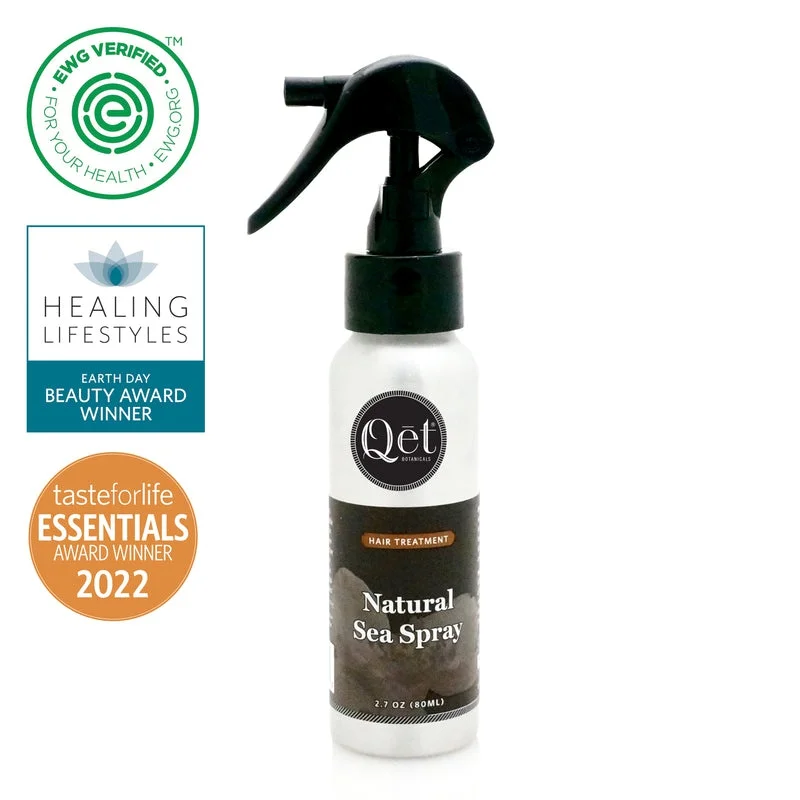
How well does your skin match with Qēt Botanicals Natural Sea Spray?
Login to see detailsOr continue via
Quick 1-minute survey • Completely free
Ingredients
Analysis results of Ingredients


Ingredient List
| EWG | CIR | Ingredient Name & Cosmetic Function | Notes |
|---|---|---|---|
| - | - | Distilled Water | |
| - | - | Maris Sal (Himalayan Pink Salt) | |
| 1 | - | | |
| - | - | |
Qēt Botanicals Natural Sea Spray - Ingredient Explanation
Distilled Water
Ingredient data is being updated. Please check back later.
Maris Sal (Himalayan Pink Salt)
Ingredient data is being updated. Please check back later.
Lavandula Angustifolia (Lavender) Flower Oil
1. Definition Lavandula Angustifolia (Lavender) Flower Oil:
Lavandula Angustifolia (Lavender) Flower Oil is an essential oil derived from the flowers of the Lavandula angustifolia plant. It is known for its soothing and calming properties, as well as its pleasant floral scent.2. Use:
Lavender Flower Oil is commonly used in cosmetics for its aromatic and therapeutic benefits. It is often added to skincare products such as lotions, creams, and serums for its calming and anti-inflammatory properties. Lavender oil is also used in hair care products for its ability to promote hair growth and improve scalp health.3. Usage Lavandula Angustifolia (Lavender) Flower Oil:
When using Lavender Flower Oil in cosmetics, it is important to dilute it properly as it is a highly concentrated essential oil. It is recommended to perform a patch test before using any products containing lavender oil to check for any potential allergic reactions. Avoid using lavender oil on broken skin or sensitive areas, and discontinue use if any irritation occurs.4. References:
- Bakkali, F., Averbeck, S., Averbeck, D., Idaomar, M. (2008). Biological effects of essential oils – A review. Food and Chemical Toxicology, 46(2), 446-475.
- Cavanagh, H. M. A., Wilkinson, J. M. (2002). Biological activities of Lavender essential oil. Phytotherapy Research, 16(4), 301-308.
- Koulivand, P. H., Khaleghi Ghadiri, M., Gorji, A. (2013). Lavender and the nervous system. Evidence-Based Complementary and Alternative Medicine, 2013, 681304.
Rosmarinus Officinalis (Rosemary) Flower Oil
1. Definition Rosmarinus Officinalis (Rosemary) Flower Oil:
Rosmarinus Officinalis (Rosemary) Flower Oil is an essential oil derived from the flowering tops of the rosemary plant through steam distillation. It is known for its aromatic, herbaceous fragrance and various skincare benefits.2. Use:
Rosemary Flower Oil is commonly used in cosmetics for its antioxidant, antimicrobial, and anti-inflammatory properties. It is often included in skincare products such as creams, lotions, and serums to help improve the overall health and appearance of the skin. Additionally, it is used in hair care products to promote hair growth, improve scalp health, and add shine to the hair.3. Usage Rosmarinus Officinalis (Rosemary) Flower Oil:
When using products containing Rosemary Flower Oil, it is important to perform a patch test first to check for any allergic reactions. It is recommended to dilute the essential oil with a carrier oil before applying it to the skin, as it can be irritating in its undiluted form. Avoid contact with the eyes and mucous membranes, and discontinue use if any adverse reactions occur.4. References:
- Peana AT, D'Aquila PS, Panin F, Serra G, Pippia P, Moretti MD. Anti-inflammatory activity of linalool and linalyl acetate constituents of essential oils. Phytomedicine. 2002;9(8):721-726. doi:10.1078/0944-7113-00176
- Moss M, Cook J, Wesnes K, Duckett P. Aromas of rosemary and lavender essential oils differentially affect cognition and mood in healthy adults. Int J Neurosci. 2003;113(1):15-38. doi:10.1080/00207450390161903
- Sienkiewicz M, Łysakowska M, Denys P, Kowalczyk E. The antimicrobial activity of thyme essential oil against multidrug resistant clinical bacterial strains. Microb Drug Resist. 2012;18(2):137-148. doi:10.1089/mdr.2011.0080
Review

Didn't find
the information you need?










Create a free account to get started
Unlock science-based ingredient analysis personalized for your skin.
Already have an account? Log in
We protect your privacy. We never send spam.