Ingredients
Analysis results of Ingredients


Ingredient List
| EWG | CIR | Ingredient Name & Cosmetic Function | Notes |
|---|---|---|---|
| 1 | - | (Solvent) | |
| 1 | - | (Skin Conditioning, Emollient) | |
| 1 | - | (Perfuming) | |
| 1 | A | (Viscosity Controlling, Antistatic Agent, Emulsion Stabilising, Binding Agent, Binding, Film Forming, Hair Fixing, Suspending Agent - Nonsurfactant) | |



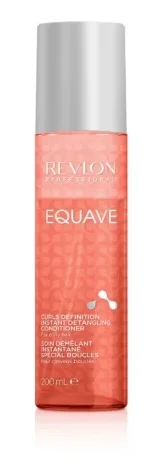
Revlon Equave Curls Definition Bi-phase Detangling Conditioner For Curly Hair - Ingredient Explanation
Aqua/Water/Eau
1. Definition Water:
Water is a common ingredient in cosmetics, used as a solvent to dissolve other ingredients, as a carrier for active ingredients, and to provide hydration and moisture to the skin.2. Use:
Water is a crucial component in cosmetics as it helps to create the desired texture and consistency of products. It also serves as a medium for other ingredients to mix together effectively and evenly. Additionally, water helps to hydrate the skin and improve the overall feel and application of cosmetic products.3. Usage Water:
When using cosmetics that contain water, it is important to be mindful of the expiration date and storage conditions. Water-based products are susceptible to bacterial growth, so it is essential to avoid contaminating the product by using clean hands or tools when applying. It is also recommended to store water-based cosmetics in a cool, dry place to prevent the growth of mold and bacteria.4. References:
- Draelos, Z. D. (2010). Cosmetic dermatology: products and procedures. John Wiley & Sons.
- Winter, R. (2009). A consumer's dictionary of cosmetic ingredients: complete information about the harmful and desirable ingredients found in cosmetics and cosmeceuticals. Crown.
- Begoun, P. (2003). Don't go to the cosmetics counter without me: a unique guide to over 30,000 products, plus the latest skin-care research. Beginning Press.
Undecane
1. Definition Undecane:
Undecane is a straight-chain hydrocarbon with the chemical formula C11H24. It is a colorless, odorless liquid that is commonly used as an ingredient in cosmetics for its emollient properties.2. Use:
Undecane is used in cosmetics as an emollient to soften and smooth the skin. It helps to hydrate the skin and improve its texture, making it a popular ingredient in moisturizers, lotions, and creams.3. Usage Undecane:
Undecane is typically used in cosmetics at concentrations ranging from 1% to 5%. It is considered safe for use on the skin, but as with any cosmetic ingredient, it is important to perform a patch test before using products containing undecane to check for any potential allergic reactions. It is also recommended to avoid using products containing undecane on broken or irritated skin.4. References:
- "Cosmetic Ingredient Review Expert Panel. Safety Assessment of Undecane and Tridecane as Used in Cosmetics." International Journal of Toxicology, vol. 33, no. 6, 2014, pp. 44S-50S.
- "Undecane." Cosmetics Info, www.cosmeticsinfo.org/ingredient/undecane.
- "Undecane." PubChem, pubchem.ncbi.nlm.nih.gov/compound/Undecane.
Tridecane
1. Definition Tridecane:
Tridecane is a hydrocarbon compound belonging to the alkane family, specifically a straight-chain alkane with 13 carbon atoms. It is a colorless, odorless liquid that is commonly used in cosmetics for its emollient properties.2. Use:
Tridecane is used in cosmetics as a solvent and emollient, helping to soften and smooth the skin. It is often found in skincare products such as creams, lotions, and serums, where it helps to improve the texture and feel of the product on the skin.3. Usage Tridecane:
Tridecane is typically used in cosmetics at low concentrations, ranging from 0.1% to 5% depending on the formulation. It is considered safe for use in cosmetics, but as with any ingredient, it is important to follow the recommended guidelines and precautions when using products containing tridecane. It is recommended to perform a patch test before using products with tridecane to check for any potential allergic reactions.4. References:
- National Center for Biotechnology Information. PubChem Compound Summary for CID 8154, Tridecane. Available online: https://pubchem.ncbi.nlm.nih.gov/compound/Tridecane
- Personal Care Council. Safety Assessment of Tridecane as Used in Cosmetics. Available online: https://cosmeticsinfo.org/ingredient/tridecane
- The European Commission. CosIng - Cosmetics Ingredients Database. Available online: https://ec.europa.eu/growth/tools-databases/cosing/
Pvp
1. Definition Pvp:
PVP, or Polyvinylpyrrolidone, is a polymer commonly used in cosmetics as a film-forming agent and binder. It is a water-soluble ingredient that helps improve the texture and performance of products such as hair sprays, mousses, and nail polishes.2. Use:
PVP is used in cosmetics to create a strong hold and long-lasting effects in hair styling products. It helps to keep styles in place and prevent frizz or flyaways. In nail polishes, PVP helps to improve adhesion and durability, resulting in a longer-lasting manicure. Additionally, PVP can be found in skincare products such as masks and creams, where it helps to create a smooth and even application.3. Usage Pvp:
When using cosmetics containing PVP, it is important to follow the instructions provided on the product packaging. Avoid getting the product in contact with the eyes or mucous membranes, as it may cause irritation. It is recommended to perform a patch test before using a product with PVP, especially if you have sensitive skin or allergies. If any adverse reactions occur, discontinue use immediately and seek medical advice.4. References:
- Korting, H. C., Schindler, S., Hartinger, A., Kerscher, M., & Angerpointner, T. (1990). PVP—A new and safe vehicle for the topical therapy of onychomycosis. Mycoses, 33(5), 265-269.
- Lademann, J., Jacobi, U., Surber, C., Weigmann, H. J., & Fluhr, J. W. (2008). The tape stripping procedure—evaluation of some critical parameters. European Journal of Pharmaceutics and Biopharmaceutics, 72(2), 317-323.
- Lupo, M. P., & Cole, A. L. (2007). Cosmeceutical peptides. Dermatologic therapy, 20(5), 343-349.
Review