Ingredients
Analysis results of Ingredients


Ingredient List
| EWG | CIR | Ingredient Name & Cosmetic Function | Notes |
|---|---|---|---|
| 1 | - | (Solvent) | |
| 1 | A | (Viscosity Controlling, Absorbent, Bulking Agent, Opacifying, Slip Modifier) | |
| 1 3 | - | (Emulsifying, Surfactant, Cleansing, Foaming) |   |
| 1 | A | (Solvent, Masking, Fragrance, Humectant, Skin Conditioning, Viscosity Controlling, Viscosity decreasing agents) |  |


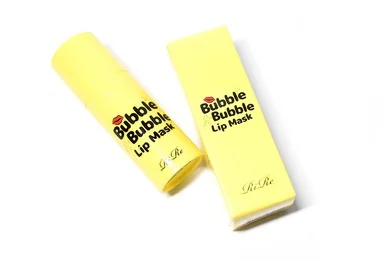
Rire Bubble Bubble Lip Mask - Ingredient Explanation
Water
1. Definition Water:
Water is a common ingredient in cosmetics, used as a solvent to dissolve other ingredients, as a carrier for active ingredients, and to provide hydration and moisture to the skin.2. Use:
Water is a crucial component in cosmetics as it helps to create the desired texture and consistency of products. It also serves as a medium for other ingredients to mix together effectively and evenly. Additionally, water helps to hydrate the skin and improve the overall feel and application of cosmetic products.3. Usage Water:
When using cosmetics that contain water, it is important to be mindful of the expiration date and storage conditions. Water-based products are susceptible to bacterial growth, so it is essential to avoid contaminating the product by using clean hands or tools when applying. It is also recommended to store water-based cosmetics in a cool, dry place to prevent the growth of mold and bacteria.4. References:
- Draelos, Z. D. (2010). Cosmetic dermatology: products and procedures. John Wiley & Sons.
- Winter, R. (2009). A consumer's dictionary of cosmetic ingredients: complete information about the harmful and desirable ingredients found in cosmetics and cosmeceuticals. Crown.
- Begoun, P. (2003). Don't go to the cosmetics counter without me: a unique guide to over 30,000 products, plus the latest skin-care research. Beginning Press.
Cellulose
1. Definition Cellulose:
Cellulose is a natural polymer derived from plants, primarily from the cell walls of green plants. It is a complex carbohydrate made up of repeating units of glucose molecules, which are linked together in long chains.2. Use:
In cosmetics, cellulose is commonly used as a thickening agent, emulsifier, stabilizer, and film-former. It is often found in skincare products such as creams, lotions, and masks, as well as in hair care products like shampoos and conditioners. Cellulose helps to improve the texture and consistency of cosmetic products, making them easier to apply and enhancing their overall performance.3. Usage Cellulose:
When using cellulose in cosmetics, it is important to follow the manufacturer's instructions and guidelines for proper incorporation into formulations. Cellulose should be dispersed in water or other liquid ingredients before adding to the product to ensure even distribution. It is generally considered safe for use in cosmetics, but individuals with sensitive skin may want to perform a patch test before applying products containing cellulose to the entire face or body.4. References:
- R. M. Silverstein, G. C. Bassler, and T. C. Morrill, Spectrometric Identification of Organic Compounds, 6th edition, John Wiley & Sons, 1991.
- C. S. Marvel, J. A. McClelland, and R. A. Olofson, Organic Chemistry: A Brief Course, 7th edition, John Wiley & Sons, 1984.
- J. Clayden, N. Greeves, and S. Warren, Organic Chemistry, 2nd edition, Oxford University Press, 2012.
Sodium Laureth Sulfate
1. Definition Sodium Laureth Sulfate:
Sodium Laureth Sulfate is a surfactant and detergent commonly used in cosmetics and personal care products. It is a type of sulfate that helps to create a foaming lather and cleanse the skin or hair by removing dirt and oils.2. Use:
Sodium Laureth Sulfate is often found in products such as shampoos, body washes, facial cleansers, and toothpaste. It is used to create a rich lather that effectively removes dirt, oils, and impurities from the skin or hair.3. Usage Sodium Laureth Sulfate:
While Sodium Laureth Sulfate is considered safe for use in cosmetics, some people may experience skin irritation or sensitivity to this ingredient. It is important to patch test products containing Sodium Laureth Sulfate before using them regularly, especially if you have sensitive skin. Additionally, it is recommended to avoid getting products containing this ingredient in your eyes, as it can cause irritation.4. References:
- National Center for Biotechnology Information. PubChem Compound Summary for CID 23665879, Sodium Laureth Sulfate. https://pubchem.ncbi.nlm.nih.gov/compound/Sodium-laureth-sulfate
- Environmental Working Group. Sodium Laureth Sulfate. https://www.ewg.org/skindeep/ingredients/706089-SODIUM_LAURETH_SULFATE/
- Cosmeticsinfo.org. Sodium Laureth Sulfate. http://cosmeticsinfo.org/ingredient/sodium-laureth-sulfate
Butylene Glycol
1. Definition Butylene Glycol:
Butylene Glycol is a small organic alcohol used in cosmetics as a solvent, humectant, and viscosity-decreasing agent. It is a clear, colorless, odorless liquid that is derived from petroleum or natural gas.2. Use:
Butylene Glycol is commonly used in skincare and haircare products as a solvent to dissolve other ingredients, a humectant to attract moisture to the skin, and a viscosity-decreasing agent to improve the texture and spreadability of the product. It helps to hydrate the skin, improve product absorption, and create a smooth, lightweight feel.3. Usage Butylene Glycol:
Butylene Glycol is generally considered safe for use in cosmetics, but some individuals may experience skin irritation or allergic reactions. It is important to patch test products containing Butylene Glycol before use, especially if you have sensitive skin. Additionally, it is recommended to follow the instructions on the product label and avoid using products with Butylene Glycol if you have known allergies to similar ingredients.4. References:
- Cosmetic Ingredient Review Expert Panel. (2001). Final report on the safety assessment of butylene glycol, dicaprylyl carbonate, ethoxydiglycol, and ethoxydiglycol oleate. International Journal of Toxicology, 20(Suppl 4), 61-75.
- National Center for Biotechnology Information. PubChem Compound Summary for CID 24856, Butylene Glycol. Retrieved from https://pubchem.ncbi.nlm.nih.gov/compound/Butylene-glycol
- Personal Care Products Council. (2017). Butylene Glycol. Retrieved from https://www.cosmeticsinfo.org/ingredient/butylene-glycol