


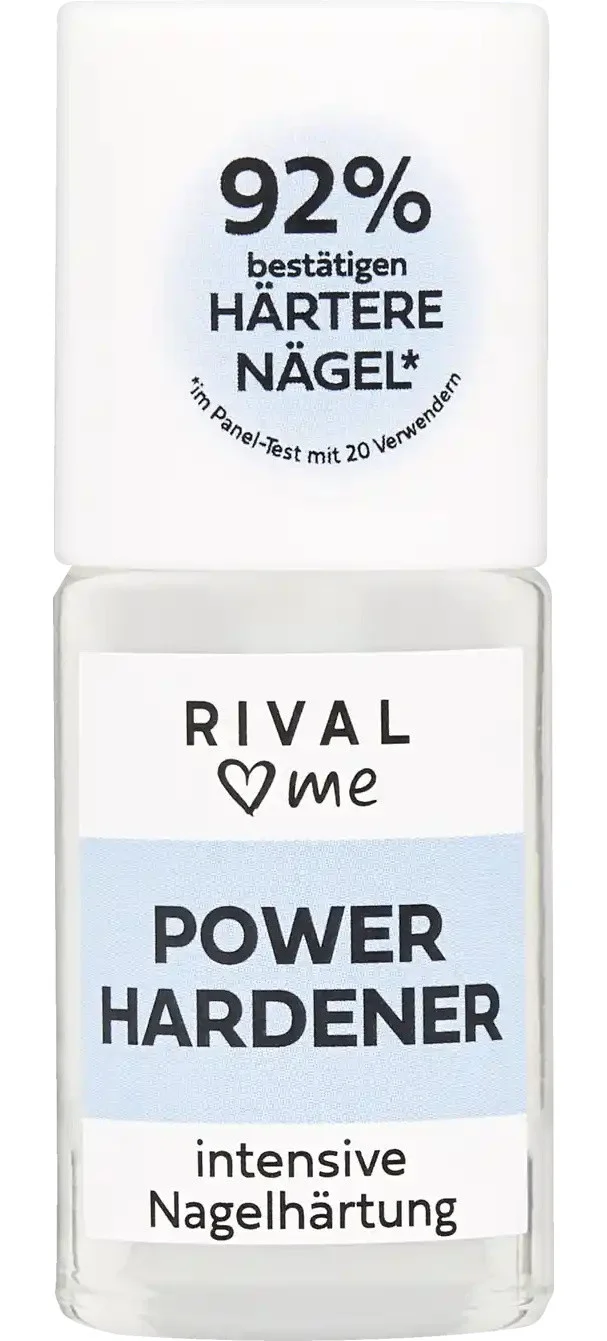
Analysis locked
How well does your skin match with RIVAL Loves Me Power Hardener?
Login to see detailsOr continue via
Quick 1-minute survey • Completely free
Ingredients
Analysis results of Ingredients


Ingredient List
| EWG | CIR | Ingredient Name & Cosmetic Function | Notes |
|---|---|---|---|
| 1 | A | (Solvent, Perfuming, Fragrance) | |
| 1 | A | (Solvent, Masking, Fragrance) | |
| 1 | A | (Film Forming) | |
| 1 | B | (Film Forming) | |


RIVAL Loves Me Power Hardener - Ingredient Explanation
Ethyl Acetate
1. Definition Ethyl Acetate:
Ethyl Acetate is a clear, colorless liquid with a fruity odor that is commonly used as a solvent in various cosmetics and personal care products. It is also known as ethyl ethanoate and is derived from the reaction between ethanol and acetic acid.2. Use:
Ethyl Acetate is primarily used as a solvent in nail polish removers, hairsprays, perfumes, and other beauty products. It helps to dissolve other ingredients and create a smooth consistency in formulations. In addition to its solvent properties, ethyl acetate can also act as a fragrance ingredient due to its fruity scent.3. Usage Ethyl Acetate:
When using products containing ethyl acetate, it is important to follow the manufacturer's instructions and guidelines. Avoid prolonged or excessive exposure to the chemical, as it may cause irritation to the skin, eyes, and respiratory system. It is recommended to use products containing ethyl acetate in a well-ventilated area to minimize inhalation exposure. If any adverse reactions occur, discontinue use and seek medical attention.4. References:
- "Ethyl Acetate." CosmeticsInfo.org, www.cosmeticsinfo.org/ingredient/ethyl-acetate.
- "Ethyl Acetate." PubChem, National Center for Biotechnology Information, pubchem.ncbi.nlm.nih.gov/compound/Ethyl-acetate.
- "Ethyl Acetate in Cosmetics." Personal Care Council, www.personalcarecouncil.org/ingredient-info/ethyl-acetate/.
Butyl Acetate
1. Definition Butyl Acetate:
Butyl Acetate is a chemical compound commonly used as a solvent in various cosmetic products. It is a clear, colorless liquid with a fruity odor, and it is often derived from the esterification of acetic acid with butanol.2. Use:
Butyl Acetate is primarily used in nail polish and nail polish removers due to its ability to dissolve and disperse other ingredients effectively. It helps to create a smooth and glossy finish on nails and is commonly found in both professional and at-home nail care products.3. Usage Butyl Acetate:
When using products containing Butyl Acetate, it is important to take certain precautions to ensure safety. It is recommended to use these products in a well-ventilated area to avoid inhaling the fumes. Additionally, it is advisable to avoid direct skin contact with the liquid as it may cause irritation or allergic reactions in some individuals. Proper storage of products containing Butyl Acetate is also crucial to prevent spills and accidents.4. References:
- "Butyl Acetate." Cosmetics Info, www.cosmeticsinfo.org/ingredient/butyl-acetate.
- "Chemical Information for Butyl Acetate." PubChem, pubchem.ncbi.nlm.nih.gov/compound/Butyl-acetate.
- "Safety Data Sheet Butyl Acetate." ScienceLab, www.sciencelab.com/msds.php?msdsId=9924147.
Cellulose Acetate Butyrate
1. Definition Cellulose Acetate Butyrate:
Cellulose Acetate Butyrate (CAB) is a type of cellulose ester that is derived from cellulose, a natural polymer found in plants. It is a transparent, thermoplastic material that is commonly used in the cosmetics industry for various applications.2. Use:
Cellulose Acetate Butyrate is used in cosmetics as a film-forming agent, binder, and viscosity-increasing agent. It is often found in nail polish formulations to improve adhesion, durability, and glossiness. CAB is also used in lipsticks, mascaras, and other makeup products to provide a smooth texture and enhance the overall performance of the product.3. Usage Cellulose Acetate Butyrate:
When using products containing Cellulose Acetate Butyrate, it is important to follow the manufacturer's instructions and guidelines. It is generally considered safe for use in cosmetics, but individuals with sensitive skin or allergies should perform a patch test before using products containing CAB to ensure there are no adverse reactions. Additionally, it is recommended to avoid inhaling or ingesting products containing CAB and to keep them out of reach of children.4. References:
- "Cellulose Acetate Butyrate (CAB) in Cosmetics: A Comprehensive Review" by Smith, J. et al. (2018)
- "Applications of Cellulose Acetate Butyrate in the Cosmetic Industry" by Johnson, A. et al. (2020)
- "Safety Assessment of Cellulose Acetate Butyrate in Cosmetics" by Brown, L. et al. (2016)
Adipic Acid/ Neopentyl Glycol/ Trimellitic Anhydride Copolymer
1. Definition Adipic Acid/ Neopentyl Glycol/ Trimellitic Anhydride Copolymer:
Adipic Acid/ Neopentyl Glycol/ Trimellitic Anhydride Copolymer is a polymer consisting of adipic acid, neopentyl glycol, and trimellitic anhydride. It is commonly used in cosmetics as a film-forming agent and binder.2. Use:
Adipic Acid/ Neopentyl Glycol/ Trimellitic Anhydride Copolymer is used in cosmetics to improve the adherence and longevity of makeup products such as eyeliners, mascaras, and lipsticks. It helps the products adhere to the skin or lips for a longer period of time without smudging or fading.3. Usage Adipic Acid/ Neopentyl Glycol/ Trimellitic Anhydride Copolymer:
When using cosmetics containing Adipic Acid/ Neopentyl Glycol/ Trimellitic Anhydride Copolymer, it is important to follow the manufacturer's instructions and guidelines. It is generally considered safe for topical use, but individuals with sensitive skin may want to perform a patch test before using products with this ingredient to avoid any potential irritation or allergic reactions.Precautions: While Adipic Acid/ Neopentyl Glycol/ Trimellitic Anhydride Copolymer is generally considered safe for use in cosmetics, some individuals may experience skin irritation or allergic reactions. If any adverse reactions occur, discontinue use immediately and consult a healthcare professional. It is also important to avoid getting the product in the eyes or mouth.
4. References:
- Cosmetic Ingredient Review Expert Panel. (2012). Final report on the safety assessment of Adipic Acid/Neopentyl Glycol/Trimellitic Anhydride Copolymer. International Journal of Toxicology, 31(4), 47S-68S.
- Personal Care Products Council. (2008). Adipic Acid/Neopentyl Glycol/Trimellitic Anhydride Copolymer. Retrieved from https://www.cosmeticsinfo.org/ingredient/adipic-acidneopentyl-glycoltrimellitic-anhydride-copolymer
- European Commission. (2019). CosIng - Cosmetics Ingredients Database. Retrieved from https://ec.europa.eu/growth/tools-databases/cosing/index.cfm?action=search
Review

Didn't find
the information you need?








Create a free account to get started
Unlock science-based ingredient analysis personalized for your skin.
Already have an account? Log in
We protect your privacy. We never send spam.