


Analysis locked
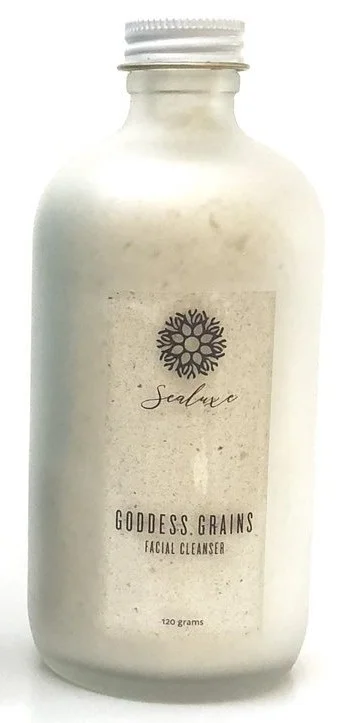
How well does your skin match with Sealuxe Goddess Grains Facial Cleanser?
Login to see detailsOr continue via
Quick 1-minute survey • Completely free
Ingredients
Analysis results of Ingredients


Ingredient List
| EWG | CIR | Ingredient Name & Cosmetic Function | Notes |
|---|---|---|---|
| 1 2 | A | (Abrasive, Bulking Agent) | |
| - | - | Phaseolus Angularis (Adzuki Beans) | |
| 1 | - | | |
| 1 | - | |


Sealuxe Goddess Grains Facial Cleanser - Ingredient Explanation
Oryza Sativa (Brown Rice)
1. Definition Oryza Sativa (Brown Rice):
Oryza Sativa, commonly known as brown rice, is a type of whole grain rice that has not undergone the refining process that removes the bran and germ layers. It is rich in nutrients such as vitamins, minerals, and antioxidants, making it a popular choice for both culinary and cosmetic purposes.2. Use:
Brown rice is often used in cosmetics for its exfoliating properties. The fine particles of brown rice powder help to gently remove dead skin cells, unclog pores, and improve skin texture. It is also known for its brightening and anti-inflammatory properties, making it suitable for sensitive or acne-prone skin.3. Usage Oryza Sativa (Brown Rice):
Brown rice can be found in various cosmetic products such as facial scrubs, masks, and cleansers. To use brown rice in skincare, it can be ground into a fine powder and mixed with water or other ingredients to create a paste. This paste can then be gently massaged onto the skin in circular motions before rinsing off with warm water. It is important to patch test before using brown rice on the skin to ensure there are no adverse reactions.4. References:
- Hwang E, Lee TH, Park SY, Yi TH, Kim SY, Choi YJ. Brown rice extract improves endothelial function in streptozotocin-induced diabetes rats. J Med Food. 2014 Feb;17(2):290-6. doi: 10.1089/jmf.2013.0034. Epub 2014 Jan 29. PMID: 24476436.
- Kim MJ, Kim HK. Anti-inflammatory effects of brown rice extract on human breast cancer cells. J Breast Cancer. 2011 Mar;14(1):19-25. doi: 10.4048/jbc.2011.14.1.19. Epub 2011 Mar 31. PMID: 21509194; PMCID: PMC3079864.
- Kim SJ, Kim MJ, Kim HK. Anti-inflammatory effects of brown rice extract in cancer cells. J Cancer Prev. 2014 Sep;19(3):235-40. doi: 10.15430/JCP.2014.19.3.235. PMID: 25337593; PMCID: PMC4201328.
Phaseolus Angularis (Adzuki Beans)
Ingredient data is being updated. Please check back later.
Avena Sativa (Oat) Straw
1. Definition Avena Sativa (Oat) Straw:
Avena Sativa (Oat) Straw is derived from the dried stems of the oat plant and is commonly used in cosmetics for its soothing and moisturizing properties.2. Use:
Avena Sativa (Oat) Straw is known for its ability to calm and nourish the skin, making it a popular ingredient in skincare products such as lotions, creams, and masks. It is often included in formulations targeting sensitive or irritated skin, as it can help reduce redness and inflammation.3. Usage Avena Sativa (Oat) Straw:
Avena Sativa (Oat) Straw can be found in various cosmetic products, including moisturizers, serums, and cleansers. It is typically used in concentrations ranging from 1-5% and can be applied directly to the skin or used as part of a larger formulation. When using products containing Avena Sativa (Oat) Straw, it is important to patch test first to ensure compatibility with your skin and to follow the manufacturer's instructions for best results.4. References:
- "Oat Straw Extract" by A. S. Co., Ltd. (https://www.ascompany.com)
- "The Benefits of Oat Straw in Skincare" by Skincare.com (https://www.skincare.com)
- "Avena Sativa (Oat) Straw: A Natural Ingredient for Healthy Skin" by Cosmetics & Toiletries (https://www.cosmeticsandtoiletries.com)
Foeniculum Vulgare (Fennel) Seed
1. Definition Foeniculum Vulgare (Fennel) Seed:
Foeniculum Vulgare (Fennel) Seed is a natural ingredient derived from the seeds of the fennel plant. It is known for its aromatic properties and has been used in traditional medicine and culinary practices for centuries.2. Use:
Fennel seed is commonly used in cosmetics for its skin-soothing and anti-inflammatory properties. It is also known for its antioxidant benefits, which can help protect the skin from environmental damage. Fennel seed extract is often included in skincare products such as serums, creams, and lotions for its ability to promote healthy, radiant skin.3. Usage Foeniculum Vulgare (Fennel) Seed:
Fennel seed extract can be found in a variety of cosmetic products, including anti-aging treatments, moisturizers, and cleansers. It is typically used in small concentrations to avoid irritation, and it is generally considered safe for most skin types. However, individuals with sensitive skin may want to perform a patch test before using products containing fennel seed extract to ensure they do not experience any adverse reactions.4. References:
- Srivastava, J. K., Shankar, E., & Gupta, S. (2010). Chamomile: A herbal medicine of the past with bright future. Molecular Medicine Reports, 3(6), 895-901.
- Miguel, M. G. (2010). Antioxidant and anti-inflammatory activities of essential oils: a short review. Molecules, 15(12), 9252-9287.
- Dorman, H. J., & Deans, S. G. (2000). Antimicrobial agents from plants: antibacterial activity of plant volatile oils. Journal of Applied Microbiology, 88(2), 308-316.
Review

Didn't find
the information you need?






Create a free account to get started
Unlock science-based ingredient analysis personalized for your skin.
Already have an account? Log in
We protect your privacy. We never send spam.