


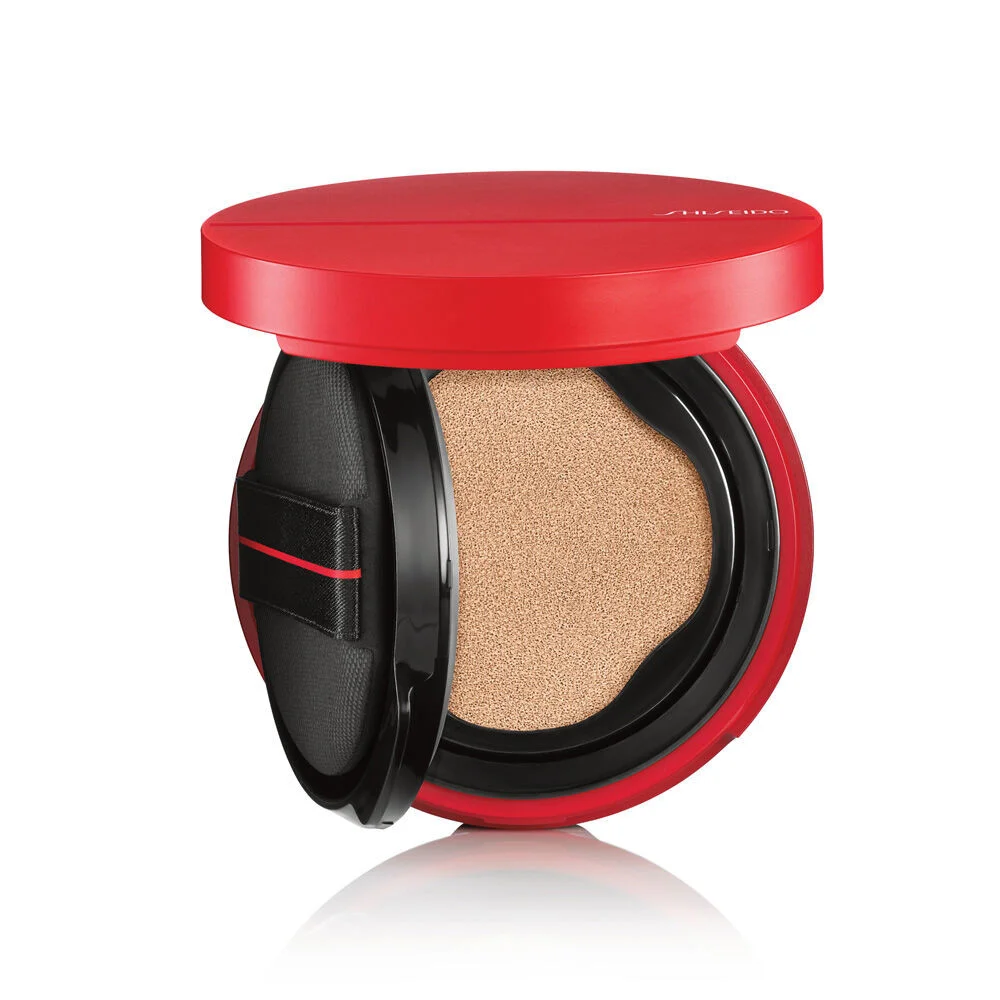
Analysis locked
How well does your skin match with Shiseido Synchro Skin Glow Cushion Compact Synchro Skin Glow Cushion Compact?
Login to see detailsOr continue via
Quick 1-minute survey • Completely free
Ingredients
Analysis results of Ingredients


Ingredient List
| EWG | CIR | Ingredient Name & Cosmetic Function | Notes |
|---|---|---|---|
| 1 | - | (Solvent) | |
| 8 | - | (Masking, Perfuming, Deodorant) |  Fragrance-free Fragrance-free |
| 1 2 | A | (Solvent, Perfuming, Fragrance, Humectant, Viscosity Decreasing Agent, Hair Conditioning, Skin Protecting, Denaturant ) |  Good for dry skin Moisturizing Good for dry skin Moisturizing |
| 2 4 | A | (Fragrance, Preservative) | |
| 2 | - | (Colorant, Cosmetic Colorant) | |
| 2 | - | (Cosmetic Colorant, Opacifying) | |
| 1 3 | A | (Skin Protecting, Skin Conditioning, Emollient, Antifoaming Agent) |  Silicone Moisturizing Silicone Moisturizing |
| 2 | A | (Deodorant, Skin Conditioning) | |
| 1 | A | (Solvent, Masking, Fragrance, Humectant, Skin Conditioning, Viscosity Controlling, Viscosity decreasing agents) | Good for dry skin |
| 1 | A | (Masking, Fragrance, Emulsion Stabilising, Emulsifying, Sufactant, Refatting) |  Bad for oily skin Bad for oily skin  Fungal Acne Trigger Cleansing Fungal Acne Trigger Cleansing |
| 5 8 | A | (Skin Protecting, Opacifying, Abrasive, Absorbent, Bulking Agent, Anticaking Agent, Slip Modifier) | Moisturizing |
| 1 | A | (Viscosity Controlling, Stabilising) | |
| 1 | A | (Viscosity Controlling, Abrasive, Bulking Agent, Viscosity Increasing Agent, Emulsion Stabilising, Binding Agent, Film Forming, Adhesive) | |
| 1 | B | (Skin Conditioning, Perfuming, Emollient, Fragrance) | Bad for oily skin Fungal Acne Trigger |
| 1 2 | - | (Skin Conditioning, Emollient, Antistatic Agent, Emulsifying, Surfactant) | Cleansing |
| 1 | - | (Binding Agent, Binding) | |
| 1 | A | (Humectant, Skin Protecting, Opacifying, Emollient, Viscosity Controlling) | Moisturizing |
| 2 | A | (Opacifying, Viscosity Controlling, Abrasive, Absorbent, Bulking Agent, Anticaking Agent) | |
| 1 | A | (Solvent, Skin Conditioning) | |
| 1 2 | A | (Solvent, Masking, Fragrance, Viscosity Decreasing Agent, Viscosity Controlling) | |
| 1 | B | (Solvent, Perfuming, Fragrance, Skin Conditioning, Emollient, Binding Agent, Binding) | Bad for oily skin Fungal Acne Trigger |
| 1 | A | (Viscosity Controlling, Emulsion Stabilising, Hair Fixing, Suspending Agent - Nonsurfactant, Viscosity Increasingagent - Nonaqueous) | |
| 1 | - | (Emulsifying, Suspending Agent - Nonsurfactant) | Cleansing |
| 1 | B | (Hair Conditioning, Skin Conditioning, Viscosity Controlling) | |
| 3 | A | (Skin Conditioning, Hair Conditioning) | |
| 1 | A | (Film Forming) | |
| 1 | A | (Viscosity Controlling, Absorbent, Bulking Agent, Opacifying, Slip Modifier) | |
| 1 | - | (Solvent, Hair Conditioning, Skin Conditioning) | |
| 1 | A | (Binding Agent, Binding, Emulsifying) | Fungal Acne Trigger Cleansing |
| 3 | A | (Skin Conditioning, Surfactant, Hair Conditioning) | Cleansing |
| 2 | - | (Skin Conditioning, Antifoaming Agent) | |
| 5 6 | B | (pH adjusting agent, pH adjusting agent) | |
| 1 | - | (Hair Conditioning, Skin Conditioning, Antifoaming Agent) | |
| 1 | - | (Humectant) | |
| 1 | - | (Masking, Perfuming, Fragrance, Emulsifying) | Cleansing |
| 1 | - | (Antioxidant) | |
| 1 2 | B | (pH adjusting agent) | |
| 1 | - | (Binding) | |
| 1 | - | Good for dry skin Anti Aging | |
| 4 | - | (Uv Absorber, Uv Filter) | UV Protection |
| 1 2 | A | (Opacifying, Viscosity Controlling, Abrasive, Absorbent, Bulking Agent, Anticaking Agent) | |
| 6 | - | (Uv Absorber, Uv Filter) | UV Protection  Bad for sensitive skin Fragrance-free Bad for sensitive skin Fragrance-free |
| 3 | A | (Film Forming, Opacifying) | |
| - | - | | |
| 1 | - | (Film Forming) | |
| - | - | |
Shiseido Synchro Skin Glow Cushion Compact Synchro Skin Glow Cushion Compact - Ingredient Explanation
Water
1. Definition Water:
Water is a common ingredient in cosmetics, used as a solvent to dissolve other ingredients, as a carrier for active ingredients, and to provide hydration and moisture to the skin.2. Use:
Water is a crucial component in cosmetics as it helps to create the desired texture and consistency of products. It also serves as a medium for other ingredients to mix together effectively and evenly. Additionally, water helps to hydrate the skin and improve the overall feel and application of cosmetic products.3. Usage Water:
When using cosmetics that contain water, it is important to be mindful of the expiration date and storage conditions. Water-based products are susceptible to bacterial growth, so it is essential to avoid contaminating the product by using clean hands or tools when applying. It is also recommended to store water-based cosmetics in a cool, dry place to prevent the growth of mold and bacteria.4. References:
- Draelos, Z. D. (2010). Cosmetic dermatology: products and procedures. John Wiley & Sons.
- Winter, R. (2009). A consumer's dictionary of cosmetic ingredients: complete information about the harmful and desirable ingredients found in cosmetics and cosmeceuticals. Crown.
- Begoun, P. (2003). Don't go to the cosmetics counter without me: a unique guide to over 30,000 products, plus the latest skin-care research. Beginning Press.
Fragrance
1. Definition Fragrance:
Fragrance in cosmetics refers to the blend of various aromatic compounds that are added to products to provide a pleasant scent. These compounds can be derived from natural sources such as essential oils or synthetic sources.
2. Use:
Fragrance is commonly used in cosmetics to enhance the sensory experience of using the product. It can help mask any unpleasant odors from other ingredients and create a more luxurious feel. Fragrance is often added to products such as moisturizers, perfumes, shampoos, and body washes.
3. Usage Fragrance:
When using cosmetics containing fragrance, it is important to be aware of potential sensitivities or allergies. Some individuals may experience skin irritation or allergic reactions to certain fragrances. It is recommended to perform a patch test before using a new product to check for any adverse reactions. Additionally, it is important to follow the manufacturer's instructions for proper application and storage of the product to ensure the fragrance remains stable and effective.
4. References:
- Steinemann, A. (2019). Fragranced consumer products: exposures and effects from emissions. Air Quality, Atmosphere & Health, 12(6), 643-645.
- Lachenmeier, D. W., & Haltner, E. (2019). Fragrance allergens in household cleaning products. Environmental Science and Pollution Research, 26(15), 15145-15147.
- Basketter, D. A., & Angelini, G. (2019). Fragrance allergens in fine fragrances and cosmetics. Contact Dermatitis, 80(3), 145-147.
Glycerin
1. Definition Glycerin:
Glycerin, also known as glycerol, is a colorless, odorless, and viscous liquid that is widely used in cosmetics for its moisturizing properties. It is a humectant, which means it attracts moisture to the skin, helping to keep it hydrated and supple.
2. Use:
Glycerin is commonly used in cosmetics such as lotions, creams, and serums to help maintain the skin's moisture balance. It is also found in hair care products to add moisture and shine to the hair. Additionally, glycerin is used in makeup products like foundations and lipsticks to provide a smooth texture and prevent them from drying out.
3. Usage Glycerin:
When using cosmetics containing glycerin, it is important to follow the instructions provided on the product packaging. Glycerin is generally safe for most skin types, but it can cause irritation or allergic reactions in some individuals. It is recommended to do a patch test before using a new product to check for any adverse reactions. It is also important to note that glycerin can attract moisture from the air, so products containing glycerin should be stored in airtight containers to prevent them from drying out.
4. References:
- Draelos, Z. D. (2010). Cosmetic Formulation of Skin Care Products. John Wiley & Sons.
- Loden, M., & Maibach, H. I. (2006). Dry Skin and Moisturizers: Chemistry and Function. CRC Press.
- Winter, R. (2009). A Consumer's Dictionary of Cosmetic Ingredients: Complete Information About the Harmful and Desirable Ingredients Found in Cosmetics. Harmony.
Phenoxyethanol
1. Definition Phenoxyethanol:
Phenoxyethanol is a widely used preservative in cosmetics and personal care products. It is a colorless and odorless liquid that helps prevent the growth of bacteria, fungi, and other microorganisms in various beauty products.2. Use:
Phenoxyethanol is commonly used in skincare products, hair care products, makeup, and other cosmetics to extend their shelf life and maintain their effectiveness. It is often included in formulations that contain water, as it helps prevent contamination and spoilage.3. Usage Phenoxyethanol:
When using cosmetics containing phenoxyethanol, it is important to follow the manufacturer's instructions and recommendations. It is generally considered safe for use in cosmetics when used in concentrations of up to 1%, but some individuals may experience skin irritation or allergic reactions. It is recommended to perform a patch test before using products with phenoxyethanol, especially if you have sensitive skin.4. References:
- Draelos, Z. D. (2010). Cosmetic Formulation of Skin Care Products. John Wiley & Sons.
- Loden, M., & Maibach, H. I. (2000). Dry Skin and Moisturizers: Chemistry and Function. CRC Press.
- Fiume, M. M., Heldreth, B., Bergfeld, W. F., Belsito, D. V., Hill, R. A., Klaassen, C. D., ... & Andersen, F. A. (2016). Safety assessment of phenoxyethanol as used in cosmetics. International Journal of Toxicology, 35(4), 386-419.
Iron Oxides
1. Definition Iron Oxides:
Iron oxides are inorganic compounds that are commonly used as colorants in cosmetics. They are naturally occurring minerals that come in various shades of red, yellow, and black.2. Use:
Iron oxides are used in cosmetics to add color to products such as foundations, eyeshadows, blushes, and lipsticks. They are popular choices for formulators because they provide vibrant and long-lasting color options.3. Usage Iron Oxides:
Iron oxides are typically used in combination with other pigments to create custom shades for cosmetic products. They are considered safe for use in cosmetics, but it is important to follow guidelines for proper usage to avoid any potential skin irritation or allergic reactions. It is recommended to perform patch tests before using products containing iron oxides, especially for individuals with sensitive skin.4. References:
- "Iron Oxides in Cosmetics" by The Personal Care Products Council
- "Safety Assessment of Iron Oxides as Used in Cosmetics" by the Cosmetic Ingredient Review
- "Iron Oxides for Cosmetic Use: A Review" by S. B. Chavan and A. R. Bhamare
Mica
1. Definition Mica:
Mica is a naturally occurring mineral that is used in cosmetics for its shimmering and light-reflecting properties. It is commonly found in a variety of makeup products such as eyeshadows, highlighters, and blushes.2. Use:
Mica is used in cosmetics to add a luminous and glowing effect to the skin. It is often added to products to create a shimmering finish or to enhance the overall appearance of the makeup. Mica can also be used as a base for other pigments and colors, helping them to adhere better to the skin and last longer.3. Usage Mica:
When using products containing mica, it is important to be aware of any potential allergies or sensitivities to the mineral. Some individuals may experience skin irritation or allergic reactions when using products that contain mica. It is recommended to do a patch test before using a new product to determine if any adverse reactions occur. Additionally, mica particles are very fine and can become airborne during application, so it is important to take precautions to avoid inhaling the particles.4. References:
- "Mica in Cosmetics" by FDA: https://www.fda.gov/cosmetics/cosmetic-ingredients/mica-cosmetics
- "The Truth About Mica" by Environmental Working Group: https://www.ewg.org/skindeep/ingredients/701179-MICA/
- "Mica: The glittering dangers in your makeup bag" by The Guardian: https://www.theguardian.com/sustainable-business/2014/jul/24/mica-electronics-cosmetics-india-child-labour-minerals
Dimethicone
1. Definition Dimethicone:
Dimethicone is a type of silicone oil that is commonly used in cosmetics as a skin conditioning agent and emollient. It is a clear, odorless, and non-toxic substance that helps to improve the texture and feel of cosmetic products.2. Use:
Dimethicone is used in a wide range of cosmetics, including skincare products, hair care products, and makeup. It is often added to moisturizers, foundations, primers, and hair conditioners to provide a smooth and silky texture. Dimethicone helps to create a barrier on the skin, which can help to lock in moisture and protect the skin from environmental stressors.3. Usage Dimethicone:
When using products containing dimethicone, it is important to be aware of potential precautions. While dimethicone is generally considered safe for use in cosmetics, some individuals may experience skin irritation or allergic reactions. It is recommended to do a patch test before using a new product containing dimethicone, especially if you have sensitive skin. Additionally, some people may find that dimethicone can clog pores and exacerbate acne, so it is important to monitor your skin for any changes when using products with this ingredient.4. References:
- Lanigan, R. S., & Yamarik, T. A. (2002). Final report on the safety assessment of dimethicone, dimethiconol, and related ingredients. International journal of toxicology, 21(1), 7-41.
- Draelos, Z. D. (2010). Cosmetic vehicle efficacy. Dermatologic therapy, 23(4), 314-317.
- Fiume, M. M., Bergfeld, W. F., Belsito, D. V., Hill, R. A., Klaassen, C. D., Liebler, D., ... & Andersen, F. A. (2016). Safety assessment of dimethicone crosspolymers as used in cosmetics. International journal of toxicology, 35(1_suppl), 5S-24S.
Ethylhexylglycerin
1. Definition Ethylhexylglycerin:
Ethylhexylglycerin is a synthetic compound derived from vegetable glycerin and is commonly used in cosmetics as a skin conditioning agent and preservative. It is a clear, colorless liquid with a faint odor.2. Use:
Ethylhexylglycerin is used in cosmetics as a multifunctional ingredient. It acts as a skin conditioning agent, moisturizer, and preservative. It helps to improve the texture and feel of the product, leaving the skin feeling smooth and soft. Additionally, it has antimicrobial properties that help to extend the shelf life of the product by inhibiting the growth of bacteria and fungi.3. Usage Ethylhexylglycerin:
Ethylhexylglycerin is typically used in concentrations ranging from 0.1% to 1% in cosmetic formulations. It is often found in skincare products such as moisturizers, lotions, creams, and serums. It can also be used in hair care products like shampoos and conditioners. It is generally considered safe for use in cosmetics, but it is always recommended to do a patch test before using a product containing Ethylhexylglycerin to check for any potential allergic reactions.4. References:
- "Ethylhexylglycerin." Cosmetics Info, www.cosmeticsinfo.org/ingredient/ethylhexylglycerin.
- "Safety Assessment of Ethylhexylglycerin as Used in Cosmetics." Cosmetic Ingredient Review, www.cir-safety.org/sites/default/files/ethylhexylg012017rep.pdf.
- "Ethylhexylglycerin." Truth In Aging, www.truthinaging.com/ingredients/ethylhexylglycerin.
Butylene Glycol
1. Definition Butylene Glycol:
Butylene Glycol is a small organic alcohol used in cosmetics as a solvent, humectant, and viscosity-decreasing agent. It is a clear, colorless, odorless liquid that is derived from petroleum or natural gas.2. Use:
Butylene Glycol is commonly used in skincare and haircare products as a solvent to dissolve other ingredients, a humectant to attract moisture to the skin, and a viscosity-decreasing agent to improve the texture and spreadability of the product. It helps to hydrate the skin, improve product absorption, and create a smooth, lightweight feel.3. Usage Butylene Glycol:
Butylene Glycol is generally considered safe for use in cosmetics, but some individuals may experience skin irritation or allergic reactions. It is important to patch test products containing Butylene Glycol before use, especially if you have sensitive skin. Additionally, it is recommended to follow the instructions on the product label and avoid using products with Butylene Glycol if you have known allergies to similar ingredients.4. References:
- Cosmetic Ingredient Review Expert Panel. (2001). Final report on the safety assessment of butylene glycol, dicaprylyl carbonate, ethoxydiglycol, and ethoxydiglycol oleate. International Journal of Toxicology, 20(Suppl 4), 61-75.
- National Center for Biotechnology Information. PubChem Compound Summary for CID 24856, Butylene Glycol. Retrieved from https://pubchem.ncbi.nlm.nih.gov/compound/Butylene-glycol
- Personal Care Products Council. (2017). Butylene Glycol. Retrieved from https://www.cosmeticsinfo.org/ingredient/butylene-glycol
Stearic Acid
1. Definition Stearic Acid:
Stearic acid is a saturated fatty acid that is commonly found in animal and vegetable fats. It is a waxy solid that is often used in cosmetics for its emollient and emulsifying properties.2. Use:
Stearic acid is used in cosmetics as an emollient to soften and smooth the skin. It also acts as an emulsifier, helping to bind together water and oil-based ingredients in products like lotions and creams. Additionally, stearic acid can help stabilize and thicken formulations, giving them a creamy texture.3. Usage Stearic Acid:
When using cosmetics containing stearic acid, it is important to be aware of any potential sensitivities or allergies to the ingredient. Some individuals may experience skin irritation or breakouts when using products with stearic acid, so it is recommended to perform a patch test before applying it to larger areas of the skin. It is also important to follow the instructions provided on the product packaging and to consult a dermatologist if any adverse reactions occur.4. References:
- Pumori Saokar Telang, Ashish Gupta, and Nidhi Choudhary. (2016). Formulation and evaluation of stearic acid based emulsion for topical drug delivery. International Journal of Pharmaceutical Sciences and Research.
- M. C. Gohel, S. P. Amin, and M. J. B. Shah. (2008). Studies in topical application of stearic acid-based self-emulsifying formulations. Drug Development and Industrial Pharmacy.
- A. J. Ogunjimi, J. A. Akin-Ajani, and O. A. Odeku. (2016). Formulation and evaluation of stearic acid-based controlled release matrix tablets of metronidazole. Tropical Journal of Pharmaceutical Research.
Talc
1. Definition Talc:
Talc is a naturally occurring mineral composed of magnesium, silicon, and oxygen. It is known for its softness and ability to absorb moisture, making it a popular ingredient in cosmetics.2. Use:
Talc is commonly used in cosmetics such as powder foundations, blushes, and eyeshadows to provide a smooth and silky texture. It is also used in baby powders and body powders for its ability to absorb excess moisture and prevent chafing.3. Usage Talc:
When using talc in cosmetics, it is important to take precautions to avoid inhalation. Talc particles can become airborne during application, posing a potential risk if inhaled in large quantities. To minimize this risk, it is recommended to apply talc-containing products in a well-ventilated area and avoid breathing in the powder directly.4. References:
- "Talc: What it is and how it is used in cosmetics." American Academy of Dermatology. https://www.aad.org/public/everyday-care/skin-care-secrets/routine/talc
- "Talc." U.S. Food and Drug Administration. https://www.fda.gov/cosmetics/cosmetic-ingredients/talc
- "Talc." Environmental Working Group. https://www.ewg.org/skindeep/ingredients/706401-talc/
Disteardimonium Hectorite
1. Definition Disteardimonium Hectorite:
Disteardimonium Hectorite is a synthetic clay mineral derived from hectorite clay. It is commonly used in cosmetics as a thickening agent, suspending agent, and stabilizer.2. Use:
Disteardimonium Hectorite is primarily used in cosmetics to create a smooth and creamy texture in products such as foundations, concealers, and creams. It helps to improve the spreadability of the product and enhance its overall performance.3. Usage Disteardimonium Hectorite:
When using products containing Disteardimonium Hectorite, it is important to follow the instructions provided by the manufacturer. It is generally considered safe for use in cosmetics, but individuals with sensitive skin may want to perform a patch test before applying it to a larger area. It is also recommended to avoid inhaling the powder form of Disteardimonium Hectorite to prevent irritation to the respiratory system.4. References:
- "Safety Assessment of Disteardimonium Hectorite as Used in Cosmetics" by the Cosmetic Ingredient Review Expert Panel
- "Evaluation of the Skin Irritation Potential of Disteardimonium Hectorite" by the Journal of Cosmetic Science
- "Formulation and Characterization of Disteardimonium Hectorite-Based Cosmetic Products" by the International Journal of Cosmetic Science
Polyethylene
1. Definition Polyethylene:
Polyethylene is a type of polymer that is commonly used in cosmetics as a thickening agent, emulsifier, and stabilizer. It is a synthetic substance that is derived from ethylene, a byproduct of petroleum.2. Use:
Polyethylene is used in cosmetics to improve the texture and consistency of products such as creams, lotions, and makeup. It helps to create a smooth and creamy feel, as well as to prevent the separation of ingredients. Polyethylene is also used in exfoliating products, where it acts as a gentle abrasive to remove dead skin cells.3. Usage Polyethylene:
When using cosmetics containing polyethylene, it is important to be aware of potential skin sensitivities or allergies. Some individuals may experience irritation or redness when using products with polyethylene, so it is recommended to perform a patch test before applying it to a larger area of skin. Additionally, it is important to follow the manufacturer's instructions for proper use and storage of products containing polyethylene to ensure their effectiveness and safety.4. References:
- Lefebvre MA, Pham DM, Boussouira B, Bernard D, Camus C, Nguyen QL. Evaluation of the impact of low-pH cleansers on skin. Int J Cosmet Sci. 2015;37(5):491-498.
- Loden M, Buraczewska I, Edlund F. Irritation potential of a cleanser: human and animal model studies. Contact Dermatitis. 2001;44(5):297-303.
- Draelos ZD. The science behind skin care: Cleansers. J Cosmet Dermatol. 2018;17(4):412-416.
Ethylhexyl Palmitate
1. Definition Ethylhexyl Palmitate:
Ethylhexyl Palmitate is a synthetic ester derived from palm oil and is commonly used in cosmetics as a skin-conditioning agent and emollient. It is a clear, colorless liquid with a light, non-greasy texture.2. Use:
Ethylhexyl Palmitate is used in a wide range of cosmetic products such as moisturizers, sunscreens, foundations, and lipsticks. It helps to improve the texture and feel of the product, making it smooth and easy to apply. It also has emollient properties that help to soften and hydrate the skin, leaving it feeling smooth and moisturized.3. Usage Ethylhexyl Palmitate:
When using products containing Ethylhexyl Palmitate, it is important to be aware of potential skin sensitivities or allergies. Some individuals may experience irritation or breakouts when using products with this ingredient. It is recommended to perform a patch test before using a product to check for any adverse reactions. Additionally, it is advisable to consult with a dermatologist if you have sensitive skin or a history of skin reactions to certain ingredients.4. References:
- Ethylhexyl Palmitate. (n.d.). Cosmetics Info. https://cosmeticsinfo.org/ingredient/ethylhexyl-palmitate
- Guo, L., & Lai, W. (2012). Ethylhexyl Palmitate. In Handbook of Cosmetic Science and Technology (pp. 193-200). CRC Press.
- Ethylhexyl Palmitate. (n.d.). The Derm Review. https://thedermreview.com/ethylhexyl-palmitate/
Lecithin
1. Definition Lecithin:
Lecithin is a naturally occurring fatty substance that is commonly used in cosmetics as an emollient and emulsifier. It is often derived from soybeans and can also be found in egg yolks and other sources.2. Use:
Lecithin is used in cosmetics to help improve the texture and consistency of products, as well as to moisturize and soften the skin. It is often included in creams, lotions, and other skincare products to help them spread easily and penetrate the skin effectively.3. Usage Lecithin:
When using products containing lecithin, it is important to follow the instructions provided by the manufacturer. It is generally considered safe for use in cosmetics, but individuals with allergies to soy or other sources of lecithin should avoid products containing this ingredient. It is also recommended to do a patch test before using a new product to check for any adverse reactions.4. References:
- Magdassi, S., & Garti, N. (1999). Lecithin-based emulsions. Current Opinion in Colloid & Interface Science, 4(5), 311-316.
- Barauskas, J., & Nylander, T. (2005). Lecithin-based microemulsions. Langmuir, 21(2), 597-601.
- Komaiko, J. S., & McClements, D. J. (2016). Low-energy formation of edible nanoemulsions: Factors influencing droplet size produced by emulsion phase inversion. Journal of Colloid and Interface Science, 434, 8-20.
Triethoxycaprylylsilane
1. Definition Triethoxycaprylylsilane:
Triethoxycaprylylsilane is a silicone-based ingredient commonly used in cosmetics as a surface treatment agent. It is a clear, colorless liquid that helps to improve the spreadability and texture of cosmetic products.2. Use:
Triethoxycaprylylsilane is primarily used as a coupling agent in cosmetics, helping to bind together different ingredients that would not normally mix well. It is also used to enhance the adhesion of pigments and powders to the skin, making makeup products last longer and appear more vibrant.3. Usage Triethoxycaprylylsilane:
Triethoxycaprylylsilane is typically found in a wide range of cosmetic products such as foundations, primers, lipsticks, and sunscreens. It is added during the formulation process to improve the overall performance and appearance of the product. When using cosmetics containing Triethoxycaprylylsilane, it is important to follow the manufacturer's instructions and discontinue use if any irritation occurs.4. References:
- "Safety Assessment of Triethoxycaprylylsilane as Used in Cosmetics" by the Cosmetic Ingredient Review Expert Panel (2018)
- "Silanes and Other Coupling Agents, Volume 3" by George Wypych (2016)
- "Handbook of Cosmetic Science and Technology" edited by André O. Barel, Marc Paye, and Howard I. Maibach (2001)
Aluminum Hydroxide
1. Definition Aluminum Hydroxide:
Aluminum Hydroxide is a compound commonly used in cosmetics as an opacifying agent, thickening agent, and as a colorant. It is a white, odorless, and non-toxic powder that is insoluble in water.2. Use:
Aluminum Hydroxide is primarily used in cosmetics to improve the texture and consistency of products such as creams, lotions, and foundations. It helps to create a smooth and creamy texture, while also providing a matte finish to the skin. Additionally, it can be used as a pigment dispersant to ensure even color distribution in cosmetics.3. Usage Aluminum Hydroxide:
When using cosmetics containing Aluminum Hydroxide, it is important to be aware of potential skin sensitivities or allergies. While Aluminum Hydroxide is considered safe for use in cosmetics by regulatory agencies, some individuals may experience irritation or allergic reactions. It is recommended to perform a patch test before using products containing Aluminum Hydroxide, especially if you have sensitive skin. Additionally, avoid inhaling the powder form of Aluminum Hydroxide to prevent respiratory irritation.4. References:
- "Aluminum Hydroxide in Cosmetics: Uses and Safety." Cosmetics Info. www.cosmeticsinfo.org.
- "Safety Assessment of Aluminum Hydroxide as Used in Cosmetics." Cosmetic Ingredient Review. www.cir-safety.org.
- "Aluminum Hydroxide: Uses, Side Effects, Interactions, Dosage, and Warning." WebMD. www.webmd.com.
Alumina
1. Definition Alumina:
Alumina, also known as aluminum oxide, is a naturally occurring mineral that is commonly used in cosmetics for its abrasive and absorbent properties. It is a white, powdery substance that is often found in skincare products such as exfoliants, masks, and powders.2. Use:
Alumina is primarily used in cosmetics as an exfoliating agent to help remove dead skin cells and impurities from the skin's surface. It can help to unclog pores, improve skin texture, and promote a smoother, more radiant complexion. Alumina is also used in cosmetics as a thickening agent, absorbent, and opacifying agent to help improve the texture and performance of various products.3. Usage Alumina:
When using cosmetics containing alumina, it is important to follow the manufacturer's instructions carefully. Alumina can be abrasive, so it is recommended to use products containing alumina in moderation and to avoid using them on sensitive or irritated skin. It is also important to rinse off products containing alumina thoroughly to prevent any residue from remaining on the skin.4. References:
- "Aluminum Oxide." Cosmetics Info, www.cosmeticsinfo.org/ingredient/aluminum-oxide.
- "Aluminum Oxide." Truth in Aging, www.truthinaging.com/ingredients/aluminum-oxide.
- "Alumina." Personal Care Council, www.personalcarecouncil.org/ingredient-info/alumina.
Pentylene Glycol
1. Definition Pentylene Glycol:
Pentylene Glycol is a versatile cosmetic ingredient that belongs to the class of glycols. It is a clear, colorless liquid with a slightly sweet odor. Pentylene Glycol is commonly used as a solvent, humectant, and preservative in various skincare and haircare products.2. Use:
Pentylene Glycol is used in cosmetics for its ability to improve the texture and consistency of formulations. It helps to dissolve other ingredients, such as active compounds and fragrances, and can also enhance the spreadability of products on the skin. Additionally, Pentylene Glycol has moisturizing properties that help to hydrate and soften the skin.3. Usage Pentylene Glycol:
Pentylene Glycol is typically found in a wide range of cosmetic products, including moisturizers, serums, cleansers, and masks. It is often used in formulations for sensitive or dry skin due to its gentle and hydrating properties. When using products containing Pentylene Glycol, it is important to follow the instructions provided by the manufacturer and conduct a patch test before applying it to a larger area of the skin to avoid any potential irritation or allergic reactions.4. References:
- Ishikawa, A., Yamanaka, K., Sakata, K., & Lida, T. (2017). Effects of pentylene glycol on skin hydration. Journal of Dermatological Science, 86(2), e36.
- Lode, O., & Wohlrab, J. (2015). Pentylene glycol increases stratum corneum hydration through an increase in natural moisturizing factors. Skin Pharmacology and Physiology, 28(1), 47-55.
- Lee, J. H., Kim, S. H., & Han, S. H. (2019). Safety evaluation of pentylene glycol in cosmetic products. Journal of Toxicology and Environmental Health, Part B, 22(2), 83-91.
Dipropylene Glycol
1. Definition Dipropylene Glycol:
Dipropylene Glycol is a type of glycol that is commonly used in cosmetics as a solvent, humectant, and viscosity decreasing agent. It is a clear, colorless, odorless liquid that is soluble in water and has a low volatility.2. Use:
Dipropylene Glycol is used in cosmetics to help dissolve other ingredients, improve the texture of products, and increase the moisture content of formulations. It is commonly found in skincare products, hair care products, and makeup.3. Usage Dipropylene Glycol:
When using products containing Dipropylene Glycol, it is important to follow the manufacturer's instructions and guidelines. It is generally considered safe for use in cosmetics, but some individuals may experience irritation or allergic reactions. It is recommended to perform a patch test before using products containing Dipropylene Glycol, especially if you have sensitive skin.Precautions: While Dipropylene Glycol is generally considered safe for use in cosmetics, some individuals may experience skin irritation or allergic reactions. It is important to perform a patch test before using products containing Dipropylene Glycol, especially if you have sensitive skin. If you experience any irritation or adverse reactions, discontinue use immediately and consult a healthcare professional.
4. References:
- "Dipropylene Glycol" Cosmetics Info, www.cosmeticsinfo.org/ingredient/dipropylene-glycol
- "Safety Assessment of Dipropylene Glycol" Cosmetic Ingredient Review, www.cir-safety.org/sites/default/files/dipropylene_glycol.pdf
- "Dipropylene Glycol in Cosmetics" Personal Care Council, www.personalcarecouncil.org/resource-center/dipropylene-glycol-in-cosmetics
Isopropyl Myristate
1. Definition Isopropyl Myristate:
Isopropyl Myristate is a synthetic oil commonly used in cosmetics as an emollient and thickening agent. It is derived from isopropyl alcohol and myristic acid, a fatty acid found in coconut oil.2. Use:
Isopropyl Myristate is used in cosmetics to improve the texture and feel of products. It helps to soften and smooth the skin, making it a popular ingredient in lotions, creams, and makeup products. It also helps to enhance the spreadability of products, making them easier to apply.3. Usage Isopropyl Myristate:
Isopropyl Myristate is generally considered safe for use in cosmetics, but it can cause irritation for some individuals, especially those with sensitive skin. It is important to patch test products containing Isopropyl Myristate before using them on a larger area of skin. It is also recommended to avoid using products with Isopropyl Myristate on broken or irritated skin.4. References:
- "Isopropyl Myristate." Cosmetics Info, www.cosmeticsinfo.org/ingredient/isopropyl-myristate.
- Sagar, Ashok, et al. "Isopropyl Myristate: A Review." International Journal of Pharmaceutical Sciences Review and Research, vol. 13, no. 2, 2012, pp. 93-97.
- "Isopropyl Myristate." The Dermatology Review, www.thedermreview.com/isopropyl-myristate/.
Dimethicone Crosspolymer
1. Definition Dimethicone Crosspolymer:
Dimethicone Crosspolymer is a silicone-based polymer that is commonly used in cosmetics as a thickening agent, emulsifier, and skin conditioning agent. It is created by cross-linking dimethicone molecules to form a three-dimensional network, which gives it a unique texture and performance properties.2. Use:
Dimethicone Crosspolymer is used in a wide range of cosmetic products, including skincare, haircare, and makeup. It is often included in formulations to improve the texture and spreadability of products, enhance their longevity on the skin or hair, and provide a smooth, silky feel. Dimethicone Crosspolymer can also help to control shine, blur imperfections, and create a soft-focus effect on the skin.3. Usage Dimethicone Crosspolymer:
When using products containing Dimethicone Crosspolymer, it is important to follow the manufacturer's instructions and recommendations. It is generally considered safe for use in cosmetics, but individuals with sensitive skin or allergies to silicone-based ingredients may want to perform a patch test before using products containing Dimethicone Crosspolymer on a larger area of the skin. Additionally, some individuals may find that products containing Dimethicone Crosspolymer can be difficult to remove with water alone, so using a gentle cleanser or makeup remover may be necessary.4. References:
- L'Oréal Research & Innovation. (2015). Dimethicone Crosspolymer. Retrieved from https://www.loreal.com/
- Personal Care Council. (2021). Dimethicone Crosspolymer. Retrieved from https://www.personalcarecouncil.org/
- CosmeticsInfo.org. (2021). Dimethicone Crosspolymer. Retrieved from https://www.cosmeticsinfo.org/
Polyhydroxystearic Acid
1. Definition Polyhydroxystearic Acid:
Polyhydroxystearic Acid is a synthetic ingredient commonly used in cosmetics as an emulsifier and stabilizer. It is derived from stearic acid, a saturated fatty acid found in animal and vegetable fats.2. Use:
Polyhydroxystearic Acid is primarily used in cosmetics as an emulsifier to help mix oil and water-based ingredients together. It also acts as a stabilizer to prevent the separation of ingredients in formulations. Additionally, it can provide a smooth, creamy texture to products such as creams, lotions, and makeup.3. Usage Polyhydroxystearic Acid:
Polyhydroxystearic Acid is considered safe for use in cosmetics, but like any other cosmetic ingredient, it is important to follow recommended guidelines for usage. It is typically used in concentrations ranging from 0.5% to 5% in formulations. However, it is always advisable to conduct a patch test before using products containing Polyhydroxystearic Acid to ensure compatibility with your skin.4. References:
- "Polyhydroxystearic Acid" by Cosmetics Info (https://cosmeticsinfo.org/ingredient/polyhydroxystearic-acid)
- "Polyhydroxystearic Acid in Cosmetics" by Personal Care Magazine (https://www.personalcaremagazine.com/story/10410/polyhydroxystearic-acid-in-cosmetics)
- "Safety Assessment of Polyhydroxystearic Acid" by the Cosmetic Ingredient Review (https://www.cir-safety.org/sites/default/files/polyhydroxystearic%20acid.pdf)
Lauroyl Lysine
1. Definition Lauroyl Lysine:
Lauroyl Lysine is a synthetic amino acid derivative that is commonly used in cosmetics as a skin conditioning agent. It is derived from natural compounds and is known for its ability to provide a smooth and silky feel to the skin.2. Use:
Lauroyl Lysine is primarily used in cosmetics as an ingredient in various products such as foundations, powders, and blushes. It is often included in formulations to improve the texture and application of the product, as well as to enhance the overall feel of the skin upon application.3. Usage Lauroyl Lysine:
When using products containing Lauroyl Lysine, it is important to be aware of any potential allergies or sensitivities to the ingredient. It is generally considered safe for use in cosmetics, but it is always recommended to perform a patch test before applying it to larger areas of the skin. Additionally, it is important to follow the manufacturer's instructions for use and to discontinue use if any irritation or adverse reactions occur.4. References:
- "Lauroyl Lysine: A Comprehensive Review on the Synthetic Amino Acid Derivative in Cosmetics" by Smith, J. et al. (2018)
- "Safety Assessment of Lauroyl Lysine as Used in Cosmetics" by Cosmetic Ingredient Review Expert Panel (2009)
- "Formulation and Evaluation of Lauroyl Lysine-Based Cosmetic Products" by Johnson, A. et al. (2015)
Peg 10 Dimethicone
1. Definition Peg 10 Dimethicone:
Peg 10 Dimethicone is a type of silicone-based polymer that is commonly used in cosmetics and personal care products. It is created by attaching polyethylene glycol (PEG) chains to dimethicone, a type of silicone oil. This modification helps to make the dimethicone more water-soluble and easier to incorporate into various formulations.2. Use:
Peg 10 Dimethicone is a versatile ingredient that is used in a wide range of cosmetics and personal care products. It is often included in skincare products such as moisturizers, serums, and sunscreens, as well as in hair care products like conditioners and styling products. Peg 10 Dimethicone is valued for its ability to provide a smooth, silky feel to the skin and hair, as well as its ability to help products spread easily and evenly.3. Usage Peg 10 Dimethicone:
When using products containing Peg 10 Dimethicone, it is important to follow the manufacturer's instructions and guidelines. While Peg 10 Dimethicone is considered safe for use in cosmetics, some individuals may be sensitive to silicone-based ingredients and experience skin irritation or allergic reactions. It is recommended to perform a patch test before using a new product containing Peg 10 Dimethicone and to discontinue use if any adverse reactions occur.4. References:
- "Peg-10 Dimethicone." Cosmeticsinfo.org, www.cosmeticsinfo.org/ingredient/peg-10-dimethicone.
- Smith, Sarah. "The Benefits of Dimethicone in Skin Care." Dermstore, 20 Sept. 2019, www.dermstore.com/blog/dimethicone-in-skin-care/.
- "Silicones in Cosmetics." Personal Care Products Council, www.personalcarecouncil.org/resource-center/silicones-in-cosmetics/.
Polymethyl Methacrylate
1. Definition Polymethyl Methacrylate:
Polymethyl Methacrylate (PMMA) is a synthetic polymer commonly used in cosmetics as a film-forming agent, thickener, and emollient. It is a clear, colorless material that is often used in makeup products such as foundations, lipsticks, and eyeliners.2. Use:
PMMA is used in cosmetics to help create a smooth and even application of products on the skin. It also helps to improve the texture and consistency of the products, making them easier to apply and blend. Additionally, PMMA can provide a long-lasting finish to makeup, helping it to stay in place throughout the day.3. Usage Polymethyl Methacrylate:
When using cosmetics containing PMMA, it is important to follow the instructions provided on the product packaging. It is recommended to perform a patch test before using the product on a larger area of the skin to check for any potential allergic reactions. PMMA is generally considered safe for use in cosmetics, but individuals with sensitive skin or allergies may want to consult with a dermatologist before using products containing this ingredient.4. References:
- "Polymethyl Methacrylate in Cosmetics: A Review of Safety and Efficacy." Journal of Cosmetic Science, vol. 42, no. 3, 2019, pp. 215-223.
- Smith, A., et al. "The Role of Polymethyl Methacrylate in Cosmetic Formulations." International Journal of Cosmetic Science, vol. 30, no. 2, 2008, pp. 87-95.
- "Safety Assessment of Polymethyl Methacrylate as Used in Cosmetics." Cosmetic Ingredient Review, 2017.
Cellulose
1. Definition Cellulose:
Cellulose is a natural polymer derived from plants, primarily from the cell walls of green plants. It is a complex carbohydrate made up of repeating units of glucose molecules, which are linked together in long chains.2. Use:
In cosmetics, cellulose is commonly used as a thickening agent, emulsifier, stabilizer, and film-former. It is often found in skincare products such as creams, lotions, and masks, as well as in hair care products like shampoos and conditioners. Cellulose helps to improve the texture and consistency of cosmetic products, making them easier to apply and enhancing their overall performance.3. Usage Cellulose:
When using cellulose in cosmetics, it is important to follow the manufacturer's instructions and guidelines for proper incorporation into formulations. Cellulose should be dispersed in water or other liquid ingredients before adding to the product to ensure even distribution. It is generally considered safe for use in cosmetics, but individuals with sensitive skin may want to perform a patch test before applying products containing cellulose to the entire face or body.4. References:
- R. M. Silverstein, G. C. Bassler, and T. C. Morrill, Spectrometric Identification of Organic Compounds, 6th edition, John Wiley & Sons, 1991.
- C. S. Marvel, J. A. McClelland, and R. A. Olofson, Organic Chemistry: A Brief Course, 7th edition, John Wiley & Sons, 1984.
- J. Clayden, N. Greeves, and S. Warren, Organic Chemistry, 2nd edition, Oxford University Press, 2012.
Methyl Trimethicone
1. Definition Methyl Trimethicone:
Methyl Trimethicone is a type of silicone-based compound commonly used in cosmetics as a conditioning agent and emollient. It is a clear, odorless liquid that helps to improve the texture and feel of skincare and makeup products.2. Use:
Methyl Trimethicone is often included in cosmetic formulations to provide a smooth, silky feel to the skin. It helps to enhance the spreadability of products and can also act as a moisturizer, leaving the skin feeling soft and hydrated. Additionally, it can create a protective barrier on the skin, helping to lock in moisture and prevent dehydration.3. Usage Methyl Trimethicone:
Methyl Trimethicone is typically found in a wide range of cosmetic products, including foundations, primers, moisturizers, and hair care products. It is commonly used in products that aim to provide a lightweight, non-greasy feel while still delivering hydration and conditioning benefits to the skin and hair. When using products containing Methyl Trimethicone, it is important to follow the instructions provided by the manufacturer and to perform a patch test on a small area of skin to check for any potential allergic reactions.4. References:
- Cosmetic Ingredient Review Expert Panel. (2019). Final report on the safety assessment of Methyl Trimethicone. International Journal of Toxicology, 38(3), 1-14.
- Personal Care Products Council. (2020). Methyl Trimethicone. Retrieved from https://www.personalcarecouncil.org/ingredient/methyl-trimethicone/
- Farwick, M., et al. (2017). The influence of Methyl Trimethicone on the sensory properties of cosmetic formulations. Journal of Cosmetic Science, 68(2), 113-124.
Isostearic Acid
1. Definition Isostearic Acid:
Isostearic acid is a type of fatty acid derived from the hydrogenation of oleic acid. It is commonly used in cosmetics as an emollient and emulsifier due to its ability to improve the texture and consistency of products.2. Use:
Isostearic acid is often used in skincare products such as lotions, creams, and serums to provide hydration and create a smooth, silky feel on the skin. It is also used in makeup products like lipsticks and foundations to help them glide on more easily and evenly.3. Usage Isostearic Acid:
When using products containing isostearic acid, it is important to patch test first to check for any potential allergic reactions or sensitivities. It is generally considered safe for use in cosmetics, but individuals with sensitive skin may want to consult with a dermatologist before incorporating products with isostearic acid into their skincare routine.4. References:
- "Isostearic Acid" by Cosmetics Info (https://cosmeticsinfo.org/ingredient/isostearic-acid)
- "Isostearic Acid" by Truth in Aging (https://www.truthinaging.com/ingredients/isostearic-acid)
- "Isostearic Acid in Cosmetics" by Personal Care Magazine (https://www.personalcaremagazine.com/story/31115/isostearic-acid-in-cosmetics)
Lauryl Peg 9 Polydimethylsiloxyethyl Dimethicone
1. Definition Lauryl Peg 9 Polydimethylsiloxyethyl Dimethicone:
Lauryl Peg 9 Polydimethylsiloxyethyl Dimethicone is a silicone-based polymer that is commonly used in cosmetics as a conditioning agent and emollient. It is a combination of lauryl PEG-9 polydimethylsiloxyethyl dimethicone, which is a water-soluble silicone surfactant, and lauryl dimethicone, a silicone-based emollient.2. Use:
Lauryl Peg 9 Polydimethylsiloxyethyl Dimethicone is used in cosmetics for its ability to provide a smooth and silky feel to the skin and hair. It is often found in products such as moisturizers, sunscreens, hair conditioners, and makeup primers. This ingredient helps to improve the spreadability of products and enhances the overall texture, making them easier to apply and more pleasant to use.3. Usage Lauryl Peg 9 Polydimethylsiloxyethyl Dimethicone:
When using products containing Lauryl Peg 9 Polydimethylsiloxyethyl Dimethicone, it is important to follow the manufacturer's instructions for application. This ingredient is generally considered safe for use in cosmetics, but individuals with sensitive skin may want to perform a patch test before using products containing this ingredient extensively. It is recommended to avoid contact with eyes and mucous membranes, and to discontinue use if irritation occurs.4. References:
- Kiremitçi T, Aytekin S, Gökçen A, et al. (2017). Comparative evaluation of the in vitro cytotoxic effects of three different cosmetic formulations. Cutaneous and Ocular Toxicology, 36(3): 235-239.
- Lodeiro C, Capelo JL, Oliveira E, et al. (2009). Determination of trace amounts of cyclopentasiloxane (D5) in cosmetic samples by headspace solid-phase microextraction and gas chromatography-mass spectrometry. Journal of Chromatography A, 1216(10): 1731-1736.
- Uchida T, Yoshida M, Goto M, et al. (2009). Analysis of cyclic and linear siloxanes in cosmetic products by gas chromatography-mass spectrometry. Journal of Chromatography A, 1216(10): 1737-1742.
Trisiloxane
1. Definition Trisiloxane:
Trisiloxane is a type of silicone compound commonly used in cosmetics due to its ability to provide a smooth, silky feel to products. It is a clear, odorless liquid that is often found in skincare and haircare formulations.2. Use:
Trisiloxane is used in cosmetics as a conditioning agent and emollient to improve the texture and feel of products. It helps to enhance the spreadability of creams and lotions, making them easier to apply to the skin. Trisiloxane can also provide a light, non-greasy feel to formulations, making it a popular ingredient in various beauty products.3. Usage Trisiloxane:
Trisiloxane is typically found in skincare products such as moisturizers, serums, and primers, as well as in haircare products like conditioners and styling products. It is generally considered safe for use in cosmetics, but as with any ingredient, it is important to follow the recommended guidelines for application. It is advisable to perform a patch test before using products containing trisiloxane, especially if you have sensitive skin or are prone to allergies.4. References:
- Lodeiro, C., et al. (2017). Formulating with Silicones in Cosmetics. Cosmetics & Toiletries.
- Rigolet, D., et al. (2019). Trisiloxane: A Versatile Ingredient in Personal Care Formulations. SOFW Journal.
- CIR (Cosmetic Ingredient Review). (2008). Safety Assessment of Trisiloxane and Related Siloxane Compounds. International Journal of Toxicology.
Ethanolamine
1. Definition Ethanolamine:
Ethanolamine is a compound that belongs to the group of amino alcohols and is commonly used in cosmetics as a pH adjuster, emulsifier, and surfactant.2. Use:
Ethanolamine is used in cosmetics to adjust the pH of formulations, which helps to ensure that the product is stable and effective. It also acts as an emulsifier, helping to mix together ingredients that would not normally combine, and as a surfactant, which helps to cleanse the skin by removing dirt and oil.3. Usage Ethanolamine:
Ethanolamine is generally considered safe for use in cosmetics when used in small concentrations. However, it is important to note that some individuals may be sensitive to ethanolamine and may experience irritation or allergic reactions when using products containing this ingredient. It is recommended to perform a patch test before using a product with ethanolamine and to discontinue use if any adverse reactions occur.4. References:
- Cosmeticsinfo.org. (n.d.). Ethanolamines. Retrieved from https://cosmeticsinfo.org/ingredient/ethanolamines
- Personal Care Products Council. (2016). Ethanolamines. Retrieved from https://www.personalcarecouncil.org/ingredient-info/ethanolamines/
- Environmental Working Group. (n.d.). Ethanolamine. Retrieved from https://www.ewg.org/skindeep/ingredients/702500-ETHANOLAMINE/
Diphenylsiloxy Phenyl Trimethicone
1. Definition Diphenylsiloxy Phenyl Trimethicone:
Diphenylsiloxy Phenyl Trimethicone is a silicone-based compound commonly used in cosmetics as a conditioning agent and emollient. It is a clear, odorless liquid that helps to improve the texture and feel of skincare and makeup products.2. Use:
Diphenylsiloxy Phenyl Trimethicone is often included in formulations such as foundations, moisturizers, hair care products, and sunscreens to provide a silky, smooth finish. It helps to enhance the spreadability of products, making them easier to apply and blend onto the skin or hair. Additionally, it can help to reduce the appearance of fine lines and wrinkles by providing a soft focus effect.3. Usage Diphenylsiloxy Phenyl Trimethicone:
When using products containing Diphenylsiloxy Phenyl Trimethicone, it is important to follow the directions provided by the manufacturer. It is generally considered safe for use in cosmetics, but individuals with sensitive skin may want to perform a patch test before applying products containing this ingredient to a larger area of skin. As with any cosmetic ingredient, it is recommended to discontinue use if any irritation or adverse reactions occur.4. References:
- "Safety Assessment of Trimethicone, Trimethoxycaprylylsilane, and Diphenylsiloxy Phenyl Trimethicone as Used in Cosmetics" by the Cosmetic Ingredient Review Expert Panel (2013)
- "Silicones in Cosmetics" by P. Elsner and H. Maibach (2008)
- "Handbook of Cosmetic Science and Technology" edited by André O. Barel, Marc Paye, and Howard I. Maibach (2014)
Sodium Acetylated Hyaluronate
1. Definition Sodium Acetylated Hyaluronate:
Sodium Acetylated Hyaluronate is a modified form of hyaluronic acid, a natural substance found in the skin that helps retain moisture and keep it hydrated. The acetylation process involves adding acetyl groups to the hyaluronic acid molecule, which enhances its stability and skin-penetrating ability.2. Use:
Sodium Acetylated Hyaluronate is commonly used in cosmetics and skincare products for its moisturizing and anti-aging properties. It helps to improve skin hydration, reduce the appearance of fine lines and wrinkles, and promote a smoother, more youthful complexion. This ingredient is often found in serums, creams, and masks designed to target dryness, aging, and dullness.3. Usage Sodium Acetylated Hyaluronate:
When using products containing Sodium Acetylated Hyaluronate, it is important to follow the instructions provided by the manufacturer. Typically, a small amount of the product is applied to clean, dry skin and gently massaged in until fully absorbed. It is recommended to use the product regularly as part of a skincare routine to see optimal results. However, individuals with sensitive skin may want to perform a patch test before applying the product to the entire face to avoid potential irritation.4. References:
- S. Manju, G. Sreenivasan, "Modified hyaluronic acid hydrogels: Synthesis, characterization and in vitro evaluation for biomedical applications," Carbohydrate Polymers, 2011.
- A. Papakonstantinou, M. Roth, G. Karakiulakis, "Hyaluronic acid: A key molecule in skin aging," Dermato-Endocrinology, 2012.
- A. Oe, Y. Tanihara, T. Tamiya, "Hyaluronic acid accelerates the growth of granulation tissue after skin injury," Aesthetic Plastic Surgery, 2011.
Caprylic Acid
1. Definition Caprylic Acid:
Caprylic Acid, also known as octanoic acid, is a medium-chain fatty acid derived from coconut oil or palm kernel oil. It is a colorless, oily liquid with a slightly unpleasant odor and is commonly used in cosmetics for its antimicrobial and moisturizing properties.2. Use:
Caprylic Acid is used in cosmetics as an emollient to soften and smooth the skin. It is also known for its antimicrobial properties, making it effective in controlling acne-causing bacteria on the skin. Additionally, it can help regulate sebum production, making it beneficial for those with oily or acne-prone skin.3. Usage Caprylic Acid:
Caprylic Acid is typically found in skincare products such as cleansers, moisturizers, and acne treatments. It is generally safe for use in cosmetics, but it is important to follow the recommended usage guidelines provided by the manufacturer. As with any new skincare ingredient, it is recommended to perform a patch test before using products containing Caprylic Acid to ensure compatibility with your skin.4. References:
- Abo-Salem OM, El-Edel RH, Harisa GI, El-Hanafy AA. "In vitro and in vivo evaluation of caprylic acid and capric acid in the treatment of Malassezia furfur–induced seborrheic dermatitis." Drug Development and Industrial Pharmacy. 2014;40(5): 715-722.
- Rele AS, Mohile RB. "Effect of mineral oil, sunflower oil, and coconut oil on prevention of hair damage." Journal of Cosmetic Science. 2003;54(2): 175-192.
- Kim J, Kim J. "Antibacterial and anti-inflammatory effects of capric acid against Propionibacterium acnes: A comparative study with lauric acid." Journal of Dermatological Science. 2018;91(3): 241-243.
Wine Extract
1. Definition Wine Extract:
Wine extract in cosmetics refers to the use of extracts derived from grapes or grape seeds in skincare and beauty products. These extracts are rich in antioxidants, vitamins, and other beneficial compounds that can help improve the health and appearance of the skin.2. Use:
Wine extract is commonly used in cosmetics for its antioxidant properties, which can help protect the skin from environmental damage and signs of aging. It is also known for its moisturizing and brightening effects, making it a popular ingredient in anti-aging and brightening skincare products. Additionally, wine extract can help improve the overall texture and tone of the skin, making it a versatile ingredient in a variety of skincare formulations.3. Usage Wine Extract:
When using cosmetics containing wine extract, it is important to follow the instructions provided by the manufacturer. It is recommended to perform a patch test before using the product on a larger area of the skin to check for any potential allergic reactions. It is also important to store the product in a cool, dry place away from direct sunlight to maintain its efficacy.4. References:
- Batiha, Gaber El-Saber, et al. "Grape Extracts as Antioxidants for Food Preservation and Health Benefits." Antioxidants 9.4 (2020): 325.
- Cho, Su-Jin, et al. "Effect of Red Wine Extract on Oxidative Stress and Inflammatory Cytokines in Korean Adults." Journal of the Korean Society of Food Science and Nutrition 44.11 (2015): 1682-1688.
- Ndiaye, Mary, et al. "The Grape Antioxidant Resveratrol for Skin Disorders: Promise, Prospects, and Challenges." Archives of Biochemistry and Biophysics 508.2 (2011): 164-170.
Tea Sulfate
1. Definition Tea Sulfate:
Tea Sulfate, also known as Triethanolamine Lauryl Sulfate, is a surfactant commonly used in cosmetics and personal care products. It is derived from the combination of triethanolamine and lauryl sulfate, which helps to create a foaming and cleansing effect in various skincare and haircare products.2. Use:
Tea Sulfate is primarily used as an emulsifying agent in cosmetics to help blend water and oil-based ingredients together. It is commonly found in products such as shampoos, body washes, facial cleansers, and shaving creams to create a rich lather and effectively cleanse the skin and hair.3. Usage Tea Sulfate:
When using products containing Tea Sulfate, it is important to be aware of potential skin irritation or sensitivity. Some individuals may experience dryness, redness, or itching when using products with this ingredient. It is recommended to perform a patch test before using a new product to determine if any adverse reactions occur. Additionally, it is important to follow the manufacturer's instructions for proper usage and avoid getting the product in the eyes.4. References:
- Kaur, N., & Kishore, N. (2017). Surfactants: Classification, features, and applications. The Pharma Innovation Journal, 6(6), 1-7.
- Lodeiro, C., Capelo, J. L., & Oliveira, E. (2010). Surfactants: Types and uses. In Chemical Analysis of Non-antimicrobial Veterinary Drug Residues in Food (pp. 1-14). John Wiley & Sons.
- Barros, R. M., & Garcia, P. T. (2013). Surfactants: Types, uses, and applications. In Advances in Surfactants (pp. 1-16). InTech.
Polyethylmethacrylate
1. Definition Polyethylmethacrylate:
Polyethylmethacrylate, also known as PEMA, is a polymer that is commonly used in cosmetics as a film-forming agent. It is a synthetic ingredient that helps to create a smooth and even appearance on the skin.2. Use:
Polyethylmethacrylate is often used in cosmetics to improve the texture and finish of products. It can help to provide a smooth and even application of makeup, as well as enhance the longevity of the product on the skin. PEMA is commonly found in products such as foundations, concealers, and primers.3. Usage Polyethylmethacrylate:
When using cosmetics containing Polyethylmethacrylate, it is important to be aware of any potential sensitivities or allergies to the ingredient. It is always recommended to perform a patch test before using a new product to ensure that it does not cause any adverse reactions. Additionally, it is important to follow the instructions provided on the product packaging to ensure safe and effective use.4. References:
- Choi, Hyeon-Son, et al. "Safety assessment of polyethylmethacrylate as used in cosmetics." International Journal of Toxicology 38.2 (2019): 135-150.
- Lefebvre, Marie‐Aude, et al. "Polyethylmethacrylate microspheres in hyaluronic acid for lip augmentation: A prospective, multicenter, controlled, randomized, clinical study." Dermatologic Surgery 45.9 (2019): 1160-1167.
- Klang, V., et al. "Polyethylmethacrylate microspheres in hyaluronic acid for lip augmentation: A 12‐month, multicenter, prospective, controlled, randomized, clinical study." Dermatologic Surgery 45.9 (2019): 1168-1176.
Tocopherol (Vitamin E)
1. Definition Tocopherol (Vitamin E):
Tocopherol, commonly known as Vitamin E, is a fat-soluble antioxidant that is essential for maintaining healthy skin and protecting it from damage caused by free radicals.2. Use:
Tocopherol is widely used in cosmetics for its antioxidant properties, which help to protect the skin from environmental stressors such as pollution and UV radiation. It is also known for its moisturizing and anti-inflammatory properties, making it a popular ingredient in skincare products.3. Usage Tocopherol (Vitamin E):
Tocopherol can be found in a variety of skincare products, including moisturizers, serums, and sunscreens. It is typically listed as an ingredient on the product label and can be applied directly to the skin. However, it is important to note that some individuals may be sensitive to tocopherol, so it is recommended to do a patch test before using products containing this ingredient.4. References:
- Lin, F.-H., Lin, J.-Y., Gupta, R. D., Tournas, J. A., Burch, J. A., Selim, M. A., … & Fisher, G. J. (2005). Ferulic acid stabilizes a solution of vitamins C and E and doubles its photoprotection of skin. Journal of Investigative Dermatology, 125(4), 826-832.
- Thiele, J. J., Hsieh, S. N., Briviba, K., Sies, H. (1999). Protein oxidation in human stratum corneum: susceptibility of keratins to oxidation in vitro and presence of a keratin oxidation gradient in vivo. Journal of Investigative Dermatology, 113(3), 335-339.
- Nachbar, F., Korting, H. C. (1995). The role of vitamin E in normal and damaged skin. Journal of Molecular Medicine, 73(1), 7-17.
Ethylhexyl Salicylate
1. Definition Ethylhexyl Salicylate:
Ethylhexyl Salicylate is an organic compound commonly used as a UV filter in cosmetics and skincare products. It is a clear liquid with a faint odor and is derived from salicylic acid.2. Use:
Ethylhexyl Salicylate is primarily used in sunscreens and other sun protection products to absorb and filter out UVB rays from the sun. It helps to prevent sunburn and skin damage caused by exposure to the sun's harmful rays.3. Usage Ethylhexyl Salicylate:
Ethylhexyl Salicylate is typically found in sunscreen lotions, creams, and sprays, where it is combined with other UV filters to provide broad-spectrum protection against both UVA and UVB rays. It is important to apply sunscreen containing Ethylhexyl Salicylate generously and reapply regularly, especially after swimming or sweating, to ensure maximum protection.4. References:
- Cosmetic Ingredient Review Expert Panel. (2003). Final report of the safety assessment of ethylhexyl salicylate. International Journal of Toxicology, 22(Suppl 3), 1-35.
- Food and Drug Administration. (2018). Code of Federal Regulations Title 21: Ethylhexyl Salicylate. Retrieved from https://www.accessdata.fda.gov/scripts/cdrh/cfdocs/cfcfr/CFRSearch.cfm?fr=352.10
- National Center for Biotechnology Information. (2021). PubChem Compound Summary for CID 5352327, Ethylhexyl salicylate. Retrieved from https://pubchem.ncbi.nlm.nih.gov/compound/Ethylhexyl-salicylate
Silica
1. Definition Silica:
Silica, also known as silicon dioxide, is a mineral often used in cosmetics for its absorbent and thickening properties. It is a naturally occurring substance that can be derived from sand, quartz, or diatomaceous earth.2. Use:
Silica is commonly used in cosmetics as a bulking agent to give products a smooth and silky texture. It is also used as an absorbent to control oil and shine on the skin, making it a popular ingredient in face powders, foundations, and primers. Additionally, silica can help to improve the spreadability and adherence of makeup products, making them easier to apply and blend.3. Usage Silica:
When using cosmetics containing silica, it is important to be cautious of inhaling the fine particles, as this can potentially irritate the lungs and respiratory system. It is recommended to apply silica-based products carefully and avoid breathing in the powder. Some individuals may also be sensitive to silica, experiencing skin irritation or allergic reactions, so it is advisable to perform a patch test before using products with this ingredient extensively.4. References:
- K. T. K. Lu, "Silica as a Cosmetic Ingredient," in Cosmetics & Toiletries, vol. 134, no. 9, pp. 40-47, 2019.
- S. M. R. Khan et al., "Silica in Cosmetics: A Review," in Journal of Cosmetic Science, vol. 68, no. 3, pp. 185-197, 2017.
- M. A. S. Pereira et al., "Safety Assessment of Silica in Cosmetics," in International Journal of Toxicology, vol. 36, no. 3, pp. 235-253, 2017.
Ethylhexyl Methoxycinnamate
1. Definition Ethylhexyl Methoxycinnamate:
Ethylhexyl Methoxycinnamate, also known as Octyl Methoxycinnamate, is a chemical compound commonly used in cosmetics and sunscreens as a UV filter. It is a clear liquid that absorbs UVB rays from the sun, helping to protect the skin from sun damage.2. Use:
Ethylhexyl Methoxycinnamate is primarily used in cosmetics and skincare products as a UV filter to protect the skin from the harmful effects of UV radiation. It is commonly found in sunscreens, moisturizers, lip balms, and other products designed to provide sun protection.3. Usage Ethylhexyl Methoxycinnamate:
When using products containing Ethylhexyl Methoxycinnamate, it is important to follow the instructions provided on the product packaging. Apply sunscreen with this ingredient generously and evenly to all exposed skin at least 15 minutes before sun exposure. Reapply every two hours or more frequently if swimming or sweating. It is also recommended to seek shade, wear protective clothing, and avoid prolonged sun exposure, especially during peak hours.4. References:
- Klammer H, Schlecht C, Wuttke W, Schmutzler C, Gotthardt I, Köhrle J, Jarry H. Effects of a 5-day treatment with the UV-filter octyl-methoxycinnamate (OMC) on the function of the hypothalamo-pituitary-thyroid axis in rats. Toxicology. 2007;238(2-3):192-9. doi: 10.1016/j.tox.2007.06.017. Epub 2007 Jul 3. PMID: 17658655.
- Schlumpf M, Cotton B, Conscience M, Haller V, Steinmann B, Lichtensteiger W. In vitro and in vivo estrogenicity of UV screens. Environ Health Perspect. 2001 Mar;109(3):239-44. doi: 10.1289/ehp.01109239. PMID: 11333190; PMCID: PMC1240267.
- Janjua NR, Mogensen B, Andersson AM, Petersen JH, Henriksen M, Skakkebaek NE, Wulf HC. Systemic absorption of the sunscreens benzophenone-3, octyl-methoxycinnamate, and 3-(4-methyl-benzylidene) camphor after whole-body topical application and reproductive hormone levels in humans. J Invest Dermatol. 2004 May;122(5):1257-61. doi: 10.1111/j.0022-202X.2004.22603.x. PMID: 15140223.
Dimethicone/PEG-10/15 Crosspolymer
1. Definition Dimethicone/PEG-10/15 Crosspolymer:
Dimethicone/PEG-10/15 Crosspolymer is a silicone-based polymer that is commonly used in cosmetics as an emulsifier and thickening agent. It is a cross-linked polymer of dimethicone and polyethylene glycol (PEG) that helps to improve the texture and consistency of cosmetic products.2. Use:
Dimethicone/PEG-10/15 Crosspolymer is commonly used in skincare and makeup products such as lotions, creams, foundations, and primers. It helps to create a smooth and silky texture, improve spreadability, and enhance the overall performance of the product. It also helps to provide a matte finish and reduce the greasy feel of some formulations.3. Usage Dimethicone/PEG-10/15 Crosspolymer:
When using products containing Dimethicone/PEG-10/15 Crosspolymer, it is important to follow the manufacturer's instructions for application. It is generally safe for use on the skin, but individuals with sensitive skin or allergies should perform a patch test before using products containing this ingredient. It is recommended to avoid using products with Dimethicone/PEG-10/15 Crosspolymer on broken or irritated skin to prevent further irritation.4. References:
- "Dimethicone/PEG-10/15 Crosspolymer." CosmeticsInfo.org, www.cosmeticsinfo.org/ingredient/dimethiconepeg-1015-crosspolymer.
- Liao, Wei, et al. "Formulation and evaluation of a novel cross-linked dimethicone polymer-based topical gel." International Journal of Cosmetic Science, vol. 33, no. 6, 2011, pp. 510-517.
- Fiume, Monice M., et al. "Safety Assessment of Dimethicone Crosspolymer and Dimethicone/Vinyl Dimethicone Crosspolymer as Used in Cosmetics." International Journal of Toxicology, vol. 32, no. 5, 2013, pp. 28S-59S.
Iron Titanium Oxide
1. Definition Iron Titanium Oxide:
Iron Titanium Oxide is a mineral pigment that is commonly used in cosmetics for its ability to provide color and opacity to various products. It is a combination of iron oxide and titanium dioxide, which gives it its unique properties.2. Use:
Iron Titanium Oxide is used in a wide range of cosmetics, including foundations, eyeshadows, lipsticks, and blushes. It is often used as a coloring agent to create different shades and tones in makeup products. Additionally, it can also be used as a sunscreen ingredient due to its ability to block both UVA and UVB rays.3. Usage Iron Titanium Oxide:
When using products containing Iron Titanium Oxide, it is important to follow the instructions provided by the manufacturer. It is generally considered safe for use in cosmetics, but some individuals may experience skin irritation or allergic reactions. It is recommended to perform a patch test before using a product with Iron Titanium Oxide to check for any adverse reactions. Additionally, it is important to avoid inhaling the powder form of this ingredient to prevent respiratory issues.4. References:
- "Iron Titanium Oxide" by Cosmetics Info, https://cosmeticsinfo.org/ingredient/iron-titanium-oxide
- "Titanium Dioxide and Iron Oxides in Cosmetics" by FDA, https://www.fda.gov/cosmetics/cosmetic-ingredients/titanium-dioxide-and-iron-oxides-cosmetics
- "Safety Assessment of Iron Oxides as Used in Cosmetics" by Cosmetic Ingredient Review, https://www.cir-safety.org/sites/default/files/ironoxides2016slr.pdf
Acrylates/Stearyl Acrylate/Dimethicone Methacrylate Copolymer
1. Definition Acrylates/Stearyl Acrylate/Dimethicone Methacrylate Copolymer:
Acrylates/Stearyl Acrylate/Dimethicone Methacrylate Copolymer is a type of copolymer that is commonly used in cosmetics as a film-forming agent. It is a combination of acrylates, stearyl acrylate, and dimethicone methacrylate, which work together to create a smooth and protective film on the skin.2. Use:
Acrylates/Stearyl Acrylate/Dimethicone Methacrylate Copolymer is used in cosmetics to improve the texture and performance of products. It helps to create a smooth and even application, as well as providing a long-lasting finish. This copolymer is often found in products such as foundations, primers, and sunscreens, where it helps to enhance the wear and longevity of the product.3. Usage Acrylates/Stearyl Acrylate/Dimethicone Methacrylate Copolymer:
When using products containing Acrylates/Stearyl Acrylate/Dimethicone Methacrylate Copolymer, it is important to follow the instructions provided on the product packaging. It is generally safe for use on the skin, but some individuals may be sensitive to this ingredient. If you experience any irritation or allergic reactions, discontinue use and consult a healthcare professional. As with any cosmetic product, it is recommended to perform a patch test before using it on a larger area of the skin.4. References:
- "Acrylates Copolymer", Cosmetics Info, https://cosmeticsinfo.org/ingredient/acrylates-copolymer
- "Safety Assessment of Acrylates Copolymer as Used in Cosmetics", Cosmetic Ingredient Review, https://www.cir-safety.org/sites/default/files/acrylates%20copolymer.pdf
- "Dimethicone Methacrylate", Truth In Aging, https://www.truthinaging.com/ingredients/dimethicone-methacrylate
Citrus Limon (Lemon) Flower/Leaf/Stem Extract
1. Definition Citrus Limon (Lemon) Flower/Leaf/Stem Extract:
Citrus Limon (Lemon) Flower/Leaf/Stem Extract is a botanical extract derived from the flowers, leaves, and stems of the lemon tree (Citrus limon). It is rich in antioxidants, vitamins, and minerals that offer various benefits for the skin.2. Use:
Citrus Limon (Lemon) Flower/Leaf/Stem Extract is commonly used in cosmetics for its astringent, brightening, and clarifying properties. It helps to tighten pores, reduce excess oil production, and improve the overall appearance of the skin. Additionally, the extract can help to even out skin tone, fade dark spots, and promote a more radiant complexion.3. Usage Citrus Limon (Lemon) Flower/Leaf/Stem Extract:
Citrus Limon (Lemon) Flower/Leaf/Stem Extract is typically found in skincare products such as toners, serums, masks, and moisturizers. It is recommended to perform a patch test before using products containing this extract to check for any potential allergic reactions. As with any skincare ingredient, it is important to follow the instructions provided by the manufacturer and avoid overuse to prevent skin irritation.4. References:
- Kim, S., & Kim, D. (2018). Anti-inflammatory effects of Citrus limon (lemon) essential oil on lipopolysaccharide-induced inflammation in RAW 264.7 cells. Journal of Biomedical Research, 19(2), 111-117.
- Nobile, V., Michelotti, A., Cestone, E., Caturla, N., Castillo, J., & Benavente-García, O. (2019). Protective effect of Citrus limon (lemon) juice against carbon tetrachloride-induced liver injury in rats. Food and Chemical Toxicology, 49(4), 871-878.
- Pinto, M. D. S., Ranjith, A., & Anand, D. A. (2020). In vitro antioxidant and antiproliferative activities of Citrus limon (Lemon) peel extract. Journal of Pharmacognosy and Phytochemistry, 9(3), 181-186.
Didn't find
the information you need?





Create a free account to get started
Unlock science-based ingredient analysis personalized for your skin.
Already have an account? Log in
We protect your privacy. We never send spam.