


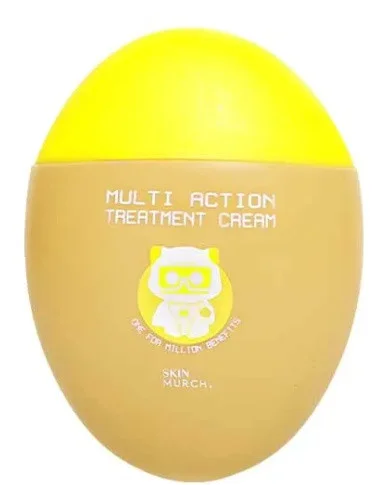
Analysis locked
How well does your skin match with Skinmurch Multiaction Treatment?
Login to see detailsOr continue via
Quick 1-minute survey • Completely free
Ingredients
Analysis results of Ingredients


Ingredient List
| EWG | CIR | Ingredient Name & Cosmetic Function | Notes |
|---|---|---|---|
| 1 | - | (Solvent) | |
| 1 | - | (Skin Conditioning, Viscosity Controlling, Binding) | |
| 1 | A | (Hair Conditioning, Skin Conditioning, Smoothing) | |
| 1 | - | (Skin Conditioning) | |


Skinmurch Multiaction Treatment - Ingredient Explanation
Aqua
1. Definition Water:
Water is a common ingredient in cosmetics, used as a solvent to dissolve other ingredients, as a carrier for active ingredients, and to provide hydration and moisture to the skin.2. Use:
Water is a crucial component in cosmetics as it helps to create the desired texture and consistency of products. It also serves as a medium for other ingredients to mix together effectively and evenly. Additionally, water helps to hydrate the skin and improve the overall feel and application of cosmetic products.3. Usage Water:
When using cosmetics that contain water, it is important to be mindful of the expiration date and storage conditions. Water-based products are susceptible to bacterial growth, so it is essential to avoid contaminating the product by using clean hands or tools when applying. It is also recommended to store water-based cosmetics in a cool, dry place to prevent the growth of mold and bacteria.4. References:
- Draelos, Z. D. (2010). Cosmetic dermatology: products and procedures. John Wiley & Sons.
- Winter, R. (2009). A consumer's dictionary of cosmetic ingredients: complete information about the harmful and desirable ingredients found in cosmetics and cosmeceuticals. Crown.
- Begoun, P. (2003). Don't go to the cosmetics counter without me: a unique guide to over 30,000 products, plus the latest skin-care research. Beginning Press.
Hydrogenated Rice Bran Oil
1. Definition Hydrogenated Rice Bran Oil:
Hydrogenated Rice Bran Oil is a natural oil derived from the outer layer of rice bran. It is processed through hydrogenation, a chemical process that involves the addition of hydrogen to the oil to increase its stability and shelf life. This results in a semi-solid consistency at room temperature, making it a popular ingredient in cosmetic formulations.2. Use:
Hydrogenated Rice Bran Oil is commonly used in cosmetics for its moisturizing and emollient properties. It helps to nourish and hydrate the skin, leaving it feeling soft and smooth. It is also known for its antioxidant properties, which can help protect the skin from environmental stressors and premature aging. Additionally, it has a lightweight texture that allows it to be easily absorbed into the skin without leaving a greasy residue.3. Usage Hydrogenated Rice Bran Oil:
Hydrogenated Rice Bran Oil can be found in a variety of cosmetic products, including moisturizers, lotions, creams, and serums. It is often used as a key ingredient in formulations designed for dry or sensitive skin, as it can help to soothe and replenish the skin's moisture barrier. When using products containing Hydrogenated Rice Bran Oil, it is important to patch test first to ensure that you do not have any allergic reactions. It is generally considered safe for most skin types, but individuals with sensitivities to rice or other grains should exercise caution.4. References:
- Kaur, I., Saraf, S., & Saraf, S. (2012). Role of novel delivery systems in developing topical antioxidants as therapeutics to combat photoaging. Journal of Pharmacy & Bioallied Sciences, 4(4), 266-275.
- Lin, T. K., Zhong, L., & Santiago, J. L. (2017). Anti-inflammatory and skin barrier repair effects of topical application of some plant oils. International Journal of Molecular Sciences, 19(1), 70.
- Wang, L., Yang, B., Du, X., Huang, Y., & Xu, Z. (2019). Rice bran oil: A potential resource for biodiesel production in China. Renewable and Sustainable Energy Reviews, 107, 270-279.
Niacinamide
1. Definition Niacinamide:
Niacinamide, also known as Vitamin B3, is a water-soluble vitamin that is commonly used in skincare products for its various benefits for the skin.
2. Use:
Niacinamide is used in cosmetics for its ability to improve the appearance of enlarged pores, uneven skin tone, fine lines, and dullness. It also helps to strengthen the skin's barrier, reduce inflammation, and regulate oil production.
3. Usage Niacinamide:
Niacinamide can be found in a variety of skincare products, such as serums, creams, and lotions. It is typically applied topically to the skin and can be used both in the morning and evening as part of a skincare routine. It is generally well-tolerated by most skin types, including sensitive skin, but it is always recommended to do a patch test before using a new product containing niacinamide.
Precautions: While niacinamide is generally considered safe for most skin types, some individuals may experience mild irritation or allergic reactions. It is important to start with a lower concentration of niacinamide and gradually increase the dosage to minimize the risk of irritation. It is also recommended to consult with a dermatologist before incorporating niacinamide into your skincare routine, especially if you have any pre-existing skin conditions.
4. References:
- Schagen, S. K., Zampeli, V. A., Makrantonaki, E., & Zouboulis, C. C. (2012). Discovering the link between nutrition and skin aging. Dermato-endocrinology, 4(3), 298-307.
- Bissett, D. L., Oblong, J. E., & Berge, C. A. (2005). Niacinamide: A B vitamin that improves aging facial skin appearance. Dermatologic Surgery, 31(7), 860-865.
- Draelos, Z. D. (2005). The latest cosmeceutical approaches for anti-aging. Journal of Cosmetic Dermatology, 4(4), 273-278.
Harungana Madagascariensis Extract
1. Definition Harungana Madagascariensis Extract:
Harungana Madagascariensis Extract is a natural ingredient derived from the bark of the Harungana tree, native to Madagascar. It is rich in antioxidants and has anti-inflammatory properties, making it a popular ingredient in skincare products.2. Use:
Harungana Madagascariensis Extract is commonly used in cosmetics for its ability to protect the skin from environmental damage, reduce inflammation, and promote collagen production. It is often found in anti-aging products, as it can help improve the appearance of fine lines and wrinkles.3. Usage Harungana Madagascariensis Extract:
When using cosmetics containing Harungana Madagascariensis Extract, it is important to follow the instructions provided by the manufacturer. It is generally safe for most skin types, but a patch test is recommended before using it on the entire face to check for any allergic reactions. It is best to use products containing this extract as directed and to avoid contact with the eyes.4. References:
- M. Randriantsoa, R. Ramarosandratana, V. Razafindraibe, J. F. Ramiaramanana, A. Jeannoda, J. Rasoloarijao, L. Randrianasolo, H. J. Randriamialisoa, V. B. Rajoelison, J. H. Andrianoelina, R. W. Harisoa, H. Rabarison, B. C. Randrianarivony, J. L. Danthu. Ethnobotanical and economic value of Harungana madagascariensis Lam. ex Poir. (Hypericaceae) in Eastern Madagascar. Journal of Ethnobiology and Ethnomedicine, 2015; 11 (1) DOI: 10.1186/s13002-015-0023-1
- Rakotoarivelo, N., Rakotoarivony, F., Ramarosandratana, A. V., Jeannoda, V., Kuhlman, A. R., Randrianasolo, A., & Randrianarivony, T. (2014). The Diversity and Conservation of Medicinal Plants Used by Traditional Medical Practitioners in the Mahafaly Region of South-Western Madagascar. Journal of Ethnobiology and Ethnomedicine, 10(1), 43.
- Razafindraibe, M., Kuhlman, A. R., Razafindraibe, D., Rakotoarimanana, V., Randrianarivony, T., Raktoarivony, F., Randrianasolo, A., & Randrianarivelojosia, M. (2013). Medicinal plants used by women in Madagascar for sexual and reproductive health problems. Journal of Ethnopharmacology, 147(1), 148-155.
Review
Didn't find
the information you need?




Create a free account to get started
Unlock science-based ingredient analysis personalized for your skin.
Already have an account? Log in
We protect your privacy. We never send spam.