


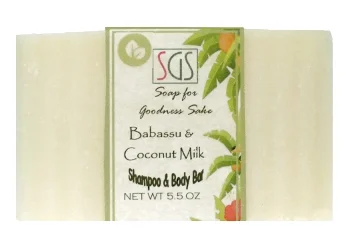
Soap for Goodness Sake Shampoo & Body Bar Babassu and Coconut Milk
Analysis locked
How well does your skin match with Soap for Goodness Sake Shampoo & Body Bar Babassu and Coconut Milk?
Login to see detailsOr continue via
Quick 1-minute survey • Completely free
Ingredients
Analysis results of Ingredients


Ingredient List
| EWG | CIR | Ingredient Name & Cosmetic Function | Notes |
|---|---|---|---|
| 1 | - | (Solvent) | |
| 1 | - | (Skin Conditioning, Emollient, Humectant, Hair Conditioning) | |
| 3 | - | (Masking, Perfuming, Denaturant ) | |
| 1 | - | |
Soap for Goodness Sake Shampoo & Body Bar Babassu and Coconut Milk - Ingredient Explanation
Water
1. Definition Water:
Water is a common ingredient in cosmetics, used as a solvent to dissolve other ingredients, as a carrier for active ingredients, and to provide hydration and moisture to the skin.2. Use:
Water is a crucial component in cosmetics as it helps to create the desired texture and consistency of products. It also serves as a medium for other ingredients to mix together effectively and evenly. Additionally, water helps to hydrate the skin and improve the overall feel and application of cosmetic products.3. Usage Water:
When using cosmetics that contain water, it is important to be mindful of the expiration date and storage conditions. Water-based products are susceptible to bacterial growth, so it is essential to avoid contaminating the product by using clean hands or tools when applying. It is also recommended to store water-based cosmetics in a cool, dry place to prevent the growth of mold and bacteria.4. References:
- Draelos, Z. D. (2010). Cosmetic dermatology: products and procedures. John Wiley & Sons.
- Winter, R. (2009). A consumer's dictionary of cosmetic ingredients: complete information about the harmful and desirable ingredients found in cosmetics and cosmeceuticals. Crown.
- Begoun, P. (2003). Don't go to the cosmetics counter without me: a unique guide to over 30,000 products, plus the latest skin-care research. Beginning Press.
Cocos Nucifera (Coconut) Fruit Juice
1. Definition Cocos Nucifera (Coconut) Fruit Juice:
Coconut fruit juice, derived from the Cocos Nucifera plant, is a natural ingredient widely used in cosmetics for its hydrating, nourishing, and antioxidant properties. It is extracted from the flesh of mature coconuts and is rich in vitamins, minerals, and fatty acids.2. Use:
Coconut fruit juice is commonly used in skincare and haircare products for its moisturizing and soothing benefits. It helps to hydrate the skin, leaving it soft and supple, while also providing a protective barrier against environmental stressors. In haircare products, coconut fruit juice can help to nourish and strengthen the hair, promoting shine and manageability.3. Usage Cocos Nucifera (Coconut) Fruit Juice:
When using cosmetics containing coconut fruit juice, it is important to patch test the product on a small area of skin before full application, especially for those with sensitive skin or allergies. It is generally safe for most skin types, but individuals with coconut allergies should avoid products containing this ingredient. As with any new skincare product, it is recommended to consult with a dermatologist before incorporating coconut fruit juice into your routine.4. References:
- Lin, T. K., Zhong, L., & Santiago, J. L. (2017). Anti-inflammatory and skin barrier repair effects of topical application of some plant oils. International Journal of Molecular Sciences, 19(1), 70.
- Rele, A. S., & Mohile, R. B. (2003). Effect of mineral oil, sunflower oil, and coconut oil on prevention of hair damage. Journal of cosmetic science, 54(2), 175-192.
- Evangelista, M. T., Abad-Casintahan, F., & Lopez-Villafuerte, L. (2014). The effect of topical virgin coconut oil on SCORAD index, transepidermal water loss, and skin capacitance in mild to moderate pediatric atopic dermatitis: a randomized, double-blind, clinical trial. International journal of dermatology, 53(1), 100-108.
Cinnamomum Cassia (Cinnamon) Leaf Oil
1. Definition Cinnamomum Cassia (Cinnamon) Leaf Oil:
Cinnamomum Cassia (Cinnamon) Leaf Oil is an essential oil extracted from the leaves of the Cinnamomum Cassia tree. It is known for its warm, spicy aroma and is commonly used in cosmetics for its fragrance and potential skin benefits.2. Use:
Cinnamon Leaf Oil is often used in cosmetics as a natural fragrance ingredient due to its pleasant scent. It can also be found in skincare products for its potential antibacterial and anti-inflammatory properties, which may help with acne and other skin conditions.3. Usage Cinnamomum Cassia (Cinnamon) Leaf Oil:
When using Cinnamon Leaf Oil in cosmetics, it is important to dilute it properly as it is a potent essential oil that can cause skin irritation if used in high concentrations. It is recommended to do a patch test before using products containing Cinnamon Leaf Oil to ensure that it does not cause any adverse reactions. Additionally, pregnant women and individuals with sensitive skin should consult with a healthcare professional before using products with this essential oil.4. References:
- Ali, B., Al-Wabel, N. A., Shams, S., Ahamad, A., & Khan, S. A. (2015). Essential oils used in aromatherapy: A systemic review. Asian Pacific Journal of Tropical Biomedicine, 5(8), 601-611.
- Chaieb, K., Hajlaoui, H., Zmantar, T., Kahla-Nakbi, A. B., Rouabhia, M., Mahdouani, K., & Bakhrouf, A. (2007). The chemical composition and biological activity of clove essential oil, Eugenia caryophyllata (Syzigium aromaticum L. Myrtaceae): a short review. Phytotherapy Research, 21(6), 501-506.
- Han, X., & Parker, T. L. (2017). Anti-inflammatory activity of clove (Eugenia caryophyllata) essential oil in human dermal fibroblasts. Pharmaceutical Biology, 55(1), 1619-1622.
Orbignya Oleifera (Babassu) Oil
1. Definition Orbignya Oleifera (Babassu) Oil:
Orbignya Oleifera (Babassu) Oil is a vegetable oil extracted from the seeds of the Babassu palm tree native to the Amazon rainforest. It is known for its moisturizing and emollient properties, making it a popular ingredient in cosmetics and skincare products.2. Use:
Babassu oil is commonly used in cosmetics as a natural alternative to synthetic emollients and moisturizers. It is rich in fatty acids, such as lauric, myristic, and oleic acids, which help to nourish and hydrate the skin. Babassu oil is also lightweight and non-comedogenic, making it suitable for all skin types, including oily and acne-prone skin.3. Usage Orbignya Oleifera (Babassu) Oil:
Babassu oil can be used in a variety of skincare products, including moisturizers, lotions, creams, and serums. It can also be used in hair care products, such as conditioners and hair masks, to help hydrate and soften the hair. Babassu oil can be applied directly to the skin or hair, or it can be incorporated into DIY beauty recipes.Precautions: While Babassu oil is generally considered safe for use in cosmetics, individuals with nut allergies should exercise caution, as it is derived from the seeds of a palm tree. It is always recommended to perform a patch test before using any new skincare product to check for any potential allergic reactions.
4. References:
- Costa, R. M., Magalhães, D., Pereira, A., & Costa, A. (2015). Babassu oil as a promising source of nutrition and medicine. Journal of the Science of Food and Agriculture, 95(2), 319-328.
- Silva, M. R., Ximenes, R. M., da Costa, C. L. S., & Souza, P. J. D. (2017). Babassu (Orbignya phalerata Mart.) oil as a raw material for the production of bioactive compounds. Journal of Food Science and Technology, 54(1), 1-9.
- de Almeida, A. A. C., Ribeiro, J. C., & De Almeida, C. (2014). Babassu oil (Orbignya speciosa): a study of the antimicrobial activity of the lipid fraction. Journal of Medicinal Plants Research, 8(4), 176-181.
Review

Didn't find
the information you need?







Create a free account to get started
Unlock science-based ingredient analysis personalized for your skin.
Already have an account? Log in
We protect your privacy. We never send spam.