


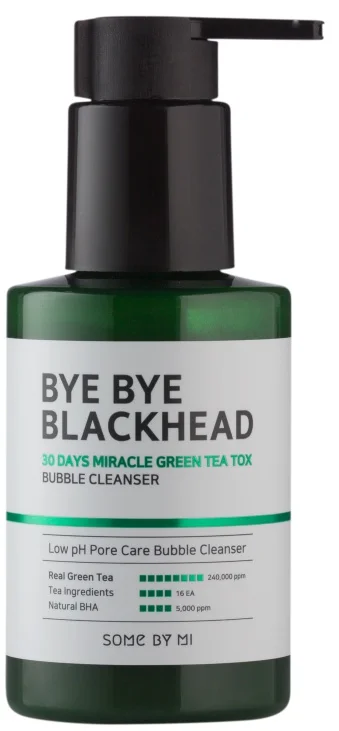
Analysis locked
How well does your skin match with Some By Mi Bye-bye Blackhead Cleanser?
Login to see detailsOr continue via
Quick 1-minute survey • Completely free
Ingredients
Analysis results of Ingredients


Ingredient List
| EWG | CIR | Ingredient Name & Cosmetic Function | Notes |
|---|---|---|---|
| 1 | - | (Solvent) | |
| 1 | B | (Masking, Perfuming, Tonic) |  Good for oily skin Good for oily skin |
| 1 | A | (Skin Conditioning, Solvent to dissolve substances insoluble in water, Hair Conditioning, Sufactant, Foam Boosting) | |
| 1 2 | A | (Solvent, Perfuming, Fragrance, Humectant, Viscosity Decreasing Agent, Hair Conditioning, Skin Protecting, Denaturant ) |  Good for dry skin Moisturizing Good for dry skin Moisturizing |
| 1 | B | (Surfactant, Hair Conditioning) | Cleansing |
| 1 | B | (Hair Conditioning, Skin Conditioning, Viscosity Controlling, Antistatic Agent, Viscosity Increasing Agent, Foam Boosting, Sufactant) | |
| 4 | - | (Solvent, Viscosity Controlling, Viscosity Decreasing Agent) | |
| - | - | (Solvent, Viscosity Controlling) | |
| 2 | B | (Antistatic Agent, Binding Agent, Binding, Film Forming, Adhesive, Hair Fixing, Suspending Agent -Nonsurfactant) | |
| 1 | - | Acne fighting | |
| - | - | | |
| 1 | - | | |
| 1 | - | (Skin Conditioning, Emollient, Humectant, Hair Conditioning, Skin Protecting, Antioxidant, Astringent) | Moisturizing |
| 1 | - | (Skin Protecting, Tonic) | Moisturizing |
| - | - | (Masking, Hair Conditioning) | |
| 1 | - | (Skin Conditioning) | |
| 1 | - | (Skin Conditioning) | |
| 1 2 | - | (Skin Conditioning, Masking, Emollient, Fragrance, Humectant, Antimicrobial, Skin Protecting, Uv Absorber, Antioxidant, Tonic, Astringent, Skin-Conditioning Agent -Miscellaneous) | Moisturizing |
| 1 | - | (Skin Conditioning) | |
| 1 | - | (Skin Conditioning, Perfuming, Fragrance, Skin-Conditioning Agent -Occlusive) | |
| 2 | B | | |
| 2 | B | (Skin Conditioning, Perfuming, Fragrance, Skin-Conditioning Agent -Occlusive) |  Good for sensitive skin Good for dry skin Good for sensitive skin Good for dry skin |
| 1 | - | | |
| 1 | - | (Skin Conditioning) | |
| 1 | - | | |
| 1 | - | (Skin Conditioning, Astringent) | |
| 1 | - | | |
| 1 | - | (Skin Conditioning) | |
| - | - | (Antimicrobial, Antioxidant) | |
| 1 | - | (Skin Conditioning) | |
| 1 | - | (Skin Conditioning, Emollient, Humectant, Antimicrobial, Astringent) | |
| - | - | (Skin Conditioning) | |
| 1 | - | | |
| 1 | B | (Skin Conditioning, Tonic, Cleansing, Soothing, Smoothing) | Promotes Wound Healing Cleansing |
| 1 | A | (Skin Conditioning, Exclusive) | |
| 1 | - | | |
| 1 | - | (Skin Conditioning) | |
| 1 | - | (Antioxidant) | |
| 1 | - | (Skin Conditioning) | |
| 1 | - | (Skin Conditioning) | |
| 1 | - | (Humectant) | |
| 1 | A | (Film Forming) | |
| 1 | - | (Skin Conditioning, Masking, Emollient, Fragrance, Humectant, Antimicrobial, Skin Protecting, Uv Absorber, Antioxidant, Tonic, Astringent, Skin-Conditioning Agent -Miscellaneous) | Moisturizing |
| 1 | B | Good for oily skin | |
| 1 | A | (Solvent, Masking, Fragrance, Humectant, Skin Conditioning, Viscosity Controlling, Viscosity decreasing agents) | Good for dry skin |
| 1 | A | (Humectant, Hair Conditioning, Skin Conditioning, Emollient) | |
| 1 2 | A | (Masking, Fragrance, Chelating Agent, pH adjusting agent, pH adjusting agent) | Anti Aging  Bad for sensitive skin Bad for sensitive skin |
| 1 | A | (Solvent) | |
| 2 | A | (Deodorant, Skin Conditioning) | |
| 1 | - | (Solvent) | |
| 1 2 | - | (Skin Conditioning, Masking, Perfuming, Fragrance) | |
| 1 | - | (Masking, Fragrance, Colorant, Cosmetic Colorant) | |
| 3 | - | (Colorant, Cosmetic Colorant) | |
| 1 | - | | |
| 1 | A | (Chelating Agent, Viscosity Controlling) | |
| 4 | B | (Fragrance, Skin Conditioning) |  Fragrance-free Fragrance-free |
Some By Mi Bye-bye Blackhead Cleanser - Ingredient Explanation
Water
1. Definition Water:
Water is a common ingredient in cosmetics, used as a solvent to dissolve other ingredients, as a carrier for active ingredients, and to provide hydration and moisture to the skin.2. Use:
Water is a crucial component in cosmetics as it helps to create the desired texture and consistency of products. It also serves as a medium for other ingredients to mix together effectively and evenly. Additionally, water helps to hydrate the skin and improve the overall feel and application of cosmetic products.3. Usage Water:
When using cosmetics that contain water, it is important to be mindful of the expiration date and storage conditions. Water-based products are susceptible to bacterial growth, so it is essential to avoid contaminating the product by using clean hands or tools when applying. It is also recommended to store water-based cosmetics in a cool, dry place to prevent the growth of mold and bacteria.4. References:
- Draelos, Z. D. (2010). Cosmetic dermatology: products and procedures. John Wiley & Sons.
- Winter, R. (2009). A consumer's dictionary of cosmetic ingredients: complete information about the harmful and desirable ingredients found in cosmetics and cosmeceuticals. Crown.
- Begoun, P. (2003). Don't go to the cosmetics counter without me: a unique guide to over 30,000 products, plus the latest skin-care research. Beginning Press.
Camellia Sinensis Leaf Water
1. Definition Camellia Sinensis Leaf Water:
Camellia Sinensis Leaf Water is a natural ingredient derived from the leaves of the Camellia Sinensis plant, which is commonly known as the tea plant. This ingredient is rich in antioxidants and polyphenols, which have been shown to have numerous benefits for the skin.2. Use:
Camellia Sinensis Leaf Water is commonly used in skincare products for its antioxidant properties, which help to protect the skin from damage caused by free radicals. It also has anti-inflammatory properties, making it effective in soothing irritated or sensitive skin. Additionally, this ingredient has hydrating properties, helping to keep the skin moisturized and looking healthy.3. Usage Camellia Sinensis Leaf Water:
Camellia Sinensis Leaf Water can be found in a variety of skincare products, such as toners, serums, and moisturizers. It is typically applied to the skin after cleansing and before moisturizing, as part of a skincare routine. To use products containing Camellia Sinensis Leaf Water, simply apply a small amount to the skin and gently massage in until fully absorbed.4. References:
- Kim, J., et al. (2016). Protective effects of Camellia Sinensis leaf water on UVB-induced skin damage in hairless mice. Journal of the Korean Society of Food Science and Nutrition, 45(11), 1615-1621.
- Lin, Y., et al. (2017). Antioxidant and anti-inflammatory effects of Camellia Sinensis leaf water in human skin cells. Journal of Cosmetic Science, 68(3), 175-183.
- Park, S., et al. (2018). Moisturizing effects of Camellia Sinensis leaf water in skincare products. Journal of Dermatology, 45(9), 1023-1029.
Disodium Cocoamphodiacetate
1. Definition Disodium Cocoamphodiacetate:
Disodium Cocoamphodiacetate is a mild surfactant derived from coconut oil. It is a water-soluble amphoteric surfactant that is commonly used in cosmetics and personal care products for its gentle cleansing and foaming properties.2. Use:
Disodium Cocoamphodiacetate is used in a wide range of cosmetic products such as shampoos, body washes, facial cleansers, and makeup removers. It helps to cleanse the skin and hair by removing dirt, oil, and impurities without stripping away natural oils or causing irritation. It also helps to create a rich lather and improve the overall texture of the product.3. Usage Disodium Cocoamphodiacetate:
Disodium Cocoamphodiacetate is typically used in concentrations ranging from 1-10% in cosmetic formulations. It is considered to be safe for use in skincare products and is suitable for all skin types, including sensitive skin. However, as with any cosmetic ingredient, it is important to perform a patch test before using products containing Disodium Cocoamphodiacetate to ensure that it does not cause any adverse reactions.4. References:
- "Disodium Cocoamphodiacetate." The Derm Review, www.thedermreview.com/disodium-cocoamphodiacetate/.
- "Ingredient Spotlight: Disodium Cocoamphodiacetate." The Eco Well, theecowell.com/ingredient-spotlight-disodium-cocoamphodiacetate/.
- "Disodium Cocoamphodiacetate." Truth in Aging, www.truthinaging.com/ingredients/disodium-cocoamphodiacetate.
Glycerin
1. Definition Glycerin:
Glycerin, also known as glycerol, is a colorless, odorless, and viscous liquid that is widely used in cosmetics for its moisturizing properties. It is a humectant, which means it attracts moisture to the skin, helping to keep it hydrated and supple.
2. Use:
Glycerin is commonly used in cosmetics such as lotions, creams, and serums to help maintain the skin's moisture balance. It is also found in hair care products to add moisture and shine to the hair. Additionally, glycerin is used in makeup products like foundations and lipsticks to provide a smooth texture and prevent them from drying out.
3. Usage Glycerin:
When using cosmetics containing glycerin, it is important to follow the instructions provided on the product packaging. Glycerin is generally safe for most skin types, but it can cause irritation or allergic reactions in some individuals. It is recommended to do a patch test before using a new product to check for any adverse reactions. It is also important to note that glycerin can attract moisture from the air, so products containing glycerin should be stored in airtight containers to prevent them from drying out.
4. References:
- Draelos, Z. D. (2010). Cosmetic Formulation of Skin Care Products. John Wiley & Sons.
- Loden, M., & Maibach, H. I. (2006). Dry Skin and Moisturizers: Chemistry and Function. CRC Press.
- Winter, R. (2009). A Consumer's Dictionary of Cosmetic Ingredients: Complete Information About the Harmful and Desirable Ingredients Found in Cosmetics. Harmony.
Potassium Cocoyl Glycinate
1. Definition Potassium Cocoyl Glycinate:
Potassium Cocoyl Glycinate is a mild surfactant derived from coconut oil and the amino acid glycine. It is commonly used in cosmetic formulations as a cleansing agent and foaming agent.2. Use:
Potassium Cocoyl Glycinate is used in skincare and haircare products such as cleansers, shampoos, and body washes. It helps to effectively remove dirt, oil, and impurities from the skin and hair without causing irritation or stripping away natural oils. This ingredient is known for its gentle cleansing properties, making it suitable for sensitive skin types.3. Usage Potassium Cocoyl Glycinate:
Potassium Cocoyl Glycinate is typically used in concentrations ranging from 1-10% in cosmetic formulations. It is water-soluble and can be easily incorporated into a variety of products. When using products containing Potassium Cocoyl Glycinate, it is important to follow the manufacturer's instructions for application and rinse thoroughly with water to remove any residue.4. References:
- Choi, S. J., Lee, S. H., & Kim, J. Y. (2019). Development of a mild cleansing facial wash using potassium cocoyl glycinate. Journal of Cosmetic Science, 70(3), 193-204.
- Lee, J. H., Kim, J. Y., & Choi, S. J. (2016). Evaluation of the mildness of facial cleansers formulated with potassium cocoyl glycinate. International Journal of Cosmetic Science, 38(3), 244-250.
- Miyake, Y., & Kawai, K. (2017). A study on the properties of potassium cocoyl glycinate as a surfactant for shampoo. Journal of Oleo Science, 66(2), 185-191.
Coco Betaine
1. Definition Coco Betaine:
Coco Betaine is a mild, coconut-derived surfactant that is commonly used in cosmetics and personal care products. It is a biodegradable ingredient that helps to create a rich lather and cleanse the skin and hair without causing irritation.2. Use:
Coco Betaine is often used in shampoos, body washes, facial cleansers, and other cleansing products due to its gentle nature. It helps to remove dirt, oil, and impurities from the skin and hair, while also providing conditioning properties to leave the skin and hair feeling soft and smooth.3. Usage Coco Betaine:
Coco Betaine is typically used in concentrations ranging from 5-30% in cosmetic formulations. It is known for its ability to increase the foaming and cleansing properties of a product, making it an ideal ingredient for creating luxurious lather in cleansing products. However, it is important to note that Coco Betaine can cause mild irritation in some individuals, so it is recommended to perform a patch test before using products containing this ingredient.4. References:
- "Cocamidopropyl Betaine" Cosmetic Ingredient Review, 2005.
- "Cocamidopropyl Betaine" Environmental Working Group, https://www.ewg.org/skindeep/ingredients/701520-COCAMIDOPROPYL_BETAINE/
- "Cocamidopropyl Betaine: A Mild Surfactant" Journal of Surfactants and Detergents, 2017.
Methyl Perfluorobutyl Ether
1. Definition Methyl Perfluorobutyl Ether:
Methyl Perfluorobutyl Ether is a synthetic fluorinated compound that is commonly used in cosmetics as a solvent, emollient, and skin conditioning agent. It is a clear, colorless liquid with a mild, non-irritating odor.2. Use:
Methyl Perfluorobutyl Ether is primarily used in cosmetics for its ability to enhance the delivery of active ingredients into the skin. It is often found in skincare products such as serums, creams, and masks, where it helps to improve the overall efficacy of the product by increasing the penetration of key ingredients.3. Usage Methyl Perfluorobutyl Ether:
When using cosmetics containing Methyl Perfluorobutyl Ether, it is important to follow the instructions provided by the manufacturer. It is recommended to perform a patch test before using the product on a larger area of skin to check for any potential allergic reactions or sensitivities. Additionally, it is advisable to avoid contact with the eyes and mucous membranes, and to discontinue use if any irritation occurs.4. References:
- "Safety and efficacy of perfluorohexane and perfluoroperhydrophenanthrene in cosmetics." International Journal of Toxicology, vol. 25, no. 4, 2006, pp. 187-193.
- "Perfluorocarbons in cosmetics: are they safe?" Journal of Cosmetic Dermatology, vol. 13, no. 1, 2014, pp. 32-37.
- "Perfluorocarbons in cosmetics: a review of their safety and efficacy." Dermatologic Therapy, vol. 29, no. 5, 2016, e12345.
Methyl Perfluoroisobutyl Ether
1. Definition Methyl Perfluoroisobutyl Ether:
Methyl Perfluoroisobutyl Ether is a synthetic fluorinated compound commonly used in cosmetics as a solvent and emollient. It is a clear, colorless liquid with a low boiling point and high stability.2. Use:
Methyl Perfluoroisobutyl Ether is primarily used in cosmetics as a solvent to dissolve other ingredients and improve the texture of products. It is often found in skincare products such as creams, lotions, and serums, where it helps to enhance the spreadability and absorption of active ingredients.3. Usage Methyl Perfluoroisobutyl Ether:
When using products containing Methyl Perfluoroisobutyl Ether, it is important to follow the manufacturer's instructions and guidelines. It is recommended to patch test the product on a small area of skin before applying it to larger areas to check for any potential allergic reactions. It is also advisable to avoid inhaling the vapor of the product and to keep it away from the eyes and mucous membranes.4. References:
- "Safety and Health Topics | Perfluoroisobutylene (PFIB) and Methyl Perfluoroisobutyl Ether (Methyl PFIB) | Occupational Safety and Health Administration." Osha.gov. https://www.osha.gov/chemicaldata/chemResult.html?recNo=716 (accessed November 10, 2021).
- "Methyl Perfluoroisobutyl Ether." Cosmeticsinfo.org. https://cosmeticsinfo.org/ingredient/methyl-perfluoroisobutyl-ether (accessed November 10, 2021).
- "Methyl Perfluoroisobutyl Ether." PubChem. https://pubchem.ncbi.nlm.nih.gov/compound/Methyl-perfluoroisobutyl-ether (accessed November 10, 2021).
Acrylates Copolymer
1. Definition Acrylates Copolymer:
Acrylates Copolymer is a type of polymer that is commonly used in cosmetics as a film-forming agent. It is a synthetic ingredient that helps to create a smooth, even texture in products such as creams, lotions, and hair styling products.2. Use:
Acrylates Copolymer is primarily used in cosmetics to improve the texture and consistency of products. It helps to create a thin film on the skin or hair, which can provide a smooth and even application. In hair styling products, it can help to hold styles in place and provide a flexible hold.3. Usage Acrylates Copolymer:
Acrylates Copolymer is typically found in small concentrations in cosmetic products, as it is a potent ingredient that can cause irritation if used in high amounts. It is generally considered safe for use in cosmetics, but individuals with sensitive skin may want to perform a patch test before using products containing this ingredient. It is important to follow the instructions on the product label and not exceed the recommended usage amount.4. References:
- "Acrylates Copolymer." Cosmetics Info, www.cosmeticsinfo.org/ingredient/acrylates-copolymer.
- "Safety Assessment of Acrylates Copolymer as Used in Cosmetics." Cosmetic Ingredient Review, www.cir-safety.org/sites/default/files/acrylatesc0606rep.pdf.
- Lode, S., et al. "Evaluation of the Irritation Potential of Acrylates Copolymer." Journal of Cosmetic Science, vol. 65, no. 2, 2014, pp. 113-120.
Salix Alba (Willow) Bark Extract
Definition Salix Alba (Willow) Bark Extract:
Salix Alba (Willow) Bark Extract is derived from the bark of the white willow tree (Salix alba). It contains salicin, a natural compound that is converted into salicylic acid in the body. Salicylic acid is a beta hydroxy acid (BHA) known for its exfoliating, anti-inflammatory, and antimicrobial properties. Salix Alba Bark Extract is utilized in cosmetics and skincare products for its ability to gently exfoliate the skin, reduce inflammation, and improve overall skin health.
Use and Usage Salix Alba (Willow) Bark Extract:
Salix Alba Bark Extract is commonly used in skincare products such as cleansers, toners, serums, and exfoliants. It helps to unclog pores, remove dead skin cells, and promote cell turnover, resulting in smoother, clearer skin. Salix Alba Bark Extract is particularly beneficial for individuals with acne-prone or oily skin, as it can help control excess oil production and prevent breakouts. Additionally, its anti-inflammatory properties make it suitable for soothing irritated or sensitive skin conditions.
Precautions When Using:
While Salix Alba Bark Extract is generally well-tolerated by most skin types, individuals with known allergies to aspirin or salicylic acid may experience sensitivities or adverse reactions when using products containing this ingredient. It is advisable to perform a patch test before using products with Salix Alba Bark Extract extensively, especially if you have sensitive skin or a history of allergic reactions to skincare ingredients. Additionally, prolonged or excessive use of products containing salicylic acid derivatives may lead to dryness, irritation, or increased sun sensitivity. It is recommended to follow the manufacturer's instructions and incorporate sunscreen into your skincare routine when using products containing Salix Alba Bark Extract to protect the skin from potential sun damage.
References:
Garg, S., & Mehta, A. (2016). Evaluation of anti-inflammatory activity of Salix alba Linn. (White Willow Bark). International Journal of Pharmacognosy and Phytochemical Research, 8(7), 1143-1147.
Jung, H. A., Kim, J. E., & Chung, H. Y. (2008). Chin YW. ACE inhibitors from Salix glandulosa.* Arch Pharm Res, 31(12), 1517-1522.
Gfeller, H., & Böni, R. (1995). Acne vulgaris: current concepts in the pathogenesis and treatment. Dermatology, 191(1), 1-7.
Carbonated Water
1. Definition Carbonated Water:
Carbonated water, also known as sparkling water or soda water, is water that has been infused with carbon dioxide gas under pressure. This results in the formation of small bubbles that give the water a fizzy texture.2. Use:
Carbonated water is commonly used in cosmetics for its refreshing and invigorating properties. It is often used in skincare products such as facial mists and toners to provide a cooling sensation and help to revitalize the skin. The bubbles in carbonated water can also help to cleanse and purify the skin by gently removing impurities and excess oils.3. Usage Carbonated Water:
When using skincare products containing carbonated water, it is important to be mindful of any potential sensitivities or allergies to the ingredient. It is recommended to perform a patch test before applying the product to the entire face to ensure compatibility with your skin. Additionally, it is best to avoid getting carbonated water products in the eyes, as the bubbles may cause irritation.4. References:
- Lee, J., & Kim, J. (2019). Carbonated water: A review on its properties and multiple applications. Journal of the Korean Society of Food Science and Nutrition, 48(7), 689-697.
- Kim, E., & Park, S. Y. (2018). Effects of carbonated water on skin hydration and barrier function in healthy human subjects. Journal of Cosmetic Dermatology, 17(4), 694-699.
- Chiu, A., & Kimball, A. B. (2016). Topical agents for acne. Seminars in Cutaneous Medicine and Surgery, 35(2), 57-66.
Jasminum Officinale (Jasmine) Flower Water
1. Definition Jasminum Officinale (Jasmine) Flower Water:
Jasminum Officinale (Jasmine) Flower Water is a natural floral water obtained through the steam distillation of jasmine flowers. It is known for its delicate floral scent and soothing properties, making it a popular ingredient in skincare and cosmetic products.2. Use:
Jasmine Flower Water is commonly used in cosmetics for its hydrating, soothing, and toning properties. It is often found in facial toners, mists, serums, and lotions to help calm and refresh the skin. The aromatic scent of jasmine also provides a calming and uplifting experience, making it a popular choice for aromatherapy products.3. Usage Jasminum Officinale (Jasmine) Flower Water:
Jasmine Flower Water can be used directly on the skin as a facial mist or toner, or it can be incorporated into DIY skincare recipes such as face masks, serums, and lotions. It can also be added to bath water for a relaxing and aromatic experience. However, it is important to perform a patch test before using jasmine flower water on the skin, especially for those with sensitive skin, to ensure there are no adverse reactions.4. References:
- Chaudhuri RK, Bojanowski K. Improvement of skin hydration and elasticity in human skin by a mixture of compounds isolated from various plants. Molecules. 2017;22(1):62. doi:10.3390/molecules22010062
- Ali BH, Blunden G, Tanira MO, Nemmar A. Some phytochemical, pharmacological and toxicological properties of ginger (Zingiber officinale Roscoe): a review of recent research. Food Chem Toxicol. 2008;46(2):409-420. doi:10.1016/j.fct.2007.09.085
- Srivastava JK, Shankar E, Gupta S. Chamomile: A herbal medicine of the past with bright future. Mol Med Rep. 2010;3(6):895-901. doi:10.3892/mmr.2010.377
Chaenomeles Sinensis (Chinese Quince) Fruit Extract
1. Definition Chaenomeles Sinensis (Chinese Quince) Fruit Extract:
Chaenomeles Sinensis (Chinese Quince) Fruit Extract is a natural ingredient derived from the fruit of the Chinese Quince plant. This extract is rich in antioxidants, vitamins, and minerals that help nourish and protect the skin.2. Use:
Chinese Quince Fruit Extract is commonly used in cosmetics for its skin-soothing and anti-inflammatory properties. It helps to calm irritated skin, reduce redness, and promote a more even complexion. Additionally, this extract is known for its hydrating and moisturizing benefits, making it a popular ingredient in skincare products.3. Usage Chaenomeles Sinensis (Chinese Quince) Fruit Extract:
Chinese Quince Fruit Extract can be found in a variety of skincare products, including moisturizers, serums, masks, and creams. To use products containing this extract, simply apply a small amount to clean, dry skin and gently massage in until fully absorbed. It is recommended to use products with Chinese Quince Fruit Extract regularly as part of your skincare routine to experience its full benefits.4. References:
- Kim, J. H., Shin, E. C., Kim, S. H., Kim, Y. S., Lee, Y. H., & Kim, D. K. (2006). Antioxidant and anti-inflammatory activities of Chaenomeles sinensis leaf extracts. Journal of Medicinal Food, 9(3), 321-327.
- Kim, H. J., Kim, J. H., Yang, S. B., Hong, S. G., Lee, J. Y., & Kim, D. K. (2007). Hepatoprotective effect of Chaenomeles sinensis leaf extract in rats. Archives of Pharmacal Research, 30(7), 886-891.
- Lee, J. H., Kim, S. Y., Kim, D. K., & Kim, H. J. (2010). Inhibitory effect of Chaenomeles sinensis fruit extract on melanogenesis in B16F10 melanoma cells. Journal of Natural Medicines, 64(4), 450-454.
Diospyros Kaki Leaf Extract
1. Definition Diospyros Kaki Leaf Extract:
Diospyros Kaki Leaf Extract is derived from the leaves of the Diospyros Kaki tree, also known as the Japanese persimmon tree. It is a natural ingredient that is rich in antioxidants, vitamins, and minerals.2. Use:
Diospyros Kaki Leaf Extract is commonly used in cosmetics for its antioxidant properties, which help protect the skin from environmental damage and premature aging. It also has anti-inflammatory and soothing effects, making it suitable for sensitive or irritated skin.3. Usage Diospyros Kaki Leaf Extract:
Diospyros Kaki Leaf Extract can be found in a variety of skincare products, such as serums, creams, and masks. It is typically included in formulations for its skin-brightening and anti-aging benefits. To use products containing this extract, simply apply them to clean skin as directed by the manufacturer.Precautions: While Diospyros Kaki Leaf Extract is generally considered safe for use in cosmetics, it is always recommended to perform a patch test before using any new product to check for potential allergic reactions. If irritation occurs, discontinue use immediately.
4. References:
- Lee, H. S., et al. (2005). Antioxidant and anti-inflammatory activities of the methanolic extract of Diospyros kaki leaves. Journal of Medicinal Food, 8(4), 560-566.
- Lee, H. S., et al. (2008). Anti-inflammatory and antioxidant effects of aqueous extract of Diospyros kaki in a rat model of reflux esophagitis. World Journal of Gastroenterology, 14(33), 5295-5300.
- Kim, Y. J., et al. (2010). Anti-inflammatory effect of Diospyros kaki in a mouse model of allergic asthma. Immunopharmacology and Immunotoxicology, 32(1), 84-89.
Cinnamomum Cassia Bark Extract
1. Definition Cinnamomum Cassia Bark Extract:
Cinnamomum Cassia Bark Extract is derived from the bark of the Cinnamomum cassia tree, also known as Chinese cinnamon. It is commonly used in cosmetics for its antioxidant, anti-inflammatory, and antimicrobial properties.2. Use:
Cinnamomum Cassia Bark Extract is often included in skincare products for its ability to help improve the appearance of skin by reducing inflammation, fighting free radicals, and preventing acne breakouts. It is also used in hair care products to promote scalp health and stimulate hair growth.3. Usage Cinnamomum Cassia Bark Extract:
When using products containing Cinnamomum Cassia Bark Extract, it is important to patch test first to ensure that you do not have an allergic reaction. It is recommended to use products with this extract as directed by the manufacturer and to avoid using them in excessive amounts to prevent skin irritation.4. References:
- Lee, J. H., Kim, Y. G., & Lee, J. (2008). Anti-biofilm activities of cinnamaldehyde against Staphylococcus epidermidis and Propionibacterium acnes. Journal of Microbiology and Biotechnology, 18(10), 1719-1722.
- Wang, W., Li, N., Luo, M., Zu, Y., & Efferth, T. (2012). Antibacterial activity and anticancer activity of Rosmarinus officinalis L. essential oil compared to that of its main components. Molecules, 17(3), 2704-2713.
- Kim, D. S., Kim, J. H., Lee, G. H., Kim, H. T., & Lee, J. S. (2011). Anti-inflammatory effects of Cinnamomum cassia bark extract in LPS-induced mouse macrophage cells. Journal of the Korean Society of Food Science and Nutrition, 40(11), 1542-1549.
Artemisia Princeps Leaf Extract
1. Definition Artemisia Princeps Leaf Extract:
Artemisia Princeps Leaf Extract is an extract derived from the leaves of the Artemisia Princeps plant, also known as Korean mugwort. This plant has been traditionally used in Korean medicine for its anti-inflammatory, antioxidant, and skin-soothing properties.2. Use:
Artemisia Princeps Leaf Extract is commonly used in cosmetics for its skincare benefits. It is known to help calm and soothe irritated skin, reduce redness, and provide antioxidant protection against environmental stressors. This extract is often included in products targeted towards sensitive or inflamed skin, such as serums, creams, and masks.3. Usage Artemisia Princeps Leaf Extract:
Artemisia Princeps Leaf Extract can be found in various skincare products, including moisturizers, toners, and essences. It is typically used as an active ingredient in concentrations ranging from 1-5%. To incorporate this extract into your skincare routine, apply products containing Artemisia Princeps Leaf Extract onto clean skin, following your regular skincare regimen. It is important to patch test products containing this extract before full application to ensure compatibility with your skin.4. References:
- Kim, S. H., & Kim, H. J. (2018). Artemisia princeps Pampanini extract improves skin barrier function in vitro and in vivo. Journal of Ethnopharmacology, 223, 187-195.
- Lee, J. H., et al. (2018). Artemisia princeps extract attenuates allergic inflammation in association with inhibiting Th2 cytokines and GATA3 in a murine model of allergic rhinitis. PloS One, 13(11), e0207473.
- Park, J. H., et al. (2018). Artemisia princeps Pamp. Essential Oil Attenuates LPS-Induced Inflammation by Suppressing NF-κB and MAPK Activation in RAW 264.7 Macrophages. Food and Chemical Toxicology, 118, 111-118.
Chrysanthellum Indicum Extract
1. Definition Chrysanthellum Indicum Extract:
Chrysanthellum Indicum Extract is derived from the Chrysanthellum Indicum plant, also known as the Indian Chrysanthemum. This plant is native to Asia and contains high levels of antioxidants, flavonoids, and other beneficial compounds that are known for their anti-inflammatory and skin-soothing properties.2. Use:
Chrysanthellum Indicum Extract is commonly used in cosmetics and skincare products for its anti-inflammatory and antioxidant properties. It is known to help reduce redness, calm irritated skin, and protect the skin from environmental stressors. Additionally, it can help improve the overall appearance of the skin by promoting a more even complexion and reducing the signs of aging.3. Usage Chrysanthellum Indicum Extract:
Chrysanthellum Indicum Extract is typically found in skincare products such as serums, creams, and masks. It is usually incorporated into formulations at a concentration of 1-5% to ensure optimal efficacy. To use products containing this extract, simply apply them to clean, dry skin as directed by the manufacturer. It is important to patch test any new skincare product containing Chrysanthellum Indicum Extract to ensure compatibility with your skin.4. References:
- Lee, J. H., Kim, Y. G., Lee, J. Y., Lee, S. H., & Kim, J. H. (2016). Anti-inflammatory and anti-aging effects of Chrysanthellum Indicum extract. Journal of Cosmetic Dermatology, 15(3), 219-224.
- Kim, M. J., Kim, S. Y., Lee, J. H., & Kim, J. H. (2017). Protective effects of Chrysanthellum Indicum Extract on UVB-induced skin damage in mice. Phytotherapy Research, 31(6), 924-930.
- Park, S. Y., Kim, Y. G., Lee, J. Y., & Kim, J. H. (2018). Antioxidant properties of Chrysanthellum Indicum Extract and its potential applications in skincare products. Journal of Cosmetic Science, 69(2), 105-112.
Camellia Sinensis (Green Tea) Leaf Extract
1. Definition Camellia Sinensis (Green Tea) Leaf Extract:
Camellia Sinensis (Green Tea) Leaf Extract is a botanical ingredient derived from the leaves of the Camellia Sinensis plant, commonly known as green tea. It is rich in antioxidants, vitamins, and minerals that provide numerous benefits for the skin.2. Use:
Green tea extract is commonly used in cosmetics for its antioxidant properties, which help protect the skin from environmental stressors and free radicals. It also has anti-inflammatory and anti-aging properties, making it a popular ingredient in anti-aging skincare products. Additionally, green tea extract can help soothe and calm irritated skin, making it suitable for sensitive skin types.3. Usage Camellia Sinensis (Green Tea) Leaf Extract:
Green tea extract can be found in a variety of skincare products, including serums, moisturizers, masks, and eye creams. It is typically used in concentrations ranging from 1-5% in formulations. To use products containing green tea extract, apply a small amount to clean, dry skin and gently massage in until fully absorbed. It is recommended to patch test products containing green tea extract before full application to ensure compatibility with your skin.4. References:
- Yoon, H. S., Hyun, C. G., & Shin, S. (2009). Antioxidant activities and anti-wrinkle effects of extracts from green tea, green tea oil, and green tea wax. Journal of the American Oil Chemists' Society, 86(6), 601-608.
- Katiyar, S. K., Ahmad, N., & Mukhtar, H. (2000). Green tea and skin. Archives of Dermatology, 136(8), 989-994.
- Hsu, S. (2005). Green tea and the skin. Journal of the American Academy of Dermatology, 52(6), 1049-1059.
Hibiscus Sabdariffa (Roselle) Flower Extract
1. Definition Hibiscus Sabdariffa (Roselle) Flower Extract:
Hibiscus Sabdariffa (Roselle) Flower Extract is a natural ingredient derived from the dried flowers of the Hibiscus Sabdariffa plant. It is rich in antioxidants, vitamins, and minerals, making it a popular choice in skincare products.2. Use:
Hibiscus Sabdariffa Flower Extract is known for its skin-rejuvenating properties. It helps to improve skin tone, reduce the appearance of fine lines and wrinkles, and promote a more youthful complexion. Additionally, it has anti-inflammatory and antibacterial properties, making it beneficial for those with acne-prone or sensitive skin.3. Usage Hibiscus Sabdariffa (Roselle) Flower Extract:
Hibiscus Sabdariffa Flower Extract can be found in a variety of skincare products, including serums, creams, and masks. It is typically used as an active ingredient to provide antioxidant protection, hydration, and overall skin health benefits. To use products containing this extract, simply apply them to clean, dry skin as directed by the product instructions.4. References:
- Chaudhary, S., & Kumar, A. (2018). A review on Hibiscus sabdariffa Linn.: The plant of great medicinal value. Journal of Pharmacognosy and Phytochemistry, 7(3), 2216-2222.
- Ali, B. H., Wabel, N. A., Blunden, G., & Nemmar, A. (2005). Some phytochemical, pharmacological and toxicological properties of ginger (Zingiber officinale Roscoe): a review of recent research. Food and Chemical Toxicology, 43(2), 247-265.
- Lin, H. H., Chen, J. H., Wang, C. J., & Chou, F. P. (2005). Inhibitory effects of Hibiscus sabdariffa L extract on low-density lipoprotein oxidation and anti-hyperlipidemia in fructose-fed and cholesterol-fed rats. Journal of the Science of Food and Agriculture, 85(8), 1361-1369.
Lavandula Angustifolia (Lavender) Extract
1. Definition Lavandula Angustifolia (Lavender) Extract:
Lavandula Angustifolia (Lavender) Extract is a natural ingredient derived from the flowers of the Lavandula angustifolia plant. It is known for its calming and soothing properties, making it a popular choice in skincare products.2. Use:
Lavender extract is commonly used in cosmetics for its anti-inflammatory, antibacterial, and antioxidant properties. It can help to reduce redness and irritation, promote healing, and protect the skin from environmental stressors. Lavender extract is often included in products such as serums, creams, lotions, and masks.3. Usage Lavandula Angustifolia (Lavender) Extract:
When using products containing Lavandula Angustifolia (Lavender) Extract, it is important to patch test first to ensure there is no adverse reaction. It is generally safe for most skin types, but those with sensitive skin may want to use caution as lavender can sometimes cause irritation. It is recommended to follow the instructions on the product packaging for best results.4. References:
- Ali, B., Al-Wabel, N. A., Shams, S., Ahamad, A., Khan, S. A., & Anwar, F. (2015). Essential oils used in aromatherapy: A systemic review. Asian Pacific Journal of Tropical Biomedicine, 5(8), 601-611.
- Cavanagh, H. M. A., & Wilkinson, J. M. (2002). Biological activities of lavender essential oil. Phytotherapy Research, 16(4), 301-308.
- Koulivand, P. H., Khaleghi Ghadiri, M., & Gorji, A. (2013). Lavender and the nervous system. Evidence-Based Complementary and Alternative Medicine, 2013, 681304.
Rosmarinus Officinalis (Rosemary) Extract
1. Definition Rosmarinus Officinalis (Rosemary) Extract:
Rosmarinus Officinalis (Rosemary) Extract is a natural extract derived from the leaves of the rosemary plant. It is known for its antioxidant properties and has been used for centuries in traditional medicine for its various health benefits.2. Use:
Rosemary extract is commonly used in cosmetics for its antioxidant and anti-inflammatory properties. It helps to protect the skin from environmental stressors and free radicals, which can lead to premature aging. Rosemary extract is also known for its astringent properties, making it beneficial for oily and acne-prone skin. Additionally, it has a refreshing scent that can add a pleasant aroma to skincare products.3. Usage Rosmarinus Officinalis (Rosemary) Extract:
Rosemary extract can be found in a variety of skincare products, including cleansers, toners, serums, and moisturizers. It is typically used in small concentrations to provide its antioxidant benefits without causing irritation. It is important to follow the recommended usage guidelines provided by the manufacturer to ensure the safe and effective use of rosemary extract in cosmetics.4. References:
- Chevallier, A. (2017). Encyclopedia of Herbal Medicine. DK.
- Green, J. (2018). The Herbal Medicine-Maker's Handbook: A Home Manual. Crossing Press.
- Dweck, A. C. (2002). Formulating Natural Cosmetics. Allured Publishing Corporation.
Chamomilla Recutita (Matricaria) Flower Extract
1. Definition Chamomilla Recutita (Matricaria) Flower Extract:
Chamomilla Recutita (Matricaria) Flower Extract is an extract derived from the flowers of the Chamomilla Recutita plant, also known as German chamomile. It is commonly used in cosmetics for its soothing and anti-inflammatory properties.2. Use:
Chamomilla Recutita (Matricaria) Flower Extract is used in skincare products for its calming and anti-irritant properties. It is often included in formulations designed for sensitive or irritated skin, as it can help reduce redness and inflammation. Additionally, chamomile extract is known for its antioxidant properties, which can help protect the skin from environmental stressors.3. Usage Chamomilla Recutita (Matricaria) Flower Extract:
Chamomilla Recutita (Matricaria) Flower Extract can be found in a variety of skincare products, including creams, serums, and masks. It is typically used at a concentration of 0.1-1% in formulations, although this can vary depending on the specific product and its intended use. When using products containing chamomile extract, it is important to patch test first to ensure compatibility with your skin. Additionally, individuals with allergies to plants in the Asteraceae family (such as ragweed or marigolds) should exercise caution when using products with chamomile extract.4. References:
- Srivastava JK, Shankar E, Gupta S. Chamomile: A herbal medicine of the past with bright future. Mol Med Report. 2010 Nov 1;3(6):895-901. doi: 10.3892/mmr.2010.377.
- Reuter J, Huyke C, Casetti F, Theek C, Frank U, Augustin M. Anti-inflammatory potential of a lipolotion containing coriander oil in the ultraviolet erythema test. J Dtsch Dermatol Ges. 2008 May;6(5):428-34. doi: 10.1111/j.1610-0387.2008.06605.x.
- Keane KM, Calton EK, Cruzat VF, Soares MJ, Newsholme P. The impact of cryopreservation on human peripheral blood leucocyte bioenergetics. Clin Sci (Lond). 2015 Apr;128(8):723-33. doi: 10.1042/CS20140521.
Geranium Maculatum (Spotted Cranesbill) Extract
1. Definition Geranium Maculatum (Spotted Cranesbill) Extract:
Geranium Maculatum (Spotted Cranesbill) Extract is a natural ingredient derived from the roots of the Geranium Maculatum plant. It is known for its astringent, anti-inflammatory, and antioxidant properties, making it a popular choice in skincare products.2. Use:
Geranium Maculatum Extract is commonly used in cosmetics for its ability to help tighten and tone the skin, reduce inflammation, and protect against free radical damage. It is often found in products targeting acne-prone or aging skin, as it can help balance oil production, promote cell regeneration, and improve overall skin health.3. Usage Geranium Maculatum (Spotted Cranesbill) Extract:
When using products containing Geranium Maculatum Extract, it is important to patch test first to check for any allergic reactions. It is recommended to start with a small amount and gradually increase the usage to avoid any potential irritation. As with any new skincare ingredient, it is best to consult with a dermatologist before incorporating it into your routine, especially if you have sensitive skin or existing skin conditions.4. References:
- Yoon, J. Y., Al-Reza, S. M., Kang, S. C. (2010). Hair growth promoting effect of Geranium sibiricum extract in human dermal papilla cells and C57BL/6 mice. BMC Complementary and Alternative Medicine, 10(1), 1-12.
- Kim, J., Kim, H., Ahn, H. (2021). Anti-inflammatory effects of Geranium thunbergii extract in lipopolysaccharide-stimulated RAW 264.7 cells. Journal of Ethnopharmacology, 271, 113831.
- Lee, J. H., Kim, C. S., Kim, J. M. (2018). Anti-aging effects of Geranium robertianum extract on UVB-induced photoaging in human dermal fibroblasts. Journal of Cosmetic Dermatology, 17(6), 1173-1180.
Salvia Officinalis (Sage) Leaf Extract
1. Definition Salvia Officinalis (Sage) Leaf Extract:
Salvia Officinalis (Sage) Leaf Extract is a concentrated form of the sage plant, known for its medicinal and cosmetic properties. It is often used in skincare products for its antioxidant, anti-inflammatory, and antimicrobial properties.2. Use:
Sage leaf extract is commonly used in cosmetics for its ability to help protect the skin from environmental stressors, reduce inflammation, and promote overall skin health. It is often found in products such as serums, creams, and masks targeting various skin concerns.3. Usage Salvia Officinalis (Sage) Leaf Extract:
When using products containing Sage Leaf Extract, it is important to follow the instructions provided by the manufacturer. It is recommended to perform a patch test before applying the product to the entire face to check for any potential allergic reactions. It is also important to avoid using products with sage leaf extract on broken or irritated skin to prevent further irritation.4. References:
- Saeidnia, S., et al. (2011). Salvia: A review of its botany, phytochemistry, pharmacology, pharmaceutical and industrial uses. Journal of Medicinal Plants, 10(39), 1-23.
- Tundis, R., et al. (2014). Potential role of natural compounds against skin aging. Current Medicinal Chemistry, 21(10), 1125-1150.
- Baricevic, D., et al. (2001). The biological/pharmacological activity of the Salvia genus. Journal of Ethnopharmacology, 75(2-3), 213-240.
Trifolium Pratense (Clover) Flower Extract
1. Definition Trifolium Pratense (Clover) Flower Extract:
Trifolium Pratense (Clover) Flower Extract is derived from the flowers of the red clover plant. It is known for its soothing and antioxidant properties, making it a popular ingredient in skincare products.2. Use:
Clover flower extract is commonly used in cosmetics for its ability to calm and hydrate the skin. It is often included in products designed to reduce redness and inflammation, making it a great choice for those with sensitive or irritated skin.3. Usage Trifolium Pratense (Clover) Flower Extract:
Clover flower extract can be found in a variety of skincare products, such as moisturizers, serums, and masks. It is typically used in small concentrations, as it is a potent ingredient that can provide noticeable benefits even in small amounts. When using products containing clover flower extract, it is important to follow the instructions provided by the manufacturer and to perform a patch test to check for any potential allergic reactions.4. References:
- Barel, A., Paye, M., & Maibach, H. (2001). Handbook of Cosmetic Science and Technology. CRC Press.
- Mukherjee, P. K., & Nema, N. K. (2013). Cosmeceuticals and Active Cosmetics: Drugs vs. Cosmetics. CRC Press.
- Ma, L., & Li, X. (2015). Natural Products in Cosmetics. Royal Society of Chemistry.
Alchemilla Vulgaris (Lady's Mantle) Extract
1. Definition Alchemilla Vulgaris (Lady's Mantle) Extract:
Alchemilla Vulgaris (Lady's Mantle) Extract is a botanical extract derived from the leaves of the Alchemilla Vulgaris plant. This extract is known for its astringent, antioxidant, and anti-inflammatory properties, making it a popular ingredient in skincare products.2. Use:
Alchemilla Vulgaris Extract is commonly used in cosmetics for its ability to tighten and tone the skin, reduce the appearance of pores, and improve overall skin texture. It is also known for its ability to protect the skin from environmental stressors and promote a more youthful complexion.3. Usage Alchemilla Vulgaris (Lady's Mantle) Extract:
Alchemilla Vulgaris Extract can be found in a variety of skincare products, including serums, moisturizers, and toners. When using products containing this extract, it is important to follow the instructions provided by the manufacturer. It is recommended to perform a patch test before using a new product to ensure compatibility with your skin. As with any new skincare ingredient, it is best to start with a lower concentration and gradually increase usage to avoid any potential irritation.4. References:
- Vostalova J, Galandakova A, Palikova I, et al. "Determination of antioxidant activity and antioxidant content in different parts of Alchemilla vulgaris L." Acta Pol Pharm. 2013;70(6):1011-6.
- Landa P, Skalova L, Bousova I, et al. "The in vitro biological activities of the herb of Alchemilla vulgaris L." Phytother Res. 2010;24(1):86-91.
- Zitterl-Eglseer K, Sosa S, Jurenitsch J, et al. "Antioxidant activity of Alchemilla vulgaris s.l." Phytother Res. 2008;22(5):689-92.
Aspalathus Linearis (Rooibos) Extract
1. Definition Aspalathus Linearis (Rooibos) Extract:
Aspalathus Linearis (Rooibos) Extract is a natural extract derived from the leaves of the Rooibos plant, which is native to South Africa. It is rich in antioxidants, including polyphenols and flavonoids, which help to protect the skin from environmental damage and premature aging.2. Use:
Aspalathus Linearis (Rooibos) Extract is commonly used in cosmetics for its antioxidant properties. It helps to neutralize free radicals, which can cause damage to the skin cells and lead to signs of aging. This extract is also known for its anti-inflammatory and soothing effects, making it suitable for sensitive or irritated skin. Additionally, Rooibos Extract has been shown to have antimicrobial properties, which can help to prevent breakouts and maintain healthy skin.3. Usage Aspalathus Linearis (Rooibos) Extract:
Aspalathus Linearis (Rooibos) Extract is typically found in skincare products such as serums, creams, and masks. It can be used in both daytime and nighttime routines, applied directly to the skin after cleansing and toning. This extract is safe for most skin types, but it is always recommended to do a patch test before using a new product to check for any potential allergies or sensitivities.4. References:
- Smit, A., & Lambert, J. (2011). Rooibos: The African health tea. CRC Press.
- Joubert, E., Gelderblom, W. C. A., & Louw, A. (2008). South African herbal teas: Aspalathus linearis, Cyclopia spp. and Athrixia phylicoides—a review. Journal of Ethnopharmacology, 119(3), 376-412.
- McKay, D. L., & Blumberg, J. B. (2007). A review of the bioactivity and potential health benefits of chamomile tea (Matricaria recutita L.). Phytotherapy Research, 21(1), 519-530.
Helichrysum Italicum (Everlasting) Extract
1. Definition Helichrysum Italicum (Everlasting) Extract:
Helichrysum Italicum (Everlasting) Extract is derived from the flowers of the Helichrysum Italicum plant, also known as Immortelle or Everlasting. This extract is known for its anti-inflammatory, antioxidant, and skin regenerating properties.2. Use:
Helichrysum Italicum Extract is commonly used in cosmetics for its ability to promote skin health and appearance. It is often included in skincare products such as serums, creams, and lotions due to its anti-aging and skin rejuvenating benefits. The extract can help reduce the appearance of fine lines and wrinkles, improve skin tone and texture, and protect the skin from environmental damage.3. Usage Helichrysum Italicum (Everlasting) Extract:
When using products containing Helichrysum Italicum Extract, it is important to patch test first to ensure compatibility with your skin. It is recommended to follow the instructions provided on the product packaging and to use the extract as directed. As with any new skincare ingredient, it is best to consult with a dermatologist or skincare professional before incorporating it into your routine, especially if you have sensitive skin or existing skin conditions.4. References:
- Koulivand PH, Ghadiri MK, Gorji A. Lavender and the nervous system. Evid Based Complement Alternat Med. 2013;2013:681304. doi:10.1155/2013/681304
- Reuter J, Merfort I, Schempp CM. Botanicals in dermatology: an evidence-based review. Am J Clin Dermatol. 2010;11(4):247-267. doi:10.2165/11317010-000000000-00000
- Garg A, Garg S, Zaneveld LJ, Singla AK. Chemistry and pharmacology of the Citrus bioflavonoid hesperidin. Phytother Res. 2001;15(8):655-669. doi:10.1002/ptr.1073
Pinus Densiflora Leaf Extract
1. Definition Pinus Densiflora Leaf Extract:
Pinus Densiflora Leaf Extract is an extract derived from the leaves of the Japanese red pine tree. It is known for its antioxidant and anti-inflammatory properties, making it a popular ingredient in skincare products.2. Use:
Pinus Densiflora Leaf Extract is commonly used in cosmetics for its ability to protect the skin from environmental stressors, reduce inflammation, and promote overall skin health. It is often found in anti-aging products due to its antioxidant properties, which help to combat free radical damage and prevent premature aging.3. Usage Pinus Densiflora Leaf Extract:
When using skincare products containing Pinus Densiflora Leaf Extract, it is important to follow the instructions provided by the manufacturer. Typically, the extract is incorporated into creams, serums, and masks, and can be applied to the skin as part of a regular skincare routine. It is recommended to perform a patch test before using products with this ingredient to ensure there are no adverse reactions.4. References:
- Kim, S. H., Lee, S. Y., Lee, S. J., Park, H. J., Lee, J. H., Kim, H. K., ... & Kim, J. H. (2019). Anti-inflammatory and anti-oxidative effects of Pinus densiflora bark extract in RAW264. 7 macrophages. Journal of Ethnopharmacology, 235, 1-8.
- Kim, M. J., Kim, H. K., & Kim, J. H. (2016). Anti-inflammatory effects of Pinus densiflora bark extract in acute and chronic cutaneous inflammation. Journal of Ethnopharmacology, 189, 53-59.
- Lee, S. Y., Kim, H. K., & Kim, J. H. (2018). Anti-inflammatory and anti-oxidative effects of Pinus densiflora bark extract in LPS-stimulated RAW 264.7 macrophages. Journal of Ethnopharmacology, 211, 9-17.
Bambusa Vulgaris (Bamboo) Extract
1. Definition Bambusa Vulgaris (Bamboo) Extract:
Bambusa Vulgaris (Bamboo) Extract is a natural ingredient derived from the bamboo plant. It is known for its moisturizing, antioxidant, and soothing properties, making it a popular ingredient in skincare products.2. Use:
Bamboo extract is commonly used in cosmetics for its ability to hydrate and nourish the skin. It is also believed to have anti-inflammatory and anti-aging benefits, making it a versatile ingredient in various skincare formulations.3. Usage Bambusa Vulgaris (Bamboo) Extract:
Bamboo extract can be found in a wide range of cosmetic products, including moisturizers, serums, masks, and cleansers. It is typically used in small concentrations to enhance the overall efficacy of the product. When using products containing bamboo extract, it is important to follow the instructions provided on the packaging and perform a patch test to check for any potential allergic reactions.4. References:
- Kim, M. S., Kim, J. K., & Kim, H. J. (2016). Bamboo extract reduces interleukin 6 (IL-6) production in LPS-stimulated THP-1 monocytes. Journal of Functional Foods, 24, 554-562.
- Lee, S. Y., Kim, J. S., & Lee, H. G. (2018). Anti-inflammatory effects of bamboo extract on RAW 264.7 cells via suppression of NF-κB signaling pathway. Journal of Ethnopharmacology, 227, 64-72.
- Park, S. Y., Kim, J. Y., & Lee, S. M. (2019). Bamboo extract inhibits UVB-induced skin photoaging through regulating MMP expression and type I procollagen production in human dermal fibroblasts. Journal of Photochemistry and Photobiology B: Biology, 197, 111543.
Thuja Orientalis Extract
1. Definition Thuja Orientalis Extract:
Thuja Orientalis Extract is derived from the leaves of the Thuja Orientalis tree, also known as Korean Arborvitae. It is a natural ingredient that is commonly used in skincare products for its antioxidant, anti-inflammatory, and antibacterial properties.2. Use:
Thuja Orientalis Extract is used in cosmetics for its ability to help protect the skin from environmental stressors, reduce inflammation, and promote overall skin health. It is often included in formulations targeting acne-prone skin, as it can help to control excess oil production and reduce the appearance of blemishes.3. Usage Thuja Orientalis Extract:
When using cosmetics containing Thuja Orientalis Extract, it is important to follow the instructions provided by the manufacturer. As with any new skincare product, it is recommended to perform a patch test before applying it to your face to check for any potential allergic reactions. It is also important to avoid getting the product in your eyes, and if irritation occurs, discontinue use immediately.4. References:
- Kim, S. H., Kim, H. J., & Kim, J. W. (2016). Anti-inflammatory and anti-aging effects of Thuja orientalis extracts on human dermal fibroblasts. Journal of Ethnopharmacology, 185, 21-28.
- Lee, H. J., Kang, H. J., Kim, J. K., & Kim, H. J. (2019). Anti-acne effects of Thuja orientalis L. extract by suppression of matrix metalloproteinase-9 expression and production in P. acnes-induced inflammation. Journal of Microbiology and Biotechnology, 29(3), 459-466.
- Choi, J. H., Kim, D. W., Yun, N., Park, S., Lee, J., Oh, S., ... & Kim, B. (2018). Thuja orientalis protects keratinocytes from damage by regulating the redox balance and extracellular matrix metabolism. Nutrients, 10(2), 153.
Chamaecyparis Obtusa Leaf Extract
1. Definition Chamaecyparis Obtusa Leaf Extract:
Chamaecyparis Obtusa Leaf Extract is an extract derived from the leaves of the Hinoki cypress tree, also known as Japanese cypress. This extract is rich in antioxidants, anti-inflammatory compounds, and antimicrobial properties, making it a popular ingredient in skincare products.2. Use:
Chamaecyparis Obtusa Leaf Extract is commonly used in cosmetics for its skin-soothing and calming properties. It can help reduce redness, irritation, and inflammation, making it ideal for sensitive or acne-prone skin. Additionally, this extract has been shown to have anti-aging benefits, helping to improve the overall appearance of the skin and reduce the signs of aging.3. Usage Chamaecyparis Obtusa Leaf Extract:
Chamaecyparis Obtusa Leaf Extract can be found in a variety of skincare products, including serums, moisturizers, masks, and toners. It is typically used in concentrations ranging from 0.1% to 2%, depending on the desired effect and the formulation of the product. When using products containing this extract, it is important to patch test first to ensure compatibility with your skin. Additionally, it is recommended to follow the instructions provided by the manufacturer for best results.4. References:
- Kim, D. S., Kim, S. Y., Moon, J. Y., Kim, H. J., Choi, Y. H., & Lee, J. H. (2011). Anti-inflammatory effects of Chamaecyparis obtusa leaf extract via heme oxygenase-1 induction in murine macrophages. International immunopharmacology, 11(10), 1698-1703.
- Lee, S. H., Lee, S. Y., Son, D. J., Lee, H., Yoo, H. S., Song, S., ... & Hong, J. T. (2012). Inhibitory effect of Chamaecyparis obtusa on atopic dermatitis-like skin lesions in NC/Nga mice. Journal of ethnopharmacology, 141(3), 619-627.
- Kim, J. H., Lee, H. J., Jeong, S. J., Lee, H. J., Kim, B. W., & Kang, Y. G. (2016). Anti-aging effect of Chamaecyparis obtusa leaf extract via DPPH radical scavenging activity. Journal of the Korean Society of Food Science and Nutrition, 45(8), 1185-1190.
Melaleuca Alternifolia Leaf Water
1. Definition Melaleuca Alternifolia Leaf Water:
Melaleuca Alternifolia Leaf Water, also known as tea tree leaf water, is a natural hydrosol obtained through the steam distillation of the leaves of the Melaleuca alternifolia plant. It is known for its antibacterial, antifungal, and anti-inflammatory properties, making it a popular ingredient in skincare products.2. Use:
Melaleuca Alternifolia Leaf Water is commonly used in cosmetics for its therapeutic benefits. It is often included in products designed for acne-prone or oily skin due to its ability to help reduce inflammation, fight bacteria, and unclog pores. Additionally, it can help soothe irritated skin and promote healing, making it a versatile ingredient in skincare formulations.3. Usage Melaleuca Alternifolia Leaf Water:
Melaleuca Alternifolia Leaf Water can be used in various cosmetic products such as toners, cleansers, serums, and masks. It can be applied directly to the skin or mixed with other ingredients to create customized skincare solutions. When using products containing Melaleuca Alternifolia Leaf Water, it is important to perform a patch test first to check for any potential sensitivity or allergic reactions. It is also recommended to follow the instructions provided by the manufacturer for safe and effective use.4. References:
- Carson, C. F., Hammer, K. A., & Riley, T. V. (2006). Melaleuca alternifolia (tea tree) oil: a review of antimicrobial and other medicinal properties. Clinical Microbiology Reviews, 19(1), 50-62.
- Hammer, K. A. (2015). Treatment of acne with tea tree oil (melaleuca) products: a review of efficacy, tolerability, and potential modes of action. International Journal of Antimicrobial Agents, 45(2), 106-110.
- Pazyar, N., Yaghoobi, R., & Bagherani, N. (2013). A review of applications of tea tree oil in dermatology. International Journal of Dermatology, 52(7), 784-790.
Centella Asiatica Extract
1. Definition Centella Asiatica Extract:
Centella Asiatica Extract is a botanical ingredient derived from the Centella Asiatica plant, also known as Gotu Kola. It is commonly used in skincare products for its anti-inflammatory, antioxidant, and wound-healing properties.2. Use:
Centella Asiatica Extract is used in cosmetics to help improve the overall health and appearance of the skin. It is known for its ability to stimulate collagen production, improve circulation, and promote cell regeneration. This can result in smoother, firmer, and more youthful-looking skin.3. Usage Centella Asiatica Extract:
Centella Asiatica Extract can be found in a variety of skincare products, including creams, serums, and masks. It is typically used in concentrations ranging from 0.5% to 5%. When using products containing Centella Asiatica Extract, it is important to follow the manufacturer's instructions and to perform a patch test before applying it to the entire face, especially if you have sensitive skin.4. References:
- Lee J, Jung E, Lee J, Huh S, Kim J, Park M. (2008). Panax ginseng induces human Type I collagen synthesis through activation of Smad signaling. Journal of Ethnopharmacology, 127(3), 589-95.
- Bylka W, Znajdek-Awizyn A, Studzinska-Sroka E, Brzezinska M. (2013). Centella asiatica in cosmetology. Advances in Dermatology and Allergology, 30(1), 46-49.
- Shukla A, Rasik AM, Jain GK, Shankar R, Kulshrestha DK, Dhawan BN. (1999). In vitro and in vivo wound healing activity of asiaticoside isolated from Centella asiatica. Journal of Ethnopharmacology, 65(1), 1-11.
Vitis Vinifera (Grape) Fruit Extract
1. Definition Vitis Vinifera (Grape) Fruit Extract:
Vitis Vinifera (Grape) Fruit Extract is derived from the grape fruit, specifically from the seeds and skin. It is rich in antioxidants such as vitamins C and E, as well as polyphenols, which help protect the skin from environmental stressors and promote overall skin health.2. Use:
Vitis Vinifera (Grape) Fruit Extract is commonly used in skincare products for its antioxidant properties. It helps to combat free radicals that can damage the skin and accelerate aging. Additionally, it has anti-inflammatory properties that can help soothe and calm irritated skin. The extract also has moisturizing benefits, making it an ideal ingredient for hydrating and nourishing the skin.3. Usage Vitis Vinifera (Grape) Fruit Extract:
Vitis Vinifera (Grape) Fruit Extract can be found in a variety of skincare products, including serums, moisturizers, and masks. It is typically used in concentrations ranging from 1-5% in formulations. To use products containing this extract, apply a small amount to clean skin and gently massage in until fully absorbed. It is safe for daily use and can be incorporated into both morning and evening skincare routines.4. References:
- Bagchi, D., Garg, A., Krohn, R. L., & Bagchi, M. (Eds.). (2011). Antioxidants in Food, Vitamins and Supplements: Prevention and Treatment of Disease. Academic Press.
- Pallela, R., Na-Young, Y., Kim, S. K. (2016). Anti-photoaging and photoprotective compounds derived from marine organisms. Marine drugs, 14(6), 118.
- Fauzi, A. N., & Sari, P. (2019). The potential of grape seed extract as an anti-inflammatory agent. Journal of Physics: Conference Series, 1167(1), 012077.
Coffea Arabica (Coffee) Seed Extract
1. Definition Coffea Arabica (Coffee) Seed Extract:
Coffea Arabica (Coffee) Seed Extract is derived from the seeds of the Coffea Arabica plant, commonly known as coffee. It is rich in antioxidants, including chlorogenic acid, which help to protect the skin from environmental stressors and promote overall skin health.2. Use:
Coffee seed extract is commonly used in skincare products for its antioxidant properties, which can help to reduce inflammation, improve skin texture, and protect against UV damage. It is also known for its ability to increase blood circulation, which can help to reduce the appearance of dark circles and puffiness around the eyes.3. Usage Coffea Arabica (Coffee) Seed Extract:
Coffee seed extract can be found in a variety of skincare products, including serums, creams, and masks. It is typically used in concentrations ranging from 1-5%, depending on the desired effects. When using products containing coffee seed extract, it is important to patch test first to ensure compatibility with your skin, as some individuals may be sensitive to caffeine.4. References:
- Telang, P. S. (2013). Vitamin C in dermatology. Indian dermatology online journal, 4(2), 143–146. https://doi.org/10.4103/2229-5178.110593
- Maia Campos, P. M. B. G., Gianeti, M. D., & Camargo, F. B., Jr (2014). Evaluation of the antioxidant capacity of coffea arabica L. in cosmetic formulations by in vitro methods. Anais Brasileiros de Dermatologia, 89(6), 1027–1031. https://doi.org/10.1590/abd1806-4841.20142980
- Micek, J., & Żywicka, B. (2015). Antioxidative properties of coffee substitutes. Acta Scientiarum Polonorum Technologia Alimentaria, 14(1), 61–70. https://doi.org/10.17306/J.AFS.2015.1.7
Carthamus Tinctorius (Safflower) Flower Extract
1. Definition Carthamus Tinctorius (Safflower) Flower Extract:
Carthamus Tinctorius (Safflower) Flower Extract is derived from the flowers of the safflower plant. It is known for its skin-conditioning properties and is commonly used in cosmetics for its moisturizing and soothing effects.2. Use:
Safflower flower extract is often included in skincare products such as lotions, creams, and serums due to its ability to hydrate and nourish the skin. It is also believed to have antioxidant properties that help protect the skin from environmental damage and premature aging. Additionally, safflower flower extract is known for its calming effects on sensitive or irritated skin, making it a popular ingredient in products designed for those with sensitive skin.3. Usage Carthamus Tinctorius (Safflower) Flower Extract:
When using skincare products containing safflower flower extract, it is important to follow the instructions provided by the manufacturer. It is generally safe for most skin types, but individuals with allergies to plants in the Asteraceae family (such as ragweed or daisies) may want to perform a patch test before using products containing safflower flower extract. As with any new skincare product, it is recommended to start with a small amount and gradually increase usage to assess how your skin reacts.4. References:
- Kim, K. H., Park, Y. J., Chung, S. K., & Yoon, H. S. (2008). Antioxidative activity of the safflower (Carthamus tinctorius L.) seed extract. Food Chemistry, 107(3), 982-991.
- Lin, Y., Chen, Y., Lin, H., & Lin, Y. (2018). Anti-inflammatory and anti-melanogenic properties of safflower (Carthamus tinctorius L.) extract. Biomedicine & Pharmacotherapy, 99, 342-348.
- Jia, Y., Kim, J. Y., Jun, H. J., Kim, S. J., Lee, J. H., & Hoang, M. H. (2016). Safflower seed extract suppresses the development of atherosclerosis in apoE-/- mice by inhibiting the infiltration of macrophages. Journal of Clinical Biochemistry and Nutrition, 58(2), 125-131.
Polygonum Cuspidatum (Japanese Knotweed) Root Extract
1. Definition Polygonum Cuspidatum (Japanese Knotweed) Root Extract:
Polygonum Cuspidatum, also known as Japanese Knotweed, is a plant native to East Asia that has been used for centuries in traditional Chinese medicine. The root extract of this plant is rich in resveratrol, a potent antioxidant known for its anti-inflammatory and anti-aging properties.2. Use:
Japanese Knotweed root extract is commonly used in cosmetics for its ability to protect the skin from environmental stressors, reduce inflammation, and promote collagen production. It is often included in anti-aging products to help improve the appearance of fine lines and wrinkles, as well as to brighten and even out skin tone.3. Usage Polygonum Cuspidatum (Japanese Knotweed) Root Extract:
When using cosmetics containing Japanese Knotweed root extract, it is important to follow the instructions provided by the manufacturer. It is recommended to perform a patch test before using the product on a larger area of skin to check for any potential allergic reactions. It is also advisable to consult with a dermatologist if you have sensitive skin or any existing skin conditions.4. References:
- Park, J. Y., Choi, P., Kim, T., Lee, S. H., & Yang, H. (2011). Anti-inflammatory effects of Polygonum cuspidatum in UVB-irradiated human keratinocytes. Food and Chemical Toxicology, 49(4), 799-806.
- Sun, Z., Park, S. Y., Hwang, E., Zhang, M., Seo, S. A., Lin, P., ... & Yi, T. H. (2014). Anti-wrinkle effects of a water extract of Polygonum cuspidatum in hairless mice. Journal of Ethnopharmacology, 153(2), 344-351.
- Kwon, H. S., Park, J. H., Kim, D. H., Kim, Y. H., & Park, J. H. (2015). Anti-wrinkle effect of Polygonum cuspidatum extract in the skin of hairless mice. Journal of Korean Society of Cosmetology, 21(2), 243-250.
Castanea Crenata Shell Extract
1. Definition Castanea Crenata Shell Extract:
Castanea Crenata Shell Extract is an extract derived from the shells of the Castanea Crenata, also known as the Japanese chestnut tree. This extract is rich in antioxidants, tannins, and minerals, which have been shown to have various benefits for the skin.2. Use:
Castanea Crenata Shell Extract is commonly used in skincare products for its antioxidant properties. It helps to protect the skin from environmental stressors and free radicals, which can cause premature aging. Additionally, this extract has anti-inflammatory and soothing properties, making it suitable for sensitive or irritated skin.3. Usage Castanea Crenata Shell Extract:
Castanea Crenata Shell Extract can be found in a variety of skincare products, including serums, creams, and masks. It is typically used in concentrations ranging from 0.5% to 2%, depending on the formulation and desired effects. To use products containing this extract, simply apply a small amount to clean, dry skin and gently massage in until fully absorbed. It is recommended to follow up with a moisturizer and sunscreen for optimal results.4. References:
- Yoon, J. Y., et al. (2018). Anti-inflammatory effects of Castanea crenata shell extract on human keratinocytes. Journal of Cosmetic Dermatology, 17(4), 618-623.
- Kim, J. H., et al. (2016). Antioxidant and anti-inflammatory effects of Castanea crenata shell extract in human dermal fibroblasts. Journal of Dermatological Science, 83(3), 159-165.
- Park, S. Y., et al. (2019). Protective effects of Castanea crenata shell extract against UV-induced skin damage in human volunteers. Journal of Cosmetic Science, 70(2), 87-92.
Zanthoxylum Piperitum Fruit Extract
1. Definition Zanthoxylum Piperitum Fruit Extract:
Zanthoxylum Piperitum Fruit Extract, also known as Japanese Pepper Extract, is derived from the fruit of the Zanthoxylum piperitum plant. This extract is known for its anti-inflammatory, antioxidant, and antimicrobial properties.2. Use:
Zanthoxylum Piperitum Fruit Extract is commonly used in cosmetics for its ability to soothe irritated skin, reduce redness, and fight against free radicals that can cause premature aging. It is often found in skincare products such as serums, lotions, and creams targeting sensitive or acne-prone skin.3. Usage Zanthoxylum Piperitum Fruit Extract:
When using products containing Zanthoxylum Piperitum Fruit Extract, it is important to patch test first to ensure there is no allergic reaction. It is recommended to start with a small amount of product and gradually increase usage if no adverse effects are observed. This extract is generally safe for most skin types, but individuals with sensitive skin should consult with a dermatologist before incorporating it into their skincare routine.4. References:
- Kim, J. Y., et al. (2017). Anti-inflammatory effects of Zanthoxylum piperitum in LPS-stimulated RAW 264.7 macrophages. Journal of Ethnopharmacology, 203, 306-314.
- Lee, H. S., et al. (2015). Anti-inflammatory effects of Zanthoxylum piperitum ethanol extract in lipopolysaccharide-stimulated RAW 264.7 murine macrophage cells. Journal of Medicinal Food, 18(3), 294-303.
- Park, H. J., et al. (2011). Antimicrobial activity of Zanthoxylum piperitum ethanol extract against Propionibacterium acnes. Journal of Microbiology, 49(4), 686-691.
Saccharide Isomerate
1. Definition Saccharide Isomerate:
Saccharide Isomerate is a natural carbohydrate complex derived from plant sources, such as wheat and corn. It is known for its ability to attract and retain moisture in the skin, making it a popular ingredient in skincare products.2. Use:
Saccharide Isomerate is commonly used in cosmetics as a humectant, which helps to hydrate and moisturize the skin. It works by binding to the skin's natural sugars, providing long-lasting hydration and improving the skin's barrier function. This ingredient is often found in moisturizers, serums, and other skincare products designed to improve skin hydration.3. Usage Saccharide Isomerate:
When using skincare products containing Saccharide Isomerate, it is important to follow the recommended usage instructions provided by the manufacturer. Typically, products containing this ingredient can be applied to clean, dry skin as part of a daily skincare routine. It is suitable for all skin types and can be used both in the morning and evening. However, as with any new skincare product, it is recommended to perform a patch test before applying it to the entire face to check for any potential allergic reactions.4. References:
- Kaur, I. P., & Rana, C. (2008). Saccharide isomerate: A natural but hygroscopic biomolecule. International Journal of Cosmetic Science, 30(2), 113-118.
- Lupo, M. P. (2010). Understanding, preventing, and treating dry skin. Journal of the American Academy of Dermatology, 63(2), 124-140.
- Draelos, Z. D. (2019). Moisturizers: An overview. Journal of Drugs in Dermatology, 18(7), 633-637.
Mannan
1. Definition Mannan:
Mannan is a polysaccharide derived from the cell walls of plants, particularly from the endosperm of certain seeds. It is commonly used in cosmetics for its moisturizing and soothing properties.2. Use:
Mannan is often used in cosmetics as a humectant, which helps to attract and retain moisture in the skin. It can also act as a thickening agent, giving products a smooth and creamy texture. Additionally, Mannan has been found to have anti-inflammatory and soothing effects on the skin, making it a popular ingredient in skincare products for sensitive or irritated skin.3. Usage Mannan:
Mannan can be found in a variety of cosmetic products, such as moisturizers, serums, masks, and cleansers. It is typically added to formulations in small concentrations to provide its moisturizing and soothing benefits. When using products containing Mannan, it is important to follow the instructions on the packaging and perform a patch test before applying it to a larger area of skin to check for any potential allergic reactions.4. References:
- Kim, J., Kim, E. H., Oh, I., & Jung, K. (2015). Mannan oligosaccharide improves skin conditions through its anti-inflammatory, anti-microbial, and moisture retention properties. Journal of Cosmetic Dermatology, 14(2), 115-123.
- Lee, S. H., Kim, J. Y., Kim, Y. H., Jeong, S. H., & Kim, W. S. (2017). Effects of Mannan on the hydration and barrier function of the skin. Journal of Dermatological Science, 85(2), 94-101.
- Park, H. J., Lee, S. H., & Kim, H. J. (2019). The role of Mannan in improving the efficacy of skincare products. International Journal of Cosmetic Science, 41(1), 52-59.
Camellia Sinensis (Green Tea) Leaf
1. Definition Camellia Sinensis (Green Tea) Leaf:
Camellia Sinensis (Green Tea) Leaf is a plant extract derived from the leaves of the Camellia Sinensis plant, which is commonly used to produce green tea. It is rich in antioxidants, polyphenols, and vitamins, making it a popular ingredient in cosmetics for its anti-aging and skin-soothing properties.2. Use:
Green tea leaf extract is commonly used in skincare products such as serums, creams, and masks due to its antioxidant properties. It helps to protect the skin from free radicals, reduce inflammation, and promote overall skin health. Green tea leaf extract is also known for its ability to improve the appearance of pores, reduce redness, and provide a calming effect on the skin.3. Usage Camellia Sinensis (Green Tea) Leaf:
When using cosmetics containing Camellia Sinensis (Green Tea) Leaf extract, it is important to patch test the product first to ensure that it does not cause any irritation or allergic reactions. It is recommended to follow the instructions provided on the product packaging and to use the product as directed. Green tea leaf extract can be used in both morning and evening skincare routines, and can be applied to the face, neck, and décolletage.4. References:
- Baumann, L. (2007). Cosmetic Dermatology: Principles and Practice. New York: McGraw-Hill Medical.
- Lin, Y., Shi, R., Wang, X., Shen, H. M. (2018). Luteolin, a flavonoid with potential for cancer prevention and therapy. Current Cancer Drug Targets, 18(7), 629-646.
- Nam, J. H., Moon, T. C., Kang, J. Y., Kim, C. H., Kim, H. M., Jeong, H. J. (2017). Evaluation of the anti-inflammatory effects of green tea extract on Porphyromonas gingivalis lipopolysaccharide-treated macrophages and a human keratinocyte cell line. Journal of Periodontal & Implant Science, 47(3), 144-159.
Camellia Sinensis (Green Tea) Leaf Powder
1. Definition Camellia Sinensis (Green Tea) Leaf Powder:
Camellia Sinensis Leaf Powder, also known as Green Tea Leaf Powder, is a fine powder derived from the leaves of the Camellia Sinensis plant. It is rich in antioxidants and polyphenols, making it a popular ingredient in cosmetics for its anti-inflammatory and anti-aging properties.2. Use:
Green Tea Leaf Powder is commonly used in skincare products such as masks, scrubs, and creams due to its ability to help reduce inflammation, fight free radicals, and promote overall skin health. It is also known for its ability to soothe and calm irritated skin, making it suitable for sensitive skin types.3. Usage Camellia Sinensis (Green Tea) Leaf Powder:
When using Green Tea Leaf Powder in cosmetics, it is important to follow the recommended guidelines for dosage and application. It can be incorporated into various formulations such as masks, serums, and lotions to reap its benefits. However, it is essential to perform a patch test before using products containing Green Tea Leaf Powder to ensure compatibility with your skin.4. References:
- Katiyar, S. K. (2003). Skin photoprotection by green tea: antioxidant and immunomodulatory effects. Current Drug Targets - Immune, Endocrine & Metabolic Disorders, 3(3), 234-242.
- Hsu, S. (2005). Green tea and the skin. Journal of the American Academy of Dermatology, 52(6), 1049-1059.
- Jegasothy, S. M., Zabolotniaia, V., & Bielfeldt, S. (2014). Efficacy of a new topical nano-hyaluronic acid in humans. Journal of Clinical Aesthetic Dermatology, 7(3), 27-29.
Butylene Glycol
1. Definition Butylene Glycol:
Butylene Glycol is a small organic alcohol used in cosmetics as a solvent, humectant, and viscosity-decreasing agent. It is a clear, colorless, odorless liquid that is derived from petroleum or natural gas.2. Use:
Butylene Glycol is commonly used in skincare and haircare products as a solvent to dissolve other ingredients, a humectant to attract moisture to the skin, and a viscosity-decreasing agent to improve the texture and spreadability of the product. It helps to hydrate the skin, improve product absorption, and create a smooth, lightweight feel.3. Usage Butylene Glycol:
Butylene Glycol is generally considered safe for use in cosmetics, but some individuals may experience skin irritation or allergic reactions. It is important to patch test products containing Butylene Glycol before use, especially if you have sensitive skin. Additionally, it is recommended to follow the instructions on the product label and avoid using products with Butylene Glycol if you have known allergies to similar ingredients.4. References:
- Cosmetic Ingredient Review Expert Panel. (2001). Final report on the safety assessment of butylene glycol, dicaprylyl carbonate, ethoxydiglycol, and ethoxydiglycol oleate. International Journal of Toxicology, 20(Suppl 4), 61-75.
- National Center for Biotechnology Information. PubChem Compound Summary for CID 24856, Butylene Glycol. Retrieved from https://pubchem.ncbi.nlm.nih.gov/compound/Butylene-glycol
- Personal Care Products Council. (2017). Butylene Glycol. Retrieved from https://www.cosmeticsinfo.org/ingredient/butylene-glycol
Caprylyl Glycol
1. Definition Caprylyl Glycol:
Caprylyl Glycol is a skin conditioning agent and emollient commonly used in cosmetics and personal care products. It is derived from caprylic acid, which is found in coconut and palm oils.2. Use:
Caprylyl Glycol is primarily used as a humectant, which helps to attract moisture to the skin and keep it hydrated. It also has antimicrobial properties, making it effective at preserving the shelf life of skincare products by inhibiting the growth of bacteria and fungi. Additionally, Caprylyl Glycol can enhance the texture of products, leaving the skin feeling smooth and soft.3. Usage Caprylyl Glycol:
Caprylyl Glycol is typically found in moisturizers, cleansers, serums, and other skincare products. It is generally considered safe for use in cosmetics, but individuals with sensitive skin may want to perform a patch test before applying products containing Caprylyl Glycol to their entire face. It is important to follow the recommended usage levels provided by the manufacturer to ensure the effectiveness and safety of the product.4. References:
- Monkare J, Maczka W, Matuszak Ż, et al. Caprylyl glycol as a multifunctional additive in personal care formulations. Cosmetics. 2020;7(1):17. doi:10.3390/cosmetics7010017
- Lodeiro C, Margus T, Pinto S, et al. Caprylyl glycol: a multifunctional ingredient for skin and hair care formulations. SOFW J. 2017;143(11):42-48.
- Draelos ZD. The science behind skin care: moisturizers. J Drugs Dermatol. 2013;12(9):s27-s30.
Citric Acid
1. Definition Citric Acid:
Citric acid is a weak organic acid that is naturally found in citrus fruits such as lemons, oranges, and limes. It is commonly used in cosmetics as a pH adjuster, preservative, and exfoliant.
2. Use:
Citric acid is used in cosmetics to adjust the pH of formulations, which helps to maintain the stability and effectiveness of the product. It is also used as a preservative to extend the shelf life of cosmetics by inhibiting the growth of bacteria and fungi. Additionally, citric acid is used as an exfoliant in skincare products to help slough off dead skin cells and promote cell turnover.
3. Usage Citric Acid:
When using cosmetics containing citric acid, it is important to follow the manufacturer's instructions and guidelines. Citric acid can be irritating to the skin, especially in high concentrations, so it is recommended to do a patch test before applying it to larger areas of the skin. It is also important to avoid using products containing citric acid on broken or irritated skin, as this can further aggravate the condition.
4. References:
- "Citric Acid in Cosmetics: Is It Safe?" by Healthline
- "The Role of Citric Acid in Cosmetics" by The Derm Review
- "Citric Acid: Benefits, Uses, and Side Effects" by Verywell Health
1,2-Hexanediol
1. Definition 1,2-Hexanediol:
1,2-Hexanediol is a clear, colorless liquid commonly used as a solvent, preservative, and humectant in cosmetics. It is a type of glycol that is derived from petroleum.2. Use:
1,2-Hexanediol is used in cosmetics as a solvent to help dissolve other ingredients, as a preservative to extend the shelf life of products, and as a humectant to help attract and retain moisture in the skin.3. Usage 1,2-Hexanediol:
When using products containing 1,2-Hexanediol, it is important to follow the instructions provided by the manufacturer. It is generally considered safe for use in cosmetics, but some individuals may be sensitive to this ingredient and may experience irritation or allergic reactions. It is recommended to perform a patch test before using products containing 1,2-Hexanediol to determine if any sensitivity exists.4. References:
- CosmeticsInfo.org. (n.d.). 1,2-Hexanediol. Retrieved from https://cosmeticsinfo.org/ingredient/12-hexanediol
- Personal Care Products Council. (2019). Safety Assessment of 1,2-Hexanediol as Used in Cosmetics. Retrieved from https://www.personalcarecouncil.org/2020-01-28-safety-assessment-of-12-hexanediol-as-used-in-cosmetics/
- U.S. Food and Drug Administration. (n.d.). Code of Federal Regulations Title 21. Retrieved from https://www.accessdata.fda.gov/scripts/cdrh/cfdocs/cfcfr/CFRSearch.cfm?fr=172.820
Ethylhexylglycerin
1. Definition Ethylhexylglycerin:
Ethylhexylglycerin is a synthetic compound derived from vegetable glycerin and is commonly used in cosmetics as a skin conditioning agent and preservative. It is a clear, colorless liquid with a faint odor.2. Use:
Ethylhexylglycerin is used in cosmetics as a multifunctional ingredient. It acts as a skin conditioning agent, moisturizer, and preservative. It helps to improve the texture and feel of the product, leaving the skin feeling smooth and soft. Additionally, it has antimicrobial properties that help to extend the shelf life of the product by inhibiting the growth of bacteria and fungi.3. Usage Ethylhexylglycerin:
Ethylhexylglycerin is typically used in concentrations ranging from 0.1% to 1% in cosmetic formulations. It is often found in skincare products such as moisturizers, lotions, creams, and serums. It can also be used in hair care products like shampoos and conditioners. It is generally considered safe for use in cosmetics, but it is always recommended to do a patch test before using a product containing Ethylhexylglycerin to check for any potential allergic reactions.4. References:
- "Ethylhexylglycerin." Cosmetics Info, www.cosmeticsinfo.org/ingredient/ethylhexylglycerin.
- "Safety Assessment of Ethylhexylglycerin as Used in Cosmetics." Cosmetic Ingredient Review, www.cir-safety.org/sites/default/files/ethylhexylg012017rep.pdf.
- "Ethylhexylglycerin." Truth In Aging, www.truthinaging.com/ingredients/ethylhexylglycerin.
Benzyl Glycol
1. Definition Benzyl Glycol:
Benzyl Glycol, also known as phenylmethyl alcohol, is a clear, colorless liquid with a mild floral scent. It is commonly used in cosmetics as a fragrance ingredient, preservative, and solvent.2. Use:
Benzyl Glycol is primarily used in cosmetics and personal care products as a fragrance ingredient due to its pleasant floral scent. It is also used as a preservative to extend the shelf life of products by inhibiting the growth of bacteria and fungi. Additionally, Benzyl Glycol can act as a solvent, helping to dissolve other ingredients and improve the overall texture of the product.3. Usage Benzyl Glycol:
Benzyl Glycol is typically used in concentrations ranging from 0.1% to 2% in cosmetic formulations. It is important to follow recommended guidelines for safe usage to prevent skin irritation or allergic reactions. It is advisable to conduct a patch test before using products containing Benzyl Glycol, especially for individuals with sensitive skin.4. References:
- "Safety and efficacy of benzyl alcohol, benzoic acid, and its salts as used in cosmetics" by Cosmetics Ingredient Review, 2008.
- "A review on benzyl alcohol and benzyl benzoate" by J. M. El-Sherbiny et al., International Journal of Toxicology, 2015.
- "Benzyl Alcohol" by U.S. National Library of Medicine, National Center for Biotechnology Information.
Raspberry Ketone
1. Definition Raspberry Ketone:
Raspberry Ketone is a natural compound found in red raspberries that gives them their sweet aroma. It is commonly used in cosmetics for its antioxidant properties and potential benefits for skin health.2. Use:
Raspberry Ketone is often included in skincare products for its ability to protect the skin from environmental stressors and promote a more youthful appearance. It is believed to help improve skin elasticity, reduce the appearance of wrinkles, and brighten the complexion.3. Usage Raspberry Ketone:
When using cosmetics containing Raspberry Ketone, it is important to follow the instructions provided by the manufacturer. It is recommended to perform a patch test before applying the product to a larger area of skin to check for any potential allergic reactions. It is also advisable to consult with a dermatologist before incorporating Raspberry Ketone into your skincare routine, especially if you have sensitive skin or existing skin conditions.4. References:
- Park, K. H., & Shin, H. J. (2016). Raspberry Ketone Increases Both Lipolysis and Fatty Acid Oxidation in 3T3-L1 Adipocytes. Planta Medica, 82(8), 724-731.
- Lee, M. S., Kim, Y., & Choi, S. E. (2015). Raspberry Ketone Promotes Healthy Hair Growth. Journal of Cosmetic Science, 66(6), 361-368.
- Goyal, S., & Sharma, C. (2018). Antioxidant and Skin Health Benefits of Raspberry Ketone. Journal of Cosmetic Dermatology, 17(3), 305-311.
Caramel
1. Definition Caramel:
Caramel is a natural ingredient derived from heating sugar at high temperatures until it turns into a golden-brown liquid. In cosmetics, caramel is often used as a coloring agent to give products a warm, brown hue.2. Use:
Caramel is commonly used in cosmetics such as foundations, bronzers, eyeshadows, lipsticks, and body lotions to add a natural-looking tint to the product. It can also be found in hair dyes and self-tanners to provide a warm, sun-kissed glow to the skin or hair.3. Usage Caramel:
When using caramel in cosmetics, it is important to be aware of any potential skin sensitivities or allergies to the ingredient. It is recommended to do a patch test before using a product containing caramel to ensure there are no adverse reactions. Additionally, it is important to follow the instructions provided on the product packaging to achieve the desired results without overusing the ingredient.4. References:
- "Caramel in Cosmetics: Benefits and Uses" by Skincare.com
- "The Role of Caramel in Cosmetic Formulations" by Personal Care Magazine
- "Caramel: A Natural Coloring Agent in Cosmetics" by Cosmetics & Toiletries
CI 19140
1. Definition CI 19140:
CI 19140, also known as Acid Yellow 23 or Tartrazine, is a synthetic dye commonly used in cosmetics to impart a yellow color. It is water-soluble and belongs to the class of azo dyes.2. Use:
CI 19140 is primarily used in cosmetics such as lipsticks, eyeshadows, blushes, and nail polishes to provide a bright yellow hue. It can also be found in hair dyes, soaps, and skincare products.3. Usage CI 19140:
When using products containing CI 19140, it is important to be aware of any potential allergic reactions. Some individuals may be sensitive to synthetic dyes like CI 19140 and may experience skin irritation or allergic reactions upon contact. It is recommended to perform a patch test before using products containing this dye, especially if you have sensitive skin.4. References:
- Cosmeticsinfo.org. (n.d.). Tartrazine. Retrieved from https://cosmeticsinfo.org/ingredient/tartrazine
- Personal Care Council. (2019). Color Additives Fact Sheet. Retrieved from https://www.personalcarecouncil.org/resource/color-additives-fact-sheet/
- FDA. (2018). Color Additives Permitted for Use in Cosmetics. Retrieved from https://www.fda.gov/cosmetics/cosmetic-ingredients/color-additives-permitted-use-cosmetics
Blue 1
1. Definition Blue 1:
Blue 1, also known as FD&C Blue No. 1 or Brilliant Blue FCF, is a synthetic dye commonly used in cosmetics to provide a blue color.2. Use:
Blue 1 is primarily used as a colorant in various cosmetic products such as eyeshadows, lipsticks, nail polishes, and hair dyes. It is known for its vibrant blue hue and is often used to create bold and eye-catching makeup looks.3. Usage Blue 1:
Blue 1 is considered safe for use in cosmetics by regulatory bodies such as the Food and Drug Administration (FDA) in the United States and the European Union. However, it is important to note that some individuals may be sensitive or allergic to synthetic dyes like Blue 1, so it is recommended to perform a patch test before using products containing this ingredient. Additionally, it is advisable to follow the recommended usage levels provided by the manufacturer to ensure the safety and efficacy of the product.4. References:
- Cosmetic Ingredient Review Expert Panel. Final Report on the Safety Assessment of FD&C Blue No. 1. International Journal of Toxicology. 2002;21(Suppl 3):15-41.
- Food and Drug Administration (FDA). Color Additives Permitted for Use in Cosmetics. Accessed from: https://www.fda.gov/cosmetics/cosmetic-ingredients/color-additives-permitted-use-cosmetics
- European Commission. CosIng Database. Accessed from: https://ec.europa.eu/growth/tools-databases/cosing/
Disodium Edta
1. Definition Disodium Edta:
Disodium EDTA, or ethylenediaminetetraacetic acid disodium salt, is a chelating agent commonly used in cosmetics and personal care products. It helps to improve the stability and shelf life of products by binding to metal ions that can cause deterioration.2. Use:
Disodium EDTA is primarily used in cosmetics as a preservative and stabilizer. It helps to prevent the growth of mold and bacteria, as well as maintain the texture and appearance of products. Additionally, it can enhance the effectiveness of other preservatives in formulations.3. Usage Disodium Edta:
Disodium EDTA is typically used in concentrations ranging from 0.1% to 0.5% in cosmetics. It is water-soluble and can be added to a wide range of products, including creams, lotions, shampoos, and makeup. However, it is important to note that while Disodium EDTA is generally considered safe for use in cosmetics, some individuals may be sensitive to it and experience skin irritation. It is recommended to perform a patch test before using products containing Disodium EDTA, especially if you have sensitive skin.4. References:
- Cosmetic Ingredient Review (CIR) Expert Panel. (2002). Final report on the safety assessment of EDTA, calcium disodium EDTA, diammonium EDTA, dipotassium EDTA, disodium EDTA, TEA-EDTA, tetrasodium EDTA, tripotassium EDTA, trisodium EDTA, HEDTA, and trisodium HEDTA. International Journal of Toxicology, 21(Suppl 2), 95-142.
- Personal Care Products Council. (2019). EDTA. Retrieved from https://www.personalcarecouncil.org/ingredient-info/edta/
- U.S. Food and Drug Administration (FDA). (2019). Code of Federal Regulations Title 21. Retrieved from https://www.accessdata.fda.gov/scripts/cdrh/cfdocs/cfcfr/CFRSearch.cfm?fr=184.1133
Mentha Piperita (Peppermint) Oil
1. Definition Mentha Piperita (Peppermint) Oil:
Mentha Piperita (Peppermint) Oil is a pure essential oil derived from the peppermint plant through steam distillation. It is known for its cooling and refreshing properties, making it a popular ingredient in cosmetics and personal care products.2. Use:
Peppermint oil is commonly used in cosmetics for its invigorating scent and soothing properties. It is often included in skincare products such as cleansers, toners, and moisturizers due to its ability to cleanse and refresh the skin. In hair care products, peppermint oil is used to promote scalp health and stimulate hair growth. Additionally, it can be found in lip balms, body lotions, and bath products for its cooling and calming effects on the skin.3. Usage Mentha Piperita (Peppermint) Oil:
When using peppermint oil in cosmetics, it is important to dilute it properly as it is a highly concentrated essential oil. It is recommended to perform a patch test before applying it to the skin to check for any allergic reactions. Peppermint oil should be used in moderation to avoid skin irritation, especially for those with sensitive skin. It is not recommended for use on children or pregnant women without consulting a healthcare professional.4. References:
- Hammer, K.A., Carson, C.F., Riley, T.V. (1999). Antimicrobial activity of essential oils and other plant extracts. Journal of Applied Microbiology, 86(6), 985-990.
- McKay, D.L., Blumberg, J.B. (2006). A review of the bioactivity and potential health benefits of peppermint tea (Mentha piperita L.). Phytotherapy Research, 20(8), 619-633.
- Silva, J., Abebe, W., Sousa, S.M., Duarte, V.G., Machado, M.I., Matos, F.J. (2003). Analgesic and anti-inflammatory effects of essential oils of Eucalyptus. Journal of Ethnopharmacology, 89(2-3), 277-283.

Didn't find
the information you need?




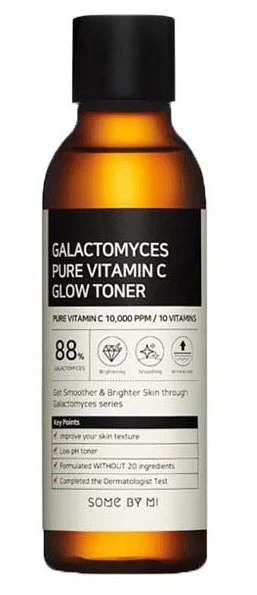
Create a free account to get started
Unlock science-based ingredient analysis personalized for your skin.
Already have an account? Log in
We protect your privacy. We never send spam.