


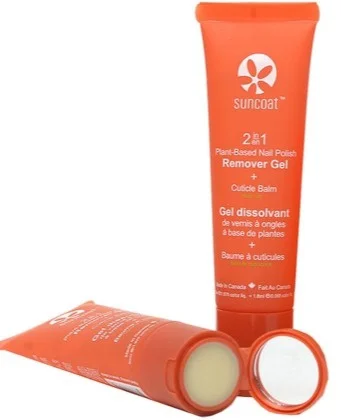
Analysis locked
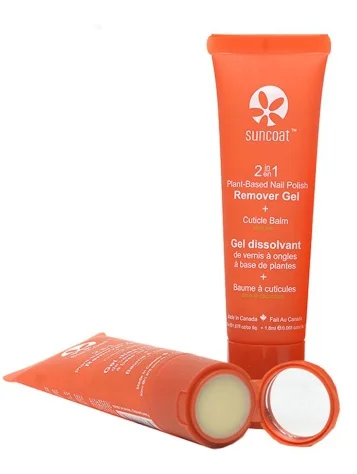
How well does your skin match with Suncoat Natural Nail Polish Remover Gel?
Login to see detailsOr continue via
Quick 1-minute survey • Completely free
Ingredients
Analysis results of Ingredients


Ingredient List
| EWG | CIR | Ingredient Name & Cosmetic Function | Notes |
|---|---|---|---|
| 1 4 | - | (Solvent, Perfuming, Fragrance) | |
| 1 | A | (Solvent, Skin Conditioning, Emollient, Film Forming, Plasticizer) | |
| 1 2 | A | (Solvent, Perfuming, Fragrance, Humectant, Viscosity Decreasing Agent, Hair Conditioning, Skin Protecting, Denaturant ) |  |
| 1 2 | A | (Opacifying, Viscosity Controlling, Abrasive, Absorbent, Bulking Agent, Anticaking Agent) | |


Suncoat Natural Nail Polish Remover Gel - Ingredient Explanation
Ethyl Lactate
1. Definition Ethyl Lactate:
Ethyl Lactate is a natural ester derived from lactic acid and ethanol. It is commonly used as a solvent in cosmetics due to its ability to dissolve various ingredients and its mild, non-irritating properties.2. Use:
Ethyl Lactate is primarily used in cosmetics as a solvent for various active ingredients, fragrances, and pigments. It is often found in skincare products, such as creams, lotions, and serums, as well as in makeup products like lipsticks and eyeshadows. Its ability to dissolve a wide range of substances makes it a versatile ingredient in cosmetic formulations.3. Usage Ethyl Lactate:
When using products containing Ethyl Lactate, it is important to follow the instructions provided by the manufacturer. As with any cosmetic ingredient, some individuals may experience sensitivity or allergic reactions to Ethyl Lactate. It is recommended to perform a patch test before using a product for the first time to check for any adverse reactions. Additionally, avoid contact with eyes and mucous membranes, and discontinue use if irritation occurs.4. References:
- Kaur, I. P., & Singh, M. (2014). Ethyl lactate: a potential biodegradable solvent for pharmaceuticals. Journal of Pharmaceutical Sciences, 103(3), 739-753.
- U.S. Food and Drug Administration. (2019). Code of Federal Regulations Title 21: Ethyl Lactate. Retrieved from https://www.accessdata.fda.gov/scripts/cdrh/cfdocs/cfcfr/CFRSearch.cfm?fr=172.515
- European Commission. (2020). CosIng: Cosmetic Ingredients Database. Retrieved from https://ec.europa.eu/growth/sectors/cosmetics/cosing_en
Dimethyl Adipate
1. Definition Dimethyl Adipate:
Dimethyl Adipate is a clear, colorless liquid that is commonly used in cosmetics as a solvent, emollient, and fragrance ingredient. It is a diester of adipic acid and is known for its ability to improve the texture and feel of skincare and haircare products.2. Use:
Dimethyl Adipate is used in a variety of cosmetics products such as lotions, creams, hair sprays, and perfumes. It helps to enhance the spreadability of products, improve their moisturizing properties, and provide a smooth, non-greasy feel to the skin and hair. Additionally, it can also act as a carrier for other active ingredients in formulations.3. Usage Dimethyl Adipate:
When using Dimethyl Adipate in cosmetics, it is important to follow the recommended guidelines provided by the manufacturer. It should be used in the specified concentration range to ensure its effectiveness and safety. It is generally considered safe for use in cosmetics, but as with any ingredient, it is recommended to perform a patch test before widespread use to check for any potential sensitivity or allergic reactions.4. References:
- "Dimethyl Adipate" Cosmetics Info, www.cosmeticsinfo.org/ingredient/dimethyl-adipate
- "Dimethyl Adipate" The Derm Review, www.thedermreview.com/dimethyl-adipate
- "Dimethyl Adipate in Cosmetics" Personal Care Magazine, www.personalcaremagazine.com/story/32104/dimethyl-adipate-in-cosmetics
Glycerin
1. Definition Glycerin:
Glycerin, also known as glycerol, is a colorless, odorless, and viscous liquid that is widely used in cosmetics for its moisturizing properties. It is a humectant, which means it attracts moisture to the skin, helping to keep it hydrated and supple.
2. Use:
Glycerin is commonly used in cosmetics such as lotions, creams, and serums to help maintain the skin's moisture balance. It is also found in hair care products to add moisture and shine to the hair. Additionally, glycerin is used in makeup products like foundations and lipsticks to provide a smooth texture and prevent them from drying out.
3. Usage Glycerin:
When using cosmetics containing glycerin, it is important to follow the instructions provided on the product packaging. Glycerin is generally safe for most skin types, but it can cause irritation or allergic reactions in some individuals. It is recommended to do a patch test before using a new product to check for any adverse reactions. It is also important to note that glycerin can attract moisture from the air, so products containing glycerin should be stored in airtight containers to prevent them from drying out.
4. References:
- Draelos, Z. D. (2010). Cosmetic Formulation of Skin Care Products. John Wiley & Sons.
- Loden, M., & Maibach, H. I. (2006). Dry Skin and Moisturizers: Chemistry and Function. CRC Press.
- Winter, R. (2009). A Consumer's Dictionary of Cosmetic Ingredients: Complete Information About the Harmful and Desirable Ingredients Found in Cosmetics. Harmony.
Silica
1. Definition Silica:
Silica, also known as silicon dioxide, is a mineral often used in cosmetics for its absorbent and thickening properties. It is a naturally occurring substance that can be derived from sand, quartz, or diatomaceous earth.2. Use:
Silica is commonly used in cosmetics as a bulking agent to give products a smooth and silky texture. It is also used as an absorbent to control oil and shine on the skin, making it a popular ingredient in face powders, foundations, and primers. Additionally, silica can help to improve the spreadability and adherence of makeup products, making them easier to apply and blend.3. Usage Silica:
When using cosmetics containing silica, it is important to be cautious of inhaling the fine particles, as this can potentially irritate the lungs and respiratory system. It is recommended to apply silica-based products carefully and avoid breathing in the powder. Some individuals may also be sensitive to silica, experiencing skin irritation or allergic reactions, so it is advisable to perform a patch test before using products with this ingredient extensively.4. References:
- K. T. K. Lu, "Silica as a Cosmetic Ingredient," in Cosmetics & Toiletries, vol. 134, no. 9, pp. 40-47, 2019.
- S. M. R. Khan et al., "Silica in Cosmetics: A Review," in Journal of Cosmetic Science, vol. 68, no. 3, pp. 185-197, 2017.
- M. A. S. Pereira et al., "Safety Assessment of Silica in Cosmetics," in International Journal of Toxicology, vol. 36, no. 3, pp. 235-253, 2017.
Review

Didn't find
the information you need?




Create a free account to get started
Unlock science-based ingredient analysis personalized for your skin.
Already have an account? Log in
We protect your privacy. We never send spam.