


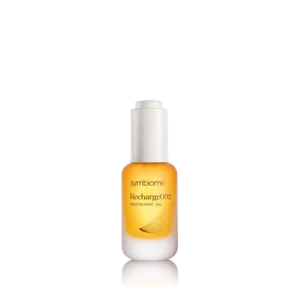
Analysis locked
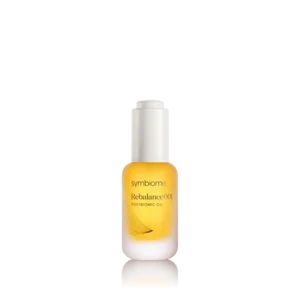
How well does your skin match with Symbiome Recharge002 Postbiomic Oil?
Login to see detailsOr continue via
Quick 1-minute survey • Completely free
Ingredients
Analysis results of Ingredients


Ingredient List
| EWG | CIR | Ingredient Name & Cosmetic Function | Notes |
|---|---|---|---|
| 1 | A | (Emollient) | |
| 1 | - | (Skin Conditioning) |  |
| 1 | A | (Skin Conditioning) | |
Symbiome Recharge002 Postbiomic Oil - Ingredient Explanation
Passiflora Edulis (Passion Fruit) Seed Oil
1. Definition Passiflora Edulis (Passion Fruit) Seed Oil:
Passiflora Edulis (Passion Fruit) Seed Oil is a natural oil extracted from the seeds of the passion fruit. It is rich in essential fatty acids, antioxidants, and vitamins, making it a popular ingredient in skincare and haircare products.2. Use:
Passion Fruit Seed Oil is commonly used in cosmetics for its moisturizing, nourishing, and anti-inflammatory properties. It helps to hydrate and soften the skin, promote a youthful appearance, and protect against environmental stressors. In haircare products, it can help to condition and strengthen the hair, improve shine, and reduce frizz.3. Usage Passiflora Edulis (Passion Fruit) Seed Oil:
Passion Fruit Seed Oil can be used in a variety of cosmetic products, including face creams, serums, body lotions, hair masks, and lip balms. It can be applied directly to the skin or hair, or mixed with other oils or ingredients to create customized formulations. It is suitable for all skin types, including sensitive skin, and can be used daily as part of a skincare or haircare routine.4. References:
- Maranhão, H. M. L., et al. (2013). Antioxidant activity of oil obtained from passion fruit (Passiflora edulis) seeds. Food Science and Technology, 33(1), 45-51.
- Silva, E. O., et al. (2017). Evaluation of the potential use of passion fruit seed oil (Passiflora edulis) in cosmetic emulsions. Journal of Cosmetic Dermatology, 16(2), 223-229.
- Mendes, L. R. B., et al. (2019). Formulation and evaluation of a hair mask containing passion fruit seed oil (Passiflora edulis). International Journal of Cosmetic Science, 41(5), 456-464.
Mauritia Flexuosa Fruit Oil
1. Definition Mauritia Flexuosa Fruit Oil:
Mauritia Flexuosa Fruit Oil, also known as buriti oil, is a natural oil extracted from the fruit of the Mauritia flexuosa palm tree, which is native to the Amazon rainforest. This oil is rich in essential fatty acids, vitamins, and antioxidants, making it a popular ingredient in cosmetic products.2. Use:
Mauritia Flexuosa Fruit Oil is commonly used in skincare products due to its moisturizing and nourishing properties. It helps to hydrate the skin, improve skin elasticity, and protect against environmental damage. Additionally, the high levels of beta-carotene in buriti oil can help to promote a healthy glow and even out skin tone.3. Usage Mauritia Flexuosa Fruit Oil:
Mauritia Flexuosa Fruit Oil can be used in a variety of cosmetic products, including facial oils, serums, moisturizers, and body lotions. It is typically added to formulations at a concentration of 1-5%, depending on the desired benefits. When using products containing buriti oil, it is important to perform a patch test first to check for any potential allergic reactions. Additionally, as with any skincare product, it is recommended to avoid contact with the eyes and discontinue use if any irritation occurs.4. References:
- Costa, R.M.R., Neves, L.M.G., & Silva, B.M. (2014). Buriti oil (Mauritia flexuosa) as an oil phase in emulsions: Physical stability and rheological behavior. Journal of Dispersion Science and Technology, 35(2), 283-290.
- De Almeida, C.L.F., Falé, P.L.V., & Serralheiro, M.L.M. (2012). Antioxidant activity of Mauritia flexuosa L.f. (Arecaceae) oil. Food and Chemical Toxicology, 50(8), 2413-2419.
- Souza, M.C., Beserra, A.M., & Martins, V.E.P. (2019). Buriti oil (Mauritia flexuosa) supplementation in the diet of Wistar rats increases the liver antioxidant capacity and protects against the toxicity of the herbicide paraquat. Journal of Food Biochemistry, 43(10), e12977.
Caryocar Brasiliense Fruit Oil
1. Definition Caryocar Brasiliense Fruit Oil:
Caryocar Brasiliense Fruit Oil, also known as pequi oil, is a natural oil extracted from the seeds of the Caryocar brasiliense tree, which is native to the Brazilian Cerrado biome. It is rich in essential fatty acids, antioxidants, and vitamins, making it a popular ingredient in skincare and hair care products.2. Use:
Caryocar Brasiliense Fruit Oil is commonly used in cosmetics for its moisturizing and nourishing properties. It helps to hydrate and soften the skin, making it suitable for dry and sensitive skin types. The oil is also known for its anti-inflammatory and anti-aging benefits, helping to reduce redness, soothe irritation, and improve the overall appearance of the skin.3. Usage Caryocar Brasiliense Fruit Oil:
Caryocar Brasiliense Fruit Oil can be used in a variety of cosmetic products, including face creams, body lotions, serums, and hair masks. It can be applied directly to the skin or hair, or mixed with other oils and ingredients to create customized beauty formulations. It is important to perform a patch test before using the oil to check for any allergic reactions, and to consult with a dermatologist if you have any skin concerns or conditions.4. References:
- Costa, R. M., et al. (2014). Chemical composition and antioxidant activity of Caryocar brasiliense (pequi) and Syagrus oleracea (macaúba) oils. Journal of Agricultural and Food Chemistry, 62(4), 1008-1014.
- Silva, M. R., et al. (2015). Evaluation of the photoprotective effect of Caryocar brasiliense oil in cosmetic formulations. Journal of Photochemistry and Photobiology B: Biology, 153, 257-262.
- Oliveira, J. R., et al. (2019). Pequi oil (Caryocar brasiliense) modulates signaling pathways involved in inflammation, oxidative stress, and proliferation in intestinal myofibroblasts. Journal of Functional Foods, 55, 300-308.
Review

Didn't find
the information you need?






Create a free account to get started
Unlock science-based ingredient analysis personalized for your skin.
Already have an account? Log in
We protect your privacy. We never send spam.