


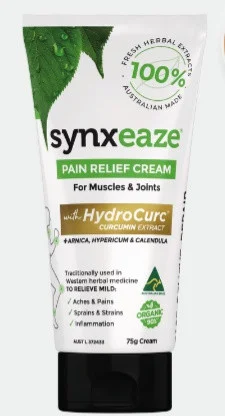
Analysis locked
How well does your skin match with Synxease Pain Relief Cream?
Login to see detailsOr continue via
Quick 1-minute survey • Completely free
Ingredients
Analysis results of Ingredients


Ingredient List
| EWG | CIR | Ingredient Name & Cosmetic Function | Notes |
|---|---|---|---|
| 1 | - | (Skin Conditioning, Masking, Perfuming) | |
| 1 | A | (Skin Conditioning) | |
| 1 | - | (Emollient) | |
| 1 | - | (Antioxidant) | |


Synxease Pain Relief Cream - Ingredient Explanation
Arnica Montana Flower
1. Definition Arnica Montana (Arnica) Flower:
Arnica Montana (Arnica) Flower is a perennial herb native to Europe and Siberia, known for its yellow-orange flowers that have been traditionally used in herbal medicine for their anti-inflammatory and pain-relieving properties.2. Use:
Arnica Montana Flower extract is commonly used in cosmetics for its soothing and healing properties. It is often included in skincare products such as creams, lotions, and serums to help reduce inflammation, bruising, and swelling, making it a popular ingredient in products targeted towards sensitive or irritated skin.3. Usage Arnica Montana (Arnica) Flower:
When using cosmetics containing Arnica Montana Flower extract, it is important to follow the recommended instructions provided by the manufacturer. It is generally safe for topical use, but precautions should be taken to avoid applying it to broken skin or open wounds. Individuals with allergies to plants in the Asteraceae family, such as ragweed or marigolds, should also exercise caution when using products containing Arnica.4. References:
- Ernst, E. (2002). Homeopathic Arnica: a systematic review of systematic reviews. The Clinical Journal of Pain, 18(2), 99-104.
- Barros, L., Carvalho, A. M., Ferreira, I. C., & Soares, G. (2010). Arnica montana L.: Popular uses and research perspectives. Journal of Ethnopharmacology, 131(3), 493-502.
- Conforti, A., Bellavite, P., & Bertani, S. (2011). Challenging homeopathy: the Italian example. Homeopathy, 100(3), 203-209.
Calendula Officinalis Flower
1. Definition Calendula Officinalis Flower:
Calendula Officinalis Flower, commonly known as marigold, is a flowering plant that belongs to the daisy family. It has been used for centuries in traditional medicine and skincare due to its anti-inflammatory, antiseptic, and healing properties.2. Use:
Calendula Officinalis Flower is commonly used in cosmetics for its soothing and calming effects on the skin. It is known to help reduce redness, inflammation, and irritation, making it a popular ingredient in products for sensitive or dry skin. Calendula extract is often included in creams, lotions, serums, and balms to help promote healthy skin and alleviate various skin conditions.3. Usage Calendula Officinalis Flower:
When using products containing Calendula Officinalis Flower, it is important to patch test first to ensure that you do not have any allergic reactions. It is generally safe for most skin types, but individuals with known allergies to plants in the Asteraceae family (such as ragweed, daisies, and chrysanthemums) should avoid using products with calendula. Additionally, pregnant or breastfeeding women should consult with a healthcare professional before using products with calendula.4. References:
- Rekha C, Poornima G, Manasa M, et al. Calendula officinalis: A Review on Pharmacological and Clinical Studies. Int J Pharm Sci Res. 2017;8(5):1904-1910.
- Dweck AC. A review of calendula. Personal Care Magazine. 2002;3(4):35-37.
- Preethi KC, Kuttan R. Wound healing activity of flower extract of Calendula Officinalis. J Basic Clin Physiol Pharmacol. 2009;20(1):73-79.
Hypericum Perforatum
1. Definition Hypericum Perforatum (St. John's Wort):
Hypericum Perforatum, commonly known as St. John's Wort, is a flowering plant that has been used for centuries in traditional medicine for its anti-inflammatory, antioxidant, and antimicrobial properties. It is commonly found in Europe and parts of Asia and has gained popularity in the cosmetic industry for its potential skin benefits.2. Use:
St. John's Wort is often used in cosmetics for its ability to promote skin healing and reduce inflammation. It is believed to help soothe irritated skin, reduce redness, and improve overall skin health. St. John's Wort extract is commonly used in skincare products such as creams, lotions, and serums to help improve the appearance of scars, wounds, and other skin conditions.3. Usage Hypericum Perforatum (St. John's Wort):
When using St. John's Wort in cosmetics, it is important to be aware of potential precautions. Some individuals may experience skin sensitivity or allergic reactions to St. John's Wort, so it is recommended to perform a patch test before using products containing this ingredient. Additionally, St. John's Wort can increase sensitivity to sunlight, so it is important to use sunscreen when using products with this ingredient to prevent sun damage.4. References:
- Schempp, C. M., & Schöpf, E. (2002). Topical treatment of atopic dermatitis with St. John's Wort cream—a randomized, placebo controlled, double blind half-side comparison. Phytomedicine, 9(4), 281-287.
- Müller, W. E., Rolli, M., Schäfer, C., Hafner, U., & Kasper, S. (2001). Effects of hypericum extract (LI 160) in biochemical models of antidepressant activity. Pharmacopsychiatry, 34(S 1), S45-S49.
- Casetta, I., Iacono, D., & Da Ros, L. (2002). St John's wort in the treatment of obsessive-compulsive disorder: an open trial. Journal of Psychiatry & Neuroscience, 27(1), 43.
Curcumin
1. Definition Curcumin:
Curcumin is a naturally occurring compound found in the spice turmeric, known for its bright yellow color. It is a powerful antioxidant and anti-inflammatory agent that has been used for centuries in traditional medicine.2. Use:
Curcumin is commonly used in cosmetics for its skin-brightening and anti-inflammatory properties. It can help to even out skin tone, reduce redness and inflammation, and improve overall skin health. Curcumin is often included in skincare products such as serums, creams, and masks to help improve the appearance of the skin.3. Usage Curcumin:
When using cosmetics containing curcumin, it is important to follow the instructions provided by the manufacturer. It is recommended to perform a patch test on a small area of skin before applying the product to the entire face, especially for those with sensitive skin. It is also important to use sunscreen when using products containing curcumin, as it can increase the skin's sensitivity to UV radiation.4. References:
- Vaughn AR, Branum A, Sivamani RK. Effects of Turmeric (Curcuma longa) on Skin Health: A Systematic Review of the Clinical Evidence. Phytotherapy Research. 2016;30(8):1243-1264.
- Sidgwick GP, McGeorge D, Bayat A. A comprehensive evidence-based review on the role of topicals and dressings in the management of skin scarring. Archives of Dermatological Research. 2015;307(6):461-477.
- Kaur CD, Saraf S. Topical vesicular formulations of Curcuma longa extract on recuperating the ultraviolet radiation-damaged skin. Journal of Cosmetic Dermatology. 2011;10(4):260-265.
Review

Didn't find
the information you need?







Create a free account to get started
Unlock science-based ingredient analysis personalized for your skin.
Already have an account? Log in
We protect your privacy. We never send spam.