


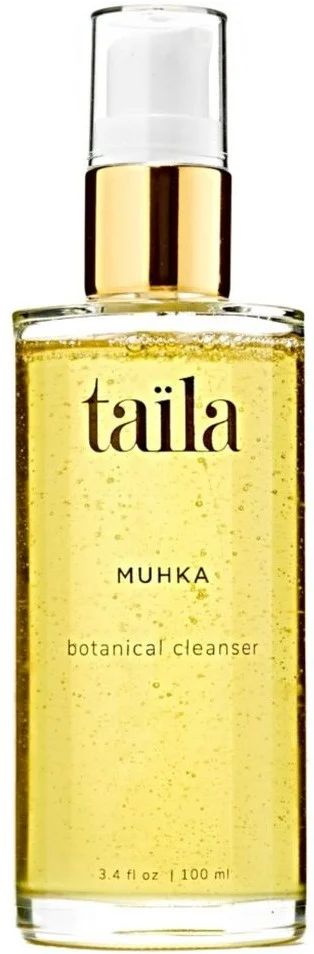
Analysis locked
How well does your skin match with Taila Muhka Botanical Face Cleanser?
Login to see detailsOr continue via
Quick 1-minute survey • Completely free
Ingredients
Analysis results of Ingredients


Ingredient List
| EWG | CIR | Ingredient Name & Cosmetic Function | Notes |
|---|---|---|---|
| 1 | A | (Masking, Fragrance, Hair Conditioning, Skin Conditioning, Emollient) |   |
| 2 | A | | |
| 1 | A | (Skin Conditioning, Emollient, Humectant, Hair Conditioning) | |
| 1 | B | (Skin Conditioning, Emollient, Surfactant, Emulsifying) | |




Taila Muhka Botanical Face Cleanser - Ingredient Explanation
Sesamum Indicum (Sesame) Seed Oil
1. Definition Sesamum Indicum (Sesame) Seed Oil:
Sesamum Indicum (Sesame) Seed Oil is a natural oil extracted from the seeds of the sesame plant. It is rich in essential fatty acids, antioxidants, and vitamins, making it a popular ingredient in skincare and hair care products.2. Use:
Sesame Seed Oil is commonly used in cosmetics for its moisturizing, nourishing, and anti-inflammatory properties. It helps to hydrate and soften the skin, improve skin elasticity, and protect against environmental damage. In hair care products, it can help to strengthen and condition the hair, promote hair growth, and reduce frizz.3. Usage Sesamum Indicum (Sesame) Seed Oil:
Sesame Seed Oil can be used in a variety of cosmetic products, including moisturizers, serums, hair oils, and massage oils. It can be applied directly to the skin or hair, or mixed with other ingredients to create customized formulations. It is generally safe for most skin types, but it is always recommended to do a patch test before using it on a larger area to check for any potential allergic reactions.4. References:
- Saeedi M, Morteza-Semnani K, Ghoreishi MR. The treatment of atopic dermatitis with licorice gel. Journal of Dermatological Treatment. 2003;14(3):153-157.
- Ahmad Z. The uses and properties of almond oil. Complementary Therapies in Clinical Practice. 2010;16(1):10-12.
- Parveen A, Parveen B, Parveen R, Ahmad S. Medicinal and cosmetic uses of sesame: A review. International Journal of Pharmacognosy and Phytochemical Research. 2014;6(3):677-681.
Ricinus Communis (Castor) Oil
1. Definition Castor Oil:
Castor oil is a vegetable oil extracted from the seeds of the castor bean plant, scientifically known as Ricinus communis. It is a thick, pale yellow liquid with a distinct odor and is widely used in various industries, including cosmetics.2. Use:
Castor oil is commonly used in cosmetics for its moisturizing and conditioning properties. It is rich in fatty acids, particularly ricinoleic acid, which helps to hydrate and nourish the skin. Castor oil is often found in skincare products such as lotions, creams, and lip balms, as well as in hair care products like shampoos and conditioners.3. Usage Castor Oil:
When using castor oil in cosmetics, it is important to patch test first to check for any allergic reactions. To use castor oil on the skin, simply apply a small amount to the desired area and gently massage it in. For hair care, castor oil can be applied to the scalp and hair, left on for a period of time, and then washed out with shampoo. It is important to note that castor oil is a thick oil and may be too heavy for some skin types, so it is recommended to use it sparingly or mix it with lighter oils.4. References:
- Gavamukulya, Y., Abou-Elella, F., Wamunyokoli, F., & AEl-Shemy, H. (2014). Phytochemical, pharmacological and industrial potential of Ricinus communis Linn: A review. Pharmacognosy Reviews, 8(16), 157-162.
- Vieira, C., Evangelista, S., Cirillo, R., Lippi, A., & Maggi, C. A. (2001). Evaluation of ricinoleic acid esters in topical preparations for hair growth in mice. Journal of Cosmetic Science, 52(6), 321-326.
- Patel, V. R., Dumancas, G. G., Kasi Viswanath, L. C., Maples, R., Subong, B. J. J., & Castanares, M. (2016). Castor oil: Properties, uses, and optimization of processing parameters in commercial production. Lipid Insights, 9, 1-12.
Carica Papaya Seed Oil
1. Definition Carica Papaya Seed Oil:
Carica Papaya Seed Oil is a natural oil extracted from the seeds of the Carica Papaya fruit. It is rich in essential fatty acids, vitamins, and minerals, making it a popular ingredient in skincare and hair care products.2. Use:
Carica Papaya Seed Oil is known for its moisturizing, nourishing, and anti-inflammatory properties. It is often used in cosmetics to help hydrate and soften the skin, promote skin elasticity, and reduce the appearance of fine lines and wrinkles. In hair care products, it can help condition and strengthen the hair, as well as promote hair growth.3. Usage Carica Papaya Seed Oil:
Carica Papaya Seed Oil can be used in a variety of ways in cosmetics. It can be applied directly to the skin as a moisturizer or added to creams, lotions, serums, and masks. In hair care products, it can be added to shampoos, conditioners, and hair oils. It is important to perform a patch test before using Carica Papaya Seed Oil, as some individuals may be allergic to it. It should be stored in a cool, dry place away from direct sunlight to prolong its shelf life.4. References:
- Chen, Y., Xu, Z., & Liu, Y. (2017). Carica papaya seed oil protects against hydrogen peroxide-induced oxidative stress in human dermal fibroblasts. Journal of Cosmetic Dermatology, 16(3), 409-414.
- Orafidiya, L. O., Agbani, E. O., & Oyedele, A. O. (2001). The effect of Carica papaya seed oil on skin and hair care. International Journal of Cosmetic Science, 23(4), 219-229.
- Mensor, L. L., Menezes, F. S., Leitão, G. G., Reis, A. S., Dos Santos, T. C., Coube, C. S., & Leitão, S. G. (2001). Screening of Brazilian plant extracts for antioxidant activity by the use of DPPH free radical method. Phytotherapy Research, 15(2), 127-130.
Polyglyceryl 4 Laurate
1. Definition Polyglyceryl 4 Laurate:
Polyglyceryl 4 Laurate is an emulsifier derived from glycerin and lauric acid. It is commonly used in cosmetics to stabilize and blend oil and water-based ingredients.2. Use:
Polyglyceryl 4 Laurate is primarily used as an emulsifier in skincare and hair care products. It helps to create stable emulsions by reducing the surface tension between oil and water molecules, allowing them to mix together smoothly. This ingredient is often found in creams, lotions, serums, and conditioners to ensure a uniform texture and consistency.3. Usage Polyglyceryl 4 Laurate:
When using products containing Polyglyceryl 4 Laurate, it is important to follow the recommended usage instructions provided by the manufacturer. This ingredient is generally considered safe for topical application, but individuals with sensitive skin may want to perform a patch test before using products containing Polyglyceryl 4 Laurate extensively. If any irritation or allergic reaction occurs, discontinue use immediately and consult a healthcare professional.4. References:
- "Polyglyceryl-4 Laurate" by Cosmetics Info (https://cosmeticsinfo.org/ingredient/polyglyceryl-4-laurate)
- "Polyglyceryl-4 Laurate" by Truth in Aging (https://www.truthinaging.com/ingredients/polyglyceryl-4-laurate)
- "Polyglyceryl-4 Laurate" by The Derm Review (https://thedermreview.com/polyglyceryl-4-laurate/)
Review

Didn't find
the information you need?




Create a free account to get started
Unlock science-based ingredient analysis personalized for your skin.
Already have an account? Log in
We protect your privacy. We never send spam.