


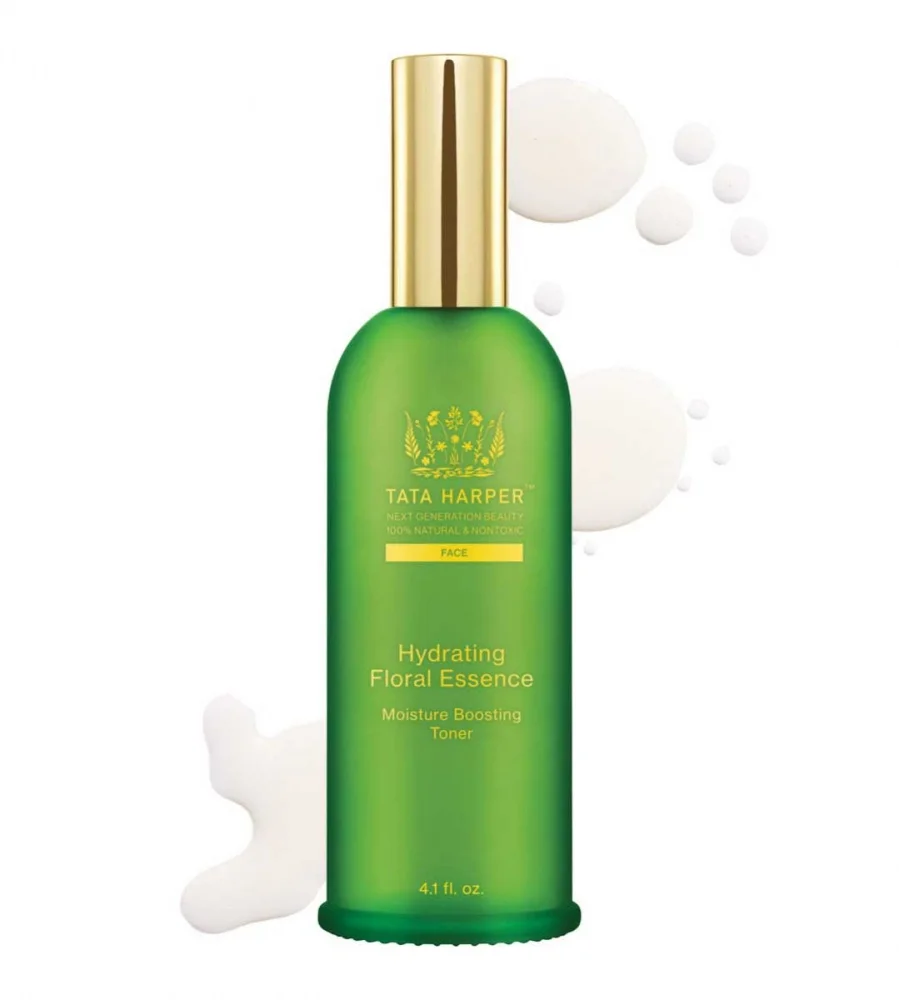
Analysis locked
How well does your skin match with Tata Harper Hydrating Floral Essence?
Login to see detailsOr continue via
Quick 1-minute survey • Completely free
Ingredients
Analysis results of Ingredients


Ingredient List
| EWG | CIR | Ingredient Name & Cosmetic Function | Notes |
|---|---|---|---|
| 1 | - | (Skin Conditioning, Humectant) | |
| - | - | Citrus Aurantium Amara (Neroli) Distillate | |
| 1 | - | (Skin Conditioning, Fragrance) | |
| 1 | - | (Skin Conditioning, Masking, Skin Protecting) | |





Tata Harper Hydrating Floral Essence - Ingredient Explanation
Hordeum Vulgare Leaf Juice
1. Definition Hordeum Vulgare Leaf Juice:
Hordeum Vulgare Leaf Juice, also known as barley leaf juice, is the extracted liquid from the leaves of the barley plant. It is rich in vitamins, minerals, antioxidants, and amino acids, making it a beneficial ingredient in skincare products.2. Use:
Hordeum Vulgare Leaf Juice is commonly used in cosmetics for its hydrating, soothing, and anti-inflammatory properties. It helps to nourish and moisturize the skin, leaving it feeling soft and supple. Additionally, it can help to reduce redness, irritation, and inflammation, making it suitable for sensitive or irritated skin.3. Usage Hordeum Vulgare Leaf Juice:
Hordeum Vulgare Leaf Juice can be found in a variety of skincare products, such as moisturizers, serums, masks, and creams. It is typically used as an emollient or humectant to provide hydration and moisture to the skin. To use products containing Hordeum Vulgare Leaf Juice, simply apply a small amount to clean, dry skin and gently massage in until fully absorbed.Precautions: While Hordeum Vulgare Leaf Juice is generally considered safe for use in cosmetics, it is always recommended to perform a patch test before using any new product to check for any potential allergic reactions. If irritation occurs, discontinue use immediately.
4. References:
- Bae, J. Y., Lim, S. S., Kim, S. J., Choi, J. S., Park, J., Ju, S. M., ... & Kim, S. K. (2013). Anti-inflammatory effect of Hordeum vulgare L. (barley) leaf extract in lipopolysaccharide-stimulated RAW264. 7 macrophages. Molecular Medicine Reports, 7(5), 1347-1353.
- Park, S. H., Kim, D. S., Kim, J. K., Lee, Y. C., & Lee, S. J. (2012). Anti-inflammatory effects of Hordeum vulgare in lipopolysaccharide-stimulated RAW264. 7 macrophages. Journal of Medicinal Food, 15(6), 505-512.
- Lee, J. H., & Kim, S. K. (2011). Anti-inflammatory effects of Hordeum vulgare in lipopolysaccharide-stimulated RAW264. 7 macrophages. Journal of Medicinal Food, 14(10), 1199-1205.
Citrus Aurantium Amara (Neroli) Distillate
Ingredient data is being updated. Please check back later.
Lavandula Angustifolia (Lavender) Flower Water
1. Definition Lavandula Angustifolia (Lavender) Flower Water:
Lavandula Angustifolia (Lavender) Flower Water is a natural byproduct of the steam distillation process used to extract lavender essential oil from the flowers of the Lavandula Angustifolia plant. It is a clear, fragrant liquid that retains some of the therapeutic properties of lavender essential oil.2. Use:
Lavender Flower Water is commonly used in cosmetics and skincare products for its soothing and calming properties. It is known for its anti-inflammatory, antibacterial, and antioxidant properties, making it beneficial for a variety of skin types. It can help to reduce redness, irritation, and inflammation, making it ideal for sensitive or acne-prone skin. Lavender Flower Water can also help to balance the skin's natural oil production and promote a clear, healthy complexion.3. Usage Lavandula Angustifolia (Lavender) Flower Water:
Lavender Flower Water can be used in a variety of ways in skincare products. It can be used as a facial toner to help balance the skin's pH levels and tighten pores. It can also be used as a refreshing mist throughout the day to hydrate and soothe the skin. Additionally, Lavender Flower Water can be added to bath water or used as a natural fragrance in homemade skincare products.4. References:
- Ali, B., et al. (2015). Essential oils used in aromatherapy: A systemic review. Asian Pacific Journal of Tropical Biomedicine, 5(8), 601-611.
- Cavanagh, H. M., & Wilkinson, J. M. (2002). Biological activities of lavender essential oil. Phytotherapy Research, 16(4), 301-308.
- Koulivand, P. H., et al. (2013). Lavender and the nervous system. Evidence-Based Complementary and Alternative Medicine, 2013, 681304.
Rosa Damascena Flower Water
1. Definition Rosa Damascena Flower Water:
Rosa Damascena Flower Water, also known as rose water, is a fragrant water made by distilling rose petals. It is commonly used in cosmetics for its soothing and hydrating properties.2. Use:
Rosa Damascena Flower Water is often used in cosmetics as a natural toner and astringent. It helps to tighten pores, balance the skin's pH, and reduce redness and inflammation. Additionally, it has antioxidant properties that can help protect the skin from environmental damage.3. Usage Rosa Damascena Flower Water:
Rosa Damascena Flower Water can be used in a variety of ways in skincare routines. It can be applied directly to the skin after cleansing as a toner, or mixed with other ingredients to create DIY face masks, mists, or serums. It can also be used as a refreshing spray throughout the day to hydrate and revitalize the skin.Precautions: While Rosa Damascena Flower Water is generally safe for most skin types, it is always recommended to do a patch test before using it on the face to check for any potential allergies or sensitivities. If irritation occurs, discontinue use immediately.
4. References:
- Tabassum, N., & Hamdani, M. (2014). Plants used in cosmetics. Phytopharmacology, 5(2), 133-143.
- Riaz, A., & Rasul, A. (2013). Rose water: a natural gift for skincare. International Journal of Chemical and Biochemical Sciences, 4(2), 62-67.
- Boskabady, M. H., Shafei, M. N., Saberi, Z., & Amini, S. (2011). Pharmacological effects of Rosa damascena. Iranian Journal of Basic Medical Sciences, 14(4), 295-307.
Review
Didn't find
the information you need?






Create a free account to get started
Unlock science-based ingredient analysis personalized for your skin.
Already have an account? Log in
We protect your privacy. We never send spam.