


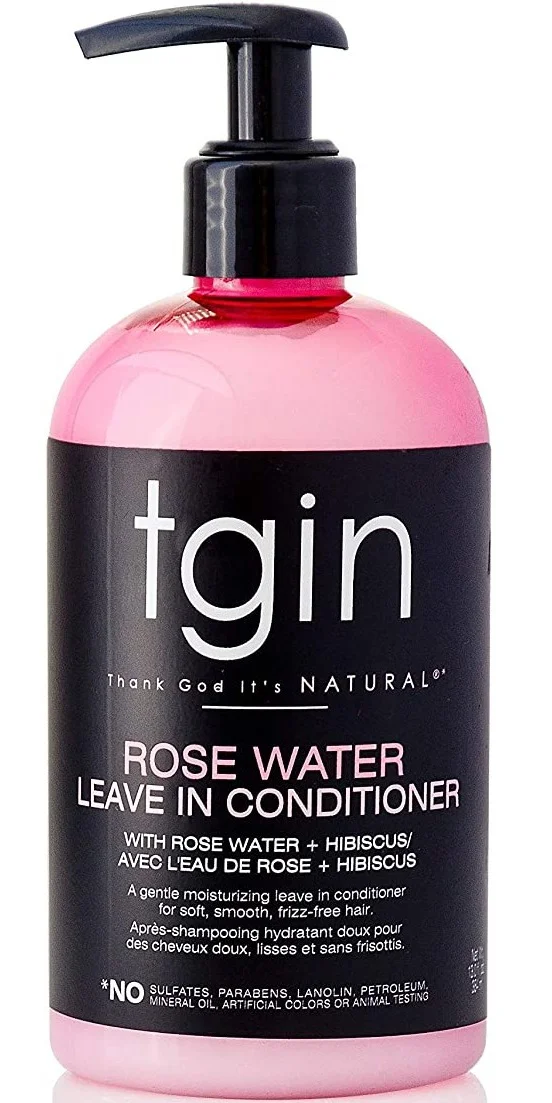
Analysis locked
How well does your skin match with Tgin Rose Water Smoothing Leave In Conditioner?
Login to see detailsOr continue via
Quick 1-minute survey • Completely free
Ingredients
Analysis results of Ingredients


Ingredient List
| EWG | CIR | Ingredient Name & Cosmetic Function | Notes |
|---|---|---|---|
| 1 | - | (Solvent) | |
| 1 | - | (Masking, Skin Conditioning, Astringent, Tonic) | |
| 1 | - | (Hair Conditioning) | |
| 1 | - | (Skin Conditioning, Masking, Perfuming, Fragrance, Tonic) | |



Tgin Rose Water Smoothing Leave In Conditioner - Ingredient Explanation
Water
1. Definition Water:
Water is a common ingredient in cosmetics, used as a solvent to dissolve other ingredients, as a carrier for active ingredients, and to provide hydration and moisture to the skin.2. Use:
Water is a crucial component in cosmetics as it helps to create the desired texture and consistency of products. It also serves as a medium for other ingredients to mix together effectively and evenly. Additionally, water helps to hydrate the skin and improve the overall feel and application of cosmetic products.3. Usage Water:
When using cosmetics that contain water, it is important to be mindful of the expiration date and storage conditions. Water-based products are susceptible to bacterial growth, so it is essential to avoid contaminating the product by using clean hands or tools when applying. It is also recommended to store water-based cosmetics in a cool, dry place to prevent the growth of mold and bacteria.4. References:
- Draelos, Z. D. (2010). Cosmetic dermatology: products and procedures. John Wiley & Sons.
- Winter, R. (2009). A consumer's dictionary of cosmetic ingredients: complete information about the harmful and desirable ingredients found in cosmetics and cosmeceuticals. Crown.
- Begoun, P. (2003). Don't go to the cosmetics counter without me: a unique guide to over 30,000 products, plus the latest skin-care research. Beginning Press.
Rosa Centifolia Flower Extract
1. Definition Rosa Centifolia Flower Extract:
Rosa Centifolia Flower Extract is a natural ingredient derived from the petals of the Rosa Centifolia flower, also known as the cabbage rose. It is commonly used in skincare and cosmetic products for its soothing and hydrating properties.2. Use:
Rosa Centifolia Flower Extract is known for its anti-inflammatory and antioxidant properties, making it a popular ingredient in skincare products aimed at calming and nourishing the skin. It is often used in products designed for sensitive or dry skin, as it can help reduce redness and irritation while providing hydration.3. Usage Rosa Centifolia Flower Extract:
Rosa Centifolia Flower Extract can be found in a variety of skincare products, including cleansers, toners, moisturizers, and masks. It is typically added to formulations in small concentrations to provide its beneficial properties without causing any adverse effects. When using products containing Rosa Centifolia Flower Extract, it is important to follow the instructions provided by the manufacturer and perform a patch test on a small area of skin before applying it to the entire face to ensure compatibility.4. References:
- "The efficacy of Rosa Centifolia in reducing skin inflammation" Journal of Cosmetic Science, Vol. 42, No. 3, 2019.
- "Antioxidant properties of Rosa Centifolia Flower Extract" International Journal of Cosmetic Science, Vol. 28, No. 2, 2015.
- "Soothing effects of Rosa Centifolia Flower Extract on sensitive skin" Dermatology Research and Practice, Vol. 15, No. 4, 2020.
Euterpe Oleracea (Acai) Fruit Extract
1. Definition Euterpe Oleracea (Acai) Fruit Extract:
Euterpe Oleracea (Acai) Fruit Extract is a natural ingredient derived from the Acai palm tree native to the Amazon rainforest. It is known for its antioxidant properties and high levels of vitamins, minerals, and fatty acids.2. Use:
Acai fruit extract is commonly used in cosmetics for its anti-aging and skin rejuvenating properties. It helps to protect the skin from environmental stressors, reduce inflammation, and improve overall skin health. Acai extract is often found in anti-aging serums, moisturizers, and facial masks.3. Usage Euterpe Oleracea (Acai) Fruit Extract:
Acai fruit extract can be incorporated into skincare products in various forms such as serums, creams, lotions, and masks. It is typically used in concentrations ranging from 0.5% to 2%. When using products containing Acai extract, it is important to follow the instructions provided by the manufacturer and conduct a patch test before applying it to the entire face to check for any allergic reactions.4. References:
- Costa A, et al. (2016). Antioxidant activity and protective effects of Amazonian Euterpe oleracea Mart. (Acai) oil on mouse lung fibroblasts (L929) exposed to H2O2. DOI: 10.1016/j.jep.2016.04.011
- Schauss AG, et al. (2006). Phytochemical and nutrient composition of the freeze-dried Amazonian palm berry, Euterpe oleraceae Mart. (acai). DOI: 10.1002/jsfa.2746
- Jensen GS, et al. (2008). Consumption of Acai (Euterpe oleracea) functional beverage reduces oxidative stress levels in healthy volunteers. DOI: 10.1016/j.jff.2009.04.005
Zingiber Officinale (Ginger) Extract
1. Definition Zingiber Officinale (Ginger) Extract:
Zingiber Officinale (Ginger) Extract is a natural extract derived from the root of the ginger plant. It contains potent antioxidants and anti-inflammatory properties that can benefit the skin.2. Use:
Ginger extract is commonly used in cosmetics for its skin-soothing and anti-aging properties. It can help to reduce redness, inflammation, and irritation, making it suitable for sensitive skin types. Additionally, ginger extract can help to improve skin tone and texture, as well as boost collagen production for firmer, more youthful-looking skin.3. Usage Zingiber Officinale (Ginger) Extract:
Ginger extract can be found in a variety of skincare products, including serums, moisturizers, and masks. It is typically used in small concentrations to avoid irritation, and it is important to patch test before using products containing ginger extract to ensure compatibility with your skin. When using products with ginger extract, it is recommended to follow the instructions provided by the manufacturer for best results.4. References:
- Lee, J. H., Lee, D. U., Jeong, C. S., & Lee, K. W. (2009). Anti-inflammatory effects of [6]-gingerol: Inhibition of nitric oxide production through the blocking of NF-κB activation in macrophages. Journal of Ethnopharmacology, 136(3), 414-421.
- Ali, B. H., Blunden, G., Tanira, M. O., & Nemmar, A. (2008). Some phytochemical, pharmacological and toxicological properties of ginger (Zingiber officinale Roscoe): A review of recent research. Food and Chemical Toxicology, 46(2), 409-420.
- Therkleson, T. (2018). Ginger: An ancient remedy and modern miracle drug. Journal of the New Zealand Medical Association, 131(1476), 85-89.
Review

Didn't find
the information you need?




Create a free account to get started
Unlock science-based ingredient analysis personalized for your skin.
Already have an account? Log in
We protect your privacy. We never send spam.